Sixth Mass Extinction: Are We Already in One?
The phrase sixth mass extinction has become one of the most powerful descriptions of the modern biodiversity crisis. It conveys a disturbing reality: species are disappearing, populations are shrinking and habitats are being transformed by human activity at rates far beyond those expected under ordinary background conditions. Yet the phrase also has a more precise meaning in palaeontology, and that scientific meaning makes the answer to “Are we already in a sixth mass extinction?” more complicated than many headlines suggest.
A widely used benchmark defines a mass extinction as the loss of roughly 75% or more of Earth's species within a geologically short interval. Using that standard, the planet has experienced five particularly severe extinction episodes during roughly the past half-billion years. A landmark 2011 Nature review concluded that modern biodiversity loss was already exceptionally serious but had not yet reached that conventional magnitude. (nature.com)
The evidence today therefore supports two statements at once. Human activity is driving an extraordinary global extinction crisis, and extinction rates for well-studied groups are far above long-term background levels. But the cumulative proportion of all Earth's species known to have disappeared during the modern episode remains far below the approximately 75% loss associated with the Big Five.
That distinction between rate and magnitude lies at the centre of the scientific debate.
What Scientists Mean by a Mass Extinction
Extinction itself is normal in evolutionary history. Species originate, spread, change and eventually disappear. What separates a mass extinction from ordinary background extinction is the scale and speed of the loss across many unrelated groups and regions.
The five episodes conventionally called the Big Five were global biological crises. They sharply reduced biodiversity and reorganised ecosystems, opening ecological opportunities that surviving groups later occupied. The U.S. National Park Service identifies them as the end-Ordovician, Late Devonian, end-Permian, end-Triassic and end-Cretaceous extinction events. (nps.gov)
They were not repetitions of one catastrophe.
The end-Ordovician crisis, about 444 million years ago, was associated with major climatic cooling, glaciation and falling sea levels. The Late Devonian involved several extinction pulses and remains more difficult to explain, although widespread ocean oxygen loss and environmental change were important. Around 252 million years ago, the end-Permian extinction—the most severe of the Big Five—was associated with enormous Siberian volcanism, rapid warming, ocean acidification and oxygen loss. Massive volcanic activity also played a central role around the end of the Triassic. The end-Cretaceous extinction 66 million years ago is strongly associated with the Chicxulub asteroid impact and eliminated all non-avian dinosaurs along with many other organisms. (nhm.ac.uk)
The causes differed, but the common feature was environmental disruption powerful enough to overwhelm large numbers of species within a comparatively short geological interval.
Modern biodiversity loss has a very different immediate cause.
One species—Homo sapiens—has become the dominant source of pressure.
Why Scientists Are So Concerned About Extinction Today
The strongest evidence for an exceptional modern crisis does not depend on whether we call it a sixth mass extinction.
The 2019 IPBES Global Assessment, one of the most comprehensive evaluations of biodiversity ever undertaken, concluded that the global rate of species extinction is already at least tens to hundreds of times higher than the average over the past 10 million years and is accelerating. Its synthesis of well-studied taxonomic groups suggested that around one million animal and plant species face extinction, many potentially within decades unless the drivers of biodiversity loss are reduced. (ipbes.net)
That does not mean one million species are certain to disappear.
“Facing extinction” is a statement about elevated risk under current or projected pressures. Conservation can change outcomes. Habitat can be protected or restored, exploitation regulated, invasive species controlled and populations rebuilt.
The International Union for Conservation of Nature makes the same distinction in its Red List system. Species classified as Vulnerable, Endangered or Critically Endangered are collectively described as threatened; they are not counted as extinct. IUCN also warns that only a fraction of the world's species have been comprehensively assessed, particularly because many insects, fungi, marine organisms and other poorly studied groups remain incompletely documented. (nrl.iucnredlist.org)
This creates an uncomfortable combination of evidence and uncertainty. We know enough to establish that biodiversity is declining rapidly, but we do not know the status of every species on Earth. Some species may disappear before science formally describes them, while other threatened species may recover through successful conservation.
The uncertainty does not cancel the crisis.
It tells us where the limits of measurement lie.
Extinction Rate and Extinction Magnitude Are Different Questions
Much of the disagreement around the phrase sixth mass extinction disappears once two separate measurements are distinguished.
Extinction rate asks how quickly species are disappearing.
Extinction magnitude asks what proportion of species has already disappeared.
Imagine a vehicle travelling toward a cliff. Its speed tells you how rapidly the situation is developing; its distance from the cliff tells you how far the process has progressed. A very high speed can create an emergency long before the vehicle reaches the edge.
The same logic applies to biodiversity.
Current extinction rates can be alarmingly high without the cumulative extinction total having reached the approximately 75% magnitude associated with historical mass extinctions.
This was already the central conclusion of Barnosky and colleagues in 2011. They found modern rates concerning enough that continued losses could eventually produce mass-extinction-scale biodiversity loss, while concluding that the threshold had not yet been reached. (nature.com)
A major 2025 paper in Trends in Ecology & Evolution sharpened the criticism. Ecologists John Wiens and Kristen Saban argued that evidence of extinction rates above background levels is not by itself evidence that a mass extinction is already occurring. They emphasised that documented modern species losses remain far below a 75% global threshold and challenged extrapolations claiming that such a loss is imminent. (sciencedirect.com)
Their argument provoked substantial scientific disagreement. Other researchers have argued that documented extinctions underestimate actual losses, particularly among poorly studied invertebrates, and that population collapse and unrecorded species disappearance make a simple count of formally declared extinctions too conservative. A 2022 review, for example, argued that incompleteness in the IUCN record—especially for invertebrates—means modern extinction may be considerably underestimated. (onlinelibrary.wiley.com)
This is not a debate between scientists who believe biodiversity is in crisis and scientists who believe everything is fine.
The disagreement is primarily about whether “mass extinction” is already the correct quantitative label for the crisis we can observe.
Human Activity Is Driving the Modern Biodiversity Crisis
Whatever terminology is used, the causes of modern biodiversity decline are unusually clear.
IPBES identifies five direct drivers with the largest global impact:
-
changes in land and sea use;
-
direct exploitation of organisms;
-
climate change;
-
pollution;
-
invasive alien species.
The relative importance differs between environments. Land-use change has been especially important in terrestrial and freshwater ecosystems, while direct exploitation—particularly fishing—has had a major impact in marine systems. Climate change is increasingly interacting with the other pressures rather than operating separately. (ipbes.net)
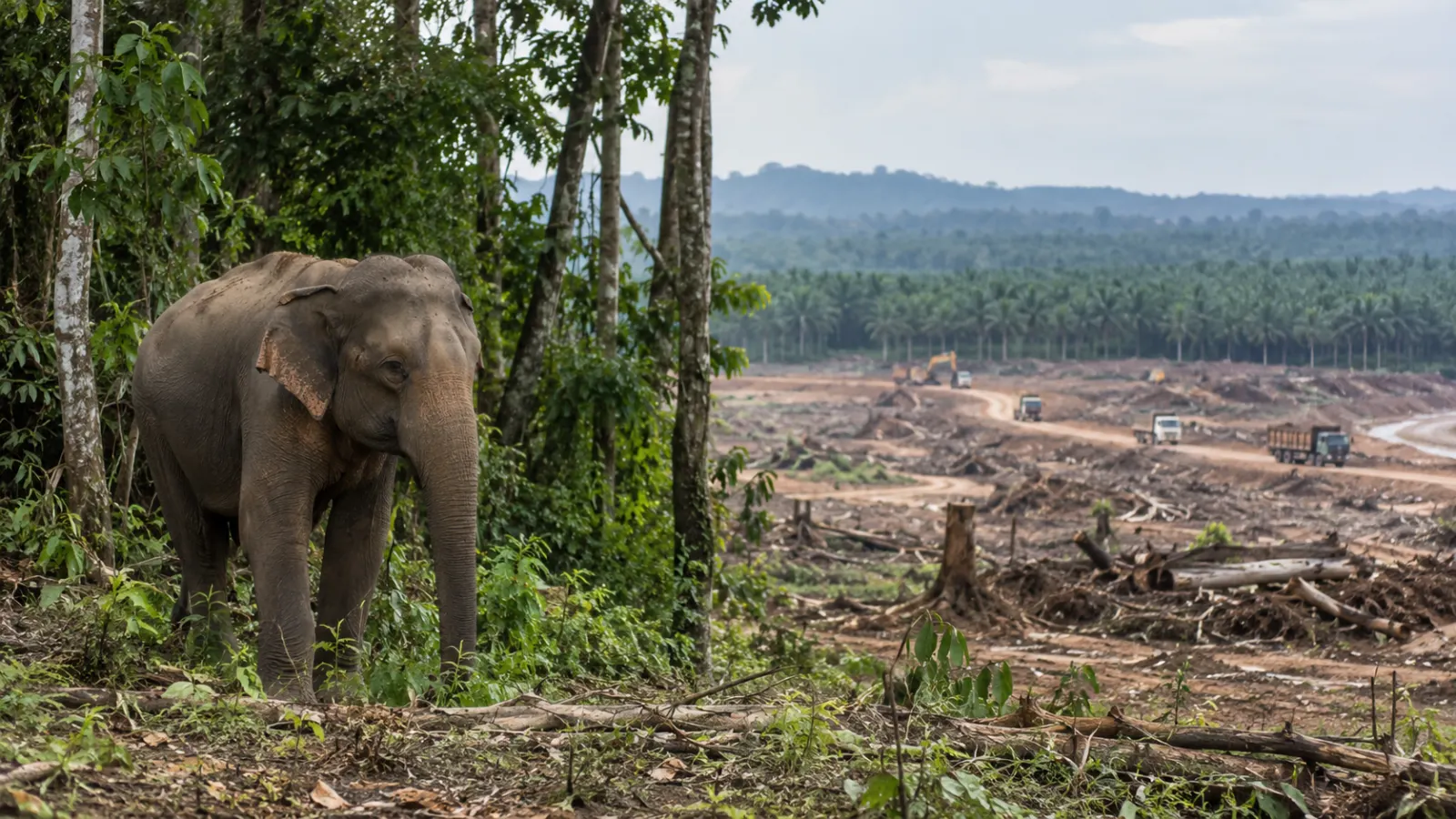
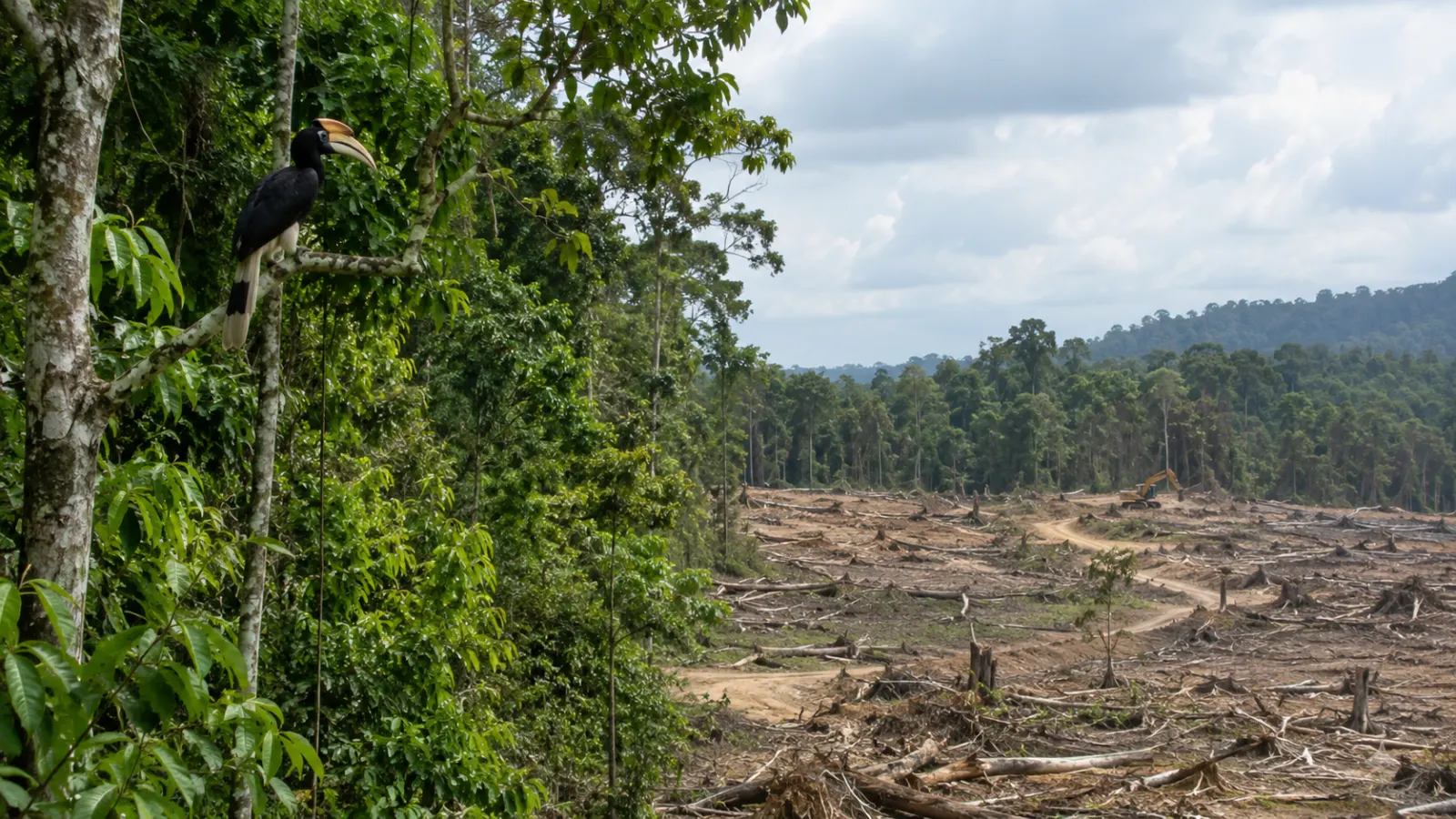
Habitat conversion is one of the most visible mechanisms. Forests become farms, wetlands are drained, rivers are dammed and coastlines are urbanised. Even where a species survives somewhere, fragmentation can divide populations into smaller and more isolated groups, reducing opportunities for movement, reproduction and genetic exchange.
Direct exploitation produces another pathway. Overfishing, hunting, wildlife trade and logging can remove organisms faster than populations can replace themselves.
Pollution changes water, soil and atmospheric conditions. Invasive alien species can compete with, prey upon or introduce disease to native organisms with little evolutionary experience of them. Climate change overlays all of these processes by shifting temperatures, rainfall, fire regimes, ocean chemistry and the geographic ranges within which species can survive.
This combination distinguishes the present crisis from the Big Five.
An asteroid or massive volcanic province was not required.
The cumulative effect of agriculture, extraction, industry, infrastructure, consumption and global movement has become capable of producing planetary biological change.
Species Can Become Ecologically Lost Before They Become Globally Extinct
Counting extinct species also misses an important part of biodiversity loss.
A species does not need to disappear from the entire planet before its ecological role begins to vanish.
Suppose a pollinator once occupied thousands of square kilometres but survives in only a few isolated populations. It remains technically extant, yet the plants it once pollinated across most of its former range no longer receive that interaction. The same principle applies to predators, seed dispersers, herbivores and ecosystem engineers.
Population decline can therefore precede species extinction by decades or centuries.
IPBES reports widespread reductions in the ranges and abundances of species alongside increased extinction risk. Those population losses can disrupt ecosystems even when the global species count has not yet changed. (ipbes.net)
This is why biodiversity cannot be measured through extinction alone.
A tiger population reduced to a handful of isolated reserves is ecologically different from a tiger population distributed across much of its historical range, even though the species is present in both cases.
The same applies below species level. Genetic diversity can decline as populations become smaller and isolated, reducing their capacity to adapt to disease, environmental change or future climate conditions.
By the time the final individual of a species dies, much of the biological loss may have already happened.
Why Comparing the Fossil Record With the Present Is So Difficult
Determining whether today's crisis qualifies as a mass extinction is methodologically difficult because the fossil record and modern conservation databases record biodiversity in very different ways.
Fossilisation is rare and strongly biased. Organisms with shells, bones or other durable structures are much more likely to leave evidence than soft-bodied species. Marine organisms often have better fossil records than many terrestrial groups. Geological erosion destroys evidence, while sampling differs dramatically among regions and periods.
The Big Five are therefore reconstructed from incomplete records accumulated over immense spans of time.
Modern biodiversity data have almost the opposite problem. Scientists can monitor some species with extraordinary precision—tracking individual wolves by satellite or sequencing entire populations—while knowing comparatively little about enormous numbers of insects, fungi, microorganisms and marine species.
Time scales also differ.
A geological interval described as “rapid” may still have unfolded over tens of thousands or hundreds of thousands of years. Modern conservation databases sometimes measure population changes annually.
This makes direct numerical comparisons difficult.
A 2025 philosophical analysis of the sixth-mass-extinction debate argued that uncertainties in defining mass extinction, reconstructing historical diversity and comparing deep-time and modern data make a simple yes-or-no answer scientifically difficult. It also warned that excessive focus on the label can distract from other insights the fossil record provides for conservation. (journals.uchicago.edu)
The uncertainty is real.
But uncertainty over terminology should not be confused with uncertainty over whether biodiversity decline is occurring.
Are We Already in the Sixth Mass Extinction?
The answer depends on how the phrase is being used.
If sixth mass extinction means that humans have already caused the disappearance of approximately 75% of Earth's species—the magnitude commonly associated with the Big Five—then the answer is no based on current evidence.
If it means that humans are driving an exceptional global extinction episode, with extinction rates far above background levels and the potential to develop into mass-extinction-scale loss if pressures continue, then the phrase is scientifically defensible and widely used.
That is why careful wording matters.
Saying “Earth has already completed its sixth mass extinction” would substantially overstate the evidence.
Saying “Earth may be entering a human-driven sixth mass extinction” captures both the severity of the current trajectory and the uncertainty over whether the formal magnitude has yet been reached.
The 2025 Wiens and Saban critique argues for even greater caution, maintaining that current evidence does not justify predictions of a 75% global species loss. Their paper notes that less than 0.1% of known species have documented extinctions during the past 500 years and argues that unusually high extinction rates alone cannot establish a mass-extinction event. (sciencedirect.com)
Other conservation scientists respond that this approach may underestimate unrecorded extinctions and ignore poorly assessed groups, particularly invertebrates. The scientific literature therefore contains a genuine debate over the label and its quantitative justification.
The strongest point of agreement is much larger than the disagreement.
Extinction risk is rising.
Populations and habitats are declining.
Human activities are the dominant drivers.
Preventing additional loss remains possible.
Why the Crisis Is Not Inevitable
“Mass extinction” sounds like a geological event that simply happens to a planet.
That framing can create fatalism.
The modern crisis is different because many of its drivers are shaped by policy, technology, land management and human behaviour. Protected areas can prevent habitat conversion. Restoration can rebuild degraded ecosystems. Wildlife trade and exploitation can be regulated. Invasive species can sometimes be eradicated or contained. Pollution can be reduced. Climate mitigation can lower future pressure.
Species recovery programmes have already prevented extinctions.
The purpose of classifying a species as threatened is precisely to create an opportunity for intervention before extinction occurs.
The Kunming-Montreal Global Biodiversity Framework, adopted under the Convention on Biological Diversity, makes that objective explicit. Its Goal A calls for human-induced extinction of known threatened species to be halted and for extinction rate and risk across species to be reduced tenfold by 2050. Target 4 calls for urgent management aimed at preventing human-induced extinction and recovering threatened species. (cbd.int)
That target would make little sense if extinction trajectories were immutable.
Conservation does not always succeed, and habitat or population recovery can require decades. But extinction risk responds to choices.
This is why the distinction between a crisis approaching mass-extinction magnitude and a completed mass extinction is more than semantic.
It means there is still an enormous biological world left to protect.
Frequently Asked Questions
What is the sixth mass extinction?
The sixth mass extinction is a term used for the current human-driven biodiversity crisis and the possibility that continued species losses could develop into a mass extinction comparable in magnitude to the five major extinction events known from the fossil record.
Are we already in a sixth mass extinction?
Scientists agree that extinction rates and biodiversity pressures are exceptionally high, but there is continuing debate about whether the present episode already meets a quantitative definition of mass extinction. A commonly used benchmark is the loss of about 75% of species in a geologically short interval, and current documented losses remain well below that magnitude. (nature.com)
What caused the previous five mass extinctions?
Different events had different causes, including major climate shifts, changing sea levels, ocean oxygen loss, enormous volcanic eruptions and the asteroid impact associated with the end-Cretaceous extinction. There is no single universal mechanism behind mass extinction. (nps.gov)
What is causing today's extinction crisis?
IPBES identifies land- and sea-use change, direct exploitation, climate change, pollution and invasive alien species as the five major direct drivers of global biodiversity decline. (ipbes.net)
Are one million species definitely going extinct?
No. The IPBES estimate means roughly one million species were assessed as facing extinction risk under existing pressures, not that one million future extinctions are certain. Conservation and changes in environmental pressures can alter outcomes. (ipbes.net)
What is the difference between a threatened and an extinct species?
Under the IUCN Red List, Vulnerable, Endangered and Critically Endangered species are considered threatened because they face elevated extinction risk. An extinct species has already disappeared. Threatened status is therefore a warning, not a declaration that extinction has happened. (nrl.iucnredlist.org)
Can the sixth mass extinction still be prevented?
Many future extinctions can still be prevented. Habitat protection, ecosystem restoration, sustainable harvesting, invasive-species control, pollution reduction, climate action and targeted species conservation can lower risk. Whether humanity eventually produces losses comparable to the Big Five depends partly on what happens next.
The Real Warning Is the Trajectory
The most important scientific question is not whether today's biodiversity crisis deserves the number six.
The deeper warning is that extinction rates have departed dramatically from long-term background conditions, large numbers of species face elevated risk and human pressures continue to transform ecosystems around the planet. (ipbes.net)
The Big Five teach another lesson. Mass extinction is not simply a temporary reduction in a biodiversity statistic. Entire ecological communities disappear. Evolutionary lineages accumulated over millions of years end permanently. Although biodiversity eventually recovers, the process occurs over evolutionary timescales and creates a different biological world rather than recreating the one that existed before.
For human civilisation, that distinction matters enormously.
Agriculture, fisheries, water systems, medicines, cultures and economies developed within the present biosphere. A geological recovery millions of years in the future would not replace ecological functions lost during the lives of people living today.
The phrase sixth mass extinction is therefore most useful when treated as a warning about trajectory rather than a declaration that a numerical threshold has already been crossed.
Earth has not yet lost anything close to three-quarters of all species in the current episode based on documented evidence.
But the fact that we have not yet reached the cliff is not evidence that travelling toward it quickly is safe.
The present still contains extraordinary biodiversity.
That is exactly why there is still so much to prevent.