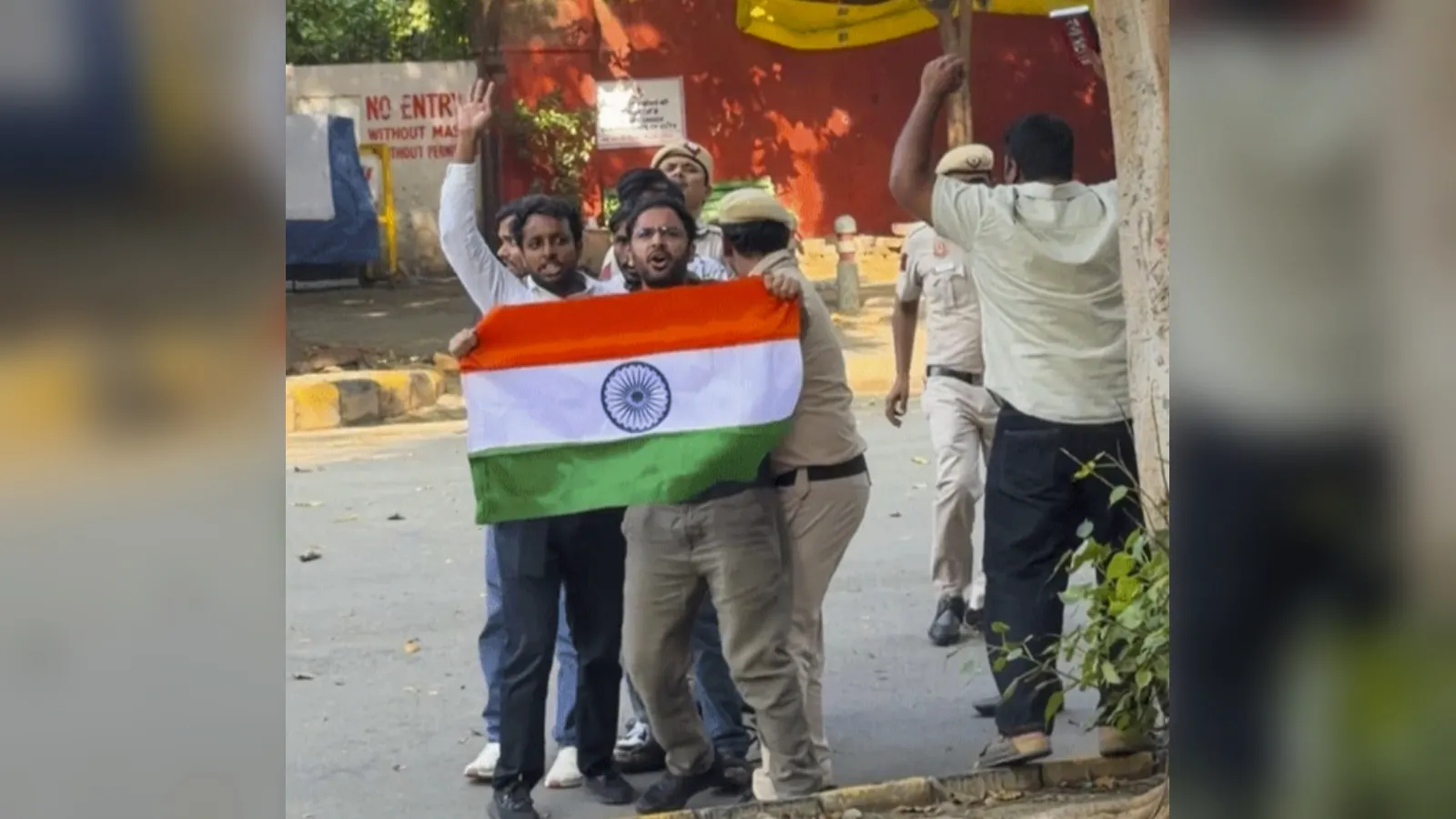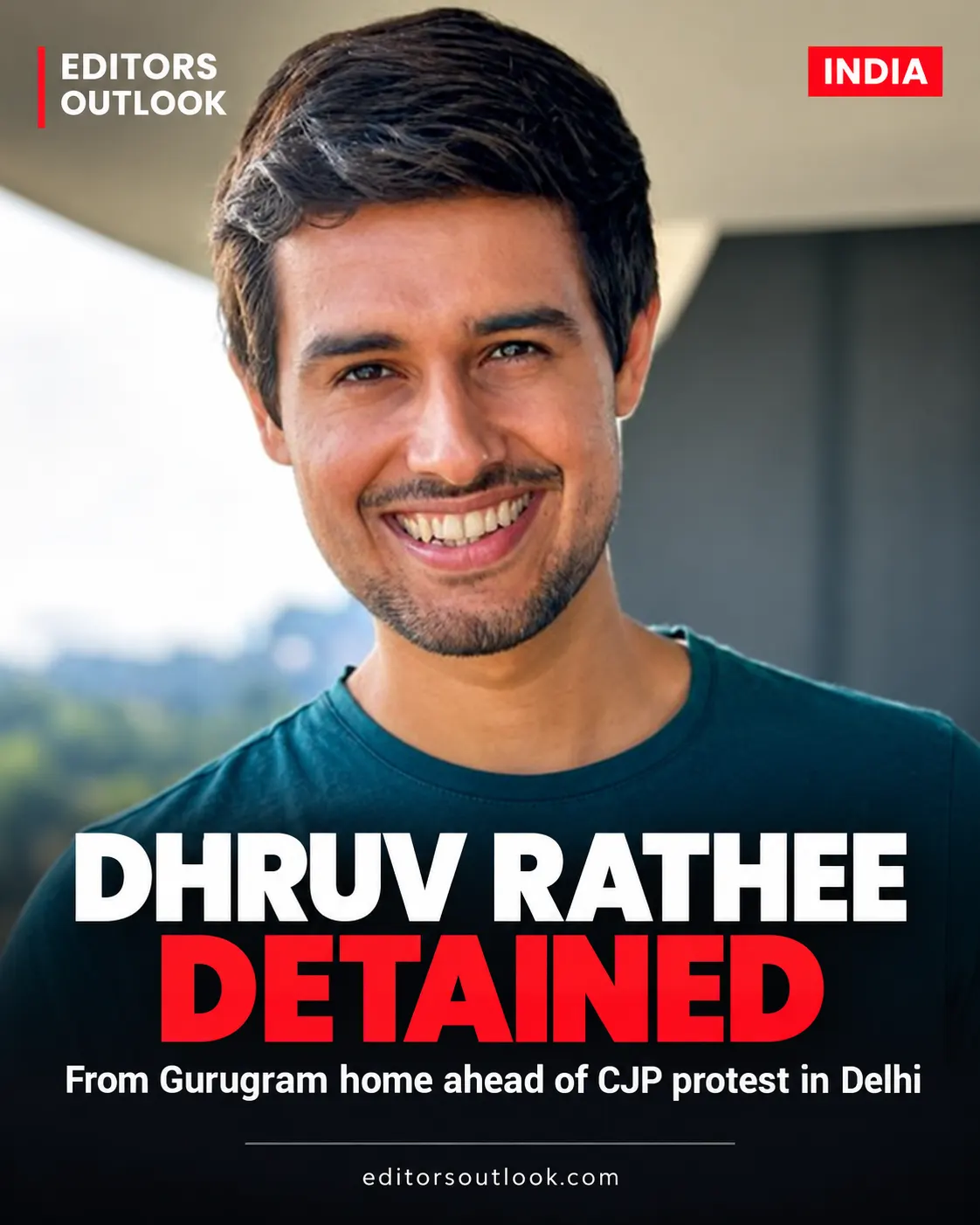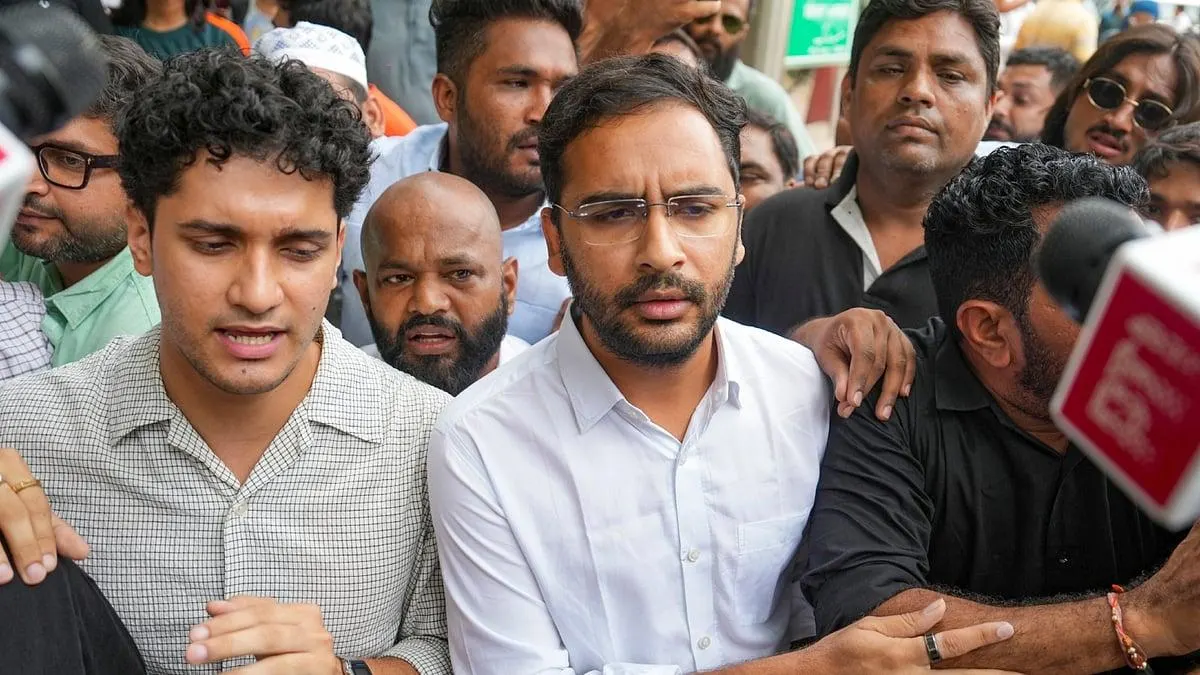
Two senior leaders of the Cockroach Janta Party (CJP), Saurav Das and Ashutosh Ranka, have been sent to Tihar Jail for five days after a Delhi court remanded them to judicial custody in connection with their entry into the Jantar Mantar protest area.
The development marks a significant escalation in the confrontation between CJP and Delhi Police following a series of demonstrations in the capital. Police have accused the two leaders of repeatedly violating restrictions and breaching earlier undertakings to maintain public order, while CJP has questioned the police action and accused authorities of attempting to suppress political dissent.
Saurav Das and Ashutosh Ranka sent to Tihar for five days
Das and Ranka were placed under preventive arrest after entering the Jantar Mantar area on October 13. They were subsequently produced before a Special Executive Magistrate, who ordered five days of judicial custody. The two leaders have now been lodged in Tihar Jail.
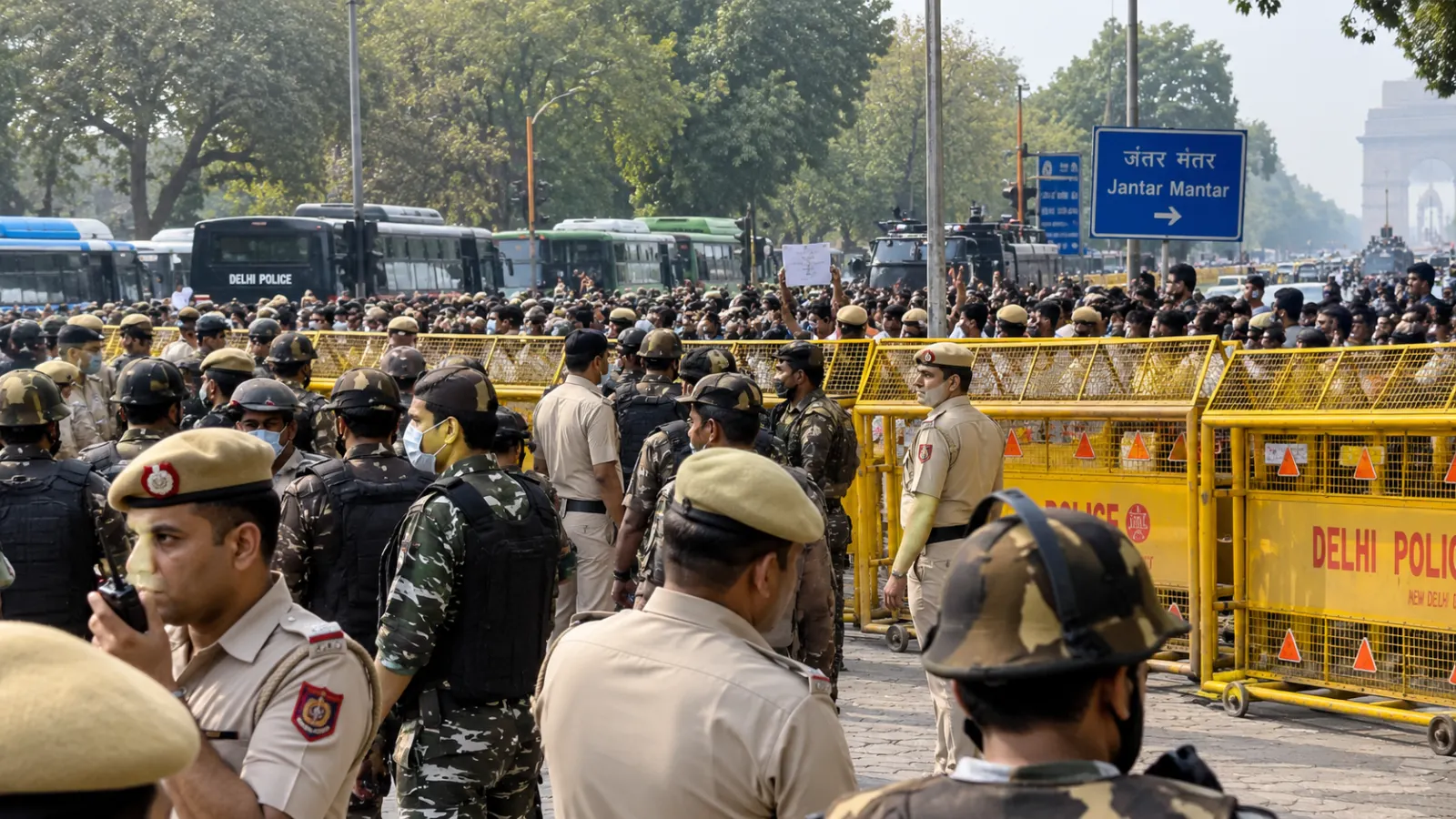
The incident occurred after Jantar Mantar, one of Delhi's best-known protest sites, became subject to restrictions on demonstrations. Police allege that CJP members entered the area without permission, crossed barricades and raised slogans while demanding the resignation of Chief Election Commissioner Gyanesh Kumar.
Delhi Police has characterised the latest episode as part of a pattern of repeated violations rather than an isolated protest. Authorities said Das and Ranka had previously given undertakings to maintain peace after earlier detentions and were accused of violating those conditions by returning to the restricted area.
Police have registered cases involving allegations including trespassing, violation of prohibitory orders, breach of a peace bond and obstruction of public servants while performing their duties. The allegations remain subject to the legal process and do not by themselves establish guilt.
Another CJP leader, Ajinkya Shinde, was also detained during the latest confrontation but was not sent to Tihar alongside Das and Ranka. Reports indicate that he was later released or bound down under preventive provisions.
CJP challenges police version of events
CJP has pushed back against the police account and raised questions about the treatment of its leaders during detention. Party representatives have alleged that those detained were initially prevented from meeting lawyers and that their phones were taken away.
The party's position is that the demonstrations are part of a broader political campaign and that arrests are being used to restrict peaceful dissent. CJP leaders have indicated that the movement will continue despite the detention of senior members.
The protests have centred on demands concerning the Election Commission and Chief Election Commissioner Gyanesh Kumar. CJP has been among the groups questioning recent electoral-roll revisions and demanding Kumar's resignation. The Election Commission and the BJP have rejected allegations that the process was manipulated to favour the ruling party.
The dispute has consequently moved beyond a disagreement over access to a protest site. It now involves competing claims about public-order enforcement, the limits of protest restrictions and the rights of political activists to demonstrate in prominent public spaces.
Five-day custody could intensify the political confrontation
Sending two prominent CJP figures to Tihar Jail is likely to become another rallying point for the organisation and its supporters. CJP has already indicated that arrests will not end its protest campaign, meaning further demonstrations or attempts to reach restricted protest locations remain possible.
At the same time, Delhi Police has signalled that repeated violations of restrictions will lead to additional legal action. That creates the possibility of another confrontation if CJP supporters attempt to assemble at Jantar Mantar or other restricted locations.
The five-day judicial custody order is therefore important beyond the immediate fate of Das and Ranka. It represents a shift from short-term preventive detention to incarceration following a judicial order, raising the stakes for both the movement and authorities attempting to enforce restrictions.
The next significant development will be what happens when the five-day custody period ends. Any request for continued detention, fresh legal proceedings, release of the two leaders or announcement of another major CJP protest could quickly move the confrontation into its next phase.