‘Prime Minister Ambani’: Elon Musk Escalates Starlink Fight in India
Elon Musk has sharply escalated his public attack on Mukesh Ambani over delays to Starlink’s commercial launch in India, sarcastically referring to the Reliance Industries chairman as “Prime Minister Ambani” and accusing powerful business interests of trying to keep SpaceX’s satellite internet service out of the market.
The clash has turned what was once mainly a regulatory dispute into a direct confrontation between two of the world’s richest businessmen. Musk argues that Starlink should be allowed to compete freely in India, while the Indian government says the company is not being singled out and remains subject to the same security and regulatory requirements as other satellite operators.
Musk directly targets Ambani
Musk’s criticism has become increasingly personal in recent days.
In one of his posts, he sarcastically addressed Ambani as “Prime Minister Ambani” while suggesting that Reliance was seeking to protect its dominant position in India’s telecom market.
Musk has also accused supporters of Reliance of making contradictory arguments about Starlink, arguing that they simultaneously claim the service cannot compete with India’s low-cost mobile data while also treating it as a serious competitive threat.
His central argument is that Indian consumers should be allowed to decide which service they prefer.
Musk says Starlink could be especially useful in rural and remote parts of India where conventional broadband infrastructure remains limited.
Starlink still waiting for commercial launch
Starlink has been trying to enter India for several years.
The company has received key approvals, but commercial operations cannot begin until remaining security requirements and spectrum-related processes are completed.
Starlink is not alone.
Reliance Jio’s satellite venture and Bharti-backed Eutelsat OneWeb are also awaiting final steps before launching full satellite broadband services.
The Indian government has repeatedly said all licensed satellite operators are at broadly similar stages of the approval process.
That directly contradicts Musk’s suggestion that Starlink is being deliberately delayed to protect an incumbent operator.
Government rejects monopoly allegation
Telecom Minister Jyotiraditya Scindia has rejected suggestions that India is allowing any single company to control the satellite broadband sector.
The government’s position is that competition will be permitted, but every operator must first satisfy security, licensing and spectrum requirements.
Officials have also said that several companies have already received licences, including Starlink, Reliance Jio and OneWeb.
Amazon’s Project Kuiper has also shown interest in the Indian market.
The government therefore argues that Starlink’s delay should be viewed as part of the regulatory process rather than evidence of political or corporate interference.
Musk says competition would help consumers
Musk has repeatedly framed the dispute as a question of consumer choice.
He argues that Starlink’s entry could bring connectivity to areas where terrestrial networks remain weak and could provide backup communication during natural disasters or infrastructure failures.
India already has some of the lowest mobile-data prices in the world, making the commercial challenge for Starlink significant.
Satellite broadband generally costs more than conventional mobile data because of the infrastructure required to launch and maintain large satellite networks.
Musk has nevertheless said Starlink would need to offer affordable pricing in India.
That means the competition between Starlink and Jio may not simply be about market share. It could also determine whether satellite broadband becomes a mass-market product or remains primarily a service for rural, enterprise and emergency-connectivity users.
Reliance has not publicly answered Musk’s allegations
Reliance has not publicly responded in detail to Musk’s allegations that Ambani is using political influence to delay Starlink.
That absence of a direct response has allowed the dispute to remain largely defined by Musk’s public statements and the government’s rebuttals.
Musk has also shared reports relating to political donations and Reliance-linked entities, further intensifying the political dimension of the confrontation.
However, those reports do not by themselves establish that Reliance influenced Starlink’s regulatory approvals.
No public evidence has been produced showing that Ambani personally directed regulators to delay Starlink.
Why India matters so much to Starlink
India represents one of the world’s largest potential broadband markets.
Hundreds of millions of people already use low-cost mobile internet, but connectivity gaps remain in rural, mountainous and remote regions.
Satellite broadband could address some of those gaps without requiring the same physical infrastructure as fibre networks or mobile towers.
For Starlink, entering India would therefore provide access to a massive potential customer base.
For Reliance Jio, satellite broadband represents an extension of a telecommunications empire that already dominates large parts of India’s mobile and digital ecosystem.
That makes the eventual launch of satellite internet services commercially significant for both companies.
Jio IPO raises the stakes
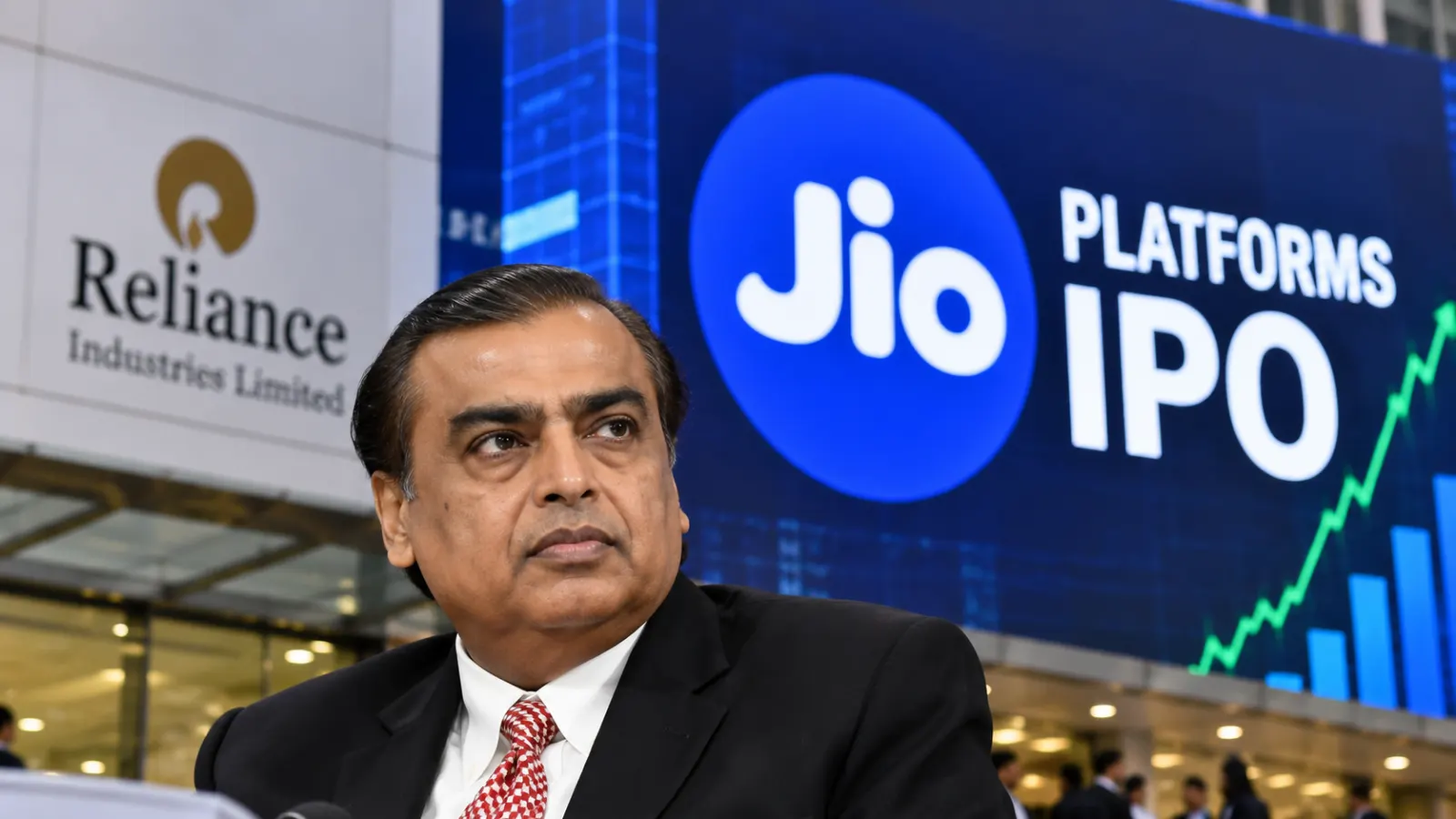
The confrontation is unfolding as Reliance prepares major plans around Jio Platforms, adding another layer of commercial sensitivity.
Any serious new competitor in broadband or satellite connectivity could affect investor expectations about Jio’s long-term market dominance.
At the same time, Starlink still faces a difficult challenge in competing with India’s extremely inexpensive mobile-data ecosystem.
Satellite internet may therefore compete most aggressively in locations where conventional networks perform poorly rather than directly replacing mobile broadband in major cities.
A business dispute becomes political
Musk’s choice to invoke Ambani’s political influence has transformed the dispute.
Instead of simply arguing over spectrum allocation, security clearances or pricing, he is now questioning whether India’s regulatory process gives established business groups an unfair advantage.
The government strongly rejects that allegation.
This creates a delicate situation for New Delhi.
India wants greater foreign investment and advanced communications infrastructure, but regulators also insist that satellite networks meet stringent national-security requirements.
Balancing competition, security and domestic industrial interests will determine how quickly Starlink can begin operating.
What happens next
The immediate question is whether Starlink clears the remaining security and spectrum requirements necessary for commercial operations.
If the company receives final approval, attention will quickly shift to pricing, launch dates and whether Starlink can compete economically with Jio and other Indian telecom operators.
If delays continue, Musk is likely to keep applying public pressure.
For now, the dispute remains a combination of business rivalry, regulatory disagreement and political accusation.
Musk’s “Prime Minister Ambani” remark has ensured that what was already one of India’s most closely watched telecom battles is now far more personal.