Marine Pollution Explained: How Waste, Nutrients and Chemicals Reach the Ocean
The ocean is downstream from almost everything.
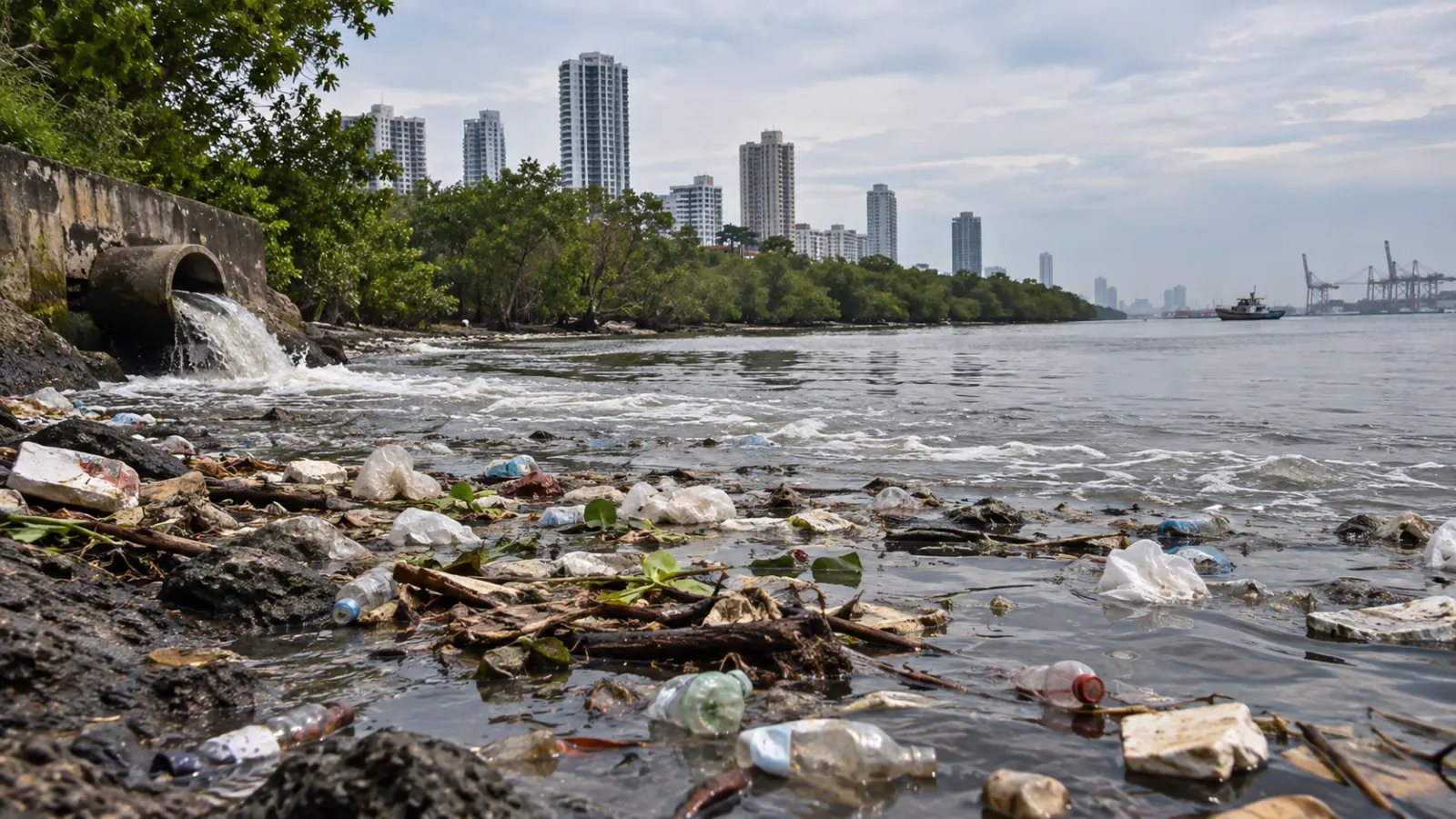
Rain falls on farms, roads, industrial sites and cities. Water moves across soil, through drains and into rivers. Wastewater travels through treatment plants or, where infrastructure is inadequate, enters waterways untreated. Plastic litter can be lifted by wind or swept into storm drains. Fertiliser and eroded soil wash from fields. Chemicals can escape through industrial discharge, leaks, mining, waste disposal or ordinary urban runoff.
Eventually, much of this material reaches estuaries and the sea.
That is why marine pollution is much more than plastic floating on ocean water. It includes physical debris, excess nutrients, untreated wastewater, sediment, petroleum, toxic chemicals and other substances entering marine environments at levels that can damage ecosystems, threaten wildlife, affect human health or interfere with fishing, tourism and other legitimate uses of the coast and ocean.
The scale of the land–sea connection is easy to underestimate. UNEP currently estimates that roughly 80% of marine pollution originates from land-based sources, including urban runoff, wastewater, agriculture, industrial activity, construction and poorly managed waste. Its source-to-sea programme also estimates that more than 11 million metric tonnes of plastic enter the seas each year. (unep.org)
These numbers change how ocean protection should be imagined. When rubbish is visible on a beach, cleaning the beach is useful. But the beach may simply be where material generated kilometres upstream finally accumulated. By then, larger plastic may already have fragmented, nutrients may have altered coastal chemistry and dissolved contaminants may be impossible to retrieve.
The most durable strategy therefore begins before pollution reaches salt water.
Plastic is highly visible, but marine debris has several different sources
Plastic has become the public face of ocean pollution for understandable reasons. It is durable, lightweight, widely used and capable of travelling long distances once it escapes waste systems. Bags, bottles, wrappers, packaging, synthetic ropes and fishing equipment can move through storm drains and rivers or enter the sea directly from fishing, shipping and coastal activity.
For wildlife, large debris creates immediate physical hazards. Animals can become entangled in nets, line, packaging bands and other materials, making it harder to swim, feed or escape predators. Debris can cut into tissue or, in severe cases, cause drowning and death. NOAA reports that marine-debris entanglement has been documented across hundreds of species, including sea turtles, seabirds, fish and marine mammals. (noaa.gov)
Animals may also ingest plastic after mistaking it for food or consuming prey that already contains debris. Large items can block or injure the digestive system, while smaller particles introduce a different environmental problem.
Plastic rarely behaves like food waste or paper and simply disappears. Sunlight, waves and abrasion can make larger plastic objects brittle and break them into progressively smaller fragments. NOAA defines microplastics as plastic pieces or fibres smaller than five millimetres. Some are manufactured at small sizes, while others form when larger products fragment. (noaa.gov)
Fragmentation should not be confused with elimination. The original bottle or rope may no longer be visible, but its material has become more dispersed and much harder to collect. This is one reason cleaning plastic from the open ocean becomes progressively less practical as debris becomes smaller.
Plastic pollution also needs to be separated by source because different sources require different solutions. Consumer packaging escaping municipal waste systems is one problem. Abandoned, lost or discarded fishing gear is another.
Fishing gear is deliberately designed to be strong enough to capture marine animals and survive harsh conditions. When nets, lines, pots or traps are lost, those properties become dangerous. Gear outside a fisher’s control can continue trapping animals—a process known as ghost fishing. NOAA identifies gillnets and pots or traps among the gear types that can continue catching fish, crustaceans, turtles, marine mammals and other wildlife after they have been lost. (noaa.gov)
This cannot be solved simply by asking consumers to use fewer shopping bags. Preventing ghost gear may require gear marking, reporting and retrieval programmes, port reception facilities, improved tracking, incentives to recover lost equipment and changes in fishing practice.
The distinction illustrates a broader principle of pollution policy:
materials that look similar once they reach the ocean may require completely different interventions at their source.
Plastic pollution is therefore simultaneously a product-design problem, a waste-collection problem, an infrastructure problem, a fishing-management problem and, in some places, a consumer-behaviour problem.
Some of the most damaging pollution is difficult to see
A coastline can appear free of litter and still be heavily polluted.
Nitrogen and phosphorus provide one of the clearest examples. These nutrients are essential to life and central to modern food production. In the right quantities they support plant growth on land and biological productivity in water. The problem begins when too much enters aquatic systems.
Agricultural fertiliser, livestock waste and domestic wastewater can deliver excess nutrients into rivers and coastal waters. Increased nutrient availability can stimulate rapid growth of algae and phytoplankton. When large quantities of this organic matter die, bacteria decompose it and consume dissolved oxygen.
This process, known as eutrophication, can create hypoxic conditions in which oxygen becomes too scarce for many marine organisms. Severe cases produce areas commonly called dead zones. Some algal species can also form harmful blooms and produce toxins with consequences for fish, shellfish, marine mammals and people. UNEP identifies agricultural runoff and domestic wastewater as major land-based drivers of coastal eutrophication. (unep.org)
The important environmental lesson is that pollution does not always involve a substance that is inherently poisonous. Nitrogen and phosphorus are indispensable nutrients. Harm comes from concentration, location and timing.
Fertiliser that supports crop production on a field can become an ecological problem when excessive quantities move downstream and alter oxygen conditions in an estuary.
Wastewater adds several pressures simultaneously. Untreated sewage can contain disease-causing microorganisms, organic matter and nutrients, while wastewater from households, hospitals, businesses and industries may also contain chemicals, pharmaceuticals, metals and other contaminants. UNEP notes that inadequately managed wastewater can create both human-health risks and ecological problems, including oxygen depletion and harmful algal growth. (unep.org)
This makes sanitation infrastructure a form of marine conservation.
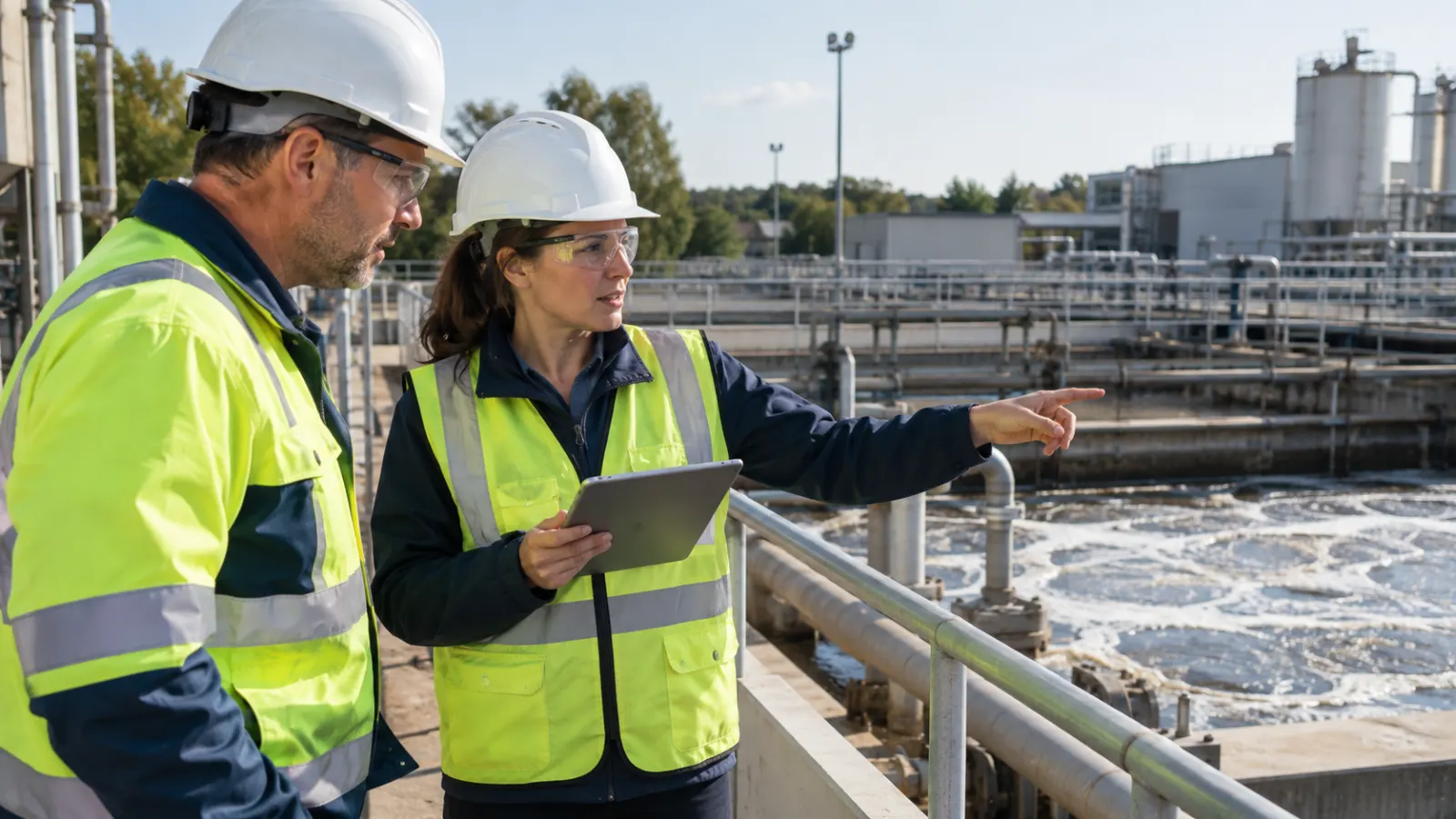
A sewage-treatment plant may be dozens or hundreds of kilometres from the coast, yet the quality of its effluent can influence a river, estuary, coral reef or shellfish-growing area downstream. Rapidly expanding coastal cities can face particularly difficult problems when population growth and tourism outpace sewer connections and treatment capacity.
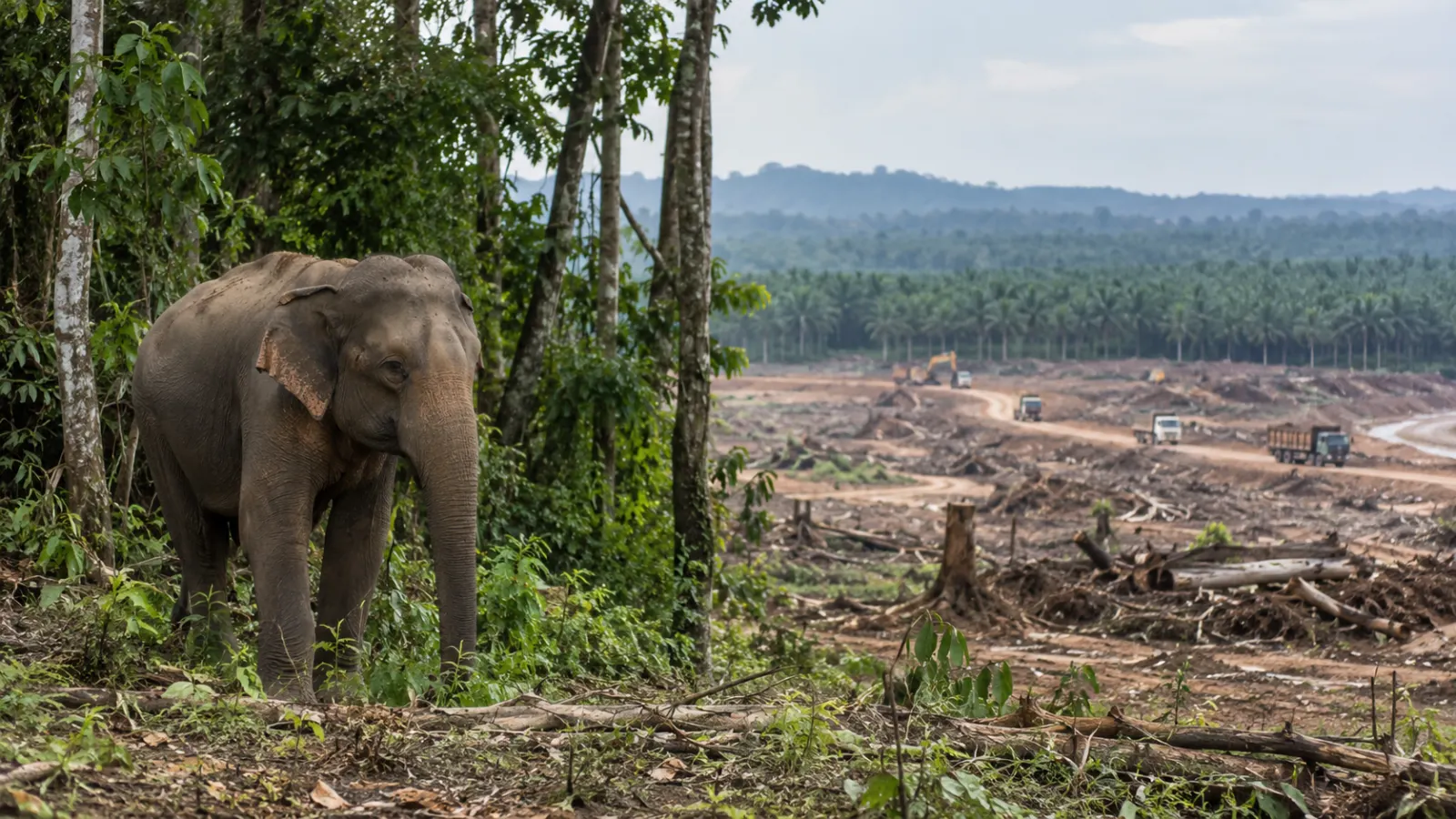
Sediment demonstrates the same importance of context. Soil and sediment are natural components of watersheds, and rivers have always transported them toward the sea. But excessive erosion caused by construction, deforestation, mining or poorly managed agriculture can dramatically increase sediment loads.
Suspended sediment reduces water clarity. Material settling on the seabed can alter habitats or smother organisms such as corals and seagrasses, while particles can also transport attached nutrients and chemicals. UNEP includes excessive sediment flows alongside nutrients, wastewater and plastics among important pressures moving from land into freshwater and marine ecosystems. (unep.org)
The issue is therefore not whether sediment is “natural.”
It is whether human activity has changed its quantity, timing or destination enough to create ecological harm.
Chemical pollution can be even harder to recognise because contamination may be invisible. Marine environments receive metals, pesticides, industrial compounds, petroleum-related chemicals and many other substances. Some degrade relatively quickly. Others persist for long periods and travel considerable distances.
Certain persistent organic pollutants are especially concerning because they resist environmental degradation and can accumulate in fatty tissues of living organisms. UNEP notes that their chemical characteristics can allow widespread environmental transport and bioaccumulation. (unep.org)
For some contaminants, concentrations can also increase through parts of a food web, potentially exposing predators—including humans who consume seafood—to levels higher than those measured in surrounding water.
This is why judging marine chemical pollution only by testing seawater can sometimes be misleading. What matters may also be what has accumulated in sediment, shellfish, fish or higher predators over time.
Oil spills are dramatic, but marine pollution usually works cumulatively
Oil spills attract enormous attention because they turn pollution into an immediate visual disaster. A tanker accident or offshore blowout can spread petroleum over coastlines, wetlands and open water, harming wildlife through physical coating and toxic exposure.
Birds and marine mammals can lose the insulating or waterproofing properties of feathers and fur. Shorelines may remain contaminated, while marshes and mangroves can be particularly difficult to clean without causing additional physical disturbance.
But catastrophic spills are not the only way petroleum reaches marine environments. Smaller leaks, vessel operations, industrial activity, road runoff and chronic discharges can also introduce oil-related pollutants over time.
This matters because marine ecosystems rarely experience one stressor in isolation.
A coral reef may simultaneously face warming, ocean acidification, fishing pressure, sediment, sewage and nutrient enrichment. A seagrass meadow already receiving less light because of sediment may also experience algal growth stimulated by excess nutrients. A fish population reduced by overharvesting may be less resilient when nursery habitat deteriorates.
UNEP describes marine litter and plastic pollution as threat multipliers because their effects can combine with other pressures already acting on ocean ecosystems. (unep.org)
Cumulative impact is therefore often more ecologically meaningful than asking which single pollutant caused all observed damage.
Marine pollution also creates economic consequences. Dirty beaches can reduce tourism. Debris can damage vessels and fishing equipment. Harmful algal blooms can close fisheries and shellfish-growing areas. Polluted seafood can create public-health problems and undermine consumer confidence. Lost fishing gear imposes replacement costs while continuing to capture commercially valuable species.
UNEP currently cites global costs of marine plastic pollution—including impacts on tourism, fisheries, aquaculture and clean-up—in the range of billions of US dollars annually. Its 2026 ocean-pollution overview reports estimated global costs of at least US$9–19 billion for 2018. (unep.org)
The distribution of those costs raises a question that extends beyond environmental science.
The people creating pollution and the people paying for its consequences are often not the same.
Waste discarded in one municipality can wash into another jurisdiction. Nutrient runoff can originate far upstream from the fishing communities affected by coastal hypoxia. Products manufactured and consumed in one country may eventually become debris on another country’s shoreline.
Marine pollution is therefore also a problem of responsibility across geography.
Cleaning the ocean matters, but stopping pollution upstream matters more
Beach clean-ups, harbour clean-ups and river-debris removal are valuable. Removing large plastic objects before they fragment prevents some future microplastic formation and reduces immediate entanglement and ingestion hazards. Recovering ghost gear can stop equipment from continuing to catch marine life.
But clean-up has physical limits.
Once a plastic object breaks into thousands of small fragments dispersed through sediment and water, recovery becomes vastly harder. Dissolved nutrients cannot be picked off a beach. Chemicals incorporated into sediments or biological tissues may persist long after the original discharge. Excess organic matter that has already contributed to oxygen depletion cannot simply be skimmed from the sea.
This is why the dominant logic of marine-pollution control is prevention at source.
For plastic, prevention can involve eliminating unnecessary products, designing materials and packaging for more effective collection and reuse, reducing leakage from waste systems, controlling industrial pellet losses and improving recycling and disposal infrastructure.
For nutrient pollution, strategies may include more precise fertiliser application, better manure management, vegetated buffer areas, wetland protection and improved wastewater treatment. The goal is not to eliminate nitrogen or phosphorus from human activity; agriculture depends on them. It is to keep excessive quantities from escaping into waterways.
For wastewater, investment in sewerage, treatment and maintenance can simultaneously protect public health and downstream ecosystems. For sediment, erosion control, vegetation management and better construction practices can reduce abnormal runoff. For hazardous industrial chemicals, regulation, monitoring, safer chemical design and prevention of releases are more effective than attempting to recover dispersed contaminants later.
Ghost gear requires fishing-specific measures rather than generic waste policy. Oil pollution requires engineering standards, maintenance, vessel and platform regulation and emergency-response capability.
There is no single technology called the solution to marine pollution because marine pollution is not one material moving through one pathway.
The common principle is earlier intervention.
UNEP describes this through a source-to-sea approach, connecting management of land, freshwater, rivers, estuaries, coasts and the open ocean instead of treating them as independent systems. (unep.org)
That approach changes the meaning of ocean conservation.
Protecting marine environments is not only about marine protected areas, fishing vessels or what happens beyond the coastline. It also involves agricultural policy, sewage systems, chemical regulation, urban drainage, construction standards, waste collection and river-basin management.
A storm drain can therefore be part of an ocean-management system.
So can a farm.
So can a wastewater plant.
So can a construction site fifty kilometres inland.
Water connects them.
The ocean begins upstream
Marine pollution is often illustrated with an image of the final consequence: a turtle tangled in plastic, an oil-covered shoreline, green water during an algal bloom or a beach covered in rubbish.
Those images are valuable because they make environmental damage visible.
They can also make the problem appear to begin at the place where the damage is finally seen.
Usually it began earlier.
The plastic entered a waste stream that failed to contain it.
The excess nitrogen was applied or discharged upstream.
The sewage passed through inadequate infrastructure.
The soil eroded from disturbed land.
The fishing gear was lost without recovery.
The industrial chemical escaped before reaching the estuary.
By the time these substances reach open water, society is often trying to manage a pollutant in the place where it is most dispersed and hardest to control.
That is the central logic of marine pollution.
The ocean is the receiving end of decisions made throughout the entire watershed and economy.
Cleaning beaches will remain necessary. Oil-spill response will remain necessary. Removing abandoned fishing gear will remain necessary. Damaged ecosystems will still need restoration.
But the long-term measure of success is not how efficient societies become at removing pollution from the sea.
It is how much less pollution reaches the sea in the first place.
The most important ocean-protection infrastructure may therefore sometimes look nothing like an ocean project.
It may be a functioning sewage plant, a well-managed landfill, a vegetated riverbank, a stormwater system, a fertiliser plan or a fishing port capable of receiving damaged gear.
The ocean begins at the drain because pollution prevention begins long before the coastline.