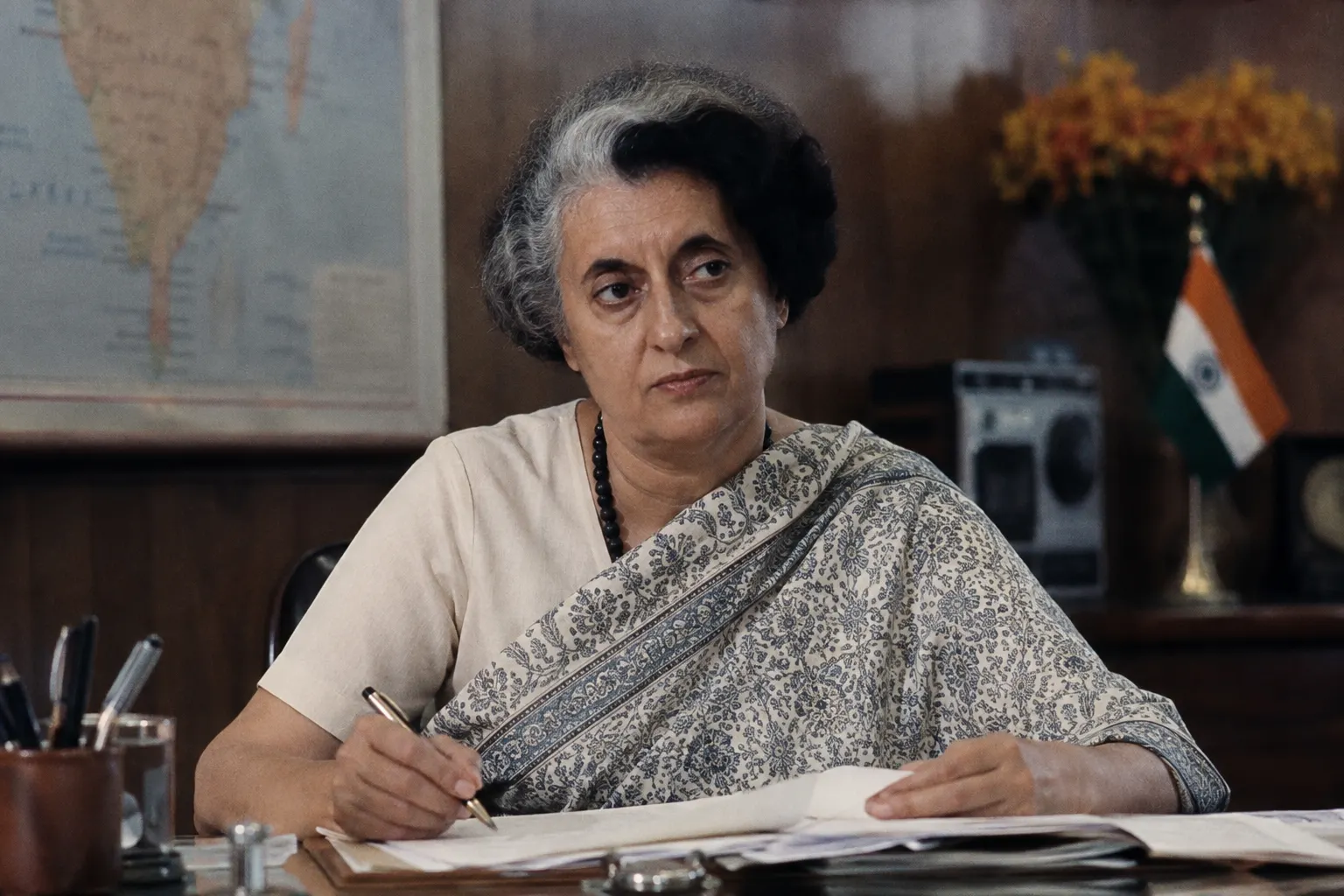
Few Indian political careers contain as much power, achievement, fear, loyalty, violence and contradiction as that of Indira Gandhi.
She led India during the 1971 war that resulted in the creation of Bangladesh. She presided over major changes in the political economy, including bank nationalisation and a sharper language of redistributive populism. She weakened the power of old Congress bosses and transformed the party around her leadership. She became one of the most internationally recognisable political figures of the postcolonial world.
She also imposed the Emergency of 1975–77, during which civil liberties were curtailed, opposition leaders were detained, press freedom was constrained and coercive state programmes became associated with serious abuses.
After voters removed her from office in 1977, she returned to power in 1980. Her final years were dominated by escalating conflict in Punjab. In June 1984, the Indian Army entered the Golden Temple complex during Operation Blue Star. Four months later, Indira Gandhi was assassinated by two of her Sikh bodyguards.
A serious biography therefore has to resist two temptations.
The first is hagiography: the idea of Indira Gandhi as the uniquely strong leader who always acted in the national interest.
The second is reduction: the idea that her entire career can be explained through the Emergency.
Both erase history.
Growing up inside the national movement
Indira Priyadarshini Nehru was born on 19 November 1917 in Allahabad, the daughter of Jawaharlal Nehru and Kamala Nehru.
Politics entered her life before she could choose it.
Her father spent long periods in British prisons. Her grandfather Motilal Nehru was a leading nationalist. Anand Bhavan, the family home, became a centre of political activity.
This childhood gave Indira extraordinary access to national leaders but also instability, parental absence and illness within the family.
She studied at several institutions in India and Europe, including Visva-Bharati and Somerville College, Oxford, though illness and wartime conditions disrupted a conventional academic path.
In 1942 she married Feroze Gandhi, a political activist and later parliamentarian. They had two sons, Rajiv and Sanjay.
The marriage was politically and personally significant, but Indira’s later public identity became increasingly independent of her husband’s career.
From prime minister’s daughter to political actor
After independence in 1947, Jawaharlal Nehru became India’s first prime minister.
Indira occupied an unusual position close to the centre of government. She assisted her father socially and politically, travelled with him and became familiar with statecraft and international diplomacy.
Critics later portrayed her rise as dynastic inheritance, and family background unquestionably provided access unavailable to ordinary political workers.
But access did not automatically produce authority.
Indira gradually acquired organisational experience within the Congress and served as party president in 1959–60. After Nehru’s death in 1964, Prime Minister Lal Bahadur Shastri appointed her Minister of Information and Broadcasting.
When Shastri died unexpectedly in January 1966, Congress leaders selected Indira Gandhi as prime minister.
Some senior party figures expected her to be politically manageable.
They misjudged her.
The early premiership and economic crisis
Indira inherited a difficult situation.
India faced food shortages, inflationary pressure, foreign-exchange constraints and the consequences of wars in 1962 and 1965. Dependence on imported food, particularly under United States food-assistance programmes, exposed the vulnerability of the economy.
In 1966, the government devalued the rupee, a decision that attracted substantial criticism.
The early years weakened the image of effortless Nehru-family continuity.
Indira had to establish authority inside a Congress still dominated by powerful regional and organisational leaders.
That internal struggle ultimately reshaped Indian politics.
The Congress split
By 1969, conflict between Indira Gandhi and the Congress “Syndicate”—the group of powerful party organisers and regional leaders—became open.
The dispute involved ideology, patronage, presidential politics and control over the party.
Indira increasingly adopted a populist posture, presenting herself as the leader willing to confront entrenched privilege.
The result was a split in the Congress.
This changed the nature of the party.
The pre-1969 Congress had been a broad federal organisation containing powerful regional leaders and factions. Under Indira, authority became more centralised around the prime minister and her personal political mandate.
That centralisation would later help her dominate elections.
It would also weaken institutional checks inside the party.
Bank nationalisation
One of the defining measures of 1969 was the nationalisation of 14 major commercial banks.
Supporters argued that private banking had concentrated credit in urban and industrial interests and that public ownership could direct finance toward agriculture, small industry and development priorities.
Critics questioned efficiency, political interference and the expansion of state control.
The decision was economically important, but its political meaning was equally significant.
It allowed Indira to position herself as an opponent of concentrated economic power.
“Garibi Hatao”—remove poverty—became the language through which she built a direct relationship with voters, often bypassing traditional party intermediaries.
The 1971 election
The 1971 general election gave Indira Gandhi a commanding mandate.
Her campaign presented national politics as a contest between a leader promising social transformation and an opposition coalition whose principal unifying message was to remove her.
The result strengthened her position dramatically.
Within months, however, India confronted an international crisis that would define her global reputation.
East Pakistan, refugees and war
In 1971, political conflict in Pakistan escalated after the Pakistani military launched a crackdown in East Pakistan following a constitutional crisis over election results and the transfer of power.
Millions of refugees entered India.
The humanitarian, economic and security pressures were enormous.
Indira’s government supported the Bengali liberation movement while also conducting an international diplomatic campaign.
War between India and Pakistan began formally in December 1971.
Indian forces and the Mukti Bahini rapidly defeated Pakistani forces in the east. On 16 December, Pakistani troops in Dhaka surrendered.
Bangladesh emerged as an independent state.
For Indira Gandhi, the outcome represented the peak of political authority.
The victory transformed India’s strategic position and produced an extraordinary surge in her domestic popularity.
Yet the war’s history belongs not to one leader alone. The Bangladesh liberation struggle, mass atrocities in East Pakistan, refugee movements, military planning, diplomacy and the actions of millions of Bangladeshis were central to the outcome.
Leader-centred history should not erase them.
Simla and the limits of victory
In 1972, Indira Gandhi and Pakistan’s Zulfikar Ali Bhutto signed the Simla Agreement.
The agreement sought to stabilise relations after war and committed the two countries to resolving differences through bilateral means.
Critics later argued that India failed to convert its overwhelming military advantage into a permanent settlement of the Kashmir dispute.
Supporters counter that diplomacy after victory involves political constraints and that a punitive settlement might have generated future instability.
The debate shows the problem of judging diplomacy retrospectively.
Military victory creates leverage, not unlimited control over history.
From dominance to crisis
The years after 1971 were less favourable.
Inflation rose. The global oil shock damaged the economy. Unemployment and political dissatisfaction increased. Opposition movements intensified.
Jayaprakash Narayan emerged as the moral centre of a broad movement demanding political reform and challenging Congress rule.
At the same time, a legal case threatened Indira’s personal position.
On 12 June 1975, the Allahabad High Court found her guilty of electoral malpractice in relation to her 1971 election and invalidated the result, while allowing time for appeal.
The political crisis escalated rapidly.
The Emergency
Late on 25 June 1975, President Fakhruddin Ali Ahmed proclaimed an Emergency under Article 352 on the ground of internal disturbance, acting on the advice of Indira Gandhi’s government.
The consequences were profound.
Opposition leaders were arrested.
Preventive detention expanded.
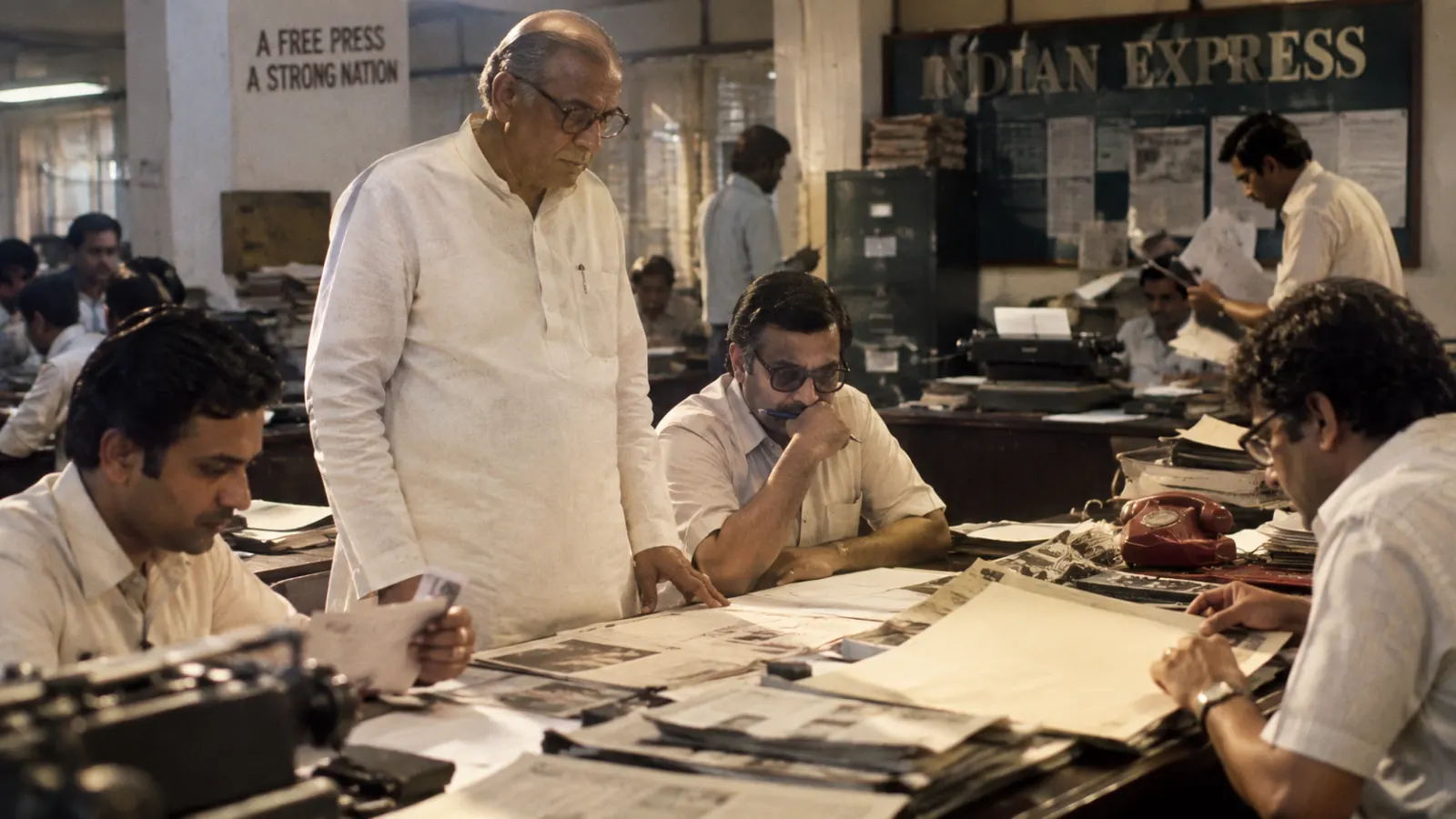
Press censorship constrained public criticism.
Constitutional and legal changes strengthened executive authority.
A presidential order of 27 June 1975 suspended the right to move courts for enforcement of several fundamental rights during the Emergency.
The Shah Commission, appointed after the Emergency, documented extensive abuses of administrative power and examined the circumstances in which the Emergency had been imposed and implemented.
The period remains one of the central tests of India’s democratic institutions.
Why the Emergency cannot be reduced to “discipline”
Supporters of the Emergency sometimes point to administrative efficiency, reduced strikes, punctuality or economic stabilisation.
These claims formed part of the government’s own justification.
But a democracy cannot evaluate emergency rule solely by whether trains run on time or officials appear more disciplined.
The constitutional issue is whether citizens can criticise the government, organise opposition, seek judicial protection and change rulers without coercion.
On those measures, the Emergency represented a severe contraction of democratic freedom.
This is why it remains qualitatively different from an ordinary period of strong government.
Sanjay Gandhi and coercive governance
Indira Gandhi’s younger son Sanjay became increasingly influential during the Emergency despite holding no elected government office of comparable formal authority.
Programmes associated with his political network included aggressive slum-clearance drives and population-control campaigns.
Coercive sterilisation became one of the most notorious aspects of the period, particularly in parts of northern India.
The precise lines of responsibility varied across agencies and states, but the broader institutional failure is clear: weak accountability and pressure for targets created conditions in which citizens could be subjected to coercive state action.
This is one reason personalisation of power matters.
Informal authority can be harder to control than formal authority because it operates without clear constitutional responsibility.
The 42nd Amendment
The Constitution (Forty-second Amendment) Act, 1976 made far-reaching changes to the constitutional structure.
Some provisions, including the addition of the words “socialist” and “secular” to the Preamble, remain familiar today.
Other changes sought to strengthen Parliament and the executive relative to the judiciary and altered institutional balances in ways later partly reversed by the Forty-fourth Amendment after the Janata government came to power.
The episode demonstrates that democratic erosion does not always occur outside legal forms.
Law itself can be used to weaken constraints on power.
The election she did not have to call
One of the most consequential decisions of Indira Gandhi’s career came in 1977, when she called a general election.
The opposition reorganised as the Janata Party.
Voters in much of northern India punished Congress heavily for the Emergency and its abuses. Indira lost her own seat.
The result is central to India’s democratic history.
It showed that even after a period of severe repression, electoral competition could remove a dominant leader peacefully.
It also showed that Indira Gandhi, whatever her motives, accepted the election result and left office.
That does not erase the Emergency.
It explains why the democratic system survived it.
The return
The Janata coalition struggled with internal conflict and leadership rivalry.
Indira Gandhi rebuilt her political position and returned to power in the 1980 election.
Her comeback demonstrated both her personal resilience and the weakness of a fragmented opposition.
But the political environment of her second premiership was different.
Regional tensions, insurgencies and the increasing importance of identity politics created new challenges.
The most dangerous developed in Punjab.
Punjab and Operation Blue Star
By the early 1980s, Punjab faced escalating militancy, political rivalry and violence.
Jarnail Singh Bhindranwale and armed supporters established themselves in the Golden Temple complex in Amritsar, Sikhism’s holiest shrine.
In June 1984, Indira Gandhi authorised Operation Blue Star, in which the Indian Army entered the complex to remove militants.
The operation killed Bhindranwale and other militants but also soldiers, pilgrims and civilians. The Akal Takht suffered severe damage.
For many Sikhs, the use of the army inside the Golden Temple created profound anger and trauma.
The decision remains one of the most controversial of Indira Gandhi’s career.
The government faced a real security crisis. The method chosen to confront it carried enormous religious and political consequences.
Both facts must be held together.
Assassination and the violence that followed
On 31 October 1984, Indira Gandhi was assassinated by two of her Sikh bodyguards.
Her death was followed by horrific anti-Sikh violence, especially in Delhi, in which thousands were killed.
Those killings were not an inevitable expression of grief.
They were acts of collective violence involving serious failures of state protection and, according to numerous later inquiries and court proceedings, allegations of political complicity in particular cases.
A biography of Indira must distinguish her assassination from the mass violence that followed. One cannot be treated as justification for the other.
The transformation of the Congress
Indira Gandhi’s influence on the Congress may be as historically important as any individual policy.
Under her leadership, the party became increasingly centralised and dependent on the authority of the national leader.
Regional bosses weakened.
Internal party institutions mattered less.
Direct appeals to voters became more important.
This model proved electorally powerful but institutionally costly.
It contributed to the broader personalisation of Indian politics and reinforced dynastic succession, especially after Sanjay’s death in 1980 and Rajiv Gandhi’s entry into politics.
The economic legacy
Indira’s economic record cannot be captured by a simple label such as socialist or statist.
Her governments expanded public-sector control and used nationalisation as an instrument of policy. The state remained central to licensing, investment and development planning.
At the same time, policies shifted across periods, and the late 1970s and early 1980s saw adjustments that do not fit a single ideological formula.
Bank nationalisation had long-term effects on branch expansion and the reach of organised banking, while the wider command-and-control system also produced inefficiencies and opportunities for political allocation.
The economic legacy is therefore mixed because the development state itself was mixed.
The politics of strength
Indira Gandhi became associated with the image of the “strong leader.”
That image drew power from real events: the Congress split, the 1971 war, confrontation with old elites and her return after defeat.
But strength is an ambiguous political virtue.
A leader can be strong against external threats and strong against institutional restraints.
The first may be necessary.
The second can damage democracy.
Indira’s career demonstrates why political systems need to distinguish decisiveness from concentration of power.
Why Indira Gandhi still matters
Indira Gandhi shaped the office of prime minister, the Congress party, the Indian state and public expectations of political leadership.
Her career forces modern readers to confront uncomfortable combinations.
A leader can win a major war and weaken democratic freedoms.
A government can expand welfare-oriented state intervention while concentrating political authority.
A politician can suffer a historic electoral rejection and later return through the same democratic process.
A security crisis can be genuine while the chosen response produces lasting social trauma.
This is why Indira Gandhi remains impossible to classify through admiration or condemnation alone.
Her historical importance lies precisely in the collision between capability and overreach.
The strongest assessment of her is not that she saved Indian democracy or destroyed it.
It is that under her leadership, Indian democracy proved both dangerously vulnerable to personal power and unexpectedly capable of correcting itself through elections.
That contradiction is one of the central stories of modern India.