How to Keep Your Eyes Healthy: Prevention, Eye Exams and Warning Signs
Healthy eyesight is easy to take for granted because many serious eye problems do not begin with dramatic symptoms.
A person may be able to read, drive and work normally while changes are already developing in the retina or optic nerve. Glaucoma can progress without obvious early warning. Diabetic retinopathy can begin before someone notices any change in vision. Other conditions may become easier to treat when discovered before significant sight has been lost.
This is why eye health cannot be judged only by asking:
“Can I see clearly?”
Clear vision is reassuring, but it is only one part of the picture.
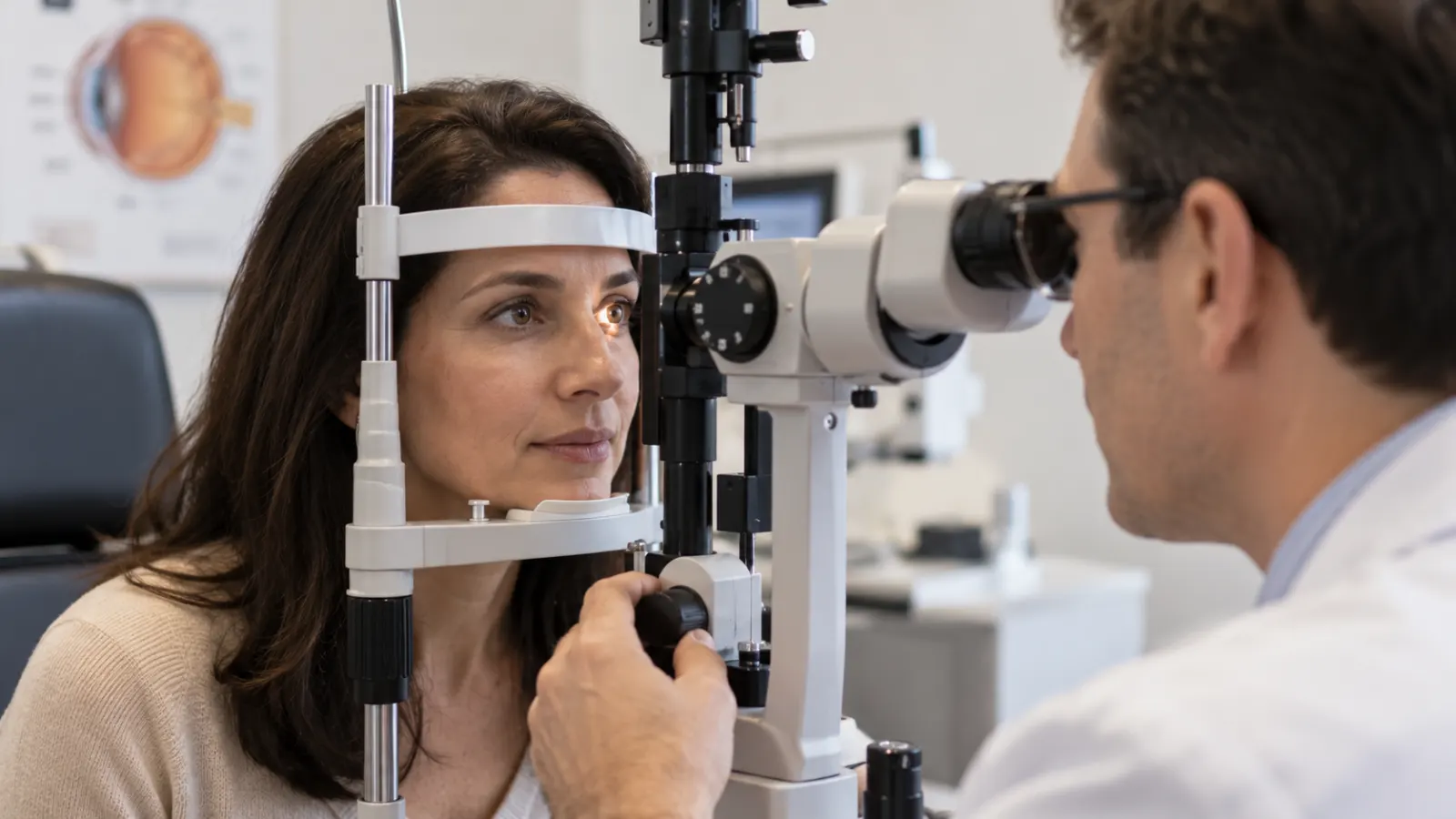
The National Eye Institute notes that many eye diseases have no early symptoms or warning signs and describes a comprehensive dilated eye examination as one of the best ways to find disease before vision loss occurs. During such an examination, an eye-care professional can assess visual acuity, peripheral vision, eye movements, pupil response and eye pressure and, after dilating the pupils when appropriate, examine structures including the retina and optic nerve more fully.
That does not mean every person needs the same examination on the same schedule.
Age matters.
Diabetes matters.
High blood pressure can matter.
Family history matters.
Previous eye disease, contact-lens use and individual symptoms matter.
Good eye care therefore combines two ideas: reduce avoidable damage where possible and detect disease early enough for treatment to protect vision.
Eye examinations matter because several important diseases can remain quiet
Glaucoma is one of the clearest examples of why symptoms alone are unreliable.
Glaucoma is not one single disease but a group of conditions that damage the optic nerve. In the common open-angle form, changes can develop gradually, and a person may not recognise early peripheral-vision loss. Vision already lost to glaucoma generally cannot simply be restored, so treatment is aimed largely at slowing or preventing further damage. NEI therefore emphasises examination rather than waiting for symptoms and recommends more frequent comprehensive dilated exams for people at increased risk.
Diabetic retinopathy creates a similar problem in a different part of the eye.
The retina is the light-sensitive tissue lining the back of the eye. Chronically elevated blood glucose can damage its small blood vessels, causing leakage, closure of vessels and, in more advanced disease, abnormal new vessel growth. Yet early diabetic retinopathy may produce no symptoms at all. NEI recommends that people with diabetes receive regular comprehensive dilated eye examinations because discovering retinal changes early creates opportunities to protect vision before severe damage develops.
The exact timing should still reflect the person's situation. CDC advises people newly diagnosed with type 2 diabetes to have an eye examination for diabetic retinopathy promptly, while people with type 1 diabetes generally begin screening within several years of diagnosis. Once retinopathy is found, examination frequency may increase.
The broader lesson is more important than memorising one schedule:
having no visual complaint does not always mean there is nothing to detect.
This principle becomes increasingly important with age. Presbyopia—the gradual reduction in the eye's ability to focus on near objects—is a common age-related change and explains why many people eventually need reading glasses. Cataracts also become more common with age and can often be treated effectively with surgery. But conditions such as glaucoma and age-related macular degeneration should not be dismissed as harmless consequences of getting older.
Needing reading glasses and losing vision from retinal or optic-nerve disease are fundamentally different processes.
Family history adds another layer. NEI specifically advises people to know whether close relatives have experienced conditions such as glaucoma or age-related macular degeneration, because inherited susceptibility can alter an individual's risk and therefore the appropriate threshold for examination.
Children need preventive vision care too.
A child who has always seen poorly may not recognise that their vision is abnormal. Problems can show up indirectly through difficulty seeing the board, persistent squinting, headaches, reduced participation in sport or schoolwork, or moving unusually close to what they are trying to see. CDC notes that childhood vision assessment is important partly because conditions such as amblyopia need to be identified early enough for treatment to be most effective.
Myopia, or nearsightedness, is also increasingly important in childhood. Genetics contribute, but environmental factors matter as well. NEI reports that children who spend more time outdoors are less likely to develop myopia, although researchers are still working to understand exactly why. That association should not be turned into the simplistic claim that screens alone “cause” myopia. Near work, outdoor time, genetics and eye growth interact in more complicated ways.
Protecting the eyes also means protecting the rest of the body
The eyes are not separate from general health.
The retina contains a dense network of small blood vessels. The optic nerve is metabolically active tissue. Blood pressure, glucose control, circulation, inflammation and smoking can therefore influence eye disease as part of broader systemic health.
Diabetes is the clearest example.
Controlling blood glucose does not eliminate every possibility of diabetic eye disease, but good diabetes management helps reduce or delay complications. CDC also emphasises blood-pressure and cholesterol management as part of preventing or slowing diabetic retinopathy.
High blood pressure itself can affect the eye's circulation and is one reason people with hypertension may need more careful eye follow-up. NEI specifically lists diabetes and high blood pressure among health conditions that increase the risk of some eye diseases and advises discussing appropriate examination frequency with a clinician.
Smoking deserves particular attention because its effects extend well beyond the lungs.
Smoking is associated with increased risks of eye diseases including cataract and age-related macular degeneration. Quitting smoking is therefore an eye-health intervention for the same reason it is a cardiovascular and respiratory intervention: it reduces exposure to a well-established systemic risk factor.
Nutrition matters too, but it is easy for sensible dietary advice to turn into a marketplace of poorly justified “vision supplements.”
NEI encourages an overall healthy diet that includes foods such as dark leafy vegetables and fish. The strongest evidence for high-dose eye supplements, however, applies to specific stages of age-related macular degeneration, not to every healthy adult who wants better eyesight. The AREDS and AREDS2 trials found that particular high-dose formulations can slow progression from intermediate to advanced AMD, but they do not prevent AMD from beginning and are not general-purpose eye-health pills.
That distinction matters because more supplements are not automatically more protective.
The AREDS2 formulations contain high doses of particular nutrients and can interact with medications. Older formulations containing beta-carotene are also inappropriate for current or former smokers because of an increased lung-cancer risk. Anyone considering disease-specific supplementation should therefore discuss it with an eye-care or healthcare professional rather than assuming that a product labelled “for vision” is universally beneficial.
For most people without a specific diagnosis, the more defensible approach is less glamorous: eat well, remain physically active, manage chronic disease, avoid smoking and obtain appropriate eye care.
Everyday protection matters: sunlight, injuries, contact lenses and screens
Many threats to vision are preventable because the hazardous exposure is known before the injury occurs.
Ultraviolet light is one example.
NEI recommends sunglasses that block 99 to 100% of both UVA and UVB radiation, including when conditions are cloudy. The important feature is the UV protection, not how dark the lens appears or how expensive the frame is. Sunglasses labelled UV400 or providing 99–100% UVA/UVB protection are the relevant standard, and wraparound designs or hats can reduce additional exposure in bright environments.
Eye protection is even more immediate when physical hazards are involved.
Grinding metal, using power tools, construction work, mowing, handling chemicals and some sports can expose the eye to high-speed particles, blunt trauma or chemical injury. Proper safety glasses, goggles or sport-specific protective equipment can prevent injuries that diet, supplements and routine eye examinations cannot undo afterward. NEI therefore includes protective eyewear among the basic habits for preserving vision.
Contact lenses require another kind of prevention.
Millions of people wear lenses safely, but contact lenses are medical devices placed directly on the surface of the eye. Poor hygiene can increase the risk of microbial keratitis, a potentially serious corneal infection.
CDC's current contact-lens guidance is straightforward: wash and thoroughly dry your hands before handling lenses, follow the correct cleaning and replacement schedule, use fresh disinfecting solution rather than water, and avoid sleeping in lenses unless an eye-care professional has specifically directed that your type may be worn overnight.
Water deserves special emphasis.
Tap water, swimming pools, lakes and hot tubs can contain microorganisms that should not become trapped between a contact lens and the cornea. CDC advises removing contact lenses before showering, swimming or entering a hot tub. One particularly dangerous organism, Acanthamoeba, can cause a rare but severe keratitis that is difficult to treat and can threaten sight.
A contact-lens wearer who develops significant redness, increasing pain, light sensitivity, discharge or sudden blurred vision should remove the lenses and seek prompt professional assessment rather than assuming the problem is ordinary irritation. CDC specifically lists these among warning signs of microbial keratitis.
Screens create a different kind of eye problem.
Long periods of computer, phone or tablet use commonly produce tired, dry or uncomfortable eyes. One reason is that people tend to blink less frequently while concentrating on screens, allowing the tear film to evaporate more quickly. NEI lists prolonged screen viewing among factors that can contribute to dry eye.
This discomfort should not be confused with diseases such as glaucoma or retinal detachment.
NEI recommends the familiar 20-20-20 approach for prolonged near work: approximately every 20 minutes, look at something around 20 feet away for about 20 seconds. The purpose is primarily to give the focusing system and eyes a break and reduce strain during sustained close work.
The practical response to ordinary digital eyestrain may also include blinking deliberately, adjusting screen position and glare, taking breaks and treating dry-eye symptoms appropriately when needed.
But persistent pain, major vision changes or symptoms that do not behave like ordinary screen fatigue deserve evaluation rather than endless attempts to solve them with screen settings.
Know which eye symptoms should not wait
Eye health advice often focuses on prevention, but recognising an emergency can be equally important.
A retinal detachment can begin suddenly with a new shower of floaters, flashes of light or the appearance of a dark shadow or “curtain” across part of the visual field. NEI describes retinal detachment as a medical emergency because delaying treatment can increase the risk of permanent vision loss.
Sudden major loss or distortion of vision should therefore never be dismissed as ordinary fatigue.
Severe eye pain also deserves attention, particularly when accompanied by redness, blurred vision, nausea or other abrupt symptoms. Acute angle-closure glaucoma, for example, can produce intense eye pain, a red eye, blurry vision and nausea and requires immediate assessment.
CDC similarly advises prompt evaluation for new decreased vision, eye pain, double vision, flashes, floaters and other significant visual changes.
Trauma and chemical injuries are another category in which speed matters.
If a chemical enters the eye, immediate irrigation and urgent medical guidance may be necessary. Penetrating injuries, high-speed foreign bodies and substantial blunt trauma can damage structures that may not be visible externally.
New double vision can also have causes outside the eye itself, including neurological problems. When double vision appears suddenly—especially with weakness, facial asymmetry, severe headache, speech problems or other neurological symptoms—the concern extends beyond routine eye care and may require emergency assessment.
The guiding distinction is simple:
tired or mildly dry eyes after prolonged close work usually behave differently from sudden, severe or rapidly changing vision symptoms.
When vision changes abruptly, the cost of waiting can be much greater than the inconvenience of being assessed.
Healthy eyes are protected by both prevention and early detection
There is no single food, exercise or supplement that guarantees lifelong eyesight.
Good eye health is a system.
Part of that system reduces avoidable injury: wear properly rated sunglasses, use protective eyewear when hazards are present, handle contact lenses hygienically and avoid smoking.
Another part protects the blood vessels and tissues on which vision depends: manage diabetes, blood pressure and other relevant health conditions with appropriate medical care.
A third part manages everyday comfort: take sensible breaks from prolonged near work and address persistent dry-eye symptoms rather than assuming all eye discomfort has the same cause.
And perhaps most importantly, appropriate professional examinations help detect conditions that may otherwise remain hidden until damage becomes more advanced.
The correct examination schedule is not identical for everyone.
NEI's current guidance recommends discussing frequency according to individual risk. People over 60, those with certain glaucoma risk factors and people with conditions such as diabetes or high blood pressure may need regular dilated examinations more frequently than younger low-risk adults.
Children also need age-appropriate vision screening and assessment because they may not recognise their own visual limitations, while adults should know their family eye-health history and report it accurately to their eye-care professional.
All of these measures point toward the same principle.
Seeing clearly today is not the entire definition of having healthy eyes.
Eye health means protecting the structures that make sight possible, reducing avoidable injury and detecting disease while there is still an opportunity to preserve vision.
That is why prevention and early detection belong together.
Sunglasses cannot detect glaucoma.
An eye examination cannot prevent a workshop injury.
A healthy diet cannot make poor contact-lens hygiene safe.
Screen breaks cannot treat retinal disease.
Each intervention solves a different problem.
The strongest strategy is therefore not to search for one “best” eye-health habit.
It is to understand which risks can be reduced, which diseases require screening and which symptoms demand immediate attention.
Clear vision today is reassuring.
Protecting the ability to see tomorrow requires looking beyond the vision chart.
Medical note
This article provides general health information and is not a substitute for individual medical or eye-care advice. Sudden vision loss, a new curtain or shadow across vision, a sudden increase in flashes or floaters, severe eye pain, significant trauma, chemical injury or new neurological symptoms require prompt professional assessment.