How Societies Become Diverse: Migration, Borders, Trade, Conflict and Cultural Change
How societies become diverse cannot be explained by immigration alone. People crossing international borders are an important source of demographic and cultural change, but societies can also become diverse through trade, internal migration, conquest, empire, slavery, forced displacement, shifting borders, religious conversion, intermarriage and the incorporation of territories that were already culturally different.
This matters because different histories create different relationships to belonging. A recently arrived worker, a refugee, an Indigenous community, the descendant of enslaved people and a linguistic minority whose ancestors lived in the same territory before modern borders were created may all be described as members of a “diverse society.” Their histories, rights and connections to the state are nevertheless very different.
Modern migration is substantial. United Nations estimates put the number of international migrants at about 304 million in 2024, or approximately 3.7% of the world's population. That number has nearly doubled from around 154 million in 1990. Yet even those figures capture only one part of how cultural diversity develops.
The more accurate picture is historical and layered. Societies become diverse when people move, borders move, political systems expand, identities change and different populations interact over time.
What Makes a Society Diverse?
A diverse society contains people who differ across one or more important social or cultural dimensions. These can include ethnicity, language, religion, ancestry, nationality, migration history, regional identity and cultural traditions.
Diversity is multidimensional. A country can be highly diverse in one respect and relatively homogeneous in another. India, for example, contains substantial linguistic, religious and regional diversity while maintaining a common national political framework. Another country may have significant ethnic diversity but one overwhelmingly dominant public language.
It is therefore misleading to describe diversity as though it were a single number. Diversity depends on which differences are being measured, how groups are defined and whether those differences remain socially important.
The Main Ways Societies Become Diverse
There is no single pathway. Most diverse societies are the result of several processes operating at different moments in history.
| Process | How it creates diversity |
|---|---|
| International migration | People settle in another country |
| Internal migration | Regional groups mix within the same country |
| Trade and commerce | Merchants and workers create long-term settlements |
| Refugee movement | Forced displacement creates new communities |
| Empire and conquest | Different populations enter one political system |
| Slavery and forced labour | People are relocated involuntarily |
| Changing borders | Groups become minorities without moving |
| State expansion or federation | Different territories enter one state |
| Religious conversion | New identities develop within existing populations |
| Intermarriage | Cultural boundaries become mixed across generations |
| Education and labour markets | Cities attract people from many regions |
| Global communication | Transnational identities remain easier to sustain |
These processes often reinforce one another. A labour-migration corridor may later produce family reunification, permanent settlement, citizenship, intermarriage and a second generation whose identity differs from that of the original migrants.
International Migration Directly Changes Populations
International migration is the most obvious route to greater diversity because it physically relocates people across political borders.
People migrate for many reasons, including employment, education, family reunification, marriage, safety and better economic opportunities. Others move because environmental pressures, political instability or conflict make remaining difficult.
The United Nations estimated approximately 304 million international migrants worldwide in 2024, representing about 3.7% of the global population. Although the absolute number is historically large, the figure also shows that the overwhelming majority of people still live in the country where they were born.
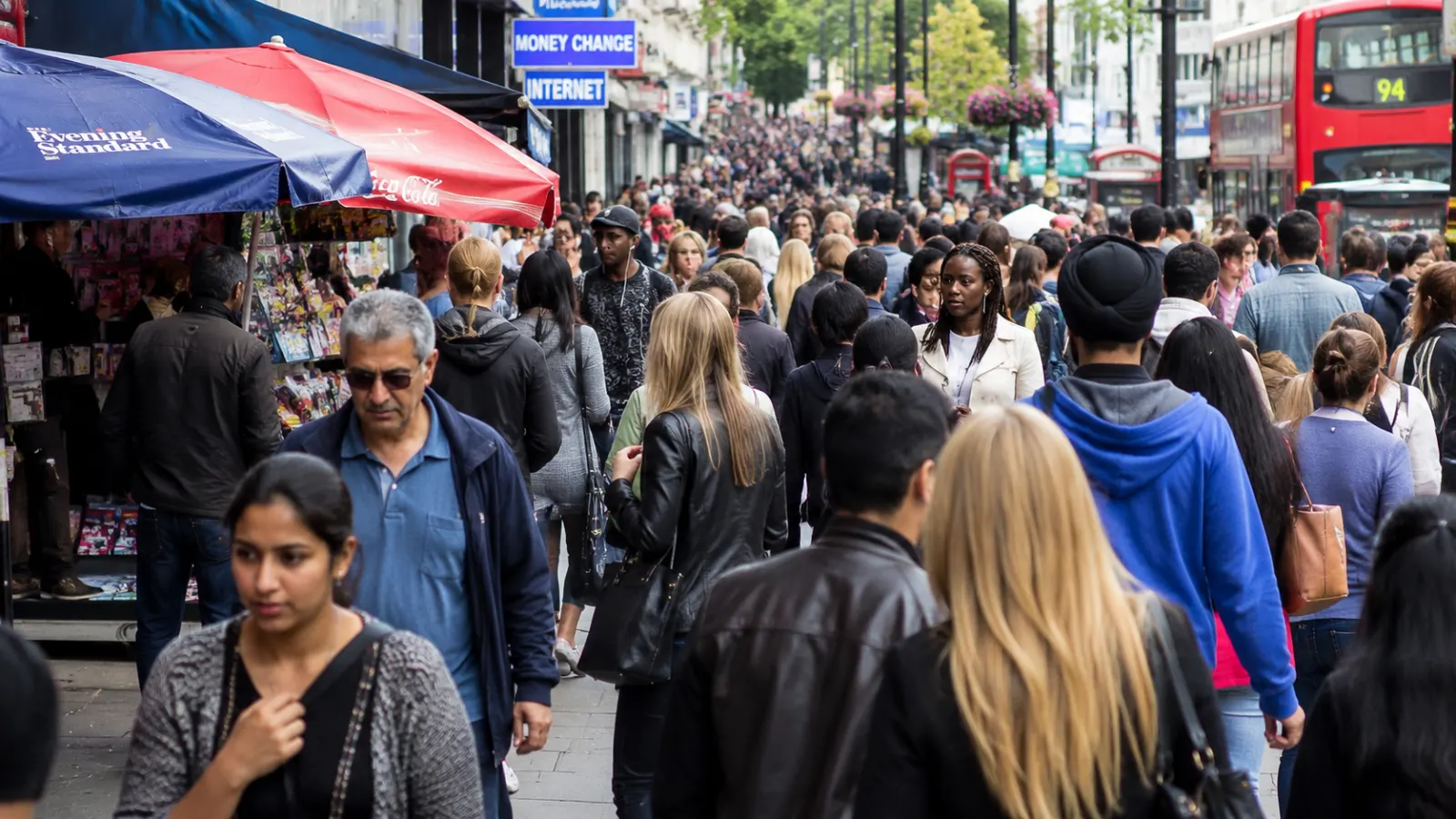
Migration nevertheless becomes culturally significant because migrants are not distributed evenly. Particular countries, cities and labour markets attract much larger shares of migrants than others.
Migration Follows Networks Rather Than Happening Randomly
People usually do not choose destinations from a blank map.
Existing family and community networks influence where later migrants go. Earlier migrants can provide information about employment, temporary accommodation, bureaucracy and everyday life. Once a migration corridor becomes established, it may continue for decades.
Language also matters. Former colonial relationships can create migration pathways because countries share languages, education systems, administrative links or established diaspora communities. Geographic proximity, recruitment programmes and labour demand further shape destinations.
This helps explain why particular cultural communities often become concentrated in certain cities rather than spreading evenly across an entire country.
Family Reunification Can Turn Temporary Migration Into Permanent Settlement
Some migration initially begins with individual workers.
If the destination country permits family reunification, spouses and children may later join them. What began as temporary labour mobility can gradually become permanent community settlement.
As families establish themselves, they create institutions such as places of worship, grocery stores, cultural associations, schools and businesses. Children enter the education system and may grow up speaking both a family language and the dominant public language.
This process shows why the long-term cultural impact of migration cannot be understood simply by counting arrivals in one year.
Internal Migration Can Transform Diversity Without Crossing a Border
People do not have to cross an international border to alter the cultural composition of a community.
Large countries can contain major differences in language, religion, ethnicity and regional culture. When people move from rural areas or smaller regions into metropolitan centres, these differences become concentrated in shared urban spaces.
A worker moving from one linguistic region of India to Mumbai, Delhi or Bengaluru may experience significant cultural adjustment despite never leaving the country. Similar processes occur when people from distant regions move to national capitals, industrial zones or university cities.
Internal mobility is particularly important because its scale can be much larger than international migration. It can rapidly turn cities into meeting points for populations that historically lived far apart.
Cities Magnify Cultural Diversity
Cities concentrate jobs, universities, hospitals, transport, government institutions and business opportunities. That makes them powerful magnets for both domestic and international migration.
Urban areas also provide the population density needed to sustain specialised cultural institutions. A relatively small linguistic or religious community may be unable to support particular shops, schools, restaurants or places of worship when dispersed across a country but can do so when concentrated in a city.
UNESCO has repeatedly highlighted cities as important spaces where migration, cultural diversity and social inclusion intersect. Urban institutions therefore play a major role in determining whether demographic diversity develops into meaningful participation and belonging.
Cities do not merely receive diversity. They can intensify it.
Labour Markets Create Migration Corridors
Economic structure strongly affects who moves where.
Agriculture may attract seasonal workers. Construction booms can bring large numbers of workers into rapidly developing regions. Ageing societies may recruit healthcare workers. Technology hubs draw engineers and skilled professionals, while universities attract students who may later remain as workers or entrepreneurs.
Employers and governments sometimes actively recruit labour internationally when domestic supply cannot meet demand.
Economic geography therefore becomes cultural geography. When industries expand, populations move toward them. When industries decline, populations may move away again.
Education Creates Cultural Contact
Universities and schools are another important pathway.
International students may spend several years in a destination country, build social networks, find employment and eventually settle permanently. Domestic universities similarly draw young adults from regions that might otherwise have relatively little contact.
Educational institutions therefore create both temporary and lasting forms of diversity.
They also influence how people understand difference. A university containing students from dozens of countries can create cultural interaction even when most students eventually return home.
Refugees and Forced Displacement Create Different Migration Histories
Not all migration is voluntary.
Refugees flee persecution, conflict, violence or other threats. Their settlement experience can differ fundamentally from that of someone who planned an international career move.
The scale remains enormous. UNHCR reported that 117.8 million people were forcibly displaced worldwide at the end of 2025, including 41.6 million refugees and tens of millions of internally displaced people.
Some refugees return when conditions improve. Others remain in host countries for years or decades. Children may be born and educated there, gradually transforming what was initially considered a temporary humanitarian situation into a permanent social reality.
The history matters because refugee communities may have arrived with limited preparation, interrupted education, family separation or traumatic experiences that ordinary economic-migration models do not capture.
Slavery Created Diversity Through Coercion
Some of the world's most consequential population movements were not migration choices at all.
Millions of people were forcibly transported through slavery and other coercive labour systems. The transatlantic slave trade fundamentally reshaped the populations of the Americas and created enduring African diasporas whose descendants became integral parts of societies from Brazil and the Caribbean to the United States.
Indentured labour systems also moved large populations across imperial territories after slavery was formally abolished in many regions. Indian workers, for example, were transported under indenture to parts of the Caribbean, Africa, Fiji and other colonial territories.
These communities became permanent populations.
Calling this history simply “migration” can conceal the violence that produced it. Diversity created through coercion carries a different historical meaning from diversity created through voluntary settlement.
Trade Routes Created Diverse Societies Long Before Modern Immigration Systems
Long-distance cultural contact is much older than passports and modern states.
Ports and trading centres have historically attracted merchants, sailors, craftsmen, religious communities and workers from distant regions. Some visitors returned home, while others stayed, married locally and created permanent communities.
Over generations, a commercial connection could therefore become a settlement network.
Indian Ocean trading networks connected East Africa, Arabia, South Asia and Southeast Asia for centuries. Mediterranean ports similarly brought together populations from Europe, North Africa and the Middle East.
Trade moved more than goods. It moved languages, religions, technologies, food traditions and people.
Empires Create Diversity by Bringing Different Populations Under One Political System
A state can become diverse even when nobody crosses what would today be considered an international border.
Empires historically expanded by incorporating territories whose populations already had different languages, religions and political traditions. Once incorporated, these groups became subjects of the same political system.
Empires also moved people internally. Soldiers, administrators, merchants, labourers and religious communities travelled through imperial territories.
The resulting diversity could persist long after the empire itself disappeared.
This is one reason many contemporary states contain populations whose histories cannot be accurately divided into a simple “native majority” and “immigrant minority.”
Colonialism Reshaped Modern Cultural Geography
Colonialism changed societies in both colonised territories and colonial powers.
European empires moved administrators, settlers and soldiers outward while simultaneously creating economic, linguistic and political relationships that later shaped migration back toward former imperial centres.
Postcolonial migration from South Asia and the Caribbean to Britain, from North and West Africa to France and from former colonies to other European states did not emerge randomly. Earlier imperial relationships had already created languages, institutions and migration channels.
Research on European migration continues to highlight how colonial history affects later migration patterns and the social boundaries through which immigrant populations are understood.
Modern diversity therefore often contains the afterlife of empire.
Borders Can Move Even When People Stay Still
One of the clearest challenges to the idea that diversity always comes from migration is that political borders themselves change.
A population may remain in the same village for generations and suddenly find itself living inside a new state because of war, partition, decolonisation or state dissolution.
This can transform a local majority into a national minority overnight.
When empires collapse or countries divide, linguistic and ethnic populations rarely line up perfectly with the new boundaries. Some communities end up on the “wrong” side of the border from the perspective of nationalist projects.
They did not immigrate into the country. The country changed around them.
Partition Can Create Both Minorities and Migration
Partition can combine moving borders with mass population movement.
New borders may place communities inside states where they are now minorities, while violence or fear pushes others across newly created frontiers.
The 1947 partition of British India provides a dramatic example. Political division produced enormous population exchanges involving Hindus, Muslims and Sikhs, while also leaving substantial minority populations in the successor states.
The diversity created by partition therefore contains both migration and territorial redefinition.
State Expansion Can Create Diversity Without Immigration
States can also become more diverse through annexation, federation or political union.
When several territories enter one political system, their populations become fellow citizens even if they remain geographically where they have always lived.
Federal political arrangements are often partly responses to this kind of territorial diversity. Regional governments can allow populations with distinctive languages, histories or identities to exercise some autonomy while remaining inside a larger state.
This form of diversity differs politically from immigrant diversity because communities may understand themselves as historic peoples of a territory rather than newcomers seeking inclusion.
Indigenous Diversity Predates Modern States
Some cultural diversity is older than the state itself.
Indigenous peoples may have occupied territories long before existing national borders were established. Their claims therefore cannot be adequately understood through immigration policy.
They may seek recognition involving:
-
land;
-
language;
-
cultural preservation;
-
treaty rights;
-
self-government;
-
political representation.
Describing all minorities as immigrant communities can erase this distinction.
A society can be diverse because the state was created across territories that already contained several peoples.
Religious Conversion Can Increase Diversity Without Population Movement
Cultural identities can change even when people remain physically in the same place.
Religious conversion, missionary activity, reform movements and the creation of new religious traditions can produce religious diversity within populations that otherwise share ancestry or language.
Religious identity can also become stronger or weaker across generations.
This demonstrates a broader point: diversity changes because identities move as well as people.
Demographic categories are not permanently fixed.
Intermarriage Blurs Cultural Boundaries
When people from different backgrounds form families, social categories become more complicated.
Children may inherit several:
-
languages;
-
religions;
-
cuisines;
-
family histories;
-
national identities.
Some choose one identity more strongly. Others combine them.
Over several generations, intermarriage can create hybrid communities that no longer fit cleanly into the original categories.
This is why diversity should not be imagined as a collection of completely separate groups. Cultural boundaries are continually being crossed and reconstructed.
Second and Third Generations Change Diversity Too
Migration does not stop affecting society when the original migrant generation ages.
Children and grandchildren may reinterpret their ancestry differently. Some heritage languages weaken while religious identity remains strong. Others revive traditions their parents had stopped practising.
The second generation may also combine ancestral identity with strong identification with the country of birth.
Modern research on “super-diversity” highlights how multiple waves of immigration can generate differences not only in ethnicity and nationality but also in legal status, education, socioeconomic position, generation and migration pathway.
A diverse society therefore becomes internally more complicated over time.
Return Migration Changes Both Origin and Destination Societies
Migration is not always one-way.
People may spend years abroad and later return to their country or region of origin. They can bring back professional skills, languages, spouses, children, consumption patterns and ideas acquired elsewhere.
Someone who returns may therefore be culturally different from someone who never left.
Return migration demonstrates that migration changes sending societies as well as receiving ones.
Cultural exchange can become circular.
Digital Communication Makes Transnational Identity Easier to Sustain
Earlier migrants often experienced substantial separation from their places of origin because communication was expensive and slow.
Digital technology has changed that relationship dramatically.
A migrant can now follow television, music, politics and social media from the country of origin every day while video-calling relatives and participating in online diaspora networks.
Physical migration therefore no longer requires the same degree of cultural separation.
This makes transnational identity easier to sustain across generations and complicates older assumptions that migration naturally leads to a steady decline in homeland connections.
Citizenship Changes the Political Meaning of Diversity
People who share a neighbourhood may have very different relationships with the state.
One person may be a temporary worker. Another may hold permanent residency. Another may be a citizen whose grandparents migrated several decades earlier.
These statuses affect rights including:
-
voting;
-
permanent residence;
-
employment;
-
public office;
-
family reunification;
-
protection from deportation.
When migrants naturalise, demographic diversity becomes more deeply embedded in political institutions.
Former newcomers become voters, candidates, civil servants and policymakers. Over time, their histories increasingly become part of the national political story rather than being understood only as immigration stories.
Government Policy Can Increase or Restrict Diversity
Migration patterns are shaped by law.
Governments decide who can enter through policies involving:
-
employment visas;
-
student visas;
-
family reunification;
-
asylum;
-
refugee resettlement;
-
permanent residency;
-
citizenship.
Policy can therefore accelerate, redirect or restrict demographic change.
A country recruiting large numbers of overseas workers may become more culturally diverse rapidly. Another state may permit temporary labour migration while making permanent settlement extremely difficult, producing diversity in the workforce without equivalent diversity in citizenship.
The design of migration policy influences not just how many people arrive but whether communities become permanent.
Census Categories Can Make Diversity More Visible
Societies do not merely change demographically. They also change how they classify themselves.
Census categories for race, ethnicity, nationality, language and religion can be revised as social understanding changes.
A population may therefore appear more diverse partly because institutions begin recognising identities that were previously ignored, merged into broader categories or considered politically irrelevant.
People's own identification can also change. A mixed-heritage population may increasingly choose identities that earlier censuses did not provide as options.
Statistics are therefore not purely neutral reflections of social groups. They also depend on how governments define and measure those groups.
Diversity Is Not the Same as Multiculturalism
A society can be diverse without adopting multicultural policies.
Diversity is descriptive. It tells us that people with different backgrounds are present.
Multiculturalism asks a political question: how should institutions respond to those differences?
A diverse society might encourage strong assimilation into one dominant culture. Another might recognise minority languages, accommodate some religious practices and deliberately include several histories in public institutions.
This distinction should link directly to the Editors Outlook article What Is Multiculturalism?
Diversity Is Not the Same as Integration Either
A neighbourhood may contain residents from twenty different cultural backgrounds and still have very little interaction between them.
Children may attend separate schools. Adults may work in different parts of the labour market. Communities may consume different media and have few friendships across group boundaries.
That society is demographically diverse.
It is not necessarily socially integrated.
IOM guidance on social cohesion emphasises that migrant inclusion involves not merely physical presence but interaction between migrants, institutions and local communities. Programmes designed around meaningful social mixing similarly draw on evidence that appropriately structured intergroup contact can build trust and reduce prejudice.
This distinction is crucial: diversity describes difference; integration describes relationships across difference.
Segregation Can Be Voluntary or Imposed
Cultural concentration is not automatically evidence of failed integration.
People often choose to live near relatives, familiar businesses, places of worship and speakers of the same language. These networks can provide childcare, employment information and practical support for newcomers.
But residential concentration can also arise from:
-
discrimination;
-
unequal income;
-
housing restrictions;
-
exclusion from particular neighbourhoods;
-
unequal access to transport.
A map showing cultural clusters cannot tell us why those clusters exist.
The underlying causes matter.
Does Diversity Increase Creativity?
Cultural diversity can bring different experiences, languages, artistic traditions and forms of knowledge into contact.
This can generate new:
-
food traditions;
-
music;
-
literature;
-
business networks;
-
ideas;
-
forms of artistic expression.
Historical research also suggests that long-term interaction among ancestrally diverse populations can contribute to the development of new cultural practices rather than simply preserving separate cultures unchanged.
But creativity is a possibility rather than an automatic result of diversity. People need institutions and opportunities that allow meaningful exchange.
Does Diversity Cause Social Conflict?
Diversity itself should not be treated as another word for conflict.
Conflict may become organised around ethnic, linguistic or religious identities when groups compete over:
-
political power;
-
land;
-
employment;
-
public resources;
-
security.
Political leaders may also deliberately make identities more salient for strategic reasons.
But diverse societies can also remain peaceful and cohesive.
Research on diversity and social cohesion is complex because social trust depends on history, institutions, inequality and the way group boundaries are constructed, not simply on the number of ethnic groups present.
The more useful question is therefore not “Does diversity cause conflict?” but “Under what institutional conditions does difference become cooperation, inequality or political competition?”
Institutions Determine What Diversity Becomes
Once a society is diverse, schools, courts, employers, housing systems, police, political parties and governments strongly influence the result.
Two equally diverse cities can have very different experiences depending on whether people have:
-
equal access to education;
-
fair employment opportunities;
-
protection against discrimination;
-
political representation;
-
shared public spaces;
-
functioning public services.
This is where a demographic question becomes a political one.
How did society become diverse? is a question about history and population change.
How should a diverse society operate? leads toward multiculturalism, integration, pluralism and anti-discrimination policy.
Diversity Can Develop Slowly or Very Quickly
Not every society changes at the same speed.
A port city may accumulate cultural diversity gradually over several centuries as traders, migrants and families settle.
A smaller city can change much faster if a new industry recruits thousands of workers or a refugee crisis produces a large population movement in only a few years.
The speed of demographic change matters because institutions need time to adjust.
Schools may need additional language capacity. Housing demand can increase. Public services may require interpreters. Political representation may lag behind population change.
Rapid diversity and long-established diversity can therefore generate different policy challenges.
Economic Change Can Rearrange Diversity Within a Country
Population geography follows economic opportunity.
A manufacturing centre may attract workers from several regions during periods of industrial expansion. If factories later close, those workers or their children may move toward new economic centres.
Technology hubs, logistics corridors, tourist areas and university towns can develop different cultural profiles because their economies demand different kinds of labour.
A country's diversity therefore does not simply increase or decrease. It can also move geographically.
Globalisation Accelerates Cultural Contact
Movement of people is only one dimension of globalisation.
Trade, tourism, digital media, multinational business and international education allow cultural practices to cross borders even when populations do not move permanently.
Fashion, cuisine, entertainment and language increasingly circulate through global networks.
This can make societies more culturally varied without necessarily making them much more demographically diverse.
It also demonstrates why cultural diversity and population diversity are related but not identical.
Why the History of Diversity Matters
Consider four citizens living in the same country.
One belongs to an Indigenous people whose ancestors predate the state. Another belongs to a linguistic minority incorporated when borders changed. A third is descended from people transported through slavery. A fourth migrated voluntarily ten years ago.
Calling all four simply “minorities” hides profound differences.
Their historical relationships to the state may generate different claims involving:
-
land;
-
language;
-
citizenship;
-
political representation;
-
cultural recognition;
-
restitution;
-
autonomy.
Understanding how diversity developed therefore matters politically.
History helps explain why apparently similar communities may make very different demands.
Common Myths About How Societies Become Diverse
Myth 1: Diversity Is Mainly a Modern Result of Immigration
Modern migration is important, but trade, conquest, empire, slavery, shifting borders and religious change created diverse societies long before modern immigration systems existed.
Myth 2: Every Minority Group Is Descended From Immigrants
Many minorities are Indigenous populations, historic regional communities or peoples incorporated through territorial change.
Myth 3: Diversity Requires People to Move
Borders and states can change around populations that remain physically in place.
Myth 4: Migration Happens Randomly
Migration commonly follows family networks, labour demand, geography, language and historical relationships.
Myth 5: Diverse Cities Are Automatically Integrated
Several groups can live in one city while remaining socially or economically separated.
Myth 6: Cultural Groups Stay the Same After Migration
Later generations adapt, intermarry and develop new identities.
Myth 7: Diversity Automatically Produces Conflict
Political institutions, inequality and historical relationships strongly influence whether diversity becomes cooperation or conflict.
Myth 8: Diversity Automatically Produces Creativity and Economic Success
Cultural exchange can produce important benefits, but outcomes depend on opportunities, institutions and social interaction.
Frequently Asked Questions
How do societies become diverse?
Societies become diverse through international and internal migration, trade, refugee movement, conquest, empire, slavery, changing borders, territorial incorporation, religious change, intermarriage and cultural exchange.
Does immigration cause cultural diversity?
Yes. Immigration is an important source of cultural diversity because migrants bring different languages, religions, customs and experiences. But it is not the only source.
What causes cultural diversity in a society?
Cultural diversity can result from population movement, historical conquest, trade, colonialism, forced labour, changing political borders, religious conversion, intermarriage and interaction among communities.
How does migration increase diversity?
Migration relocates people from different cultural backgrounds into shared communities. Permanent settlement, family reunification and later generations can make those differences lasting parts of the receiving society.
How many international migrants are there?
UN DESA estimated approximately 304 million international migrants worldwide in 2024, representing around 3.7% of the global population.
Does internal migration create diversity?
Yes. Movement between culturally different regions of the same country can make cities and other destinations more linguistically, religiously or ethnically diverse.
Why are cities more diverse?
Cities attract migrants because they concentrate employment, education, transport and public services. Large populations can also sustain cultural institutions serving smaller communities.
How does trade create cultural diversity?
Trading centres attract merchants, workers and travellers. When some settle permanently and form families or institutions, commercial contact becomes long-term cultural exchange.
How did empires create diverse societies?
Empires incorporated territories containing different peoples and also moved soldiers, administrators, merchants and workers around imperial territories.
How did colonialism affect diversity?
Colonialism moved people and created political, linguistic and economic connections that later shaped migration between former colonies and colonial powers.
How did slavery contribute to cultural diversity?
Slavery forcibly relocated millions of people and created permanent diaspora populations. Their descendants became enduring parts of the societies into which their ancestors were transported.
How do refugees affect cultural diversity?
Refugees can form new communities in host countries when displacement becomes long-term. Their children may later become permanent members of the receiving society.
Can borders create diversity?
Yes. When political boundaries change, existing communities can become minorities within new states without physically moving.
Is all diversity caused by migration?
No. Diversity can also result from Indigenous populations, territorial expansion, shifting borders, religious conversion and changing social identities.
What is inherited diversity?
Inherited diversity refers to cultural differences rooted in communities that have existed within a territory for generations or centuries rather than arriving through recent immigration.
How does intermarriage affect diversity?
Intermarriage combines cultural traditions and creates people with multiple backgrounds, gradually making rigid group boundaries less clear.
How does religion create diversity?
Religious differences can arise through migration, conversion, missionary activity, reform movements and intermarriage.
Does citizenship affect diversity?
Citizenship changes the political significance of diversity because permanent residents who naturalise gain fuller political membership and can participate more directly in elections and public institutions.
Does globalisation increase cultural diversity?
Globalisation can increase cultural contact through migration, trade, tourism, education and digital communication. It can spread cultural practices even when permanent migration is limited.
What is the difference between diversity and multiculturalism?
Diversity describes the presence of different groups. Multiculturalism concerns how institutions recognise and respond to those differences.
What is the difference between diversity and integration?
Diversity describes population differences. Integration concerns whether people from different backgrounds participate in shared institutions and relationships.
Does diversity lead to segregation?
Not necessarily. Communities may retain distinctive identities while interacting extensively with others. Segregation depends on residential patterns, institutions, economic inequality, discrimination and personal choices.
Does diversity cause conflict?
Not automatically. Conflict depends on factors such as political institutions, inequality, competition for resources and how identities are mobilised.
Can diversity benefit society?
Diversity can create opportunities for cultural exchange, innovation, broader skills and new forms of creativity, but positive outcomes depend on institutions and meaningful interaction.
Why does the history of diversity matter?
Different historical pathways create different relationships to citizenship, land, recognition and political rights. Indigenous peoples, refugees, descendants of enslaved populations and recent immigrants cannot always be understood through the same framework.
Diversity Is Usually a Layered History
The most important lesson in how societies become diverse is that there is rarely one beginning.
A port may first attract foreign merchants. An empire may later incorporate another population. Colonial relationships may create new migration routes. Workers may arrive during an industrial boom. Families may follow them. Refugees may arrive after a conflict. Their children may marry people from several backgrounds while new census categories make those identities more visible.
Each layer changes the next.
Sometimes people move voluntarily. Sometimes they are forced to move. Sometimes they never move at all and a new border appears around them. Sometimes diversity develops because identities themselves change through religion, intermarriage or cultural exchange.
That is why a diverse society should not automatically be described as a collection of immigrants.
Some communities are newcomers. Others have lived in the territory longer than the state itself. Some diversity came through opportunity; some came through conquest and coercion.
These histories also influence what happens next. Demographic diversity does not automatically produce integration, equality, creativity or conflict. Those outcomes depend heavily on institutions, economic opportunities, political rights and the amount and quality of interaction between communities.
A society's diversity is therefore not one event or one immigration wave.
It is usually a layered history of people, borders, power, settlement and adaptation—and understanding those layers is essential to understanding who belongs, how societies change and how people learn to live together.