Bankruptcy is not a sudden death, it is a failed promise
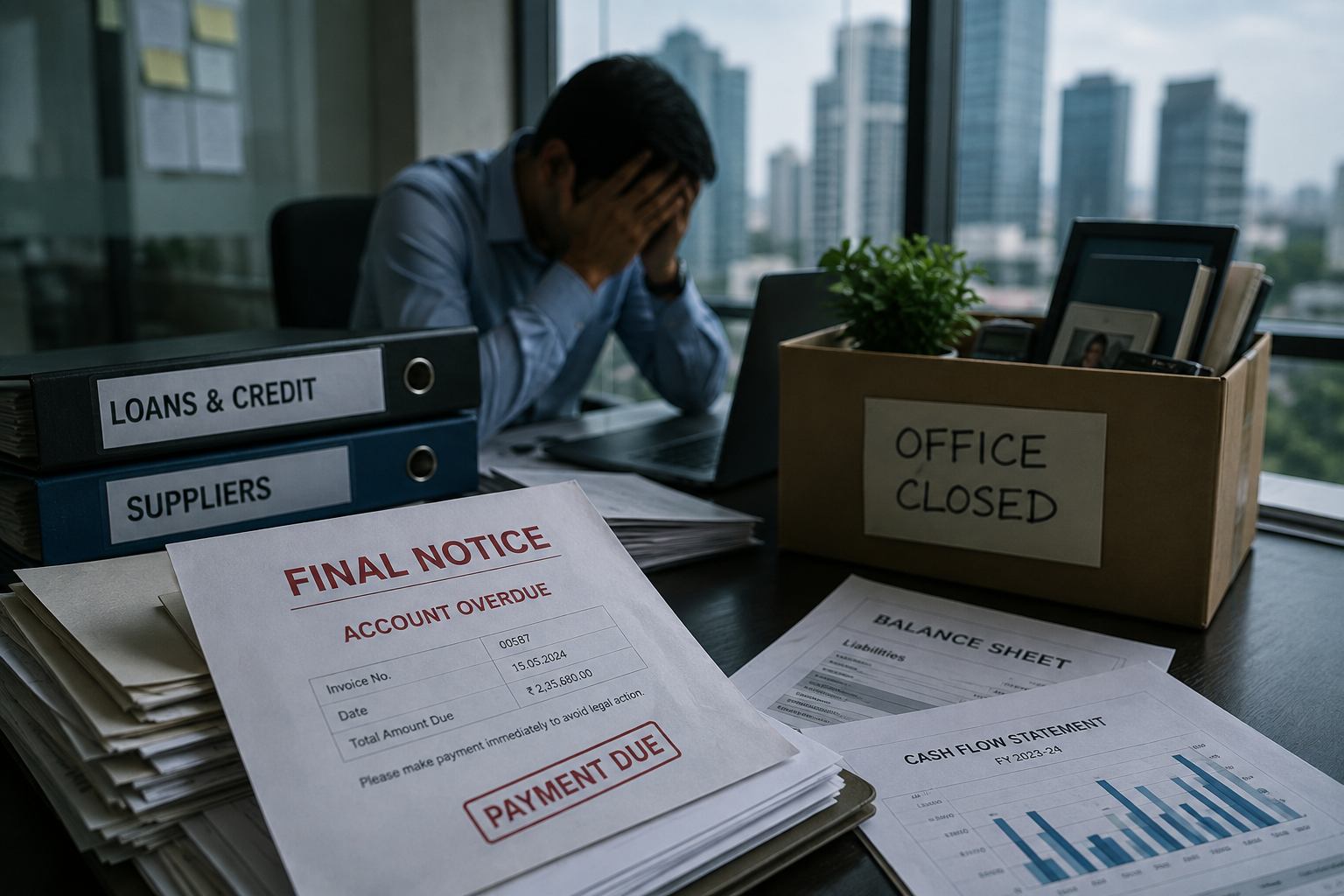
A company does not go bankrupt simply because it makes a loss. Many companies lose money for years and still survive. A company collapses when it can no longer honour the promises it has made - to banks, bondholders, suppliers, employees, tax authorities, landlords, customers and investors. Bankruptcy is the moment when private optimism meets legal reality.
The word sounds final, but the process is usually more complex. Bankruptcy can mean liquidation, where the business is broken up and its assets are sold. It can mean restructuring, where lenders accept a haircut, timelines are extended and a new owner takes control. It can mean a sale of business, a merger, a rescue financing arrangement or a negotiated settlement. The real question is not only whether a company has failed, but what parts of it can still be saved.
This matters because corporate bankruptcy is not only a company problem. It affects jobs, banks, suppliers, customers, government revenue and investor confidence. A weak insolvency system traps capital in dead businesses. A strong insolvency system moves assets from failed hands to better hands while protecting fairness and economic order.
Why companies actually go bankrupt
The common image is simple: a company spends too much and runs out of cash. That is true in many cases, but it is only the surface. Companies usually go bankrupt because several weaknesses compound at the same time. Falling revenue reduces cash inflow. High debt keeps interest obligations fixed. Poor inventory management locks money in unsold stock. Delayed customer payments create liquidity stress. Bad governance hides the warning signs until creditors lose patience.
A business can look profitable on paper and still fail if cash does not arrive on time. A construction company may book revenue but wait months for payments. A retailer may own valuable inventory but lack cash for salaries and rent. A manufacturer may have orders but no working capital to buy raw material. This is why cash flow is often more important than accounting profit when assessing survival.
Debt magnifies the danger. Borrowing is not inherently bad. It helps firms expand factories, buy equipment, acquire competitors and fund working capital. But debt converts uncertainty into obligation. Revenue may rise or fall, but interest payments remain due. When a company takes debt based on optimistic assumptions and the market turns against it, leverage becomes a trap.
The warning signs before collapse
Bankruptcy rarely arrives without signals. The first warning is usually liquidity stress: delayed supplier payments, frequent requests for loan rollovers, unpaid statutory dues, salary delays or stretched receivables. The second is financial deterioration: falling margins, rising finance costs, repeated losses, negative operating cash flow and excessive short-term borrowing.
The third warning is governance behaviour. Companies in distress may become less transparent, delay financial reporting, change auditors frequently, sell assets in haste, pledge promoter shares or depend on related-party transactions. Management may keep insisting that recovery is near, but creditors begin looking at hard cash rather than speeches.
For investors, one key lesson is that stock price decline is often a late signal. By the time the market visibly panics, lenders may already have internal stress reports, suppliers may have reduced credit terms and employees may know the business is struggling. Serious analysis begins with the balance sheet, cash flow statement and debt maturity schedule, not with market rumours.
What happens when a company cannot pay
When a company defaults, the first stage is usually negotiation. Lenders may restructure debt, extend repayment schedules, reduce interest temporarily, convert debt into equity or bring in additional security. Suppliers may shorten credit periods or stop deliveries. Employees may face salary delays. Shareholders may see dilution or a collapse in valuation.
If negotiation fails, formal insolvency proceedings may begin. In India, the Insolvency and Bankruptcy Code created a framework where financial creditors, operational creditors or the debtor itself can initiate a corporate insolvency resolution process under specified conditions. Once admitted, the process shifts control away from existing management and places the company under a resolution professional, subject to oversight by creditors and tribunals.
The logic is simple: when a company cannot meet obligations, the old management should not be allowed to keep gambling with creditor money indefinitely. Creditors need a time-bound process to decide whether the business can be rescued or should be liquidated. Insolvency law turns a private default into an orderly institutional process.
Who gets paid first
One of the most misunderstood parts of bankruptcy is priority. Not everyone has the same claim. Secured lenders, who hold collateral, usually stand stronger than unsecured creditors. Employees and workmen may receive statutory protection. Government dues, operational creditors, bondholders and shareholders occupy different positions depending on law and the specific resolution plan.
Equity shareholders are last in the economic queue. This is because shareholders own the residual claim. They benefit when the business does well, but they bear losses when assets are insufficient to repay creditors. In many insolvency cases, existing shareholders are wiped out or heavily diluted even if the company continues under a new owner.
This is why retail investors must be careful when buying shares of distressed companies simply because the price has fallen. A low price does not automatically mean value. If the company is deeply insolvent, the enterprise may survive while the old equity becomes nearly worthless.
Restructuring vs liquidation
The central choice in bankruptcy is whether the business is worth saving. If the company has a viable factory, useful brand, strong customer base or valuable licences, creditors may prefer restructuring. A new buyer can take over, inject funds, reduce debt and run the business more efficiently. This protects jobs and preserves economic value.
Liquidation is different. It happens when the company is worth more dead than alive, or when no acceptable resolution plan emerges. Assets are sold, proceeds are distributed according to legal priority and the company effectively ceases to operate. Liquidation is sometimes necessary, but it is usually a lower-value outcome because factories, brands and employee networks lose value when broken apart.
A good insolvency system should not punish failure for its own sake. Capitalism requires risk-taking, and risk-taking sometimes produces failure. The goal should be rapid recognition, fair resolution and redeployment of assets. Delayed insolvency destroys value quietly.
The larger economic importance
Bankruptcy law is part of a country's financial infrastructure. Banks are more willing to lend when they know there is a credible recovery process. Investors are more willing to fund businesses when failure does not become endless litigation. Entrepreneurs are more willing to take risk when insolvency is not treated as permanent social death.
But the system must balance speed with fairness. If creditors can seize control too easily, genuine businesses may be pushed into distress unnecessarily. If promoters can delay indefinitely, lenders and suppliers suffer. If workers are ignored, the social cost becomes unjust. If haircuts become too frequent, lending discipline weakens. Insolvency is therefore not merely a technical legal process; it is a test of economic governance.
For India, the challenge is sharper because corporate distress affects public-sector banks, employment, infrastructure projects and capital formation. A stalled power plant, real estate project or steel company does not only hurt investors. It locks land, machinery, labour and bank capital in uncertainty.
Final takeaway
Companies go bankrupt when their promises exceed their capacity to pay. The process may begin with falling sales or poor management, but it ends in a legal and financial contest over value: who controls the company, who gets paid, what can be rescued and what must be written off.
The mature way to understand bankruptcy is not moral panic. Some failures are caused by fraud or reckless borrowing. Others are caused by business cycles, technological disruption, policy shocks or honest misjudgement. What matters is whether the system can separate salvageable businesses from dead ones, protect legitimate creditors and workers, and return capital to productive use.
Bankruptcy is painful. But unmanaged bankruptcy is worse. When failure is hidden, delayed or politicised, the economy pays through bad loans, weak banks, unpaid suppliers and lost jobs. When failure is handled transparently and quickly, it becomes a mechanism of renewal. That is the real purpose of insolvency law.