NMC Bars AI-Generated Patient Testimonials and Fake Clinical Outcomes in Medical Ads
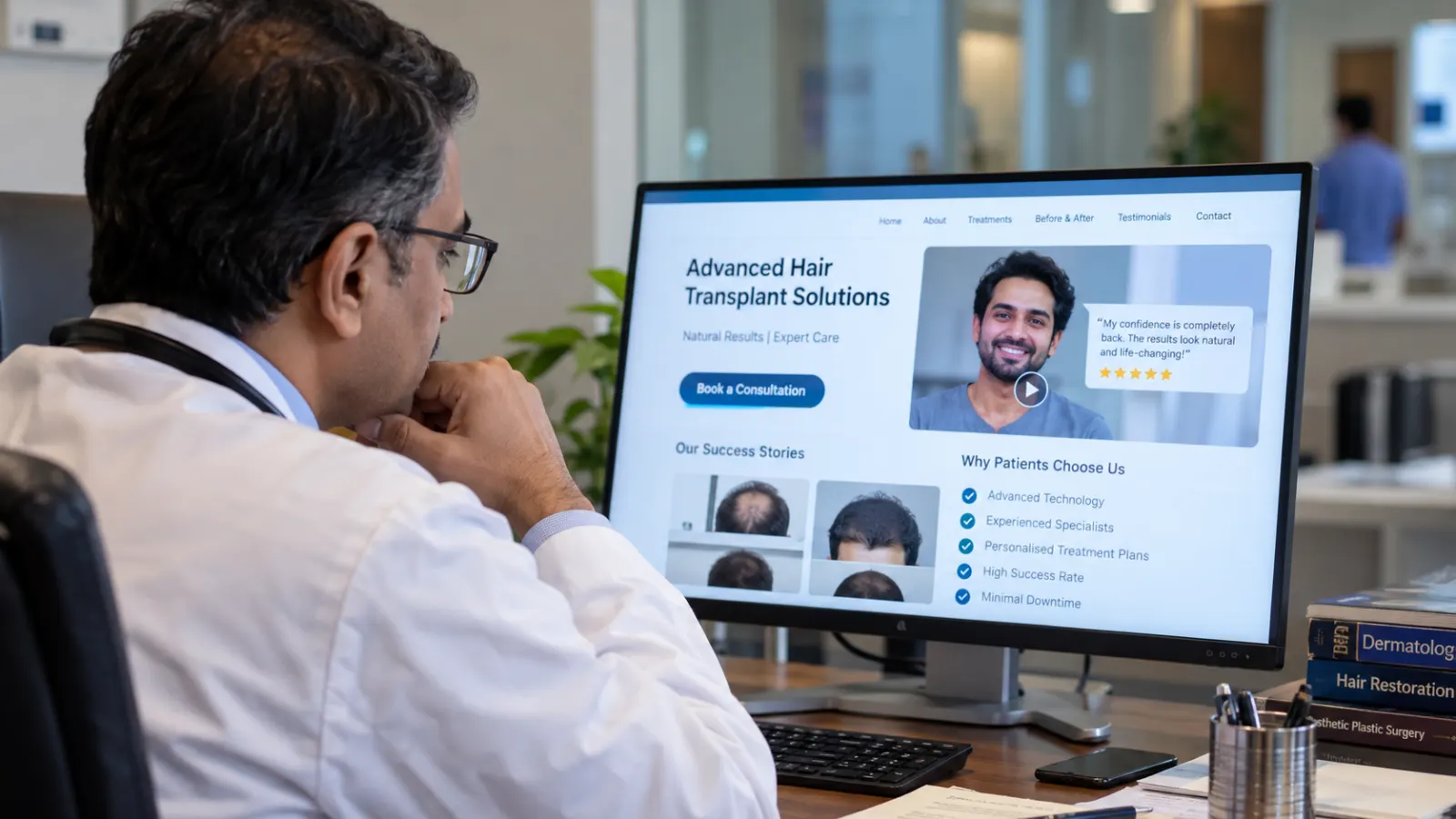
India’s National Medical Commission has introduced new ethical advertising rules that prohibit doctors and hospitals from using artificial intelligence to fabricate patient testimonials, clinical outcomes, endorsements or other promotional material that could mislead people about the effectiveness of medical treatment.
The guidelines, issued on October 6 and effective immediately, significantly tighten the rules governing how registered medical practitioners and healthcare institutions can promote themselves online. The NMC has also barred claims such as “100% success”, “guaranteed cure”, “best doctor”, “number one” or “most trusted” when those claims cannot be objectively verified.
The new framework reflects growing concern that AI-generated voices, images, reviews and synthetic patient stories can make false medical claims appear authentic. In healthcare, such advertising carries particular risks because patients may make decisions involving surgery, medication or expensive treatment based on information they believe represents real clinical experience.
AI cannot be used to manufacture patient experiences
The most significant part of the new rules directly addresses generative AI.
Doctors and hospitals cannot use AI to create synthetic patient testimonials, artificial voices, fabricated treatment outcomes or fake endorsements. They also cannot use AI-generated material to make a medical service appear more successful or effective than it actually is.
This could include a digitally generated patient claiming to have recovered after treatment, an AI voice presenting a fictional success story, or promotional content describing clinical results that did not actually occur.
The principle is straightforward: AI can assist communication, but it cannot be used to manufacture evidence of medical success.
The restriction is particularly relevant as increasingly sophisticated AI tools make it possible to create convincing videos, photographs and voices at relatively low cost.
‘100% success’ and guaranteed-cure claims are also restricted
The guidelines go beyond AI.
Doctors and medical institutions cannot advertise treatments using unverifiable superlatives or guarantees. Claims such as “100% success rate”, “guaranteed cure”, “best doctor” or “most trusted hospital” can mislead patients unless supported by objective and verifiable evidence.
Healthcare outcomes depend on factors including disease severity, age, existing medical conditions, adherence to treatment and individual biological differences. Guaranteeing an outcome can therefore create unrealistic expectations.
The same concern applies to advertisements promising “pain-free”, “risk-free” or “breakthrough” treatments when the claims are not backed by appropriate evidence.
The NMC’s approach effectively separates factual information about medical services from promotional claims designed primarily to attract patients.
Patient testimonials and before-after images face tighter controls
Traditional patient testimonials are also covered.
Doctors and hospitals cannot use testimonials, treatment-success stories or before-and-after photographs in ways that create unrealistic expectations or misrepresent likely outcomes.
Patient photographs require valid consent and appropriate safeguards.
Even genuine testimonials can be misleading if they imply that every patient will experience the same outcome. A dramatic recovery by one person does not establish the effectiveness of a treatment for everyone.
Before-and-after images can pose a similar problem because factors such as lighting, camera angle, editing and selective presentation can exaggerate treatment effects.
The new framework therefore places greater emphasis on whether promotional material accurately represents what patients can reasonably expect.
Doctors cannot pay to manipulate online rankings
Another important provision targets digital reputation management.
Doctors and hospitals cannot pay to manipulate their ranking on search engines, healthcare applications or other online platforms.
This addresses practices in which healthcare providers effectively purchase greater visibility or artificially improve their position in “top doctor” or “recommended hospital” listings.
Such rankings can strongly influence patients who use online searches to choose doctors, particularly for specialist consultations and elective procedures.
The NMC wants patients to be able to distinguish genuine reputation from commercially engineered prominence.
Paid advertising itself is not the only issue; the concern is presenting paid or manipulated visibility as if it were an independent measure of medical quality.
Influencers cannot be paid according to patient referrals
The guidelines also address the growing use of influencers, marketing agencies and online platforms to acquire patients.
Doctors and hospitals cannot enter arrangements in which influencers or intermediaries are paid according to the number of patients they generate.
Such arrangements create a direct financial incentive to promote medical treatment regardless of whether the patient actually needs it.
A social-media creator, for example, should not receive a commission every time a follower books a medical procedure through a referral link.
The same principle applies to agencies and platforms whose compensation is linked directly to patient procurement.
Healthcare marketing becomes ethically problematic when the person recommending treatment financially benefits from convincing more people to undergo it.
Limited-period discounts and referral incentives restricted
The NMC has also restricted promotional tactics commonly seen in other industries.
Doctors and healthcare institutions cannot use limited-period discounts, coupons, gift packages or referral benefits when these incentives could encourage unnecessary medical consultations or procedures.
A sale-style approach such as “book surgery this week and receive a discount” can pressure patients into making decisions that should instead be based on medical need.
Medicine differs fundamentally from ordinary retail because unnecessary consumption can harm patients.
The guidelines therefore attempt to prevent healthcare services from being marketed using urgency and scarcity techniques commonly associated with consumer products.
Doctors can still provide health information online
The rules do not prevent doctors from using social media or digital platforms.
Medical professionals can continue publishing factual health education, public-awareness content and objective information about their qualifications and services.
Hospitals can similarly provide information about available departments, facilities, specialties and services.
The key distinction is between information and solicitation.
A doctor explaining the symptoms of diabetes, discussing vaccination or educating people about cancer screening is fundamentally different from using exaggerated treatment claims to attract patients.
This distinction is likely to become increasingly important as more doctors build professional audiences on Instagram, YouTube and other platforms.
Violations can eventually lead to suspension
The NMC has introduced a graded enforcement structure.
A first violation can result in a warning and mandatory ethics training. A second violation may lead to censure and a financial penalty.
A third violation can result in suspension from medical practice for three to six months.
Serious violations may attract suspension for six to 12 months, while repeated breaches can result in removal from the medical register for one to three years.
This makes the guidelines more consequential than a simple advisory.
Doctors and institutions using marketing agencies will also need to monitor the material published on their behalf because outsourcing promotional activity does not eliminate professional responsibility.
Why AI advertising is a particular concern in healthcare
AI-generated misinformation is potentially more dangerous in medicine than in many other industries.
A fabricated testimonial for an ordinary consumer product may mislead someone into making a poor purchase. A fabricated medical testimonial could influence a patient to delay appropriate treatment, choose an unnecessary procedure or spend large sums on an ineffective intervention.
Synthetic media can also be highly persuasive.
A convincing video showing an apparently real patient describing a miraculous recovery can feel more credible than conventional advertising even when the person never existed.
AI tools can produce dozens or hundreds of such testimonials quickly, making large-scale manipulation relatively inexpensive.
The NMC’s guidelines therefore attempt to regulate the technology before fabricated clinical marketing becomes normalised.
The rules could reshape healthcare marketing in India
Hospitals, cosmetic clinics, fertility centres, hair-transplant businesses, dental practices and other healthcare providers have increasingly relied on digital marketing to attract patients.
Highly competitive specialties frequently use patient reviews, transformation images, success-rate claims and influencer promotions.
The new framework could force many providers to review their websites, social-media accounts, paid advertisements and agency contracts.
Marketing teams may need to document the basis for claims, obtain valid patient consent and clearly distinguish factual information from promotional language.
Healthcare platforms may also face pressure to ensure that ranking systems and paid placements are transparent.
Patients will still need to evaluate medical claims carefully
The guidelines could reduce misleading advertising, but regulation alone cannot eliminate misinformation.
Patients should continue treating extraordinary medical claims cautiously, particularly when advertisements promise guaranteed results or unusually high success rates.
Clinical outcomes vary, and reputable medical advice should normally explain risks, alternatives and uncertainty rather than promise certainty.
Patients should also distinguish educational content from marketing and verify a doctor’s qualifications and registration when making significant medical decisions.
AI makes this verification more important because realistic-looking people, voices and documents can increasingly be generated without any real-world source.
A broader attempt to protect trust in medicine
The NMC’s new rules reflect a wider challenge facing healthcare regulators: modern medical advertising increasingly operates through social media algorithms, influencers, search rankings and AI-generated content rather than conventional newspaper or television advertisements.
That makes misleading promotion easier to create and harder for patients to recognise.
By explicitly prohibiting fabricated AI testimonials, synthetic clinical outcomes and fake endorsements, the Commission has drawn a clearer line around what healthcare providers can claim publicly.
The central principle is that medical advertising should provide patients with accurate information, not manufacture confidence through artificial evidence.
As AI becomes increasingly capable of producing convincing synthetic media, enforcing that distinction may become one of the most important challenges in healthcare communication.