A historical narrative on knowledge, institutions, literacy and civilisational memory
Teaching Before Schools
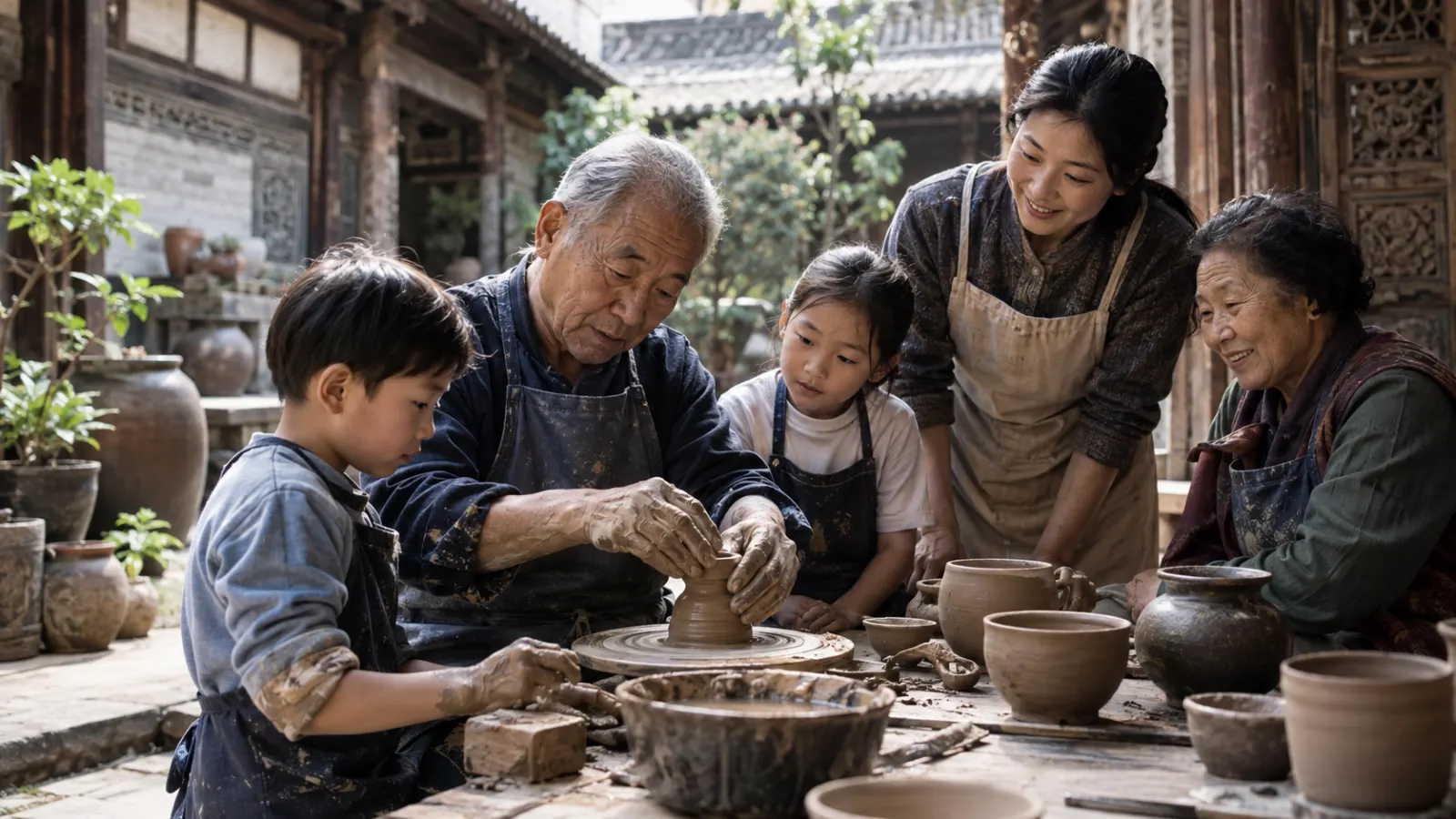
This early education was practical, moral and communal. It answered urgent questions: how to survive, how to belong, how to marry, how to mourn, how to fight, how to plant, how to honour the invisible world and how to become a recognized adult. The curriculum was not written on paper, but it was disciplined. A society that could not transmit its knowledge could not preserve its food systems, myths, boundaries or technologies. The first classroom was therefore not a building; it was the repeated act by which one generation shaped the next.
The danger in modern history is to mistake schooling for education itself. Schools are one institutional form of education, not its origin. For most of human history, education was embedded in household, clan, field, workshop, monastery, temple, court and army. The later rise of formal education did not replace informal learning; it reorganized authority over learning. The central question became: who has the right to decide what knowledge matters?
Writing and the Birth of Formal Instruction
The invention of writing changed education because it made knowledge more durable, portable and hierarchical. In Mesopotamia, Egypt, China, Mesoamerica and other literate civilizations, writing created a new class of specialists: scribes. To write was not merely to communicate. It was to administer taxes, record grain, preserve law, manage temples, calculate land, serve kings and organize memory beyond the limits of speech. Scribal education was therefore one of the earliest forms of formal schooling.
Scribal schools trained students through copying, memorization, calculation and discipline. Clay tablets, papyrus, bamboo slips and palm-leaf manuscripts became instruments of statecraft. Education now belonged partly to bureaucracy. A person who mastered signs could enter administration, law, trade or priestly service. Literacy did not immediately become democratic. It often strengthened hierarchy because those who controlled writing controlled records, rituals and revenue.
Yet writing also widened time. A student could encounter voices from the past. Law codes, hymns, epics, medical recipes, mathematical tables and astronomical observations could be transmitted with greater precision. Education became cumulative. Each literate civilization built institutions to preserve specialized knowledge, and every such institution created a boundary between the educated and the uneducated.
Sacred Learning and the Moral Formation of the Person
In many civilizations, the earliest formal education was religious. Temples, monasteries, madrasas, gurukulas, cathedral schools and scriptural academies treated learning as moral formation. To be educated was not only to know facts; it was to shape the soul, discipline desire and enter a tradition. Sacred texts required memory, interpretation and commentary. The student learned not only language but reverence.
This sacred structure gave education immense authority. Priests, monks, rabbis, ulema, pandits and theologians became guardians of meaning. They trained successors, preserved manuscripts and interpreted law. In societies where religion and governance overlapped, education linked cosmic order with social order. Learning could legitimate kingship, caste, clergy, law and custom. At the same time, religious education often produced intellectual sophistication: grammar, logic, philosophy, metaphysics, jurisprudence and debate.
Religious education was never uniform. Buddhist monastic centres in South Asia, Islamic madrasas, Christian cathedral schools, Jewish yeshivas and Confucian academies differed in method and worldview. But they shared a belief that knowledge was not morally neutral. Education formed character. Modern secular education would later challenge many sacred monopolies, but it inherited from them the idea that learning should transform the human being, not merely train the worker.
Classical Civilizations and the Educated Elite
Ancient Greece, Rome, China and India developed influential models of elite education. In Greece, paideia referred to the formation of the citizen through music, gymnastics, rhetoric, philosophy and civic culture. Education aimed to produce a person capable of participating in public life, at least within the narrow limits of male citizenship. Plato imagined education as a journey from illusion toward truth; Aristotle treated learning as part of ethical and political life.
Rome adapted Greek models to its own civic and legal culture. Rhetoric, grammar, law and public speaking became central to the training of officials and elites. Education produced administrators, advocates and statesmen. In imperial China, Confucian learning linked education to bureaucracy through examinations. Mastery of classical texts became a path, however difficult and socially unequal, into state service. In South Asia, traditions of learning ranged from Vedic instruction and philosophical schools to Buddhist monastic universities and specialized instruction in grammar, logic, medicine and astronomy.
These classical systems reveal a recurring pattern. Education was praised as universal in value but restricted in access. The cultivated person was celebrated, yet peasants, slaves, women, artisans and marginalized groups were often excluded or educated only for subordinate roles. Education became a mark of status. It refined the elite and justified their authority.
Apprenticeship, Craft and the Education of the Hand
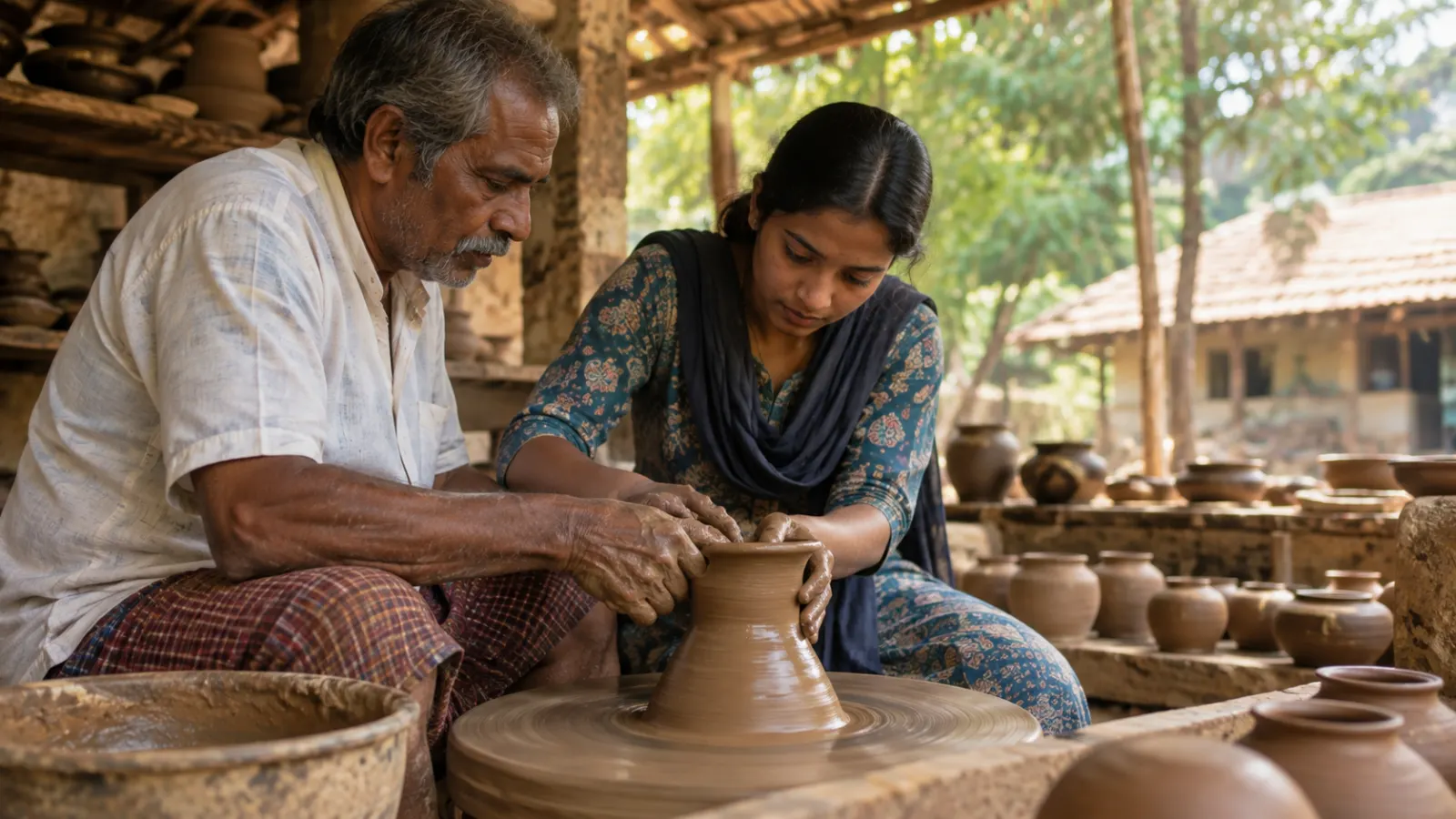
Not all important education was literary. Civilizations were built by people trained through apprenticeship: potters, masons, carpenters, metalworkers, sailors, weavers, builders, farmers, healers, musicians, soldiers and merchants. Their education passed through the body. The apprentice learned by watching, repeating, failing and correcting. A master did not only transmit a technique; he or she transmitted standards of quality, timing, discipline and professional identity.
Craft education was often organized through family, caste, guild, workshop or local custom. It preserved technologies that written education sometimes ignored. The construction of temples, cathedrals, irrigation systems, ships, coins, textiles and weapons depended on sophisticated practical intelligence. Much of this intelligence was not written in treatises but embodied in skilled labour.
The division between book learning and hand learning has distorted educational history. Literate elites often described manual skill as inferior, yet societies depended on it. The history of education must therefore include both the school and the workshop. A civilization may be judged not only by what its philosophers wrote but also by what its artisans knew how to make.
Printing, Literacy and the Public of Readers
The spread of printing transformed education by multiplying texts and reducing the dependence on hand-copied manuscripts. Movable type, paper production, commercial publishing and vernacular literature gradually expanded the world of readers. In Europe, printing accelerated religious reform, scientific debate and administrative standardization. In Asia, older traditions of woodblock and movable-type printing had already demonstrated the power of reproduced texts in Buddhist, Confucian and bureaucratic settings.
Printing did not instantly create universal literacy. Books could remain expensive, censorship could restrict access, and social hierarchy could limit schooling. But print altered expectations. More people encountered pamphlets, catechisms, primers, calendars, newspapers and textbooks. A society of readers began to emerge, and education became linked to public debate. Literacy became not merely a clerical skill but a civic and religious demand.
The printed textbook was a quiet revolution. It standardized lessons, fixed curricula and allowed teachers and students to share the same material. It also enabled state and religious authorities to regulate knowledge more efficiently. Education expanded, but it also became more centralized. Print democratized access while strengthening the institutions that selected what should be read.
The Modern State and Mass Schooling
The modern age changed education more radically than almost any earlier period because states began to treat schooling as a public responsibility. Compulsory education, state-funded schools, teacher training, inspection systems, standardized curricula and public examinations created mass schooling. The child became not only a family member but also a future citizen, soldier, worker and taxpayer. Education moved from privilege toward policy.
Mass schooling served multiple purposes. It spread literacy, numeracy and national language. It trained industrial workers to obey time, rules and routines. It created citizens who could read laws, newspapers and patriotic histories. It strengthened national identity by teaching maps, flags, heroes, wars and civic rituals. Education became one of the most powerful instruments through which modern states entered everyday life.
This expansion was both emancipatory and disciplinary. Millions who would once have remained illiterate gained access to reading, calculation and social mobility. At the same time, schools standardized minds, punished local languages, ranked children and reproduced inequality through examinations. Mass education carried a double legacy: it opened doors while teaching people to pass through them in approved ways.
Colonial Education and the Politics of Knowledge
Empire turned education into a political battlefield. Colonial governments established schools, colleges and universities partly to train clerks, interpreters, teachers and subordinate officials. Missionaries used education to spread religion and social reform. Colonial elites used education to access employment and prestige. Anti-colonial nationalists used the same education to challenge imperial rule. The classroom became one of empire’s most unstable institutions.
Colonial education often privileged the language, history and worldview of the ruling power. It could portray colonized societies as backward, irrational or in need of guidance. Indigenous knowledge systems were frequently marginalized, although they did not disappear. In India, Africa, Southeast Asia and elsewhere, debates over curriculum became debates over dignity: should education produce loyal subjects, useful workers or free citizens?
The irony of colonial education was that it often created critics of colonialism. Students trained in law, history, political theory and modern administration read about liberty, rights and constitutionalism, then applied those ideas against imperial power. Educated nationalists built newspapers, parties, associations and reform movements. Education became both an instrument of rule and a weapon of liberation.
Women, Marginalized Groups and the Democratization of Learning
The history of education is also a history of exclusion. For centuries, girls were denied formal learning or educated only for domestic roles. Slaves, serfs, lower castes, Indigenous peoples, racial minorities and the poor were often blocked from literacy because knowledge threatened hierarchy. To teach the excluded was to disturb the social order. Every campaign for girls education, Black education, Dalit education, workers education or Indigenous schooling therefore carried political meaning.
Women reformers, anti-slavery activists, missionaries, social reformers, labour movements and democratic states all helped expand access, though with different motives. Girls schools challenged the assumption that intellect belonged to men. Schools for formerly enslaved people challenged the idea that literacy was a privilege of masters. Education for marginalized communities became a struggle for self-respect, legal awareness and mobility.
Democratization did not mean equality arrived automatically. Access could be unequal in quality. Schools could be segregated, underfunded or culturally hostile. Students could be present in classrooms but absent from curriculum. The deeper question became not only who may enter school, but whose knowledge, language and history the school recognizes.
Examinations, Merit and the Anxiety of Ranking
Examinations are among the most influential educational inventions. They promise fairness by replacing birth with performance. The Chinese civil-service examination system, modern university entrance tests, school-leaving exams and professional qualifications all reflect the belief that merit can be measured. In societies marked by hierarchy, examinations can open routes of mobility. A poor student who passes may cross boundaries that ancestry once fixed.
Yet examinations also create anxiety and narrow learning. They reward certain kinds of memory, speed, language and cultural capital. Families with resources can purchase tutoring, books, time and confidence. Merit can become a new language for old privilege. When education is tied to scarce jobs, examinations become not only assessments but life gates.
The history of education repeatedly returns to this tension. Should education cultivate wisdom or certify competence? Should it rank individuals or build society? Should schools reward obedience, creativity, discipline, empathy, technical skill or civic courage? Every examination system answers these questions, whether openly or silently.
Digital Education and the New Knowledge Order
The digital age has again transformed education. Internet access, online courses, digital libraries, video lectures, artificial intelligence tools and mobile learning have weakened the monopoly of the classroom. A learner can now encounter university lectures, archives, simulations and global communities without entering a traditional institution. Knowledge has become searchable at unprecedented speed.
But digital abundance creates new inequalities. Access depends on devices, connectivity, language, attention and digital literacy. Information is not the same as education. A search engine can retrieve data, but it cannot automatically build judgement. Algorithms can personalize learning, but they can also trap students in shallow engagement, distraction or misinformation. The central educational problem has shifted from scarcity of information to cultivation of discernment.
Digital education also raises institutional questions. What is a teacher when content is everywhere? What is a classroom when learners are dispersed? What is assessment when machines can generate answers? These questions do not end the history of education; they extend its oldest concern: how societies transmit reliable knowledge and form capable human beings.
Legacy: Education as Civilisation Remembering Itself
The history of education is the history of civilisation trying to reproduce itself without freezing itself. Every society teaches because it fears forgetting. It teaches language, tools, stories, laws, rituals, maps, numbers, loyalties and doubts. Yet education is never only preservation. It also creates the possibility of criticism. A student may learn a tradition deeply enough to question it.
This is education’s civilisational power. It can domesticate minds, but it can also liberate them. It can produce obedient subjects, but it can also produce citizens, reformers, scientists, poets and revolutionaries. It can reproduce inequality, but it can also give the excluded the vocabulary to demand justice.
The long history of education therefore cannot be reduced to schools, literacy rates or degrees. It is the story of how human beings decide what is worth knowing, who is allowed to know it, and what kind of person knowledge should create. Civilisation survives by teaching, but it renews itself when learners become more than copies of their teachers.