Gopal Krishna Gokhale: Reform, Education and the Politics of Preparation
Gopal Krishna Gokhale rarely receives the dramatic treatment given to revolutionaries, imprisoned agitators or leaders of mass civil disobedience. His preferred political instruments were less cinematic: budget speeches, legislative amendments, commissions, educational proposals, statistical arguments and the patient training of people for public service. That has often left him compressed into a familiar textbook category—the “Moderate” leader who came before a supposedly more energetic phase of Indian nationalism.
The label describes an important strategic divide within the Indian National Congress, but it can obscure Gokhale’s larger political project. He believed British rule in India was unjust and that Indians had to gain progressively greater control over their own government. Yet he also believed political freedom required more than anger at foreign rule. A self-governing country needed educated citizens, trained administrators, functioning legislatures, public institutions and political workers capable of converting nationalist aspiration into competent government.
That gave Gokhale a different emphasis from Bal Gangadhar Tilak, his great contemporary and rival in western Indian politics. Tilak increasingly asked how nationalist pressure could be intensified and broadened through boycott, swadeshi, political mobilisation and more assertive demands. Gokhale asked how India could build the social and administrative capacity required to exercise power responsibly once greater self-government was achieved. The difference was real, and it contributed to one of the most important strategic conflicts within early twentieth-century nationalism, but it should not be simplified into courage versus timidity.
Gokhale’s politics rested on a demanding proposition: colonial government had to be criticised not only as foreign rule but as government that could be measured against its own budgets, taxation, educational record and administrative claims. Nationalists therefore needed to understand finance, legislation and public policy as thoroughly as colonial officials did. His career made these apparently technical subjects part of the freedom struggle.
Education and economic criticism shaped Gokhale’s political method
Gopal Krishna Gokhale was born on 9 May 1866 in Maharashtra, then part of the Bombay Presidency. He belonged to one of the earliest generations of Indians for whom university education in English created access to new intellectual traditions and new forms of public life. He graduated in the 1880s and entered the educational world associated with Pune, eventually teaching history and political economy at Fergusson College through the Deccan Education Society. The Servants of India Society’s institutional history emphasises this early commitment to teaching and the influence it had on his later conception of national service.
Education also brought him into sustained contact with Mahadev Govind Ranade, the judge, economist, historian and social reformer who became one of the strongest intellectual influences on his life. Ranade represented a style of reform that combined social change, economic analysis and constitutional politics rather than treating them as separate spheres. Gokhale absorbed that method. He became known for studying official records closely, preparing detailed memoranda and grounding political claims in administrative evidence rather than relying only on patriotic rhetoric.
This orientation placed economics at the centre of his nationalism. Dadabhai Naoroji’s drain theory had already argued that colonial arrangements transferred wealth from India to Britain, while Romesh Chunder Dutt analysed the effects of land revenue and imperial economic policy. Gokhale worked in the same broad tradition but often at the granular level of annual budgets, taxation and expenditure. His method was to take the government’s own figures and ask what they revealed about the priorities of a state that claimed to be governing India for Indian welfare.
His evidence before the Welby Commission on Indian expenditure helped establish his reputation as a critic of imperial finance. The Indian National Congress later remembered his testimony before the commission and his Central Legislative Council budget speeches as examples of his command of public finance. He repeatedly questioned military expenditure, pressed for greater employment of Indians in government, criticised burdensome taxation, supported irrigation and technical education and argued for wider access to elementary schooling.
The significance of this work went beyond individual financial proposals. Gokhale helped turn the colonial budget into a political document. If India remained poor while large resources were spent on military and imperial priorities, nationalists could challenge the claim that British administration was primarily developmental or benevolent. Fiscal scrutiny became a way of demonstrating that the structure of government was not accountable to the people who financed it.
This kind of politics could appear dry beside mass demonstrations, but it contained a fundamental constitutional argument. Government should have to explain where money came from, where it went and why its priorities deserved public consent. The fact that Indian representatives possessed limited power over those decisions did not make scrutiny meaningless; it exposed precisely how limited colonial accountability remained.
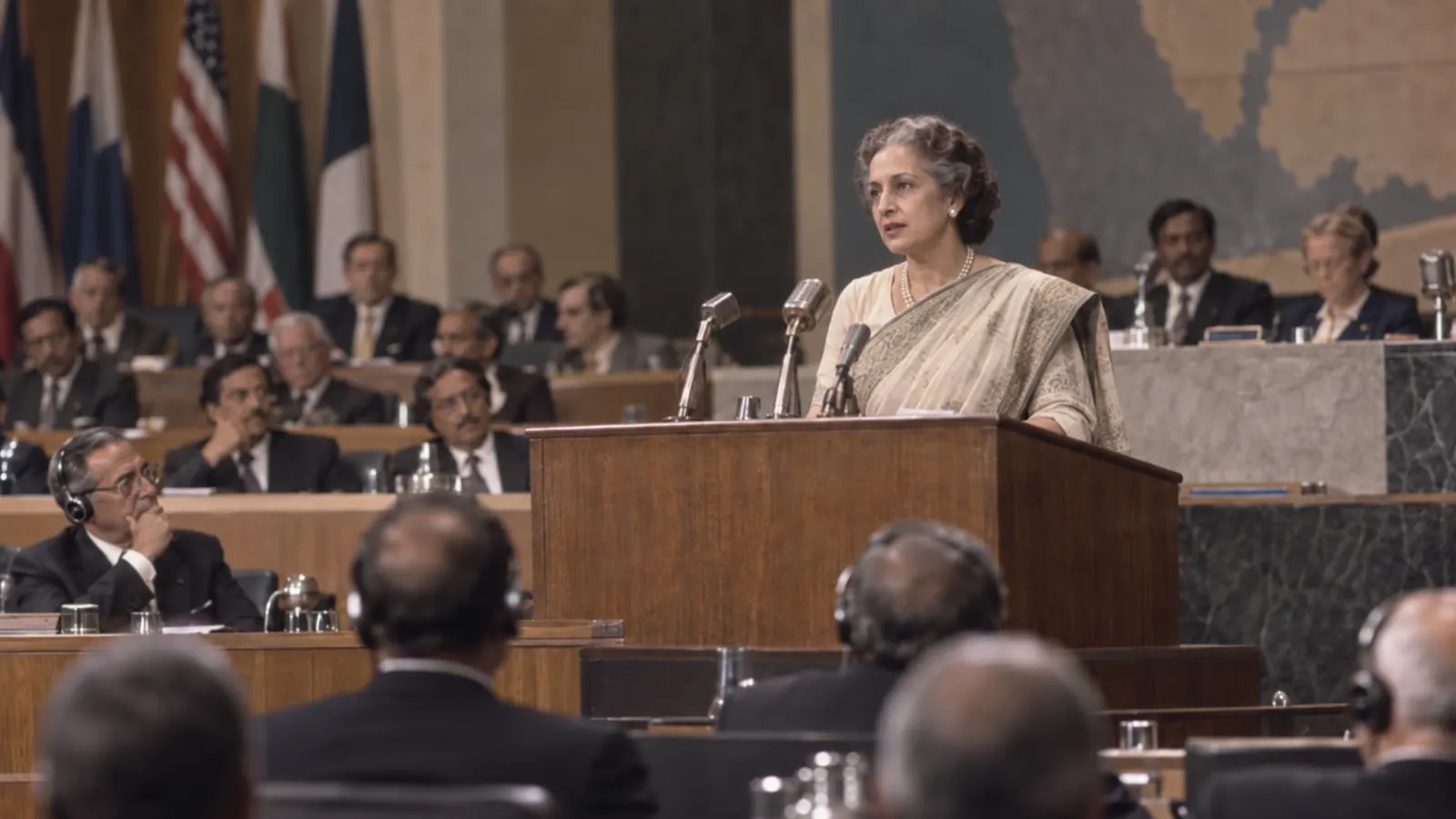
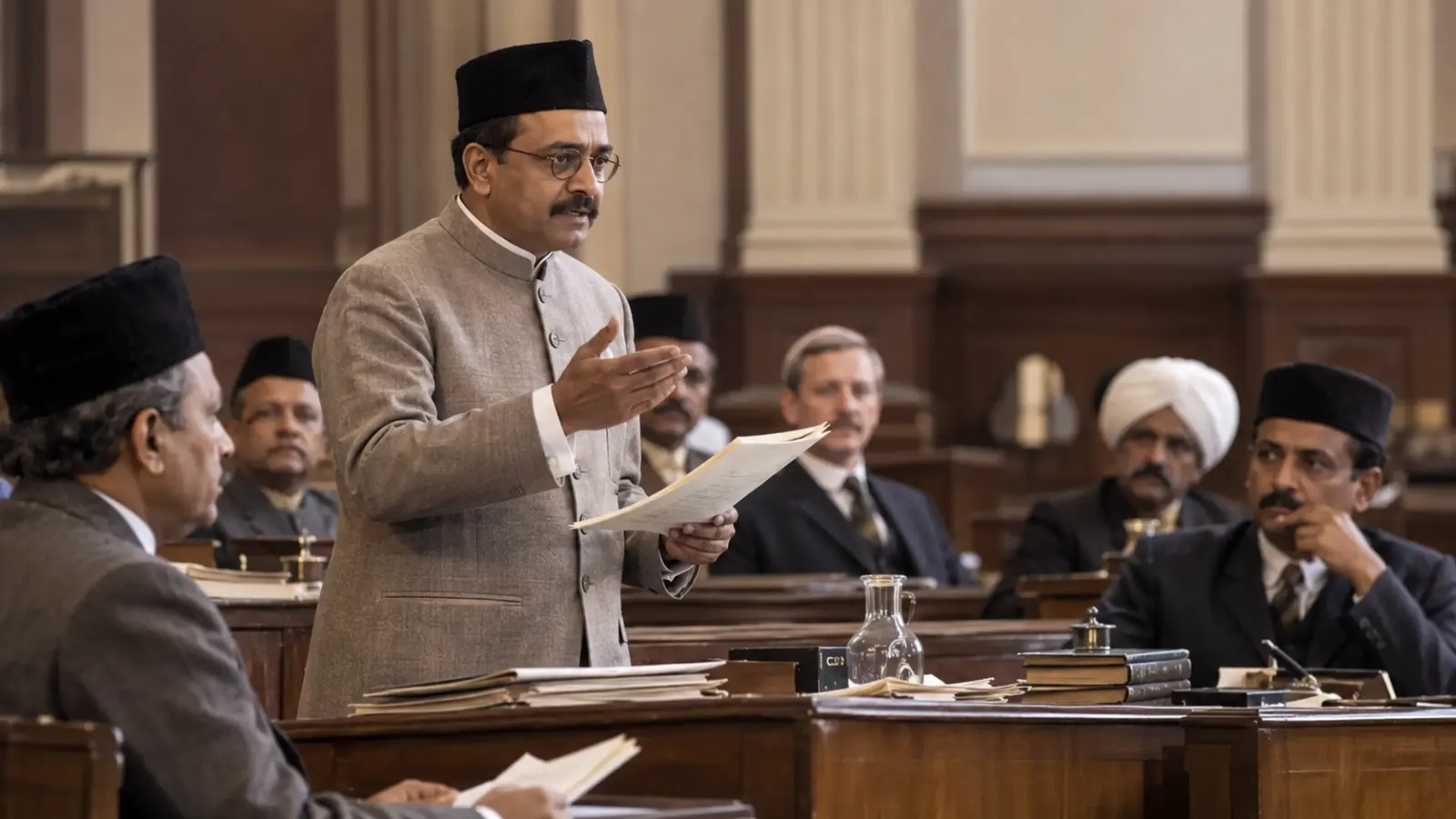
Gokhale carried this method into the Imperial Legislative Council in the early twentieth century. His speeches addressed budgets, taxation, education and administrative policy with a degree of detail that made him one of the most prominent Indian legislative voices of the period. The council itself was highly constrained and did not make the Raj democratically accountable, but it created a public arena in which Indian representatives could force questions into the official record.
Gokhale understood those limits. His constitutionalism did not rest on the belief that colonial institutions were already representative. It rested on the expectation that sustained political pressure, public criticism and institutional reform could gradually enlarge Indian participation until increasingly arbitrary government became politically harder to defend.
That strategy involved a degree of faith in British liberal opinion that later events would expose as overly optimistic. Yet it should be distinguished from passive acceptance of foreign rule. Gokhale tried to use Britain’s own proclaimed commitments—to representative government, financial responsibility and rule-bound administration—as standards against which imperial practice in India could be judged.
“Moderate” described a strategy, not satisfaction with colonial rule
Gokhale rose rapidly inside the Indian National Congress and presided over its Benares session in 1905. The official Congress record identifies him as president of the twenty-first session, held during the crisis created by Lord Curzon’s partition of Bengal. The meeting occurred at a moment when the political differences between constitutionalist leaders such as Gokhale and more assertive nationalists such as Tilak, Lala Lajpat Rai and Bipin Chandra Pal were becoming increasingly difficult to contain.
The word Moderate generally referred to a political strategy based on constitutional agitation, petitions, legislative intervention, public opinion and gradual expansion of representative government. It did not mean that leaders such as Gokhale considered colonial rule just or permanent. The disagreement concerned how political power could most effectively be challenged and what kinds of institutions India needed while that challenge was developing.
The partition of Bengal in 1905 placed enormous pressure on this gradualist strategy. Curzon’s decision provoked mass opposition and strengthened the Swadeshi movement, which encouraged the use of indigenous goods and, increasingly, the boycott of British products. Many younger nationalists believed that years of petitions and appeals had demonstrated the weakness of moderate methods and that stronger popular mobilisation was necessary.
Gokhale opposed the partition and sharply criticised Curzon’s policies, but he remained cautious about tactics that he believed could move beyond disciplined constitutional agitation. The 1905 Benares session itself revealed growing disagreements over boycott and the proper response to the Prince of Wales’s visit. By 1906 the Congress had formally adopted the goal of swaraj in a broader sense, and the conflict between the moderate and more assertive wings culminated dramatically at Surat in 1907, when the session broke down amid irreconcilable differences over tactics and leadership.
The conflict between Gokhale and Tilak is therefore historically important, but turning them into moral opposites obscures more than it explains. Both were products of western Indian intellectual and political life, both opposed permanent foreign domination and both wanted Indians to develop the capacity for collective political action. They differed sharply over pace, method, social reform and the degree to which constitutional cooperation with the Raj could produce meaningful gains.
Tilak feared that gradualism would allow colonial rule to indefinitely postpone meaningful concessions. Gokhale feared that mobilisation without institutional preparation could produce political excitement without the civic, administrative and educational foundations required for durable self-government. Those concerns were not mutually exclusive, and later Indian nationalism would draw from both traditions.
This helps explain why Gokhale accepted incremental constitutional reforms without treating them as final settlements. The Indian Councils Act of 1909, associated with John Morley and Lord Minto, expanded legislative councils and introduced limited electoral mechanisms while also institutionalising separate electorates for Muslims. Gokhale regarded openings for greater Indian participation as useful but insufficient; accepting a reform did not mean accepting the permanent legitimacy of foreign rule.
His critics nevertheless had a powerful argument. Colonial rule was not a neutral constitutional system patiently preparing Indians for democracy. It rested on racial hierarchy, coercive authority and political structures that did not depend on Indian electoral consent. A government possessing decisive power could listen to criticism, make limited concessions and still retain control.
The central weakness of Gokhale’s gradualism was therefore not lack of intelligence or patriotism but its dependence on the assumption that sustained constitutional pressure could produce an expanding sequence of reforms. In many areas, Britain conceded too little and too slowly. The political rise of Tilak, revolutionary movements, Home Rule agitation and eventually Gandhi’s mass satyagraha reflected growing dissatisfaction with the pace and limits of the moderate constitutional programme.
Yet the later success of mass politics did not make Gokhale’s institutional concerns irrelevant. Independent government would ultimately require precisely the arenas he had taken seriously: legislatures, budgets, schools, commissions, civil administration and public policy. Mobilisation could delegitimise colonial rule, but it could not by itself perform the work of governing.
The Servants of India Society turned nationalism into a profession of public service
The clearest expression of Gokhale’s political philosophy was the Servants of India Society, founded in Pune on 12 June 1905. According to the Society’s own history, Gokhale and his associates created it to train people prepared to devote their lives to national work, political education and the advancement of Indian interests through constitutional means. Members were expected to approach public work with a seriousness closer to a vocation than to occasional political participation.
The organisation answered a problem Gokhale believed the Congress alone could not solve. Annual meetings, political speeches and resolutions could mobilise educated public opinion, but a country also required people willing to work continuously on education, social welfare and political instruction. Nationalism needed organisers who could study local conditions, build schools, explain public issues and remain committed even when such work brought little public fame.
This idea made public service almost professional in character. Members of the Society were expected to accept disciplined lives and dedicate themselves to national work rather than treating politics as an occasional extension of private careers. The institution later expanded into branches and educational activities in several parts of India, including elementary education work, schools, literacy initiatives and rural programmes.
The model never became the dominant organisational form of Indian nationalism. Mass parties, popular movements, electoral organisations and eventually state bureaucracies operated on far larger scales. Yet the problem Gokhale identified remains recognisable: democracies require people willing to master difficult administrative and policy questions that may attract less attention than speeches, elections or protest.
Education occupied a particularly important place in this programme. Gokhale believed elementary schooling was not merely a social benefit but part of the foundation of political citizenship. A population denied basic literacy would find it harder to participate meaningfully in representative institutions, evaluate government policy or enter new economic opportunities.
In March 1911, he introduced an Elementary Education Bill in the Imperial Legislative Council. The proposal was deliberately incremental rather than revolutionary. It sought to create a framework under which local authorities could gradually introduce compulsory elementary education under specified conditions rather than imposing an immediate universal national system.
Even this cautious proposal failed. The Servants of India Society’s account records its introduction on 16 March 1911 and its rejection, while later Indian debates on the right to education frequently remembered Gokhale’s attempt as an early legislative effort to make elementary schooling a public obligation rather than a matter left almost entirely to families or voluntary provision.
The defeat was revealing because colonial governments routinely justified empire through claims of improvement, order and civilisation. Yet providing even gradually expanding compulsory elementary education required expenditure and administrative commitment that the government was unwilling to undertake at the scale Gokhale sought. Legislative failure therefore became evidence of the limits of colonial developmental ambition.
For Gokhale, education and political reform reinforced one another. He did not believe India should postpone every social question until after independence. A self-governing society needed educational capacity, trained citizens and institutions before political authority changed hands as well as after it.
This approach distinguished him from strands of nationalism that feared social reform disputes could divide political mobilisation. It did not mean Gokhale solved India’s vast problems of caste, gender, poverty or mass illiteracy. His own movement remained shaped by the social limits of its era. But it made public education central to the meaning of national development.
The Servants of India Society also demonstrated his larger institutional instinct. When Gokhale perceived a weakness in Indian political life, his response was often to build an organisation capable of working on the problem over time. Public service required trained workers, so he created a body designed to train them. Elementary education required advocacy, so the Society later developed educational campaigns and institutions. National capacity, in his view, had to be organised rather than merely desired.
Gandhi admired Gokhale, but Gokhale’s importance did not depend on Gandhi
Gokhale’s relationship with Mohandas Karamchand Gandhi became one of the most remembered aspects of his later life. Gandhi regarded him as an important political mentor and repeatedly wrote about him with admiration. Yet describing Gokhale primarily as “Gandhi’s mentor” reverses the historical relationship: Gandhi sought his guidance because Gokhale was already one of the most accomplished political and public-policy figures in India.
Their connection developed while Gandhi was still deeply engaged with the struggle of Indians in South Africa. Gokhale travelled there in 1912, and the Gandhi Heritage Portal records that his South African tour began on 22 October of that year. He met Indian communities and engaged directly with the discriminatory conditions against which Gandhi and others had been organising.
Gokhale’s influence on Gandhi should not be exaggerated into ideological identity. Gandhi’s later strategy of mass satyagraha would move far beyond Gokhale’s methods of legislative advocacy and incremental constitutional reform. Gandhi nevertheless inherited something important from him: the idea that political leadership required disciplined service, detailed knowledge of Indian conditions and a moral obligation to work among people rather than merely speak in their name.
When Gandhi returned permanently to India in 1915, Gokhale urged him to understand the country before rushing into national leadership. Later Congress recollections describe Gokhale as Gandhi’s political mentor and note his advice that Gandhi travel across India to learn directly about its people and problems.
The contrast between their later methods makes the relationship more interesting rather than less. Gandhi demonstrated that moral protest, disciplined non-cooperation and mass participation could challenge colonial authority on a scale the earlier moderates had never achieved. But Gandhi also built ashrams, trained cadres, studied local grievances and insisted on forms of service that resonate with Gokhale’s belief that nationalism required disciplined workers as well as public enthusiasm.
Gokhale therefore belongs neither entirely to a failed pre-Gandhian past nor simply to the genealogy of Gandhi’s later politics. His independent importance lies in making administrative competence, education and public service central components of nationalism before mass anti-colonial mobilisation became dominant.
His death came just as that transition was beginning. Gokhale died in Pune on 19 February 1915 at the age of forty-eight, only weeks after Gandhi’s return to India. The Gandhi Heritage Portal records Gandhi receiving news of his death the following day at Santiniketan and travelling to Pune afterward.
The timing affected Gokhale’s historical reputation. He did not live to see the Home Rule agitation, the Rowlatt protests, Non-Cooperation, Civil Disobedience or the mass transformations of Congress politics. Leaders associated with those movements became more visible in popular memory because their political careers overlapped directly with the final decades before independence.
Gokhale belonged to an earlier phase in which Indian nationalism was still constructing much of its economic critique, legislative language and institutional capacity. Preparation is less dramatic than confrontation, but that does not make it historically insignificant.
Gokhale’s legacy is a theory of how political freedom becomes government
The most useful contrast between Tilak and Gokhale is therefore not “extremist” versus “moderate” as a judgment of patriotism. It is a contrast between two different anxieties about nation-building. Tilak feared that caution, petition and gradual reform would leave India indefinitely subordinate. Gokhale feared that political mobilisation without education, civic discipline and administrative preparation could leave India demanding power without having built enough institutions capable of exercising it.
Modern Indian politics inherited both problems. Anti-colonial movements required mobilisation strong enough to make foreign rule unsustainable, but an independent state also required administrators, legislators, schools, universities, courts, public finances and people capable of working through complex policy questions. Political freedom could remove imperial sovereignty; it could not eliminate the need to govern.
Gokhale’s detailed budget speeches therefore deserve to be understood as nationalist politics rather than technical footnotes. He was teaching Indian public life to ask who paid taxes, how revenue was spent and whether expenditure served the population. His educational campaigns asked whether political citizenship could become meaningful when millions lacked basic schooling. The Servants of India Society asked where disciplined public workers would come from if political life rewarded only prominent leaders.
This does not mean his strategy should be insulated from criticism. His confidence that British liberalism could be progressively compelled to honour its own principles proved too optimistic. Constitutional concessions remained heavily controlled, colonial institutions were structurally unequal and Indian political frustration repeatedly outran the pace of reform.
The “Moderate” approach also emerged from a relatively narrow educated political public. Mass participation remained limited compared with the politics that Gandhi would later build, and the early Congress could not claim the broad social reach that later nationalist mobilisation achieved. Gokhale’s emphasis on education partly recognised this limitation, but institutional preparation could not substitute indefinitely for wider political participation.
Yet the inadequacy of gradual reform under empire should not be confused with the irrelevance of gradual institutional work. Independent India would rely on representative legislatures, public budgets, civil services, commissions and educational systems—the same kinds of structures through which Gokhale had argued political responsibility needed to develop.
His strongest legacy is therefore not a famous slogan. It is a political ethic. Public service should be learned and disciplined. Budgets should be interrogated rather than accepted as neutral accounting. Education should reach beyond a privileged minority. Governments should be judged by measurable effects on ordinary people. Nationalism should develop institutions capable of surviving beyond the excitement of political campaigns.
That vision also explains why Gokhale continues to matter in democracies long after the colonial context that shaped his strategy disappeared. Political systems inevitably reward visibility, rhetoric and mobilisation, but functioning government depends on quieter forms of competence: reading legislation, understanding expenditure, designing education policy, monitoring administration and training people willing to remain in public service after the applause ends.
Gokhale made that less glamorous work part of nationalism itself. His constitutional strategy did not ultimately become the method through which India forced the British to leave, but many of the capacities he wanted Indians to develop were exactly the capacities a self-governing country would later require.
He should therefore not be remembered simply as the cautious leader who stood between early Congress petitions and the arrival of a more “real” freedom struggle. Gopal Krishna Gokhale represented a different theory of political liberation: that a nation preparing to claim power also had to prepare itself to use power.
That argument was never as dramatic as a call for immediate confrontation. It was also never completely answered by independence. Every democracy still confronts the tension Gokhale recognised between winning political authority and building the institutional capacity to exercise it well.