Spending less is not always the same as spending wisely
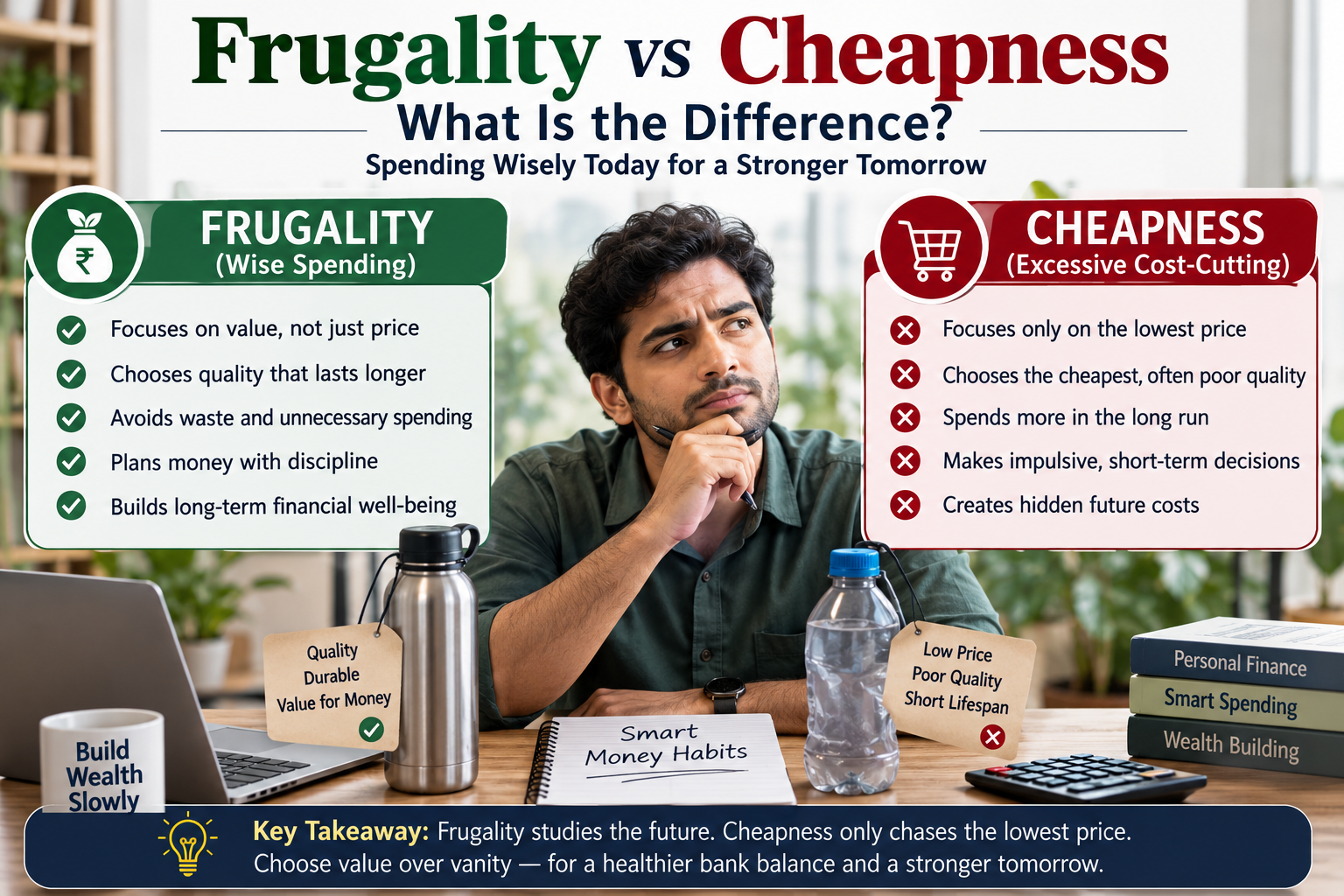
Frugality and cheapness look similar from a distance. Both involve saying no to unnecessary spending. Both question price. Both resist impulse. But financially, psychologically and socially, they are not the same habit. Frugality is the discipline of using money with purpose. Cheapness is the habit of choosing the lowest visible cost even when it damages quality, relationships, time or future security.
This difference matters because personal finance is not only about earning more. It is also about deciding what deserves money, what does not, and what cost is hidden beneath the price tag. A frugal person asks, "Does this spending support my values, goals and long-term well-being?" A cheap person asks only, "Can I pay less right now?"
The first question creates wealth. The second can quietly destroy it. Many people save money on the wrong things and overspend on the wrong things. They may bargain hard on essential health, education, tools or insurance, then spend freely on status, convenience or avoidable consumption. This is not frugality. It is financial confusion dressed as discipline.
Frugality is value-conscious, not joyless
Frugality is often misunderstood as deprivation. In reality, frugality is selective generosity. It is the ability to spend fully on what matters and spend little or nothing on what does not. A frugal household may cook at home most days but spend willingly on a family trip. A frugal professional may avoid unnecessary gadgets but buy a strong laptop because it improves productivity. A frugal investor may avoid flashy speculation but pay for good advice when the stakes are high.
Frugality is therefore not anti-spending. It is anti-waste. It recognises that money is limited and that every rupee has an opportunity cost. Money spent on one choice cannot be invested, saved, donated, used for debt repayment or deployed toward another goal. The frugal person respects this trade-off.
The emotional tone of frugality is also different. It usually creates calm. When spending aligns with values, guilt falls. When needs are planned, emergencies become less frightening. When consumption is intentional, status pressure weakens. Frugality gives money a job instead of allowing money to leak through habit.
Cheapness focuses only on the visible price
Cheapness is narrower. It sees the price but not the full cost. It may choose the cheapest shoe that wears out in two months instead of a stronger pair that lasts two years. It may delay necessary medical consultation until a small issue becomes expensive. It may refuse preventive maintenance on a vehicle and then face a major repair. It may underpay skilled people, damage trust and later pay more to fix poor work.
The cheapest option is not always bad. Sometimes it is perfectly sensible. A generic product may work as well as a branded one. A simple phone may serve better than a premium model. A used item may be more rational than a new one. The problem begins when low price becomes the only criterion.
Cheapness can therefore create false savings. The buyer feels victorious at the moment of purchase but loses through replacement, repair, inconvenience, stress or reputational damage. The saving is immediate; the cost is delayed. That delay makes cheapness seductive.
The time cost of cheap decisions
Money is not the only resource involved in spending. Time has value. Mental energy has value. Reliability has value. A decision that saves Rs 500 but consumes six hours of comparison, travel, negotiation and frustration may not be a genuine saving for a person whose time could have been used productively or peacefully.
This does not mean every convenience is worth paying for. Many convenience products are expensive traps. But frugality includes an honest valuation of time. A household may choose to batch-cook because it saves both money and time. A business owner may pay for reliable software because manual work is costing attention. A student may buy a good course or book because it saves months of confusion.
Cheapness often ignores this invisible ledger. It treats time as free. That is dangerous because poor time allocation can reduce income, health, relationships and learning. A person can appear financially careful while wasting the very resource needed to earn and live well.
Frugality protects the future self
A central test of good money behaviour is whether it protects the future self. Frugality does this. It builds emergency funds, reduces high-interest debt, invests consistently, buys adequate insurance, maintains useful assets and avoids lifestyle inflation. It creates flexibility for future needs.
Cheapness often sacrifices the future self to comfort the present self. It may avoid insurance premiums, postpone health checkups, buy unsafe products, ignore skill development, delay tax planning or refuse to spend on tools that improve earning capacity. These choices may feel like savings, but they transfer risk to the future.
The difference is especially visible in maintenance. Frugal people maintain assets because maintenance extends value. Cheap people avoid maintenance because the bill is visible today. Over time, the frugal person often spends less because assets last longer and crises are fewer. The cheap person may spend more because neglected systems eventually fail.
Social cost: when saving money damages trust
Money habits also affect relationships. Frugality can be respected because it is principled and transparent. Cheapness can become harmful when it shifts costs onto others. Refusing to contribute fairly, exploiting hospitality, underpaying workers, always expecting discounts, or making others feel guilty for normal expenses can damage dignity and trust.
Financial discipline should not become selfishness. A person can live simply without making others pay the price. A frugal friend may suggest a low-cost plan everyone can enjoy. A cheap friend may allow others to pay while claiming prudence. A frugal employer controls waste. A cheap employer cuts fairness.
This is why money character matters. Wealth built through exploitation is not financial wisdom. A strong financial life should protect both numbers and reputation.
How to practise frugality without becoming cheap
The practical method is to judge spending by value, not emotion. First, separate needs, wants, tools and status spending. Needs support basic life. Wants add enjoyment. Tools improve earning power, safety or efficiency. Status spending exists mainly to impress others. Frugality reduces status spending first, not essential spending.
Second, use cost per use. A Rs 5,000 item used 500 times costs Rs 10 per use. A Rs 1,000 item used twice costs Rs 500 per use. This simple lens prevents both overbuying and underbuying.
Third, ask about failure cost. If a cheap item fails, what happens? If the failure creates danger, lost income, medical risk, data loss or major inconvenience, quality matters more.
Fourth, plan joy. Frugality becomes sustainable when life still contains chosen pleasures. A budget that eliminates all enjoyment usually fails. A good budget says yes deliberately, not impulsively.
The business and economic angle
Frugality also matters at the level of businesses and governments. Efficient organisations control waste, avoid vanity spending and allocate capital carefully. Cheap organisations underinvest in people, safety, technology, research and customer experience. They may improve short-term margins while weakening long-term competitiveness.
The same logic applies to public spending. A government that eliminates waste is prudent. A government that underfunds basic health, education, infrastructure or regulatory capacity may appear fiscally strict but create larger future costs. Real economy-wide frugality is not blind austerity; it is intelligent allocation.
This makes frugality a serious economic principle. Societies grow stronger when resources are used productively, when waste is reduced and when short-term savings do not destroy long-term capacity.
Conclusion: the goal is not to spend less, but to spend better
Frugality is not a small habit. It is a philosophy of respect: respect for money, time, labour, future needs and personal values. Cheapness is a narrower impulse: fear of paying. The first builds freedom; the second often builds friction.
A healthy financial life does not require buying the best of everything. It requires knowing where quality matters, where simplicity is enough, where delay is wise and where under-spending becomes risky. The most financially mature people are not those who never spend. They are those who know why they spend.
In the end, frugality is wealth-building because it aligns money with purpose. Cheapness is costly because it mistakes low price for good judgment. The real victory is not paying the least. The real victory is receiving lasting value for every rupee that leaves your hand.
Disclaimer
This article is for educational and editorial purposes only. It is not personal financial, investment, tax, legal or consumer advice. Spending decisions depend on income, family responsibilities, location, risk profile and personal goals. Readers should use qualified professionals where financial, legal or tax stakes are material.