Foreign Portfolio Investment (FPI) in India: Meaning, FPI vs FDI, Rules and Market Impact
Foreign capital does not arrive in only one form.
Some overseas investment builds factories, establishes subsidiaries, buys businesses and remains tied to operating assets for years. Other foreign capital enters through shares, bonds and other financial instruments that can generally be bought or sold much more quickly.
The second category is Foreign Portfolio Investment, or FPI.
Foreign Portfolio Investment refers broadly to cross-border investment in financial assets without the kind of lasting operational control normally associated with Foreign Direct Investment. In India, FPIs are an important part of the equity and debt markets, bringing international capital, liquidity and global price discovery—but also exposing domestic markets to changes in global interest rates, currencies, risk appetite and investor sentiment.
This combination makes FPI both useful and potentially volatile. The central question is not whether foreign portfolio capital is inherently good or bad, but how effectively an economy can benefit from it without becoming excessively dependent on capital that can reverse direction quickly.
What Is Foreign Portfolio Investment?
Foreign Portfolio Investment is investment by overseas investors in financial assets such as shares, bonds and other eligible securities without acquiring the kind of direct managerial influence normally associated with FDI.
Portfolio investors can include pension funds, sovereign wealth funds, mutual funds, insurance companies, asset managers and other eligible foreign investors.
Their objective is usually financial return rather than operating a business themselves.
An FPI may invest because it expects:
- share prices to appreciate,
- dividends to increase,
- bond yields to remain attractive,
- the currency to remain stable,
- economic growth to strengthen,
- or the market to outperform competing countries.
That makes FPI fundamentally different from a multinational company establishing a manufacturing plant or acquiring operational control over a domestic business.
FPI primarily represents financial ownership.
FDI is more closely associated with a lasting direct-investment relationship and business influence.
Latest FPI Trend in India
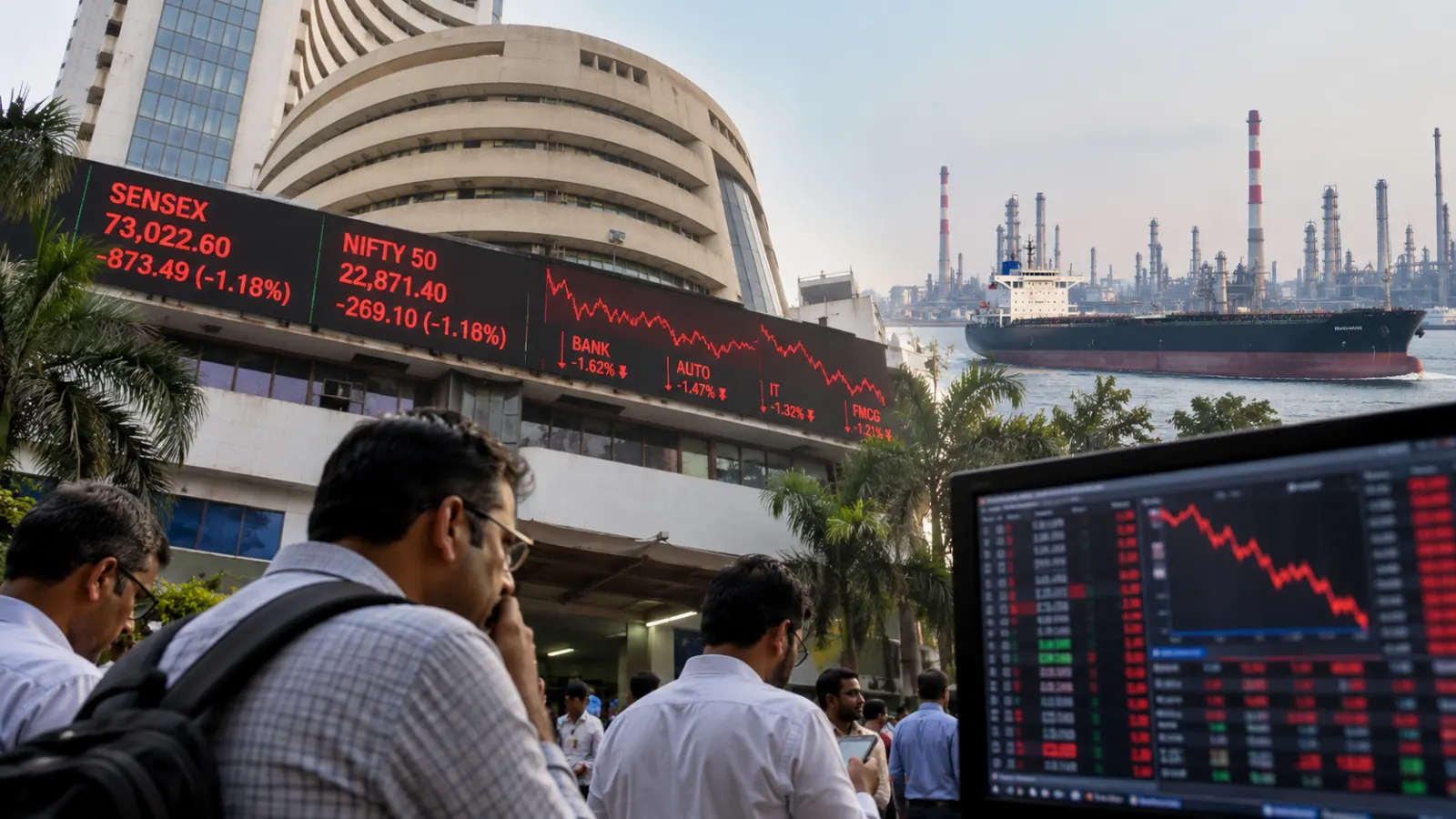
Foreign portfolio flows can change direction rapidly, and India's 2026 experience illustrates that volatility.
As of 23 August 2026, FPIs had invested a net ₹23,544 crore in Indian equities during August, according to depository data reported by Akashvani. Of this, ₹14,118 crore came through stock-exchange purchases and ₹9,426 crore through the primary market. August buying followed approximately ₹20,200 crore of net equity investment in July.
The reversal followed several months of substantial equity selling. Reported FPI equity outflows included approximately ₹1.17 lakh crore in March, ₹60,847 crore in April, ₹32,963 crore in May and ₹49,340 crore in June before flows turned positive in July.
| Recent FPI equity trend | Approximate net flow |
|---|---|
| March 2026 | -₹1.17 lakh crore |
| April 2026 | -₹60,847 crore |
| May 2026 | -₹32,963 crore |
| June 2026 | -₹49,340 crore |
| July 2026 | +₹20,200 crore |
| August 2026, through 23 August | +₹23,544 crore |
These movements demonstrate why one month of FPI buying or selling should not be interpreted as a permanent judgment on the Indian economy.
Foreign investors can change allocations because of global interest rates, valuations, currency movements, fund redemptions or portfolio rebalancing even when India's underlying economic outlook has changed relatively little.
FPI vs FDI: What Is the Difference?
The easiest way to understand FPI is to compare it with Foreign Direct Investment.
| Foreign Portfolio Investment | Foreign Direct Investment |
|---|---|
| Primarily investment in financial assets | Establishes a direct-investment relationship in a business |
| Usually does not involve operational control | Can involve significant influence or control |
| Often more liquid | Usually less easily reversed |
| Commonly involves listed shares and debt securities | Can involve subsidiaries, factories, acquisitions and joint ventures |
| Primarily seeks portfolio returns | Often combines financial return with business strategy |
| Can react quickly to markets | Usually reflects a longer-term operating commitment |
Under India's foreign-investment framework, an individual FPI together with its investor group is generally required to keep its investment in a listed Indian company's equity below 10% of fully diluted paid-up equity capital.
If that threshold is breached, India's regulatory framework provides for divestment or, subject to applicable conditions, reclassification of the holding as FDI. The RBI formalised an operational framework for such reclassification in November 2024.
The threshold provides a practical regulatory boundary between portfolio investment and direct investment.
But economic reality is more nuanced than the percentage alone. A large portfolio investor can still influence market sentiment even without exercising operational control over the companies it owns.
What Can FPIs Invest In?
FPI is often discussed as though it means only foreign investment in Indian shares.
That is too narrow.
Depending on the applicable regulatory framework and limits, foreign portfolio investors can participate in different segments of Indian financial markets, including equities and various debt instruments.
Debt investment itself can operate under different routes and limits.
Current depository data separately track FPI investment through categories such as the General Limit, Voluntary Retention Route and Fully Accessible Route. For example, during August 2026 through the latest reported period, debt flows differed substantially across these routes even while equity investment remained positive.
This matters because the statement “foreign investors are buying India” can conceal very different behaviour.
FPIs may simultaneously:
- buy equities,
- sell conventional debt,
- increase investment in particular government securities,
- rotate between sectors,
- or participate in new issues while selling shares in the secondary market.
A useful FPI analysis therefore identifies both the asset class and investment route.
Why Countries Welcome Foreign Portfolio Investment
FPI gives domestic companies and governments access to a wider pool of international savings.
When overseas investors buy shares, they increase potential demand for equity securities. When they purchase bonds, they contribute capital to debt markets.
This can improve market depth.
A financial market with many diverse participants generally has more buyers and sellers, which can support liquidity and more efficient price discovery.
Foreign institutional participation can also increase scrutiny of companies.
Large global investors frequently examine:
- corporate governance,
- capital allocation,
- profitability,
- disclosure quality,
- minority-shareholder protection,
- sustainability,
- and management performance.
Companies seeking international institutional capital therefore operate within a wider competitive market for investor confidence.
However, attracting FPI should not itself be treated as the objective of economic policy.
The deeper goal is to build financial markets strong enough that both domestic and international investors want to allocate capital based on credible institutions, productive businesses and transparent regulation.
Why FPI Can Move So Quickly
Liquidity is both FPI's greatest advantage and its most important source of volatility.
A foreign company that builds a manufacturing plant cannot easily dismantle the facility and remove its investment tomorrow.
A portfolio manager can sell listed securities much more rapidly.
That difference means FPI responds strongly to changes in relative financial returns.
Suppose interest rates rise sharply in the United States.
US government securities may suddenly offer higher returns with comparatively low perceived risk. Some global investors may then decide that the additional return available in emerging-market assets no longer compensates them sufficiently for currency and market risk.
They can reduce allocations to countries such as India without necessarily believing that India's economy has entered a structural crisis.
Similarly, foreign investors may sell when Indian equity valuations become expensive compared with other markets.
They may also return when relative valuations improve.
This is why FPI flows should be understood as part of a global asset-allocation process, not simply a daily vote of confidence or no-confidence in India.
Interest Rates Matter to Foreign Investors
Global interest rates have an important influence on portfolio flows.
An investor comparing an Indian bond with a US bond does not look only at the headline yield.
The investor also considers:
- credit risk,
- inflation,
- currency movements,
- hedging costs,
- liquidity,
- taxation,
- and expected policy changes.
If returns on safer developed-market assets rise substantially, emerging markets may need to offer more attractive risk-adjusted returns to retain foreign capital.
When expectations shift toward lower global rates, the opposite can occur.
Capital may move back toward emerging-market equities and debt in search of higher returns.
The relationship is not mechanical, but global monetary conditions are an important part of explaining FPI cycles.
The Rupee and FPI Are Closely Connected
Foreign portfolio investment also interacts with the currency market.
When overseas investors allocate new capital to Indian securities, the associated flows can increase demand for rupee assets.
When foreign investors sell Indian investments and repatriate capital, demand for foreign currency can increase.
Large flows can therefore influence currency-market conditions.
But it would be wrong to say:
FPI inflow = rupee automatically rises
or
FPI outflow = rupee automatically falls.
The exchange rate is influenced simultaneously by merchandise trade, oil prices, services earnings, remittances, FDI, external borrowing, central-bank intervention, reserves and global currency movements.
FPI is one part of that wider external-sector equation.
Its influence becomes more important when portfolio movements are particularly large or occur alongside pressure from the current account and global dollar strength.
FPI and India's Foreign-Exchange Reserves
Foreign portfolio flows also interact indirectly with India's broader external financial position.
Foreign-exchange reserves help provide a buffer when global capital becomes volatile.
As of 14 August 2026, India's foreign-exchange reserves had risen to about US$716.9 billion, according to RBI data reported by Reuters, after substantial capital inflows and reserve accumulation.
Large reserves do not prevent markets from falling or guarantee a stable currency.
What they can do is give the central bank greater capacity to respond to disorderly external conditions and help maintain confidence that the country can meet international payment requirements.
This is one reason the effect of FPI outflows differs between economies.
A country with deeper markets, large reserves, strong domestic investors and credible institutions can usually absorb portfolio volatility more effectively than one with thin markets and weak external buffers.
India's Domestic Investors Have Changed the FPI Story
India's financial markets are no longer dependent on foreign institutions to the extent they once were.
Domestic mutual funds, insurance companies, pension-related savings and direct household participation have expanded substantially.
That creates an important counterweight.
When FPIs sell Indian equities, domestic institutional investors may continue buying.
This does not mean foreign flows no longer matter. Large FPI transactions can still affect index levels, individual sectors, liquidity and the rupee.
But stronger domestic financial participation reduces the risk that every period of foreign selling becomes an uncontrolled market shock.
This is strategically important.
A country benefits most from international capital when it is integrated with global finance but not dependent on global finance for market stability.
FPI Regulation in India
Foreign Portfolio Investors in India operate within a regulated framework overseen principally by the Securities and Exchange Board of India (SEBI), together with applicable foreign-exchange rules.
The principal framework includes the SEBI (Foreign Portfolio Investors) Regulations, 2019, which were most recently amended on 7 July 2026.
Foreign investors seeking FPI status generally operate through registration and market infrastructure involving Designated Depository Participants and depositories.
The NSDL FPI portal reported more than 12,000 registered FPIs as of 19 August 2026, illustrating the scale of international institutional participation in India's capital markets.
Regulation serves several objectives simultaneously:
ensuring investor eligibility, identifying beneficial ownership, enforcing investment limits, preventing market abuse, ensuring appropriate disclosures and allowing legitimate international investment to access Indian markets efficiently.
The challenge is maintaining adequate safeguards without creating unnecessary barriers to high-quality global capital.
A Major 2026 Change: SWAGAT-FI
One of the most important recent regulatory developments is the Single Window Automatic and Generalised Access for Trusted Foreign Investors, or SWAGAT-FI, framework.
SEBI announced the framework in January 2026, with its provisions taking effect from 1 June 2026.
It is intended to simplify access for qualifying trusted foreign investors by providing a more unified registration process and reducing repetitive compliance and documentation. Eligible categories include certain central banks, sovereign wealth funds, appropriately regulated broad-based funds, insurers and pension funds.
For qualifying SWAGAT-FI investors, SEBI also introduced longer compliance cycles in certain areas. The regulatory circular provides, among other things, for a 10-year registration block and 10-year KYC review periodicity for eligible SWAGAT-FI FPIs.
This development is important because India's FPI policy is not simply concerned with controlling foreign capital.
It is also trying to make market access easier for credible long-term institutional investors.
FPI Market Infrastructure Is Also Evolving
India continued changing the operating framework for foreign portfolio investors during 2026.
In April, SEBI issued a framework for net settlement of funds for FPI transactions in the cash market, another measure aimed at improving market operations.
The details are regulatory and technical, but the broader direction matters.
As Indian capital markets grow, policy is increasingly focused not only on whether foreign investors are permitted to participate, but on reducing operational friction while preserving identification, transparency and market-integrity safeguards.
This combination—greater accessibility with stronger regulatory infrastructure—is important if India wants to compete internationally for institutional investment.
Why FPI Selling Can Push Markets Down
Foreign institutional investors can hold substantial positions in large listed companies.
When many such investors sell simultaneously, supply increases and share prices can fall.
Heavy selling may affect major indices because FPIs often own large-cap companies that carry significant index weights.
But a market decline during foreign selling does not prove that FPIs alone caused it.
Domestic investors, earnings expectations, interest rates, valuations and global market movements also affect prices.
There is also an important feedback mechanism.
A market may initially fall for economic reasons. Foreign funds then reduce exposure because volatility has increased. Their selling can intensify the decline.
This is why financial-market causality is rarely as simple as:
“FPIs sold, therefore the market fell.”
Sometimes foreign selling is the cause.
Sometimes it is a response.
Often it is both.
Why FPI Buying Is Not Automatically Bullish
The reverse mistake occurs when foreign investors return.
Strong FPI buying can support liquidity and market prices, but it does not guarantee that equities are cheap or that prices will keep rising.
Foreign institutions can themselves make poor investment decisions.
They can buy near market peaks and sell near lows.
Their portfolios are influenced by mandates, benchmark weights, currency hedging and global asset-allocation decisions that may have little relationship to an individual Indian company's intrinsic value.
Retail investors should therefore avoid treating FPI flow data as trading instructions.
Flows provide context, not certainty.
How Retail Investors Should Read FPI Data
Instead of asking simply whether FPIs bought or sold today, readers should ask several questions.
Is the movement occurring only in India, or across emerging markets?
Are investors buying equities while selling debt?
Is the activity concentrated in the secondary market or primary market?
Which sectors are receiving capital?
Are domestic institutions moving in the opposite direction?
What is happening to the rupee?
Have global bond yields changed?
Are Indian equity valuations historically high or low?
Are corporate earnings improving?
This context converts raw flow numbers into meaningful analysis.
For example, foreign investors can sell Indian equities during a global risk-off period even while maintaining a constructive long-term view of India's economy.
Similarly, a sudden FPI inflow can represent short-term tactical positioning rather than permanent confidence.
FPI vs FII: Are They the Same?
Readers frequently encounter both FPI and FII, or Foreign Institutional Investor.
Historically, India used FII terminology extensively for foreign institutional participation in its securities markets.
The modern regulatory framework uses Foreign Portfolio Investor (FPI).
Older reports, market commentary and even some contemporary data pages may still use FII/FPI together because the older expression remains familiar.
For current regulatory analysis, FPI is the appropriate formal term.
Understanding this prevents readers from assuming they are necessarily two completely separate categories whenever both acronyms appear in market reports.
Is FPI Good or Bad for India?
Neither description is adequate on its own.
FPI can provide significant benefits.
It can deepen securities markets, broaden the investor base, contribute liquidity, support capital raising and connect India with global savings.
It can also increase market discipline as domestic issuers compete for international institutional capital.
But portfolio capital is inherently more mobile than direct investment tied to factories and operating businesses.
Large reversals can amplify market and currency volatility.
The appropriate policy response is therefore not to eliminate portfolio flows.
It is to build an economy capable of absorbing them.
That requires:
strong regulation, deep domestic savings, adequate external buffers, credible macroeconomic policy, liquid capital markets and diverse investor participation.
The objective should be resilience alongside openness.
Frequently Asked Questions About FPI
What is FPI in simple words?
Foreign Portfolio Investment is investment by overseas investors in financial securities such as shares and bonds without the type of lasting operational influence generally associated with FDI.
What is the difference between FPI and FDI?
FPI primarily involves financial assets and is generally more liquid. FDI establishes a direct-investment relationship and can involve significant influence over a business, subsidiaries, acquisitions or physical operating assets.
What is the 10% rule for FPI in India?
An FPI together with its investor group is generally required to hold less than 10% of a listed Indian company's fully diluted paid-up equity capital under the applicable portfolio-investment framework. A breach may require divestment or reclassification as FDI, subject to applicable rules.
Who regulates FPIs in India?
SEBI regulates Foreign Portfolio Investors through the SEBI FPI framework, while foreign-exchange and non-debt investment rules also apply. SEBI's FPI Regulations were most recently amended on 7 July 2026.
Why do FPIs sell Indian stocks?
Possible causes include changing global interest rates, high Indian valuations, currency expectations, geopolitical uncertainty, global fund withdrawals, portfolio rebalancing and changes in expected corporate earnings.
Does FPI selling weaken the rupee?
Large outflows can contribute to currency pressure because investors repatriating funds may increase demand for foreign currency. But the rupee is affected by many other forces, including trade, services exports, remittances, oil prices, FDI, reserves and central-bank actions.
Is FPI the same as FII?
FII is older terminology for Foreign Institutional Investor. India's contemporary regulatory framework uses the broader term Foreign Portfolio Investor or FPI, although market reports may still use FII and FPI interchangeably.
How can I check FPI flows in India?
Final FPI investment data are available through India's depositories, including NSDL and CDSL. Stock exchanges also publish provisional daily FII/FPI trading activity, but NSE notes that depository data should be used for final FPI figures.
FPI Is Global Capital With an Exit Door
Foreign Portfolio Investment represents one of the clearest consequences of financial globalisation.
Global investors can allocate capital to Indian companies and debt markets without establishing factories or directly managing businesses.
That creates substantial benefits.
Companies gain access to broader pools of capital. Markets become more liquid. Asset prices incorporate the views of domestic and international investors. India's financial system becomes more connected to global savings.
But that connection works in both directions.
Capital that can enter efficiently can also leave efficiently.
That is why the most successful FPI policy is not one that celebrates every foreign inflow or fears every foreign outflow.
It is one that builds markets capable of functioning through both.
India's growing domestic investor base, sizeable foreign-exchange reserves and increasingly sophisticated market infrastructure improve its ability to absorb international capital cycles.
The deeper measure of financial strength is therefore not whether FPIs are buying this week.
It is whether Indian markets remain stable, liquid and credible even when global portfolio investors change their minds.
Editorial Disclaimer
This article is intended for general financial and economic education. It does not constitute investment, trading, tax, legal or regulatory advice or a recommendation to buy or sell any security. Foreign Portfolio Investment regulations, limits and market flows can change quickly. Current information should be verified through SEBI, RBI, NSDL, CDSL and other applicable official sources before being used for investment, regulatory or policy decisions.