The payment revolution in your pocket
For decades, money moved with friction. A small payment required cash. A transfer required a bank visit, cheque, card machine or internet banking credentials. A shopkeeper needed change. A customer needed an ATM. A freelancer waited for bank details. A street vendor was outside the formal payment map. The inconvenience looked normal because people had lived with it for so long.
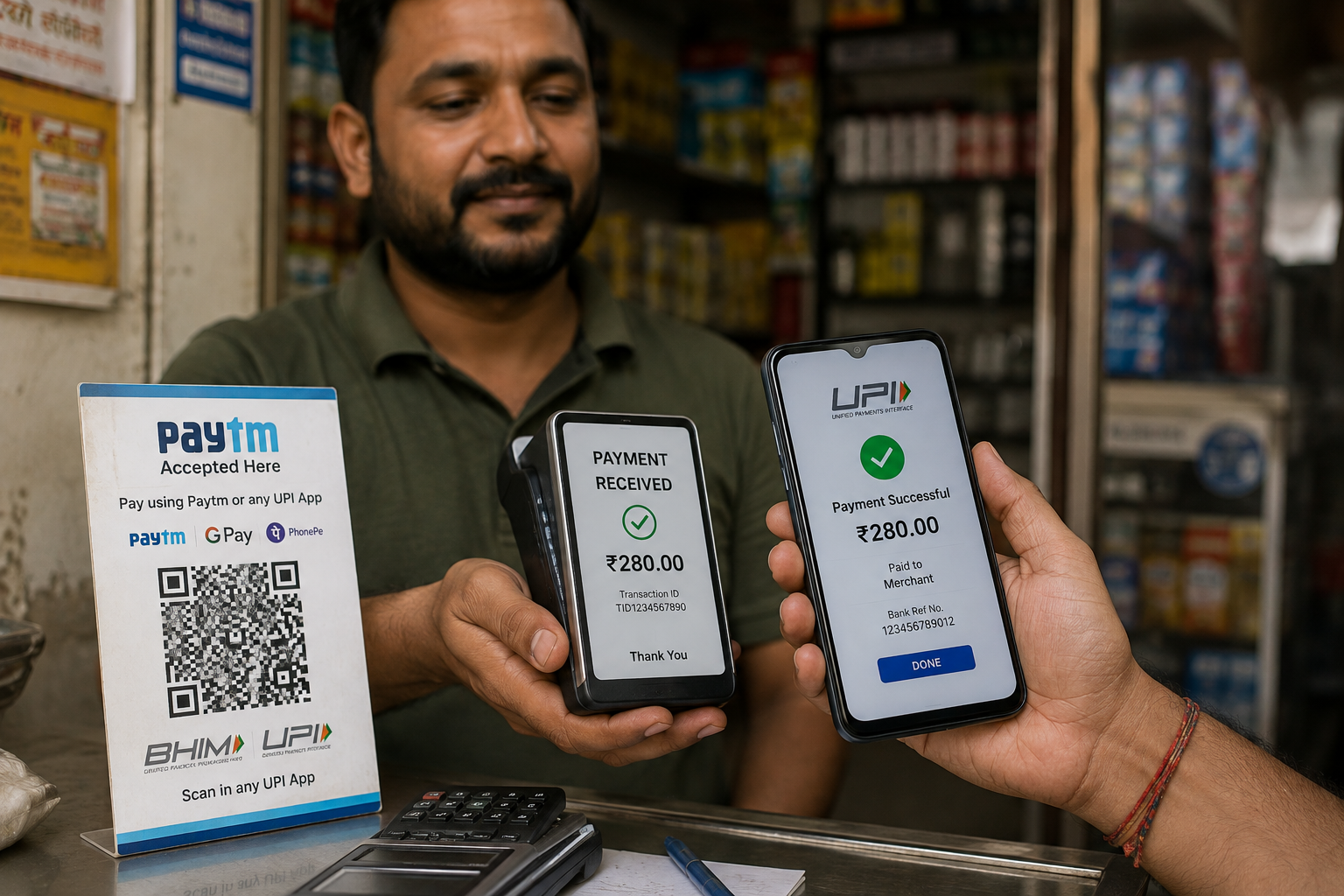
Digital wallets and UPI changed that everyday experience. A smartphone became a payment instrument. A QR code became a point-of-sale terminal. A mobile number or virtual payment address became enough to send money. The change was not only technological. It changed behaviour. People began paying for tea, groceries, taxis, school fees, subscriptions and small business invoices with a few taps.
India's UPI story is especially important because it did not simply digitise card payments. It created public payment rails on which banks and apps could operate. That architecture allowed interoperability. A user of one app could pay a user of another app through bank-linked infrastructure. The result was not just another wallet. It was a payments network that made instant digital transfers ordinary.
What a digital wallet is
A digital wallet is an electronic store or interface for making payments. In simple language, it allows users to keep payment instruments in digital form and use them through a mobile app or web interface. Some wallets store prepaid value. Some act as interfaces for cards, bank accounts or payment systems. Some combine bill payment, merchant payment, money transfer, rewards and financial services.
A prepaid wallet typically requires users to load money first and then spend from that balance. Other apps may not store money directly but allow payments from linked bank accounts, cards or UPI handles. The user experience may look similar, but the underlying structure can be different. This matters for regulation, safety, refunds, limits and grievance redressal.
The biggest appeal of wallets is convenience. They reduce the need for cash, speed up payments, provide transaction history and support online commerce. But convenience should not hide the fact that wallets are part of a regulated financial infrastructure. Money moving digitally still needs security, authentication, record keeping and consumer protection.
What UPI is
UPI, or Unified Payments Interface, is an instant payment system developed by the National Payments Corporation of India. It allows users to transfer money between bank accounts through mobile applications. Instead of entering account number and IFSC every time, users can pay through a UPI ID, QR code, mobile number or app interface, depending on the enabled feature.
UPI's significance lies in interoperability. A person using one UPI app can pay another person or merchant using a different app, as long as both are connected to the UPI ecosystem through participating banks and approved systems. This differs from a closed wallet where value may remain trapped inside one provider's network.
UPI is bank-account based. When a user pays through UPI, money typically moves from the payer's bank account to the receiver's bank account in near real time. The app provides the interface, but the payment rail connects banks. This architecture helped UPI scale because users did not need to maintain separate balances in multiple wallets for every transaction.
Wallet vs UPI: the important difference
Many users casually use the words wallet, app and UPI as if they mean the same thing. They do not. A payment app is the interface. A wallet may hold stored value. UPI is a bank-linked payment rail. The same app may offer both wallet and UPI features, which creates confusion.
If you load money into a wallet, you are using stored value subject to wallet rules and limits. If you pay through UPI from your bank account, money moves directly from your bank account through the UPI system. If you use a card saved in an app, the transaction may travel through card networks. The screen may look similar, but the backend is different.
This difference matters when a payment fails, a refund is delayed, a fraud occurs or limits apply. Users should know whether they paid from wallet balance, bank account, credit line, card or UPI. Financial literacy in digital payments begins with understanding the rail behind the button.
Why UPI became transformative in India
UPI became transformative because it solved multiple problems at once. It made small payments easy. It reduced dependence on cash. It allowed merchants to accept digital payments without expensive card machines. It enabled instant person-to-person transfers. It worked across banks and apps. It reduced friction for bill payments, subscriptions, collections and business transactions.
The QR code was especially powerful. A small shopkeeper, vegetable vendor or tea stall could display a QR code and receive payment instantly. This lowered the entry barrier for digital acceptance. Earlier, digital payments were associated with formal retail, card machines and urban consumers. UPI made digital payments visible in street-level commerce.
UPI also benefited from India's wider digital public infrastructure: bank account expansion, Aadhaar-enabled identity systems, mobile connectivity, affordable data and growing smartphone adoption. The payments revolution did not emerge from one app alone. It emerged from rails, regulation, competition and user behaviour converging at the same time.
The economics of digital payments
Digital payments create economic value by reducing friction. When payments are faster, transactions become easier. Businesses can collect money remotely. Small merchants can reduce cash-handling risk. Consumers can maintain records. Governments can transfer benefits more efficiently. Freelancers and gig workers can receive payment without delays. Formal transaction trails can support credit assessment.
But digital payments also create economic questions. Who pays for the infrastructure? Are merchants charged? Are apps subsidising user acquisition? What happens when private platforms dominate the user interface built on public rails? How are fraud costs allocated? How is consumer data used? The visible transaction may be free or cheap, but payment systems always have costs somewhere in the chain.
A mature economy should not measure payment success only by transaction volume. It should also examine reliability, inclusiveness, data protection, fraud control, competition and resilience during outages.
Digital wallets in daily life
Digital wallets remain useful even in a UPI-dominated environment. They can support prepaid spending, gift cards, transit payments, subscriptions, loyalty rewards, small-value transactions and cases where users want to separate spending from their main bank account. Some wallets are useful for children, employees, controlled budgets or specific platforms.
For users, wallets can help track spending if used carefully. A separate wallet balance can impose discipline. But wallets can also encourage frictionless spending. When payment becomes painless, consumption can become less visible. The absence of physical cash can make people underestimate how much they are spending.
The psychological effect of digital payments is important. Cash creates a visible loss at the moment of payment. Digital payments reduce that pain. Convenience is valuable, but it must be paired with transaction awareness.
Security and fraud risks
Digital payments reduce some risks but create others. They reduce the risk of carrying cash, losing change or handling counterfeit notes. But they increase exposure to phishing, screen-sharing fraud, fake customer care numbers, QR-code scams, payment request manipulation, malware and social engineering.
Most payment fraud does not require breaking the payment system. It requires tricking the user. A fraudster may pretend to be a bank employee, buyer, delivery agent, app support executive or government officer. The victim may be persuaded to share OTPs, enter UPI PIN, approve a collect request or install remote-access software. The technology may be secure, but the human layer remains vulnerable.
The most important safety rule is simple: receiving money does not require entering a UPI PIN. A UPI PIN is used to authorise outgoing payment. Users should never share OTPs, PINs or passwords. They should not install apps suggested by strangers. They should verify payment requests before approval. They should report fraud quickly through the app, bank and official complaint channels.
UPI and financial inclusion
UPI is often celebrated as a financial-inclusion tool because it allows low-cost, instant digital payment access across social and economic groups. A migrant worker can send money home instantly. A small merchant can receive digital payments without card infrastructure. A household can pay bills without travel. A microbusiness can create transaction history.
But financial inclusion is not complete just because payment access improves. Inclusion also requires grievance redressal, language accessibility, fraud awareness, reliable connectivity, disabled-user access and protection for people who are new to formal finance. A person who can scan a QR code but cannot resolve a failed transaction is only partially included.
The next stage of digital inclusion should focus less on adoption and more on trust. Users must know what happened when a transaction fails, where money is stuck, how long refunds take and whom to contact. Payment systems become truly inclusive when ordinary users can solve problems without fear.
Impact on businesses and government
For businesses, digital payments improve collection speed and reduce cash handling. They create digital trails that can support accounting, tax compliance and creditworthiness. A small business with regular digital receipts may find it easier to demonstrate revenue to lenders. For larger businesses, digital payments improve reconciliation, subscription billing and customer analytics.
For government, digital payments can improve welfare delivery, tax collection, transparency and public-service payments. When money moves electronically, leakage can reduce and audit trails improve. However, digital trails also raise questions about privacy and surveillance. A cashless society may be efficient, but it must not become a society where every small transaction is vulnerable to misuse.
The goal should not be to eliminate cash by force. It should be to make digital payments so reliable, safe and useful that people choose them willingly while retaining payment choice for resilience.
The risks of overdependence
A payment system that becomes central to daily life must be resilient. If digital payments fail during an outage, network disruption, cyber incident or bank downtime, people still need alternatives. Cash, cards, offline payment modes and fallback systems remain important. A modern economy should not confuse digital progress with single-point dependence.
Overdependence also creates platform-power concerns. If a few apps dominate user access, they can influence consumer behaviour, merchant visibility and data flows. Public rails must remain open, competitive and interoperable. The success of UPI lies partly in its network nature. That strength must not be weakened by closed ecosystems or unfair platform practices.
Digital payment policy should therefore focus on resilience, interoperability, cyber security and consumer protection, not only growth.
Final takeaway
Digital wallets and UPI have changed the everyday experience of money. They have made payments faster, smaller, more traceable and more convenient. They have brought street vendors, households, freelancers, small shops and large firms onto the same digital payment map. In India, UPI has become more than a payment feature; it has become part of the country's economic infrastructure.
But the deeper lesson is that payment innovation is not only about speed. It is about trust. Users must trust that money will reach the right person, failed transactions will be resolved, fraud will be addressed and data will be protected. Merchants must trust that digital receipts are reliable. Policymakers must ensure that public payment rails remain secure, competitive and inclusive.
The future of money will not be decided only by apps. It will be decided by whether digital systems make ordinary economic life more transparent, safer and fairer. UPI and digital wallets have made money move faster. The next challenge is to make digital finance more responsible.