The Truth About Supplements: When They Help, When They Don’t and How to Use Them Safely
Few health products occupy as much psychological space as supplements.
A tablet can feel precise. A capsule arrives with a number on the label. A powder may promise energy, immunity, concentration, sleep, metabolism or longevity. Compared with the untidy business of eating well, sleeping adequately and managing chronic disease, supplements can appear almost engineered for reassurance.
But “supplement” is a commercial category, not a guarantee of benefit.
Some supplements are extraordinarily useful. Folic acid around conception is a classic example: adequate folic acid before and during early pregnancy substantially reduces the risk of neural-tube defects. Vitamin B12 supplementation can be necessary for people unable to obtain or absorb enough B12. A diagnosed nutritional deficiency may require targeted treatment.
Other supplements provide uncertain benefits, are unnecessary for the person taking them, or introduce avoidable risks.
The correct question is therefore not “Are supplements good or bad?” It is “Which supplement, for whom, for what purpose, at what dose, and supported by what evidence?”
What counts as a supplement?
The category can include vitamins, minerals, amino acids, herbs, botanicals, probiotics and numerous other substances.
That range alone should make us suspicious of blanket claims.
Vitamin B12 prescribed to correct deficiency and an herbal mixture sold online as a “detox” product may both sit under the broad supplement umbrella, but they have little else in common.
Evidence must therefore be evaluated ingredient by ingredient and use by use.
Supplements can solve real nutritional problems
One reason the supplement debate becomes confused is that genuine benefits are sometimes used to validate unrelated claims.
Folic acid is an instructive example. Evidence supporting folic acid before conception and during early pregnancy is strong enough that multiple public-health bodies recommend supplementation to reduce neural-tube defects. NIH’s Office of Dietary Supplements notes that folic acid is the form demonstrated in clinical trials for this purpose.
Likewise, people following vegan diets are at risk of vitamin B12 inadequacy because natural food sources of B12 are largely animal-derived; other people develop B12 deficiency because absorption is impaired. Supplements or medical treatment can therefore be necessary depending on cause.
This is supplementation doing what the word implies: filling a defined nutritional need.
A supplement cannot compensate for everything else
Once we accept that supplements can be useful, it is tempting to imagine that a multivitamin provides insurance against an otherwise poor diet.
That is too simple.
Foods contain combinations of nutrients, fibre and other compounds, while dietary patterns influence energy balance and the intake of sodium, free sugars, saturated fat and other components that a vitamin tablet does not remove.
WHO’s approach to healthy nutrition therefore remains primarily food-based: meet energy and nutrient needs through a varied diet, largely plant-based, while adjusting for individual requirements and circumstances.
A supplement may correct a nutrient gap. It cannot turn an unhealthy overall dietary pattern into a healthy one.
“Natural” is not a synonym for safe
This is one of the most persistent misconceptions in the supplement market.
Plants produce pharmacologically active chemicals. That is precisely why many traditional remedies, modern medicines and toxic substances originate in nature.
The U.S. National Center for Complementary and Integrative Health explicitly warns that “natural” does not automatically mean safer. It also documents potentially serious adverse effects from some supplement ingredients, including liver injury associated with certain products.
A natural origin tells you where a substance came from. It does not establish an appropriate dose, effectiveness, purity or safety.
Supplements can interact with medicines
Consumers sometimes forget to list vitamins and herbal products when asked what medication they take.
That can be a mistake.
Supplement ingredients can alter drug absorption, metabolism or biological effects. The FDA, for example, warns that St John’s wort can reduce the effectiveness of several medicines.
Other combinations may increase adverse effects.
The risk is particularly relevant for people taking multiple medicines, undergoing surgery, managing chronic illness, receiving cancer treatment, or taking drugs with narrow therapeutic ranges.
A clinician and pharmacist therefore need to know about supplements as well as prescriptions.
Regulation is not the same everywhere
A global article has to be careful here.
Supplement regulation differs between jurisdictions. A product sold as a food supplement in one country may fall under different legislation elsewhere.
The United States provides a useful example of why consumers should not assume that every bottle has undergone drug-style pre-market approval.
Under U.S. law, the FDA does not approve dietary supplements for safety and effectiveness before most products enter the market. Manufacturers have primary responsibility for ensuring their products comply with applicable safety, manufacturing and labelling requirements, while FDA has post-market enforcement powers.
That is a description of the U.S. framework, not a universal global rule.
Quality and effectiveness are different questions
Suppose independent testing confirms that a supplement contains exactly the amount of magnesium written on its label and is free from relevant contaminants.
That establishes something important about manufacturing quality.
It does not prove that taking the magnesium will treat the condition advertised.
NIH’s Office of Dietary Supplements notes that independent quality seals may indicate that a product was properly manufactured, contains the labelled ingredients and avoids harmful contaminant levels. Such seals do not establish that the supplement is safe or effective for a particular health claim.
Consumers should therefore separate three questions:
Does the bottle contain what it claims?
Is the dose reasonably safe for me?
Is there good evidence it achieves the outcome I want?
Those questions are not interchangeable.
More is not better
Micronutrients are required in small quantities because biological systems operate within ranges.
Deficiency can be harmful, but excessive intake of some vitamins and minerals can also cause harm. WHO has specifically recognised health risks from excessive consumption of certain micronutrients.
Fat-soluble vitamins are an obvious example because they can accumulate, but excessive intake is not limited to that category.
Combining fortified foods, multivitamins and individual high-dose nutrient supplements can also push total intake higher than consumers realise.
Beware claims that sound like medicine without evidence
A useful warning sign is a product that promises dramatic, rapid or universal outcomes.
Claims to “detox” the body, cure chronic disease, melt fat quickly, permanently boost immunity or replace medical treatment should receive particular scrutiny.
The FDA continues to identify products marketed as supplements that contain undeclared pharmacologically active ingredients. Its health-fraud database includes products cited for hidden ingredients and unlawful disease-treatment claims.
That does not mean all supplements are contaminated. It means consumers should not infer safety from packaging.
A better decision process
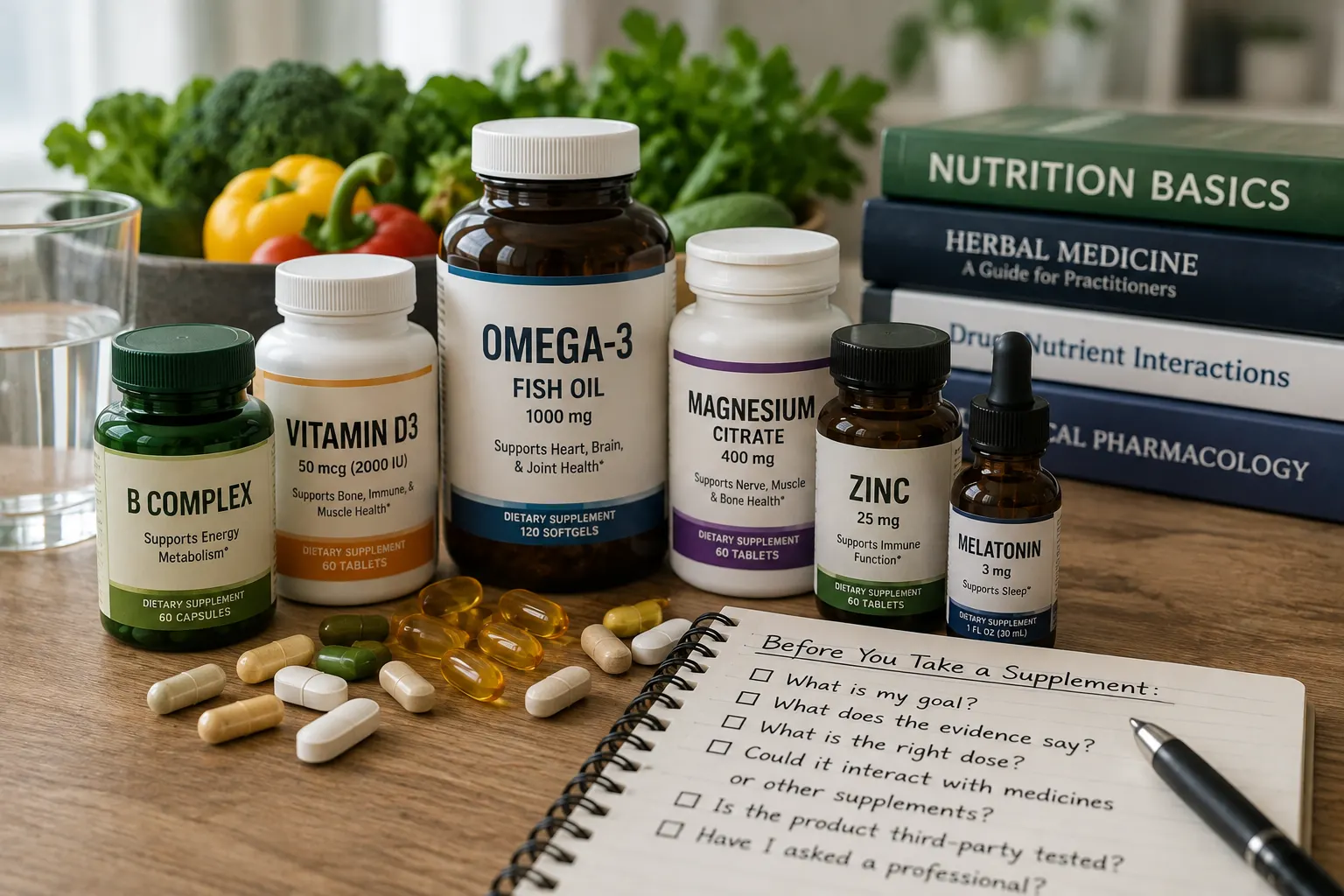
Before starting a supplement, ask:
What problem am I trying to solve?
If the answer is a diagnosed deficiency, pregnancy-related recommendation, medically recognised risk or specific dietary gap, the rationale may be clear.
What evidence supports this ingredient for that problem?
Evidence for one use should not be transferred casually to another.
What dose am I actually taking?
Check the amount per serving and the number of servings.
Could it interact with medicines or another supplement?
This is particularly important when several products are combined.
Who makes it, and is there credible quality assurance?
Quality testing cannot establish effectiveness, but it can reduce uncertainty about what is inside the product.
The real truth about supplements
Supplements are neither scams as a category nor shortcuts to health as a category.
They are tools.
Some have compelling evidence in specific circumstances. Some have modest evidence. Some remain uncertain. Others are marketed on claims that are biologically implausible, inadequately tested or simply false.
The disciplined approach is therefore remarkably ordinary: identify a need, examine the evidence, check the dose, consider interactions and use professional advice when the consequences matter.
A vitamin bottle should not be feared. It should also not be granted authority merely because it comes with scientific-looking numbers.
Medical note: People who are pregnant, breastfeeding, taking prescription medicines, preparing for surgery, treating a medical condition or considering high-dose supplements should discuss supplement use with an appropriately qualified healthcare professional.