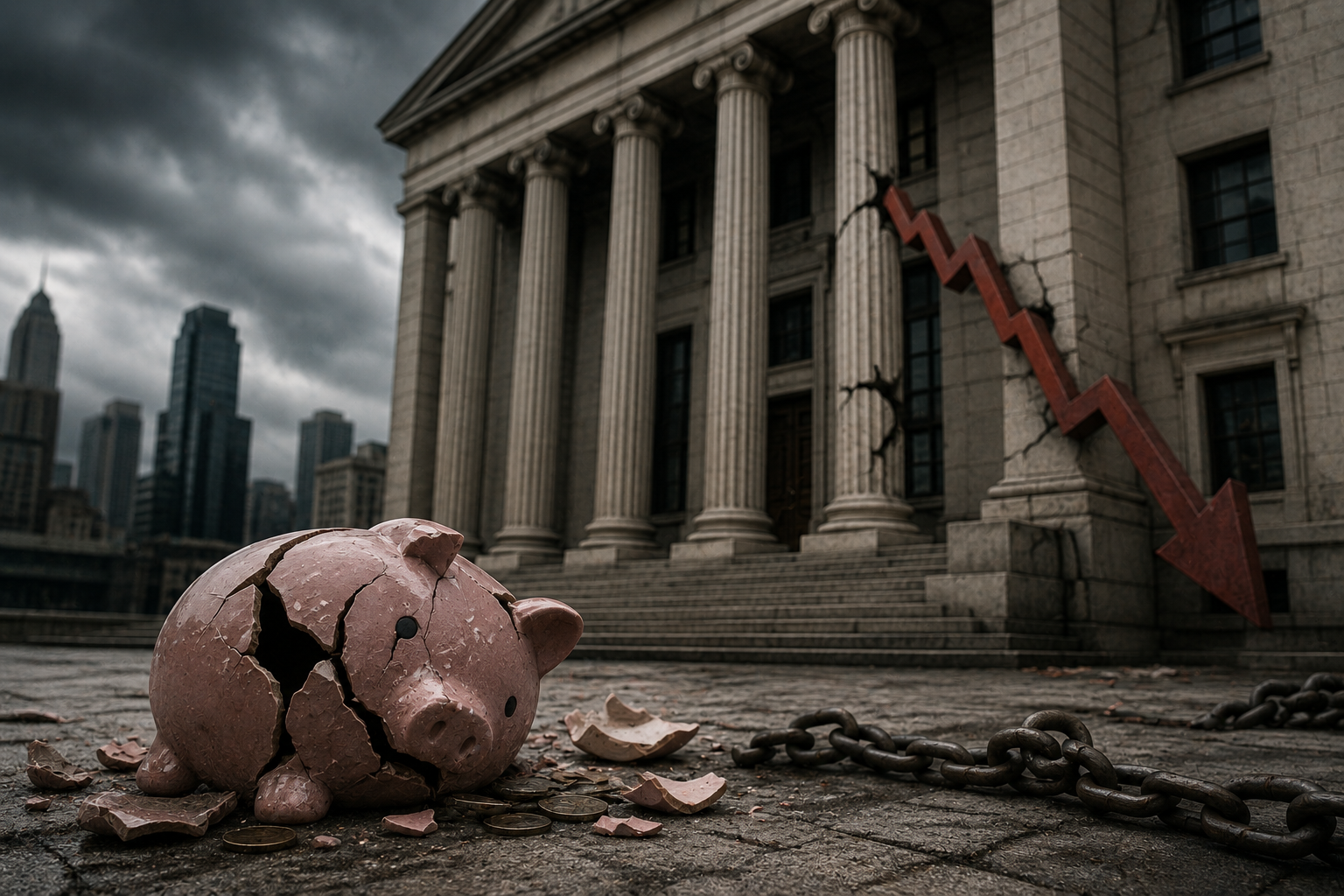
Bad loans are slow-moving financial earthquakes
A bad loan rarely looks dramatic on the first day. A borrower misses a payment. A project is delayed. A company asks for more time. A bank relationship manager expects recovery next month. On paper, the problem seems contained. But if many such loans accumulate, the banking system begins to carry hidden pressure. The earthquake is not visible at the surface, but the fault line is active.
Bad loans threaten banks because banking depends on trust, cash flow and confidence. Depositors trust banks with money. Banks lend that money to borrowers. Borrowers repay with interest. The system works when enough loans perform as expected. When loans stop performing, banks lose income, build provisions, consume capital and become cautious about future lending.
A single bad loan is a business problem. A wave of bad loans is a financial stability problem. It can slow credit, damage investment, force recapitalisation, weaken public confidence and turn private mistakes into public costs.
The credit boom problem
Bad-loan crises often begin during good times. When the economy is expanding, lenders feel confident, borrowers feel ambitious and asset prices rise. Banks compete to lend. Businesses borrow for expansion. Households borrow for property, vehicles and consumption. Credit growth looks like progress.
The danger is that good times can weaken discipline. Collateral values may be inflated. Future cash flows may be assumed too optimistically. Banks may underprice risk to win customers. Borrowers may take loans assuming growth will continue forever. A credit boom can therefore plant the seeds of a later bad-loan cycle.
When conditions reverse, weak assumptions collapse. Interest rates rise, demand slows, input costs increase, projects get stuck, customers delay payments and asset prices fall. Suddenly loans that looked safe during the boom begin to fail. The system discovers that some growth was financed by hope rather than repayment capacity.
How bad loans weaken bank profits
The first impact of bad loans is on bank income. A performing loan generates interest. A stressed loan may stop doing so. The bank may also be unable to recognise interest as income in the normal way once asset quality deteriorates. Income that the bank expected disappears or becomes uncertain.
At the same time, the bank must make provisions. Provisioning reduces profit because the bank has to set aside money for possible loss. If bad loans rise sharply, provisions can eat a large share of operating profit. A bank may still have branches, staff, deposits and technology, but its earnings become absorbed by past lending mistakes.
This matters because profit is not only a reward for shareholders. Profit builds capital, funds technology, supports expansion and creates resilience. A bank with weak profits has less ability to absorb future shocks. Bad loans therefore reduce not only current earnings but future strength.
How bad loans consume capital
Capital is the bank’s shock absorber. It protects depositors and the financial system when loans go wrong. When losses rise, capital is consumed. If capital falls too low, the bank cannot safely expand lending and may require fresh capital from investors, promoters or, in some cases, the government.
This is where bad loans become a public issue. If a large bank is systemically important, allowing it to fail can create panic. But rescuing it may require public money or regulatory support. The public may then ask why ordinary taxpayers should bear the cost of poor lending decisions, weak governance or borrower misconduct.
The answer is uncomfortable: banking mistakes can become socialised because banks are critical infrastructure. This is why bank supervision, governance and early recognition of bad loans matter. Prevention is cheaper than rescue.
The credit slowdown effect
When banks are burdened by bad loans, they become cautious. They may reduce exposure to risky sectors, tighten documentation, demand stronger collateral and avoid new lending. This caution is understandable, but it affects the wider economy. Creditworthy borrowers may find finance harder to access because the bank is repairing damage from earlier borrowers.
This creates a feedback loop. Lower credit availability can slow business expansion, employment and consumption. Slower growth can make existing borrowers weaker. More borrowers then become stressed, and banks become even more cautious. A banking problem can therefore become a growth problem.
This is why economists pay attention to asset quality. Bad loans are not only about yesterday’s defaults. They influence tomorrow’s credit. A weak loan book can act like a brake on the economy even when interest rates are low or demand exists.
Why bad loans can become public costs
Bad loans become public costs when the affected institution is too important to fail quietly. A small lender may be resolved with limited spillover, but a large bank touches millions of depositors, borrowers, employees, vendors and payment systems. The state may have to intervene not because every mistake deserves rescue, but because disorderly collapse can create wider damage.
This creates a difficult policy trade-off. If the state supports weak banks too easily, it may encourage careless lending in the future. If it refuses support in a panic, it may allow confidence to break. Good policy therefore tries to protect depositors and financial stability while imposing accountability on management, promoters and irresponsible borrowers.
The cleanest solution is prevention. Strong supervision, honest disclosure and early provisioning reduce the chance that a bank’s private credit mistakes become a public balance-sheet problem.
Contagion and confidence
Banking is built on confidence. Most depositors do not inspect every loan on a bank’s balance sheet. They trust that management, auditors and regulators are doing their job. If bad loans are hidden or suddenly revealed, confidence can weaken quickly.
The danger is contagion. Concern about one bank can spread to others if people believe the problem is systemic. Markets may punish bank stocks. Depositors may shift funds to perceived safer institutions. Lenders may become reluctant to lend to banks. Even healthy institutions can face pressure if trust in the sector declines.
This is why transparency is not optional. It may be painful for a bank to recognise bad loans, but delayed honesty is more dangerous. Financial systems are more stable when losses are visible and managed rather than hidden until confidence breaks.
Bad loans and moral hazard
Bad loans also create a moral hazard problem. If powerful borrowers believe they can delay repayment, restructure repeatedly, shift assets or negotiate large haircuts without consequences, credit culture weakens. Honest borrowers pay on time while irresponsible borrowers exploit the system. That perception damages financial morality.
Banks can also face moral hazard. If managers believe future losses will be absorbed by shareholders, taxpayers or regulators, they may take excessive risk during boom periods. Poor appraisal, political pressure, related-party lending and unrealistic project assumptions can all flourish when accountability is weak.
A healthy credit system needs both compassion and discipline. Genuine failure should not be criminalised. Business risk is real. But deliberate default, fraud, fund diversion and reckless lending must face consequences. Otherwise the system rewards the wrong behaviour.
Why resolution must be timely
Bad loans lose value with time. A factory that stops operating deteriorates. Machinery becomes obsolete. Employees leave. Customers move away. Collateral values fall. Legal disputes consume years. By the time recovery happens, the economic value may be far lower than the amount outstanding.
Timely resolution is therefore critical. Banks must identify stress early, decide whether the borrower is viable, restructure when recovery is credible, enforce collateral when necessary and use insolvency mechanisms where appropriate. Delay is often costly for both borrower and lender.
Resolution should not mean automatic liquidation. Some businesses are worth saving. But saving a business requires a realistic plan, new discipline and sometimes new ownership. A weak borrower should not be kept alive indefinitely merely to avoid recognising loss.
What protects the banking system
The banking system is protected by many layers: prudent lending, borrower due diligence, collateral valuation, sector exposure limits, early warning signals, asset classification norms, provisioning, capital adequacy, audits, regulatory supervision, insolvency frameworks and market discipline. None is perfect alone. Together they create resilience.
Technology can help, but it cannot replace judgement. Data analytics may detect stress earlier. Credit bureaus may show borrower behaviour. Cash-flow monitoring may reveal weakness. But banks still need people willing to say no during booms and act early during stress.
The best protection is a culture of realistic lending. Loans should be based on repayment capacity, not only collateral or relationships. A bank that lends badly during good times cannot become safe through recovery action during bad times.
Final takeaway
Bad loans threaten the banking system because they attack its foundations: income, capital, credit flow and trust. They reduce bank profitability, consume buffers, slow new lending and can force public intervention. What begins as a borrower problem can become a national economic problem.
The solution is not to stop lending. Economies need credit. Businesses need risk capital. Households need access to finance. The solution is better lending, faster recognition of stress, fair restructuring for viable borrowers, firm action against misconduct and transparent reporting.
A banking system is strongest when it can lend boldly but recognise failure honestly. Bad loans become dangerous not simply because borrowers fail, but because institutions delay facing the failure. The earlier the truth enters the balance sheet, the safer the system becomes. That honesty is the real foundation of durable financial stability.