Abraham Lincoln Biography: Presidency, Civil War, Slavery and Legacy
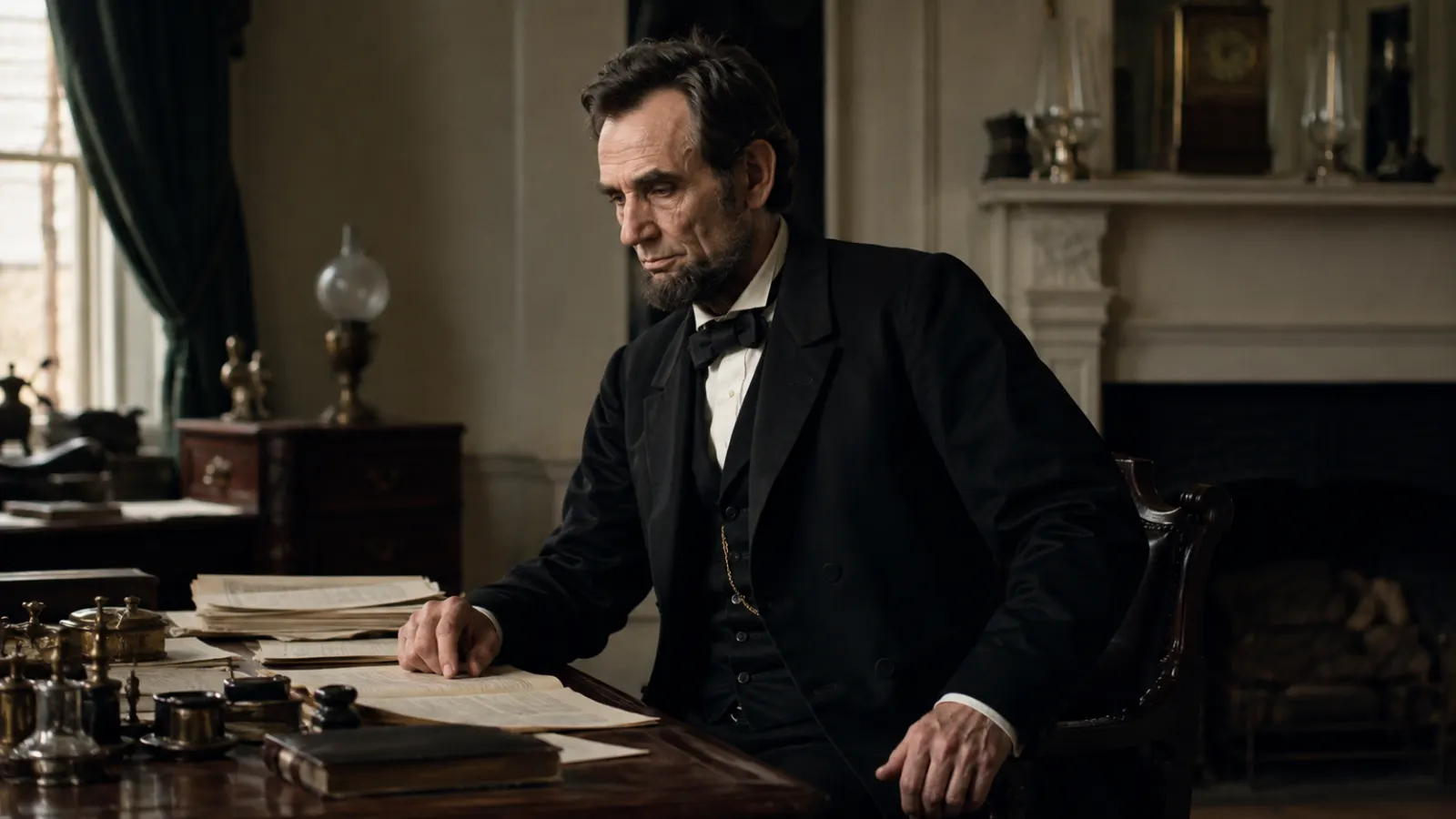
An Abraham Lincoln biography cannot be reduced to the familiar story of a poor frontier boy who became president, saved the Union and freed enslaved Americans. Those events are central to his life, but the historical Lincoln was more complicated: morally opposed to slavery yet initially cautious about federal abolition, committed to constitutional government yet willing to stretch presidential power during civil war, and capable of changing his position when events made older formulas inadequate.
Lincoln entered the presidency in 1861 insisting that his central duty was to preserve the Union and assuring the South that he would not interfere with slavery where it already existed. By the time of his assassination four years later, his administration had issued the Emancipation Proclamation, authorised Black military service, supported a constitutional amendment abolishing slavery throughout the United States and begun considering a limited expansion of Black voting rights. That transformation was not the execution of a fixed plan he had carried into office. It emerged through war, enslaved people's actions, abolitionist pressure, military necessity, Republican politics, Black enlistment, constitutional argument and Lincoln's own changing judgment.
That capacity for change is one of the most important themes of Lincoln's political life. He was neither outside the prejudices of nineteenth-century America nor permanently trapped by them. Understanding his significance requires holding together his achievements, limitations, compromises and the extraordinary circumstances in which he governed.
Abraham Lincoln at a Glance
| Fact | Detail |
|---|---|
| Full name | Abraham Lincoln |
| Born | February 12, 1809 |
| Birthplace | Near Hodgenville, Kentucky |
| Political parties | Whig; later Republican |
| Profession | Lawyer and politician |
| President | 16th president of the United States |
| Presidency | 1861–1865 |
| Major crisis | American Civil War |
| Major antislavery action | Emancipation Proclamation, effective January 1, 1863 |
| Constitutional abolition | Supported passage of the Thirteenth Amendment |
| Reelected | 1864 |
| Assassinated | April 14, 1865 |
| Died | April 15, 1865 |
| Age at death | 56 |
The National Park Service records Lincoln as the 16th president, born in Kentucky on February 12, 1809, and dying in Washington on April 15, 1865.
Early Life: From Kentucky to Indiana and Illinois
Abraham Lincoln was born in 1809 into a frontier farming family in Kentucky. His family later moved to Indiana and then Illinois, and his formal education was limited. The Library of Congress estimates that he had only about eighteen months of formal schooling, but he read intensively and pursued learning largely on his own.
The familiar description of Lincoln as “self-educated” is broadly justified, but it can become romanticised if it suggests that intelligence alone carried him effortlessly from poverty to the presidency. His advancement was gradual. He worked in several occupations, served briefly in the Illinois militia during the Black Hawk War, entered local politics and eventually studied law.
Lincoln's attention to language became one of the defining features of his political career. His most memorable speeches were often powerful not because they were long or ornamental but because they compressed large moral and constitutional arguments into unusually disciplined prose.
In 1836 he qualified as a lawyer. He eventually built a successful legal career in Springfield, Illinois, travelling the Eighth Judicial Circuit and handling disputes involving property, debt, transportation, contracts and other ordinary legal matters. The courtroom gave Lincoln experience in reducing complicated disputes to arguments that judges and juries could understand.
Marriage, Family and Personal Loss
Lincoln married Mary Todd in 1842. The couple had four sons: Robert, Edward, William and Thomas, known as Tad. Only Robert survived into adulthood.
The Lincolns experienced repeated bereavement. Edward died in childhood, Willie died in the White House in 1862 and Tad died several years after his father. Willie's death occurred while the country was already in civil war and placed intense private grief inside a presidency defined by public catastrophe.
Lincoln's marriage has generated extensive historical interpretation because both Abraham and Mary experienced periods of severe emotional strain. A responsible biography should avoid retroactively diagnosing either of them from limited nineteenth-century evidence, but there is little doubt that war, political attacks and family loss made the White House years extraordinarily difficult.
Lincoln Was a Whig Before He Became a Republican
Lincoln's first mature political identity was not Republican but Whig. He admired Henry Clay and supported a political programme that favoured economic development, infrastructure, commerce and what Whigs called internal improvements.
The Whig vision assumed that government could help create conditions in which individuals could advance economically. Roads, canals, banking institutions and commercial development were not merely technical questions for Lincoln; they fitted his belief that ordinary people should have opportunities to improve their circumstances.
He served in the Illinois legislature and later one term in the U.S. House of Representatives from 1847 to 1849. His congressional career was not especially successful politically. He criticised President James K. Polk's justification for the Mexican-American War, a stance that exposed him to attacks in his home district, and he did not immediately emerge as a national antislavery leader.
The political crisis that transformed his career came several years later.
The Kansas-Nebraska Act Brought Lincoln Back Into National Politics
The Kansas-Nebraska Act of 1854 allowed settlers in new territories to decide the slavery question through “popular sovereignty,” effectively opening territory previously restricted by the Missouri Compromise framework to possible slavery.
Lincoln saw the measure as a dangerous reversal. He believed that the federal government could constitutionally restrict slavery's expansion and increasingly argued that slavery violated the principles of the Declaration of Independence. The National Park Service identifies the Kansas-Nebraska Act as a major catalyst in Lincoln's renewed political engagement and increasingly explicit criticism of slavery.
As the Whig Party disintegrated, Lincoln joined the emerging Republican Party. The new party brought together former Whigs, antislavery Democrats, Free Soilers and others opposed to the expansion of slavery into western territories.
This distinction is important: the early Republican position did not necessarily demand immediate abolition in every slave state. Its central unifying demand was preventing slavery's expansion.
Lincoln's Views on Slavery Were Morally Opposed but Politically Limited
Lincoln repeatedly described slavery as morally wrong, but his early political programme did not call for immediate nationwide abolition.
He distinguished between condemning slavery and claiming federal authority to abolish it inside states where it was already protected under existing constitutional arrangements. His First Inaugural Address in 1861 explicitly denied any intention or lawful authority to interfere with slavery in states where it existed.
That distinction can be difficult for modern readers. Lincoln opposed slavery morally but was also a lawyer and politician who believed federal power operated within constitutional limits. He initially focused on stopping slavery's territorial expansion in the expectation that containment would place it on a path toward eventual extinction.
This made him antislavery, but it did not make him an abolitionist in the same sense as Frederick Douglass, William Lloyd Garrison or activists demanding immediate emancipation.
Lincoln-Douglas Debates: Equality and Its Limits
Lincoln's 1858 Senate campaign against Stephen A. Douglas made him nationally prominent even though he lost the election.
The debates centred heavily on slavery's expansion. Douglas defended popular sovereignty, while Lincoln argued that slavery should not spread into federal territories. He connected his opposition to the Declaration of Independence and its claim that all people possess natural rights.
Yet Lincoln also made statements denying that he was advocating full social and political equality between Black and white Americans. Those statements reflected racial assumptions widely held among white Americans of his time, but they were not uncontested even then. Black abolitionists and more radical antislavery activists demanded considerably more.
Lincoln also supported or entertained colonisation proposals at different points, imagining voluntary Black emigration from the United States as one possible response to emancipation. That aspect of his thinking is indispensable to an accurate biography.
His later development should not be projected backward. The Lincoln of 1865 had moved beyond some positions he articulated in the 1850s.
Cooper Union and Lincoln's Rise to the Presidency
Lincoln's performance in the Douglas debates brought him national attention, but his Cooper Union Address in New York on February 27, 1860, was particularly important in establishing him as a serious presidential possibility.
He constructed a historical constitutional argument, examining the views of the men involved in framing the Constitution and arguing that federal restriction of slavery in the territories was consistent with the founders' practice rather than a radical invention. The Library of Congress describes the speech as one of the most carefully prepared of his career and notes that it helped win support among influential eastern Republicans.
Lincoln entered the Republican convention as less famous than several rivals but emerged as the presidential nominee. His frontier background, moderate reputation, political positioning and strategic support inside the convention helped him defeat better-known candidates.
He then won the 1860 presidential election in a deeply divided four-way contest.
Lincoln's Election and the Secession Crisis
Lincoln became the first Republican president of the United States. His victory triggered an accelerating secession crisis even though he had pledged not to abolish slavery in states where it already existed.
South Carolina seceded in December 1860. Other Deep South states followed, and seven states had already left the Union before Lincoln's inauguration in March 1861. They formed the Confederate States of America.
Lincoln rejected the constitutional legitimacy of secession. In his First Inaugural Address, he argued that the Union was perpetual and that no state could lawfully leave it through unilateral action. At the same time, he repeated that he would not interfere with slavery inside states where it already existed.
The attempt to preserve both Union and constitutional restraint did not prevent war.
Fort Sumter and the Beginning of the Civil War
Confederate forces fired on Fort Sumter in Charleston Harbor on April 12, 1861. The fort surrendered, and Lincoln called for troops to suppress the rebellion.
That decision led additional Upper South states to join the Confederacy. What had begun as a secession crisis became a full-scale civil war.
Lincoln entered the conflict with little military experience. His brief service in the Black Hawk War had not prepared him to direct continental armies or coordinate strategy across multiple theatres.
His presidency therefore became an extended process of learning how political aims, military strategy and constitutional authority interacted.
Lincoln Learned to Become a Wartime Commander-in-Chief
Lincoln initially relied heavily on military professionals, but repeated disappointments pushed him toward increasingly active involvement.
George B. McClellan created and trained the Army of the Potomac effectively, but Lincoln became frustrated with his caution and reluctance to commit the army aggressively. Other commanders also failed to deliver decisive results.
Lincoln read military material, questioned generals, visited headquarters and followed battlefield developments through the War Department telegraph office. His greatest strategic contribution was not battlefield tactics. It was recognising that military operations had to serve a coherent national political objective.
He eventually placed greater confidence in commanders such as Ulysses S. Grant and William Tecumseh Sherman, who were prepared to sustain pressure on Confederate armies and resources simultaneously.
Victory came at enormous human cost, and it was never guaranteed. In the summer of 1864 Lincoln believed there was a serious possibility that he would lose reelection.
Lincoln Expanded Presidential Power During the War
Civil war presented Lincoln with one of the most difficult constitutional questions faced by any U.S. president: how far could executive power expand during rebellion without destroying the constitutional order it was supposedly defending?
Lincoln called troops, authorised military measures and suspended the privilege of the writ of habeas corpus in specified areas. Habeas corpus allows detained people to challenge the legality of their detention before a court.
Chief Justice Roger B. Taney challenged Lincoln's authority in Ex parte Merryman. Lincoln's administration did not accept Taney's conclusion. The National Park Service notes that Lincoln defended suspension as necessary to deal with people who could not, in his view, be adequately restrained through ordinary legal processes during rebellion.
Congress later enacted legislation providing statutory authority for suspension under specified conditions, but the broader civil-liberties controversy persisted. Military arrests, suppression of some newspapers and military trials of civilians remain part of the historical record.
Lincoln therefore occupies a difficult constitutional position. His administration maintained national elections and functioning civilian institutions across much of the Union while simultaneously exercising emergency powers on an extraordinary scale.
The 1864 Election Was Itself Historically Important
The presidential election of 1864 took place while armies were still fighting.
Lincoln faced Democrat George B. McClellan, his former general. Earlier that year Lincoln privately prepared for the possibility of defeat, but Union military successes—especially the capture of Atlanta—improved Northern morale and political conditions.
Lincoln ultimately won reelection with about 55% of the popular vote and an overwhelming electoral majority.
The election mattered for more than Lincoln's career. A constitutional government fighting for its survival still subjected the presidency to a national election rather than cancelling electoral competition because of wartime emergency.
That does not erase civil-liberties controversies, but it is an important part of the constitutional record.
Slavery Made a Union-Only War Increasingly Impossible
Lincoln initially defined the war's official purpose around restoring the Union. But slavery was embedded so deeply in the Confederacy's economic, military and political system that separating the war from slavery became increasingly difficult.
Enslaved people themselves accelerated this transformation by fleeing plantations and reaching Union military lines. Their movement forced officers and politicians to decide whether people claimed as property under slave law would be returned to Confederate owners.
Congress adopted confiscation legislation. Abolitionists demanded emancipation. Black activists argued that a war against a rebellion rooted in slaveholding power could not be successfully separated from slavery itself.
Military reality and moral argument increasingly moved in the same direction.
Why Lincoln Initially Moved Cautiously on Emancipation
Lincoln's caution did not simply reflect uncertainty about slavery's morality.
He feared losing the loyal slaveholding border states—Kentucky, Missouri, Maryland and Delaware—whose strategic position was extremely important to the Union. He also worried about public opinion in the North, constitutional authority and whether an emancipation order issued without sufficient military support could actually be enforced.
For these reasons, Lincoln reversed premature emancipation orders issued by Union generals John C. Frémont and David Hunter.
His position was that emancipation had to become sustainable federal policy rather than an isolated announcement by a field commander.
By 1862, however, his assessment had changed.
Why Lincoln Issued the Emancipation Proclamation
Lincoln increasingly concluded that emancipation in areas still in rebellion could be justified under his wartime authority as commander-in-chief because slavery supported the Confederate war effort.
He presented the idea to his Cabinet in 1862. After the Union checked Robert E. Lee's invasion at Antietam, Lincoln issued the preliminary proclamation on September 22.
The final Emancipation Proclamation took effect on January 1, 1863. It declared enslaved people free in specified areas still in rebellion against the United States.
The document transformed the official character of the war, but understanding its limitations is essential.
What the Emancipation Proclamation Did—and Did Not Do
The proclamation did not immediately abolish slavery throughout the United States.
It did not apply to the loyal slaveholding border states. It also exempted specified Confederate areas already under Union control. Its practical enforcement depended heavily on Union military success. The National Archives emphasises these limitations while also describing the proclamation as a fundamental transformation of the war.
That has sometimes produced the misleading argument that the proclamation therefore “freed nobody” or was merely symbolic.
The reality was more important. The federal government had officially committed itself to freeing enslaved people in rebellious territory as Union armies advanced. Slavery's destruction had become an explicit federal war aim rather than merely a possible future consequence.
The proclamation also opened the U.S. armed forces to Black military service.
Black Military Service Changed the War
Black Americans did not simply wait passively for Lincoln to free them.
They pushed against slavery, fled into Union lines, demanded the right to fight and transformed the political possibilities of the war. After the Emancipation Proclamation authorised Black enlistment, African American military service expanded dramatically.
The Library of Congress reports that approximately 180,000 African Americans served in the Union Army and another 18,000 in the Navy by the end of the war.
Their service strengthened Union manpower and made emancipation harder to reverse politically. Men fighting in U.S. uniform created a powerful claim to citizenship even while they faced unequal pay, discrimination and the threat of brutal Confederate treatment if captured.
The destruction of slavery was therefore not the achievement of one president acting alone. Enslaved people, Black soldiers, abolitionists, members of Congress, Union military forces and the broader pressures of war all shaped the outcome.
Emancipation Proclamation vs Thirteenth Amendment
The distinction between the Emancipation Proclamation and the Thirteenth Amendment is one of the most important points in Lincoln's presidency.
The proclamation was a wartime executive measure. It applied to specified rebellious territory and rested on Lincoln's authority as commander-in-chief.
The Thirteenth Amendment changed the Constitution itself. It abolished slavery throughout the United States, except as punishment for crime after conviction.
The Senate approved the proposed amendment in April 1864, but the House initially failed to achieve the required two-thirds vote. Lincoln then actively supported its passage. The House approved it on January 31, 1865, by 119 votes to 56; ratification by the necessary states was completed on December 6, months after Lincoln's death.
This constitutional step mattered because Lincoln recognised that permanent abolition should not depend solely on an emergency presidential war measure.
Did Abraham Lincoln Free the Slaves?
The simple answer is Lincoln played a central role in the destruction of American slavery, but saying that one man “freed the slaves” compresses a much larger historical process.
The Emancipation Proclamation directly changed federal policy and declared freedom in rebellious territory as Union power advanced. Lincoln then pressed for constitutional abolition through the Thirteenth Amendment.
But emancipation was also produced by enslaved people's flight and resistance, military defeat of the Confederacy, Black enlistment, abolitionist activism, congressional legislation and political pressure inside the Republican coalition.
Lincoln's role was indispensable at key moments, but it was neither solitary nor static.
Lincoln's Views on Race Changed, but Not Without Limits
The most accurate way to discuss Lincoln's racial views is to avoid two opposite errors.
The first is to pretend he always believed in full racial equality. He did not.
The second is to use his earlier racist assumptions as proof that his later policy changes were meaningless. The historical evidence does not support that either.
Lincoln's public position moved over time. By April 1865, in what became his final public speech, he suggested extending voting rights to at least some Black men—particularly those he described as very intelligent and those who had served as soldiers. The Library of Congress records this as a significant development in his final days.
That proposal fell far short of universal Black male suffrage. Yet it represented a meaningful shift from positions he had publicly articulated earlier in his career.
Frederick Douglass and the Pressure on Lincoln
Frederick Douglass provides an especially useful way to understand Lincoln's development because Douglass both criticised and engaged with him.
Douglass attacked Lincoln's caution, demanded immediate emancipation and pressed for equal treatment of Black soldiers. He did not simply accept the administration's limitations.
Yet over time he also recognised the political significance of Lincoln's actions and the pressures operating on a president responsible for holding together a broad wartime coalition.
This relationship illustrates why Lincoln should not be treated as the sole source of emancipation politics. Black abolitionists helped move national debate and held the administration accountable to principles it did not initially fully embrace.
An internal Editors Outlook article on Frederick Douglass and the Politics of Abolition would therefore be particularly valuable alongside this biography.
The Gettysburg Address Redefined the Meaning of the War
Lincoln delivered the Gettysburg Address on November 19, 1863, at the dedication of a military cemetery following the enormous battle there.
The speech lasted only a few minutes, but its argument was far larger than a battlefield memorial.
Lincoln reached back beyond the Constitution to the Declaration of Independence and its proposition that people are created equal. He presented the Civil War as a test of whether a democratic nation founded on such a proposition could survive.
The famous phrase “new birth of freedom” captured the transformation underway. The Union was no longer being described merely as an inherited political arrangement that had to be restored. The war had become connected to a wider argument about equality and democratic government.
This did not mean racial equality had suddenly been achieved. It meant that the public meaning Lincoln attached to Union victory had expanded considerably since 1861.
Lincoln's Second Inaugural Address Was Not a Victory Speech
By March 1865, Confederate defeat was increasingly likely.
Lincoln could have used his Second Inaugural Address as a celebration of Union victory. Instead, he delivered one of the most morally complex speeches of his presidency.
He identified slavery as the fundamental issue around which the war had arisen and suggested that the terrible destruction might be understood as judgment on a national sin rather than merely punishment of the South.
His closing appeal for “malice toward none” and “charity for all” later became central to interpretations of how he might have handled Reconstruction.
But Lincoln left no complete postwar blueprint. His assassination only weeks later makes claims about exactly what “Lincoln's Reconstruction” would have become necessarily speculative.
Abraham Lincoln and Native American Policy
A biography focused only on slavery and Civil War strategy leaves out another major part of Lincoln's presidency: the United States remained a settler state expanding across Native lands even while it fought over slavery.
The most controversial episode involving Lincoln directly was the U.S.–Dakota War of 1862 in Minnesota.
The conflict followed years of land loss, treaty violations, delayed payments, hunger and growing tension. After fighting ended, military commissions conducted rapid trials of Dakota men. The Minnesota Historical Society records that 392 prisoners were tried and 303 sentenced to death.
Lincoln and government lawyers reviewed the death sentences. He ultimately authorised 39 executions, one of which was later reprieved. On December 26, 1862, 38 Dakota men were hanged at Mankato, the largest mass execution in U.S. history.
Lincoln's review prevented hundreds of executions, but that fact does not erase his responsibility for approving the executions that occurred or the wider federal policies that followed.
What Happened to the Dakota After the War?
The execution was not the end of the U.S.–Dakota War's consequences.
Dakota women, children and elderly people were subjected to forced removal and confinement. The Minnesota Historical Society describes approximately 1,700 Dakota people being taken to Fort Snelling and later banished from Minnesota, with many deaths occurring amid harsh conditions and displacement.
This history complicates simplified memorial narratives of Lincoln as solely an emancipator.
A president can act decisively against one form of oppression while simultaneously presiding over policies that inflicted violence and dispossession on another population.
Good historical biography should be able to hold both truths together rather than using one to cancel the other.
The Homestead Act, Railroads and Land-Grant Colleges
The Civil War presidency also produced major domestic legislation beyond emancipation.
In 1862 Lincoln signed the Homestead Act, which offered western land under specified settlement conditions; the Morrill Act, which helped establish land-grant colleges; and the Pacific Railroad Act, which supported construction of the transcontinental railroad. The Library of Congress identifies these measures among major domestic achievements of his presidency.
These laws are often presented as straightforward economic modernisation.
They also belong to the history of western expansion and Native dispossession because land made available to settlers and railroads was not an empty national resource. Much of it was Indigenous territory incorporated through treaties, coercion, war and federal policy.
Lincoln's economic programme therefore combined opportunity for many white settlers with the expansion of federal power across the West.
Why the Union Won Under Lincoln
No single person “won” the Civil War, but Lincoln's leadership contributed in several important ways.
He maintained the political coalition necessary to continue fighting despite enormous casualties. He gradually found generals willing and able to execute sustained military strategy. He recognised that Confederate slavery was both a political system and a military resource that the Union could attack.
He also preserved enough political legitimacy to survive repeated electoral tests, including the crucial election of 1864.
Union victory depended on far more than presidential leadership: industrial capacity, population, naval power, Black troops, financial systems, military commanders and the resistance of enslaved people all mattered.
Lincoln's distinctive role was to connect those military and political resources to an evolving conception of what victory would mean.
Lincoln's Assassination
General Robert E. Lee surrendered the Army of Northern Virginia to Ulysses S. Grant at Appomattox Court House on April 9, 1865.
Five days later, on April 14, actor and Confederate sympathiser John Wilkes Booth shot Lincoln at Ford's Theatre in Washington, D.C. Lincoln died the following morning.
His death came before the country had resolved the central problems that followed emancipation: the status of formerly enslaved people, voting rights, southern political reconstruction, land, labour and federal protection of citizenship.
Assassination therefore froze Lincoln's postwar intentions at an incomplete stage.
That has allowed generations of Americans to imagine different versions of the Reconstruction he might have pursued.
Would Lincoln Have Supported Black Voting Rights?
By the final days of his life, Lincoln had publicly moved toward at least limited Black suffrage.
In his April 11, 1865 address, he suggested voting rights for some Black men, particularly educated men and those who had served in the military.
This was politically significant but still limited. It did not amount to support for universal Black male voting rights, which would later become constitutionally protected through the Fifteenth Amendment after Lincoln's death.
Whether Lincoln would have expanded his position further is unknowable.
Historical analysis should distinguish what he actually said from what later admirers believe he might have done.
Why Abraham Lincoln Is Remembered as the Great Emancipator
The title “Great Emancipator” reflects real historical achievements.
Lincoln signed and defended the Emancipation Proclamation, made Black military enlistment federal policy and actively supported the Thirteenth Amendment.
But the title can become misleading if it turns emancipation into a gift handed down by one powerful white politician.
Freedom was also fought for from below. Enslaved people undermined slavery by fleeing plantations and seeking Union protection. Black soldiers fought for the United States. Abolitionists kept moral and political pressure on the government. Members of Congress passed legislation transforming federal policy.
Lincoln should therefore be understood as one indispensable actor within a much larger emancipation process.
Was Abraham Lincoln Racist?
This question deserves more precision than either a simple yes or no.
Lincoln made statements in the 1850s that clearly rejected full social and political equality between Black and white Americans, and he entertained colonisation as a possible policy. Those views reflected racial hierarchy.
At the same time, he consistently argued that slavery was wrong, opposed its expansion, increasingly connected Black Americans with the natural-rights language of the Declaration, issued the Emancipation Proclamation, supported Black military service and constitutional abolition, and eventually proposed limited Black voting rights.
The historically useful question is therefore not whether Lincoln can be placed cleanly into a twenty-first-century moral category. It is how his racial and political thinking changed, why it changed and what material consequences followed from his decisions.
Was Abraham Lincoln an Abolitionist?
For most of his political career, Lincoln should not be described as an abolitionist in the movement sense.
He opposed slavery morally and sought to prevent its expansion, but he initially rejected immediate federal abolition where slavery already existed.
The war changed the political and constitutional environment.
By 1863 he had made emancipation federal war policy in rebellious territory, and by 1865 he was actively supporting constitutional abolition. The NPS summarises this development as a movement from an “antislavery” position to emancipation and vigorous support for the Thirteenth Amendment.
The distinction allows us to describe genuine political change without rewriting Lincoln's earlier position.
Did Lincoln Suspend the Constitution?
No. The Constitution remained in effect, Congress continued legislating, federal courts continued operating and national elections occurred.
But Lincoln interpreted presidential war powers broadly and took controversial actions that critics regarded as unconstitutional, including unilateral suspension of habeas corpus in the early phase of the war.
The constitutional dispute is therefore better expressed as a question of how far emergency executive authority could extend during rebellion, not whether Lincoln simply abolished constitutional government.
This tension remains one reason his presidency is still central to debates over executive power.
What Was Abraham Lincoln's Greatest Achievement?
There is no purely factual answer because “greatest” is an evaluation.
The strongest candidates are preserving the United States through the Civil War and helping transform that war into a successful struggle that destroyed constitutionally protected chattel slavery.
The achievements cannot easily be separated. Lincoln's central objective remained preservation of the Union, but by the later war years he increasingly understood that the Union could not simply be restored to its prewar relationship with slavery.
The country that emerged from the war was therefore constitutionally different from the country that entered it.
Abraham Lincoln's Major Speeches
Several speeches are essential for understanding Lincoln because they show his political development better than isolated quotations do.
House Divided Speech — 1858
Lincoln warned that a country divided between slavery and freedom could not remain permanently in that condition. The speech did not predict an immediate civil war so much as argue that the political conflict over slavery could not be indefinitely stabilised.
Cooper Union Address — 1860
Lincoln used historical constitutional evidence to defend federal restrictions on slavery's expansion and strengthen his credibility as a presidential candidate.
First Inaugural Address — 1861
He denied an intention to interfere with slavery in existing slave states while rejecting the legality of secession and insisting on Union permanence.
Gettysburg Address — 1863
Lincoln recast the war as a test of democratic government and linked the Union's future to equality and a “new birth of freedom.”
Second Inaugural Address — 1865
He identified slavery as central to the war and framed the conflict in morally national rather than narrowly sectional terms.
Read together, the speeches reveal political development rather than one unchanging doctrine.
Abraham Lincoln Timeline
| Year | Event |
|---|---|
| 1809 | Born in Kentucky |
| 1830 | Family moves to Illinois |
| 1832 | Serves in Black Hawk War militia; begins political career |
| 1836 | Becomes a lawyer |
| 1842 | Marries Mary Todd |
| 1847–1849 | Serves in U.S. House of Representatives |
| 1854 | Kansas-Nebraska Act renews Lincoln's political engagement |
| 1858 | Lincoln-Douglas debates |
| 1860 | Cooper Union Address; Republican nomination; elected president |
| 1861 | Inaugurated; Civil War begins at Fort Sumter |
| 1862 | Preliminary Emancipation Proclamation; U.S.–Dakota War |
| 1863 | Emancipation Proclamation takes effect; Gettysburg Address |
| 1864 | Reelected president |
| Jan. 1865 | House passes Thirteenth Amendment |
| Mar. 1865 | Second Inaugural Address |
| Apr. 9, 1865 | Lee surrenders at Appomattox |
| Apr. 11, 1865 | Lincoln gives final public speech |
| Apr. 14, 1865 | Shot at Ford's Theatre |
| Apr. 15, 1865 | Dies in Washington |
| Dec. 1865 | Thirteenth Amendment ratified |
Frequently Asked Questions About Abraham Lincoln
Who was Abraham Lincoln?
Abraham Lincoln was an American lawyer and politician who served as the 16th president of the United States from 1861 until his assassination in 1865. He led the Union through the Civil War and played a central role in emancipation and constitutional abolition of slavery.
When was Abraham Lincoln born?
Lincoln was born on February 12, 1809, near Hodgenville, Kentucky.
Was Abraham Lincoln poor as a child?
Lincoln grew up in modest frontier circumstances and had very limited formal schooling. His later education was largely self-directed through extensive reading.
What political party was Abraham Lincoln?
Lincoln began his mature political career as a Whig and later became a Republican as the Whig Party collapsed amid the national conflict over slavery.
Why did Abraham Lincoln become famous?
His national reputation grew through his opposition to the expansion of slavery, the Lincoln-Douglas debates and his 1860 Cooper Union Address. His presidency during the Civil War later made him one of the most consequential figures in U.S. history.
Why did the Southern states secede after Lincoln was elected?
Lincoln's Republican Party opposed slavery's expansion into federal territories. Slaveholding states viewed his election as a profound threat to their political power and the future security of slavery, and secession began before he took office.
Did Lincoln want to abolish slavery when he became president?
He considered slavery morally wrong but entered office saying he lacked lawful authority and intention to abolish it inside states where it already existed.
What did the Emancipation Proclamation do?
Effective January 1, 1863, it declared enslaved people free in designated areas still in rebellion against the United States and authorised Black military enlistment. It did not abolish slavery everywhere.
Did the Emancipation Proclamation free all enslaved people?
No. It excluded the loyal slave states and certain areas already under Union control.
What ended slavery throughout the United States?
The Thirteenth Amendment abolished slavery throughout the United States, except as punishment for crime after conviction. Congress proposed it in January 1865, and the states completed ratification in December 1865.
Did Lincoln support the Thirteenth Amendment?
Yes. The National Archives states that Lincoln took an active role in ensuring congressional passage and made its adoption part of his political programme.
How many Black soldiers served in the Union forces?
The Library of Congress reports approximately 180,000 African Americans served in the Union Army and another 18,000 in the Navy.
Did Abraham Lincoln support racial equality?
His views changed. Earlier in his career he rejected full social and political equality and supported colonisation ideas. In his final public speech, however, he proposed voting rights for at least some Black men, particularly educated men and veterans.
Why did Lincoln suspend habeas corpus?
He argued that rebellion created circumstances in which some threats could not be addressed adequately through ordinary legal processes. The decision produced a major constitutional controversy.
Did Lincoln become a dictator during the Civil War?
His wartime administration exercised extraordinary executive power and committed serious civil-liberties infringements, but Congress, courts and electoral politics continued to function. Lincoln also stood for reelection in 1864 rather than cancelling the election.
What was Lincoln's role in the U.S.–Dakota War?
After military commissions sentenced 303 Dakota men to death, Lincoln reviewed the cases and authorised 39 executions. One man was reprieved, and 38 were hanged at Mankato on December 26, 1862.
Was the Mankato execution the largest mass execution in U.S. history?
Yes. The execution of 38 Dakota men in Mankato is recognised as the largest mass execution in U.S. history.
What was the Gettysburg Address about?
Lincoln used the speech to frame the Civil War as a test of whether democratic government founded on equality could survive and called for a “new birth of freedom.”
Did Abraham Lincoln win reelection?
Yes. Lincoln defeated George B. McClellan in 1864, receiving roughly 55% of the popular vote and 212 of 243 electoral votes.
Who killed Abraham Lincoln?
Actor and Confederate sympathiser John Wilkes Booth shot Lincoln at Ford's Theatre on April 14, 1865. Lincoln died the next morning.
How old was Abraham Lincoln when he died?
Lincoln was 56.
Where is Abraham Lincoln buried?
Lincoln is buried in Springfield, Illinois.
Why is Abraham Lincoln considered one of the most important U.S. presidents?
His presidency encompassed the survival of the United States through civil war, emancipation in the Confederacy, Black military enlistment and the political drive toward constitutional abolition of slavery. His wartime expansion of executive authority and his incomplete movement on racial equality also make his presidency central to continuing debates about constitutional democracy.
Lincoln's Legacy: Preservation Through Transformation
The central paradox of Abraham Lincoln's presidency is that he entered office determined to preserve the Union but ultimately helped preserve it by transforming it.
In 1861, he insisted that the federal government would not abolish slavery where it already existed. By 1863, he had made emancipation an official Union war policy in rebellious territory. By early 1865, he was pushing constitutional abolition and beginning to consider limited Black suffrage.
That development should neither be romanticised nor dismissed. Lincoln did not begin his career with the racial politics of his final months. He made statements and supported ideas that reflected white racial hierarchy. He also presided over wartime civil-liberties violations and approved the execution of 38 Dakota men during a broader federal policy of Native dispossession.
Yet history is not improved by pretending these facts cancel everything else. Lincoln also made decisions that materially altered the course of slavery, authorised Black military service, sustained the Union war effort and pressed the country toward constitutional abolition.
His defining strength was therefore not perfect consistency.
It was political development under extraordinary pressure.
Lincoln held firmly to the survival of constitutional Union while repeatedly revising what preservation required. As the war changed, the meaning of Union changed with it. A nation restored with slavery permanently protected would not be the nation that emerged from Union victory and the Thirteenth Amendment.
That is why Lincoln remains difficult to reduce either to a monument or an indictment. He was a nineteenth-century politician shaped by his era's constitutional assumptions and racial prejudices, but also one capable of moving beyond some of his own earlier positions when events, argument and political opportunity made change possible.
A serious Abraham Lincoln biography therefore does not need to choose between celebrating the Great Emancipator and exposing the limited politician behind the legend.
It should explain how both existed in the same historical life—and how the distance between them became one of the most consequential political transformations in American history.