What Is Poverty? Why Income Alone Does Not Capture Deprivation
Poverty is often described as not having enough money. That definition is useful because income and consumption determine whether households can obtain food, shelter, clothing, transport and other necessities. But money alone does not fully describe what it means to live with inadequate resources.
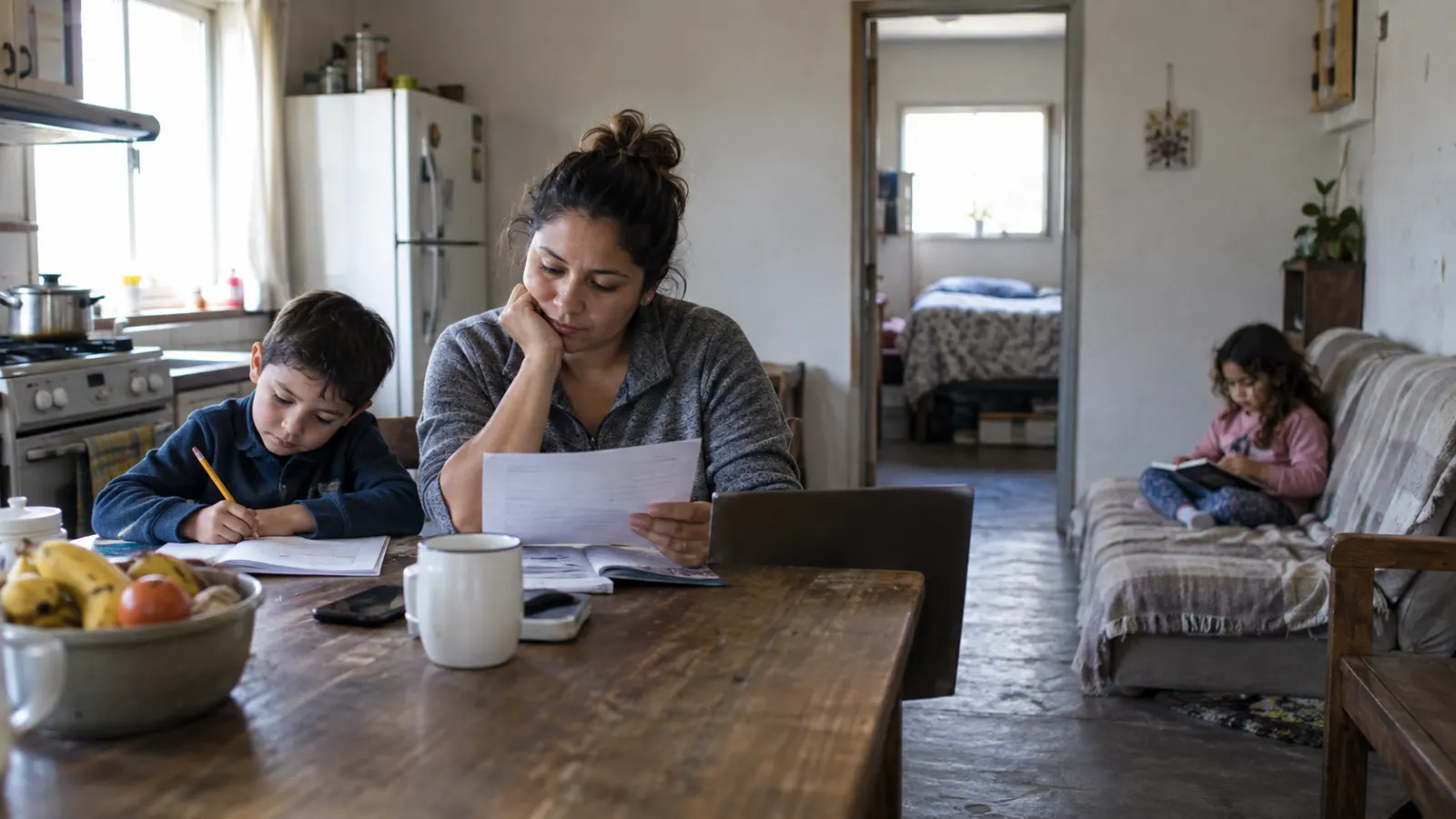
Two households with identical incomes can experience very different living standards. One may have access to free schooling, reliable public healthcare, clean water and inexpensive transport. Another may have to pay privately for basic services or live in an area where they are unavailable altogether. A household can also sit just above an official poverty line while remaining one illness, job loss or flood away from severe deprivation.
Poverty is therefore best understood as insufficient resources and capabilities to achieve an adequate standard of living, shaped by income, prices, public services, health, employment, household needs and exposure to shocks.
Measurement necessarily simplifies that reality. Poverty lines provide a threshold that allows governments and researchers to estimate how many people fall below a defined standard. Multidimensional measures add information about education and infrastructure. Poverty-gap measures show how far below the line poor households are. Measures of vulnerability ask how easily households currently above the line could fall below it.
None captures everything.
Together, they provide a more realistic picture than a single headcount.
The Global Extreme-Poverty Line Is Now $3 a Day—but It Is Not a Cash Budget
In June 2025, the World Bank updated its international poverty lines after incorporating 2021 purchasing-power-parity data and newer national poverty-line information.
The international extreme-poverty line is now $3.00 per person per day in 2021 PPP terms, replacing the previous $2.15 line based on 2017 PPPs. The corresponding reference lines used for lower-middle-income and upper-middle-income economies are $4.20 and $8.30 per person per day. (worldbank.org)
These numbers are easy to misunderstand.
A person classified as living below the $3 line is not necessarily surviving on three literal U.S. dollars exchanged at a bank every day. Purchasing power parity, or PPP, is a statistical conversion system intended to compare the purchasing power of currencies across economies where prices differ.
An amount of local currency is converted into international dollars representing comparable purchasing power.
The international line is also not intended to define an adequate living standard for every society. It reflects poverty standards typical of the world's poorest economies and is primarily useful for comparing extreme poverty across countries and over time.
The World Bank itself stresses that national poverty lines are generally more appropriate for domestic policy and programme targeting, because they incorporate the economic conditions and definitions of minimum needs relevant to a particular country. (worldbank.org)
This distinction matters particularly in middle- and high-income countries.
A person can be well above the global extreme-poverty threshold while still being unable to afford adequate housing, transport, heating, childcare or participation in ordinary social life where they live.
The global line answers a comparative question.
It does not settle every domestic question about poverty.
The latest World Bank estimates continue to show that extreme poverty remains widespread. Its September 2025 update estimated that 10.3% of the world's population lived below the $3 international poverty line in 2024. (worldbank.org)
Behind that global share are enormous regional differences.
Poverty has fallen dramatically over the long run, but progress has slowed, and extreme poverty is increasingly concentrated in economies affected by conflict, weak institutions and low growth.
Absolute, Relative and Multidimensional Poverty Answer Different Questions
An absolute poverty measure asks whether a household falls below a specified minimum standard. The international $3 threshold is one example.
A relative poverty measure asks how a household's resources compare with living standards in the society around it, often using a proportion of median income.
The distinction matters because poverty involves social participation as well as physical survival.
A household may have enough calories to avoid hunger and still lack the income required for transportation to work, internet access needed for education, adequate housing or the costs associated with participating in ordinary community life.
These expenses change as societies develop.
This is why richer countries often rely heavily on relative measures even though relatively few residents fall below the World Bank's international extreme-poverty threshold.
Neither approach is inherently superior.
They answer different questions.
Absolute measures are useful for monitoring whether people can meet defined minimum needs. Relative measures reveal exclusion and inequality relative to prevailing social standards.
Multidimensional poverty asks a third question: what if deprivation cannot be represented adequately by income or consumption alone?
The World Bank's Multidimensional Poverty Measure combines monetary poverty with educational deprivation and lack of basic infrastructure. Its six indicators cover income or consumption, educational attainment, school enrolment, electricity, sanitation and drinking water. (worldbank.org)
The World Bank's April 2026 update, covering 100 economies with recent comparable data, shows why this broader perspective matters. Around 11% of the covered population was monetarily poor at the $3 line, while roughly 17% was multidimensionally poor once education and basic infrastructure were included. (worldbank.org)
The measures overlap, but imperfectly.
A household may earn slightly more than the monetary poverty line while lacking sanitation, electricity or education. Another household may fall below the income threshold while still having access to strong public services.
Money remains enormously important.
The point of multidimensional measurement is not to replace money but to identify which mechanisms of deprivation income statistics fail to capture.
Poverty Is Produced Through Work, Productivity, Health and Prices
Many people living in poverty work.
This is important because public discussion sometimes treats employment as though it were the opposite of poverty. A person can be employed and still earn too little to maintain an adequate standard of living.
Low hourly wages are one route.
Insufficient working hours are another.
Informal employment can produce unstable earnings without paid leave, social insurance or predictable schedules. Seasonal agricultural work may generate income during part of the year and little during another.
Employment therefore reduces poverty only when the work produces sufficient and reasonably reliable resources.
Productivity is part of this story, but productivity should not be confused with individual effort.
A farmer using poor roads, limited irrigation, low-quality equipment and weak market access can work extremely hard while producing relatively little value per hour. A worker in a low-capital informal business may face similar constraints.
Productivity depends on skills, technology, infrastructure, finance, institutions and access to markets.
This is why sustained poverty reduction generally requires more than telling individuals to work harder or acquire one additional qualification.
Economic structures determine how much productive opportunity exists.
Education can improve access to higher-productivity work, but schooling is not a guaranteed exit from poverty either. Qualifications matter only when labour markets create opportunities in which those skills are valuable and when discrimination or geographical barriers do not prevent people from reaching them.
Health creates an especially powerful two-way relationship.
Illness can reduce a person's ability to work while generating medical expenses. Poverty can simultaneously worsen health through poor nutrition, unsafe housing, hazardous work and delayed access to treatment.
A household can therefore become poorer because somebody becomes ill and more vulnerable to illness because it is poor.
The same feedback appears with debt.
Borrowing can protect a family after job loss, crop failure or medical emergency. If credit is expensive, however, future income must then service earlier shocks. Families may sell productive assets, withdraw children from school or borrow again to meet previous repayments.
A temporary emergency can thereby become a longer economic decline.
Poverty Is Also About Exposure to Shocks
A household does not need to be below a poverty line today to be economically insecure.
Imagine a family earning just enough to remain above the official threshold but holding almost no savings. A major illness, sudden unemployment, crop failure, rent increase or period of high food inflation could push it below the line within weeks.
This is vulnerability.
It differs from current poverty because it concerns the probability of future deprivation rather than today's measured resources.
That distinction matters in countries where large numbers of households live close to poverty thresholds.
Inflation illustrates why.
Poorer households typically spend a larger proportion of their income on essential goods such as food, fuel and housing. Sharp increases in those prices can therefore reduce real living standards more rapidly than an aggregate inflation measure might suggest.
Climate shocks create similar risks.
Drought can reduce harvests and farm employment.
Floods can destroy homes or business equipment.
Heat can reduce labour productivity and increase health risks.
Storms can interrupt markets and transportation.
Households with savings, insurance or diversified income can absorb part of these losses. Households without such protection can fall into debt or lose assets required to earn future income.
Social protection therefore does more than transfer money to people already classified as poor.
Cash transfers, child benefits, unemployment insurance, pensions, food support and health coverage can stop a temporary shock from creating irreversible losses.
A household that can continue buying food while a parent searches for work may avoid malnutrition.
A family that can pay school costs during a crop failure may avoid withdrawing a child from education.
A medical insurance system can prevent illness from forcing the sale of a productive asset.
In that sense, poverty policy can be preventive as well as corrective.
Poverty Has Depth and Duration, Not Just a Headcount
Suppose two people fall below the same poverty line.
One earns the equivalent of $2.95 per day and is likely to move above the threshold when seasonal work resumes.
Another survives on the equivalent of $1.20 per day and has experienced severe deprivation for most of their life.
A simple poverty headcount classifies both as poor.
Their economic situations are obviously not identical.
The poverty gap addresses part of this problem by measuring the average shortfall between the resources of people below the poverty line and the poverty threshold itself. The World Bank describes it as a measure that captures the depth of poverty as well as its incidence. (worldbank.org)
This matters for policy.
A population in which millions of people sit narrowly below a threshold requires different resources from one in which fewer people live extraordinarily far below it.
Duration creates another distinction.
Transient poverty may follow job loss, temporary illness, crop failure or economic recession. Once the shock passes, some households can recover.
Chronic poverty persists for years or generations and often combines several disadvantages: poor education, weak health, few assets, geographical isolation, discrimination and limited access to productive employment.
Temporary cash assistance can be highly effective for transient income loss.
Chronic deprivation often requires a deeper package: education, healthcare, infrastructure, assets, access to finance, safer housing and functioning labour markets.
The difference is important because the same policy can produce very different results depending on the mechanism keeping a household poor.
Conflict and Discrimination Can Make Poverty Structural
Poverty is not randomly distributed across societies.
People can face barriers because of caste, ethnicity, race, gender, disability, migration status, location or other characteristics that influence access to schools, employment, credit, property and public services.
Where these barriers persist, poverty becomes partly structural.
The problem is not only that a person has low income today.
The institutions around them reduce the probability of reaching higher-productivity opportunities tomorrow.
Household-level statistics can also hide unequal deprivation inside families.
A household may be classified as above the poverty line while one member has far less access to food, healthcare, education or control over resources than others.
Women and girls can be especially vulnerable to such hidden inequality in societies where men exercise disproportionate control over household income or where girls' education and nutrition receive lower priority.
This is one reason individual and multidimensional indicators can reveal patterns that household income alone does not.
Conflict intensifies these mechanisms.
War destroys infrastructure, interrupts schools, closes businesses, displaces households and prevents farmers from reaching land or markets.
The World Bank reported in June 2025 that 421 million people were living below $3 a day in 39 economies affected by conflict or instability, more than in the rest of the world combined. Without substantial improvement, it projected that these economies could contain nearly 60% of the world's extreme poor by 2030. (worldbank.org)
This concentration shows why global poverty reduction becomes harder as the remaining poverty increasingly occurs in environments where normal development institutions are weakest.
Building a school is difficult during war.
Maintaining reliable surveys is difficult.
Attracting investment is difficult.
Protecting property and markets is difficult.
Poverty policy in fragile settings therefore cannot be separated neatly from peace, governance and institutional capacity.
Children Experience Poverty Before They Can Control Its Causes
Children illustrate particularly clearly why poverty cannot be treated as a personal failure.
Children do not choose household income, neighbourhood infrastructure, parental employment or whether conflict disrupts their education.
Yet deprivation during childhood can affect nutrition, physical development, learning and future employment opportunities.
UNICEF's State of the World's Children 2025 reports that 412 million children live in extreme monetary poverty below the $3-a-day threshold, while approximately 1.6 billion children lack any form of social-protection coverage. (unicef.org)
Child poverty also has a strong multidimensional component.
A child can be deprived through malnutrition, inadequate sanitation, unsafe housing, missed schooling or lack of healthcare even where household income alone does not capture the severity of the situation.
These effects can accumulate.
Poor nutrition can affect school performance.
Interrupted schooling can reduce future employment options.
Weak healthcare can turn treatable illness into long absence from education.
When children later enter the labour market, the disadvantages created before they could influence their circumstances may already have shaped their opportunities.
This is why child-focused poverty policy often combines income support with schools, nutrition programmes, healthcare and social protection rather than relying on household income transfers alone.
Public Services Change What a Given Income Can Buy
Income does not operate in a vacuum.
Consider two households earning the same amount.
One lives in a community with functioning public schools, clinics, clean water, reliable electricity and affordable transport.
The other must pay private fees for education, buy drinking water, travel long distances to healthcare and spend heavily on electricity alternatives.
Their nominal incomes are identical.
Their effective living standards are not.
This is why weak public services can increase what might be called the cost of being poor.
Poor households often cannot obtain the bulk discounts available to richer consumers, cannot borrow at low interest rates, live farther from good employment opportunities and have less ability to pay upfront for durable goods that lower long-term costs.
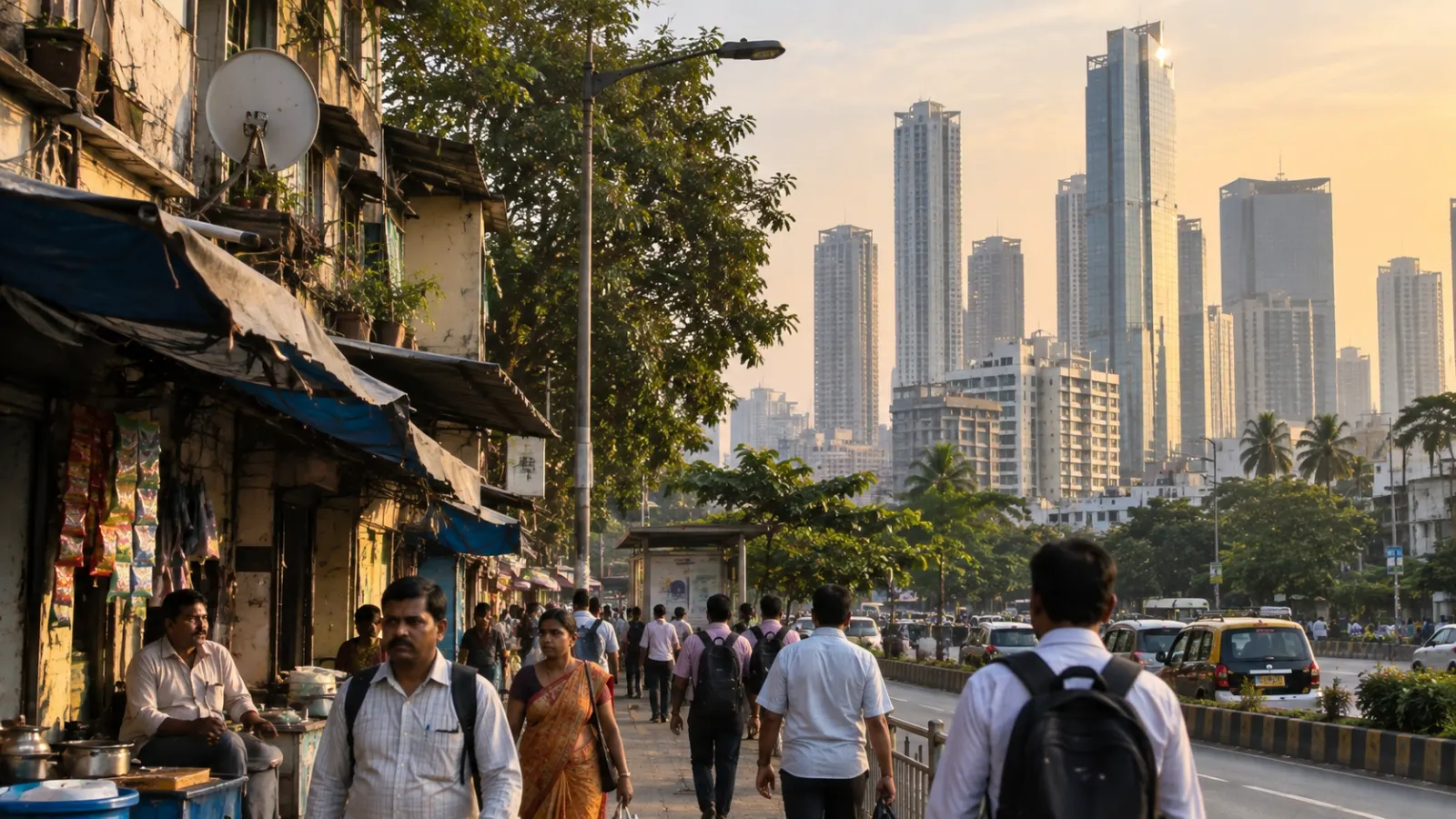
Urban and rural poverty can therefore look very different.
Urban residents may live physically close to hospitals and schools but face high housing, transport and food costs. Informal settlements may lack secure tenure or basic infrastructure despite proximity to economic activity.
Rural households may have lower housing costs but depend more heavily on agriculture, face long distances to healthcare or secondary schools and have fewer employment alternatives when crops fail.
A single national poverty line necessarily compresses these differences.
That does not make it useless.
It means the number should be interpreted alongside information about housing, services, geography and household composition.
A household containing an older person, several young children or someone with a disability may need different resources from another household with the same number of people.
Poverty measurement therefore always contains assumptions about needs and how resources are shared.
Those assumptions should be visible rather than treated as facts of nature.
Growth Matters, but Who Participates in Growth Matters Too
Long-run poverty reduction on a large scale is difficult without economic growth.
Growing economies can create jobs, raise productivity, increase tax revenue and provide governments with more resources for infrastructure and social services.
But growth does not reduce poverty mechanically.
The effect depends on where growth occurs, which workers participate and how income gains are distributed.
An economy can expand rapidly while leaving people behind if growth is concentrated in capital-intensive sectors with few employment opportunities, if educational barriers prevent poorer workers from entering productive industries, or if rising housing and food costs absorb much of the benefit for low-income households.
The quality of public institutions also determines whether growing national income becomes better schools, healthcare and infrastructure.
Distribution and growth are therefore not competing explanations for poverty reduction.
They interact.
A policy that redistributes income without creating productive capacity may struggle to sustain rising living standards.
Growth that systematically excludes lower-income groups may produce impressive aggregate statistics without eliminating deprivation.
The most effective strategy depends on why people are poor.
Where low productivity is central, infrastructure, education, technology and access to markets may matter greatly.
Where unemployment results from recession, macroeconomic recovery and income protection may be more urgent.
Where discrimination blocks opportunity, general economic growth alone may not remove the barrier.
Where health costs create poverty, financial protection and public healthcare become central.
Poverty is one label applied to many different mechanisms.
Policy has to diagnose the mechanism rather than simply target the label.
Measuring Poverty Is Necessary—and Always Imperfect
Poverty statistics can create a false sense of precision.
A national estimate might report poverty to a decimal point, but the underlying number comes from surveys, definitions, price adjustments and modelling choices.
Household surveys can miss people experiencing homelessness or living in institutions.
Informal earnings can be difficult to measure.
Respondents may forget irregular purchases or income.
Consumption from home-produced food must be valued.
Households may share resources in ways surveys cannot observe accurately.
Rapid inflation can make older surveys less representative of current living standards.
International comparison introduces further complications because purchasing-power parities themselves have to estimate how prices differ across countries.
The World Bank's 2025 poverty-line revision demonstrates this directly. The adoption of 2021 PPPs, updated national poverty lines and newer household surveys revised the estimated number of people in extreme poverty in 2022 upward by approximately 125 million compared with the previously published estimate. (worldbank.org)
That does not mean 125 million people suddenly became poor when statisticians changed the line.
It means poverty estimates are measurements produced from data and methodological standards that improve and change.
Historical trends should therefore be compared using consistent methods.
The same caution applies to multidimensional poverty. The World Bank's April 2026 measure covers 100 economies with sufficient recent information, representing about two-thirds of the global population rather than every person on Earth. (worldbank.org)
Responsible reporting should make such coverage limitations visible.
None of these complications means poverty cannot be measured.
They mean measurement should be treated as an estimate rather than a perfect census of human deprivation.
Triangulating monetary poverty, poverty depth, public-service access, multidimensional indicators and vulnerability can provide a stronger picture than relying on one number.
Poverty Is a Condition, Not a Character Trait
The most misleading explanations of poverty turn an economic condition into a judgment about the people experiencing it.
Individual decisions obviously matter.
Education choices, savings, migration, work decisions and risk-taking can change economic outcomes.
But people make those decisions inside labour markets, public institutions, families, health systems and environments they do not fully control.
A worker cannot personally create a productive regional labour market.
A child cannot choose whether a school exists.
A farmer cannot prevent a drought.
A family cannot individually stop a civil war.
A person with a disability cannot remove inaccessible transport infrastructure through greater motivation.
Understanding poverty therefore requires looking at the interaction between individual resources and the systems surrounding them.
Income matters because people need command over goods and services.
Public services matter because they change what income must purchase privately.
Health matters because illness changes both earning capacity and expenses.
Employment matters because work is the primary source of income for most households.
Prices matter because nominal money has meaning only through what it can buy.
Social protection matters because shocks can turn temporary difficulty into lasting deprivation.
Institutions matter because they influence who can access education, property, credit, markets and justice.
And time matters because one month below a poverty line is not equivalent to a lifetime of deprivation.
That is why no single statistic completely answers the question “Who is poor?”
A poverty line provides an essential threshold.
The poverty gap tells us something about depth.
Longitudinal evidence can reveal persistence.
Multidimensional measures identify non-monetary deprivation.
Vulnerability analysis asks who could fall into poverty next.
Together these measures change poverty from a vague description of hardship into a problem that can be investigated more precisely.
The goal of measurement is not to find one perfect number.
It is to understand which needs are unmet, why they are unmet, how severe and persistent the deprivation is, and which institutions can realistically change it.
That is what poverty means when the question moves beyond a line on a chart.