What Is a Keystone Species? Why Some Species Have Outsized Ecological Effects
A keystone species is an organism whose effect on an ecological community is unusually large relative to how abundant it is. The idea challenges a simple assumption about ecosystems: the species with the greatest numbers, biomass or physical presence are not necessarily the ones whose loss would cause the greatest change. A relatively uncommon predator, pollinator, seed disperser or habitat-modifying organism can influence many other species because it occupies a particularly powerful position within a network of ecological interactions.
The metaphor comes from architecture. In a stone arch, the keystone is only one component and may represent a small fraction of the structure’s total mass, yet removing it can undermine the integrity of the arch. Ecologist Robert T. Paine used the ecological version of this idea after experiments on rocky shores showed that removing a predator could allow one competitor to expand and substantially reorganise the surrounding community. The term later became broader than its original predator-focused use, but its central meaning remains the same: ecological impact is disproportionately large relative to abundance. A widely used later formulation by ecologists Mary Power and colleagues defined a keystone species in essentially these terms, distinguishing keystones from abundant species whose large effects are more proportional to their dominance.
This distinction makes the concept valuable because ecosystems are networks rather than simple collections of species. An organism can affect another species directly through predation or competition, which can then alter vegetation, prey populations, nutrient movement or habitat available to many additional organisms. Some of the most important ecological effects are therefore indirect. Removing a species may appear to change only one interaction at first, while consequences spread through several levels of the community over time.
The concept is also easy to misuse. “Keystone” does not mean the most endangered species, the most charismatic animal, the largest organism or the species humans value most. Nor does every ecologically important species qualify. A species earns the description only when evidence indicates that its influence on community structure or ecosystem processes is unusually strong relative to its abundance, and that relationship may occur in one ecosystem without being equally important everywhere else.
The keystone idea began with a predator and a rocky shore
Paine’s classic experiments took place in rocky intertidal communities on the Pacific coast of North America. In his 1966 work, he experimentally removed the predatory sea star Pisaster ochraceus from parts of the shore and observed what happened to other organisms occupying the limited rock surface. In the absence of the predator, the mussel Mytilus californianus, a powerful competitor for space, expanded and displaced several other primary space-occupying species. Paine argued that predators could therefore help maintain local diversity by preventing one competitively dominant species from monopolising an essential resource.
The experiment was influential partly because it manipulated the ecological mechanism rather than merely observing a correlation. If mussels were abundant wherever other species were scarce, many environmental differences could potentially explain the pattern. Paine instead removed the predator and observed the subsequent community change, providing much stronger evidence that predation itself was involved. His later 1969 paper developed the “keystone” metaphor to describe species whose influence on the appearance and composition of a community was much larger than their numerical presence might suggest.
The story is often simplified into a sentence such as “remove the sea star and biodiversity collapses,” but the scientific history is more interesting. A later reassessment of Paine’s experiment noted that the expanding mussel beds themselves create complex three-dimensional habitat used by many associated organisms, meaning the effect on total community-wide species diversity is more complicated than the classic account of losing several primary space-holding species suggests. That does not erase Paine’s result: the sea star clearly altered competitive relationships and community structure. It does show why ecological concepts should be interpreted through the specific measurement being used rather than converted into universal slogans.
The deeper insight was therefore not simply that predators are “good for biodiversity.” It was that interaction strength can matter independently of abundance. A predator occupying relatively little biomass could control an abundant competitor strongly enough to influence which other organisms persisted. That principle encouraged ecologists to look beyond species counts and ask how strongly different organisms shape the networks around them.
Predators remain some of the clearest examples because their effects can travel through food webs. When a predator limits an herbivore, for example, it can indirectly reduce pressure on plants. If predator abundance falls, herbivore numbers or behaviour may change, which can then alter vegetation and organisms dependent on that vegetation. Such chains of indirect effects are often described as trophic cascades, although their strength varies enormously among ecosystems and not every predator produces a large cascade.
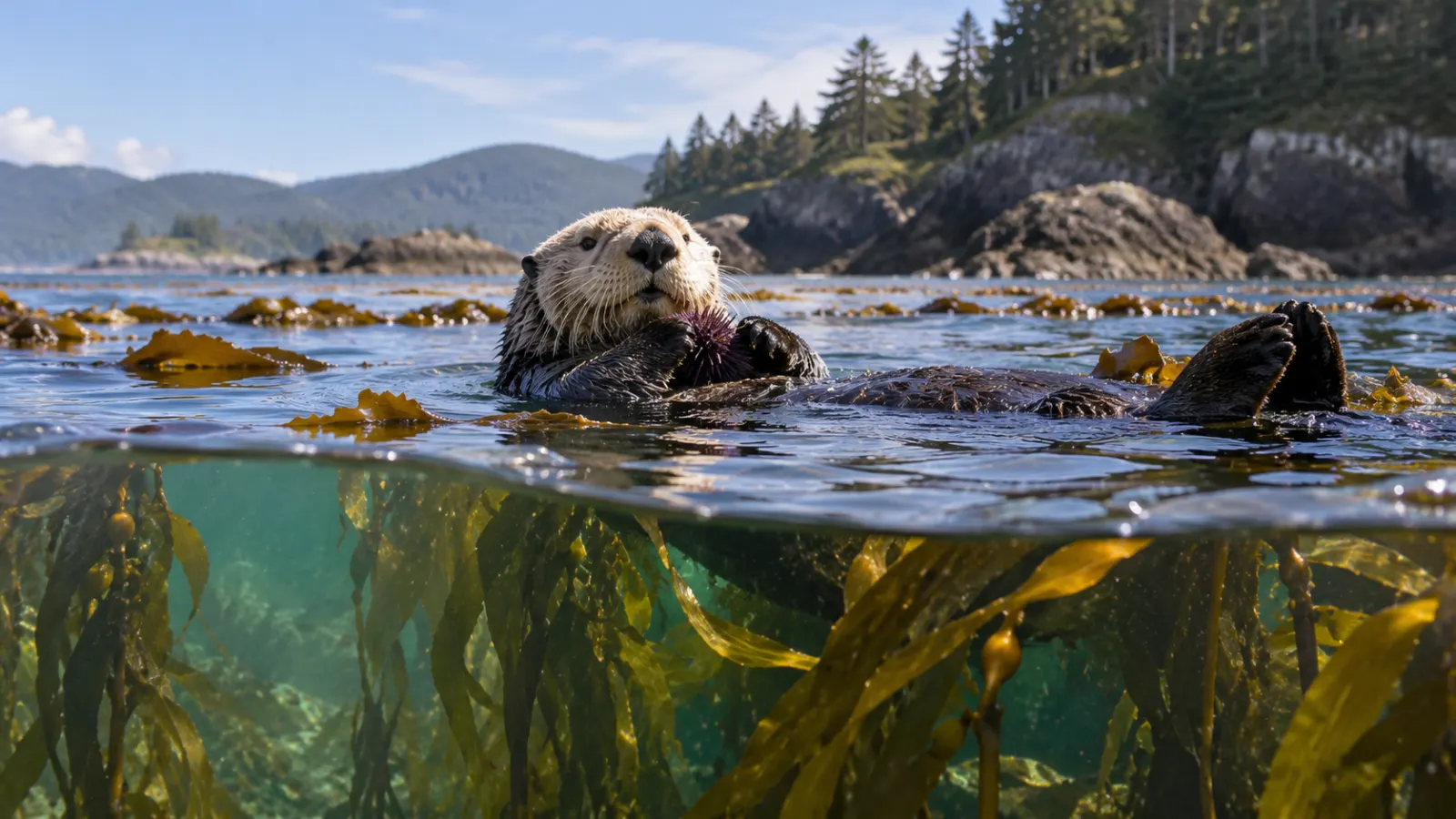
Sea otters and kelp ecosystems provide another widely studied example. Sea otters prey on sea urchins, which feed on kelp. Research in western Alaska documented how declines in sea otters were associated with increased sea urchin densities and major loss of kelp, linking changes in a predator population to a transformation of nearshore ecosystem structure. The researchers described the otter’s keystone role as having been reduced or eliminated where otter numbers collapsed.
This does not mean every coastline follows exactly the same otter–urchin–kelp relationship. Wave exposure, alternative predators, food availability, climate, fishing and other ecological conditions can strengthen or weaken these interactions. The value of the sea-otter example lies not in providing a universal formula for kelp forests, but in demonstrating how changing the abundance of one strongly interacting predator can propagate through prey populations into an entirely different trophic level.
Keystone species are not simply the biggest, rarest or most famous organisms
The easiest way to understand the term is to compare it with other ecological and conservation categories. Dominant species have large effects partly because they are extremely abundant, occupy substantial space or account for a large proportion of biomass or productivity. A tree species that forms most of a forest canopy can profoundly influence shade, moisture, habitat and nutrient cycling simply because so much of the ecosystem consists of that species. Its ecological importance can be enormous without necessarily representing a classic keystone effect.
Keystone species are different because the effect is disproportionate to abundance. If ecological impact is imagined on one axis and abundance on another, dominant species tend to have high impact alongside high abundance, whereas a classic keystone occupies the unusual position of relatively low abundance but high ecological influence. This distinction was formalised when ecologists attempted to make the concept more rigorous after concerns that “keystone” was being applied too loosely to almost any important species.
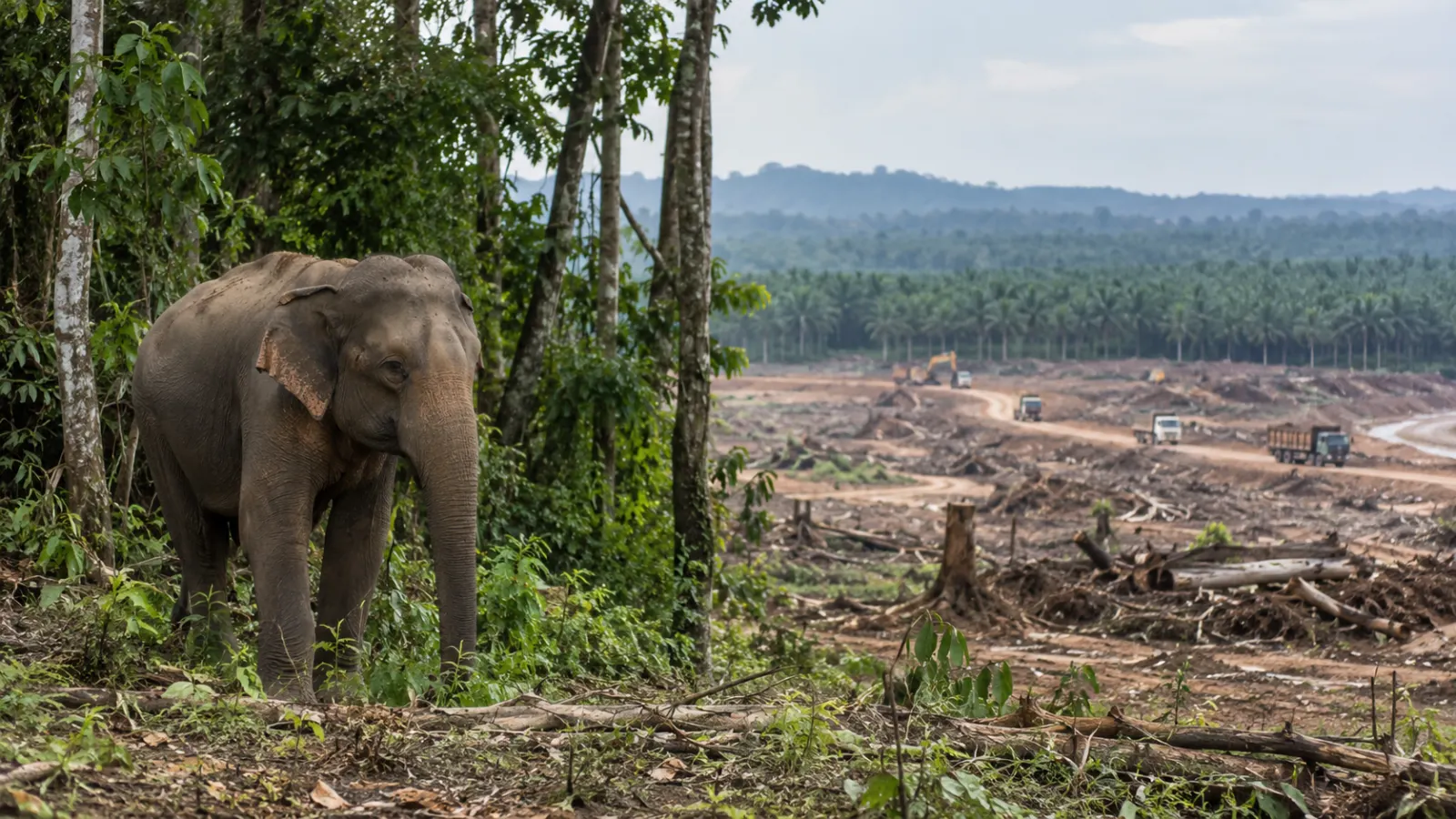
A flagship species is different again because the term belongs primarily to conservation communication rather than community ecology. Tigers, elephants, rhinos, whales and other recognisable species can become symbols that attract public attention, funding and political support for wider conservation programmes. IUCN material describes flagship species as charismatic or popular species that can stimulate conservation awareness and action, and there are no rigid ecological criteria requiring a flagship to exert a disproportionate community effect. A species could simultaneously be a flagship and a keystone, but one label does not imply the other.
The same caution applies to ecosystem engineers. These are organisms that change the physical environment in ways that alter resource availability for other species. Beavers create ponds and wetlands by building dams, corals construct reef structures, burrowing animals alter soils and many plants physically modify habitat through their own structures. Jones, Lawton and Shachak defined ecosystem engineers around this capacity to create, maintain or modify habitat through physical changes to biotic or abiotic materials.
An ecosystem engineer can also be a keystone species when its physical modifications produce an ecological effect that is unusually large relative to its abundance, but the two terms describe different things. “Ecosystem engineer” describes how the organism changes the environment, whereas “keystone species” describes the magnitude of its influence relative to abundance. This distinction prevents ecological terminology from turning into a collection of interchangeable labels for anything considered important.
Predators are likewise not automatically keystones. A predator can consume large numbers of prey without producing major community-wide consequences if other predators perform a similar function, prey populations are controlled mainly by other factors or the food web compensates when the species declines. Keystone status has to be demonstrated through interaction strength and ecological response, not inferred merely because an organism sits near the top of a food chain.
The concept has also been extended beyond predators. A pollinator could potentially function as a keystone when many plant species depend heavily on its activity and alternatives cannot compensate for its loss. A seed disperser might disproportionately influence forest regeneration, while a pathogen or parasite could alter competitive relationships among host species. Habitat modifiers can also produce keystone effects. What matters is not whether the organism belongs to a particular biological group but whether changing its presence or abundance generates effects far larger than its numerical contribution would suggest.
Scientists have to demonstrate a keystone effect rather than simply declare one
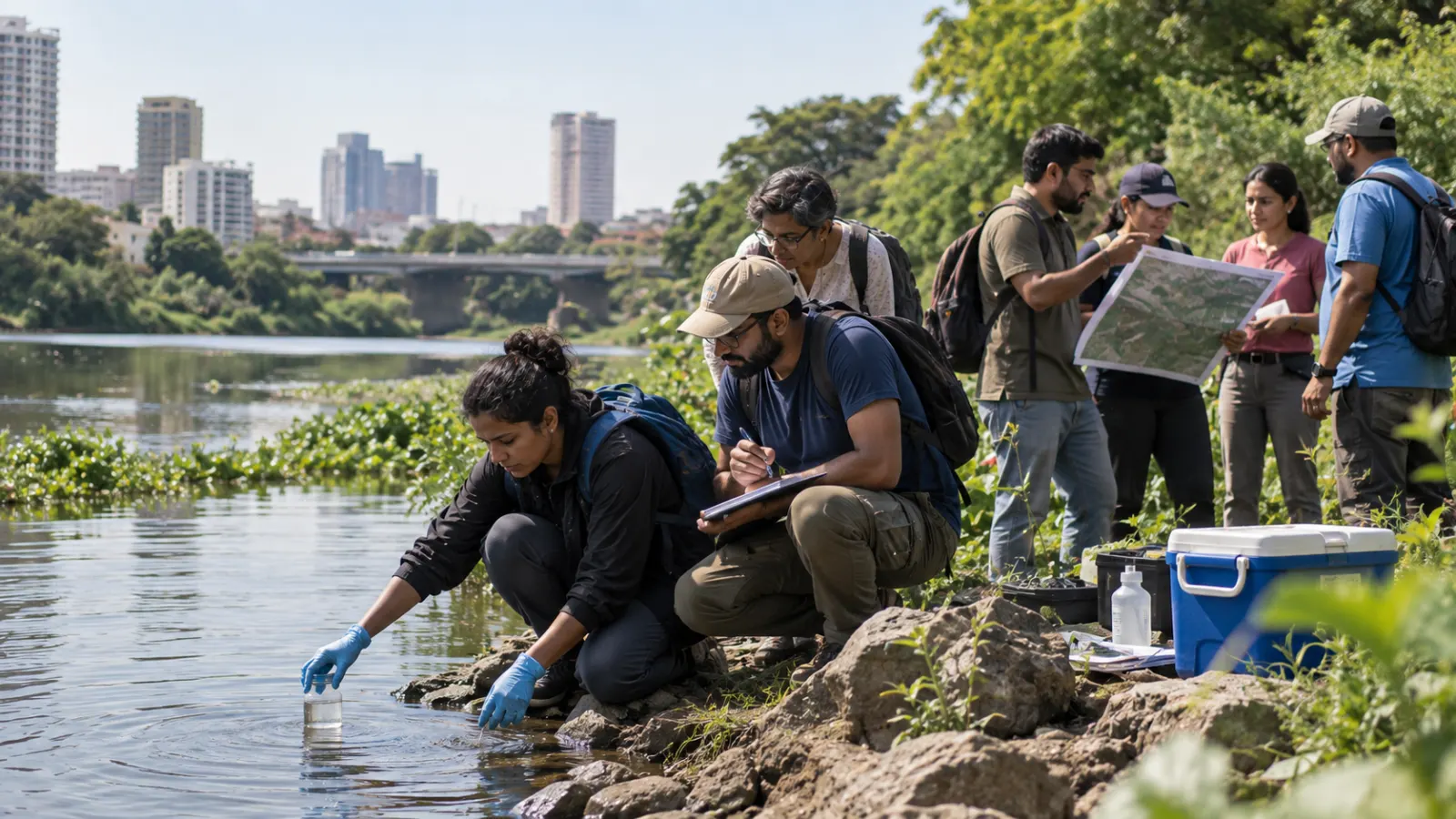
Identifying a genuine keystone species can be difficult because ecosystems contain many simultaneous interactions. The strongest evidence often comes from manipulative experiments in which researchers remove, exclude or alter the abundance of a candidate species and observe how the wider community changes. Paine’s sea-star experiments became iconic precisely because this approach made the causal mechanism unusually clear.
Large-scale experiments are not always practical, ethical or even possible. Removing a large predator from an entire landscape simply to test its ecological importance would create obvious conservation problems, and many ecological changes unfold over years or decades. Researchers therefore also use natural experiments, historical population collapses, reintroductions, long-term monitoring, comparative studies, food-web analysis and ecological models to estimate what happens when strongly interacting species decline or return.
Evidence also has to distinguish abundance from interaction strength. A very common species may transform an ecosystem because millions of individuals collectively account for much of its biomass. That does not necessarily make each unit of abundance disproportionately influential. Keystone analysis instead asks whether the ecological change caused by losing or reducing the species is unusually large relative to how much of the community the species itself represents.
Context creates another complication. Ecological roles are not permanent titles carried unchanged by a species everywhere it occurs. The same predator may strongly control prey in one region but have a weaker influence somewhere else because alternative predators are present, habitat offers more hiding places, prey species differ or food availability changes. A pollinator may be difficult to replace in one plant community while being functionally redundant in another.
Season and environmental conditions can also change interaction strength. A species may exert a major effect during a breeding season, drought or particular stage of succession but a much smaller influence at other times. Climate change, invasive species, harvesting and habitat fragmentation can restructure food webs sufficiently that an interaction once considered central becomes weaker—or a previously modest interaction becomes more important.
This is why lists of “the world’s keystone species” should be treated cautiously. They can be useful for introducing the concept, but they risk making keystone status sound like an intrinsic taxonomic property comparable to being a mammal or a bird. In reality, keystone status is better understood as an evidence-based description of a species’ role within a particular ecological context.
The distinction also matters when considering population decline. An organism does not necessarily need to disappear completely before its keystone function is lost. If population density falls far enough, the remaining individuals may no longer suppress prey, disperse enough seeds, pollinate enough plants or modify sufficient habitat to produce the ecological effect they once maintained. A species can therefore remain present in a landscape while becoming ecologically ineffective.
That possibility complicates conventional conservation monitoring. Head counts tell managers whether individuals remain, but they do not always show whether the ecological interaction for which the species matters is still functioning. A naturally scarce predator can potentially exert a strong regulatory influence, while a population that remains numerically respectable may lose influence if it disappears from critical areas, shifts behaviour or becomes fragmented across the landscape.
Keystone thinking therefore complements population monitoring rather than replacing it. Conservationists need to know how many individuals survive, where they occur and whether populations are viable, but they may also need to know whether those populations continue to perform interactions important to ecosystem structure.
Keystone effects can travel through food webs and sometimes produce major ecological shifts
The conservation importance of keystone species becomes clearer when indirect effects are considered. Imagine a predator that keeps an herbivore below the level at which vegetation is heavily overgrazed. If the predator declines, herbivores may increase or change their behaviour, vegetation can decrease, and birds, insects or other organisms that depend on the plants may subsequently be affected. The predator’s direct interaction involved prey, but its indirect influence extends much further.
This is the logic behind a trophic cascade. Changes at one trophic level alter another, which then influences another part of the food web. Sea otters, sea urchins and kelp provide one of the best-known marine examples, while many terrestrial food webs have also been studied for possible top-down effects. The strength and even direction of cascades can depend heavily on local ecological conditions, so the concept should describe demonstrated relationships rather than become an automatic assumption whenever predators decline.
These interactions can also contribute to nonlinear ecological change. Ecosystems do not always respond in a perfectly proportional way when an influential species decreases. A predator might continue suppressing prey effectively through much of its decline, but once its population becomes too low, prey pressure could increase sharply. Feedbacks can then reinforce the new state, making recovery harder than simply restoring a small number of predators.
Kelp systems illustrate how such state changes can become visually dramatic. Where predator pressure on sea urchins becomes weak, dense urchin populations can graze kelp heavily and contribute to the formation of urchin barrens. Restoring kelp may then require more than simply increasing predator numbers because ecological conditions, prey density and feedbacks can influence whether the system readily switches back. The exact threshold and reversibility differ among locations, but the example shows why interaction strength can matter to ecosystem resilience.
Not all keystone effects involve food webs. A strongly depended-upon pollinator can influence plant reproduction; a seed disperser can affect where new plants establish; an ecosystem engineer can create habitat required by many other species. In each case, the ecological effect spreads because other organisms depend directly or indirectly on the interaction.
This is why species richness alone cannot describe ecosystem function. Two sites might contain the same number of species while differing substantially in ecological structure if one has lost a strong predator, key pollinator or habitat modifier. Counting names tells us who is present, but interaction studies tell us what those organisms are doing.
The same distinction applies to restoration. Reintroducing a species may be considered a demographic success if individuals survive and reproduce, but ecological recovery asks whether the interaction that originally shaped the community has returned. If a predator is present but too scarce to influence prey, or a pollinator survives but no longer reaches large parts of its former plant community, the species may have recovered numerically without fully recovering functionally.
Why keystone thinking matters for conservation
Conservation has traditionally relied heavily on population size, geographic range and extinction risk, all of which remain essential. Keystone ecology adds another question: which ecological relationships would be especially difficult for the system to lose? This can identify situations where protecting a relatively uncommon species might preserve processes that affect many other organisms.
That does not mean keystone species should automatically receive priority over all others. Conservation decisions also involve extinction risk, evolutionary distinctiveness, ecosystem representation, cultural value, feasibility, legal obligations and many other considerations. A highly threatened species can deserve protection even when it is not a keystone, while a strong keystone species may currently be abundant enough that it is not endangered.
The concept instead provides another dimension of ecological information. Protecting a strongly interacting predator may indirectly influence prey and vegetation. Maintaining a key pollination or seed-dispersal relationship may support reproduction across a wider plant community. Protecting an ecosystem engineer can preserve habitat used by numerous organisms. These possibilities make ecological interactions relevant to conservation planning rather than treating biodiversity simply as a collection of independent populations.
Keystone thinking can also reveal why waiting until a species is nearly extinct may be too late. If ecological function disappears at a population level well above zero, an ecosystem may begin changing while the species still appears relatively secure on a conventional presence-or-absence map. Restoring the population after cascading changes have become established can be more difficult than preventing the ecological interaction from collapsing in the first place.
At the same time, conservationists have good reason to use the label cautiously. The history of the term includes decades of debate over how broadly it should apply, how interaction strength should be measured and whether some applications amount to little more than calling a species “important.” If nearly every valued species is described as a keystone, the concept loses its ability to distinguish a particular ecological pattern.
A stronger approach is to describe the mechanism and evidence. Instead of saying only that sea otters are keystone species, explain that predation by otters can suppress sea urchins and thereby affect kelp. Instead of automatically calling a beaver a keystone, identify how dam construction changes water flow and habitat and whether those effects are disproportionate relative to the animal’s abundance in the system being discussed. Mechanistic explanations are more scientifically useful than labels alone.
This precision also prevents conservation communication from confusing ecological importance with human appeal. A tiger can be an enormously important conservation flagship because it mobilises public support, while another less familiar organism may exert a stronger measurable effect on a particular ecological process. Both can matter, but for different reasons.
The enduring value of the keystone concept is therefore not that it provides a definitive ranking of which organisms matter most. It teaches a more fundamental ecological lesson: numbers alone do not reveal influence. A species representing a small fraction of an ecosystem’s biomass can sometimes regulate competitors, prey, habitat or ecological processes strongly enough that its decline changes the wider community.
That insight changes how ecosystems are viewed. Biodiversity is not merely an inventory of species, and conservation cannot always be evaluated by counting how many names remain on that inventory. Ecological communities are held together by interactions of very unequal strength, and some of those relationships carry far more structural weight than their visible abundance would suggest.
A keystone species is therefore best understood not as an ecological celebrity but as evidence of how strongly connected ecosystems can be. When changing one relatively uncommon species causes effects that spread through competitors, prey, vegetation or habitat, the result reveals something important about the architecture of the community itself. Protecting such species can help preserve those relationships, but the larger lesson is broader: to understand an ecosystem, we have to measure not only what is present, but what each part is doing.