Modernisation: Meaning, Theory, Characteristics, Examples and Why It Is Not Westernisation
Modernisation is the long-term transformation of economic, technological, social and institutional systems as societies develop new ways of producing goods, organising work, educating people, governing large populations and coordinating increasingly complex economies. The American spelling, modernization, refers to the same concept.
In everyday language, modernisation may simply mean upgrading something: modernising a railway, hospital, factory, payment system or government office. In sociology and development studies, however, the concept has historically carried a much larger claim. It has been used to describe interconnected changes such as industrialisation, urbanisation, rising education, technological adoption, declining mortality, expanding bureaucracy, larger markets and changing family and political institutions.
Some of those connections remain extremely useful. A country that shifts from low-productivity agriculture toward more productive manufacturing and services usually needs new skills, infrastructure, finance, administrative capacity and cities capable of supporting larger economic networks. The World Bank still describes economic transformation in terms of deeper structural change, productivity growth, employment, infrastructure, urbanisation, connectivity and institutional conditions.
The problem begins when structural transformation is converted into a cultural ladder. Twentieth-century modernisation theories often implied that societies moved from “traditional” to “modern” through a broadly universal sequence and frequently treated Western Europe and North America as the model against which everyone else should be measured. Modern history has not supported such a simple path.
Countries have combined markets and governments differently, modernised without abandoning distinctive religious or family institutions, skipped technologies used by earlier industrialisers and experienced highly advanced sectors alongside persistent poverty or weak public services. Modernisation is therefore better understood today as capability-building and structural transformation rather than cultural imitation.
What Does Modernisation Mean?
At its most useful, modernisation describes changes that increase a society's capacity to organise complex economic and social activity. These may include more productive agriculture, industrial or service-sector growth, mass education, improved health systems, reliable electricity, transport networks, telecommunications, professional administration, financial systems and institutions capable of coordinating activity among millions of people who do not know one another personally.
This does not mean that every modern society has the same institutions. One country may rely heavily on public healthcare while another uses a larger private sector. Some states pursue industrial policy aggressively; others rely more on markets. Cities can be dense or dispersed. Welfare systems, education, labour regulation and family arrangements vary enormously among highly developed economies.
Modernisation is therefore best thought of as a family of structural transformations rather than one institutional package.
It is also different from economic growth alone. GDP can rise because commodity prices increase while education, infrastructure or institutional capability changes little. Conversely, investments in health, literacy, public administration and technology can increase future capabilities even before their full effect appears in measured output.
UNDP's human-development approach was developed partly to correct the assumption that economic growth automatically captures development. It treats income as an important means while focusing ultimately on whether people gain greater capabilities, opportunities and freedom to live lives they value. This provides a useful contemporary standard for evaluating modernisation: does structural change actually expand what people can do?
Modernisation Theory and Why the Classical Version Was Controversial
Classical modernisation theory became especially influential during the 1950s and 1960s. Scholars from economics, sociology and political science attempted to explain how societies changed from predominantly rural and agrarian systems toward industrial, urban, bureaucratic and politically more participatory forms.
One of the best-known economic versions came from Walt W. Rostow, whose “stages of growth” model described development as movement through a sequence culminating in advanced mass consumption. Sociological approaches associated with figures such as Talcott Parsons examined changes in institutions, roles and social organisation accompanying the transition from what they described as traditional to modern society.
The attraction of these theories is understandable. Industrialisation in Europe and North America had indeed been accompanied by urban growth, mass education, new bureaucratic states, technological change and enormous increases in production. Theories tried to identify recurring relationships among these transformations.
But the classical framework often made three problematic assumptions: that tradition and modernity were sharply opposed, that development occurred mainly through internal changes within each society, and that countries would eventually converge toward broadly similar modern institutions. Scholars later criticised this determinism and the tendency to use Western historical experience as an implicit endpoint.
Colonialism further complicated the picture. Many societies did not enter the modern world as isolated countries freely choosing development strategies. Colonial rule reorganised economies, trade, taxation, landholding and political institutions in ways that influenced later development. Dependency and world-systems approaches therefore argued that poverty and wealth had to be understood partly through unequal international relationships rather than only through domestic “traditionalism.”
The strongest lesson from these debates is not that every element of modernisation theory was useless. It is that structural transformation is real, but there is no historically compulsory single route through it.
Modernisation Is Not the Same as Westernisation
This distinction is essential.
Modernisation refers to transformations in technology, productivity, institutions, infrastructure, skills and social organisation. Westernisation refers more specifically to adopting cultural forms associated with Western societies.
The two processes can overlap, but they are not identical.
A country may develop sophisticated manufacturing, modern medicine, digital payments, mass higher education and efficient public administration while maintaining distinctive languages, family patterns, religious practices, food cultures and political traditions. Industrial technology does not logically require cultural uniformity.
Japan's development has long made this obvious. So have many later East Asian economies. Modern production and technical institutions were combined with local historical institutions rather than simply replacing society with a European copy.
Contemporary digitalisation makes the distinction even clearer. Countries can use digital identification, instant payments or online public services without adopting one uniform national culture. The World Bank now treats digital public infrastructure—systems such as digital identity, payments and secure data exchange—as shared foundations that can modernise service delivery, while also stressing inclusion, privacy, security and governance.
A technologically advanced society can therefore remain culturally plural.
Modernisation should not be used as a polite synonym for becoming culturally Western.
Industrialisation and Structural Transformation
Historically, industrialisation was one of the most important engines of modernisation. Moving from small-scale craft and agricultural production toward factories transformed productivity, labour organisation, capital investment, transport and urban settlement.
Factories concentrated workers and machinery. Large firms needed managers, accounting systems and reliable supply chains. Railways, ports and electricity networks became essential. Governments developed new regulatory and taxation capacities. Industrial cities expanded, creating new class relations and political movements.
But modernisation in the twenty-first century cannot simply mean building more factories.
Economic transformation can occur through advanced services, digital platforms, logistics, finance, healthcare, software, biotechnology and knowledge-intensive industries. The relevant economic concept is structural transformation: workers, capital and organisational capacity move toward activities capable of generating greater productivity and income.
The World Bank's current economic-transformation work therefore focuses not only on industrial production but productivity, employment dynamics, regulation, infrastructure, urbanisation, connectivity, private-sector development and the political economy of reform.
Manufacturing remains extremely important in many developing economies. But it is one possible component of modernisation rather than the entire definition.
Agriculture Modernises Too
Older accounts sometimes made development sound as though agriculture simply shrinks until it becomes economically unimportant.
That is misleading.
Agriculture itself can become dramatically more productive through irrigation, improved seeds, mechanisation, storage, transport, information, finance, better market access and scientific farming. Higher agricultural productivity can raise rural incomes while reducing the share of labour needed to produce food.
That productivity growth can then contribute to wider structural transformation. World Bank research explicitly describes agricultural productivity growth as a major driver of transformation and documents connections between rising farm productivity and employment growth in manufacturing and services.
Rural transformation can also create non-farm employment in food processing, logistics, construction, retail and services.
A modernising economy therefore does not necessarily “leave agriculture behind.” It can transform agriculture while increasing the importance of other sectors.
Urbanisation and the Growth of Complex Economies
Modernisation has historically been closely associated with urbanisation because cities allow workers, firms, universities, infrastructure and customers to locate near one another. This proximity can improve matching between employers and workers, reduce transport costs, encourage specialisation and make public services easier to provide at scale.
Urbanisation can therefore support productivity.
But urbanisation is not automatically development.
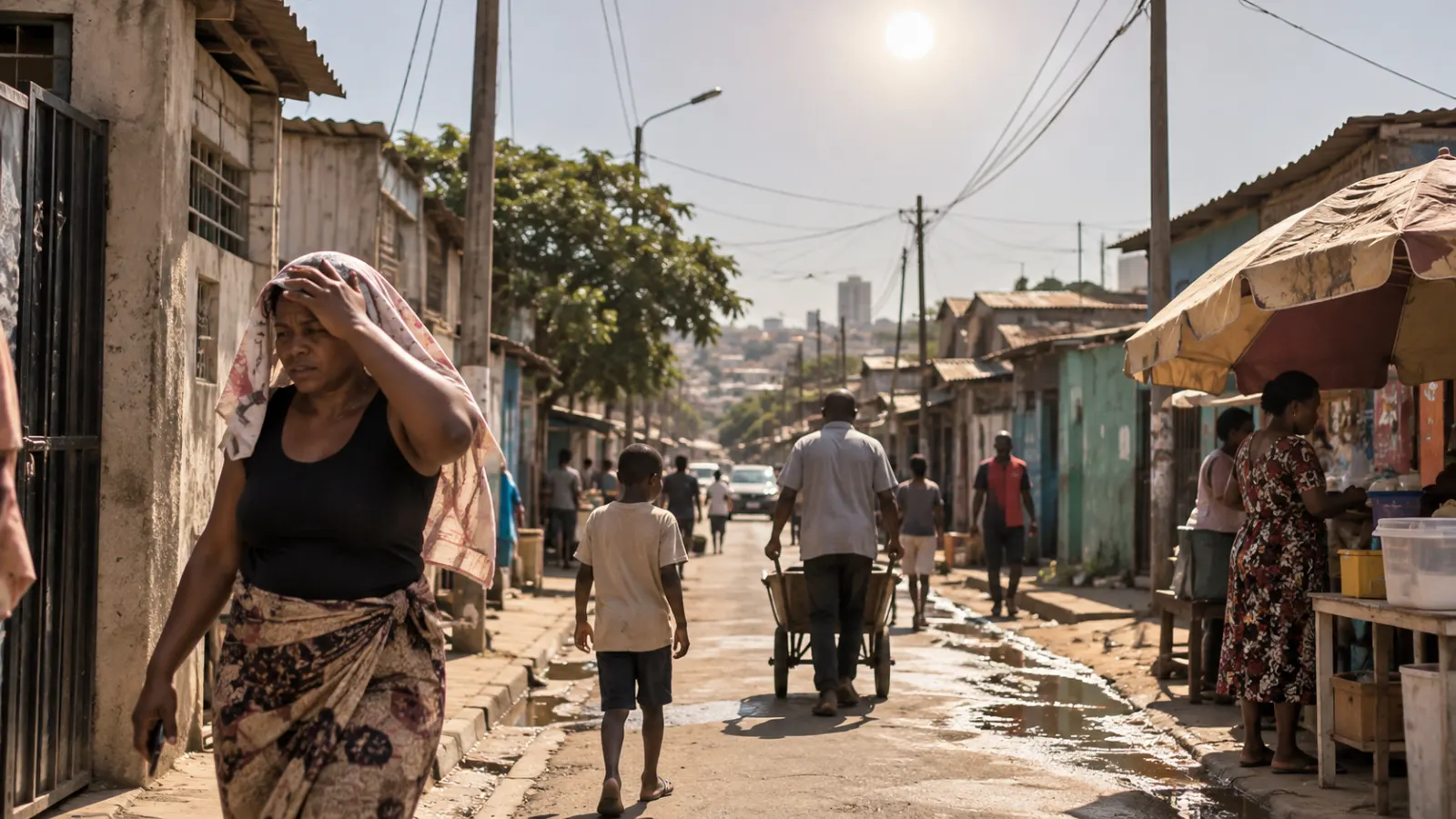
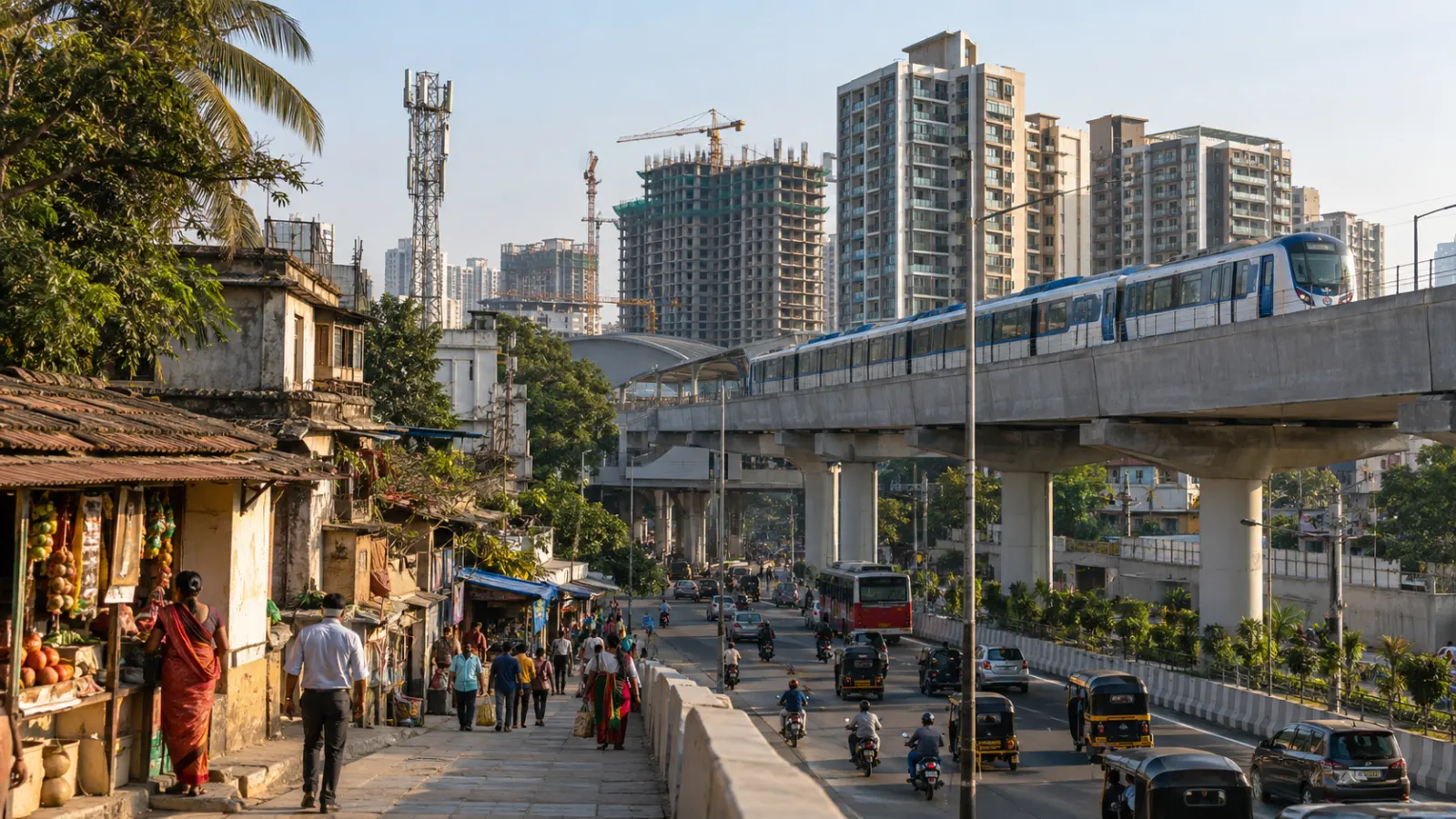
Cities can grow faster than housing, transport, sanitation and employment. The result may be congestion, informal settlements, pollution and severe inequality rather than immediate prosperity. The UN's World Social Report has emphasised this dual character: urbanisation can create extraordinary opportunity while also making inequality highly visible and intensifying exclusion when institutions fail to keep pace.
The relevant modernisation question is therefore not simply whether more people live in cities.
It is whether cities become productive, connected, liveable and institutionally capable of serving growing populations.
Education, Skills and Human Capital
A complex economy needs people capable of reading, calculating, operating machinery, managing organisations, using digital systems and learning new technologies. Mass education therefore became one of the defining institutions of modern societies.
Schools also do more than provide occupational skills. They standardise credentials, create common administrative categories and expose children to people outside immediate family networks. Universities produce professionals, researchers and specialised knowledge.
But simply increasing enrolment does not guarantee effective modernisation. Quality matters. If students spend years in school without acquiring usable literacy, numeracy or technical competence, formal education expands without producing equivalent capability.
Access can also remain unequal across class, gender, geography or disability.
Modernisation should therefore be evaluated not only by how many people attend school, but by what people learn and whether that knowledge creates genuine opportunities.
Health, Sanitation and the Demographic Transition
Public health is another major element of modernisation.
Clean water, sanitation, vaccination, nutrition, safer childbirth and medical systems reduce mortality and extend life expectancy. These improvements transform demographic structures.
When child mortality declines, families often eventually choose to have fewer children. Population growth patterns change, and societies may pass through a demographic transition involving lower mortality followed by lower fertility.
Longer lives also create new institutional demands. Pension systems, chronic-disease care, long-term care and retirement planning become more important.
Modernisation therefore creates new problems partly because it successfully solves older ones.
A society with high life expectancy needs institutions that a society with widespread premature mortality did not require on the same scale.
Bureaucracy and State Capacity
Modern economies depend on states capable of performing tasks that small traditional political systems never had to execute at comparable scale. Governments collect taxes, register property, regulate markets, administer schools, operate healthcare programmes, build infrastructure, manage statistics and coordinate disaster response.
This requires bureaucracy: specialised organisations using rules, records and professional expertise.
Max Weber famously associated modern social organisation with increasing rationalisation and bureaucratic administration. Standard procedures can increase predictability because decisions are based more on formal rules and less on personal relationships.
But bureaucracy can also become rigid, opaque or unaccountable. Increasing administrative capacity therefore does not automatically produce better government.
Modernising the state means more than adding departments or digitising forms. It requires institutions capable of implementing policy competently while remaining subject to law, scrutiny and correction.
A dysfunctional bureaucracy transferred from paper to software may become a digitally dysfunctional bureaucracy.
Technology cannot substitute for institutional quality.
Infrastructure Makes Larger Systems Possible
Roads, railways, ports, electricity, telecommunications, water networks and digital connectivity are often described as infrastructure because they form the physical systems on which other activities depend.
Their importance goes far beyond engineering.
A road can change which village products reach markets. Electricity changes what firms can produce and when students can study. Broadband connects businesses to national and global customers. A reliable port can reshape an entire region's industrial geography.
Infrastructure can therefore alter economic opportunity and settlement patterns for decades.
But infrastructure also creates distributional choices. A high-speed rail link between prosperous cities may deliver impressive technology while remote communities remain without reliable water or basic transport.
Modernisation should therefore ask not only what infrastructure exists, but whom it connects and which capabilities it expands.
Modernisation of Firms and Markets
Economic modernisation usually changes the organisation of firms. Household enterprises and informal businesses remain important, but larger and more specialised production often requires formal accounting, contracts, professional management, standardisation, supply-chain coordination and investment in machinery and training.
Markets also become increasingly anonymous. In a village economy, trust may arise mainly through repeated personal relationships. Large national and global markets require institutions that allow strangers to exchange safely.
Contract enforcement, property rules, competition policy, product standards and consumer protection therefore become more important.
Finance becomes more sophisticated for similar reasons. Banking, insurance, capital markets and digital payments can mobilise savings, finance investment and spread risk. Poorly regulated financial systems, however, can also create crises capable of destroying years of development gains.
Modernisation increases capacity.
It also increases complexity—and complex systems generate new forms of systemic risk.
Digitalisation Has Become a New Modernisation Frontier
The newest major modernising force is digital technology.
Digital systems now shape payments, identification, administration, communication, education, healthcare, business and employment. The World Bank describes digital public infrastructure such as digital identity, payments and secure data exchange as foundational systems capable of making services more efficient and scalable.
But the same institution stresses that badly designed systems can remain fragmented, insecure or inaccessible and that digitalisation can reproduce existing inequalities when people lack devices, connectivity, literacy or legal protection.
This is why digitisation and modernisation are not synonymous.
Scanning a paper form is digitisation.
Redesigning an administrative system so citizens can access services more reliably, securely and fairly is closer to institutional modernisation.
The distinction becomes even more important with artificial intelligence.
UNDP's Human Development Report 2025 argues that the central development question is not simply what AI can technically do. The important issue is how human choices shape technology so that it expands people's capabilities and agency.
A society can therefore possess highly advanced AI systems without using them in ways that meaningfully improve human development.
Modernisation Can Deepen Inequality
Modernisation is sometimes discussed as though technological progress spreads benefits automatically.
History shows otherwise.
New technologies can raise national productivity while concentrating rewards among people with particular skills, capital or geographic advantages. Cities may modernise faster than rural areas. Highly educated workers may benefit while routine occupations disappear. Digital government can improve access for connected citizens while excluding people without devices or digital literacy.
The UN's World Social Report 2020 identifies technological change and urbanisation as forces capable of expanding opportunity while simultaneously worsening inequality when institutions do not distribute gains effectively.
This means aggregate statistics can conceal uneven modernisation.
A country may simultaneously contain globally competitive software companies, advanced urban hospitals, low-productivity agriculture and rural communities without basic services.
All of these conditions can exist at the same time.
Real societies do not move neatly from one historical stage to another.
Women’s Opportunities Are a Critical Test
Modernisation profoundly affects gender relations because education, urbanisation, labour markets, fertility change and legal institutions can alter the economic and social opportunities available to women.
Greater female access to schooling and paid employment can transform household decisions and national labour supply. Legal rights concerning property, inheritance and political participation can expand autonomy.
But technological advancement alone does not guarantee gender equality.
A society can possess advanced infrastructure while retaining barriers to women's employment, safety or property ownership. A digital economy can create new work opportunities while reproducing harassment or unequal access to technology.
This is another reason modernisation should be judged by human capabilities rather than machinery alone.
If technological sophistication increases while half the population remains systematically excluded from important opportunities, modernisation is incomplete in a meaningful developmental sense.
Families and Social Institutions Change Without Disappearing
Modernisation frequently changes family life. Education can delay marriage. Urban housing can influence household size. Paid employment changes the division of labour inside families. Falling mortality and fertility alter relationships among generations.
Classical theory sometimes treated these changes as movement from “traditional” extended families toward one supposedly modern nuclear-family model.
Real societies are much more varied.
Extended kin networks remain important inside highly urbanised and technologically advanced societies. Digital communication can even strengthen relationships among geographically separated families. Migrants may participate simultaneously in modern labour markets and long-standing kinship obligations.
Traditional and modern institutions therefore often coexist, adapt and recombine.
A farmer may use satellite weather forecasts while relying on inherited local knowledge. A family may make instant digital payments while organising elder care through extended kin.
Modernisation is layered rather than culturally total.
Modernisation Changes Time and Coordination
One less obvious transformation concerns time itself.
Industrial production, railways, offices and bureaucracies rely heavily on standardised schedules. Workers need to arrive at predictable hours. Trains depend on synchronised timetables. Banks, markets and international supply chains coordinate activity across regions and time zones.
This creates what sociologists sometimes describe as greater time discipline.
Agricultural life was never without schedules, but industrial and bureaucratic systems intensify the importance of clocks, deadlines and standard working periods.
Digital systems have pushed this even further.
Real-time financial markets, global logistics and instant communication allow organisations to coordinate activity across continents almost continuously.
Modernisation is therefore partly a transformation in how precisely strangers can coordinate with one another.
Latecomers Do Not Have to Repeat Every Historical Stage
One of the strongest objections to linear modernisation theory is technological leapfrogging.
Countries adopting infrastructure later can sometimes skip technologies that early industrialisers had to build first. Mobile phones expanded rapidly in places that never developed universal fixed-line telephone networks. Digital payments can spread where conventional branch banking remains limited.
Renewable energy may allow countries to expand electricity without reproducing every stage of coal-intensive development followed by earlier industrialisers.
The World Bank's 2026 digital public infrastructure programme now supports more than 80 countries in building systems such as digital ID, payments and data sharing, illustrating how development pathways can be shaped around technologies that did not exist during earlier modernisation waves.
Leapfrogging is not automatic. New technologies still require institutions, skills and maintenance.
But it demonstrates that history does not force every country to climb the same technological ladder rung by rung.
Modernisation Can Damage the Environment
The environmental record of early industrialisation creates perhaps the most important reason why contemporary modernisation cannot simply reproduce nineteenth- and twentieth-century development.
Coal, oil and gas powered enormous increases in production and living standards while creating air pollution and greenhouse-gas emissions. Industrial agriculture raised yields but sometimes degraded soil, water or biodiversity. Rapid urbanisation consumed land and generated waste.
The modernisation challenge has therefore changed.
The question is no longer merely how poorer societies can acquire the productive systems wealthier societies already possess. It is how societies can increase health, mobility, energy access, housing and productivity without reproducing environmentally destructive pathways that are no longer sustainable at global scale.
UNDP's Human Development Report 2020 argued that development now has to operate within planetary constraints rather than treating environmental systems as unlimited.
A coal-powered industrial city might once have symbolised modernity.
Today, a more advanced goal may be a city producing greater wellbeing with cleaner energy, efficient transport and lower resource intensity.
The meaning of modernisation changes as historical problems change.
Modern Systems Create New Risks
Modernisation reduces many older vulnerabilities while creating new ones.
Improved sanitation lowers infectious-disease risk, but complex urban infrastructure creates dependence on electricity and water networks. Modern finance allows investment at enormous scale, but financial crises can spread quickly across borders. Digital systems make services efficient while creating cybersecurity and privacy risks.
Industrial production raises productivity while creating industrial accidents and environmental hazards. Automation may remove dangerous work while destabilising particular occupations.
Ulrich Beck and other theorists later described this broader phenomenon as the emergence of a risk society, in which advanced institutions increasingly confront hazards generated by modernisation itself.
The implication is important.
Modernisation should not be understood as a historical process in which societies progressively eliminate problems.
They replace some problems with new categories of problems requiring new institutions.
Modernisation Can Concentrate Power
Large-scale infrastructure and technology often require substantial capital and organisational capacity.
This can strengthen governments capable of coordinating national systems, but it can also centralise surveillance and coercion. Large industrial or digital firms can create extraordinary efficiency while accumulating market and informational power.
Technical modernisation therefore has no automatic political direction.
Digital databases can make welfare delivery more efficient.
The same technologies can enable intrusive surveillance.
Artificial intelligence can help doctors interpret information.
It can also concentrate decision-making inside poorly accountable systems.
Modernisation must therefore be paired with institutions capable of constraining power.
A state can modernise public services, but it can also modernise coercion.
Technical sophistication should never be mistaken automatically for institutional fairness.
Modernisation Requires Maintenance
Modernisation is often presented as something a society achieves and then possesses permanently.
Infrastructure makes the flaw in that thinking obvious.
Roads deteriorate.
Power grids need upgrading.
Hospitals require trained staff and equipment replacement.
Software requires cybersecurity maintenance.
Universities need research capacity.
Water systems corrode.
Complex systems survive only through continuing investment, skilled personnel and competent organisations.
Modernisation is therefore not simply the ability to build systems.
It is the institutional ability to maintain, repair and adapt them.
A country filled with impressive infrastructure that gradually becomes unreliable has not solved the organisational problem of development.
Modernisation Can Reverse
The assumption that development moves permanently in one direction is another weakness of linear theory.
War can destroy infrastructure and education systems.
Economic crises can reduce employment and public investment.
Political collapse can weaken institutions.
Climate disasters can erase physical assets.
Large-scale migration can follow institutional breakdown.
Modern systems are resilient only when societies possess the capacity to preserve and rebuild them.
History therefore contains both modernisation and de-modernisation, although the latter term is used less frequently.
Complexity does not guarantee permanence.
Different Societies Can Produce Different Modernities
The evidence against one universal modern culture has led scholars toward concepts such as multiple modernities.
The basic insight is straightforward: societies can participate in global systems of science, capitalism, industrial production, mass education and technology while interpreting and organising these institutions through different histories and cultural frameworks.
One country may combine modern capitalism with a strong welfare state. Another may rely more on family welfare provision. Different democracies organise courts, electoral systems and decentralisation differently. Highly industrialised societies vary greatly in religion, work culture and family structure.
Successful development therefore provides strong evidence against the claim that every country must converge culturally.
There may be recurring functional requirements—reliable infrastructure, skilled workers, effective institutions—but there are many ways to satisfy them.
What Are the Main Characteristics of Modernisation?
Modernisation should not be reduced to a checklist, but several recurring transformations appear across many development experiences.
| Dimension | Typical modernising change |
|---|---|
| Economy | Higher productivity, structural transformation and greater specialisation |
| Agriculture | Higher yields, mechanisation, market integration and fewer workers needed per unit of output |
| Industry and services | Larger firms, advanced technology and more specialised occupations |
| Urbanisation | Greater concentration of population and economic activity in towns and cities |
| Education | Mass literacy, schooling, professional credentials and specialised skills |
| Health | Lower mortality, longer life expectancy and organised health systems |
| Demography | Transition toward lower mortality and eventually lower fertility |
| Government | Larger administrative capacity, records, taxation and professional bureaucracy |
| Infrastructure | Electricity, transport, water, telecommunications and digital connectivity |
| Finance | More complex banking, insurance, payments and investment systems |
| Law | Greater dependence on formal contracts, regulation and impersonal institutions |
| Technology | Wider adoption and adaptation of advanced production and information technologies |
| Digital systems | Digital identity, payments, data systems and online services |
| Social organisation | Changing occupations, families, gender roles and patterns of interaction |
| Risk management | New institutions for environmental, financial, technological and social risks |
The table shows why modernisation cannot be measured convincingly by one skyscraper, factory or app.
It is a systemic transformation.
Common Misunderstandings About Modernisation
One misconception is that modernisation means Westernisation. Modern technology and institutions can be combined with very different cultural systems.
Another is that modernisation means abandoning tradition. Traditions often change, but they can also adapt and survive inside technologically advanced societies.
It is also misleading to equate modernisation entirely with industrialisation. Manufacturing was historically central, but contemporary structural transformation also involves services, knowledge sectors and digital systems.
Another mistake is assuming that GDP growth automatically demonstrates successful modernisation. Income matters, but education, health, infrastructure, institutional capacity and human freedom also determine whether structural change improves people's lives.
Modernisation also does not guarantee democracy, equality or environmental sustainability. Technically sophisticated societies can remain authoritarian, highly unequal or environmentally destructive.
Finally, modernisation is not permanent. Infrastructure and institutions deteriorate without investment, while conflict and institutional collapse can reverse development.
Frequently Asked Questions About Modernisation
What is modernisation? Modernisation is the broad transformation of economic, technological, social and institutional systems as societies develop greater productivity, infrastructure, education, administrative capacity and new forms of coordination.
What is modernisation theory? Modernisation theory refers particularly to influential twentieth-century theories that attempted to explain transitions from predominantly traditional and agrarian societies toward industrial and modern social systems.
When did modernisation theory become influential? Classical versions became especially prominent in the 1950s and 1960s.
What are the main characteristics of modernisation? Common features include structural economic transformation, industrialisation, urbanisation, mass education, improved health, technological adoption, infrastructure expansion and stronger administrative institutions.
Is modernisation the same as Westernisation? No. Modernisation concerns structural and technological transformation, while Westernisation refers more specifically to adopting cultural patterns associated with Western societies.
Is modernisation the same as industrialisation? No. Industrialisation has historically been a major part of modernisation, but modernisation also includes education, urbanisation, health, infrastructure, administration, finance and digital transformation.
Why was classical modernisation theory criticised? Critics argued that it was too linear, underestimated colonialism and international power relationships, treated Western experience as a universal model and assumed societies would converge toward similar institutions.
What is structural transformation? Structural transformation refers to changes in the composition and productivity of an economy as labour and resources move among agriculture, manufacturing and services and as firms and institutions become more productive.
How does agriculture contribute to modernisation? Higher agricultural productivity can raise rural incomes, improve food supply and release labour and resources for manufacturing and services.
How does urbanisation relate to modernisation? Cities can improve productivity through proximity among firms, workers, infrastructure and customers, but poorly managed urban growth can also create congestion, inequality and inadequate housing.
Why is education important for modernisation? Modern economies require literacy, technical skills and specialised professionals, while education also supports citizens' ability to participate in increasingly complex institutions.
How does technology affect modernisation? Technology can increase productivity, communication and service delivery, but benefits depend on institutions, skills, access and regulation.
What is digital modernisation? It involves redesigning economic and public systems around technologies such as digital identity, payments, data exchange, online services and increasingly artificial intelligence.
Does AI automatically produce development? No. UNDP's Human Development Report 2025 argues that what matters is how societies make choices around AI so technology expands human capabilities and agency.
Can modernisation increase inequality? Yes. New technologies, cities and economic sectors can create opportunities while distributing them unevenly across skills, classes, genders and regions.
Does modernisation destroy traditional culture? Not necessarily. Traditional practices can decline, adapt or coexist with advanced technologies and institutions.
Can a country skip stages of modernisation? Sometimes. Technology can allow leapfrogging, such as widespread mobile communication without universal fixed-line networks or digital payments without traditional banking infrastructure.
Does modernisation always improve people's lives? No. Structural change can increase productivity while producing inequality, pollution, social disruption or concentrated power. Outcomes depend heavily on institutions and policy.
Can modernisation be reversed? Yes. Conflict, institutional collapse, economic crisis and environmental disasters can damage infrastructure, skills and organisational capacity.
What is the best modern measure of successful modernisation? There is no single measure, but a strong contemporary approach asks whether structural transformation expands human capabilities, opportunity, health, education, productivity, security and the ability of institutions to adapt.
What Modernisation Should Mean Today
The most useful contemporary understanding of modernisation is neither a celebration of everything new nor a theory that places societies on one ladder from backward to advanced.
Modernisation is better understood as increasing a society's capacity to solve increasingly complex problems.
Can it educate its population?
Can farmers and firms become more productive?
Can electricity and transport operate reliably?
Can cities absorb population without collapsing into permanent congestion and exclusion?
Can governments administer programmes consistently?
Can contracts and financial systems support exchange among strangers?
Can healthcare extend healthy lives?
Can people use new technologies rather than simply consume imported devices?
Can institutions manage the risks created by industrialisation, finance, digital systems and environmental change?
And can these capabilities be distributed widely enough that modernisation improves human lives rather than producing islands of technological sophistication surrounded by exclusion?
Those questions are more useful than asking whether a society resembles the historical West.
Modernisation theory was strongest when it recognised that economic, technological, demographic and institutional transformations are connected. It became weakest when it converted those observations into a deterministic sequence and treated one region's historical experience as everyone's future.
Development since then has repeatedly demonstrated greater diversity.
Countries have industrialised through different combinations of markets and states.
Agricultural productivity has helped create manufacturing and service-sector employment.
Mobile networks have allowed some countries to bypass fixed-line infrastructure.
Digital public infrastructure now allows governments to reorganise identification, payments and public services in ways that earlier modernisers could never have imagined.
At the same time, new technology has not eliminated the older development questions.
Who has access?
Who acquires the skills?
Who controls the infrastructure?
Who benefits from productivity growth?
Who carries environmental costs?
What happens when systems fail?
And does greater technical capability actually expand people's freedom to live lives they value?
UNDP's human-development approach offers a useful final standard. Development should ultimately be about expanding human possibilities rather than treating economic production or technology as ends in themselves. The 2025 Human Development Report applies the same logic to artificial intelligence: the key issue is not the machine's capability in isolation, but how people and institutions choose to use it.
That principle can be extended to modernisation as a whole.
A high-speed railway is not modern merely because it is technologically impressive if most people cannot access useful transport.
A digital government is not successful merely because forms have moved online if citizens without connectivity are excluded.
A modern financial system is not an achievement if repeated instability destroys household security.
A technologically advanced economy cannot be judged only by productivity if gains remain concentrated and public institutions cannot manage the resulting risks.
Modernisation therefore has to be evaluated by capability, inclusion, resilience and sustainability.
The word remains valuable because societies genuinely do undergo structural transformations. Productivity changes. Cities grow. technologies reorganise work. Education expands. Families adapt. States acquire new capacities. Infrastructure connects people who were once economically isolated.
But there is no final modern society toward which history automatically moves.
Modern systems require maintenance.
New technologies create new vulnerabilities.
Traditions can survive inside advanced economies.
Late developers can follow different paths.
And societies can become more technically sophisticated without becoming more equal, more democratic or more sustainable.
The serious question is consequently not “How modern does this society look?”
It is:
What new capabilities has structural change created, who can actually use them, which risks has it produced, and do the institutions exist to adapt again when the next transformation arrives?
That is what modernisation should mean today.