Rural–Urban Divide Explained: How Geography Shapes Opportunity
Where someone lives still influences what they can realistically reach.
Digital communication, faster transport and expanding infrastructure have reduced the importance of distance in many parts of life. A person in a small town can attend an online university course, work remotely for a company hundreds of kilometres away, transfer money instantly and consult a doctor by video.
Yet geography has not disappeared.
Jobs remain concentrated in particular labour markets. Hospitals and specialist doctors are unevenly distributed. Schools differ in the subjects and teachers they can offer. Roads determine how quickly people and goods reach markets. Broadband quality changes what digital opportunities are genuinely usable. Electricity, water, sanitation and public transport still vary enormously across territory.
The rural–urban divide describes these geographic differences in access to infrastructure, services and economic opportunity.
But the phrase can also mislead.
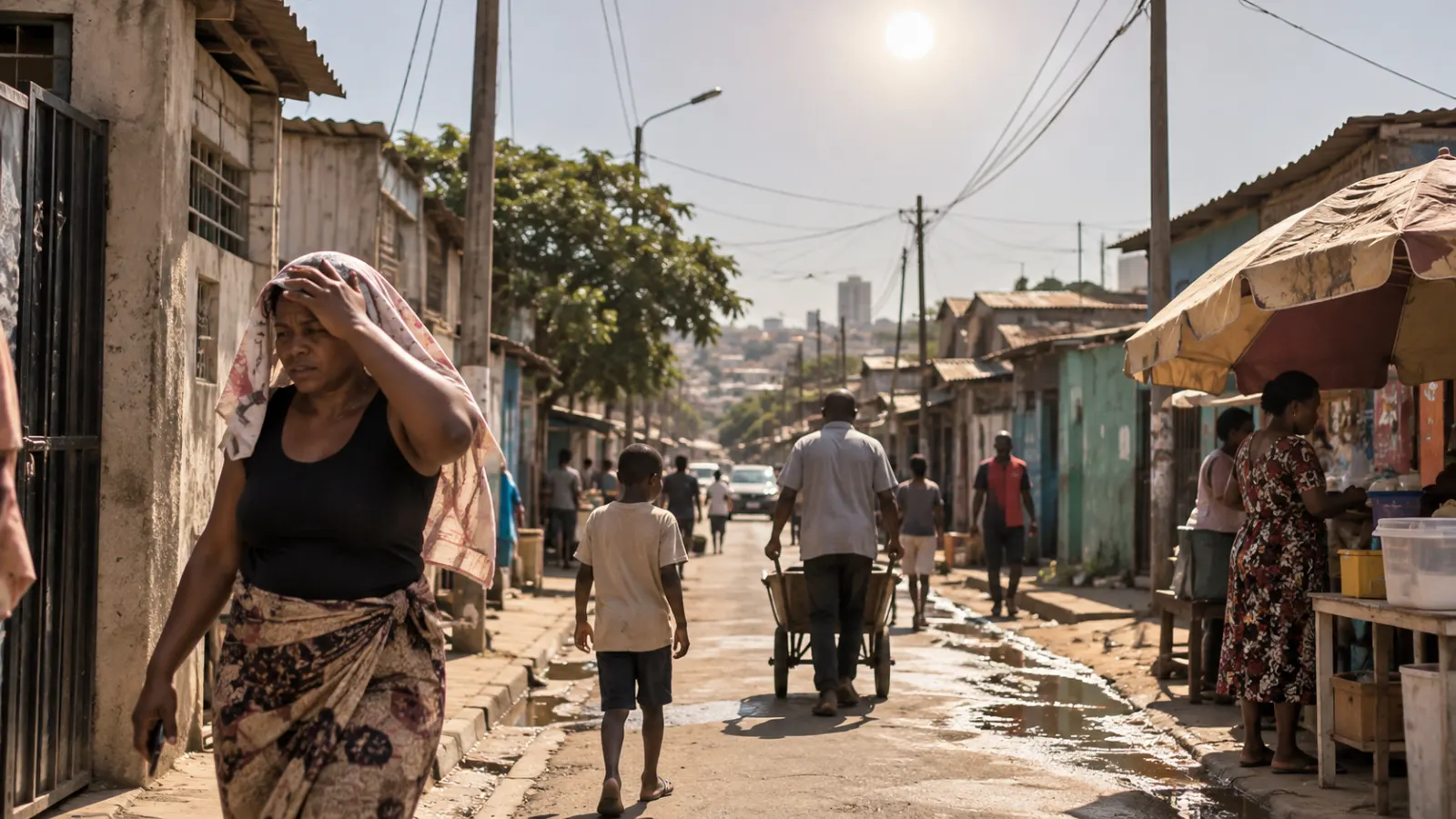
There is no single condition called “rural disadvantage,” and cities do not automatically provide good living conditions simply because they are urban. A prosperous agricultural region can have excellent roads, schools and internet. A remote town can contain strong local industries. Meanwhile, a household in an informal urban settlement may live close to hospitals and employers while lacking secure housing, sanitation or reliable public services.
The useful way to think about the rural–urban divide is therefore not as a hierarchy in which urban always means better.
It is a question of how distance, density, infrastructure, labour markets and public investment shape what people can actually access.
Rural and urban are better understood as a continuum
Official statistics often divide populations neatly into rural and urban categories.
Real settlements are much less tidy.
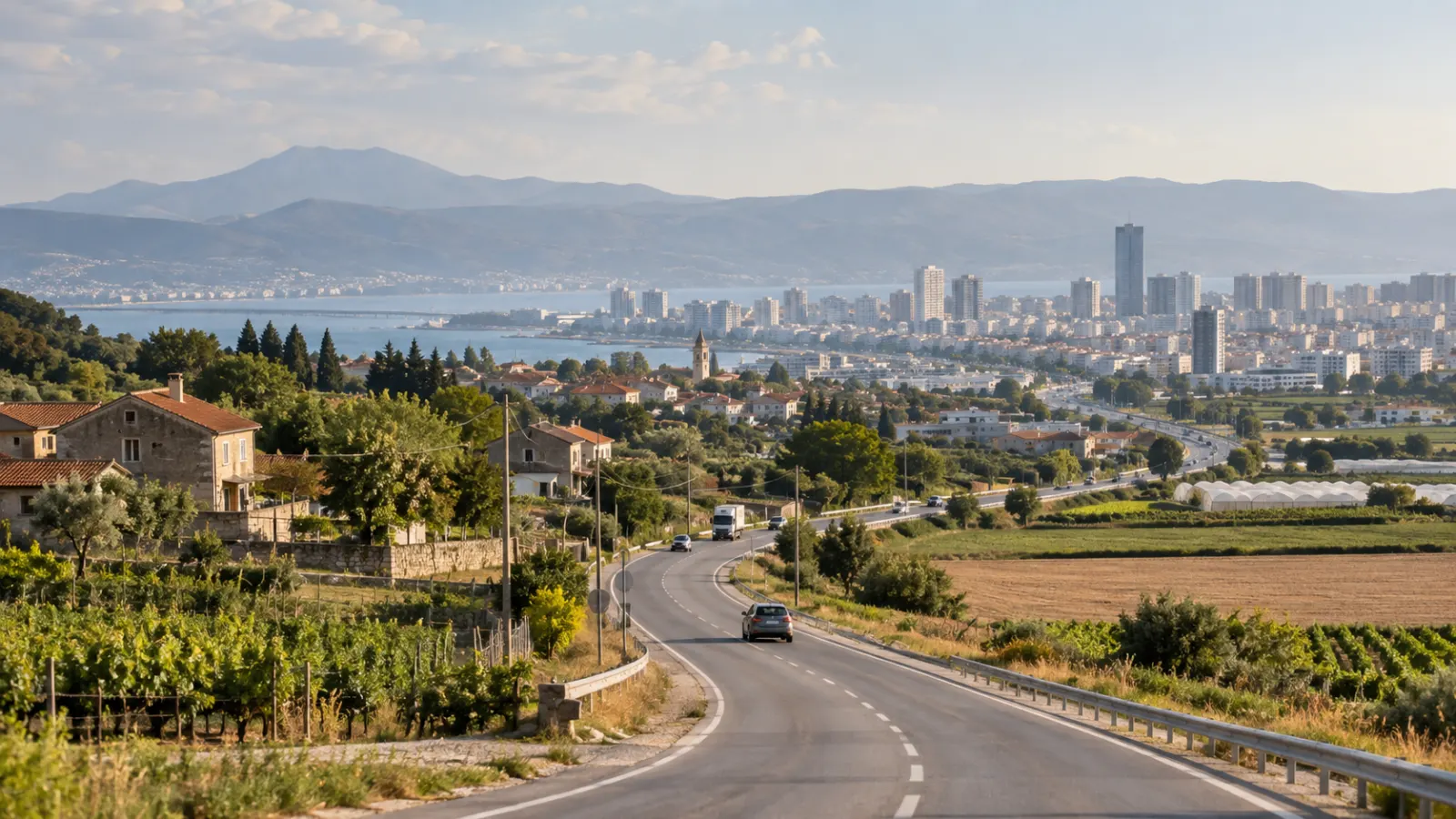
There are isolated farms, villages, market towns, peri-urban settlements, regional centres, secondary cities, suburbs and enormous metropolitan regions. Economic relationships also cross these boundaries continuously. Someone may live in a village, commute to a town, sell products through a city wholesaler and receive digital services from a company located in another country.
Definitions of “urban” also differ between countries. One government may classify an area according to population size, another according to administrative status, density or employment structure.
This makes international comparisons difficult.
The United Nations' World Urbanization Prospects 2025 responds to that problem by incorporating the Degree of Urbanization, a harmonised spatial classification that distinguishes among cities, towns and semi-dense areas, and rural areas. It uses population and spatial information to make settlement patterns more comparable across countries rather than relying only on each country's national definition.
That approach captures an important reality: rural and urban are not two completely separate worlds.
Globally, cities now contain about 45% of the world's population, according to the UN's 2025 revision. But hundreds of millions of people live in towns and semi-dense settlements that do not fit comfortably into an old village-versus-metropolis model.
These intermediate places matter enormously.
A small town may provide the hospital, bank, secondary school, agricultural market, government office and transport hub serving dozens of surrounding villages. A secondary city may connect regional businesses to national markets without requiring every worker or firm to move to the capital.
The rural–urban divide is therefore better understood as a gradient of accessibility and opportunity.
Distance from economic centres matters.
Population density matters.
But so do roads, communications, institutions and the quality of connections between places.
Jobs and infrastructure create some of the strongest geographic differences
Labour markets are one of the clearest reasons people migrate toward cities.
Dense urban economies can support a wider range of occupations because large numbers of employers, workers and customers are located close together. Manufacturing, finance, professional services, universities, healthcare, technology and government institutions often cluster in towns and cities.
Rural economies, by contrast, tend to depend more heavily on agriculture, forestry, fisheries, extraction and smaller local service markets, although the exact pattern varies enormously by country.
This can affect wages and career choice.
A qualified engineer living in a remote agricultural district may technically be employable but have few nearby engineering firms. A specialist doctor can work only where hospitals have the equipment and patient volumes required for the specialty. A young person interested in advanced manufacturing may need to relocate simply because no such employer exists locally.
But rural development should not be reduced to the idea that successful modernisation means moving everybody out of agriculture.
Agricultural productivity itself can generate broader development.
World Bank research on structural transformation has found that rising agricultural productivity can stimulate employment beyond farming, including manufacturing and services. In rural areas, much of this expansion can occur through smaller enterprises, while nearby towns can develop more diverse service and business activity.
This is why rural–urban linkages matter.
Farmers need transport, storage, machinery, finance, processing and markets.
Food-processing firms need agricultural supply.
Small towns can connect producers with wholesalers, banks and public services.
Cities depend on rural and peri-urban systems for food, water, labour, energy and ecological services.
Rural and urban economies are therefore complementary rather than independent.
Infrastructure determines how effectively those relationships work.
A road does more than shorten a journey.
It can increase the number of employers a worker can reach, lower the cost of transporting crops, make a hospital accessible within an hour rather than four hours and allow businesses to sell into larger markets.
Electricity does more than provide lighting.
It allows refrigeration, irrigation, communications, machinery, cooling, digital services and small-business activity.
Water infrastructure affects health and also determines how much time households spend obtaining water.
The World Bank's 2025 review of rural–urban infrastructure gaps shows how large some of these differences remain. In 2022, 81% of urban residents globally had access to safely managed drinking water compared with 62% of rural residents. More than 500 million of the 618 million people still lacking electricity lived in rural areas, according to the data used in the analysis.
The gaps are especially large in poorer countries.
But they are not permanent.
As infrastructure becomes more universal, rural–urban differences can shrink dramatically. The World Bank notes that electricity-access gaps have narrowed substantially in regions including South Asia, Latin America and parts of East Asia.
This is an important correction to fatalistic thinking.
Geography creates costs.
It does not make inequality inevitable.
Broadband has become infrastructure in the same sense as roads and electricity
For much of modern development history, geographic access meant roads, railways, electricity, water and telecommunications.
Broadband now belongs on that list.
Internet connectivity affects education, banking, job applications, government services, business operations, entertainment, professional networking and increasingly healthcare.
A person with reliable high-speed connectivity can access opportunities that once required physical proximity.
But this only narrows geographic inequality when the connection is actually good enough to support those services.
A slow or unreliable mobile connection may technically count as “internet access” while failing during a video consultation, online examination or remote-work meeting.
The OECD's Closing Broadband Connectivity Divides for All, published in 2025, shows that even wealthy countries continue to experience substantial territorial gaps.
Across OECD countries with available data, about 92.3% of all households in 2023 had access to fixed broadband capable of at least 30 Mbps, compared with 78.5% of rural households. At the 100 Mbps level, the gap was wider: about 81.3% overall compared with 58.7% for rural households.
Actual performance also differs.
The OECD found that at the end of 2024, fixed broadband download speeds in metropolitan regions were significantly higher on average than those in regions far from metropolitan areas. Its broader analysis found persistent differences in speed, latency, reliability and uptake across geography.
This matters because modern digital services are becoming more demanding.
Remote work requires reliable video communication and cloud access.
Digital education may involve live classes, large downloads and interactive platforms.
Telemedicine may require stable video.
Businesses increasingly use online accounting, payments, inventory management and customer systems.
Poor connectivity therefore creates a new version of distance.
A village may be physically connected by road yet digitally distant from the institutions and markets increasingly operating online.
Digital technology can reduce geographic inequality.
But a digital service layered on weak broadband can simply reproduce the same inequality in another form.
Devices, affordability and digital skills matter too.
Providing fibre to a village does not automatically mean every low-income household can afford a computer or service plan.
Infrastructure is necessary.
It is not sufficient.
Health, education and opportunity are shaped by the cost of distance
Many rural–urban inequalities are really inequalities in time and travel cost.
Imagine two people who are both legally entitled to the same specialist medical treatment.
One lives twenty minutes from a hospital.
The other must travel four hours, pay for transport, miss a day of work and perhaps arrange childcare.
Their formal entitlement is equal.
Their practical access is not.
The same logic applies to education.
A rural school can provide excellent basic teaching while struggling to support the same range of specialised subjects, laboratories or extracurricular opportunities as a large urban school. Recruiting and retaining specialist teachers can be difficult where populations are small or remote.
Regional colleges, vocational institutes and universities can therefore play a major development role.
They do more than educate students.
They can retain young adults within a region, provide local employers with skilled workers, support research relevant to regional industries and reduce the need to migrate permanently simply to obtain education.
Healthcare faces similar staffing constraints.
Building a rural clinic does not guarantee that doctors, nurses or specialists will remain there.
Professional isolation, housing, schooling for children, career development and working conditions all influence recruitment.
Closing rural–urban gaps therefore requires people as well as buildings.
Decentralised services can help.
So can better transport.
Telemedicine can expand access to some consultations.
But many services remain physical.
A surgical operation cannot be downloaded.
A laboratory test still requires equipment.
A child cannot always replace classroom support with a video lesson.
This is why digitalisation reduces some distance costs without abolishing geography.
The broader concept is effective accessibility.
A job, hospital, university or government service can exist without being realistically accessible to everyone.
To understand spatial inequality, the question is not merely:
Does the service exist?
It is:
How difficult is it for different people to reach and use it?
Migration can expand opportunity while weakening places left behind
When opportunities differ across geography, migration becomes a rational response.
Young adults often leave rural regions and smaller towns to study, work or access larger labour markets.
At the individual level, this can be enormously beneficial.
Migration can increase income, broaden career choice and create access to education and professional networks.
Migrants may also send remittances home, support family businesses and maintain economic relationships with their regions of origin.
But sustained out-migration can create difficult feedback loops.
When large numbers of young adults leave, the remaining population may age.
Local consumer demand can decline.
Shops and services may close.
Public transport becomes harder to operate economically.
Schools serve fewer children.
Employers have greater difficulty finding workers.
Those changes can make the area still less attractive to the next generation.
Population decline then becomes partly self-reinforcing.
This is one reason policy should not treat migration as the only solution to rural disadvantage.
People should have the option to move.
But they should not be forced to relocate simply because basic opportunities have been allowed to disappear from their region.
Rural youth illustrate the complexity.
IFAD research finds that rural employment transformation generally proceeds more slowly than urban transformation and that young people participate in both agriculture and emerging non-farm opportunities. When new off-farm activities develop, youth may successfully enter them, while barriers such as access to land can make entry into farming more difficult.
A development strategy based solely on telling young people to leave agriculture can therefore miss the wider agrifood economy.
Modern agriculture creates employment in logistics, machinery, food processing, veterinary services, finance, retail, digital platforms and agricultural technology.
Small towns often become the locations where these activities cluster.
Strengthening those towns can create opportunities close enough to rural communities that migration becomes a choice rather than a requirement.
Remote work adds another possibility.
For occupations that can be performed digitally, high-quality broadband can allow some professionals to live farther from major employment centres.
That could strengthen some smaller cities and rural regions.
But remote work should not be exaggerated into a universal rural-development strategy.
Many jobs cannot be digitised.
Factories, hospitals, farms, construction sites, transport systems, hospitality businesses and repair services still require physical presence.
And remote workers themselves still need healthcare, schools, roads, housing and reliable utilities.
Digital work can narrow some gaps.
It cannot substitute for regional development.
The divide overlaps with class, gender, climate and political geography
Rural–urban inequality rarely operates by itself.
It intersects with income, gender, age and social position.
A wealthy rural household with a car, private internet connection and financial resources can overcome distance more easily than a low-income household in the same village.
A woman may face additional constraints if local norms limit independent travel or if unpaid care responsibilities make long journeys especially difficult.
A person with a disability may experience inadequate transport as a much greater barrier.
The same geographic distance therefore does not impose the same cost on everyone.
Environmental risks also vary across space.
Agricultural communities can be highly exposed to drought, crop failure, changing rainfall and ecosystem degradation because livelihoods depend directly on natural conditions.
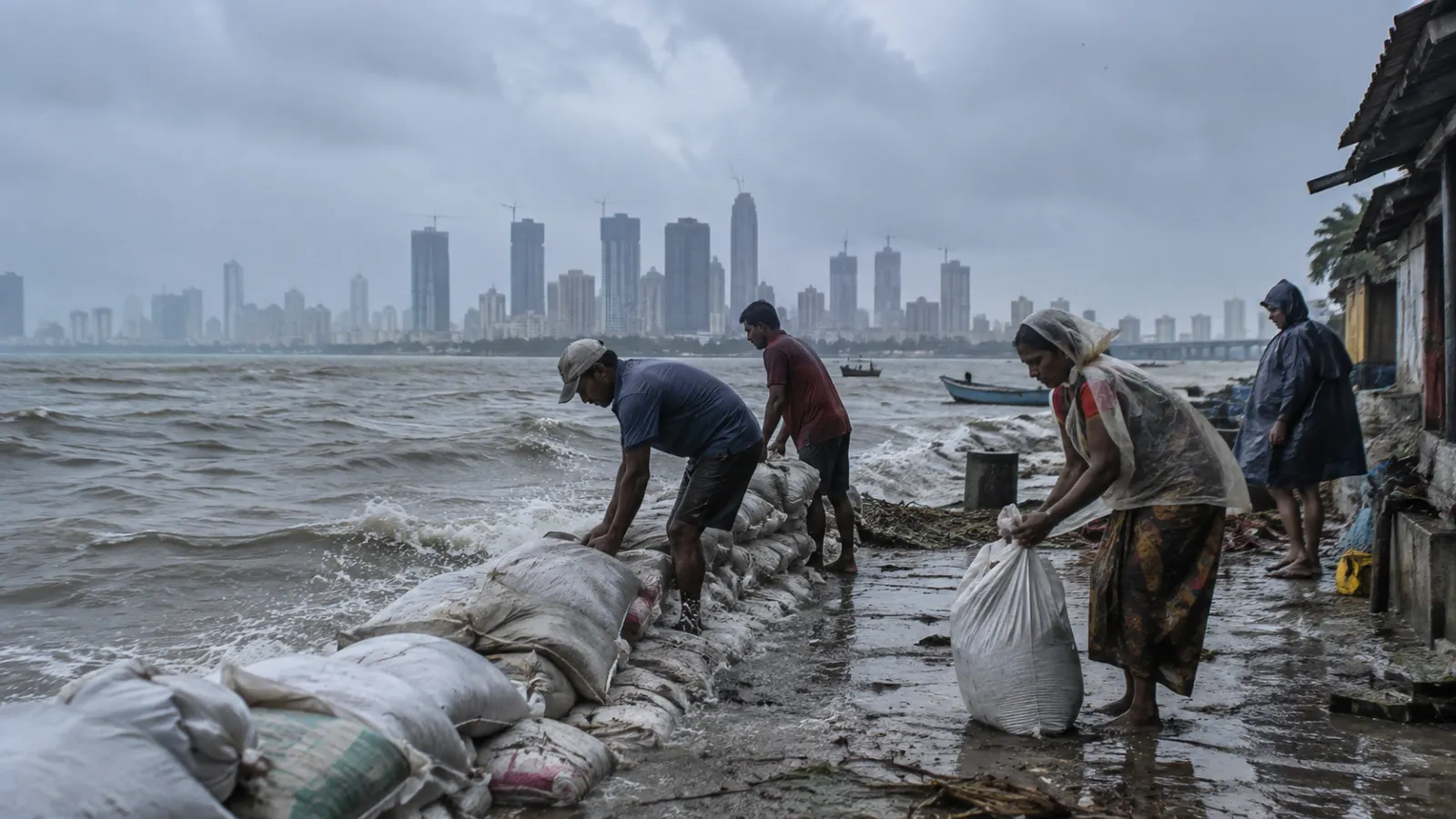
Cities face different risks, including extreme heat, air pollution and flooding intensified by dense development and impermeable surfaces.
Climate adaptation therefore has to be spatially specific.
There is no universal intervention called “climate resilience” that works identically in a farming region, coastal town and megacity.
Political geography can be equally complicated.
Rural residents may feel distant from government institutions concentrated in capitals or large cities.
But electoral systems can sometimes give rural areas substantial political representation.
Economic disadvantage and political influence therefore do not always move together.
Culture adds another layer.
Rural life is often romanticised as peaceful, authentic and communal or dismissed as backward and resistant to change.
Urban life is similarly idealised as modern and cosmopolitan or condemned as anonymous, unequal and socially fragmented.
Both stereotypes hide enormous internal diversity.
There are prosperous and poor rural regions.
There are globally connected and economically declining cities.
There are innovative farmers and struggling urban workers.
The rural–urban divide should describe spatial structures, not personalities or cultural worth.
Good policy connects places rather than choosing between rural and urban development
Development debates sometimes ask whether governments should invest in rural areas or accept urbanisation and focus resources on cities.
That is the wrong choice.
Urbanisation is a powerful part of economic transformation. Cities generate productivity through dense labour markets, specialised firms, universities, infrastructure and knowledge exchange.
Cities therefore require investment in housing, transport, sanitation, electricity, climate resilience and public services.
But cities do not exist independently from the regions around them.
Rural areas provide food, water, labour, energy and raw materials.
Small towns connect agricultural economies with larger markets.
Regional roads allow goods and workers to move between settlements.
Secondary cities provide services that would be inefficient to locate in every village but unnecessarily distant if available only in national capitals.
A strong regional system therefore assigns different functions to different places while improving the connections among them.
This is where place-based policy becomes useful.
Not every region should attempt to reproduce the economy of a global technology centre.
A rural area may possess advantages in specialised agriculture, food processing, tourism, forestry, renewable energy or manufacturing.
A former industrial town may retain technical skills and transport infrastructure.
A regional university can support industries tied to local strengths.
Development becomes more plausible when policy builds on those assets instead of asking every place to compete for the same fashionable sectors.
Public intervention is particularly important where low population density weakens ordinary commercial incentives.
A telecommunications company may find fibre extremely profitable in a dense city but unattractive in a village where kilometres of network reach relatively few customers.
The same economics affects transport, water and other infrastructure.
If access to these services is considered socially important, governments may need subsidies, universal-service obligations, public investment or shared infrastructure to overcome the economics of low density.
The evidence suggests this can work.
Rural–urban gaps in electricity and water have narrowed substantially in many regions as countries became richer and infrastructure expanded. Broadband gaps also differ enormously between countries, showing that geography influences outcomes without mechanically determining them.
The strongest goal is therefore not to make every rural area resemble a city.
Nor is it to prevent migration or preserve every settlement at its historical population.
It is to reduce the degree to which postal code determines life chances.
Someone living in a village may reasonably choose agriculture or a small-town career.
Someone else may choose to move to a metropolis.
Development should expand both people's options.
That requires roads that connect rather than isolate, broadband good enough for modern services, schools that provide genuine learning, healthcare that can actually be reached, electricity capable of powering productive activity and regional economies strong enough to offer more than one path to adulthood.
The rural–urban divide is therefore ultimately a question about practical freedom.
Where you live will probably always shape part of your life.
Mountains create distance.
Population density affects cost.
Industries cluster.
Cities create opportunities that cannot efficiently exist in every village.
But geography does not have to determine whether someone can obtain basic healthcare, connect to the digital economy, receive a good education or reach a viable market.
The divide narrows when infrastructure and institutions make distance less decisive.
That is the real objective of rural and regional development:
not eliminating geographic differences, but ensuring that those differences do not become permanent barriers to building a secure and productive life.