Water Pollution: Causes, Types, Effects and How Contamination Travels From Source to Tap
A river can look clean and still be polluted.
Water emerging from a tap can look clear and still require testing.
A lake covered in algae may be showing the effects of fertiliser applied kilometres upstream.
Groundwater contaminated today may reflect something released years ago.
A plastic bottle floating on a river is obvious.
Nitrate dissolved in groundwater is not.
Neither are:
pathogens;
arsenic;
PFAS;
some pesticides;
pharmaceutical residues;
dissolved metals;
or many industrial chemicals.
That is why water pollution cannot be understood simply by looking at water.
It has to be understood as a movement of contaminants through connected systems.
A pollutant may begin:
on farmland;
inside a sewer;
at an industrial site;
on a road;
inside a landfill;
at a mine;
or in an ordinary household.
Rainfall, drainage, groundwater movement and rivers can then transport it.
The contaminant may eventually reach:
a stream;
a lake;
an estuary;
the sea;
an aquifer;
a fishery;
an irrigation system;
or a drinking-water source.
Modern water protection therefore begins long before water reaches a treatment plant.
WHO's latest drinking-water guidance explicitly uses a catchment-to-consumer approach: identify hazards throughout the entire supply system and control them before they become a public-health problem.
The central question is not only:
“Is this water polluted?”
It is:
“What entered it, where did that contaminant come from, how is it moving, who or what is exposed, and where can the pathway be interrupted?”
Water Pollution at a Glance
| Question | Short answer |
|---|---|
| What is water pollution? | Harmful alteration of water by biological, chemical or physical contaminants. |
| What are the main sources? | Sewage, agriculture, industry, mining, urban runoff, waste disposal and some naturally occurring contaminants. |
| Can polluted water look clean? | Yes. Pathogens, nitrate, arsenic and many chemicals may be invisible. |
| What is the biggest immediate drinking-water threat? | WHO identifies faecal microbial contamination as the greatest drinking-water safety risk globally. |
| How much household wastewater is safely treated? | The latest UN-Water estimate is about 56% globally for 2024. |
| What is eutrophication? | Excess nutrients stimulate algal growth, which can ultimately deplete oxygen and damage aquatic ecosystems. |
| Can groundwater become polluted? | Yes, and contamination can be particularly difficult and slow to reverse. |
| Does detecting a chemical mean the water is dangerous? | Not automatically. Risk depends on the substance, concentration, exposure and toxicity. |
| Are microplastics the main water-pollution problem? | They are one concern, but pathogens, nutrients and dissolved chemicals can create larger immediate health or ecological risks in many settings. |
| Can treatment remove every pollutant? | No single process removes every possible contaminant under all conditions. |
| What is the best pollution strategy? | Prevent contamination at source, then use collection, treatment, monitoring and ecosystem protection as additional barriers. |
| Does climate change affect water pollution? | Yes. Drought, floods, heat and intense rainfall can change pollutant concentrations and movement. |
What Is Water Pollution?
Water pollution occurs when substances, organisms, heat or other physical changes alter water in ways that threaten:
human health;
aquatic ecosystems;
drinking-water use;
fishing;
recreation;
agriculture;
industry;
or other legitimate uses.
The term includes much more than visible rubbish.
Water pollution can be:
biological, such as disease-causing microorganisms;
chemical, such as nitrate, metals, pesticides or solvents;
or
physical, such as sediment, excessive heat or suspended material.
These categories can overlap.
Wastewater, for example, may simultaneously contain:
microorganisms;
nutrients;
organic material;
chemicals;
and solids.
Water Pollution and Water Contamination Are Not Always Exactly the Same Idea
The terms are often used interchangeably in ordinary language.
But there is a useful conceptual distinction.
Contamination can describe the presence of something in water.
Pollution usually implies that the contaminant is present in a quantity or form capable of causing harm or interfering with water use.
That distinction becomes particularly important with modern analytical chemistry.
Laboratories can detect substances at extremely low concentrations.
Finding a trace chemical does not automatically mean the water poses a meaningful health risk.
Risk depends on:
concentration;
toxicity;
duration of exposure;
route of exposure;
and the population exposed.
This is why responsible reporting should separate:
“detected”
from
“shown to be dangerous at this level.”
Water That Looks Clear Can Still Be Unsafe
Human senses are poor water-quality instruments.
Some contaminants change:
colour;
taste;
smell;
or turbidity.
Many do not.
Faecal pathogens can exist without creating an obvious visual warning.
Nitrate-contaminated groundwater may appear perfectly clear.
Arsenic can be present without an immediately noticeable taste.
Some industrial contaminants occur at concentrations far below what humans could detect by smell.
WHO therefore bases drinking-water safety on:
risk assessment;
testing;
water-safety management;
and surveillance,
rather than appearance alone.
The Source-to-Tap Pathway
A useful way to understand water pollution is to follow one contaminant.
Imagine excessive fertiliser applied to a field.
Rain falls.
Some nutrient is absorbed by crops.
Some remains in soil.
Some washes into a drainage channel.
Some moves downward through soil.
The drainage channel enters a river.
The river feeds a reservoir.
The reservoir supplies a drinking-water plant.
Along the journey, the nutrient may also contribute to:
algal growth;
oxygen depletion;
changes in aquatic species;
and increased water-treatment difficulty.
The original pollution event therefore occurred on land.
Its effects appear in water downstream.
This is why water-quality management increasingly focuses on catchments rather than merely treatment-plant outlets.
What Is a Catchment?
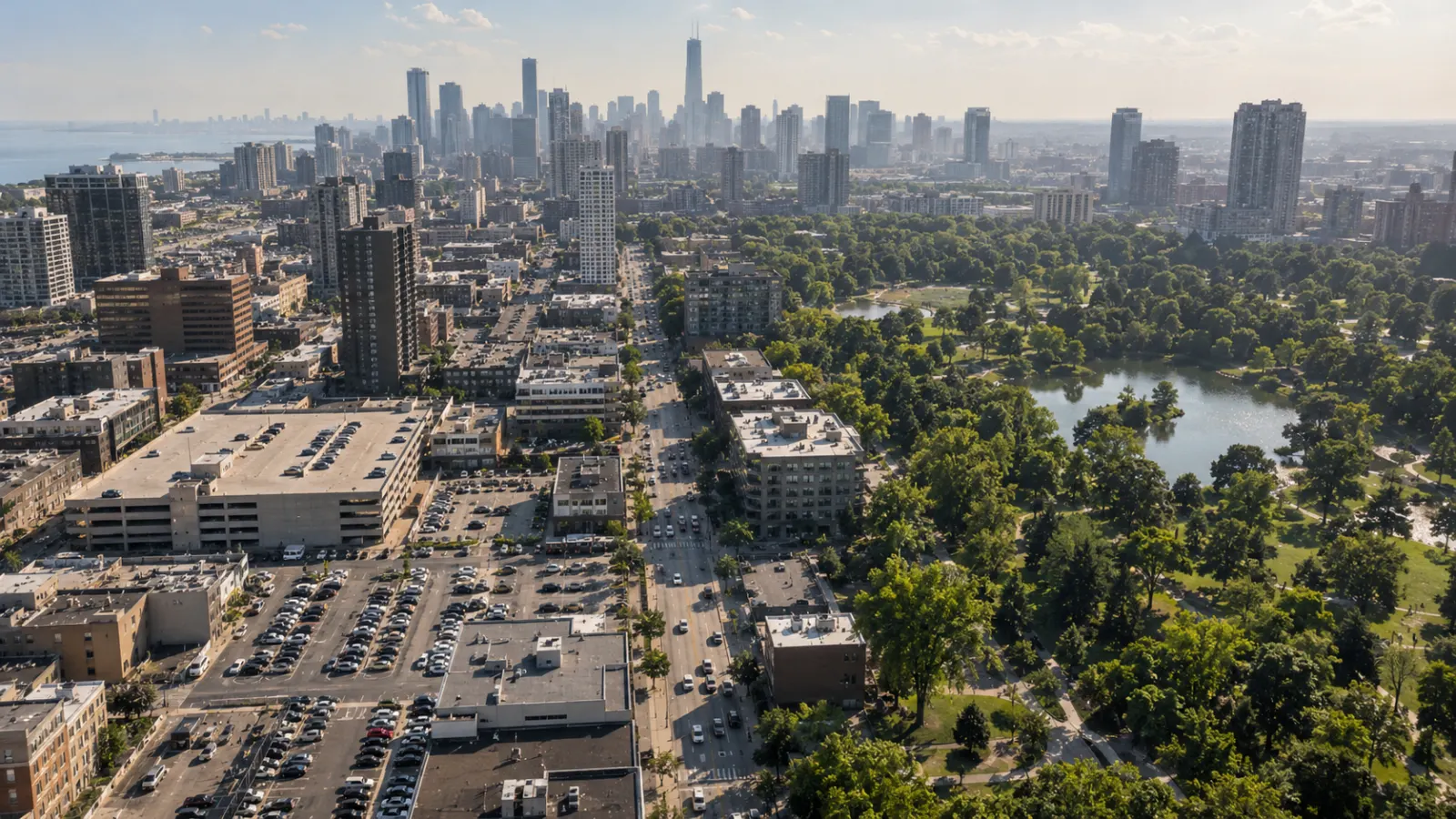
A catchment, also called a watershed or drainage basin, is the area of land from which water drains toward a particular:
river;
lake;
reservoir;
or other receiving waterbody.
Activities across the catchment can influence downstream water quality.
A reservoir may therefore be affected by:
farmland 40 kilometres away;
upstream towns;
roads;
industrial sites;
landfills;
and tributaries.
Protecting drinking water often means protecting the wider landscape feeding the source.
WHO's water-safety approach explicitly assesses risk across the full pathway from catchment to consumer rather than treating water safety as something created only by final disinfection.
Sewage and Faecal Contamination
Microbial contamination remains one of the most direct water-related public-health dangers.
Human and animal faeces can contain organisms capable of causing disease.
WHO reports that in 2022 at least 1.7 billion people worldwide used a drinking-water source contaminated with faeces.
Microbiologically contaminated drinking water can transmit diseases including:
diarrhoeal illness;
cholera;
dysentery;
typhoid;
and polio.
WHO estimates contaminated drinking water causes roughly 505,000 diarrhoeal deaths annually.
That is why sanitation and drinking-water safety cannot be separated.
Sewage Pollution Is Not Only a Drinking-Water Problem
Untreated sewage entering a river can also affect ecosystems.
Wastewater contains biodegradable organic material.
Microorganisms break that material down.
The process consumes dissolved oxygen.
If the pollution load is large enough, oxygen concentrations can fall.
Aquatic organisms then experience stress.
In extreme conditions, fish and other oxygen-dependent species can die.
Wastewater may also introduce:
nitrogen;
phosphorus;
pathogens;
pharmaceutical residues;
household chemicals;
and suspended solids.
So sewage pollution is simultaneously:
a public-health problem;
an ecological problem;
and a wastewater-management problem.
How Much Wastewater Is Actually Treated?
This is one area where current data need careful wording.
The latest UN-Water update estimates that approximately 55.8%, or roughly 56%, of household wastewater flows were safely treated worldwide in 2024.
That means about:
44% were not safely treated.
Regional differences are enormous.
UN-Water reports safe household-wastewater treatment above 90% in high-income countries but only about 26% in low-income countries.
This global figure refers primarily to household wastewater.
Data for industrial wastewater are much more incomplete.
That distinction matters.
“Untreated Wastewater” Is Not One Simple Statistic
Wastewater statistics can refer to different things.
A flow may be:
collected but untreated;
partly treated;
treated but not to a sufficiently safe standard;
or never collected at all.
UN-Water's SDG monitoring therefore distinguishes between:
some treatment
and
safe treatment.
Its 2024 report found that global industrial-wastewater data were still too limited to generate a fully representative worldwide estimate.
So claims such as:
“80% of all wastewater worldwide is untreated”
should not automatically be repeated without checking:
the year;
the wastewater category;
and the underlying dataset.
Sanitation Is One of the First Pollution Barriers
If human waste enters the environment uncontrolled, downstream treatment becomes harder.
Sanitation systems can include:
sewerage;
septic systems;
faecal-sludge collection;
wastewater treatment;
and safe disposal or reuse.
The goal is to prevent pathogens and other waste constituents from moving into:
groundwater;
surface water;
streets;
and drinking-water sources.
Water pollution therefore begins partly as a sanitation problem.
Agriculture Is One of the Hardest Pollution Sources to Control
Industrial pollution can sometimes be traced to one discharge pipe.
Agricultural pollution often comes from thousands of hectares.
Rainfall may wash:
fertiliser;
manure;
pesticides;
soil;
and veterinary chemicals
across large areas.
The pollution enters:
ditches;
streams;
drainage systems;
groundwater;
and rivers
through many small pathways.
This is called diffuse or non-point-source pollution.
Because there is no single pipe to treat, control has to occur across the landscape.
Point-Source vs Non-Point-Source Pollution
The distinction is fundamental.
A point source has an identifiable discharge location.
Examples can include:
a wastewater outfall;
a factory discharge;
or a pipe leaving a treatment plant.
A non-point source is dispersed.
Examples include runoff from:
farmland;
roads;
construction;
and urban surfaces.
Point-source pollution can often be:
permitted;
measured;
and regulated at the outlet.
Diffuse pollution usually requires changing how land is managed.
Fertiliser Is Useful Until Too Much Leaves the Field
Plants require nutrients.
Agriculture would be impossible at modern scale without nutrient management.
Nitrogen and phosphorus are therefore not inherently pollutants.
They become a water-quality problem when more nutrient enters the environment than crops and ecosystems can use.
Rainfall or irrigation can move nutrients into:
surface water;
drainage;
or groundwater.
UNEP identifies excess nitrogen and phosphorus as major drivers of aquatic pollution and ecosystem degradation.
What Is Eutrophication?
Eutrophication occurs when water receives excessive nutrients, particularly nitrogen and phosphorus.
More nutrients can stimulate rapid growth of:
algae;
cyanobacteria;
and aquatic plants.
At first, this may look like increased biological productivity.
The problem develops as excessive organic material dies and decomposes.
Microorganisms consume oxygen during decomposition.
Dissolved oxygen falls.
The result may include:
fish kills;
loss of sensitive species;
harmful algal blooms;
and oxygen-depleted zones.
UNEP describes nutrient pollution as a major cause of eutrophication, harmful algal blooms and aquatic dead zones.
What Is a Dead Zone?
A dead zone is an area of water with extremely low dissolved oxygen, often described as hypoxic.
Many aquatic animals cannot survive prolonged severe oxygen depletion.
Some organisms leave.
Others die.
The ecosystem may become dominated by species tolerant of degraded conditions.
The term does not necessarily mean literally every organism disappears.
It describes a severe reduction in oxygen sufficient to make the area unsuitable for much normal aquatic life.
Harmful Algal Blooms Are Not Just Ugly Water
Some algal and cyanobacterial blooms can generate toxins.
UNEP notes that freshwater cyanobacterial blooms can render water unsuitable for:
drinking;
irrigation;
bathing;
or swimming.
Blooms can also:
block light;
alter food webs;
reduce oxygen;
create taste and odour problems;
and increase treatment demands.
Climate conditions can influence bloom development as well.
Warmer water and changed nutrient flows may favour some bloom events.
Manure Can Pollute Water Too
Livestock manure contains useful nutrients.
When managed correctly it can act as fertiliser.
When excessive quantities reach water, it can carry:
nitrogen;
phosphorus;
organic material;
and microorganisms.
Poorly managed manure storage can also contaminate groundwater or surface water.
The issue is therefore not:
“manure is bad.”
It is:
“nutrients and microorganisms need to remain within a controlled agricultural system rather than escaping into water.”
Pesticides Follow Different Pathways
Pesticides are designed to affect biological organisms.
Different products vary enormously in:
toxicity;
persistence;
mobility;
chemical structure;
and environmental behaviour.
Some bind strongly to soils.
Others can move with runoff or groundwater.
This means pesticide risk cannot be described with one universal rule.
Monitoring and management need to consider the specific compound, crop, soil, hydrology and exposure route.
Soil Itself Can Become a Pollutant
Sediment is natural.
Rivers move sediment constantly.
But excessive erosion can degrade water quality.
Large sediment loads can:
cloud water;
reduce light penetration;
smother spawning habitat;
bury aquatic organisms;
fill reservoirs;
and carry nutrients or chemicals attached to soil particles.
This is why erosion control can also be a water-pollution measure.
Urban Runoff Washes Cities Into Rivers
Rain falling on undeveloped land can infiltrate soil.
Rain falling on:
roads;
car parks;
roofs;
and pavements
often runs rapidly into drains.
Along the way, it can pick up:
oil;
metals;
rubber and tyre particles;
litter;
sediment;
animal waste;
and other urban contaminants.
Stormwater therefore creates a direct connection between city surfaces and rivers.
A pollutant does not need to be poured into a river deliberately.
Rain can deliver it.
Combined Sewers Can Overflow During Heavy Rain
Some cities use combined sewer systems that carry both:
sewage;
and
stormwater.
During intense rainfall, the system may receive more water than the pipes or treatment plants can handle.
Overflow structures may then discharge mixed sewage and stormwater to prevent the system from backing up elsewhere.
These events can introduce:
pathogens;
organic pollution;
and debris
into receiving waters.
This is one reason increasingly intense rainfall can become a water-quality challenge.
Industry Produces Many Different Water-Pollution Profiles
There is no single substance called:
industrial pollution.
A food-processing plant, textile factory, metal-finishing operation and chemical manufacturer produce very different wastewater.
Possible contaminants include:
metals;
solvents;
hydrocarbons;
salts;
acids;
alkalis;
dyes;
organic material;
and persistent compounds.
Treatment therefore has to match the industrial process.
A municipal sewage plant designed primarily for household wastewater cannot automatically handle every industrial chemical safely.
Industrial Pretreatment Matters
Industrial facilities may need to remove or neutralise particular contaminants before wastewater enters a public sewer.
Pretreatment can help prevent:
damage to treatment plants;
worker exposure;
toxic inhibition of biological treatment;
and contaminants passing through into receiving waters.
In many systems, the correct solution begins inside the industrial process rather than at the end of the municipal sewer.
Pollution Prevention Can Be Better Than Treatment
Suppose an industrial process uses a toxic solvent.
One strategy is:
use it;
contaminate wastewater;
then build expensive treatment to remove it.
Another is:
redesign the process;
substitute a safer chemical;
recover and reuse the solvent;
and generate less contaminated wastewater.
The second strategy may reduce:
pollution;
cost;
and treatment complexity.
This is why source reduction belongs inside water management.
Mining Can Produce Long-Lived Water Pollution
Mining exposes geological material that may previously have been isolated from:
air;
water;
and weathering.
Under some geological conditions, sulphide minerals can oxidise and produce acidic drainage.
Acidic water can then mobilise metals from surrounding rock.
This phenomenon is commonly called acid mine drainage.
Mining pollution can persist after mining stops because the exposed geology remains.
That makes mine closure and long-term water management particularly important.
Legacy Pollution Can Remain After the Polluter Is Gone
Pollution does not always disappear when a factory closes.
Chemicals can remain in:
soil;
sediment;
groundwater;
and waste deposits.
A river may therefore contain contamination produced decades earlier.
Sediments can act as both:
a sink;
and
a future source.
Floods, dredging or chemical changes can remobilise pollutants previously stored in sediment.
Historical land use is therefore part of modern water-quality investigation.
Groundwater Is Hidden but Extremely Important
Surface-water pollution is visible.
Groundwater pollution is easier to ignore.
Groundwater moves through:
soil;
sediment;
fractures;
and aquifers.
Contaminants can enter from:
septic systems;
agriculture;
landfills;
leaking storage tanks;
industrial sites;
mines;
and waste disposal.
Some contaminants also occur naturally because groundwater interacts with geological materials.
Natural Contaminants Are Still Water-Quality Problems
Not every hazardous substance in drinking water comes from human pollution.
Groundwater can naturally contain substances such as:
arsenic;
fluoride;
salts;
or other minerals
depending on local geology.
This creates an important distinction.
The source may be natural.
The public-health risk can still be real.
Water-safety management therefore concerns hazards, not merely blame.
Why Groundwater Pollution Can Be Hard to Reverse
A polluted river may flush relatively quickly after the contamination source stops, although sediments and ecosystems can prolong effects.
Groundwater can move much more slowly.
Pollution may spread across:
large aquifers;
deep formations;
and complicated subsurface pathways.
Cleanup can require years of:
pumping;
treatment;
containment;
and monitoring.
Some contamination cannot practically be removed completely at aquifer scale.
That makes prevention especially valuable.
Groundwater Monitoring Is Still Weak
UN-Water's latest global water-quality summary shows a significant monitoring gap.
Of the 120 countries reporting ambient water-quality data, only 71 had groundwater information.
That is particularly concerning because groundwater represents a major freshwater resource in many countries.
A lack of measurements does not mean groundwater is clean.
It means uncertainty is larger.
How Much of the World's Water Is in “Good” Condition?
UN-Water's 2024 ambient-water-quality report found that 56% of assessed water bodies in 120 reporting countries were classified as having good ambient water quality in 2023, down slightly from 57% in 2017.
The organisation warns that the health and livelihoods of 4.8 billion people could be at risk by 2030 if water quality and monitoring do not improve.
This statistic needs one important qualification.
It is based on countries with available reporting.
Global monitoring remains incomplete.
What Does “Good Ambient Water Quality” Measure?
UN-Water's SDG indicator uses core groups of parameters associated with common global water-quality pressures.
These include measurements related to:
oxygen;
salinity;
nitrogen;
phosphorus;
and acidification.
That does not mean these five categories capture every pollutant.
Thousands of possible chemicals exist.
The global indicator is designed to provide a practical common framework countries can report.
Local monitoring may require many additional parameters.
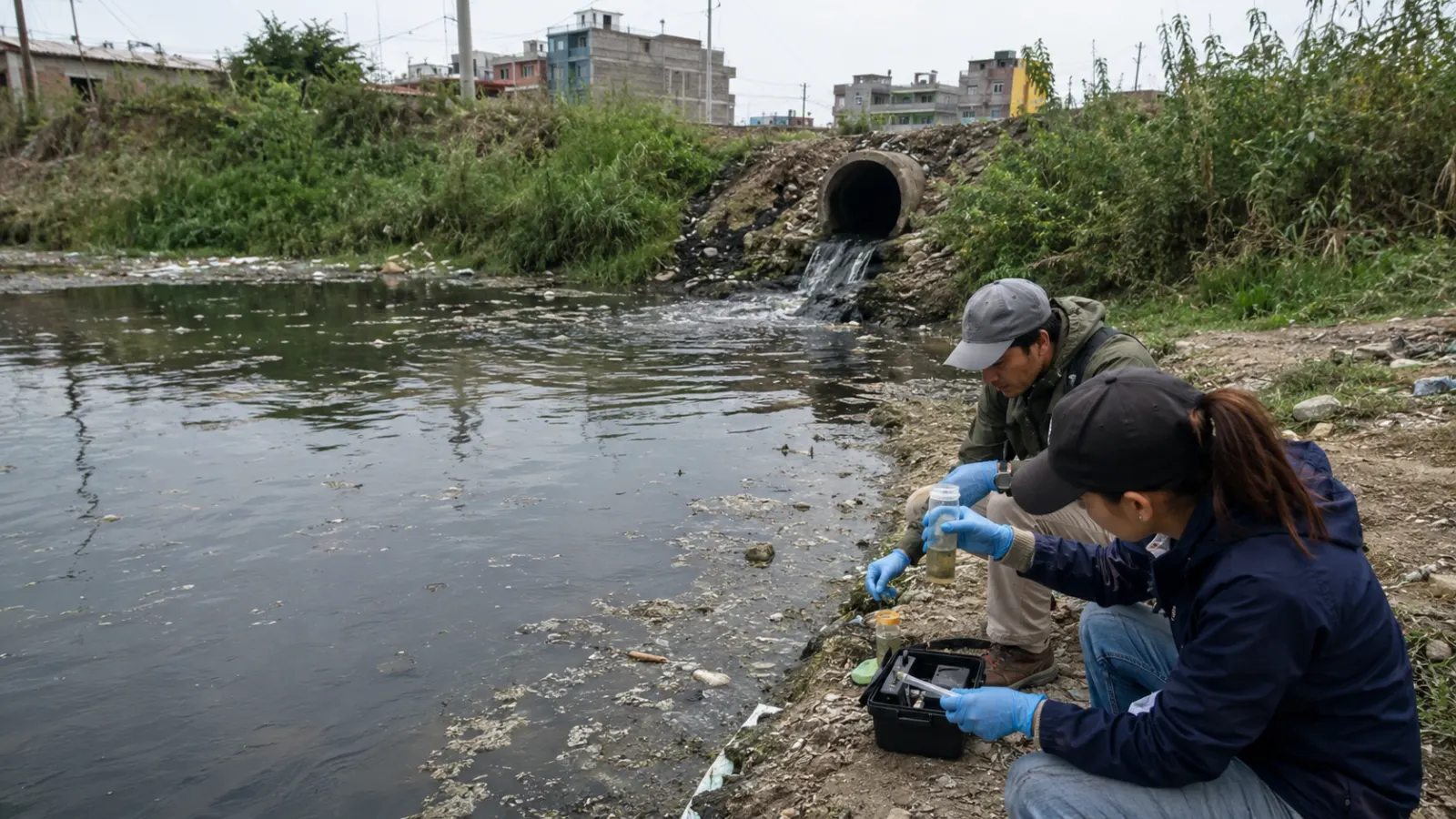
Monitoring Is Part of Pollution Control
Imagine a river tested once each year.
The sample is taken on a dry morning.
A factory releases pollution intermittently after heavy rainfall.
The annual measurement could miss it completely.
Water quality changes across:
time;
flow;
season;
location;
and weather.
Good monitoring therefore requires enough sampling to understand the actual pattern.
It can combine:
chemical indicators;
physical measurements;
biological indicators;
remote sensing;
automatic sensors;
and laboratory analysis.
What Is Biological Monitoring?
Chemical testing tells researchers which substances are present at the moment of sampling.
Biological communities integrate environmental conditions over longer periods.
The presence or absence of particular:
insects;
fish;
algae;
or other organisms
can therefore reveal ecological condition.
A stream containing only pollution-tolerant species may indicate degradation even if one chemical sample appears acceptable.
This is why ecosystem assessment often combines chemistry and biology.
Pharmaceuticals Can Reach Water
Medicines taken by humans and animals do not necessarily remain entirely inside the body.
Some compounds or metabolites can be excreted.
Pharmaceuticals may therefore enter wastewater.
Improper disposal of unused medicines can add another pathway.
Hospitals, households and livestock systems can all contribute depending on the compound.
Modern analytical methods can detect increasingly small concentrations.
Again:
detection alone does not establish a health effect.
Risk assessment requires evaluating actual exposure.
Personal-Care Chemicals Also Enter Wastewater
Everyday products can introduce compounds into sewage.
Examples can come from:
cosmetics;
cleaning;
skin-care products;
and other household uses.
Many are removed to varying degrees during wastewater treatment.
Others may persist.
The important point is not that every consumer chemical is dangerous.
It is that wastewater increasingly contains a complex chemical mixture rather than only:
water;
faeces;
and food residues.
PFAS Illustrates the Difficulty of Persistent Chemicals
Per- and polyfluoroalkyl substances, commonly called PFAS, are a large family of manufactured chemicals.
Some are environmentally persistent.
Their presence in water has prompted growing regulatory and treatment attention in many countries.
But PFAS should not be discussed as though every member of the chemical family has identical:
toxicity;
exposure;
or regulation.
The broader lesson is that persistent chemicals create difficult management problems because conventional wastewater or drinking-water processes were not necessarily designed specifically for them.
Emerging Contaminant Does Not Mean Newly Invented Contaminant
The term emerging contaminant can be misleading.
Sometimes the substance has existed for decades.
What is new may be:
better detection;
new evidence;
greater monitoring;
or new understanding of effects.
Improved analytical instruments can reveal chemicals at concentrations laboratories could not previously measure.
Scientific ability to detect pollution therefore changes faster than society's ability to interpret every detection.
Plastic Pollution Connects Waste Management and Water Quality
Plastic reaches aquatic systems through:
litter;
storm drains;
poor waste collection;
industrial losses;
fishing activity;
wastewater;
and runoff.
Larger plastic objects can:
entangle wildlife;
be ingested;
block drainage;
or damage habitat.
Over time, plastic can fragment into increasingly small pieces.
What Are Microplastics?
Microplastics are small plastic particles.
They may originate directly at small sizes or form as larger plastic products break down.
Sources can include:
fragmented packaging;
synthetic textiles;
tyre wear;
industrial materials;
and other plastic products.
Microplastics have been detected across aquatic environments.
That makes them an important research and pollution-control issue.
But their presence should not be used to imply that every detected particle carries a known or identical human-health risk.
Plastic Is Visible, but Invisible Pollution May Be More Urgent
Plastic bottles create compelling photographs.
Nitrate does not.
A sewage pathogen does not.
Dissolved arsenic does not.
This creates a communication bias.
Visible pollution can receive more public attention because it is easier to photograph.
In many locations, however, the more immediate health threat may come from:
unsafe sanitation;
microbial contamination;
nutrient pollution;
or toxic chemicals.
A comprehensive water strategy cannot prioritise only what is visually dramatic.
Pollution Changes Entire Ecosystems
Water pollution is sometimes measured through dramatic outcomes such as:
dead fish.
Damage can occur much earlier.
Pollution may alter:
species abundance;
reproduction;
growth;
feeding;
habitat;
migration;
and predator-prey relationships.
A nutrient-rich lake may shift from:
clear water with diverse plants
toward
frequent algal blooms and low-oxygen conditions.
A polluted stream may increasingly contain species tolerant of degraded conditions.
UNEP identifies nutrient pollution and chemical toxic stress as major pressures on aquatic ecosystems.
Pollution Can Affect Fisheries
Fish depend on more than the absence of acute poison.
They need:
oxygen;
appropriate temperature;
spawning habitat;
food;
and suitable chemistry.
Pollution that damages any of these can affect fisheries.
Sediment may bury spawning grounds.
Eutrophication may reduce oxygen.
Toxic chemicals can affect reproduction.
Contaminants may also accumulate in aquatic food webs.
The economic effect can therefore extend far beyond the polluted water itself.
Water Pollution Has Economic Costs
Pollution moves costs downstream.
Imagine an industrial facility saves money by discharging inadequately treated wastewater.
The contamination may force a water utility to spend more on:
treatment;
monitoring;
chemicals;
and energy.
Fisheries may lose production.
Tourism may decline.
Farmers may lose irrigation options.
Households may buy bottled water.
Public-health systems may treat disease.
The pollutant did not eliminate the cost.
It transferred it.
The Polluter-Pays Principle
This economic logic helps explain the polluter-pays principle.
The general idea is that the entity responsible for pollution should bear appropriate costs of:
prevention;
control;
or remediation
rather than shifting those costs entirely onto the public.
Applying the principle can be complicated.
Pollution may come from thousands of diffuse sources.
Historic polluters may no longer exist.
Legal liability varies by jurisdiction.
But the principle captures an important idea:
environmental damage is not economically free merely because the polluter did not pay for it.
Drinking-Water Treatment Is a Barrier, Not a Licence to Pollute
Modern water-treatment systems can be extremely effective.
Processes may include:
coagulation;
sedimentation;
filtration;
disinfection;
activated carbon;
membranes;
or other specialised technologies.
But no treatment plant removes every conceivable contaminant equally well under every operating condition.
The more polluted the source becomes, the more difficult and expensive treatment may become.
That is why WHO's current guidelines emphasise preventive risk management from catchment to consumer.
Protecting source water is part of drinking-water treatment.
What Is a Water Safety Plan?
WHO describes water safety plans as the most effective means of consistently ensuring the safety and acceptability of a drinking-water supply.
The approach examines the full system from:
catchment;
source;
treatment;
storage;
distribution;
to the consumer.
Operators identify hazards, assess risks, put control measures in place and monitor whether those controls are functioning.
This is fundamentally different from waiting until finished water fails a laboratory test.
It is preventive.
WHO Updated Its Drinking-Water Guidance in 2026
On 17 June 2026, WHO published the fourth edition of its drinking-water quality guidelines incorporating the first, second and third addenda.
The update strengthens several areas, including:
risk management;
water-safety plans;
sanitary inspections;
small water supplies;
microbial guidance;
and management of hazards such as cyanobacteria.
It continues the principle that public-health protection should operate from catchment to consumer rather than relying solely on final water testing.
This is an important freshness point for any article on water pollution and drinking-water safety.
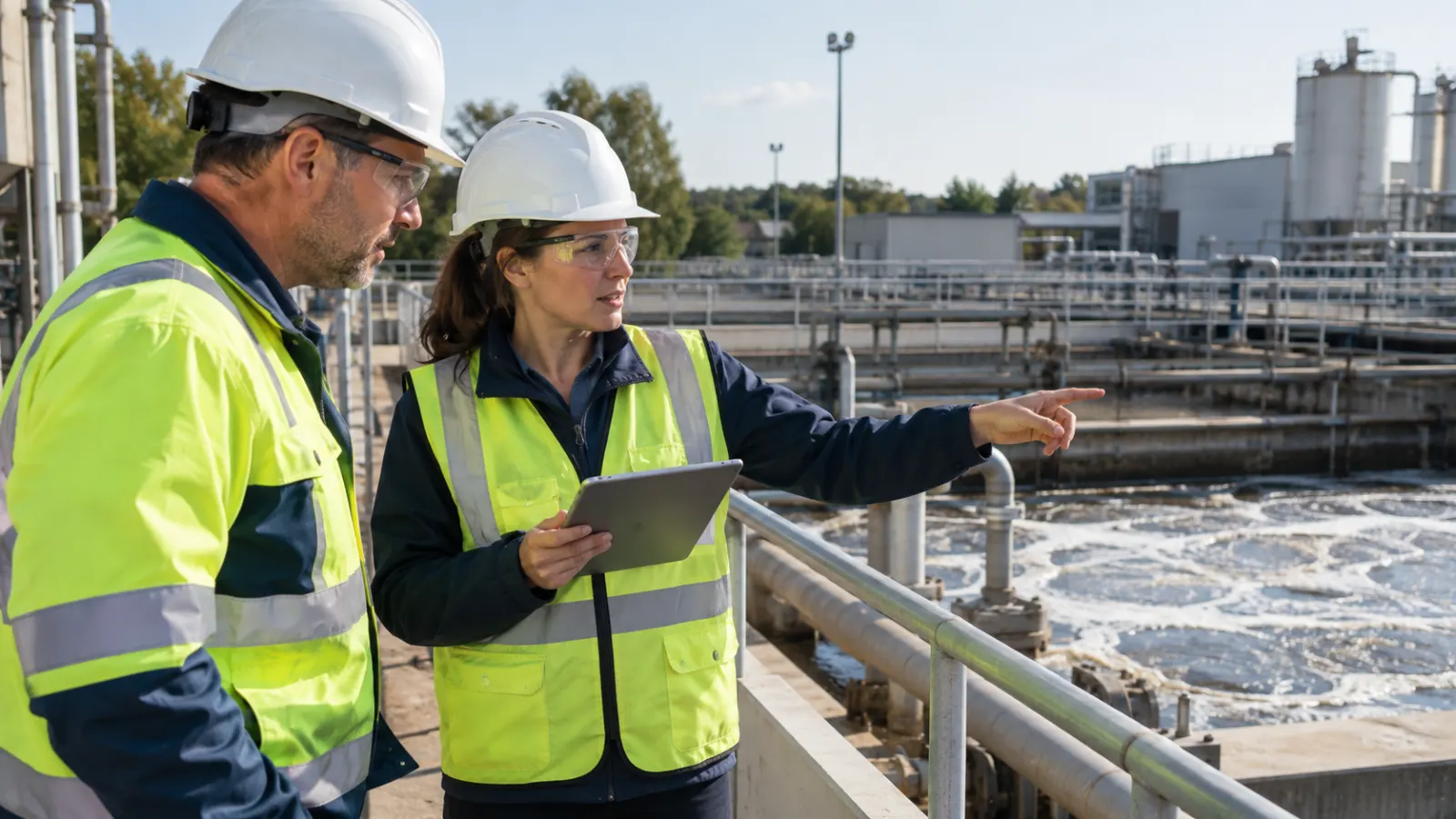
Wastewater Treatment Is Essential—but Not Unlimited
A wastewater treatment plant can remove large amounts of pollution.
Different treatment stages may reduce:
solids;
organic matter;
pathogens;
and nutrients.
More advanced treatment can address particular chemical or microbial risks.
But treatment effectiveness depends on:
plant design;
maintenance;
energy;
operator skill;
flow;
incoming contamination;
and the target pollutant.
There is no universal machine that turns any mixture of waste into perfectly clean water at negligible cost.
Primary, Secondary and Advanced Treatment Are Different
In simplified terms, wastewater treatment may include different levels.
Primary treatment focuses heavily on physical removal of solids.
Secondary treatment generally uses biological processes to remove much biodegradable organic pollution.
Additional or advanced treatment can target:
nutrients;
specific chemicals;
microorganisms;
or requirements for water reuse.
The terminology and standards vary by country.
That means:
“the wastewater was treated”
is incomplete information.
The important question is:
treated to what level, for which pollutants and to what discharge standard?
Wastewater Treatment Produces Residual Material Too
Pollutants do not always disappear.
Treatment can transfer contaminants from water into:
sludge;
biosolids;
concentrated waste;
or treatment residues.
Those materials then require appropriate management.
A water-treatment problem should not merely be converted into an uncontrolled solid-waste problem.
This is another reason pollution management needs to consider whole material cycles.
Water Reuse Can Reduce Pressure on Freshwater Supplies
Properly treated wastewater can sometimes be reused for purposes such as:
irrigation;
industrial use;
landscape watering;
or, under highly controlled systems, potable-water supply.
Reuse can reduce:
freshwater demand;
and wastewater discharge.
But safety requirements depend on intended use.
Water suitable for industrial cooling may not meet drinking-water standards.
The phrase:
“recycled water”
therefore does not describe one universal quality.
Climate Change Can Make Pollution Harder to Control
Climate change affects both water quantity and water quality.
Drought can reduce river flow.
If the same pollution load enters less water, concentrations may increase.
Heat can increase water temperature and affect:
oxygen;
ecology;
and some algal blooms.
Heavy rainfall can wash:
fertiliser;
manure;
sediment;
oil;
and waste
into rivers.
Flooding can overwhelm:
sewers;
latrines;
waste sites;
and industrial infrastructure.
Climate adaptation therefore requires more than finding additional water.
It also requires protecting its quality.
Drought Can Concentrate Pollution
Imagine a factory discharge remains constant.
A river normally carries 100 units of water.
During drought it carries 30.
The pollution is now diluted into a much smaller volume.
Concentrations can increase even though the polluter released no additional material.
Reduced flow can also worsen:
temperature;
oxygen;
and ecological stress.
Water scarcity and water pollution therefore interact.
Floods Can Spread Pollution Quickly
Floodwater can connect systems that are normally separated.
It may enter:
sewers;
septic systems;
farms;
fuel storage;
factories;
waste sites;
and homes.
Contaminated floodwater can then spread:
microorganisms;
chemicals;
oil;
and debris
over a large area.
The pollution event may continue after the visible flood disappears if contaminants entered:
soil;
wells;
or groundwater.
War and Disaster Can Damage Water Systems
Water pollution can also result from infrastructure failure.
Conflict or natural disaster may damage:
sewage networks;
treatment plants;
industrial facilities;
fuel storage;
pipelines;
and waste sites.
The result can be simultaneous loss of:
safe drinking water;
sanitation;
and pollution control.
This demonstrates how closely public health, environmental protection and infrastructure security are connected.
Water Pollution Does Not Stop at Political Borders
A river can begin in one country and flow through several others.
Groundwater aquifers may cross borders.
A coastal pollution problem may be produced far upstream.
This creates a governance problem.
One municipality may bear the consequences of decisions made by another.
One country may receive pollution created upstream elsewhere.
Water management therefore often requires:
basin-wide;
regional;
and international cooperation.
What Does “Source to Sea” Mean?
UNEP increasingly frames aquatic pollution through a source-to-sea perspective.
The idea is that land, rivers, groundwater, estuaries and oceans form connected systems.
A fertiliser loss on a field can become:
river pollution;
then coastal nutrient pollution.
Plastic litter dropped in a city may travel:
drain → river → estuary → sea.
Sediment from erosion can damage downstream aquatic habitats.
The correct management unit is therefore often larger than the location where pollution finally becomes visible.
Restoration Is Possible
Polluted water bodies can recover.
Sewage treatment can sharply improve urban rivers.
Reducing nutrient inputs can allow lakes to recover.
Contaminated sites can be remediated.
Wetlands and river habitats can be restored.
Species can return.
This matters because water pollution is not automatically permanent.
But recovery can take:
years;
decades;
or longer.
Restoration Can Be Slower Than Pollution
A chemical may enter groundwater in one day.
Removing it may take decades.
A lake can accumulate phosphorus in its sediments.
Even after external nutrient inputs decline, those sediments may continue releasing nutrients.
A river's biological community may need years to recolonise after water chemistry improves.
The time required to pollute and the time required to recover are therefore not equal.
Prevention Usually Beats Cleanup
This is one of the strongest principles in water management.
Preventing a solvent leak is generally easier than cleaning an aquifer.
Keeping excess fertiliser on a field is easier than removing nitrate from groundwater.
Preventing sewage discharge is easier than treating contaminated drinking-water sources downstream.
Stopping hazardous waste entering a sewer is easier than designing a plant capable of removing every resulting chemical.
Treatment and restoration are essential.
They should not become excuses for allowing avoidable pollution upstream.
What Can Households Actually Do?
Household behaviour is only one part of water pollution, but it can still matter.
People can avoid treating:
drains;
toilets;
and stormwater systems
as universal waste-disposal routes.
Paints, oils, chemicals, medicines and batteries may require dedicated disposal systems depending on local rules.
Reducing unnecessary fertiliser and pesticide use around homes can also reduce runoff.
But household advice should not distract from the larger sources.
Industrial discharge, sanitation infrastructure, agriculture and municipal systems often require policy and investment far beyond individual consumer choices.
What Governments and Utilities Need to Do
Water pollution is fundamentally an infrastructure and governance problem as well as an individual one.
Effective systems require coordination across:
sanitation;
wastewater treatment;
agriculture;
industrial regulation;
mining;
solid waste;
drinking-water supply;
urban drainage;
land-use planning;
and environmental monitoring.
A river agency alone cannot control pollution generated across an entire catchment.
That is why integrated water management matters.
How Do We Know Whether Pollution Control Is Working?
Not through one photograph.
Not through one water sample.
Not through the absence of smell.
Progress requires trends.
Are:
pathogen levels falling?
nutrient concentrations declining?
oxygen conditions improving?
fish communities recovering?
industrial discharges meeting limits?
groundwater contaminants spreading?
wastewater-treatment coverage increasing?
Monitoring makes pollution control measurable.
UN-Water reports that global monitoring capacity has improved, but major gaps remain, especially in lower-income countries and groundwater.
Common Myths About Water Pollution
| Myth | More accurate explanation |
|---|---|
| “Clear water is clean water.” | Many important contaminants are invisible. |
| “Water pollution means litter floating in rivers.” | Pollution also includes pathogens, nutrients, chemicals, sediment, heat and salinity changes. |
| “All pollution comes from factories.” | Agriculture, sewage, roads, households, mining and waste sites can all contribute. |
| “Every detected chemical is dangerous.” | Detection and demonstrated risk are not the same thing. Dose and exposure matter. |
| “Wastewater treatment removes everything.” | Treatment performance depends on the contaminant and technology. |
| “Groundwater is naturally protected because it is underground.” | Pollution can infiltrate aquifers and may be extremely difficult to remove. |
| “Fertiliser cannot be pollution because plants need it.” | Excess nutrient leaving farms can cause eutrophication and groundwater pollution. |
| “Microplastics are the only modern water-quality threat.” | They are one concern among many; pathogens and nutrient pollution can create much larger immediate impacts in some places. |
| “Once the pollution source stops, the ecosystem immediately recovers.” | Sediment, groundwater and ecological damage can persist. |
| “A treatment plant can solve any upstream pollution problem.” | Source protection is usually safer and often cheaper. |
| “Water pollution stays where it was released.” | Rivers, drainage and groundwater can move contamination far downstream. |
| “Climate change is only about water scarcity.” | Climate change can also worsen water-quality problems through heat, floods, drought and runoff. |
Frequently Asked Questions
What is water pollution?
Water pollution is the harmful alteration of water by biological, chemical or physical contaminants in ways that threaten health, ecosystems or legitimate water uses.
What are the main causes of water pollution?
Major sources include:
sewage;
agriculture;
industrial wastewater;
mining;
urban runoff;
poor waste management;
and contaminated land.
Some harmful substances can also occur naturally in groundwater.
What are the main types of water pollution?
Water pollution can broadly involve:
microbial contamination;
nutrient pollution;
chemical pollution;
sediment;
plastic;
thermal pollution;
salinity;
and other physical changes.
What is the biggest drinking-water pollution risk worldwide?
WHO identifies faecal microbial contamination as the greatest risk to drinking-water safety.
How many people use faecally contaminated drinking water?
WHO reported that at least 1.7 billion people used a drinking-water source contaminated with faeces in 2022.
Can water look clean but be polluted?
Yes.
Many microbial and chemical contaminants are invisible.
Can boiling remove every contaminant?
No.
Boiling can inactivate many microorganisms when performed correctly, but it does not remove every chemical contaminant and may not address hazards such as dissolved metals.
Treatment needs to match the hazard.
What is eutrophication?
Eutrophication occurs when excessive nutrients stimulate biological growth, often leading to algal blooms, decomposition and oxygen depletion.
What causes algal blooms?
Nutrients—particularly nitrogen and phosphorus—are major drivers, although temperature, light and water conditions also affect bloom development.
What is a dead zone?
A dead zone is an area with very low dissolved oxygen that cannot support much normal aquatic animal life.
How does farming pollute water?
Potential pathways include runoff and leaching of:
fertilisers;
manure;
pesticides;
and sediment.
How does sewage pollute water?
It can introduce:
pathogens;
organic material;
nitrogen;
phosphorus;
chemicals;
and suspended solids.
How much household wastewater is safely treated globally?
The latest UN-Water estimate indicates approximately 56% was safely treated in 2024, leaving about 44% not safely treated.
How does industrial pollution reach water?
It may enter through:
direct discharges;
sewers;
spills;
runoff;
contaminated land;
or groundwater.
What is groundwater pollution?
It occurs when contaminants enter underground water stored or moving through aquifers.
Why is groundwater pollution difficult to clean?
Groundwater can move slowly through large subsurface formations, making contamination difficult to locate, contain and remove.
What are emerging contaminants?
The term generally refers to contaminants receiving growing scientific or regulatory attention, sometimes because better analytical methods have made them easier to detect.
Are PFAS water pollutants?
Some PFAS are persistent environmental contaminants of significant regulatory and health interest. Their risks vary by individual compound and exposure.
Are microplastics dangerous in drinking water?
Microplastics are an active research area. Their detection does not by itself establish a particular level of human-health risk. Risk interpretation requires evidence about exposure, particle characteristics and biological effects.
What is water-quality monitoring?
It is systematic measurement of physical, chemical and biological characteristics of water over time.
How much of monitored global water is considered good quality?
UN-Water reported that 56% of assessed water bodies in 120 reporting countries were classified as having good ambient water quality in 2023.
Why is groundwater monitoring important?
Groundwater is a major water source, but UN-Water reports that only 71 of the 120 countries supplying ambient-water-quality data had groundwater information.
Can drinking-water treatment remove pollution?
Yes, many contaminants can be removed or controlled effectively.
But treatment must match the hazard and cannot substitute completely for source protection.
What is a water safety plan?
It is WHO's preventive risk-management approach for identifying and controlling hazards throughout a drinking-water system from catchment to consumer.
Did WHO update its drinking-water guidance in 2026?
Yes.
WHO published the fourth edition incorporating the first, second and third addenda on 17 June 2026.
Does climate change increase water pollution?
It can.
Drought can concentrate contaminants, intense rainfall can increase runoff, floods can spread sewage and chemicals, and warmer conditions can affect oxygen and algal growth.
Can polluted rivers recover?
Yes, especially when pollution sources are controlled and ecosystems are restored.
The recovery time depends on the contaminant and ecosystem.
What is the best way to prevent water pollution?
The strongest strategy is usually to control pollution before it reaches water, while also maintaining sanitation, wastewater treatment, monitoring, drinking-water protection and ecosystem restoration.
The Water-Pollution Chain
A simple pollution chain looks like this:
| Stage | Example |
|---|---|
| Source | Fertiliser, sewage, chemical spill or litter |
| Release | Runoff, discharge, leakage or infiltration |
| Transport | Drain, river, groundwater or sediment movement |
| Receiving environment | Stream, lake, aquifer, estuary or coast |
| Exposure | Wildlife, recreation, irrigation, fisheries or drinking-water supply |
| Impact | Disease, toxicity, eutrophication, habitat loss or treatment cost |
| Control point | Prevention, containment, treatment, monitoring or restoration |
This framework is useful because it shows that pollution does not consist only of a contaminant.
It requires a pathway.
Interrupting that pathway can reduce risk.
Not Every Pollutant Reaches the Tap
This distinction is essential.
A pollutant enters a river supplying a city.
That does not automatically mean identical concentrations will emerge from household taps.
Between the river and consumer may be:
reservoir processes;
water abstraction;
treatment;
disinfection;
storage;
distribution;
and monitoring.
The correct public-health question is therefore not:
“Was something detected somewhere in the watershed?”
It is:
“What is the exposure at the point where people actually encounter the water?”
At the same time, source contamination should not be dismissed simply because treatment exists.
Greater upstream pollution can increase treatment complexity, cost and risk.
Water Pollution Is Ultimately About Connected Systems
The most common mistake is treating every problem separately.
Agricultural department:
fertiliser.
City government:
stormwater.
Sanitation department:
sewage.
Industry regulator:
factory discharge.
Waste department:
plastic.
Water utility:
drinking water.
Environmental agency:
rivers.
But water connects all of them.
The river does not know which government department the nitrate belongs to.
Groundwater does not recognise the boundary between a landfill and a drinking-water well.
A coastal dead zone does not care whether its nitrogen originated in:
agriculture;
sewage;
or atmospheric deposition.
That is why water pollution is fundamentally a systems problem.
The Central Idea
Water pollution begins before contaminants enter water.
It begins with how societies manage:
sanitation;
agriculture;
chemicals;
mining;
industry;
roads;
waste;
and land.
Water then becomes the transport system.
Rain can move fertiliser from a field.
A sewer can carry pharmaceuticals from households.
A storm drain can move tyre particles from roads.
Groundwater can transport a leaking chemical beneath property boundaries.
A river can carry nutrients hundreds of kilometres.
And eventually those pollutants can affect:
people;
ecosystems;
fisheries;
agriculture;
coasts;
and drinking-water systems.
This is why the strongest water-pollution strategy does not begin at the final treatment plant.
It begins upstream.
Prevent hazardous releases.
Manage nutrients.
Provide safe sanitation.
Collect and properly treat wastewater.
Control industrial discharges.
Protect groundwater recharge areas.
Manage solid waste.
Monitor rivers and aquifers.
Restore damaged ecosystems.
Then use drinking-water treatment as another protective barrier rather than the only one.
WHO's 2026 drinking-water guidance reinforces exactly this philosophy: manage risks systematically from catchment to consumer.
A clean glass of water at the tap is therefore the end result of many successful decisions made long before the tap is opened.
Water pollution is the story of what happens when some of those barriers fail.
And clean water is the story of keeping contamination out of the water cycle wherever possible before asking technology to remove it later.