A rebirth that was also a reinvention
The Renaissance is often described as Europe’s rebirth, but rebirth is only part of the story. It was also a reinvention. Between the fourteenth and sixteenth centuries, especially in Italy and later across Europe, artists, scholars, patrons and political thinkers began to look back to classical antiquity while creating something new. They did not simply copy Greece and Rome. They used the ancient past to rethink human potential, beauty, knowledge, politics and the dignity of worldly life.
The Renaissance matters because it changed the tone of European civilisation. Medieval Europe had produced universities, cathedrals, scholastic philosophy, vernacular literature and complex law; the Renaissance did not emerge from darkness. But it shifted emphasis. Human beings, cities, bodies, perspective, fame, civic action and critical inquiry received new energy. Art became more naturalistic and intellectually ambitious. Scholarship became more philological and classical. Patronage became a tool of political prestige. The Renaissance was therefore not a clean break with the Middle Ages, but a transformation within European culture that made later modernity imaginable.
Time, place and the geography of renewal
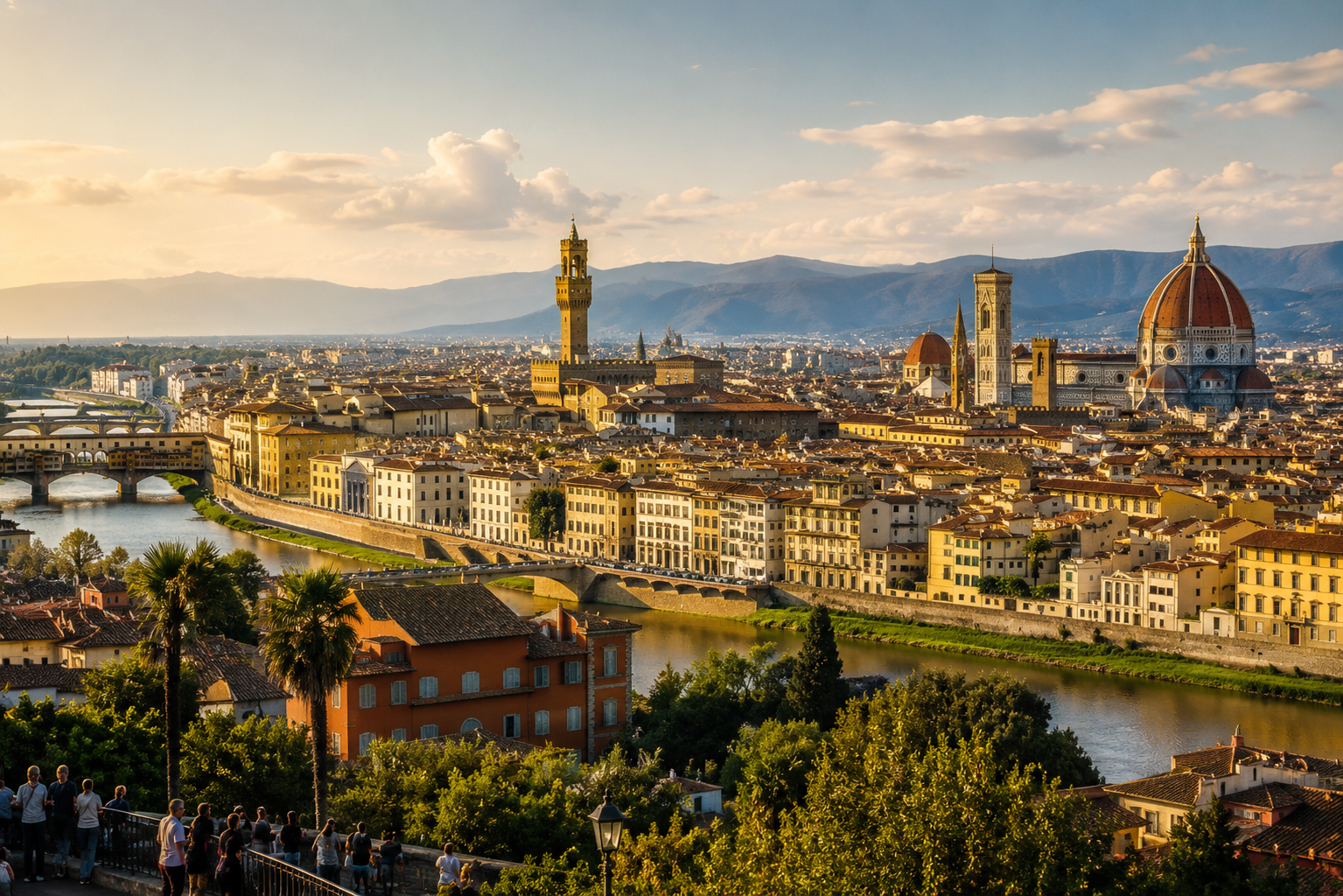
The Renaissance began in northern and central Italy, especially Florence, during the fourteenth and fifteenth centuries, before spreading to Rome, Venice, Milan, Naples and then to northern Europe. Its chronology varies by region. Italy’s Renaissance is often associated with the period from around 1300 to 1600, while the Northern Renaissance flourished strongly in the fifteenth and sixteenth centuries. The movement touched art, literature, education, politics, architecture, science and religion.
Italy’s geography mattered. It was urban, commercially active, politically fragmented and filled with visible Roman remains. City-states competed for prestige. Merchant families funded art and scholarship. The papacy turned Rome into a centre of patronage. Venice connected Europe to eastern trade. Florence became a laboratory of humanism and visual experimentation. Unlike a centralised kingdom, Italy’s fragmented politics created many courts and cities eager to display magnificence. Competition became cultural fuel. The Renaissance arose where wealth, memory, ambition and urban life met.
Background: the medieval foundations of change
The Renaissance did not begin in an intellectual vacuum. Medieval Europe had preserved and transformed much ancient knowledge through monasteries, cathedral schools, universities and scholastic philosophy. The twelfth-century renaissance had already revived interest in Aristotle, law, medicine and logic. Gothic cathedrals showed technical daring. Universities in Paris, Bologna, Oxford and elsewhere created disciplined intellectual cultures. Trade and towns had grown before the fourteenth century.
This background is important because the old myth of Renaissance light after medieval darkness is misleading. The Renaissance was a new phase built on medieval foundations. What changed was emphasis and method. Humanists preferred rhetorical elegance, moral philosophy, classical Latin and direct study of ancient texts over some scholastic habits. Artists studied bodies, space and ancient forms with new intensity. Patrons used culture to construct political identity. The Renaissance was therefore not Europe’s first awakening, but a reorientation of earlier energies toward classical recovery and human-centred expression.
The shock of crisis and the hunger for renewal
The Renaissance emerged after a century of crisis. The Black Death devastated Europe in the mid-fourteenth century. Wars, banking failures, church conflicts and political instability unsettled societies. Italy itself was filled with factional conflict, mercenary warfare and fragile republics. Yet crisis did not simply destroy creativity. In some contexts, it intensified the desire for memory, beauty, fame and worldly achievement.
The relationship between crisis and renewal is complex. The plague did not cause the Renaissance in a simple way, but it changed social and economic conditions. Wealth was redistributed in some families. Patronage patterns shifted. Awareness of mortality sharpened interest in legacy. Cities sought symbols of resilience and prestige. A society that had seen mass death could become more attentive to the value of earthly life. The Renaissance, in this sense, was not an escape from crisis. It was one way European elites and thinkers responded to a world that felt both fragile and full of possibility.
Humanism: the intellectual turning point
Humanism was the central intellectual movement of the Renaissance. It emphasised the study of grammar, rhetoric, poetry, history and moral philosophy through classical texts. Humanists searched for manuscripts, corrected corrupt Latin, learned Greek, imitated Cicero, studied Livy and Plutarch, and argued that education should shape eloquent, ethical and active human beings. They believed language mattered because public life depended on persuasion, judgement and memory.
This was a turning point because it changed what educated Europeans valued. Scholastic logic did not disappear, but humanists promoted a different ideal: the cultivated person formed by classical learning and civic responsibility. Petrarch is often called a father of humanism because of his passion for antiquity and self-conscious literary life. Later figures such as Leonardo Bruni, Lorenzo Valla, Marsilio Ficino, Erasmus and Thomas More extended humanist methods in different directions. Humanism made the ancient world a living resource. It taught Europeans to read historically, compare texts critically and imagine human dignity through language and action.
Florence, the Medici and civic magnificence
Florence became one of the great centres of the Renaissance because it combined wealth, republican traditions, guild culture, banking power and intense civic competition. The city was not peaceful or equal; it was marked by faction, class conflict and elite domination. Yet its political and social tensions produced a public culture in which art, architecture and scholarship carried civic meaning. Buildings, paintings and sculptures became statements about Florence itself.
The Medici family played a crucial role as bankers, patrons and political managers. Cosimo de’ Medici and Lorenzo de’ Medici supported scholars, artists and architects while maintaining influence within a formally republican system. Patronage was never only generosity. It was image-making, alliance-building and political communication. A chapel, palace, manuscript or statue could display piety, learning and power at once. Florence shows that Renaissance art cannot be separated from money and politics. Beauty had patrons, and patrons had agendas.
Artists and the new science of seeing
Renaissance art transformed European visual culture through attention to perspective, anatomy, proportion, light, movement and classical form. Artists such as Giotto, Masaccio, Brunelleschi, Donatello, Leonardo da Vinci, Michelangelo, Raphael, Botticelli and many others explored how space and bodies could be represented with new naturalism and intellectual control. Linear perspective gave paintings a disciplined illusion of depth. Anatomical study gave figures weight and structure.
This artistic revolution was not merely technical. It reflected a new confidence in human perception and reason. The artist became not only a craftsman but an investigator of nature, antiquity and the human body. Leonardo’s notebooks reveal the unity of art, anatomy, engineering and observation. Michelangelo’s figures express spiritual intensity through bodily power. Raphael’s compositions turn harmony into philosophy. Renaissance art made the visible world worthy of study. It suggested that beauty could be understood through mathematics, observation and imagination together.
Architecture: antiquity rebuilt for a Christian Europe
Renaissance architecture revived classical forms such as columns, arches, domes, pediments and proportional systems. Brunelleschi’s dome for Florence Cathedral showed technical brilliance and civic ambition. Alberti wrote architectural theory linking beauty to proportion and classical order. Later, Bramante, Michelangelo and others transformed Rome through monumental projects connected to papal power.
This architecture was not pagan nostalgia. It was classical vocabulary used for Christian, civic and princely purposes. Churches, palaces and public spaces adopted ancient forms to express order, dignity and authority. The Renaissance city became a stage on which antiquity and modern ambition met. Architecture gave permanence to the movement’s ideals. It turned humanist admiration for Rome into stone, brick and urban space. A Renaissance building was not just shelter; it was an argument that proportion, reason and inherited memory could structure public life.
Science, observation and the changing idea of nature
The Renaissance did not produce modern science fully formed, but it changed habits of observation, representation and inquiry. Anatomists such as Andreas Vesalius challenged inherited medical authority through dissection. Artists studied optics, muscles and movement. Engineers designed machines, fortifications and hydraulic systems. Astronomers inherited and questioned classical models, leading eventually toward Copernicus and the Scientific Revolution.
The significance lies in method. Renaissance thinkers increasingly valued direct observation, accurate illustration, measurement and recovery of ancient mathematical traditions. They still lived within religious and classical frameworks, but they became more willing to compare authority with evidence. The boundary between artist, engineer and natural philosopher was often fluid. This helped create an intellectual culture in which nature could be studied as a structured, intelligible order. The Renaissance did not replace faith with science; it expanded confidence that human beings could investigate creation with disciplined eyes and hands.
Politics: republics, princes and Machiavelli’s realism
Renaissance Italy was politically fragmented among republics, duchies, kingdoms, papal territories and foreign powers. Florence, Venice, Milan, Naples and Rome each developed distinct political cultures. Diplomacy became sophisticated because states were close, ambitious and vulnerable. Ambassadors, alliances, mercenary armies and balance-of-power calculations became normal features of political life.
Niccolo Machiavelli emerged from this world. His political thought, especially in The Prince and the Discourses, reflected the instability of Italian politics. He separated political analysis from conventional moralising and asked how power actually works. This was shocking not because rulers had never been ruthless, but because Machiavelli described political necessity with unusual clarity. Renaissance politics therefore contributed to a more secular and analytical language of statecraft. The same civilisation that produced ideal beauty also produced hard realism about power.
Printing and the acceleration of ideas
The invention of movable-type printing in Europe by Johannes Gutenberg in the mid-fifteenth century transformed the Renaissance by accelerating the circulation of texts. Manuscripts had always moved, but slowly and expensively. Printing made books cheaper, more consistent and more widely available. Humanist editions, classical texts, religious works, maps, pamphlets and scientific treatises could circulate through expanding networks of readers.
Printing changed the scale of cultural transformation. A humanist correction, a religious argument, a political satire or a scientific diagram could now travel faster and farther. It strengthened standardisation while also encouraging debate. It helped the Renaissance spread beyond Italy and later became crucial to the Reformation and Scientific Revolution. The printing press did not create ideas by itself, but it changed their velocity. Once ideas could multiply mechanically, European intellectual life became harder for any single authority to control.
The Northern Renaissance and moral reform
As Renaissance culture moved north, it took different forms. In the Low Countries, Germany, France and England, humanism often became more religious and reformist. Scholars such as Erasmus used classical and biblical learning to criticise corruption, superstition and bad education. Artists such as Jan van Eyck, Albrecht Durer and Hans Holbein developed extraordinary realism, detail and psychological depth.
The Northern Renaissance shows that there was no single Renaissance. Italian humanism often focused on classical antiquity, civic fame and visual harmony, while northern humanism frequently emphasised Christian renewal, moral reform and textual scholarship. The recovery of Greek and Hebrew encouraged closer study of the Bible. This intellectual movement did not cause the Reformation alone, but it helped prepare a culture of criticism. The Renaissance therefore expanded from aesthetic renewal into religious and moral questioning. Its tools could beautify churches, but they could also challenge the Church.
Women, class and the limits of rebirth
The Renaissance celebrated human potential, but access to that potential was unequal. Elite men benefited most from humanist education, patronage and public life. Women could become patrons, writers, scholars or artists in exceptional circumstances, but social norms restricted their opportunities. Figures such as Isabella d’Este, Christine de Pizan, Sofonisba Anguissola and later Artemisia Gentileschi show female agency, yet they also reveal how unusual such visibility was.
Class limits were equally important. The Renaissance splendour of palaces, paintings and manuscripts rested on labour: artisans, servants, apprentices, textile workers, builders and peasants. Guilds trained artists, but social hierarchy remained strong. Humanist dignity did not mean democratic equality. This limitation matters because it prevents romanticism. The Renaissance expanded cultural horizons, but it did not liberate everyone. Its rebirth was uneven, urban, elite-driven and often dependent on wealth produced by many who did not share fully in its glory.
Global context: trade, empire and encounter
The Renaissance unfolded during a period of expanding European contact with the wider world. Mediterranean trade, Ottoman power, Portuguese voyages around Africa, Columbus’s Atlantic crossing and the beginning of European colonial expansion all shaped the era. Maps changed. Goods moved. Missionaries, merchants and conquerors carried European ambitions outward while bringing new knowledge and wealth back.
This global context complicates the idea of Renaissance as purely European self-renewal. Europe was shaped by contact with Islamic scholarship, Byzantine refugees, African gold, Asian luxury goods and eventually the Americas. At the same time, European expansion brought conquest, enslavement and extraction. The Renaissance produced beauty and brutality in the same centuries. A civilisation capable of painting the human body with tenderness was also entering an age of colonial violence. Any honest account of Europe’s rebirth must place cultural brilliance beside global disruption.
Peak and transformation: from High Renaissance to new tensions
The High Renaissance, associated with figures such as Leonardo, Michelangelo and Raphael, represented a peak of artistic harmony, anatomical mastery and monumental ambition. Rome, under papal patronage, became a major centre. The rebuilding of St Peter’s, the Sistine Chapel ceiling and Raphael’s Vatican rooms expressed an extraordinary fusion of theology, classical form and artistic genius.
Yet peaks are often turning points. The sixteenth century brought religious conflict, the Protestant Reformation, the Catholic Reformation, wars in Italy, imperial rivalries and changing artistic styles. Mannerism moved away from High Renaissance balance toward complexity, tension and artificial elegance. The Renaissance did not end suddenly; it transformed into new worlds of Baroque art, confessional politics and early modern state formation. Its ideals survived, but the confidence of harmonious rebirth gave way to a more divided Europe.
Historical debates: break, continuity and myth
Historians debate whether the Renaissance was a sharp break from the Middle Ages or a continuation of earlier developments. Nineteenth-century interpretations, especially those influenced by Jacob Burckhardt, often presented the Renaissance as the birth of modern individualism. Later scholars have stressed medieval continuities, regional diversity and the limited social reach of Renaissance culture.
This debate is important because the word Renaissance can become myth. If it means Europe suddenly woke from darkness, it is false. If it means a complex cultural movement that reinterpreted antiquity, elevated humanist education, transformed art and encouraged new forms of inquiry, it remains useful. The Renaissance was neither the beginning of everything modern nor a decorative episode for elites alone. It was a major reconfiguration of European cultural life, rooted in the medieval past and open toward the modern future.
Legacy: the rebirth that taught Europe to remember differently
The Renaissance changed Europe by teaching it to remember the past creatively. Classical antiquity became not a dead inheritance but a resource for new art, education, architecture, politics and self-understanding. Humanism reshaped schooling. Artists transformed visual representation. Printing accelerated communication. Patrons made culture a language of power. Scholars developed critical methods that would influence religion, science and historical study.
Its legacy is powerful because it joined memory with ambition. Renaissance thinkers looked backward in order to move forward. They recovered ancient texts while inventing new styles. They admired Roman ruins while building modern cities. They studied the human body while meditating on the divine. The movement’s contradictions remain visible: elite splendour beside inequality, beauty beside violence, curiosity beside conquest. Yet the Renaissance endures because it expanded Europe’s imagination of what human beings could make, know and become. It was not simply Europe’s rebirth. It was Europe’s argument with its own past, and that argument reshaped the future.
Education and the humanist classroom
Humanist education reshaped elite schooling. Students were trained to read classical authors, imitate elegant Latin, compose letters, speak persuasively and draw moral lessons from history. The goal was not simply information but formation: to create citizens, courtiers, officials and clergy capable of eloquence and judgement. Education became a cultural programme for shaping public personality.
This classroom mattered because it spread Renaissance values beyond a few famous writers. Grammar books, editions, commentaries and school exercises trained generations to admire antiquity and value rhetorical skill. The humanist classroom also had limits. It served mainly boys from privileged families, though some women gained exceptional access. Still, education became one of the Renaissance’s most durable institutions. Long after particular patrons died or city-states changed, humanist curricula continued to influence European schools.
Vernacular literature and the dignity of local languages
Although humanists admired classical Latin and Greek, the Renaissance also strengthened vernacular languages. Dante, Petrarch and Boccaccio had already demonstrated the literary power of Italian. Later writers across Europe used English, French, Spanish and other languages for poetry, drama, political thought and religious debate. The vernacular became a vehicle for serious culture, not merely everyday speech.
This development widened the social reach of ideas. Latin remained essential for scholarship, but printed vernacular works allowed broader audiences to engage literature, devotion and argument. In England, Shakespeare would later show the expressive power of dramatic English; in Spain, Cervantes would reshape prose fiction. The Renaissance thus carried a paradox: its love of classical languages helped refine scholarship, while its confidence in human expression elevated local languages. Europe rediscovered antiquity and discovered new power in its own tongues.
Workshops, guilds and the labour behind genius
The Renaissance cult of genius can obscure the collaborative world behind art. Painters, sculptors, goldsmiths and architects trained in workshops. Apprentices prepared pigments, copied designs, assisted masters and learned techniques through labour. Guilds regulated quality, contracts and professional identity. A famous painting might bear one master’s name while depending on many hands.
This workshop world matters because it grounds Renaissance creativity in social organisation. Innovation did not happen only in solitary inspiration. It required materials, training, patrons, assistants, contracts and markets. Pigments came through trade; marble came from quarries; bronze casting required technical teams; fresco cycles required planning and speed. The Renaissance artist became more intellectually honoured than many medieval craftsmen, but art remained labour. Recognising this labour makes the Renaissance more human, not less impressive.
Rome, Venice and alternative Renaissance centres
Florence is central to the Renaissance story, but it was not alone. Rome became a centre of papal patronage, especially in the High Renaissance. Popes used art and architecture to restore the city’s prestige and express spiritual authority. Venice developed a distinctive visual culture shaped by colour, light, maritime wealth and contact with the eastern Mediterranean. Milan, Mantua, Ferrara and Urbino also supported artists and scholars.
These centres remind us that the Renaissance was plural. Rome’s monumental classicism differed from Venice’s luminous painting; courtly Urbino differed from republican Florence; papal ambition differed from mercantile display. The movement spread through networks of artists, marriages, wars, diplomacy and imitation. Its diversity was one of its strengths. There was no single Renaissance style or politics. There were many local renaissances connected by shared admiration for antiquity, artistic competition and the search for prestige.
The Ottoman world and Byzantine transmission
The fall of Constantinople in 1453 is often linked to the movement of Greek scholars and manuscripts into Italy, though the exchange between Byzantine and Italian scholars had begun earlier. Greek learning, manuscripts and teachers helped deepen western Europe’s access to Plato, Greek patristic texts and ancient philosophy. The Byzantine world was not merely a victim at the edge of the Renaissance; it was one of the channels through which classical knowledge moved.
The Ottoman presence also shaped Renaissance Europe by changing trade routes, diplomacy and military imagination. Italy’s city-states dealt with the Ottoman Empire through fear, commerce and negotiation. This wider eastern context prevents an inward-looking Renaissance story. Europe’s rebirth was entangled with the fate of Byzantium, Islamic scholarship, Mediterranean trade and Ottoman power. The Renaissance was European, but it was never sealed off from the world around it.
The Renaissance and the Reformation
Renaissance humanism helped prepare the intellectual conditions for the Reformation. By encouraging return to original texts, philological criticism and moral reform, humanists made it possible to question inherited religious practices with new tools. Erasmus edited the Greek New Testament and criticised clerical corruption while remaining within Catholic reform. Luther’s revolt would move in a more radical direction, but it emerged in a world already shaped by textual criticism and print.
The relationship between Renaissance and Reformation was not simple. Many humanists feared religious division, and many artists continued to serve Catholic patrons. Yet the same methods that restored classical texts could also challenge ecclesiastical authority. Printing spread reform arguments rapidly. Vernacular translation gave lay readers new access to scripture. In this way, the Renaissance’s confidence in language and inquiry helped destabilise the religious unity of western Christendom. Cultural rebirth became part of spiritual revolution.
A timeline from recovery to transformation
The Renaissance developed in stages. In the fourteenth century, Petrarch and early humanists recovered classical models and reflected on the self, memory and moral life. In the fifteenth century, Florence became a centre of artistic and intellectual experimentation, with perspective, civic humanism and patronage reshaping culture. In the late fifteenth and early sixteenth centuries, the High Renaissance concentrated extraordinary artistic achievement in Florence, Milan and Rome. Later, the movement spread across northern Europe and entered the age of Reformation.
This timeline matters because the Renaissance was not a single moment. It was a long process of recovery, experimentation, peak and transformation. Different regions entered it differently. Artists and scholars did not all share one programme. The movement’s unity came from recurring habits: returning to sources, valuing eloquence, studying antiquity, seeking proportion, honouring fame and treating human creativity as worthy of serious attention. These habits changed over time but kept the Renaissance recognisable.
Art markets, contracts and the economics of beauty
Renaissance art depended on money. Patrons commissioned altarpieces, portraits, chapels, tombs, palaces and public sculptures through contracts that specified materials, deadlines, subjects and payments. Artists negotiated status within markets shaped by guilds, courts, republics and churches. Beauty was spiritual and intellectual, but it was also economic.
This economic dimension does not reduce art to commerce; it explains how art became possible. Pigments, marble, bronze, assistants, studio space and time all required resources. Patronage gave artists opportunity but also imposed constraints. A painter could innovate within a donor’s expectations; a sculptor could display genius while satisfying civic symbolism. The Renaissance masterpiece is therefore both aesthetic object and social document. It records not only imagination but the economy that funded imagination.
The body as a site of knowledge
One of the Renaissance’s most powerful shifts was its treatment of the human body. Artists studied anatomy to represent muscles, bones, movement and proportion. Physicians and anatomists used dissection to challenge inherited errors. Religious art continued, but sacred figures often appeared with startling bodily presence. The body became a site where theology, beauty, science and observation met.
This attention to the body expressed a larger confidence in visible reality. To study the body was to study God’s creation, human dignity and artistic form at once. It did not necessarily mean secularism in the modern sense. Rather, it meant that physical existence could carry intellectual and spiritual meaning. The Renaissance body was vulnerable, powerful, idealised and investigated. Through it, Europe learned to connect art with empirical attention.
Libraries, collectors and the recovery of texts
The Renaissance was built in libraries as much as studios. Humanists searched monastic collections, copied manuscripts, compared versions and celebrated the recovery of lost or neglected ancient authors. Collectors and patrons built libraries that displayed status and served scholarship. The hunt for texts became an adventure of memory.
This recovery mattered because texts changed intellectual possibility. A newly found manuscript could reshape philosophy, history or rhetoric. Greek studies expanded after increased contact with Byzantine scholars. Printing later multiplied access. Libraries became engines of cultural change because they gathered the past into forms that could be studied, corrected and reinterpreted. The Renaissance began, in many ways, as a revolution in reading.
Moral ambiguity: brilliance beside violence
The Renaissance produced extraordinary art and thought, but it unfolded in a world of violence. Italian wars devastated cities. Rulers used assassination, exile, torture and propaganda. European voyages opened new routes but also inaugurated conquest and enslavement. Papal patronage produced beauty while Church politics could be deeply corrupt. The age was not morally pure because it was culturally brilliant.
This ambiguity is essential to mature historical understanding. Civilisations can create masterpieces while committing crimes. The Renaissance expanded ideas of human dignity but did not apply them equally. It celebrated the individual but depended on hierarchy. It admired antiquity while entering colonial modernity. Its legacy is therefore not a simple hymn to progress. It is a reminder that beauty and power often grow together, and that cultural rebirth can coexist with domination.
Why the Renaissance still matters
The Renaissance still matters because it shaped enduring institutions of cultural life: museums, art history, classical education, textual criticism, architectural ideals, secular political analysis and the prestige of individual creativity. It gave Europe models of the artist as genius, the scholar as critic, the patron as cultural actor and the city as stage of memory.
Its deeper significance is psychological. The Renaissance taught Europeans to imagine that the past could be recovered and surpassed. It made learning aspirational, art investigative and public life theatrical. Even when modern scholars revise old myths about the period, the movement remains central because it changed how Europe valued human making. It did not create modernity alone, but it provided many of the languages through which modernity later described itself.
Historical synthesis: the Renaissance as method
The Renaissance can be understood not only as a period but as a method. Its method was to return to sources, compare texts, study form, observe nature, seek eloquence and use the past as a tool for present ambition. This method appeared in humanist scholarship, artistic perspective, anatomical drawing, architectural proportion and political writing. The same impulse that led a scholar to correct a manuscript led an artist to correct the representation of space.
Seeing the Renaissance as method helps explain its lasting force. Styles changed, patrons died and city-states fell, but the habits endured. Modern scholarship, museums, philology, art academies, civic architecture and secular political analysis all inherited something from Renaissance ways of working. Its rebirth was therefore not only thematic; it was procedural. It gave Europe new disciplines of looking, reading, building and remembering.
Civilisational impact beyond Italy
The Renaissance became civilisational because it travelled. Italian artists worked for foreign courts. Printed books crossed borders. Students studied abroad. Diplomats carried styles and ideas. Northern painters adapted realism to local devotional cultures. Monarchs used Renaissance architecture to display authority. The movement spread because it offered rulers, scholars and artists a prestigious language of refinement.
Yet as it travelled, it changed. In France it entered court culture; in England it shaped drama, education and political language; in the German lands it interacted with reform and print; in the Low Countries it deepened visual realism and devotional intensity. This adaptability was central to its success. The Renaissance was not exported as a finished package. It became powerful because each region could translate its ideals into local needs, conflicts and ambitions.