The Power of Mass Media: How Media Shape Public Attention
Modern societies produce far more information than any individual can absorb. Political decisions, scientific discoveries, wars, business developments, court rulings, entertainment, accidents, public debates and millions of everyday claims compete for attention at the same time. No person can follow all of them.
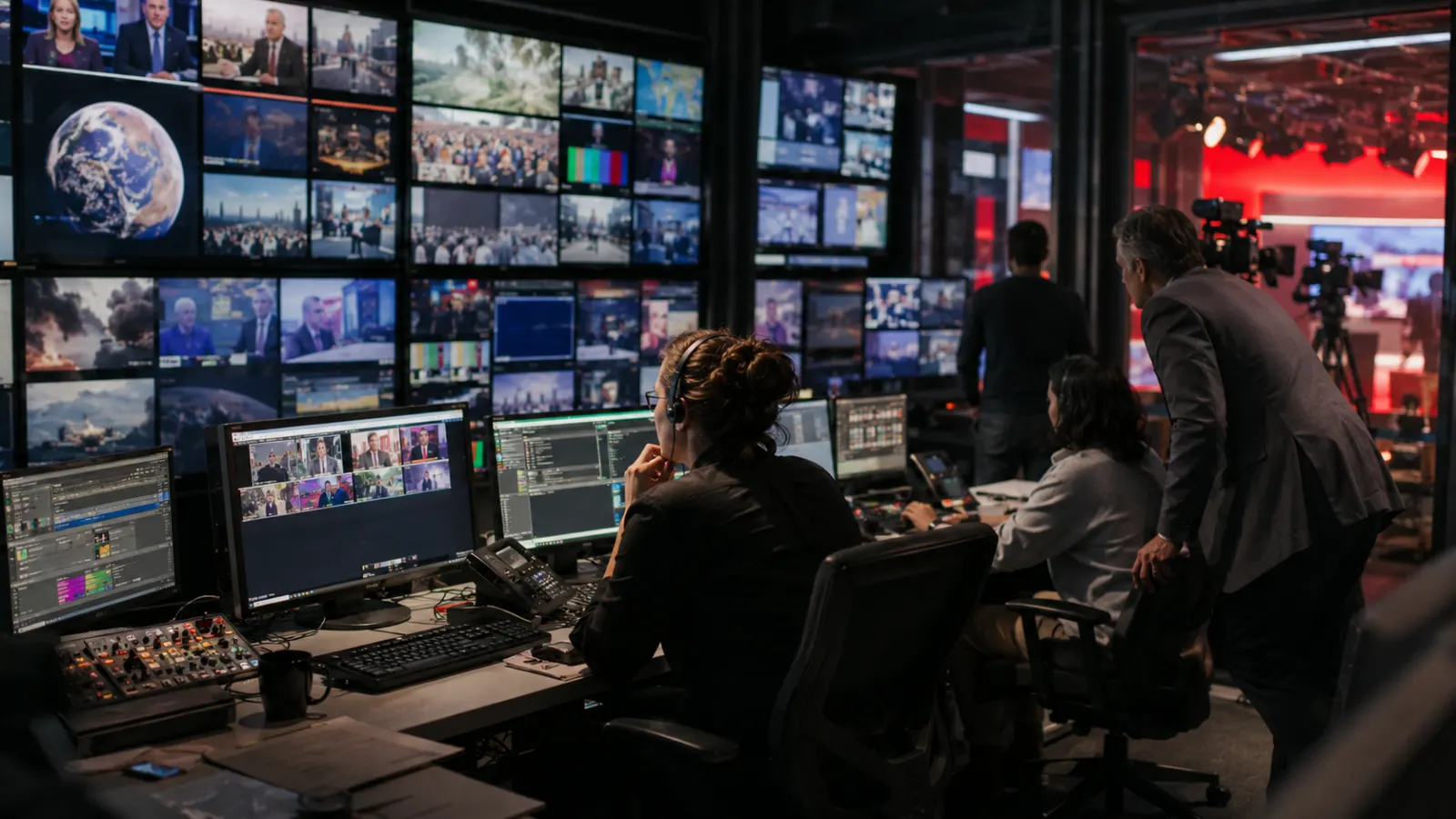
Mass media became socially powerful partly because they solve this problem of overload. Newspapers select a limited number of stories for publication. Television bulletins fit the day into a fixed number of minutes. Radio stations choose which events deserve airtime. News websites decide what appears on their homepages. Digital platforms rank and recommend material from almost unlimited inventories.
Selection is unavoidable because attention is limited.
The important consequence is that visibility becomes a scarce social resource. An issue repeatedly placed before millions of people has a different opportunity to influence public conversation from an issue that receives almost no attention, even when both may be important.
This is the foundation of mass-media power.
The strongest media institutions do not necessarily tell people exactly what to think. Their influence often begins one stage earlier: helping determine what people encounter, which issues appear important, whose voices become familiar and which interpretations become available when audiences try to understand events.
What Is Mass Media?
Traditionally, mass media referred primarily to newspapers, magazines, radio, television, cinema and other systems capable of distributing broadly similar content to very large audiences.
The defining feature was scale. A newspaper could print thousands or millions of copies. A radio transmission could reach an entire region. Television could deliver the same broadcast into millions of homes simultaneously. Cinema could reproduce the same cultural product for audiences across cities and countries.
Digital communication complicated this model. A social platform can function simultaneously as interpersonal communication, mass broadcasting, entertainment distribution, advertising infrastructure and political information system. A single user may send a private message in one moment and publish a video capable of reaching millions in the next.
The older concept of mass media nevertheless remains useful because the central problem has not disappeared: institutions and technologies still organise which messages receive large-scale visibility.
The gate has changed.
It has not vanished.
Media Power Begins With Attention
Attention is one of the most important resources in modern communication.
A political candidate can hold a press conference, but the event has limited national significance if almost nobody hears about it. Scientists can publish important research, but public understanding remains limited if the finding never enters wider communication channels. A community may face a severe local problem for years without national attention because the issue does not fit dominant news priorities.
The media therefore exercise power partly through allocation.
Which stories appear first?
Which receive repeated coverage?
Which disappear after one day?
Which people become recurring commentators?
Which events are treated as national crises?
Which problems remain local or invisible?
These choices do not need to be part of a conspiracy to have consequences. Any communication system with limited space must prioritise.
The power arises because those priorities help structure public attention.
Agenda-Setting: What Deserves Attention?
One of the most influential concepts in media research is agenda-setting.
The basic claim is not that media organisations can simply command audiences to support a particular political opinion. Instead, sustained coverage can influence which issues people perceive as important.
If inflation dominates headlines for weeks, economic conditions become difficult to ignore. If national-security threats receive continuous coverage, security may rise in public consciousness. If healthcare, corruption or climate change disappears from prominent coverage, those subjects may struggle to retain the same urgency.
Agenda-setting therefore concerns importance rather than direct persuasion.
A news organisation can publish relatively balanced stories about an issue while still affecting public attention simply by deciding that the issue deserves extensive coverage.
This distinction helps explain why media influence can exist even when audiences disagree strongly with what they watch or read.
People may reject a particular interpretation while still accepting that the subject itself deserves attention.
Media Attention Can Influence Political Attention
Public agendas and political agendas can interact.
Politicians monitor news coverage because media visibility provides information about which issues may become publicly costly or electorally important. Journalists monitor political institutions because governments create decisions, conflicts and events that satisfy traditional news criteria.
The relationship therefore moves in both directions.
Government action produces coverage.
Coverage creates political pressure.
Political actors respond publicly.
The response generates additional coverage.
An issue that acquires momentum can remain visible through repeated interaction among institutions.
This does not mean media determine policy mechanically. Lobbying, elections, bureaucracy, ideology, public opinion and economic interests remain important.
Media attention is one part of the system through which political importance is produced.
Framing: What Kind of Problem Are We Looking At?
Selecting an issue is only one stage.
The next question is how the issue is presented.
This is where framing becomes important.
Consider the same increase in migration. One news story may frame it primarily as a labour-market issue. Another may treat it as a humanitarian question. A third may emphasise border security. A fourth may focus on demographic change or public services.
The underlying phenomenon has not necessarily changed.
The interpretive frame has.
Frames highlight particular causes, consequences, moral concerns and possible solutions. They make some considerations easier to notice while leaving others less prominent.
A frame does not have to contain false information to influence interpretation.
Selection alone can change meaning.
Framing Works Through Emphasis
Suppose a protest turns violent after several hours of peaceful demonstrations.
A news report can focus primarily on broken windows.
Another can emphasise the original grievance.
Another may concentrate on police conduct.
Another may place the event inside a broader history of political mobilisation.
All of these details can be factually real.
The framing difference lies in which element becomes the organising story.
This is why two people can consume accurate reports about the same event and emerge with very different understandings of what the event represented.
They may have encountered different factual emphases rather than simply different facts.
Priming: Which Standards Become Important?
Media attention can also affect the criteria people use when evaluating political leaders or institutions.
This idea is often described as priming.
Imagine that economic performance dominates news coverage for several months. Citizens evaluating a government may begin giving economic competence greater weight than they otherwise would.
If security becomes the dominant issue, evaluations may shift toward leadership, defence or crisis management.
Priming therefore concerns which considerations become especially available when people make judgments.
Again, media do not necessarily determine the final judgment.
One voter may blame the government for economic problems.
Another may defend it.
But both may be evaluating the government primarily through the economic lens that repeated coverage has made especially salient.
Gatekeeping: Who Gets Through?
Mass communication requires selection.
This makes gatekeeping another central source of media power.
Editors choose stories.
Producers choose guests.
Publishers choose books.
Radio programmers choose songs.
Newsrooms decide which photographs appear.
Television producers select which experts receive airtime.
Digital homepage editors decide which stories appear prominently.
Each decision affects visibility.
Gatekeeping therefore helps determine which voices have access to mass audiences.
Gatekeepers Are Not Neutral Machines
The existence of gatekeeping does not automatically imply ideological manipulation.
Selection is influenced by many forces.
Journalists work under deadlines. Stories need evidence. Newsrooms have limited staff. Some events are easier to verify than others. Television prefers material that can be represented visually. Publications serve particular audiences. Legal restrictions matter. Commercial pressures matter. Editorial traditions matter.
Professional norms also influence decisions.
Reporters may favour events that are timely, verifiable and connected to recognised institutions. Editors may be reluctant to publish allegations without sufficient evidence. Specialist journalism may prioritise subjects general-interest newsrooms overlook.
The gate is therefore institutional.
Understanding media power requires studying the institution controlling it.
News Values Create Predictable Patterns
Certain events fit news production especially well.
Conflict is easy to explain.
Disaster produces dramatic images.
Elections create clear winners and losers.
Powerful public figures are already recognisable.
Sudden events satisfy the requirement of novelty.
Slow processes are more difficult.
Consider environmental degradation developing gradually over twenty years. Its cumulative impact may be enormous, yet there may be no single day on which it becomes dramatically “new.”
A sudden flood, by contrast, produces striking images and a clear event.
The flood may receive intensive coverage while the decades-long environmental conditions contributing to vulnerability receive far less.
This does not require deliberate bias.
The structure of news production itself favours events with certain characteristics.
Media Power Includes the Power to Ignore
Visibility attracts attention.
Silence can be equally consequential.
A community may struggle to make a problem politically important because its experiences rarely appear in major media.
A local labour dispute may remain largely invisible outside the affected region. A slowly developing public-health problem may receive little coverage until deaths reach dramatic levels. A marginalised group may appear frequently in entertainment yet rarely be allowed to describe its own political concerns.
Absence is difficult to measure because people naturally notice what is present.
But mass-media power includes the ability—intentional or otherwise—to leave certain subjects outside the shared public agenda.
Ownership Matters, but It Is Not the Only Influence
Media ownership is an important structural question.
Owners can influence investment, executive appointments, strategic priorities and the degree of editorial independence available inside an organisation. When ownership becomes highly concentrated, the number of genuinely independent decision centres can decline even when many individual publications or channels remain visible.
But ownership does not explain everything.
Professional journalism cultures can constrain direct owner interference. Regulation can shape behaviour. Subscribers can influence editorial strategy. Advertisers create another set of incentives. Audiences increasingly sort themselves into specialised ideological or cultural niches.
A useful analysis therefore asks not merely:
Who owns this outlet?
but:
How is it funded, governed and professionally organised?
Advertising Changed the Economics of Attention
Advertising-supported media created a distinctive relationship between media organisations and audiences.
The audience consumes content.
The organisation simultaneously sells access to that audience.
Attention becomes economically valuable.
A television network does not merely provide programmes. It can sell advertisers opportunities to reach particular demographics. A website can monetise page views. A newspaper can combine subscriber income with advertising. Digital platforms can target advertisements using detailed behavioural data.
This model made mass-access media economically viable on enormous scales.
It also creates incentives.
Large audiences matter.
Engagement matters.
Certain demographic groups may be more commercially valuable than others.
Content that repeatedly attracts attention can therefore possess economic advantages unrelated to its public importance.
Public-Service Media Use a Different Model
Publicly funded broadcasters operate according to another logic.
They may have obligations involving universal access, education, culture, minority-language programming, public information and reliable journalism.
Public funding can reduce dependence on advertising and commercial audience maximisation.
But it creates another potential vulnerability.
If government controls funding or appointments too directly, political pressure can undermine editorial independence.
Public-service media therefore face a structural challenge: receiving public resources while remaining sufficiently independent from the government of the day.
The quality of the institutional safeguards matters as much as the funding model itself.
Journalism Can Function as Democratic Infrastructure
Mass media are not only commercial enterprises.
Independent journalism can perform important democratic functions.
Reporters investigate public institutions.
News organisations verify claims.
Journalists attend courts, legislatures and government briefings.
Investigative reporting can reveal corruption, misconduct or abuse of power that ordinary citizens lack the resources to uncover independently.
For this reason UNESCO treats freedom of expression, press freedom and access to information as fundamental democratic concerns. The source you supplied correctly emphasises that public debate becomes weaker when journalists face censorship, violence or systematic intimidation.
Citizens cannot evaluate power effectively if information about power cannot circulate.
Press Freedom Is About More Than Journalists
Threats to journalism affect wider public knowledge.
When reporters cannot safely investigate organised crime, corruption, war or government misconduct, the loss extends beyond the newsroom.
The public loses access to information.
The same applies when censorship prevents publishers from distributing controversial material or when broadcasters risk punishment for criticism.
Freedom of expression is therefore partly an information-system issue.
A society with nominally large amounts of media can still have a weak information environment if important subjects cannot be investigated freely.
Representation Shapes Cultural Normality
Mass-media power extends beyond news.
Television dramas, films, advertising, reality programmes, magazines and entertainment repeatedly portray families, bodies, professions, neighbourhoods, religions and relationships.
These representations help establish expectations.
What does an executive look like?
What kind of home signifies success?
Which accents suggest intelligence or comic incompetence?
What kinds of relationships appear normal?
Who gets to be the central character?
Which lives appear only at the margins?
One isolated portrayal may have little influence.
Repeated patterns can gradually make some social arrangements appear natural and others unusual.
Entertainment Is Part of Media Power
Political communication research can make media power sound like a matter of elections and headlines.
Entertainment also shapes social imagination.
A police drama teaches audiences a fictional model of how police work.
A hospital programme creates expectations about doctors.
A romantic comedy constructs assumptions about relationships.
A reality programme presents a particular model of success, beauty or social status.
A historical drama may become more influential in popular memory than the academic history on which it was loosely based.
Entertainment does not need to issue explicit instructions to influence cultural expectations.
Repeated storytelling itself can matter.
Mass Media Can Expand Cultural Horizons
Media influence is not inherently negative.
The same mass-distribution systems capable of spreading stereotypes can introduce audiences to experiences they might otherwise never encounter.
Documentaries can communicate scientific research.
International cinema can expose audiences to different languages and societies.
News can make distant conflicts visible.
Educational broadcasting can reach people without access to specialist institutions.
Minority communities can gain wider recognition through representation.
Mass reach can therefore spread knowledge as effectively as misinformation.
The technology does not determine the social result.
Institutions and practices matter.
Propaganda Uses Mass Reach Deliberately
Governments, political movements and other powerful actors have long recognised the value of mass communication.
Propaganda uses communication systematically to shape attitudes, simplify complex issues, create emotional identification and promote preferred narratives.
Repetition is especially important.
A slogan or image encountered once may disappear.
Repeated across posters, newspapers, broadcasts and public events, it can become part of the surrounding information environment.
Propaganda therefore demonstrates one extreme form of media power: coordinated communication intentionally linked with political goals.
But ordinary journalism and propaganda should not be collapsed into the same category merely because both influence attention.
The differences in evidence, accountability, transparency and institutional independence matter.
Censorship Confirms the Value of Visibility
Authorities censor media because visibility has consequences.
A government does not need to ban information it considers completely irrelevant.
Restrictions target journalists, publishers, broadcasters, films, books or digital platforms precisely because circulating messages can affect public understanding and political legitimacy.
Censorship therefore reveals the relationship between communication and power.
Who is allowed to speak?
Who can investigate?
Which ideas can circulate?
Which historical accounts can be published?
Which images are prohibited?
These are questions about participation in public communication.
Audiences Are Not Passive
Media influence should not be exaggerated into mind control.
Audiences interpret messages through previous beliefs, identities, education, family discussions, social networks and personal experiences.
The same report can produce different reactions among different viewers.
People also practise selective exposure.
They frequently choose media that fit existing interests or beliefs. A conservative and progressive viewer may consume different news sources. Sports fans deliberately seek sports coverage. Investors search for financial information.
Media power is therefore interactive.
Institutions select content.
Audiences also select institutions.
More Media Can Produce More Diversity
The growth of media outlets can create genuine benefits.
More channels mean more opportunities for specialised reporting.
Minority voices can build audiences.
Independent creators can reach users without traditional broadcasters.
Local communities can publish directly.
Competition can challenge dominant institutional narratives.
This is one of the democratising possibilities created by digital communication.
Publication costs fell dramatically.
A small organisation can now reach an international audience without owning a printing press or television transmitter.
More Media Can Also Produce Fragmentation
The same proliferation has another consequence.
Audiences can sort themselves into separate information environments.
One group follows one set of outlets.
Another follows completely different sources.
The disagreement may eventually extend beyond political values to factual assumptions about what happened.
This does not mean earlier mass-media systems produced perfect consensus.
But traditional broadcast systems more often exposed large audiences to at least some shared information.
Personalised digital environments can weaken that common agenda.
Digital Media Did Not Eliminate Gatekeepers
The early internet encouraged the idea that gatekeeping would disappear.
Anyone could publish.
That prediction was only partly correct.
Traditional editors lost some exclusive control over distribution, but new gatekeepers emerged.
Search engines rank websites.
Social platforms rank posts.
App stores decide which applications remain accessible.
Streaming services choose what appears prominently.
Recommendation systems decide what users are likely to encounter next.
Infrastructure providers can affect whether services remain online.
Gatekeeping moved from editorial desks into a combination of institutional and computational systems.
Algorithms Personalise the Gate
Traditional newspapers could place one front page before most readers.
Digital platforms can create millions of different front pages.
One user sees politics.
Another sees sport.
Another sees entertainment.
Two neighbours can open the same platform and encounter almost completely different information.
Personalisation can increase relevance.
It also makes the public agenda harder to observe.
A citizen may know what they are seeing without knowing what everyone else is being shown.
This changes the social character of mass communication.
Algorithms Do Not Merely Reflect Interest
Recommendation systems respond to user behaviour, but their choices can also influence future behaviour.
If a platform repeatedly promotes one video, more people encounter it.
More encounters can generate more engagement.
Greater engagement can lead to additional recommendation.
Visibility becomes self-reinforcing.
The platform is therefore not simply measuring popularity.
It participates in producing the conditions through which popularity develops.
That makes algorithmic design part of contemporary media power.
Speed Creates a Verification Problem
Digital competition rewards immediacy.
Breaking-news environments create strong incentives to publish quickly.
But verification takes time.
Journalists may need to contact witnesses, examine documents, confirm identities or wait for official information.
This creates a structural tension between being first and being right.
Professional journalism attempts to manage that tension through sourcing rules, editors, corrections and transparent updates.
These systems are imperfect.
Their importance becomes particularly visible when unverified claims can spread online within minutes.
Corrections Rarely Travel Like Errors
Suppose an incorrect claim reaches one million people.
The news organisation later publishes a correction.
There is no guarantee that the same million people will encounter it.
Some may have seen the first claim through a social-media screenshot.
Others may never revisit the article.
The correction exists.
Its distribution differs from the distribution of the original error.
This asymmetry makes verification before publication especially valuable.
It also makes correction practices important to institutional trust.
Correction Culture Is a Form of Accountability
Errors are unavoidable in any large, fast-moving information system.
The critical question is what happens next.
Does an organisation acknowledge the error?
Does it explain what changed?
Is the correction visible?
Does the original article quietly disappear?
Accountable media institutions create procedures for correcting the public record.
A visible correction can sometimes strengthen trust because it demonstrates that accuracy is treated as a continuing obligation rather than a claim of permanent infallibility.
Crisis Coverage Magnifies Media Effects
During war, disasters, terrorist attacks, pandemics and other emergencies, people depend heavily on mass media for situational awareness.
Information can save lives.
Warnings can direct people away from danger.
Reporting can mobilise aid.
Images can attract international political attention.
But crisis coverage can also distort perception.
The most dramatic images are not always statistically representative.
Continuous repetition of extreme scenes may make audiences misjudge frequency or scale.
Responsible crisis journalism therefore needs context alongside immediacy.
Local Journalism Performs Unique Functions
Global information has never been easier to access.
Local information can still be surprisingly difficult to obtain.
Municipal budgets, school boards, local courts, transport authorities, zoning disputes and neighbourhood institutions rarely attract sustained national coverage.
Local newspapers, radio stations and regional broadcasters historically performed much of this work.
When local journalism weakens, residents may know more about international political drama than about decisions affecting their own streets.
This creates an important paradox.
Information volume can increase while information about nearby power decreases.
Source Diversity Means More Than Having Many Channels
A media system can contain hundreds of outlets and still rely on a narrow set of underlying sources.
Many websites may repeat the same wire report.
Television programmes may invite the same small group of experts.
Journalists may depend disproportionately on official briefings.
A large number of channels therefore does not automatically equal informational diversity.
Real diversity can involve ownership, geography, language, professional background and access to different communities.
The important question is not simply how many voices appear.
It is whether those voices originate from genuinely different parts of society.
Media Archives Become Historical Sources
News is produced for the present.
It also becomes part of the historical record.
Newspaper archives preserve daily language, political debates, advertisements and social assumptions. Broadcast recordings preserve voices and images. Photo archives document events and ordinary life. Local journalism can preserve details ignored by national histories.
This archival role gives journalism a second life.
Yesterday’s reporting becomes tomorrow’s evidence.
The source is never complete. Journalism reflects the selection priorities of its own period.
That incompleteness is itself useful.
Historians can compare what received attention, what remained invisible and how public language changed over time.
Media Literacy Is More Than Spotting Fake News
Media literacy is frequently reduced to detecting misinformation.
That is important but incomplete.
A media-literate citizen should also understand how communication is produced.
Who created the message?
Who owns or funds the organisation?
What evidence supports the claim?
Which sources were consulted?
What editorial incentives may affect selection?
How did the message reach the audience?
What perspectives are absent?
Has the information been corrected or updated?
These questions address structural media power rather than only factual accuracy.
Media Literacy Requires Lateral Thinking About Institutions
Understanding one article often requires looking beyond the article itself.
A reader can investigate the publisher.
Is it a public broadcaster, commercial news organisation, political campaign, state-controlled outlet, personal creator or advocacy group?
How does it earn money?
Does it publish corrections?
Does it distinguish reporting from opinion?
Can the original documents or evidence be located?
Such questions help users evaluate not simply whether one sentence is true but what kind of information system produced it.
Mass Media Do Not Control Everyone
The idea of all-powerful media is as misleading as the idea of completely neutral media.
People resist messages.
They reinterpret stories.
They change channels.
They seek alternative sources.
Personal experience can contradict media framing.
Families and communities influence beliefs.
Political identities shape interpretation.
Mass media therefore do not operate like a remote control for public opinion.
Their power is more structural.
They organise opportunities for attention and interpretation.
The Power Lies in Repetition and Visibility
Consider the cumulative effect of thousands of media choices.
The same occupations appear prestigious.
The same neighbourhoods are associated with danger.
The same kinds of people appear as experts.
Certain political issues repeatedly dominate front pages.
Particular lifestyles receive constant advertising.
No single message determines culture.
Repeated visibility creates patterns.
Those patterns help shape what audiences perceive as ordinary, important, desirable or threatening.
This cumulative influence is often more significant than any individual television programme or newspaper article.
Frequently Asked Questions
What is mass media?
Mass media refers broadly to communication systems capable of distributing content to large audiences, traditionally including newspapers, magazines, radio, television and cinema, and increasingly including large-scale digital platforms.
Why is mass media powerful?
Its power comes partly from the ability to allocate attention, select stories, frame issues, elevate voices and repeatedly represent social groups and ideas to large audiences.
What is agenda-setting?
Agenda-setting describes the ability of sustained media attention to influence which issues audiences perceive as important.
What is framing in media?
Framing refers to how an issue is organised and presented. Different frames can emphasise economic, political, moral, security or human consequences of the same event.
What is priming?
Priming occurs when repeated media attention makes particular considerations more prominent when people evaluate politicians, institutions or events.
What is gatekeeping?
Gatekeeping is the process through which editors, producers, publishers and increasingly algorithms determine what material gains visibility.
Does media ownership influence content?
Ownership can affect investment, strategy and editorial independence, but ownership is only one influence alongside professional norms, regulation, advertisers, subscribers and audiences.
Are audiences passive?
No. People interpret, reject and selectively choose media according to their beliefs, identities and interests.
How has social media changed mass communication?
It has lowered barriers to publication while shifting important gatekeeping functions toward algorithms, platforms and recommendation systems.
Are algorithms media gatekeepers?
They can perform gatekeeping-like functions because ranking and recommendation systems influence which material users encounter.
Why is local journalism important?
It covers nearby institutions such as municipalities, schools, courts and transport systems that national media generally cannot monitor consistently.
Why do media corrections matter?
Corrections help preserve an accountable public record, although corrected information may not reach everyone who encountered the original error.
What is media literacy?
Media literacy involves understanding how messages are created, sourced, funded, selected and distributed, as well as evaluating whether individual claims are accurate.
Can mass media strengthen democracy?
Yes. Independent journalism can investigate power, verify claims, enable public debate and provide information needed for democratic decision-making.
Can mass media spread propaganda?
Yes. Governments and political movements have repeatedly used mass-distribution systems to promote simplified and emotionally powerful narratives.
Does mass media determine what people believe?
Not completely. Media effects interact with prior beliefs, social identity, personal experience, education and competing information.
The Central Idea
The power of mass media is often misunderstood because people look for dramatic evidence that media have directly changed someone’s mind.
That is only one possible form of influence.
The deeper power begins with visibility.
Mass communication systems decide which parts of an overwhelmingly complex world become manageable public stories. Editors, producers, publishers and algorithms all participate in that selection.
Agenda-setting affects which problems appear important. Framing influences how those problems are interpreted. Priming can affect which standards audiences use when evaluating institutions and leaders. Gatekeeping affects who receives access to large audiences.
Ownership, advertising, public funding, professional norms and political pressure shape those processes. Digital platforms have changed their mechanics without removing them.
The source you provided captures the essential point well: mass-media power is rarely absolute control over belief. It is the ability to allocate attention, create frames, repeat representations, elevate voices and organise public visibility.
That power can produce extraordinary public benefits.
Journalism can expose corruption.
Educational media can spread knowledge.
Local reporting can make nearby institutions accountable.
International coverage can bring distant human suffering into public view.
Cultural media can expose audiences to lives and experiences outside their own.
The same mechanisms can also support propaganda, stereotyping, censorship, exclusion and manipulation.
That is why the correct response is neither to treat mass media as an all-powerful machine nor to regard it as a neutral pipeline carrying information from events to audiences.
Mass media are institutions.
They select.
They organise.
They repeat.
They distribute.
And in a world where human attention is permanently limited, the ability to organise visibility is itself a form of social power.