The Influence of Television: How TV Changed Society and Culture
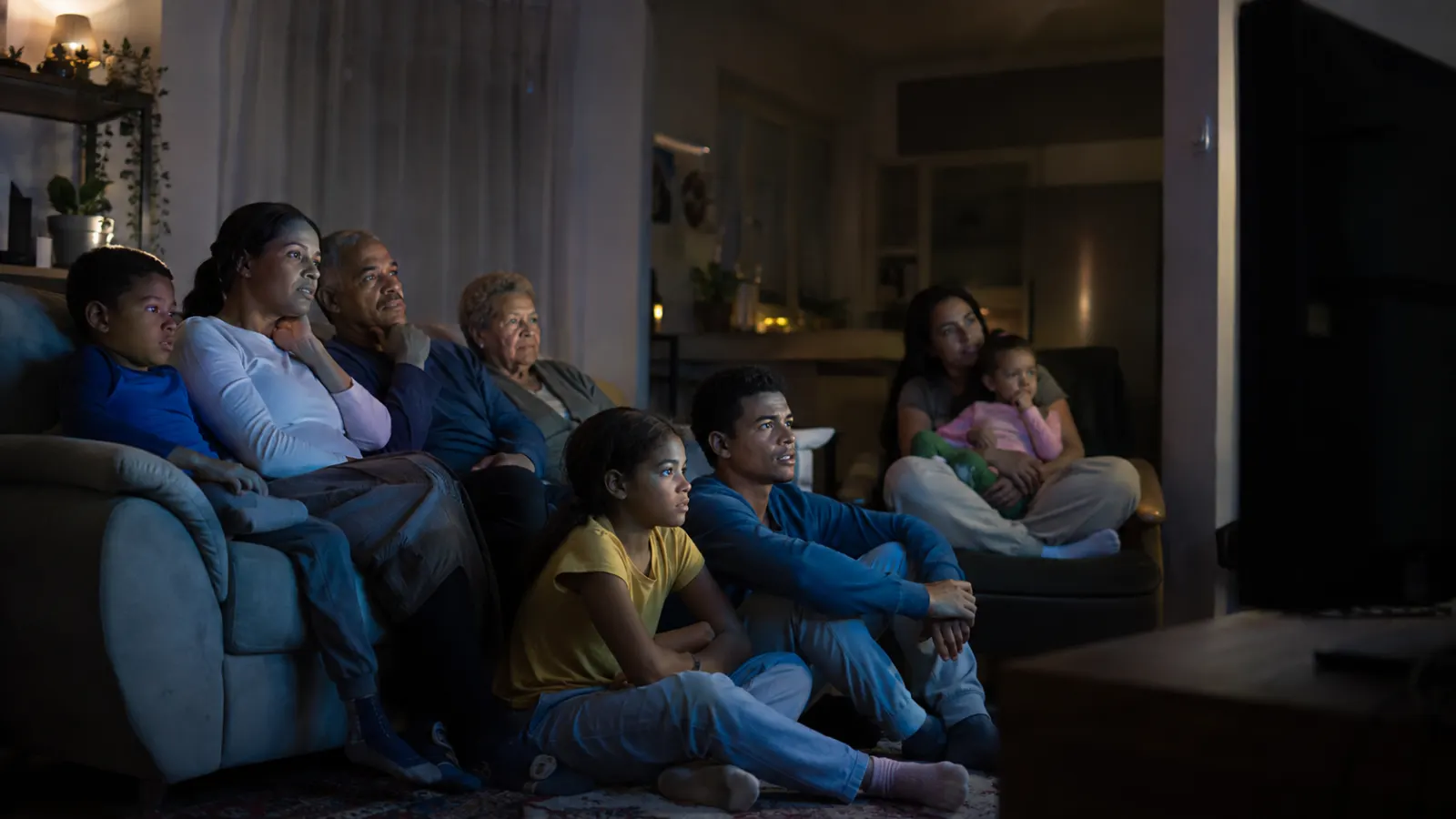
Television changed everyday life not simply by introducing another machine into the home, but by creating a new relationship between households and the outside world. News, sport, drama, advertising, political speeches and entertainment could now arrive continuously inside domestic space, allowing people to see events and lifestyles that previously might have reached them only through newspapers, radio, cinema or personal experience.
The television set soon became more than an electronic device. Furniture was arranged around it. Families scheduled evenings around programmes. Advertisers learned to build visual stories around products. Political leaders adapted to a medium in which appearance, gesture and tone could matter alongside words. Broadcasters constructed schedules that turned particular hours into recurring social appointments.
Television therefore became part of the social infrastructure of everyday life. Its influence did not depend on viewers simply believing everything they saw. The deeper transformation came from repetition, shared attention and the incorporation of audiovisual media into ordinary routines.
Even in the age of streaming, smartphones and short-form video, many of the cultural habits created by television remain visible. Serial storytelling, live sport, audiovisual political communication, celebrity culture, advertising and shared public events all developed through systems that television helped establish at enormous scale.
Television Is More Than the Television Set
It is useful to distinguish television as technology from television as an institution.
A television set is hardware. Television as a social system includes broadcasters, production companies, studios, journalists, regulators, advertisers, public-service institutions, actors, sports organisations, audiences and the cultural norms governing what can be shown.
This distinction helps explain why two countries with access to similar television technology can develop very different broadcasting cultures. One may have a powerful publicly funded broadcaster. Another may be dominated by commercial networks. One may regulate advertising to children strictly. Another may permit much more commercial exposure. Language requirements, censorship rules, ownership structures and political systems can all affect what eventually appears on screen.
Technology enables transmission.
Institutions determine much of what gets transmitted.
Television Entered the Household
Earlier mass media had already transformed society. Newspapers delivered large quantities of information. Radio brought live voices, music and political speeches into homes. Cinema created moving visual narratives for mass audiences.
Television combined several of these functions while placing them inside domestic life.
A family no longer needed to visit a cinema to watch moving pictures. A political leader could appear visually inside millions of homes. A sports event could unfold live in front of viewers who were physically thousands of kilometres away. Advertisements could demonstrate products rather than simply describe them.
The significance was partly psychological.
The outside world appeared to become present in the room.
That sense of presence helped make television unusually powerful as a cultural institution.
Television Created Shared National Moments
Broadcast television became especially influential during periods when audiences had relatively few channels.
When several large broadcasters dominated national viewing, enormous numbers of people could encounter the same event at almost the same time. Elections, royal ceremonies, political speeches, major disasters, championship matches and popular television dramas became collective cultural experiences.
The programme might end at night, but its social life continued the following morning.
People discussed what they had watched at school, in offices, shops, factories and public transport. A television episode could become a shared reference even among people who had never met.
This simultaneity gave broadcasting a distinctive social power.
A society did not simply contain millions of private viewers.
For certain moments, it contained a mass audience watching together.
Shared Viewing Created a Common Cultural Vocabulary
Television programmes supplied phrases, characters, images and narratives that large audiences could recognise immediately.
A joke could depend on everyone knowing a particular television personality. A fictional character could become shorthand for a type of behaviour. A sports commentator's phrase could enter ordinary speech. Advertising slogans could survive long after the campaign itself disappeared.
This cultural vocabulary mattered because it reduced the distance between strangers.
Two people could begin a conversation because both understood the same reference.
Television therefore did more than distribute programmes.
It produced shared cultural memory.
Television Expanded the Visible Social World
One of television's most significant social effects was making unfamiliar people and places repeatedly visible.
Viewers could encounter foreign cities, different occupations, unfamiliar family structures, regional accents, changing fashions and lifestyles far removed from their own surroundings.
Exposure did not automatically produce tolerance or acceptance.
A viewer could see a different way of living and reject it.
But the range of possibilities available for comparison expanded.
Television could show that people elsewhere organised families differently, dressed differently, worked in different professions or held different social expectations.
This made television part of the process through which people imagined societies beyond their immediate environment.
Media Effects Are Not Automatic
The fact that television influences culture does not mean viewers simply absorb whatever appears before them.
Media-effects research emphasises that influence is conditional. What matters includes the content itself, how frequently it is encountered, the age and background of the viewer, existing beliefs, social relationships and whether the person trusts or identifies with the people appearing on screen.
Two viewers can watch the same political speech and reach opposite conclusions.
A teenager and an older adult can interpret the same drama differently.
Someone who already distrusts a broadcaster may reject its message entirely.
Television therefore should not be treated as a remote control for public opinion.
Its influence works through interaction between media content and the social world viewers already inhabit.
Repetition Matters More Than One Programme
One isolated television scene rarely transforms social beliefs on its own.
Repeated patterns are more important.
If executives are consistently portrayed as men, viewers repeatedly encounter an association between masculinity and authority. If one minority group appears mainly in criminal roles, the repeated pattern may shape expectations even when no programme explicitly states a stereotype.
Likewise, if particular family arrangements, lifestyles or occupations appear routinely, they may gradually come to feel familiar.
This is why representation matters at the level of patterns rather than only individual examples.
Cumulative exposure can contribute to people's sense of what appears ordinary, desirable, dangerous or unusual.
Television Can Shift Social Norms
One influential study examined the expansion of cable television into rural communities in India. Researchers Robert Jensen and Emily Oster found that cable access was associated with changes in several reported attitudes and behaviours concerning women, including women's autonomy, domestic violence, son preference and fertility.
The result should not be interpreted as proving that television automatically produces social progress or that any particular programme creates the same effect everywhere.
Its significance is more specific.
People who had previously encountered a narrower range of social models were exposed repeatedly to alternative representations of family life, women and social behaviour.
That exposure appears to have mattered.
The study therefore illustrates how television can affect social expectations when new representations enter environments in which those representations were previously less visible.
Fiction Can Change What Seems Possible
News informs viewers about events.
Fiction can influence something different: the range of social possibilities audiences imagine.
A television drama may show a woman working in a profession rarely represented locally. A serial may depict a family structure that viewers have not personally encountered. A comedy may challenge the authority of a traditional social role simply by making that authority ridiculous.
None of this guarantees behavioural change.
But cultural normalisation frequently begins with familiarity.
Something that initially appears unusual can become less surprising when viewers encounter it repeatedly inside ordinary stories.
Television therefore influences society partly through narrative repetition rather than explicit argument.
Soap Operas Became Long-Term Social Laboratories
Serial dramas are especially interesting because viewers can spend years following the same characters.
This allows television to introduce social questions gradually.
A single programme may follow marriage, divorce, employment, illness, migration, generational conflict, changing gender roles or economic aspiration across hundreds of episodes.
The audience does not encounter the issue as one lecture.
It encounters it as part of the lives of familiar characters.
This repeated exposure can make serial television an unusual cultural laboratory in which social change is dramatised over long periods.
Viewers may disagree strongly with what characters do.
The behaviour has nevertheless entered the shared conversation.
Television Changed Politics
Politics existed in mass media long before television, but television changed what political communication rewarded.
A newspaper could reproduce the text of a speech.
Radio transmitted the voice.
Television added the face, body and physical performance.
Appearance therefore acquired political significance in new ways.
Debates, interviews, televised rallies and campaign advertisements made presentation part of political strategy. Candidates and leaders increasingly had to think about how they looked and sounded on screen, not only what they said.
This did not make political substance irrelevant.
It introduced another dimension through which leaders were evaluated.
Political Communication Became Visual
Television allowed political events to be framed through images rather than words alone.
A politician standing beside flood victims communicates something before any sentence is spoken. Images of crowds can make a movement appear large or small depending on framing and selection. Camera angles, editing and repeated footage can shape the emotional character of an event.
Television therefore made visual literacy increasingly important to politics.
Citizens needed to interpret not merely claims but images.
Political institutions recognised this quickly.
Campaigns became increasingly attentive to visual staging because television transformed staging into public communication.
Television News Selects Reality
No television bulletin can show everything that happened during the day.
Editors therefore select.
They decide which stories lead the broadcast, which receive twenty seconds and which never appear. Producers choose interview guests, correspondents and images. Breaking-news decisions determine which events receive continuous live coverage.
This selection creates a public agenda.
An issue repeatedly placed at the beginning of national broadcasts can acquire an urgency that a slow-moving problem receiving occasional coverage struggles to achieve.
This does not mean television news automatically determines public opinion.
It means television influences which parts of reality receive sustained public visibility.
That mechanism links television directly with the broader power of mass media.
Live Television Changed the Experience of Crisis
Television also transformed how people experienced disasters, wars, elections and political upheaval.
Events could unfold live.
Viewers no longer necessarily learned about a major development after it had finished. They could watch uncertainty develop in real time.
This produced enormous public engagement.
It also created new problems.
Live images may arrive before facts have been verified. Journalists may have to describe events whose causes remain unknown. Speculation can fill gaps created by the pressure to keep broadcasting.
Television therefore increased the speed of public awareness while creating new tensions between immediacy and verification.
Images Can Mobilise Public Attention
A written report about suffering can be powerful.
Moving images create a different emotional experience.
Television coverage of famine, war, natural disaster or humanitarian crisis can make distant events feel immediate enough to generate donations, political pressure or public debate.
But emotional power can also distort perception.
One dramatic image may become representative of an entire conflict even when the reality is far more complicated.
Visual journalism therefore requires context.
The most memorable image is not automatically the most representative one.
Television Created a New Advertising Culture
Commercial television transformed attention into an economic resource.
Programmes attracted audiences.
Advertisers paid broadcasters for access to those audiences.
This arrangement helped finance large-scale television production while integrating advertising deeply into entertainment culture.
Television advertising could demonstrate products visually, use music repeatedly, employ celebrities and create miniature stories around brands.
A household product no longer needed to be marketed simply through information about price or function.
It could be associated with happiness, modernity, beauty, family belonging, masculinity, youth or success.
Television helped turn advertising into cultural storytelling.
Advertising Helped Create Consumer Aspirations
The influence of advertising extends beyond individual purchasing decisions.
Repeated images of houses, cars, clothing, food and lifestyles can contribute to broader ideas about what success looks like.
A television advertisement does not necessarily force someone to buy a product.
It can participate in constructing the symbolic meaning surrounding consumption.
Certain goods become associated with adulthood.
Others with romance.
Others with status or modern living.
Advertising therefore belongs inside the cultural history of television rather than being treated merely as interruptions between programmes.
Children Became a Major Television Audience
Television also created a specialised world of children's programming.
Educational programmes could introduce numbers, language, science and social concepts in accessible visual formats. Entertainment gave children characters and stories shared across generations.
Commercial broadcasting simultaneously recognised children as consumers.
Advertising could influence preferences for toys, food and entertainment products.
This made children a particularly important subject within research on television effects.
But the question “Is television good or bad for children?” is too broad to be useful.
Content matters.
Duration matters.
Age matters.
What television replaces also matters.
An educational programme and several hours of inappropriate entertainment are not equivalent exposures.
Viewing Time Can Displace Other Activities
The influence of television cannot be understood only through what appears on the screen.
Time spent watching television is time not spent doing something else.
Depending on context, television may replace reading, physical activity, sleep, family conversation or outdoor play.
In another situation, television may replace less educational entertainment and provide useful information instead.
This idea of displacement is particularly important when considering children.
Media effects depend partly on the activities television substitutes for.
The clock matters alongside the content.
Television Reorganised Family Routines
Broadcast schedules created recurring appointments.
A family might eat dinner before a favourite programme. Children negotiated access to the television. A major sporting event could gather several generations in the same room. Weekend schedules could be organised around regular shows.
Television therefore affected not merely individual viewing but household time.
The television set could become a shared gathering point.
It could also create conflict over what to watch.
Later, as households acquired multiple television sets and eventually personal screens, some of that shared viewing declined.
The history of television is therefore also a history of changing domestic arrangements.
Family Viewing Could Produce Conversation
Watching television together did not necessarily mean passive silence.
Families argued about news.
Parents explained unfamiliar events to children.
Viewers discussed characters and storylines.
A controversial scene could create intergenerational disagreement.
Television therefore often entered social interpretation through conversation.
The programme ended.
Its cultural effect continued through what people said about it.
This is one reason media influence should not be understood as a message travelling directly from screen to individual mind.
Social discussion mediates interpretation.
Television Helped Standardise Language
National broadcasting can expose large audiences to particular forms of pronunciation, vocabulary and grammar.
News anchors and popular dramas may therefore contribute to the spread of widely understood language forms.
This can make communication easier across regions.
It can also reduce the visibility of local dialects when one form becomes associated disproportionately with education, authority or prestige.
Broadcasting policy can work in the opposite direction as well.
Regional and minority-language programming can provide public visibility to languages that might otherwise be marginalised within national media.
The source article correctly notes UNESCO examples in which broadcasting policy has been used to strengthen the visibility of multiple languages.
Accents Became Cultural Signals
Television did not merely transmit language.
It attached social meanings to different ways of speaking.
A particular accent might repeatedly appear with wealthy characters.
Another might be used mainly for comedy.
Regional speech could signal authenticity, rural identity, class or criminality depending on the programme.
These associations matter because language is closely connected to social identity.
Repeated representation can reinforce or challenge assumptions about who sounds educated, respectable, trustworthy or powerful.
Television Changed Celebrity
Film created international stars before television.
Television created another kind of fame.
Actors, hosts, news anchors, game-show presenters and sports commentators could appear repeatedly inside the household. Familiarity itself became a form of cultural capital.
Viewers did not simply recognise these personalities.
They felt they knew them.
The relationship remained one-sided, but repeated exposure created a sense of intimacy.
Television personality therefore became a profession in its own right.
A person could become famous not merely through one extraordinary performance but through recurring presence.
News Anchors Became Institutional Faces
Television journalism personalised institutions in similar ways.
A newspaper has a masthead.
Television news often has a face.
Long-serving anchors and correspondents could become symbols of reliability for viewers who encountered them night after night.
This created advantages and risks.
Trust could be strengthened through familiarity.
The institution could also become overly dependent on individual personalities.
Again, television transformed abstract organisations into recurring human presences inside domestic life.
Television Influenced Fashion and Consumer Behaviour
Popular television characters could affect clothing, hairstyles and interior design.
A successful series might make a particular style desirable. Viewers could imitate the appearance of admired performers. Advertisers could quickly respond by connecting commercial products to television personalities.
The relationship between media and fashion is circular.
Television observes existing trends.
Designers and producers incorporate them.
Audiences see the result.
Some viewers imitate it.
The resulting popularity returns to television.
Culture moves repeatedly between the screen and everyday life.
Television Became Part of Popular Culture
Few modern media institutions have contributed more to shared popular culture.
Catchphrases, theme songs, characters, reality-show moments, sporting commentary and famous interviews can become widely recognisable references.
Some programmes become associated with entire generations.
People remember where they lived when they watched a historic broadcast. A childhood television series can produce intense nostalgia decades later. Songs connected with programmes can survive after the programme itself disappears.
Television therefore becomes part of autobiographical memory as well as national cultural memory.
Television Helped Create National Identity
National broadcasters often present themselves not merely as entertainment services but as institutions representing the country.
They broadcast national ceremonies.
They cover elections.
They televise sporting teams.
They produce dramas based on national history.
This can create common cultural reference points across geographically dispersed populations.
But national television can also exclude.
If one region, language, religion or community dominates the screen, the image of the nation becomes narrower than the population itself.
Television can therefore construct national belonging while simultaneously raising questions about who is represented within that national story.
Representation Can Include and Exclude at the Same Time
A television programme may become culturally unifying for millions while still portraying particular communities through stereotypes.
This dual capacity is characteristic of mass media.
Wide reach magnifies positive representation.
Wide reach also magnifies distortion.
A stereotype repeated on a small stage reaches a small audience.
The same stereotype repeated nationally can become a widely recognised cultural code.
This is why representation debates matter even when programmes are fictional.
Fiction still participates in cultural classification.
Television Can Expand Minority Visibility
The opposite is also true.
Television can provide visibility to communities that audiences rarely encounter in everyday life.
Characters from marginalised groups can become recurring participants in ordinary stories rather than appearing only in documentaries about difference.
News interviews can give minority leaders national access.
Regional broadcasting can make local languages and cultural practices visible beyond their immediate communities.
Visibility alone does not guarantee equality.
But invisibility makes equality harder.
Television therefore can participate in expanding the social imagination.
Public-Service Broadcasting Uses a Different Logic
Commercial television depends heavily on attracting and retaining audiences because audience attention generates revenue.
Public-service broadcasting adds another set of objectives.
A public broadcaster may be expected to provide reliable news, educational programming, cultural content, minority-language services and universal access even when those programmes would not maximise commercial profit.
This creates a valuable alternative to purely market-driven television.
It also creates a difficult governance problem.
If governments control public broadcasters too directly, political interference can undermine trust.
The challenge is to combine public funding with genuine editorial independence.
Commercial and Public Television Can Coexist
The distinction should not be simplified into public equals good and commercial equals bad.
Commercial broadcasters can produce outstanding journalism, drama and educational programming.
Public broadcasters can become bureaucratic or politically compromised.
Different funding systems create different incentives rather than automatic outcomes.
Understanding television therefore requires examining the institutional design of particular broadcasters.
How are they funded?
Who appoints leadership?
What public obligations exist?
How independent is the newsroom?
These questions often explain more than the technology itself.
Television Became an Archive of Everyday History
Television programmes are produced for contemporary audiences.
Decades later, they become historical evidence.
News footage preserves major events, but the most revealing material may sometimes be ordinary.
Advertisements show consumer aspirations.
Soap operas preserve furniture, clothing and social attitudes.
Game shows record humour and speech.
Talk shows preserve debates about relationships, morality and celebrity.
Local television archives preserve communities that national histories may barely mention.
Old television therefore becomes a record of how society imagined itself.
Fiction Preserves Social Assumptions
Historical researchers should not treat television drama as straightforward documentation of ordinary life.
Television is selective.
Writers exaggerate.
Producers choose visually attractive settings.
Commercial pressures influence stories.
Yet these distortions are themselves evidence.
A fictional family may not be statistically representative.
It can still reveal what producers believed audiences would recognise as normal, aspirational, funny or controversial.
Television should therefore be read culturally rather than literally.
Advertising Archives Reveal Changing Aspirations
Old advertisements are particularly revealing.
Products change.
So do the lifestyles used to sell them.
An advertisement from one period may present domestic appliances as symbols of modernity. Another may associate cars with masculine freedom. A later campaign may emphasise environmental responsibility or personal individuality.
Advertising records the assumptions marketers believed would persuade audiences.
Those assumptions tell historians something about the period.
Television Changed Sport
Sport existed as mass entertainment long before television.
Television transformed its scale and economics.
A stadium holds a limited audience.
A broadcast can reach millions.
This changed the value of broadcasting rights, sponsorship, scheduling and athlete celebrity. Sports increasingly adapted to television requirements through camera placement, match timing, instant replay, commentary and advertising formats.
Television did not merely document sport.
Sport evolved partly around television.
Major Sporting Events Still Preserve Television's Shared Power
Streaming has fragmented entertainment audiences, but live sport remains one of the strongest surviving examples of simultaneous mass viewing.
A championship final can still produce millions of people watching at approximately the same time.
The cultural result resembles the classic broadcasting era.
People experience suspense together.
Social media discussion intensifies around the broadcast.
The following day, the event becomes a shared conversation.
Live sport therefore preserves one of television's historically distinctive forms of social power.
Streaming Changed Television Without Ending It
Streaming platforms disrupted the fixed schedule that defined traditional broadcasting.
Viewers can now watch entire seasons on demand.
Episodes do not necessarily air at the same time.
People can pause, replay and binge programmes.
Television content also moves across phones, tablets and laptops rather than remaining attached to one household set.
This changes the experience of television profoundly.
But long-form episodic audiovisual storytelling did not disappear.
Distribution changed.
The cultural form survived.
From Shared Schedule to Personalised Menu
Traditional television offered limited choice.
That limitation created common exposure.
If only a handful of channels were available, people were more likely to encounter the same programmes.
Streaming reverses much of this structure.
Large catalogues give viewers far greater control over what they watch.
Recommendation systems can personalise suggestions.
This increases choice but reduces some forms of shared cultural experience.
Two people living next door can now inhabit completely different entertainment worlds.
The abundance of content can therefore produce cultural fragmentation alongside freedom.
Recommendation Algorithms Became New Programmers
Traditional television programmers decided which programme appeared at 8 p.m.
Streaming algorithms increasingly decide which programme appears first on a user's screen.
The mechanism differs, but selection remains important.
A series prominently recommended to millions receives an enormous visibility advantage.
A technically available programme hidden deep in a catalogue may remain effectively invisible.
The transition from broadcast schedule to personalised recommendation therefore did not eliminate gatekeeping.
It automated and individualised parts of it.
Streaming Also Changed the Meaning of Ratings
Traditional television industries relied heavily on audience measurements associated with scheduled broadcasts.
Streaming platforms possess much more detailed behavioural information.
They can observe completion rates, rewatches, abandonment, viewing time and interactions across large subscriber populations.
This affects production decisions.
A programme may be judged not simply by how many people began watching but by how it influences subscriptions, retention or other platform objectives.
Television remains an industry of attention.
The measurement system has become more complex.
Television's Decline Is Uneven
It is common to say that television is dying because younger audiences spend increasing amounts of time on streaming services, online video and social platforms.
The reality is more uneven.
Traditional scheduled television has lost importance in many markets and age groups.
Yet television remains influential in live sport, elections, breaking news and older demographics. Broadcasters increasingly distribute the same material through apps, streaming services and social media.
The television institution is therefore changing more quickly than audiovisual culture itself.
Television and Social Media Now Interact
Modern television rarely stays inside the television screen.
Viewers discuss programmes on social media.
Short clips circulate independently.
Reality-show moments become memes.
News interviews are reposted.
Sport highlights travel across platforms within minutes.
The relationship therefore works both ways.
Social media can increase interest in a television programme.
Television can provide material around which online communities organise.
This makes the distinction between television and internet culture increasingly porous.
Television Still Shapes Public Crisis
When a major election result is announced, war breaks out, a natural disaster occurs or a national leader makes an important address, television often regains its old centrality.
People return to live feeds because they want simultaneous information.
This reveals a continuing distinction between scheduled entertainment and live public communication.
A viewer may abandon broadcast television for ordinary drama yet still depend on it during major public events.
Television's strongest remaining cultural advantage is often liveness.
Television Has Never Had One Single Effect
Any claim that “television changes people” is too vague.
Which television?
Which people?
What programme?
How often?
At what age?
In which social environment?
What did viewers believe beforehand?
What alternatives were available?
These questions matter because media effects are conditional.
Educational television can teach.
Advertising can influence consumer preferences.
Repeated stereotypes can shape social expectations.
News can affect the perceived importance of political issues.
Fiction can introduce alternative lifestyles.
Live broadcasts can create shared national moments.
The medium produces different effects through different kinds of content.
Frequently Asked Questions
What is television's influence on society?
Television has influenced society by bringing audiovisual news, entertainment, advertising, politics and sport into everyday domestic life. It has helped create shared cultural moments, shape representation and transform advertising and political communication.
Why did television become so powerful?
Its combination of moving images, sound, regular scheduling and domestic accessibility allowed broadcasters to reach very large audiences repeatedly.
Does television control what people think?
No. Media effects depend on content, prior beliefs, age, trust, social environment and many other factors. Television can influence attention and perceptions without determining everyone's beliefs.
How does television influence culture?
Television circulates characters, language, fashion, music, advertising, social roles and representations that can become widely shared cultural references.
Can television change social attitudes?
Research indicates that sustained exposure to different social models can influence attitudes under some conditions. Effects depend strongly on context.
How did television change politics?
It made political communication more visual, giving greater importance to appearance, gesture, interviews, debates and televised campaign events.
What is agenda-setting in television news?
Agenda-setting refers to the ability of sustained media attention to influence which issues audiences perceive as important.
Why does representation on television matter?
Repeated portrayals can contribute to perceptions of which people, professions, lifestyles or social groups appear normal, successful, threatening or marginal.
Does one television programme change social norms?
Usually the stronger concern is cumulative exposure rather than one isolated programme.
How did television affect families?
Broadcast schedules could reorganise household routines and create shared viewing events, although television could also displace other activities.
How did television affect children?
Effects depend strongly on programme content, age, viewing duration and what television viewing replaces. Educational and commercial content can have very different implications.
How did television change advertising?
Television allowed advertisers to combine moving images, speech, music, characters and repeated visual storytelling to connect products with lifestyles and emotions.
What is public-service television?
Public-service broadcasting generally carries obligations involving information, education, culture and access in addition to audience attraction.
Did television help standardise language?
National broadcasting can increase exposure to widely used forms of language, although regional programming can also support linguistic diversity.
How did television change celebrity?
Repeated household exposure allowed actors, anchors and presenters to become familiar public personalities rather than celebrities known only through occasional appearances.
Is streaming still television?
The boundary is increasingly blurred. Streaming changes distribution and scheduling while preserving many forms of long-form audiovisual storytelling historically associated with television.
Has streaming ended shared television experiences?
It has fragmented much scheduled viewing, but live sport, elections, major news and public events can still attract large simultaneous audiences.
Why is old television historically valuable?
Television archives preserve speech, fashion, advertising, political debates, domestic imagery and cultural assumptions that help historians study earlier periods.
Television Did Not Simply Reflect Society
Television took material from the society around it and transformed that material into stories, news reports, advertisements and entertainment.
Those representations then returned to society.
People adopted fashions they saw on television.
Political campaigns adapted to broadcasting.
Advertisers borrowed television personalities.
Families discussed fictional relationships.
Children repeated phrases.
Television stars became cultural symbols.
The relationship therefore became circular.
Society produced television.
Television helped reshape society.
The Central Idea
Television's historical importance lies not simply in the invention of electronic broadcasting. Its deeper significance came from making audiovisual mass communication routine inside ordinary domestic life.
Once the screen entered the household, distant events became visually present. Political leaders could address voters through appearance and voice. Advertisers could tell repeated visual stories about consumption. Dramas could expose audiences to unfamiliar relationships and lifestyles. Sports events could gather millions of viewers simultaneously.
Broadcast schedules reorganised household time and created shared national moments. Repeated representations helped shape assumptions about gender, class, profession and social success. Public-service broadcasters used television for education and cultural programming, while commercial networks converted audience attention into advertising revenue.
The source you supplied captures an especially important qualification: television audiences were never blank screens waiting to absorb messages. Effects depend on content, frequency, existing beliefs, age, social environment and interpretation.
That qualification makes television's influence more interesting rather than less powerful.
Television rarely worked by commanding millions of people to believe exactly the same thing. It worked by placing particular images, stories, lifestyles and problems repeatedly before enormous audiences.
Streaming has fragmented the old shared schedule, but the basic audiovisual culture television created remains central. Long-form serial storytelling continues. Political communication remains visual. Live sport and news still produce shared moments. Advertising remains deeply audiovisual. Recommendation algorithms have inherited some of the selection power once exercised primarily by broadcast programmers.
Television therefore should not be treated as a dead technology belonging to the twentieth century.
The household screen has multiplied into televisions, laptops, tablets and phones.
The distribution system has changed.
The cultural revolution it began has not ended.