Physical Activity for Older Adults: Strength, Balance and Independence
Physical activity for older adults becomes more important, not less, as ageing changes strength, balance, endurance and recovery. The instinct to move less when walking feels slower, joints become stiff or confidence declines is understandable, but long periods of reduced activity can create their own downward cycle. Less movement means fewer opportunities to maintain muscle, cardiovascular fitness and balance, which can make everyday tasks feel harder and lead to even more avoidance.
Exercise cannot stop biological ageing. Its value is more practical: it can help preserve the physical reserve needed for ordinary life. Walking to a shop, carrying groceries, climbing stairs, getting out of a chair, stepping onto public transport and recovering balance after a stumble all depend on capacities that can be trained.
WHO's current guidance recommends that adults aged 65 and older generally aim for 150–300 minutes of moderate-intensity aerobic physical activity per week, or 75–150 minutes of vigorous-intensity activity, or an equivalent combination. It also recommends muscle-strengthening activity involving major muscle groups on at least two days each week and varied multicomponent activity emphasising functional balance and strength on three or more days per week. Just as importantly, WHO states that doing some activity is better than doing none and that people who are inactive should start with small amounts and increase gradually.
Those targets are useful, but they should not be treated as a pass-fail test. The real objective is to make movement sustainable enough that physical capacity remains available for daily life.
Physical Activity Is Broader Than Exercise
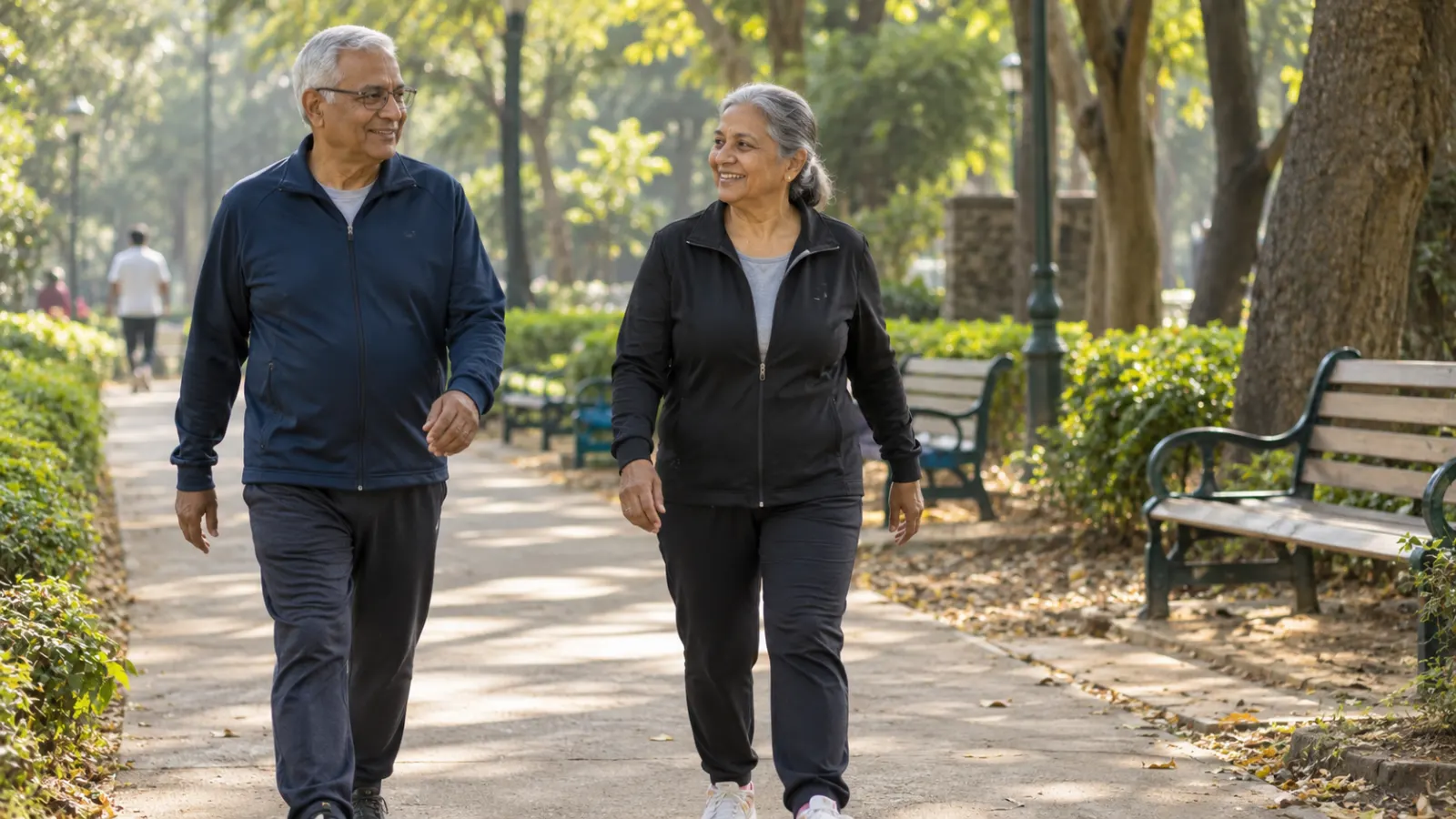
Exercise is planned and structured physical activity, but movement does not have to happen in a gym to matter. Brisk walking, cycling, dancing, gardening, household tasks, active transport, swimming and recreational sport can all contribute to weekly activity.
That distinction matters because some older adults imagine that becoming physically active requires specialised equipment, a fitness club or a complicated programme. Structured training can be valuable, particularly for strength and balance, but useful movement can begin with much simpler changes: walking for ten minutes, taking regular movement breaks, doing repeated chair rises, carrying shopping or joining a local walking group.
CDC's current guidance similarly emphasises that adults aged 65 and older need a mixture of aerobic, muscle-strengthening and balance activity, and that these activities can be accumulated in many different ways. If someone cannot meet the full recommended amount, the guidance is to remain as physically active as abilities and health conditions allow.
This broader view helps avoid an all-or-nothing mentality. Someone who has been mostly inactive does not need to jump immediately to five long workouts each week. Ten minutes of walking performed consistently can be a more useful starting point than an idealised programme that lasts four days and is then abandoned.
The same principle applies to people recovering after illness, hospitalisation or a long sedentary period. The first useful dose of movement may be much smaller than population-level recommendations, but it can still begin rebuilding capacity.
Strength, Balance and Aerobic Fitness Protect Different Parts of Independence
Walking receives most of the attention in discussions of healthy ageing, but aerobic activity alone does not train every physical capacity that later life requires.
Muscle strength supports climbing stairs, carrying bags, opening heavy doors, rising from chairs and maintaining posture. Ageing is associated with declining muscle mass and strength, but resistance training can still stimulate adaptation in older adults. Weights are one option, but resistance bands, machines, bodyweight exercises and appropriately loaded functional movements can all be used.
The exercise does not have to look athletic. Repeated sit-to-stand movements, step-ups, supported squats, pushing and pulling exercises can all target useful movement patterns when performed at an appropriate difficulty.
The important principle is progression. If an exercise remains permanently easy, it eventually provides little new stimulus. Resistance, repetitions, movement range or exercise complexity can gradually increase as capacity improves. Progression should be deliberate rather than abrupt.
Balance requires separate attention because falls are not caused by weakness alone. Vision, medications, footwear, postural blood-pressure changes, neurological conditions, home hazards and previous falls can all influence risk. Balance training can include controlled weight shifting, heel-to-toe walking, stepping in different directions, tai chi and supported single-leg practice.
The U.S. Preventive Services Task Force currently recommends exercise interventions for community-dwelling adults aged 65 or older who are at increased risk of falls. The interventions studied most often included gait, balance and functional training, frequently combined with strength and resistance work.
This is important because balance training should not become a test of bravery. Someone who is unstable does not prove anything by standing unsupported in a situation where falling is likely. The purpose is to create controlled challenge with enough support to keep practice safe.
Aerobic fitness protects another part of independence. Walking, cycling, swimming and similar sustained activities improve cardiorespiratory capacity. WHO links regular physical activity in older adults with benefits across cardiovascular health, type 2 diabetes risk, mental health, cognitive health, sleep and physical function, as well as fall prevention and preservation of functional ability.
The everyday benefit can be understood through reserve. If walking to the bus stop requires almost all of someone's available aerobic capacity, the task feels exhausting. When fitness improves, the same trip consumes a smaller proportion of total capacity.
That difference can determine whether someone continues shopping independently, socialising or moving around the community.
Intensity Should Be Relative to the Person
A pace described as moderate for one person may feel vigorous to another.
This is especially important with older adults because fitness levels vary enormously. A fit 70-year-old and a frail 70-year-old can experience the same walking speed very differently.
CDC describes moderate intensity using relative effort: breathing and heart rate increase, but conversation remains possible. The familiar “talk test” is useful—during moderate activity, a person can usually talk but not sing comfortably, while vigorous activity makes it difficult to say more than a few words without pausing for breath.
Relative intensity is often more useful than comparing people against one fixed speed.
A person beginning with slow walking may already be working at an appropriate training intensity. As fitness improves, the same route may become easier and pace or duration can gradually increase.
Heart-rate targets can sometimes help, but they are not universally reliable. Fitness, age and medicines that alter heart-rate response can make generic formulas less useful for some people. Perceived effort, breathing, symptoms and professional guidance can therefore be more practical in many cases.
The same idea should guide resistance training. The appropriate load is not determined by what another person of the same age lifts. It should be challenging enough to stimulate adaptation while allowing controlled technique and manageable recovery.
Starting Small Is Not a Compromise
People often fail to begin because the recommended totals look too large.
Someone who has been inactive for several years may hear “150 minutes per week, strength twice and balance three times” and conclude that they are too far behind to start.
WHO specifically rejects that interpretation. Its guidelines state that some physical activity is better than none and recommend that inactive older adults begin with small amounts before progressively increasing frequency, intensity and duration.
Starting small is not a weaker form of training.
It is often how training becomes sustainable.
A realistic first week might involve a short walk on several days, a few supported chair rises and simple balance practice near a stable surface. When that becomes tolerable, one variable can increase. The walk can become longer. Resistance can increase. Another session can be added. Balance movements can become slightly more demanding.
Changing one variable at a time also makes it easier to notice what the body tolerates.
Abrupt increases can create soreness, fatigue or injury severe enough to interrupt the very consistency the programme was supposed to build.
Recovery therefore belongs inside the training plan.
Older adults retain substantial capacity to adapt to exercise, but sleep, nutrition, rest between harder sessions and gradual progression become important parts of maintaining consistency. Recovery should not be interpreted as evidence that the body is too old to exercise.
It is part of how adaptation occurs.
For people returning after hospitalisation, major surgery, prolonged illness or substantial loss of mobility, rehabilitation or professionally supervised exercise can provide a safer bridge back to independent activity.
Muscle Power Matters for Real-World Movement
Strength describes how much force a muscle can produce.
Power includes how quickly that force can be produced.
That distinction matters because many everyday situations do not provide unlimited time. Recovering from a loss of balance may require a quick step. Rising from a chair efficiently requires force to be produced rapidly enough to move the body. Boarding a bus or climbing a step also combines strength with speed.
Research has therefore examined whether resistance exercises performed with a faster intended lifting phase can improve physical function in older adults. Systematic reviews suggest possible functional benefits from power-oriented training, although certainty is not high enough to imply that every older adult needs specialised high-velocity exercise.
The practical interpretation should remain conservative.
Basic strength and movement control come first.
Once someone can perform an exercise safely and confidently, a trained professional may sometimes introduce movements in which the lifting phase is performed more purposefully or quickly while remaining controlled.
This is very different from telling an inexperienced older adult to make exercises explosive.
The goal is functional capacity, not speed for its own sake.
Sitting Less Matters Even When Exercise Is Already Scheduled
A person can complete a daily walk and still spend most of the remaining day sitting.
WHO's physical-activity guidance recommends limiting sedentary time and replacing sitting with physical activity where possible. For someone who spends long periods seated, short periods of standing, walking or light activity create additional opportunities for muscle use and energy expenditure.
This can be especially practical for people who find longer exercise sessions difficult.
Stand and move briefly after watching television for a while. Walk while talking on the phone when safe. Do a household task. Change position regularly. Someone with limited mobility may still be able to use seated movements or repeated supported transfers.
The aim is not to create anxiety about every minute spent sitting.
Rest is necessary.
The useful distinction is between intentional rest and an entire day becoming sedentary simply because sitting has become the default.
A more active day can accumulate through many small movements in addition to planned exercise.
Chronic Disease Usually Changes the Programme, Not the Importance of Movement
Many older adults live with arthritis, diabetes, cardiovascular disease, chronic lung disease, osteoporosis, neurological conditions or several conditions at the same time.
These diagnoses can make exercise planning more complicated, but they do not automatically make physical activity inappropriate.
WHO's guidelines explicitly include older adults living with chronic conditions and recommend regular activity, adjusted according to functional ability and medical circumstances.
The type of movement may need adaptation.
Joint pain may make cycling, aquatic exercise or modified strengthening more tolerable than long walks. A neurological condition may make balance training more appropriate under supervision. Heart or lung disease may require slower progression, symptom monitoring or formal rehabilitation. Osteoporosis may affect exercise selection and technique.
Medication can matter as well. Drugs influencing blood pressure, balance, blood glucose or heart rate may change how exercise should be monitored.
The principle is not “push through everything”.
New chest pain, fainting, severe unexplained breathlessness, sudden weakness, rapidly worsening neurological symptoms or other acute warning signs require medical assessment rather than being treated as normal exercise discomfort.
People who already have unstable disease, recent major illness or major mobility limitations may benefit from individual guidance before significantly increasing intensity.
At the same time, excessive fear can become its own barrier. Avoiding all movement because someone has arthritis or heart disease can contribute to further loss of capacity.
The better question is usually not whether movement has value.
It is which type, intensity and progression are appropriate for this person's condition.
Falls Prevention Requires More Than Balance Exercises Alone
Falls are often discussed as though they can be prevented simply by becoming stronger.
Exercise matters, but fall risk is multifactorial.
The USPSTF notes that relevant factors can include gait, balance, vision, medication, postural blood pressure, cognition, psychological health and environmental hazards. For older adults at increased risk, exercise has a moderate net benefit, while broader multifactorial interventions may be selectively useful depending on the person's circumstances.
That means someone who repeatedly falls should not automatically respond by practising harder exercises alone.
A medication may be contributing to dizziness.
Vision may have deteriorated.
Shoes may provide poor support.
A rug or poorly lit staircase may create hazards.
Blood pressure may fall excessively after standing.
A neurological condition may need assessment.
Exercise improves one important part of the system, but a comprehensive fall-prevention plan sometimes requires several changes at once.
Confidence also matters.
After a fall, people may become afraid of moving and begin avoiding activities they previously performed. That response is understandable, but severe avoidance can accelerate weakness and reduce balance exposure, potentially creating another cycle of vulnerability.
Appropriately supervised rehabilitation can help rebuild capability and confidence together.
Enjoyment, Convenience and Social Context Determine Whether Exercise Continues
The physiologically perfect programme is useless if somebody stops doing it.
Adherence depends partly on how well activity fits into the person's life.
Some people enjoy walking alone. Others prefer dance, gardening, swimming, group exercise, tai chi or activity with family. A group class can add social connection and accountability. A home programme can remove transport costs and make consistency easier.
Variety can also help. Walking can provide aerobic activity while separate strength sessions train muscles more directly. Gardening can add general movement. Balance work can be integrated into a short daily routine.
The best choice is not necessarily the activity that burns the most calories or looks most athletic.
It is one that is safe enough, challenging enough and realistic enough to continue.
This is especially important in later life because the value of exercise accumulates through repetition. One difficult workout contributes relatively little compared with months or years of sustainable movement.
Social environment also influences participation. Safe footpaths, accessible parks, community programmes, transport and affordable facilities can determine whether regular movement is practical. Advice to “walk more” is less useful when someone lives where walking is unsafe or impossible.
Physical activity is therefore an individual behaviour occurring inside an environment.
The Goal Is Functional Reserve for Real Life
The strongest reason for physical activity in later life is not to imitate youth.
It is to preserve functional reserve.
Think of daily life as requiring a certain minimum level of physical capacity. Standing from a chair requires some leg strength. Crossing a road requires walking speed and confidence. Recovering balance requires strength and coordination. A long trip outside the home requires endurance.
When a person's maximum capacity sits only slightly above those requirements, small disruptions can create major losses of independence.
A week of illness may make stairs suddenly difficult.
Several days of bed rest can noticeably reduce mobility.
A minor injury can make grocery shopping feel overwhelming.
When reserve is larger, the same disruption is less likely to push ordinary activities beyond what the person can manage.
This is why strength, aerobic fitness, balance and movement confidence can be thought of as forms of practical resilience.
Ageing does not remove the body's ability to respond to training.
The pace of progress may differ, recovery may require more attention and medical conditions may change how exercise is performed, but improvement remains possible.
The most useful programme is therefore not the one designed to prove how young someone still is.
It is the one that makes everyday life easier.
Walk enough that ordinary distances require less effort. Build enough strength that chairs and stairs remain manageable. Practise balance so that small disturbances are easier to correct. Move often enough that inactivity does not become the default. Progress gradually enough that the programme can continue.
The purpose of physical activity in older age is ultimately simple:
to preserve the capacity to keep doing the things that make independent life possible.
Medical Note
This article provides general health information and is not a substitute for individual medical advice, diagnosis, rehabilitation or exercise prescription. Appropriate physical activity depends on current fitness, mobility, symptoms, medical conditions, medicines, previous falls and recent illness or surgery. People with significant instability, unstable medical conditions or concerning symptoms should obtain appropriate professional assessment. New chest pain, fainting, severe unexplained breathlessness, sudden neurological symptoms or rapidly worsening symptoms should not be treated as normal exercise discomfort.