Equality Sometimes Requires Support, Not Sameness
A society marked by centuries of caste exclusion, educational deprivation, social stigma and unequal opportunity cannot become equal merely by declaring everyone equal. Formal equality may say that the same rule applies to all. But substantive equality asks whether people actually begin from comparable social positions.
Reservation in the Indian Constitution is an affirmative action tool designed to address historical and structural disadvantage. It gives representation, access and opportunity to communities that have been socially and educationally excluded.
Reservation is therefore not an exception to equality in a simple sense. It is one method by which the Constitution tries to achieve real equality.
Meaning of Reservation
Reservation means setting aside a certain share of seats, posts or opportunities for specified disadvantaged groups in education, public employment, legislatures or other constitutionally permitted areas.
In India, reservation policies have mainly benefited Scheduled Castes, Scheduled Tribes, Other Backward Classes and, in specific constitutional form, Economically Weaker Sections.
The purpose is not charity. It is constitutional correction for unequal access to power, education and public employment.
Constitutional Basis in Article 15
Article 15 prohibits discrimination on grounds only of religion, race, caste, sex, place of birth or any of them. But it also permits special provisions for certain groups.
Article 15(3) allows special provisions for women and children. Article 15(4) allows special provisions for socially and educationally backward classes of citizens and for Scheduled Castes and Scheduled Tribes. Article 15(5) allows special provisions for admission to educational institutions, subject to its terms. Article 15(6) allows special provisions for Economically Weaker Sections.
This shows that the Constitution combines non-discrimination with affirmative support.
Constitutional Basis in Article 16
Article 16 guarantees equality of opportunity in public employment. But Article 16(4) allows the State to make reservation in appointments or posts for any backward class of citizens which, in the opinion of the State, is not adequately represented in State services.
Article 16(4A) allows reservation in promotion with consequential seniority for Scheduled Castes and Scheduled Tribes in specified circumstances, and Article 16(4B) deals with carrying forward unfilled reserved vacancies.
These provisions show that reservation in public employment is tied to backwardness and inadequate representation, not merely poverty.
Reservation and Social Justice
Reservation is rooted in social justice. Many communities were historically excluded from education, temples, land ownership, skilled occupations, public office and social dignity. Open competition in such a society may reproduce old exclusion if starting conditions remain unequal.
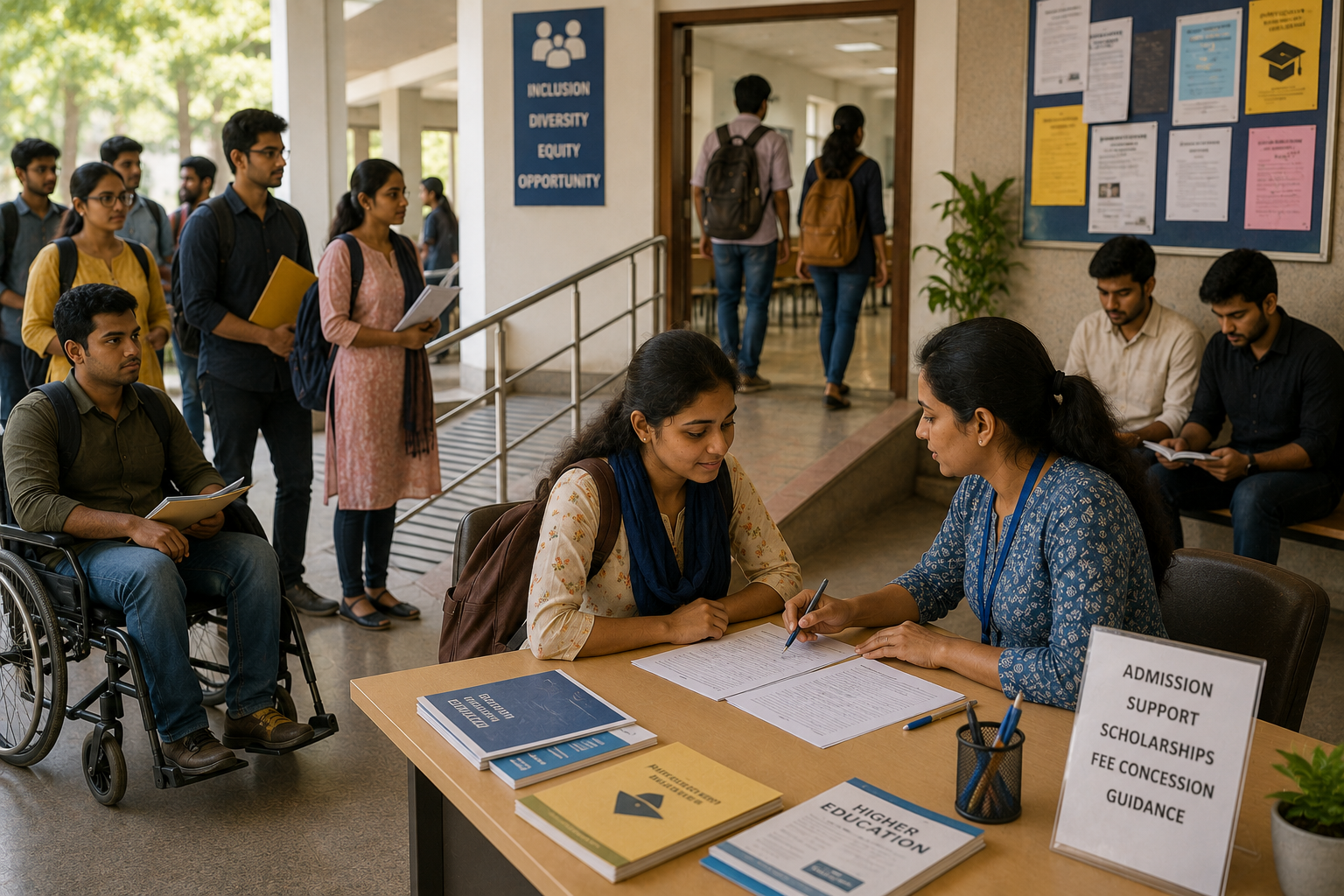
Reservation tries to create entry points into education, public employment and representation. It is not the whole solution to inequality, but it is one constitutional instrument.
Other measures such as quality schooling, scholarships, anti-discrimination enforcement, health, housing and economic opportunity are also necessary.
Indra Sawhney and OBC Reservation
The Supreme Court’s decision in Indra Sawhney v. Union of India is a landmark in reservation law. The Court upheld 27 percent reservation for Other Backward Classes in central services, recognised the creamy layer exclusion for OBCs and discussed the 50 percent ceiling principle, subject to exceptional circumstances.
The judgment shaped the modern constitutional understanding of backward-class reservation. It also clarified that reservation under Article 16(4) is connected to inadequate representation in public services.
Reservation in Promotion
Reservation in promotion has been one of the most debated areas. After judicial decisions limited promotion reservation, constitutional amendments inserted Article 16(4A) and related provisions for Scheduled Castes and Scheduled Tribes.
The Supreme Court later examined these provisions in cases such as M. Nagaraj and Jarnail Singh, focusing on conditions like inadequate representation, administrative efficiency and creamy layer principles in certain contexts.
This area remains legally complex and must be understood through current constitutional provisions, statutes, government rules and case law.
Reservation and the 50 Percent Debate
The 50 percent ceiling is one of the most discussed limits in reservation law. It comes from judicial interpretation, especially Indra Sawhney, where the Court said reservations should ordinarily not exceed 50 percent, except in extraordinary situations.
However, later constitutional and judicial developments, including debates around Economically Weaker Sections and State-level reservation laws, have kept the issue alive.
The important point is that reservation is constitutionally permitted but not unlimited. It must satisfy equality principles, representation logic and constitutional limits.
Citizen Impact
Reservation affects students, job applicants, public institutions, government services and democratic representation. For beneficiaries, it may provide access that social history denied. For institutions, it promotes diversity and representation. For society, it raises debates about merit, equality, caste, poverty and fairness.
These debates are serious because reservation touches both historical injustice and present opportunity.
A mature discussion must avoid both extremes: treating reservation as permanent entitlement without review, or dismissing it as unfair without recognising structural exclusion.
Limits and Misunderstandings
One misunderstanding is that reservation is only about economic poverty. In the Indian constitutional framework, most reservation is based on social and educational backwardness, caste-based exclusion and inadequate representation, though EWS reservation uses economic criteria.
Another misunderstanding is that reservation abolishes merit. Merit itself depends on access to nutrition, schooling, language, coaching, social capital and opportunity.
A third misunderstanding is that reservation alone can solve inequality. It cannot. It must be combined with broader social and educational reform.
Final Takeaway
Reservation in the Constitution is an affirmative action mechanism for achieving substantive equality. It is grounded in Articles 15 and 16 and shaped by social justice, representation and judicial limits.
Its purpose is not to deny equality, but to make equality real for communities historically denied fair access to institutions and opportunity.
Disclaimer: This article is for general information and educational understanding only. It is not personal legal advice. For specific legal problems, consult a qualified legal professional.