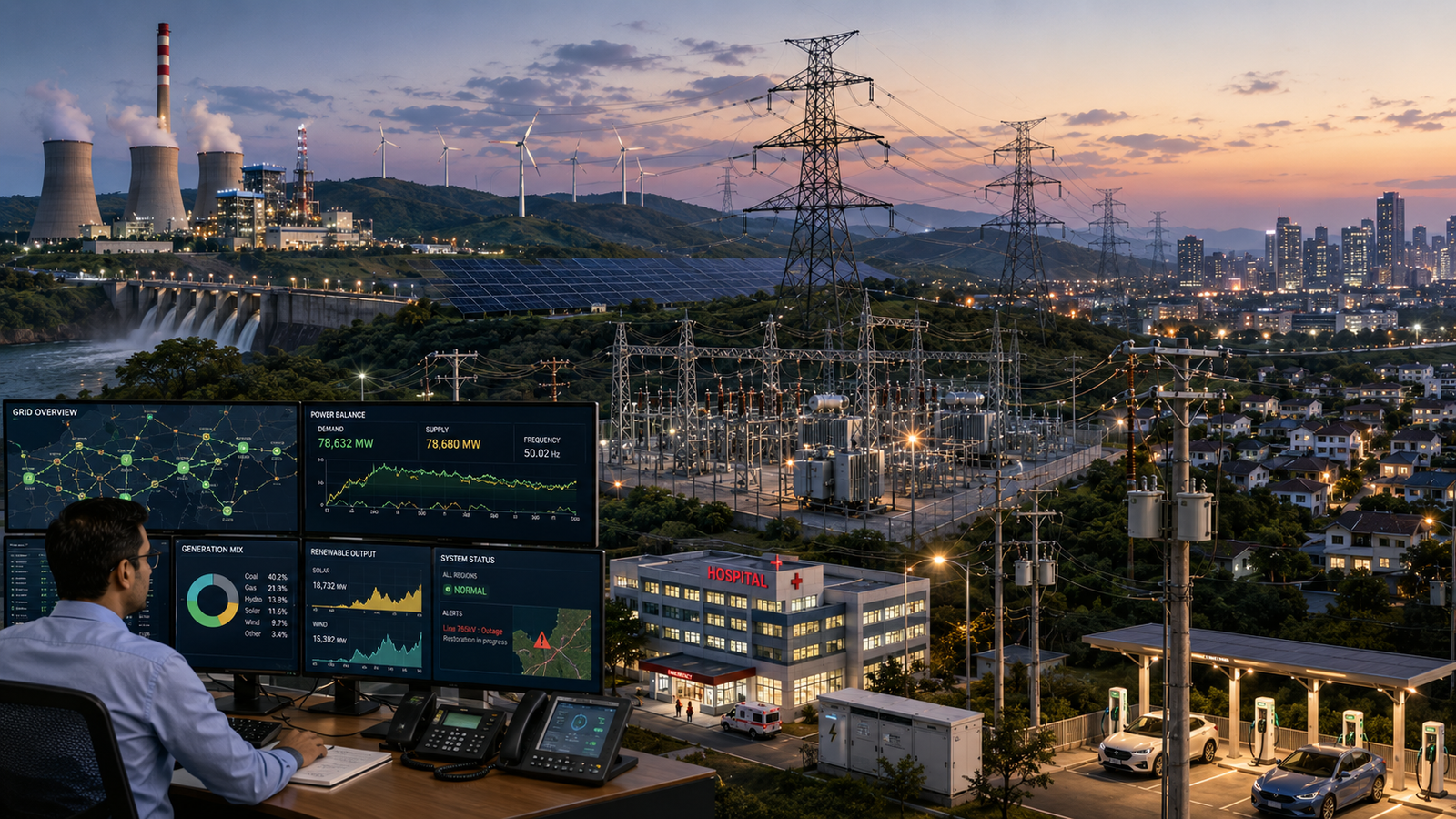
The power grid is one of the most important machines modern society has built, yet most people never see it as a machine. It has no single body, no single engine and no single switch. It spreads across power stations, transmission corridors, substations, distribution lines, control rooms, transformers, meters and millions of connected devices. It must respond every second to factories starting machines, trains drawing power, families cooking dinner, offices switching on air conditioning and storms damaging lines. A grid is not just a set of wires. It is a living system of balance.
The Core Meaning
A power grid is an interconnected network that moves electrical energy from sources of supply to points of use. It includes generation, transmission, distribution, control systems, protection equipment and market or dispatch mechanisms in many countries. The grid exists because electricity is useful only when it is available at the right voltage, frequency, location and time. A power plant without a grid can generate energy, but it cannot serve a city. A home with wires but no grid connection cannot receive power from distant generation. The grid is the bridge between production and use.
Generation: Where Power Enters the System
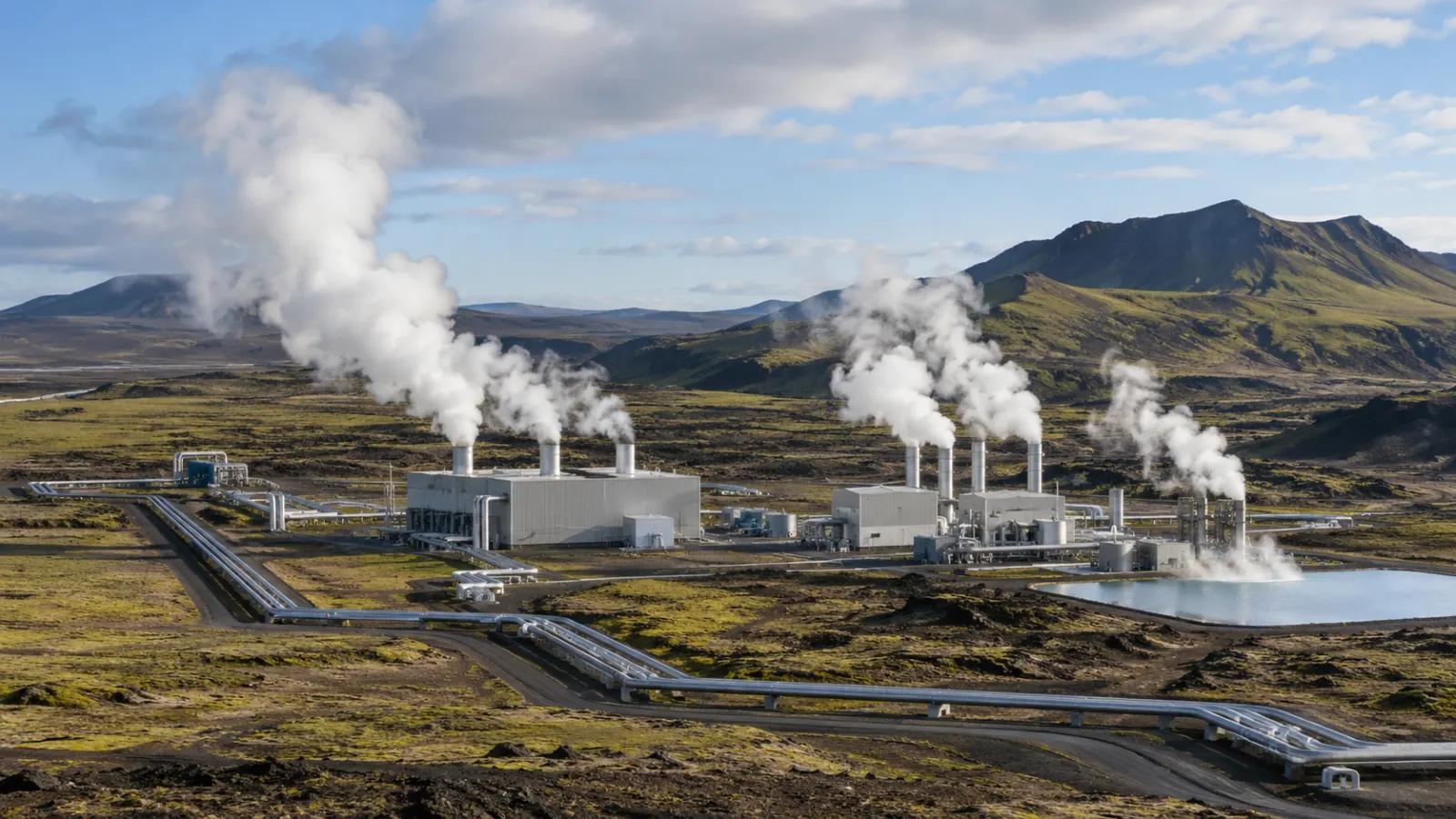
Electricity can come from many sources: coal, natural gas, nuclear energy, hydroelectric dams, wind turbines, solar farms, biomass, geothermal plants and smaller local generators. Each source has different operating behaviour. A gas plant can often change output relatively quickly. A nuclear plant usually runs steadily. Solar output rises and falls with sunlight. Wind output depends on wind conditions. Hydropower may depend on water availability and reservoir management. The grid must combine these sources into one stable supply, even though their technical characteristics are different.
Transmission: The Long-Distance Backbone
Transmission is the high-voltage part of the grid. Its job is to move bulk electricity across long distances. High voltage is used because it reduces losses when large amounts of power travel over long lines. Transmission networks also improve reliability by connecting regions. If one plant fails or one line is overloaded, another path or source may support the system. However, transmission is not an unlimited highway. Lines have capacity limits, stability constraints and physical vulnerabilities. Building new transmission can take years because it involves land, regulation, engineering, environmental review and public acceptance.
Distribution: The Local Delivery System
Distribution is the part of the grid closest to consumers. It receives power from transmission substations and sends it through local feeders to homes, shops, hospitals, farms and small industries. Distribution networks must handle many small, changing loads. They also face frequent physical exposure: trees, poles, cables, local transformers, road work and storms. For many users, reliability is experienced mainly at the distribution level. A national grid may be stable, but a broken local transformer can still leave a neighbourhood in darkness.
The Most Important Rule: Supply Must Match Demand
Electricity grids have a strict rule: supply and demand must remain in balance. If people use more electricity than generators and storage systems provide, the system can become unstable. If generation greatly exceeds demand, that too creates problems. Grid operators monitor demand, generation, frequency, voltage and line conditions in real time. They dispatch generators, manage reserves, coordinate power flows, call on storage or demand response and isolate faults when needed. This balancing act is what makes the grid different from many other supply chains. Electricity cannot simply wait in a warehouse in large quantities unless storage has been built.
Voltage, Frequency and Power Quality
A grid is not successful merely because electricity arrives. It must arrive in usable form. Voltage must stay within acceptable ranges so appliances and industrial equipment can work safely. Frequency must remain stable in AC systems because many machines depend on it. Sudden dips, surges and disturbances can damage equipment or trigger protective shutdowns. Power quality matters for data centres, hospitals, factories and homes alike. This is why substations, transformers, relays, sensors and control systems are central to grid operation.
Why the Grid Is Becoming More Complex
For much of the twentieth century, grids were designed around large centralized power plants sending electricity outward to passive consumers. That model is changing. Rooftop solar panels, batteries, electric vehicles, data centres, heat pumps, smart meters, microgrids and distributed energy resources are making the grid more interactive. A home may consume electricity in the evening, export solar power in the afternoon and charge a vehicle at night. This creates opportunity but also complexity. Operators must plan for two-way flows, variable generation and new peaks in demand.
Resilience and Reliability
Reliability means the grid can provide electricity when users need it. Resilience means the grid can withstand and recover from disruptions. These disruptions may include storms, floods, heat waves, cyberattacks, equipment failure, fuel shortages or sudden changes in demand. A resilient grid uses redundancy, protection systems, vegetation management, weather forecasting, spare equipment, cyber protection and emergency operating plans. It may also use microgrids and distributed resources so that critical facilities can remain powered even when the wider network is stressed.
Common Misconceptions
One misconception is that the grid is just a wire network. In reality, the physical wires are only one layer; control, protection, forecasting and coordination are equally important. Another misconception is that renewable energy is impossible to integrate because it varies. Variability creates challenges, but grids can manage it with forecasting, storage, flexible generation, transmission, demand response and better controls. A third misconception is that power always follows the route chosen in a contract. In an interconnected AC grid, power flows according to electrical conditions across the network.
Final Takeaway
The power grid is the invisible infrastructure that makes modern life continuous. It connects generation to use, high voltage to low voltage, distant plants to local appliances and second-by-second demand to second-by-second supply. Understanding the grid means understanding that electricity is not just produced; it is coordinated. The future grid will not merely be bigger. It will have to be smarter, more flexible and more resilient.