Osteoporosis Explained: Symptoms, T-Scores, Screening, Treatment and Fracture Prevention
Osteoporosis can weaken bones for years without causing obvious symptoms.
There may be no pain, no visible change and no warning that bone strength has declined substantially. For some people, the first sign is a wrist fracture after a relatively minor fall. For others, it is a vertebral compression fracture that causes sudden back pain or gradual height loss. A hip fracture can abruptly transform an independent older adult into someone requiring surgery, rehabilitation and long-term assistance.
That is why osteoporosis is often described as a silent bone disease.
The National Institute of Arthritis and Musculoskeletal and Skin Diseases, or NIAMS, defines osteoporosis as a bone disease that develops when bone mineral density and bone mass decrease or when changes in bone structure reduce bone strength.
But bone density is not the final outcome doctors are trying to protect.
The real clinical goal is preventing fractures.
A DXA scan, T-score, previous fracture history, age, medicines, medical conditions and fall risk all contribute to answering the most important question:
How likely is this person to break a bone, and what can reduce that risk?
What Is Osteoporosis?
Osteoporosis is a condition in which bones become weaker and more susceptible to fracture.
Healthy bone is living tissue. Old bone is continuously broken down through a process called bone resorption, while new bone is formed to replace it.
During childhood and early adulthood, bone formation generally exceeds bone breakdown and bone mass increases.
Later in life, that balance changes.
If bone is lost faster than it is replaced for long enough, bone mass falls. The microscopic architecture inside bone can also deteriorate, reducing strength beyond what bone-density measurements alone can fully describe.
Osteoporosis therefore involves more than simply “not having enough calcium.”
It is a disorder of bone strength and fracture risk.
Osteopenia vs Osteoporosis: What Is the Difference?
Osteopenia means bone mineral density is lower than the young-adult reference range but has not crossed the conventional DXA threshold used to define osteoporosis.
For postmenopausal women and men aged 50 and older, T-scores are commonly interpreted this way:
| T-score | Common interpretation |
|---|---|
| −1.0 or higher | Normal bone density |
| Between −1.0 and −2.5 | Low bone mass / osteopenia |
| −2.5 or lower | Osteoporosis |
The distinction is useful, but it should not be misunderstood.
Osteopenia does not mean “safe,” and osteoporosis does not begin biologically at one exact decimal point.
Fracture risk exists on a continuum.
An older adult with a T-score of −2.2, previous fragility fracture and repeated falls may face substantially greater fracture risk than a younger person with the same T-score and no other major risk factors.
That is why clinicians interpret bone density alongside the rest of the person's risk profile.
What Are the Symptoms of Osteoporosis?
Osteoporosis usually causes no symptoms before a fracture occurs.
This is one of the reasons screening and risk assessment matter.
When fractures or advanced vertebral changes occur, possible warning signs include back pain, loss of height, a stooped or increasingly curved posture and fractures occurring after less trauma than expected.
The spine deserves particular attention because vertebral fractures can be missed.
Some produce severe pain.
Others produce relatively little acute pain and are discovered later because a person has lost height or developed increasing spinal curvature.
A fracture can even occur during ordinary stresses such as bending or lifting when bones have become severely fragile.
What Is a Fragility Fracture?
A fragility fracture is a fracture resulting from relatively low-energy trauma that would not normally be expected to break healthy bone.
A common example is breaking a bone after falling from standing height.
Fragility fractures commonly involve the:
| Common site | Why it matters |
|---|---|
| Hip | Can threaten mobility, independence and survival in older adults |
| Spine / vertebrae | May cause pain, height loss and spinal deformity; some are clinically silent |
| Wrist | Often occurs after trying to break a fall |
| Upper arm / shoulder | Can significantly limit function and independence |
| Pelvis | Can impair mobility and require substantial rehabilitation |
A previous fragility fracture is one of the most important warning signs for future fracture.
This is why a fracture can sometimes tell clinicians more about skeletal risk than a borderline T-score alone.
Why Osteoporosis Is Serious
The seriousness of osteoporosis is not mainly the laboratory label.
It is what fractures can do.
A broken wrist may limit independence temporarily. Vertebral fractures can cause chronic pain, height loss and altered posture. Hip fractures often require surgery and prolonged rehabilitation.
The U.S. Preventive Services Task Force notes that only around 40% to 60% of people experiencing a hip fracture recover their pre-fracture level of mobility and ability to perform daily activities.
For an older adult already living with frailty or chronic disease, one major fracture can therefore mark the difference between living independently and requiring substantial long-term help.
Preventing fractures is consequently a functional and quality-of-life goal, not merely an attempt to improve a number on a scan.
Why Do Bones Become Weak?
Bone strength changes across the lifespan.
Most people build substantial bone mass during childhood, adolescence and early adulthood. Later, bone breakdown gradually begins to exceed formation.
Ageing therefore increases osteoporosis risk in both women and men.
In women, menopause introduces another major change.
Estrogen helps regulate bone remodelling. When estrogen levels fall around menopause, bone loss can accelerate, particularly during the early postmenopausal years.
Men usually experience bone loss later and more gradually, but they are not protected from osteoporosis.
Hormonal disorders, illness, medicines, nutrition and lifestyle can accelerate bone loss in either sex.
What Causes Osteoporosis?
There is rarely one cause.
Osteoporosis usually results from interactions among ageing, peak bone mass, hormone changes, genetics, disease, medications and lifestyle.
Important risk factors include older age, postmenopausal status, previous fragility fracture, family history—especially parental hip fracture—low body weight, smoking, excessive alcohol use, inadequate nutrition, physical inactivity and long-term use of certain medicines.
Long-term glucocorticoid treatment, such as systemic corticosteroids used for inflammatory diseases, is particularly important because it can accelerate bone loss and fracture risk.
Medical conditions that affect sex hormones, thyroid or parathyroid function, digestion and nutrient absorption, kidneys, liver or chronic inflammatory pathways may also contribute.
Primary vs Secondary Osteoporosis
It can be useful to distinguish primary osteoporosis from osteoporosis caused or accelerated by another identifiable factor.
Age-related and postmenopausal bone loss are common examples of primary osteoporosis.
Secondary osteoporosis develops because another condition or treatment is affecting bone.
Possible secondary contributors include endocrine disorders, malabsorption, chronic inflammatory disease, chronic kidney or liver disease, low sex-hormone levels, eating disorders and medicines that adversely affect bone.
Doctors are more likely to investigate secondary causes when osteoporosis appears unusually early, is unexpectedly severe, progresses despite treatment or appears in someone without the typical risk pattern.
An osteoporosis evaluation may therefore involve more than a DXA scan.
Blood tests and medical review can help identify potentially treatable contributors.
Men Can Develop Osteoporosis Too
Osteoporosis is more common in women, particularly after menopause, but it is not exclusively a women's disease.
Men also lose bone with age and can sustain serious osteoporotic fractures.
Risk may be increased by older age, low testosterone, glucocorticoid treatment, excessive alcohol use, smoking, low body weight and several chronic diseases.
One problem is cultural.
Because osteoporosis is often presented as a women's health issue, men may not recognise themselves as being at risk and clinicians may investigate the disease only after a fracture occurs.
A fragility fracture in a man deserves the same attention to underlying skeletal weakness that it would receive in a woman.
How Is Osteoporosis Diagnosed?
Diagnosis combines clinical history and, when appropriate, bone-density measurement.
A clinician may consider:
-
previous fractures;
-
height loss or vertebral symptoms;
-
medicines;
-
family history;
-
menopause and hormonal history;
-
smoking and alcohol;
-
medical conditions;
-
fall history;
-
physical function; and
-
bone mineral density.
The main test used to measure bone mineral density is dual-energy X-ray absorptiometry, usually called DXA or DEXA.
What Is a DXA Scan?
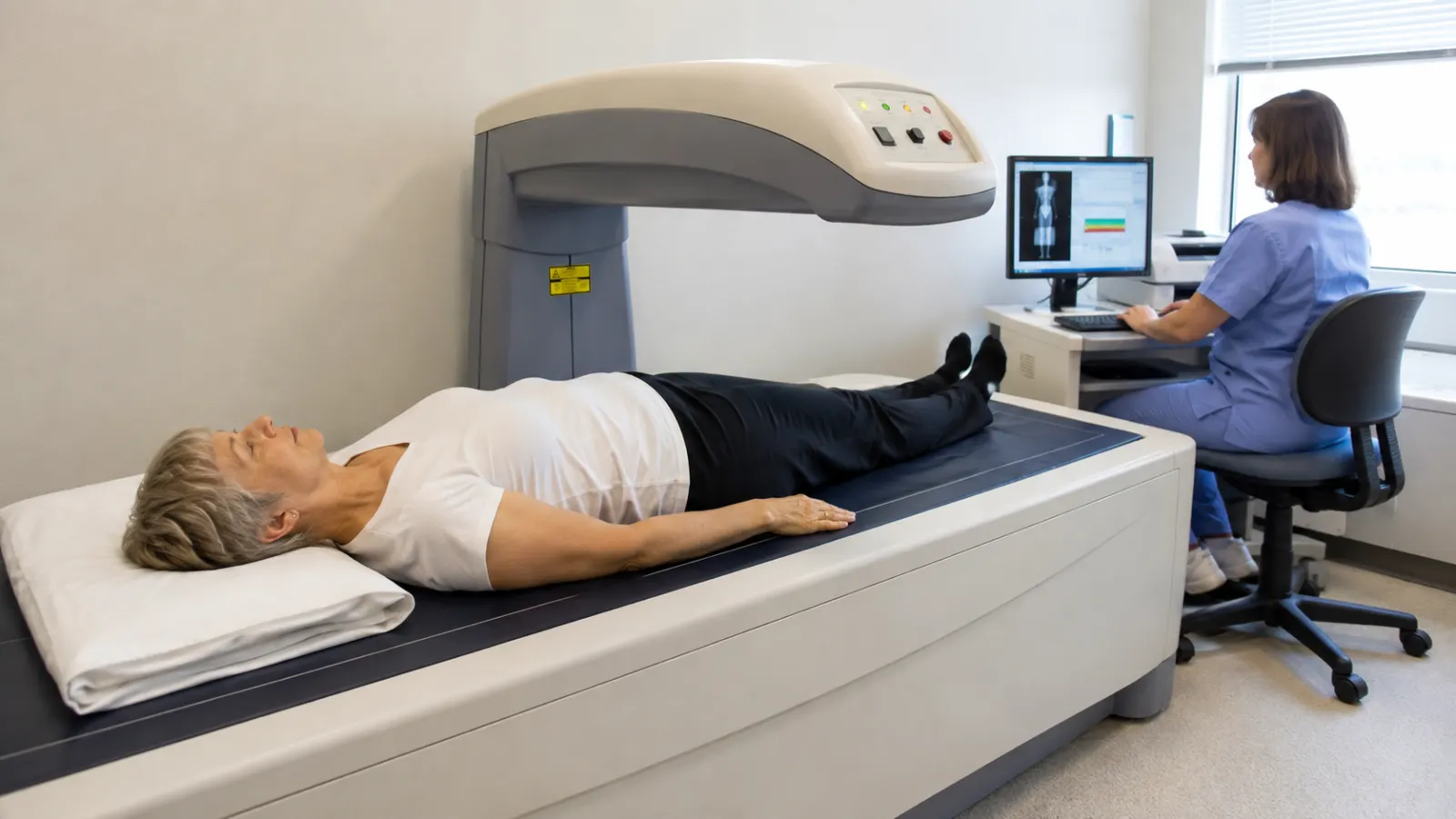
A DXA scan is a quick, non-invasive test that uses a low dose of X-rays to estimate bone mineral density.
Central DXA usually measures the hip and lumbar spine, because these sites are clinically important and provide useful information about fracture risk.
During the test, the person lies on a table while the scanner measures how much X-ray energy passes through the bone.
The scan does not directly test how hard it would be to break the bone.
Instead, it measures bone mineral density, which is strongly related to fracture risk.
NIAMS describes central DXA of the hip and spine as the most reliable commonly used method for diagnosing osteoporosis and estimating fracture risk.
DXA vs DEXA: Are They Different?
No meaningful difference exists.
DXA stands for dual-energy X-ray absorptiometry.
DEXA is an older but still widely used way of writing the same test.
If a doctor orders a DEXA scan or DXA scan for osteoporosis, they generally mean the same procedure.
What Does a T-Score Mean?
A T-score compares a person's bone mineral density with the average bone density of a healthy young adult reference population.
A score of zero means the measured density is close to that reference average.
Negative numbers represent progressively lower bone density.
For postmenopausal women and men aged 50 or older:
T-score −1.0 or above generally falls within the normal range.
T-score between −1.0 and −2.5 is usually called low bone mass or osteopenia.
T-score −2.5 or below is consistent with osteoporosis.
NIAMS notes that fracture risk rises as the T-score declines.
But the T-score is only part of the clinical picture.
What Is a Z-Score?
A Z-score compares bone mineral density with people of similar age and sex rather than with young healthy adults.
It is particularly relevant in premenopausal women, men younger than 50 and some younger people undergoing bone evaluation.
A Z-score that is substantially below the expected range for age may encourage clinicians to look for a secondary cause of low bone density.
T-scores and Z-scores therefore answer different questions.
They should not be used interchangeably.
Can You Have Osteoporosis With a T-Score Higher Than −2.5?
Yes, depending on the clinical situation.
The threshold of −2.5 is important, but osteoporosis care is not purely a numerical diagnosis.
A person can sustain a low-trauma hip or vertebral fracture despite a T-score that has not crossed −2.5.
Clinical guidelines may recommend treatment based on the fracture itself or on overall fracture probability rather than waiting for the bone-density number to become lower.
This is one of the central lessons of osteoporosis medicine:
the disease is about fracture risk, not simply reaching a particular T-score.
What Is FRAX?
FRAX is a fracture-risk assessment tool.
It combines clinical information such as age, sex and several fracture risk factors, and can incorporate femoral-neck bone mineral density when available.
The tool estimates the probability of major osteoporotic fracture and hip fracture over the following 10 years.
FRAX can be useful because two people with identical T-scores may have very different overall fracture risk.
Age alone can make a substantial difference.
A previous fracture, smoking, glucocorticoid exposure and other risk factors can change the calculation further.
Treatment thresholds based on FRAX vary between countries and guidelines, so the score should be interpreted within the relevant healthcare system.
Who Should Be Screened for Osteoporosis?
Screening recommendations are not universal.
Different countries and professional organisations use different age thresholds and risk-based approaches.
In the United States, the 2025 U.S. Preventive Services Task Force recommendation advises osteoporosis screening to prevent fractures in:
women aged 65 years and older, and
postmenopausal women younger than 65 who have one or more risk factors and are found to be at increased fracture risk using a clinical risk-assessment approach.
For men, the USPSTF concluded that current evidence is insufficient to determine the balance of benefits and harms of universal screening.
That does not mean men should never receive a DXA scan.
A man with a fragility fracture, substantial glucocorticoid exposure, hypogonadism or another major skeletal risk may clearly warrant clinical evaluation.
Population screening and individual diagnostic testing are different questions.
Is Osteoporosis Screening the Same Everywhere?
No.
Some organisations recommend routine testing for men beginning at particular ages. Others rely more heavily on individual risk factors.
Different healthcare systems also use different fracture-risk thresholds for treatment.
Global readers should therefore avoid applying one country's screening rule universally.
The practical question is:
Does this person's age, fracture history, medicine use or medical risk make bone-density testing clinically useful?
Vertebral Fractures Can Be Missed
Not all osteoporosis fractures happen during obvious falls.
Vertebral compression fractures may occur after relatively minor stresses and can sometimes be painless.
Possible clues include loss of height, new spinal curvature or persistent unexplained back pain.
Repeated vertebral fractures can shorten the spine and produce kyphosis, the characteristic forward-curved posture sometimes associated with advanced osteoporosis.
These fractures matter even when they are not dramatically painful because a previous vertebral fracture substantially raises the risk of future fractures.
A person who has noticeably lost height should not assume that ageing alone explains the change.
Can Osteoporosis Be Reversed?
“Reversed” is not always the most useful term.
Bone density can improve with effective treatment, particularly with some bone-forming medicines, and fracture risk can fall substantially.
But treatment does not necessarily restore the skeleton to the state it had decades earlier.
The goal is to reduce future fractures and improve skeletal strength sufficiently to lower risk.
Success may mean stable or improved bone density, absence of new fractures, improved physical function and effective management of factors contributing to bone loss.
A normal T-score is not required for treatment to be worthwhile.
How Is Osteoporosis Treated?
Treatment depends on overall fracture risk rather than on one universal prescription.
For someone at relatively low risk, management may focus on nutrition, exercise, fall prevention, smoking cessation and addressing medical causes.
For someone at high or very high fracture risk, osteoporosis medication may be needed.
Major medication groups include:
| Treatment type | General role |
|---|---|
| Bisphosphonates | Slow bone breakdown and are commonly used as initial therapy |
| Denosumab | Potent antiresorptive treatment given by injection; requires careful ongoing or transition therapy |
| SERMs | Act selectively on estrogen receptors and may reduce vertebral fracture risk in selected postmenopausal women |
| Teriparatide / abaloparatide | Bone-forming treatments for selected people at very high fracture risk |
| Romosozumab | Bone-forming/antiresorptive therapy used for selected very-high-risk patients |
| Menopausal hormone therapy | May protect bone in selected younger postmenopausal women when benefits and risks are appropriate |
The appropriate medicine depends on fracture history, kidney function, age, sex, other diseases, cardiovascular risk, previous treatment and patient preferences.
Osteoporosis therapy is therefore not simply a choice between “take calcium” and “take medicine.”
Bisphosphonates
Bisphosphonates are among the most widely used osteoporosis medicines.
Examples include alendronate, risedronate and zoledronic acid.
They slow the activity of cells that break down bone and can reduce fracture risk in appropriately selected patients.
Treatment duration is not necessarily indefinite.
Some patients using certain bisphosphonates may be reassessed after several years and, if their fracture risk has fallen sufficiently, may be considered for a temporary bisphosphonate holiday.
That concept should not be applied automatically to every osteoporosis medicine.
Different drugs behave differently after they are stopped.
Why Denosumab Should Not Simply Be Stopped
Denosumab is an effective antiresorptive osteoporosis treatment, typically administered at regular intervals.
But its effect reverses relatively quickly when doses are missed or treatment stops.
Rapid rebound in bone turnover can lead to substantial bone loss and increased vertebral-fracture risk.
For that reason, major guidelines advise that denosumab should not simply be delayed or stopped without a plan for subsequent antiresorptive or other appropriate therapy.
This is a particularly important safety point because people sometimes assume osteoporosis medicines can all be paused in the same way.
They cannot.
Anyone considering stopping denosumab should discuss the transition plan with the clinician managing their osteoporosis.
What Are Bone-Forming Osteoporosis Medicines?
Most traditional osteoporosis medicines reduce bone breakdown.
Some treatments can actively stimulate bone formation.
Teriparatide and abaloparatide are examples.
Romosozumab has both bone-forming and antiresorptive effects.
These treatments are generally considered for people at very high fracture risk, such as individuals with severe osteoporosis or multiple vertebral fractures.
Because gains can be lost after bone-forming therapy ends, treatment is commonly followed by an antiresorptive medicine to preserve the improvement.
Medication sequencing can therefore matter almost as much as the initial drug choice.
Calcium and Vitamin D: Important but Not Enough
Calcium and vitamin D support normal bone biology.
Calcium supplies skeletal mineral.
Vitamin D helps the intestine absorb calcium and participates in calcium regulation.
Adequacy matters, particularly when intake or vitamin D status is poor.
But established osteoporosis is not simply a nutrient deficiency.
Someone with a hip fragility fracture, multiple vertebral fractures or very high calculated fracture risk may need medication specifically shown to reduce fractures.
Calcium and vitamin D provide a nutritional foundation.
They do not automatically replace osteoporosis treatment.
Does Exercise Help Osteoporosis?
Yes, but exercise needs to be matched to the person.
Weight-bearing activity and resistance exercise can help maintain bone and muscle.
Strength and balance training are also important because they can reduce falls.
This matters because fracture prevention requires both:
a stronger skeleton and fewer falls onto that skeleton.
People with severe osteoporosis or vertebral fractures may need professional advice before beginning high-impact activities, unfamiliar heavy lifting or exercises involving substantial loaded spinal flexion.
The goal is to create useful mechanical loading without exposing vulnerable bones to unnecessary injury.
What Exercise Is Best for Osteoporosis?
There is no one exercise programme suitable for every person.
A balanced programme may include resistance training, weight-bearing aerobic activity, balance work, posture training and functional exercises.
Someone with mild low bone mass and no fractures may tolerate activities that are inappropriate for a person with multiple vertebral fractures.
The correct programme therefore depends on fracture history, physical fitness, balance and medical conditions.
For high-risk individuals, a physiotherapist or other qualified exercise professional familiar with osteoporosis can help adapt movements safely.
Fall Prevention Is Part of Osteoporosis Treatment
A fragile bone does not fracture in isolation.
Many major fractures occur because the person falls.
That means osteoporosis treatment cannot focus exclusively on increasing bone density.
Fall risk can be influenced by:
-
muscle weakness;
-
poor balance;
-
sedating medicines;
-
low blood pressure;
-
impaired vision;
-
unsuitable footwear;
-
environmental hazards;
-
poor lighting;
-
neurological disease; and
-
mobility limitations.
Reviewing medicines, improving balance and strength, correcting vision where possible, using appropriate mobility aids and removing household trip hazards can all contribute to fracture prevention.
Sometimes the fastest way to prevent a hip fracture is not to change the T-score immediately.
It is to prevent tomorrow's fall.
Smoking, Alcohol and Bone Health
Smoking is associated with poorer bone health and increased fracture risk.
Excessive alcohol consumption can also increase risk through several pathways, including effects on bone itself and greater likelihood of falls.
Reducing these risks forms part of comprehensive osteoporosis care.
Again, the disease should not be reduced to calcium intake alone.
Bone strength reflects years of interaction among genetics, hormones, nutrition, activity, disease, medications and lifestyle.
Can Diet Prevent Osteoporosis?
Good nutrition supports skeletal health throughout life.
Adequate calcium, vitamin D, protein and overall energy intake are particularly important.
But diet cannot remove every osteoporosis risk.
A person can eat well and still develop osteoporosis because of age, menopause, genetics, glucocorticoids or other medical conditions.
Nutrition is best understood as one modifiable component of fracture prevention rather than a guarantee against disease.
What Is Glucocorticoid-Induced Osteoporosis?
Systemic glucocorticoids such as prednisone can accelerate bone loss and increase fracture risk.
Risk depends on dose, duration and patient characteristics.
People expected to use systemic glucocorticoids for prolonged periods may therefore need early fracture-risk assessment rather than waiting until a fracture occurs.
This is an important example of secondary osteoporosis because the risk is partly treatment-related and potentially predictable.
Never stop medically necessary steroids abruptly because of concerns about bone health.
Instead, discuss bone-protection strategies with the prescribing clinician.
Can Osteoporosis Cause Back Pain?
Osteoporosis itself is usually painless until a fracture occurs.
Back pain may develop when one or more vertebrae fracture or collapse.
The pain may be sudden and severe, but some vertebral fractures produce more subtle symptoms.
Persistent new back pain, substantial loss of height or developing spinal curvature in a person at risk for osteoporosis deserves medical evaluation.
Not every episode of back pain is an osteoporotic fracture, but osteoporosis should not be dismissed simply because no dramatic fall occurred.
Can Osteoporosis Cause Height Loss?
Yes.
Height loss can occur when vertebral compression fractures reduce the height of individual spinal bones.
One fracture may produce a small change.
Several fractures can produce substantial cumulative height loss and increasing forward curvature of the spine.
Ageing and spinal-disc changes can also reduce height, so height loss does not automatically prove osteoporosis.
But unexplained or substantial loss of height is a useful clinical clue.
Does Osteoporosis Affect Teeth?
Osteoporosis affects the skeleton generally, but dental problems are not used to diagnose the disease.
Jaw bone density and oral health can be influenced by several factors.
People taking certain osteoporosis medicines may also hear about rare complications such as osteonecrosis of the jaw.
This risk is uncommon at doses used for osteoporosis but becomes relevant when planning invasive dental procedures or when significant dental disease exists.
Patients should generally tell their dentist which osteoporosis medicines they use and tell the clinician prescribing osteoporosis treatment about major planned dental procedures.
Fear of rare complications should not lead high-risk patients to stop effective osteoporosis treatment without medical advice.
How Often Should a DXA Scan Be Repeated?
There is no universal interval suitable for everyone.
Repeat testing depends on the original result, treatment status, age, fracture risk and whether the result is likely to change management.
For high-risk people undergoing osteoporosis treatment, some guidelines recommend bone-density monitoring at intervals such as every one to three years.
But measuring too frequently can also create confusion because bone density changes slowly and very small differences may fall within the measurement error of the machine.
A follow-up scan should answer a clinical question.
It should not simply be performed because someone wants to see the T-score change every few months.
Does Osteoporosis Treatment Have to Continue Forever?
Not necessarily, but treatment duration depends on the medicine.
Bisphosphonates can remain in bone after therapy stops, allowing selected lower-risk patients to take a monitored treatment break after several years.
Denosumab behaves very differently and generally should not be interrupted without subsequent treatment.
Bone-forming therapies are normally used for limited treatment periods and followed by another medication to preserve gains.
This is why the general question:
“Can I stop my osteoporosis medicine?”
cannot be answered without knowing which drug is being used and why.
How Is Treatment Success Measured?
A rising T-score can be encouraging, but it is not the only measure of success.
Clinicians may consider:
-
whether any new fractures have occurred;
-
whether bone density is stable or improving;
-
whether medicines are being taken correctly;
-
whether risk factors have changed;
-
whether falls are occurring;
-
whether treatment duration remains appropriate; and
-
whether secondary causes are controlled.
Some medicines reduce fracture risk even when changes in measured bone density appear relatively modest.
The ultimate endpoint remains fewer fractures, not a perfect scan.
Can Osteoporosis Be Prevented?
Not every case can be prevented, because ageing, genetics and hormone changes cannot be eliminated.
But risk can often be reduced.
Building healthy bone during childhood and early adulthood matters because peak bone mass provides a larger skeletal reserve later in life.
Across adulthood, useful strategies include adequate nutrition, regular weight-bearing and resistance activity, avoiding smoking, limiting excessive alcohol, maintaining muscle strength, identifying medicines or diseases that damage bone and reducing fall risk.
For people already at high fracture risk, prevention also means timely diagnosis and appropriate treatment.
Prevention is not only what happens before osteoporosis appears.
It also means preventing the next fracture after the first warning sign.
What Happens After a Fragility Fracture?
A fragility fracture should trigger more than treatment of the broken bone.
It is an opportunity to ask why the fracture occurred.
Evaluation may include bone-density testing, review of medicines, assessment for secondary causes, vitamin and mineral status where clinically indicated, fall-risk assessment and consideration of osteoporosis medication.
This is sometimes described as secondary fracture prevention.
It matters because experiencing one osteoporotic fracture substantially increases the risk of another.
The period after a fracture is therefore an important opportunity to intervene before the next event.
Frequently Asked Questions
What is osteoporosis?
Osteoporosis is a skeletal disease in which bone mass and/or bone structure deteriorate enough to increase bone fragility and fracture risk.
What are the first signs of osteoporosis?
There are often no early symptoms. The first sign may be a fracture. Vertebral fractures may cause back pain, height loss or increasing spinal curvature.
Is osteoporosis painful?
Osteoporosis itself is usually painless until a fracture occurs. Vertebral and other fractures can cause substantial acute or chronic pain.
What is the difference between osteoporosis and osteopenia?
Osteopenia describes bone density below the normal young-adult range but above the conventional osteoporosis threshold. In appropriate adults, a T-score between −1.0 and −2.5 indicates osteopenia; −2.5 or below is consistent with osteoporosis.
What T-score means osteoporosis?
For postmenopausal women and men aged 50 or older, a T-score of −2.5 or lower at an appropriate skeletal site is conventionally used to define osteoporosis by bone-density criteria.
What is a DXA scan?
DXA is a low-dose X-ray test used to measure bone mineral density, usually at the hip and spine.
Is DEXA the same as DXA?
Yes. Both terms refer to dual-energy X-ray absorptiometry.
Can you have osteoporosis without a T-score of −2.5?
Yes. Certain fragility fractures or sufficiently high fracture risk may establish a need for osteoporosis treatment even when the T-score is above −2.5.
Who should get an osteoporosis screening test?
Recommendations vary by country. In the United States, the 2025 USPSTF recommends screening women aged 65 and older and younger postmenopausal women at increased fracture risk. Evidence remains insufficient for universal screening of men, although high-risk men may need individual assessment.
What is FRAX?
FRAX is a clinical tool that estimates 10-year probability of hip and major osteoporotic fractures using risk factors and, when available, femoral-neck bone density.
Can men get osteoporosis?
Yes. Osteoporosis is less common in men than women but becomes increasingly important with age and can cause serious fractures.
Does menopause cause osteoporosis?
Menopause does not guarantee osteoporosis, but declining estrogen accelerates bone loss and substantially increases risk in many women.
Can steroids cause osteoporosis?
Long-term systemic glucocorticoid therapy can cause rapid bone loss and increase fracture risk. People using these medicines for extended periods may need specific bone-risk assessment.
Is calcium enough to treat osteoporosis?
No. Adequate calcium and vitamin D are important, but people at high fracture risk often require medications specifically shown to reduce fractures.
What is the best medicine for osteoporosis?
There is no single best medicine for everyone. Treatment depends on fracture risk, fracture history, kidney function, other medical conditions and previous therapy. Bisphosphonates are commonly used first-line in many high-risk patients.
What happens if denosumab is stopped?
Stopping or substantially delaying denosumab without appropriate follow-on treatment can cause rebound bone turnover, rapid bone loss and increased vertebral-fracture risk. Discontinuation should be medically planned.
Can exercise reverse osteoporosis?
Exercise helps maintain bone, improves muscle strength and balance and can reduce fall risk. It is an important part of treatment but does not replace medication when fracture risk is high.
What exercises should people with osteoporosis avoid?
Restrictions depend on fracture severity and individual health. People with severe osteoporosis or vertebral fractures may need to avoid unsafe high-impact activities or heavily loaded spinal flexion and should seek professional exercise guidance.
Can osteoporosis be cured?
Treatment can substantially improve bone strength and reduce fracture risk, but “cure” is not always the most useful concept. Management often continues through long-term risk reduction and monitoring.
How often should bone density be checked?
The interval depends on baseline risk, treatment and whether a repeat result will change management. High-risk treated patients may be monitored every few years, but frequent scanning is not automatically useful.
What is the most dangerous complication of osteoporosis?
Major fractures—particularly hip and vertebral fractures—are the most important consequences because they can affect mobility, independence, pain, future fracture risk and overall health.
Osteoporosis Is Ultimately a Fracture-Prevention Problem
Bone-density numbers are valuable because they help quantify skeletal risk.
But they are not the disease's final outcome.
A person does not experience a T-score.
They experience what happens when a weakened bone fails.
That is why good osteoporosis care works at several levels simultaneously.
It maintains adequate nutrition. It keeps muscles and bones active. It identifies diseases and medicines that accelerate bone loss. It reduces the probability of falls. It measures bone density when the result is useful. It considers fracture history and overall risk rather than one number alone. And when fracture risk is high, it uses medications with evidence that they reduce fractures.
The most important question is therefore not simply:
“What is my T-score?”
It is:
“How likely am I to fracture, and what combination of treatment, exercise, nutrition and fall prevention can reduce that risk?”
That shift—from treating a scan to protecting a person—is the central principle of osteoporosis care.
Medical Note
This article provides general health information and is not a substitute for individual medical advice. Osteoporosis screening, diagnosis, exercise recommendations and medication decisions depend on age, sex, fracture history, kidney function, medicines, medical conditions and individual fracture risk. Decisions should be made with an appropriately qualified healthcare professional.