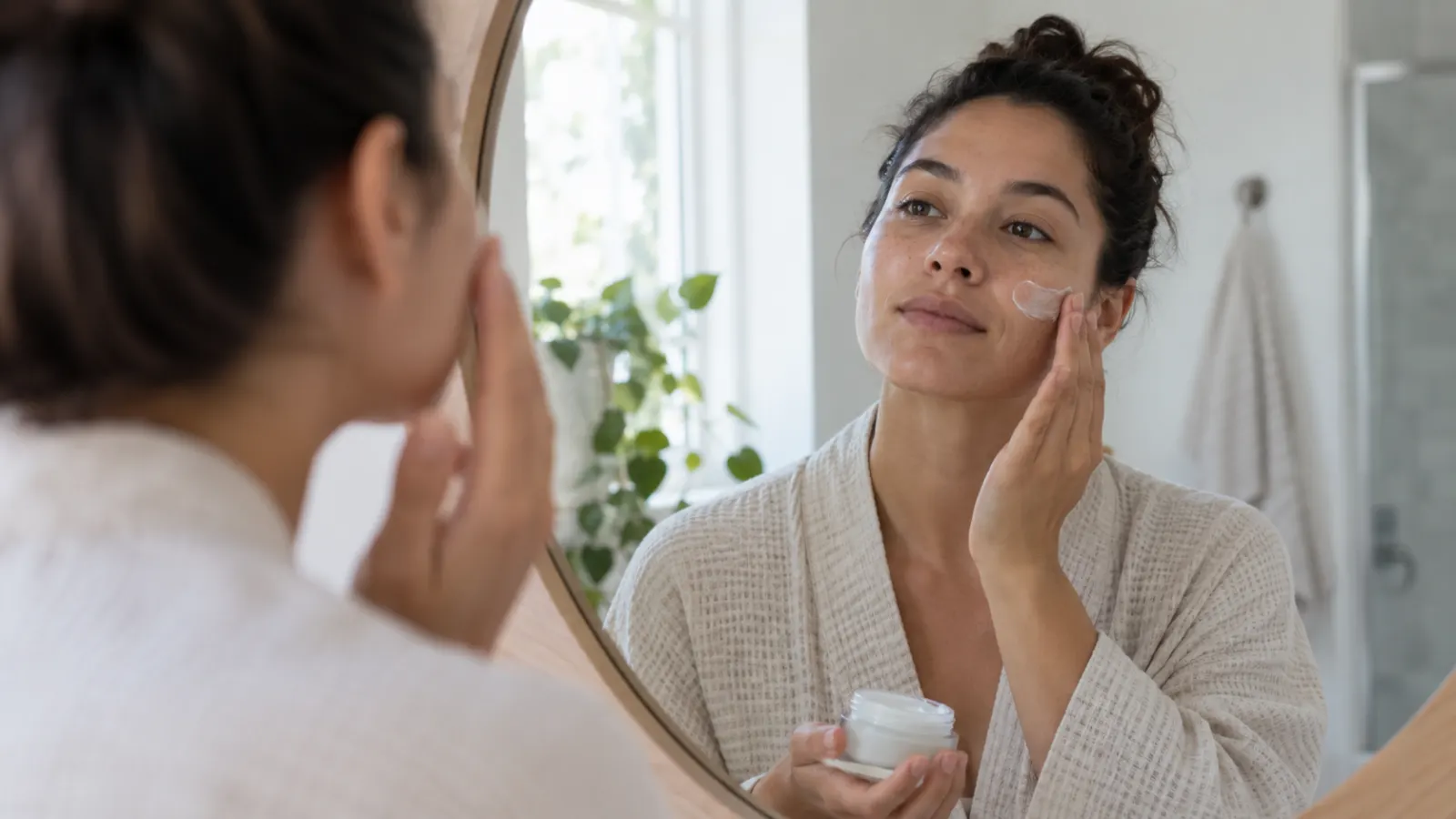
Healthy Skin: How the Skin Barrier Works and a Simple Evidence-Based Skincare Routine
Healthy skin is not necessarily poreless, perfectly smooth, evenly coloured or free from every blemish. Skin is first an organ, and its most important jobs have little to do with meeting cosmetic ideals. It limits water loss, helps block harmful substances and microorganisms, senses touch and pain, contributes to temperature regulation, participates in immune defence and repairs itself after injury.
That distinction changes how skincare should be judged. Freckles, visible pores, scars, lines, pigmentation differences and occasional blemishes can all exist on healthy skin. Conversely, skin that looks temporarily polished may be irritated, excessively exfoliated or chronically exposed to ultraviolet radiation.
A useful skincare routine therefore begins with function rather than perfection. For many people, the essentials are surprisingly ordinary: cleanse gently when necessary, moisturise according to dryness and skin type, protect the skin from excessive ultraviolet exposure, avoid repeatedly irritating the barrier and treat genuine skin disease appropriately.
More products are not automatically better. The American Academy of Dermatology has recently emphasised that consistency with a simple routine can be more useful than repeatedly adding products to an elaborate regimen.
How the Skin Barrier Protects the Body
The outermost layer of the epidermis contains the stratum corneum, a specialised barrier made from flattened cells surrounded by lipids. It is sometimes compared with bricks and mortar: the cells provide structural units while the surrounding lipids help create a controlled seal.
The barrier is not completely impermeable. Water and substances can move through it, but the skin restricts that movement enough to prevent excessive water loss while making entry more difficult for many irritants, allergens and microorganisms. Research on skin physiology describes this permeability barrier as one of the skin's most important defensive functions.
When this barrier becomes disrupted, water escapes more readily from the skin. This process is measured as transepidermal water loss, or TEWL. People may experience dryness, roughness, tightness, itching, burning or increased sensitivity.
Barrier dysfunction is especially important in atopic dermatitis, or eczema. NIAMS explains that changes affecting the skin's protective layer can allow moisture to escape and expose the immune system more readily to environmental triggers, contributing to dryness and inflammation.
This is why many sensible skincare recommendations have the same underlying purpose: avoid damaging the barrier faster than the skin can repair it.
Cleansing: Clean Enough Without Stripping the Skin
Cleansing removes sweat, excess oil, cosmetics, environmental residue and material accumulated on the skin. But there is no biological advantage to making skin feel “squeaky clean.” That sensation can simply mean surface oils have been removed aggressively.
Hot water, long showers, frequent washing and harsh cleansers can worsen dryness. The AAD recommends gentle, fragrance-free products for dry or sensitive skin, while NIAMS recommends mild cleansers and lukewarm bathing for people with atopic dermatitis.
Facial cleansing frequency also does not need to be identical for everyone. Someone with oily or acne-prone skin may tolerate washing twice daily, whereas once-daily evening cleansing may be sufficient for some people with dry or sensitive skin. AAD advice for acne-prone skin recommends gentle washing up to twice daily and after significant sweating rather than repeated scrubbing.
The practical rule is to remove what needs removing without repeatedly producing tightness, stinging or obvious irritation.
Wash with comfortably warm rather than very hot water, avoid aggressive rubbing and pat rather than vigorously scrub the skin dry.
Why Moisturiser Matters
Moisturiser is often marketed as though its purpose were simply making skin feel softer. Its more important function is helping the outer skin retain water and supporting the barrier.
Different moisturisers achieve this in different ways. Some ingredients attract and hold water, while more occlusive ingredients reduce evaporation from the surface. Creams and ointments generally provide more occlusion than thin lotions, which is why thicker products are frequently useful for very dry or eczema-prone skin.
NIAMS specifically includes moisturising creams as part of barrier restoration in atopic dermatitis and recommends applying moisturiser after bathing while the skin still contains moisture. The AAD similarly advises applying moisturiser to damp skin and notes that creams and ointments can be particularly useful when dryness is significant.
There is no universally superior moisturiser. A heavy ointment may work extremely well on dry hands and feel uncomfortable on an oily face. Someone prone to acne may prefer a lighter, non-comedogenic product.
Sensitive skin often benefits from simpler fragrance-free formulations. “Fragrance-free” is also different from “unscented”: a product marketed as unscented can still contain fragrance-related ingredients used to disguise other smells.
The best moisturiser is therefore not the one with the longest ingredient list or most expensive packaging. It is one your skin tolerates and that provides enough hydration for the conditions in which you live.
Sun Protection Is Health Protection, Not Only Anti-Ageing
Ultraviolet radiation damages skin DNA and contributes to skin cancer. It also contributes to pigmentation changes and premature skin ageing.
Sun protection should therefore be understood primarily as disease prevention rather than a cosmetic attempt to avoid wrinkles.
CDC's updated 2026 guidance recommends using several strategies together: seek shade, wear covering clothing, use a wide-brimmed hat and UV-blocking sunglasses, apply sunscreen to exposed skin and avoid indoor tanning. It specifically warns that a tan represents UV injury rather than evidence of good health.
For practical skincare, the American Academy of Dermatology recommends a broad-spectrum, water-resistant sunscreen with SPF 30 or higher, particularly when significant outdoor UV exposure is expected.
Sunscreen should not be treated as magical armour. Clothing and shade can sometimes provide more reliable protection over large areas, while sunscreen is especially useful for exposed skin.
Indoor tanning should be avoided. Tanning beds deliberately expose skin to ultraviolet radiation and increase skin-cancer risk.
Vitamin D requirements do not justify intentional sunburn or tanning. People with concerns about vitamin D intake can discuss diet, fortified foods, testing and supplementation with an appropriate healthcare professional rather than deliberately damaging the skin.
The Skin Microbiome Does Not Mean Skin Should Never Be Washed
Human skin supports communities of bacteria, fungi, viruses and other microorganisms. These organisms interact with the skin barrier and immune system, and many are normal residents rather than pathogens.
This discovery has sometimes been transformed into an exaggerated message that cleansing is inherently damaging because it “destroys the microbiome.”
That conclusion does not follow.
Skin regularly encounters transient contaminants, and ordinary hygiene remains important. The objective is not to sterilise normal skin but to remove contamination without producing unnecessary barrier injury.
Repeated exposure to harsh soaps, detergents, disinfectants and even frequent water contact can contribute to irritant contact dermatitis, particularly on the hands. AAD guidance therefore recommends mild cleansers and moisturising after repeated washing when irritation is a problem.
The useful principle is balance: hygiene without the fantasy that healthy skin needs to be chemically sterilised.
Acne, Eczema and Psoriasis Are Not Signs of Poor Hygiene
One of the most damaging skincare myths is that visible skin disease proves someone is dirty or following a poor routine.
Acne involves interactions among hair follicles, sebum, follicular plugging, inflammation and other biological factors. Scrubbing the skin does not remove these underlying mechanisms and can make acne more irritated. AAD guidance specifically advises gentle, non-abrasive cleansing and warns against aggressive scrubbing.
Atopic dermatitis involves barrier and immune dysfunction. Moisturisation and gentle skincare may be important parts of treatment, but moderate or severe eczema can require prescription anti-inflammatory medications, biologic treatments or other specialist care.
Psoriasis is an immune-mediated inflammatory disease, not accumulated dirt or a failure to exfoliate. Dermatologists select treatment according to psoriasis type, severity, location and its effect on the person's life.
When a disease requires treatment, repeatedly adding scrubs, acids, essential oils or aggressive cleansing can make the situation more complicated rather than “purifying” the skin.
A skincare routine supports skin.
It does not replace diagnosis.
Skin Disease Can Look Different Across Skin Tones
Medical descriptions have historically relied too heavily on lighter skin as the visual default.
Inflammation is frequently described simply as “red,” but redness may be much less obvious in darker skin. Atopic dermatitis can appear dark brown, purple or greyish, while psoriasis on darker skin may look violet or dark brown rather than bright red.
Rosacea can also occur in people with darker skin and may be missed because the expected redness or flushing is less visually obvious. The AAD notes that affected skin can appear brown or violet and that delayed recognition can allow symptoms to worsen.
Inflammatory conditions can also leave post-inflammatory hyperpigmentation or hypopigmentation, especially in medium and darker skin tones. A healed acne lesion, eczema patch or psoriasis plaque can therefore remain visibly darker or lighter even after active inflammation has improved.
Good dermatology requires recognising illness across the full range of human skin colour rather than assuming disease always looks like textbook photographs taken on pale skin.
Skincare Products Can Cause Skin Problems
A product sold for skincare can itself produce dermatitis.
Fragrances, preservatives, metals, hair dyes, topical medications and many other substances can cause allergic contact dermatitis in susceptible people. So-called natural or clean products are not automatically safer; plant-derived ingredients can also irritate skin or trigger allergies.
Irritant contact dermatitis is different. It does not require a specific allergy. Repeated exposure to detergents, solvents, disinfectants or water can directly damage the skin barrier.
If a rash appears after adding several new products, the first logical response is often not adding another product.
Simplifying the routine can make it easier to identify the cause.
The AAD recommends testing new skincare products on a small area before wider use when sensitivity is a concern. Persistent or recurring reactions can require formal patch testing by a dermatologist to identify an allergen.
Persistent burning should not be interpreted automatically as proof that an active ingredient is “working.”
Irritation is sometimes simply irritation.
Exercise, Sweat and Skin
Sweating is a normal physiological process involved in temperature regulation. Sweat itself does not mean that skin has become unhealthy or “toxic.”
Problems are more likely when sweat remains trapped beneath tight clothing or equipment, combines with friction or contributes to an environment that aggravates acne, chafing or irritation.
After heavy exercise, changing out of damp clothing and gently cleansing sweat-prone skin can be helpful. The AAD recommends showering after workouts when possible, using mild cleansers and avoiding vigorous rubbing.
Sports equipment can create additional friction and occlusion, producing acne mechanica in susceptible people. Clean equipment, moisture-wicking clothing and reducing unnecessary rubbing can help.
Again, aggressive cleaning is not required.
The objective is to remove sweat and residue while minimising friction and preserving the barrier.
Healthy Skin Changes With Age and Environment
There is no skincare routine that remains ideal from childhood to old age or across every climate.
Puberty increases sebaceous activity and commonly brings acne.
Pregnancy can change pigmentation and sensitivity.
Older skin generally becomes drier and more fragile and can require richer moisturisation.
Cold, low-humidity environments increase dryness, while hot and humid climates increase sweating and may change which formulations feel comfortable.
Occupational exposure matters as well. Healthcare workers, cleaners, food workers, mechanics and others who repeatedly wash their hands or encounter chemicals can face much greater risk of irritant dermatitis.
Skin health is therefore contextual.
A moisturiser that feels unnecessarily heavy in a humid summer may become useful during a dry winter. A person who tolerates an active ingredient once weekly may become irritated when using it twice daily.
A routine should change when the skin or environment changes.
Healthy Skin Does Not Require a Ten-Step Routine
Skincare marketing naturally benefits when consumers believe every concern requires another product.
Skin biology does not impose that requirement.
AAD guidance increasingly emphasises simple, consistent routines, especially for younger or sensitive skin: gentle cleansing, moisturisation and appropriate sun protection provide a strong foundation.
Additional treatments can be worthwhile when they have a defined purpose. Acne treatments, retinoids, pigment treatments or prescription medications may be appropriate for particular conditions.
But every additional product also creates another possible source of irritation, allergy, interaction or unnecessary expense.
A useful question before adding anything is:
What specific problem is this product supposed to solve?
If the answer is unclear, the product may not be necessary.
A Simple Evidence-Based Routine for Healthy Skin
For many people without a specific dermatological condition, a basic routine can remain extremely simple.
| Situation | Practical approach |
|---|---|
| Morning | Gentle cleansing if needed, moisturiser if skin feels dry, and sun protection appropriate to expected UV exposure |
| Evening | Remove sunscreen, makeup and accumulated residue with a gentle cleanser; moisturise according to skin type |
| Dry skin | Use a richer cream or ointment and apply while the skin is still slightly damp |
| Oily/acne-prone skin | Prefer gentle, non-comedogenic products and avoid aggressive scrubbing |
| Sensitive skin | Reduce unnecessary ingredients and consider fragrance-free products |
| After heavy sweating | Change damp clothing and gently cleanse or shower rather than scrubbing |
| After frequent handwashing | Apply hand moisturiser to reduce dryness and barrier disruption |
| New product | Introduce one at a time when possible so reactions are easier to identify |
This is a foundation, not a universal prescription.
Someone treating acne, eczema, rosacea, psoriasis, pigmentation or another condition may need additional products or prescription treatment.
What About Exfoliation?
Skin naturally sheds outer cells.
Exfoliation can alter the feel and appearance of the surface, but healthy skin does not require aggressive daily removal of its outermost layers.
Physical scrubs, brushes and strong chemical exfoliants can irritate skin when used too frequently or combined with other active ingredients. AAD acne guidance specifically advises against scrubbing because irritation can worsen breakouts.
This becomes especially important when people layer acids, retinoids, scrubs and other products simultaneously.
When the skin begins burning, peeling or becoming unusually sensitive, adding stronger exfoliation is rarely the sensible response.
The barrier may need less intervention rather than more.
Smoking, Diet, Sleep and the Limits of “Lifestyle Skincare”
Skin does not exist independently from the rest of the body.
Smoking adversely affects skin blood flow and collagen and is associated with premature skin ageing as well as increased risk of some skin cancers. Mayo Clinic therefore includes avoiding tobacco among basic measures for protecting skin health.
A balanced diet supports general health, including the biological systems required to maintain skin. Severe nutritional deficiencies can cause skin disease.
But this does not mean every breakout or rash can be “cleansed from within” through restrictive diets, detoxes or supplements.
Likewise, drinking excessive amounts of water does not automatically moisturise dry skin when the real problem is barrier dysfunction.
Sleep, nutrition, stress and general health matter, but skincare claims should remain proportional to evidence.
A persistent disease deserves diagnosis rather than an endless search for the supposedly impure food responsible for it.
When a Skin Change Needs Medical Attention
Most temporary dryness or minor irritation is not an emergency, but some changes should not be managed indefinitely through home experimentation.
Persistent or rapidly spreading rashes, significant swelling, severe pain, extensive blistering, pus, fever or other signs suggesting infection deserve professional assessment.
A lesion that repeatedly bleeds or a sore that does not heal should also be examined. The AAD lists a persistent or recurrent non-healing sore, a growing or bleeding bump and changing lesions among possible warning signs of skin cancer.
For pigmented lesions, dermatologists often use the ABCDE warning framework for melanoma: asymmetry, irregular border, varied colour, diameter and—especially importantly—evolution or change. Melanomas can be smaller than 6 mm, so diameter should never be treated as an absolute safety threshold.
A spot that looks different from the others, changes, repeatedly itches, bleeds or otherwise concerns you deserves evaluation rather than diagnosis from photographs on the internet.
Persistent itch can also be medically significant even when visible changes appear modest.
Skin symptoms should be judged by duration, severity, trajectory and effect on daily life, not appearance alone.
Frequently Asked Questions About Healthy Skin
What does healthy skin look like? There is no single appearance. Healthy skin can have pores, freckles, lines, scars, pigmentation variation and occasional blemishes. Function, comfort and absence of untreated disease matter more than cosmetic perfection.
What is the skin barrier? The skin barrier is primarily the outer epidermal system that limits excessive water loss and helps protect the body from environmental substances and microorganisms.
How do I know if my skin barrier is damaged? Dryness, unusual sensitivity, burning, stinging, roughness and increased irritation can accompany barrier disruption, although these symptoms can also occur with specific skin diseases.
How often should I wash my face? It depends on skin type and circumstances. Acne-prone skin is generally washed gently up to twice daily and after significant sweating, whereas some people with dry or sensitive skin may tolerate once-daily cleansing better.
Should skin feel tight after cleansing? Persistent tightness can indicate that cleansing is too harsh or drying rather than evidence that the skin is exceptionally clean.
Do I need moisturiser if my skin is oily? Not everyone needs the same moisturiser, but oily or acne-prone skin can still become dehydrated or irritated. Lightweight, non-comedogenic formulations may be more comfortable.
When should moisturiser be applied? Applying it after washing while the skin remains slightly damp can help trap moisture, particularly when skin is dry.
What sunscreen should I use? AAD recommendations commonly call for broad-spectrum, water-resistant sunscreen with SPF 30 or higher as part of sun protection. Shade and protective clothing remain important as well.
Does darker skin need sun protection? Yes. Greater melanin can provide some natural UV protection, but people of every skin tone can experience UV damage and skin cancer.
Is a tan healthy? No. CDC describes tanning after UV exposure as a sign of skin injury rather than health.
Does sweat cause acne? Sweat itself is not the complete cause of acne, but sweat combined with oil, friction, occlusion and contaminated clothing or equipment can contribute to breakouts in susceptible people.
Should I scrub acne away? No. Aggressive scrubbing can irritate acne-prone skin and worsen breakouts.
Are natural skincare products safer? Not automatically. Natural and botanical ingredients can irritate skin or trigger allergic contact dermatitis just like synthetic ingredients.
Can fragrance cause a rash? Yes. Fragrance is a common cause of allergic contact dermatitis.
Why does eczema look different on dark skin? In darker skin, eczema can appear brown, purple or grey rather than obviously red. Pigment changes may also remain after inflammation improves.
Does healthy skin require exfoliation? No. Exfoliation can be useful for particular concerns, but aggressive or excessive exfoliation can irritate the barrier.
Do I need many skincare products? No. Many people can maintain a basic routine around cleansing, moisturisation and sun protection, adding targeted treatment only when there is a reason to do so.
When should I see a dermatologist? Persistent, painful, severely itchy, infected, rapidly changing or otherwise concerning skin findings deserve assessment. New or changing lesions, recurrent bleeding and sores that fail to heal should also be evaluated.
Healthy Skin Is Functional Skin
The skincare industry often presents healthy skin as a visual destination: poreless, glowing, perfectly smooth and uniformly coloured.
Biology sets a different standard.
Skin needs to maintain a barrier.
It needs to restrict water loss without becoming completely impermeable.
It needs to detect temperature, touch and potential injury.
It needs to participate in immune defence.
It needs to heal.
And it has to perform those jobs while exposed continuously to water, clothing, cosmetics, pollutants, sunlight, microorganisms, friction and changing weather.
A sensible skincare routine should therefore support these functions rather than constantly challenge them.
That is why gentle cleansing usually makes more sense than repeated stripping.
Why moisturiser is useful because it supports water retention, not because softness is morally superior to dryness.
Why sunscreen matters because ultraviolet radiation damages tissue, not merely because photoageing changes appearance.
Why acne, eczema and psoriasis need appropriate treatment rather than punishment through increasingly aggressive cleansing.
And why darker, lighter, scarred, freckled, lined or unevenly pigmented skin can all still be healthy.
Skin also does not require permanent intervention.
The body's largest external barrier possesses its own renewal and repair systems. Skincare should work with those processes whenever possible.
For many people, the most evidence-based routine is therefore less glamorous than the internet suggests:
clean gently, moisturise according to need, protect against excessive UV exposure, avoid unnecessary irritation and obtain medical treatment when a real skin disorder appears.
Additional products can certainly be useful.
But they should earn their place by addressing a defined need.
Healthy skin is not flawless skin.
It is skin functioning well enough to protect, sense, regulate and repair while allowing the person inside it to live comfortably and safely.
Medical Note
This article provides general educational information and is not a substitute for individual medical or dermatological advice. Persistent, painful, infected, rapidly changing or otherwise concerning skin findings should be assessed by an appropriately qualified healthcare professional. A new or changing pigmented lesion, recurrent bleeding or a sore that does not heal warrants medical evaluation.