Hazardous Waste Explained: What Makes Waste Dangerous and How It Is Controlled
Hazardous waste is not simply rubbish that looks dirty, smells unpleasant or comes from an industrial site. It is waste that requires special control because its physical, chemical or biological properties can cause serious harm when it is stored, mixed, transported, treated or disposed of incorrectly. Some hazardous wastes can ignite, some can corrode tissue or equipment, others may react violently, release toxic gases, poison people or contaminate ecosystems. The Basel Convention, the principal international treaty governing transboundary movements of hazardous and certain other wastes, recognises characteristics including explosive, flammable, poisonous, infectious, corrosive, toxic and ecotoxic properties. National governments then translate those broad principles into their own legally enforceable definitions, schedules and thresholds.
The most useful way to understand hazardous waste is therefore not as a frightening list of chemicals but as a management category based on hazard, exposure and control. A corrosive chemical sealed in a compatible container and stored safely creates a very different immediate risk from the same chemical poured into a drain. A flammable solvent held in an approved system is not equivalent to that solvent being mixed with incompatible waste. Hazardous-waste management exists to prevent a dangerous property from becoming an actual exposure by identifying the waste, preserving information about it, separating incompatible materials, controlling transport and selecting appropriate treatment or disposal.
There Is No Single Worldwide List of Hazardous Waste
One common misconception is that a material must either be hazardous everywhere or harmless everywhere. International agreements create common frameworks, but countries maintain their own legal definitions, concentration thresholds, exemptions and treatment requirements. The Basel Convention itself recognises that countries may define additional wastes as hazardous under national law. For practical compliance, a business therefore needs to follow the rules applying where the waste is generated, transported and treated rather than relying on a generic global list.
Hazardous waste is consequently both a scientific and legal category. Something can possess dangerous chemical properties without necessarily fitting one particular country's regulatory definition, while another waste may be specifically regulated because legislation places it on a listed schedule. The legal system provides thresholds and categories so waste can be identified and controlled consistently; it is not intended to catalogue every conceivable way a material might cause harm.
The Four Main Hazard Characteristics in the U.S. RCRA System
The U.S. Environmental Protection Agency provides a useful example through the Resource Conservation and Recovery Act, commonly known as RCRA. Under this framework, some wastes are hazardous because they appear on specified lists, while others are hazardous because they exhibit one or more defined characteristics: ignitability, corrosivity, reactivity or toxicity. These are regulatory criteria rather than a universal scientific classification, but they help illustrate the kinds of properties that make waste require special management.
Ignitable waste can catch fire under defined conditions. Spent solvents and other combustible liquids may fall within this category depending on their properties. Fire is not only a direct hazard; combustion can spread contamination, damage containment systems and create hazardous smoke or decomposition products.
Corrosive waste includes strongly acidic or alkaline materials and certain liquids capable of corroding steel. Corrosivity matters because a chemical can damage workers, equipment and the very container meant to contain it. Selecting a compatible storage container is therefore a basic part of hazardous-waste control.
Reactive waste can be unstable, react violently with water, generate heat or pressure, release dangerous gases or present an explosion hazard. This characteristic explains why apparently simple acts such as combining two waste liquids can create a much larger emergency.
Toxicity is assessed in the RCRA framework using a regulatory leaching procedure for specified contaminants. The objective is partly to identify substances that could migrate from disposed waste into groundwater. This does not mean the listed contaminants represent every possible toxic substance; the test provides a legal method for determining whether particular wastes require regulation.
Hazard and Risk Are Different
A hazardous material does not cause harm in every circumstance. Hazard refers to the inherent capacity to cause harm, while risk depends on the probability, route and magnitude of exposure. A strong acid may remain highly hazardous even when safely sealed inside a suitable container, but its immediate risk is much lower than when the same acid is leaking across a floor or entering a drain.
This distinction explains why regulation focuses so strongly on containment, labelling, compatible storage, transport procedures and treatment. The goal is not to pretend that the dangerous property disappears. The goal is to prevent the property from creating a harmful exposure to workers, communities, wildlife or environmental systems.
Hazardous Waste Does Not Always Look Dangerous
Appearance is a poor guide. Hazardous waste can be liquid, solid, sludge, powder or gas contained within a cylinder. It may be colourless, odourless or visually indistinguishable from relatively harmless material. A transparent solvent can be flammable or toxic, a dry powder can create an inhalation hazard, a battery can contain corrosive material and stored electrical energy, and a container that appears empty can still contain hazardous residues or vapours.
Safe classification therefore depends on what the material is, where it came from, how it was used and what may have entered it during a process. Labels, safety information and process knowledge are important, while testing may be required in some regulated situations. Judging waste only by colour, smell or appearance is unreliable.
Original Labels May Not Describe the Final Waste
A commercial label can provide useful information when waste originates from a known product, but the material may change during use. A solvent used for cleaning machinery may acquire oils, metals or other contaminants. A chemical bath can develop reaction products that were absent from the original formulation. A sludge may contain residues from several process stages.
This means the correct question is not only, “What product did we buy?” but also, “What material do we now have after using it?” Waste characterisation may need to combine original product information with process knowledge and, where regulations require it, laboratory testing.
Where Hazardous Waste Comes From
Hazardous waste is generated by many sectors. Manufacturing facilities may produce spent solvents, plating residues, contaminated filters, process sludges and off-specification chemicals. Laboratories can generate unused reagents and reaction residues. Vehicle and maintenance operations may produce oils, solvents, paints and batteries. Agriculture can create pesticide residues and contaminated containers, while healthcare facilities can generate chemical, pharmaceutical and infectious waste streams that may be managed under specialised regulatory systems.
Households also possess smaller quantities of products that may need separate collection, including certain paints, pesticides, automotive fluids, batteries, cleaners and electronic devices. The quantities are usually much smaller than those generated by industrial facilities, but a dangerous material does not automatically become safe because only a small amount is present.
Why Hazardous Wastes Should Not Be Mixed Casually
Mixing is one of the easiest ways to make a manageable hazardous-waste problem substantially worse. Incompatible chemicals can generate heat, pressure, toxic gas, fire or violent reactions. Even when no dramatic reaction occurs, mixing can contaminate a larger quantity of material and make recycling or treatment more difficult.
For example, a relatively small hazardous fraction can convert a much larger amount of otherwise recoverable material into a waste stream requiring specialised management. Segregation is therefore both a safety measure and a waste-minimisation strategy. Waste streams should remain identified and separated according to chemical compatibility and the requirements of the receiving facility.
Dilution Is Not the Same as Treatment
Adding water or ordinary waste to a hazardous material does not necessarily remove the danger. In many regulatory systems, deliberate dilution may be restricted when it is being used as a substitute for required treatment. The hazardous constituent can remain physically present even when its concentration appears lower.
Proper treatment should address the relevant chemical or physical hazard. Simply spreading a contaminant through a larger volume can increase the amount of material that ultimately requires management rather than solving the underlying problem.
Storage Is Part of Hazardous-Waste Management
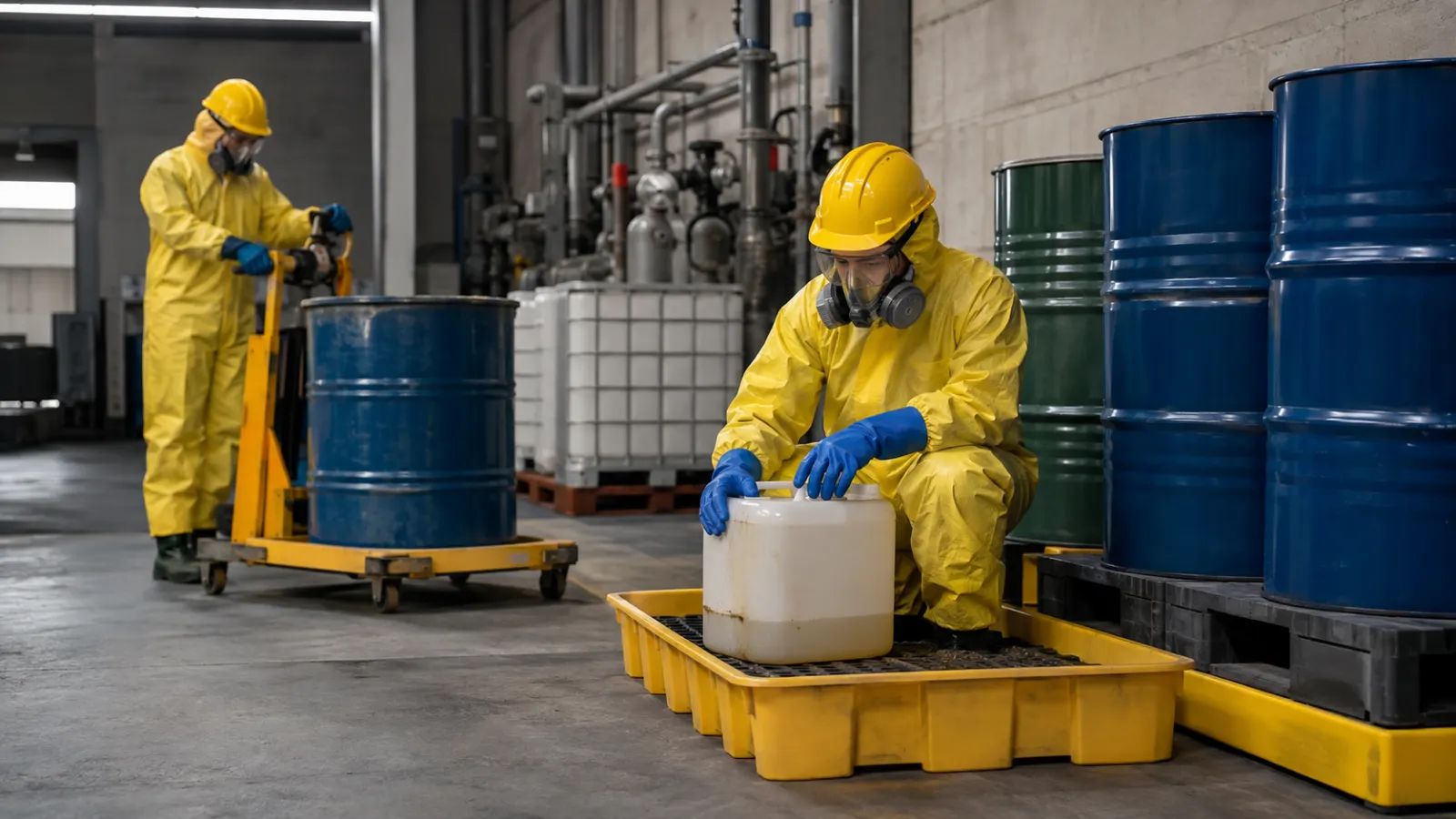
Waste management begins at the point of generation, not when a collection truck arrives. Containers must remain compatible with what they hold, incompatible materials should be separated, identification should remain clear and storage areas may need appropriate containment, inspection and access controls.
Poor storage can create an environmental release long before disposal. A corroded drum can leak into a floor drain, soil or groundwater even if the organisation eventually intended to send it to a licensed treatment facility. Temporary storage therefore needs to be treated as part of the hazardous-waste control system rather than as a neutral waiting period.
The Cradle-to-Grave Principle
EPA describes the U.S. RCRA framework as a cradle-to-grave system because regulated hazardous waste remains controlled from generation through transportation, treatment and storage to final disposal. The concept is useful beyond U.S. law because it addresses a fundamental problem: once a truck removes waste from the original site, the generator may no longer see it, but the environmental hazard still exists.
Tracking systems, manifests, licensed transporters, permitted treatment facilities and records help preserve accountability through the chain. Responsible waste management is therefore not complete when the material changes ownership. Someone still needs to recover, treat, stabilise or dispose of what remains.
Information Travels With the Waste
Documentation is part of the physical safety system. Labels, process descriptions, analytical results and transport records communicate what the next person is receiving and how it should be handled. If that information is lost, the chemistry of the waste has not changed, but the risk can increase dramatically because workers may no longer know which materials are compatible, what personal protection is needed or which treatment process is appropriate.
In this sense, information itself is a form of environmental infrastructure. The waste and the knowledge required to manage it safely need to remain connected.
Prevention Is Better Than Treatment
The safest hazardous waste is the waste that was never generated. Manufacturers can substitute less hazardous chemicals, redesign processes, recover solvents or metals and improve inventory control. Laboratories can purchase smaller quantities rather than allowing unused chemicals to expire. Maintenance operations can reduce waste by extending product life or avoiding unnecessary replacement.
Waste prevention can reduce worker exposure, storage requirements, transport risks and disposal costs simultaneously. It is often more effective to remove the hazard from the production process than to spend years managing the material after it becomes waste.
Inventory Control Can Prevent Waste Before It Exists
Chemical waste is sometimes created not because a process actually used the chemical, but because an organisation bought more than it needed. Containers sit unused until they expire, labels become unreadable or staff members who understood the material leave the organisation.
Better procurement and inventory management can therefore be environmental controls. Knowing what chemicals are present, where they are stored and when they expire can prevent valuable products from becoming expensive hazardous waste.
Recovery and Recycling Can Preserve Value
Some hazardous waste streams contain materials worth recovering. Solvents may sometimes be reclaimed, metals may be recovered from certain industrial residues and some materials may be reused under controlled conditions when regulations permit.
Recovery can reduce demand for new raw materials and lower the quantity ultimately requiring disposal. However, recycling should not automatically be treated as proof that a process is environmentally sound. A metal-recovery operation that exposes workers to toxic fumes or releases contaminants into the environment is not responsible recycling merely because valuable material is recovered.
Treatment Must Match the Waste
There is no universal hazardous-waste treatment technology. Acids and bases may be neutralised under controlled conditions. Certain organic hazardous compounds can be treated through specialised high-temperature processes. Metal-containing wastes may undergo recovery or chemical treatment. Other wastes can be stabilised or solidified to reduce the mobility of contaminants before disposal. Biological or chemical treatment may be suitable for specific compounds.
The correct method depends on composition, concentration, physical form, applicable law and the required treatment standard. A technique that works well for one waste stream can be ineffective or dangerous for another.
Controlled Thermal Treatment Is Not Open Burning
Some hazardous organic wastes can be treated in specialised high-temperature facilities designed to control combustion and emissions. This is fundamentally different from burning chemical waste outdoors or in an uncontrolled furnace.
Engineered thermal treatment relies on controlled temperatures, residence times, monitoring and pollution-control equipment. Open burning lacks those safeguards and can release hazardous smoke while leaving contaminated ash. The fact that specialised facilities use heat does not make informal burning a safe disposal method.
Why Secure Disposal Still Exists
Even after prevention, recovery and treatment, some hazardous residues remain. Those materials may require disposal in facilities specifically engineered for hazardous waste. Such sites use containment and monitoring systems that differ from ordinary municipal waste facilities.
Final disposal should therefore be understood as the end of a management hierarchy rather than the preferred first option. Sending untreated hazardous material directly into an ordinary dump transfers risk to waste workers, neighbouring communities, soil, water systems and future generations.
Groundwater Makes Poor Disposal Especially Serious
Hazardous-waste releases into soil can eventually affect groundwater, and contamination below ground is often difficult to detect and extremely expensive to reverse. Once hazardous substances enter an aquifer, remediation may take years or decades and can require extensive pumping, treatment and monitoring.
This explains why prevention and containment receive so much regulatory attention. A properly maintained storage system can look expensive when nothing has leaked, but it may be trivial compared with the cost of cleaning a contaminated groundwater system.
Hazardous Waste Can Harm Ecosystems Without Direct Human Exposure
Human poisoning is not the only concern. Some wastes can damage plants, aquatic organisms, wildlife and entire food webs. Persistent substances may remain in soil or sediment, while mobile contaminants can travel through rivers and groundwater far from the place where they were originally discarded.
Ecotoxicity therefore matters independently of whether someone is immediately exposed. Waste-control systems are designed to protect environmental systems as well as human health.
Hazardous Waste Across Borders
The Basel Convention was adopted partly in response to concerns about hazardous-waste shipments from wealthier countries toward developing regions where treatment costs could be lower and environmental controls weaker. The Convention seeks to control transboundary movements of covered waste and promote environmentally sound management.
International movement can involve notification, consent and other procedures depending on the waste and countries involved. The ethical principle is straightforward: hazardous material should not simply be exported because another jurisdiction has weaker enforcement or cheaper disposal.
International processing is not automatically wrong. Some wastes can legitimately move to specialised facilities capable of better recovery or treatment. The relevant question is what actually happens downstream.
Exporting Waste Does Not Export Responsibility
A country or company can make a waste problem less visible by sending material elsewhere, but the environmental burden has not disappeared. If exported waste reaches a well-controlled facility, the transfer may be justified. If it ends up in informal burning, dumping or unsafe recycling, the problem has merely been relocated.
Responsible waste policy therefore looks beyond the first transfer and asks where material ultimately goes and under what conditions it is treated.
Hazardous Waste and E-Waste Can Overlap
Electronic waste shows why modern waste categories frequently overlap. A discarded computer or phone may contain reusable equipment and valuable metals, but it may also contain lithium batteries or other components requiring specialised handling.
The existence of recyclable materials does not make the entire device appropriate for ordinary municipal recycling. It needs a collection and treatment route designed for electronics. The same principle applies to many specialised wastes: classification should guide the management method rather than assuming all hazardous material belongs in one universal disposal stream.
Household Hazardous Waste Requires Local Guidance
Households generally produce much smaller quantities than factories, but unwanted paints, pesticides, automotive fluids, batteries, cleaners and similar products can still be unsafe in ordinary bins, drains or fires. Local authorities may operate household hazardous-waste facilities, product take-back schemes, battery programmes or e-waste collection.
Keep products in their original containers when practical, avoid mixing unknown chemicals and follow the instructions from the product manufacturer and local authority. Because laws and collection systems differ, there is no single worldwide household disposal rule.
Emergency Releases Are Different From Routine Disposal
Routine hazardous-waste guidance assumes the waste is under control. If an unknown chemical is leaking, producing fumes, heating, reacting or threatening a drain or waterway, disposal planning is no longer the immediate priority. The situation may require emergency response.
Do not approach an actively reacting material merely to identify it if doing so creates exposure. Do not mix chemicals in an attempt to neutralise an unknown substance. Depending on the situation and location, fire services, poison-control centres or hazardous-material emergency authorities may need to respond.
Waste management deals with controlled materials. Active releases are incidents.
Workers Are Central to Hazardous-Waste Safety
Containers, manifests and treatment equipment receive much of the attention in environmental regulation, but people operate every part of the system. Workers face risk when substances are incorrectly labelled, incompatible materials are mixed, containers fail or a hazardous item enters a waste stream where no one expects it.
Accurate segregation therefore protects the waste worker who may never meet the original generator. A battery placed in ordinary recycling can ignite much later inside a collection vehicle or sorting facility. A solvent hidden in general waste can expose someone who had no reason to expect chemical contamination.
Responsible disposal protects people throughout the chain.
Frequently Asked Questions
What is hazardous waste? Hazardous waste is waste requiring special management because its properties or regulated constituents can create significant risks to human health or the environment when handled incorrectly.
What makes waste hazardous? Classification varies by jurisdiction but may depend on specific listed wastes, hazardous constituents or properties such as ignitability, corrosivity, reactivity and toxicity.
Is hazardous waste defined the same way worldwide? No. International agreements establish frameworks, while national governments maintain their own definitions, schedules, thresholds and exemptions.
What are the four RCRA hazardous-waste characteristics? In the U.S. RCRA system they are ignitability, corrosivity, reactivity and toxicity.
Does hazardous waste have to be liquid? No. Hazardous waste can occur as liquids, solids, powders, sludges or contained gases depending on the material and applicable regulation.
Can hazardous waste look harmless? Yes. Colour and smell are unreliable indicators. Clear liquids, dry powders and apparently empty containers can still present serious hazards.
What is the difference between hazard and risk? Hazard is the inherent ability to cause harm. Risk depends on how likely exposure is and how serious the resulting harm could be.
Why should hazardous wastes be kept separate? Mixing incompatible materials can cause heat, toxic gases, fire, pressure or other dangerous reactions and can contaminate larger amounts of otherwise manageable material.
Can hazardous waste be diluted and thrown away? Dilution is not automatically a legitimate treatment method and may be prohibited when used to avoid proper treatment requirements.
Can hazardous waste be recycled? Some streams can be legitimately recovered or recycled, provided the process protects workers and the environment and complies with applicable regulations.
What does cradle-to-grave management mean? It means maintaining control and accountability from the point of generation through transportation, treatment and storage to final disposal.
Can hazardous waste be incinerated? Certain hazardous wastes can undergo specialised thermal treatment, but that is very different from uncontrolled burning.
Can hazardous waste go into an ordinary landfill? Regulated hazardous wastes may require authorised treatment and specialised disposal rather than ordinary municipal landfills.
What is household hazardous waste? The term generally refers to household products or residues requiring special collection because of potentially dangerous properties, although the exact definition varies locally.
Can unwanted chemicals be poured down the drain? Potentially hazardous products should not be poured into drains unless local rules and product instructions specifically identify that route as safe and lawful.
What should I do with an unidentified chemical? Do not mix or experiment with it. Seek guidance from the relevant local hazardous-waste or hazardous-material authority.
What is the Basel Convention? It is an international treaty controlling transboundary movements of hazardous and certain other wastes and promoting environmentally sound waste management.
What is the best way to reduce hazardous waste? Prevent generation where possible through safer substitutes, improved process design, better inventory control and appropriate material recovery.
The Real Goal Is Control, Not Fear
The word “hazardous” can make every regulated material sound immediately catastrophic, but fear is not the purpose of the classification. Hazardous-waste systems exist because dangerous properties can often be managed effectively when they are correctly identified and controlled.
A corrosive liquid inside a compatible container is not equivalent to an unknown leaking chemical. A battery in an authorised collection system is not equivalent to the same battery crushed inside a waste truck. A flammable solvent in a properly managed process is not equivalent to the solvent entering a drain.
The hazardous property may be the same. The exposure pathway is completely different.
The Central Idea
Hazardous waste is best understood as a chain-of-control problem. First, the waste has to be identified accurately, because appearance alone is unreliable and the material may have changed during use. Second, the hazard needs to be translated into practical controls such as compatible containers, segregation, labelling, storage and worker protection. Third, generation should be reduced wherever possible through better purchasing, process redesign, substitution and recovery. Fourth, unavoidable waste requires treatment matched to its actual chemistry and physical properties. Finally, accountability has to continue until the remaining material reaches a legitimate recovery, treatment or disposal route.
Waste does not disappear because it leaves a factory gate, laboratory, garage or household. Someone else receives it, transports it and eventually has to recover, destroy, stabilise or isolate it. Responsible hazardous-waste management is therefore the system that prevents environmental responsibility from disappearing while the physical material remains.
The safest hazardous waste is the waste that was never generated. The next safest is the waste that is understood well enough to be controlled.