Delhi Shuts Six Metro Stations Ahead of Opposition March to Supreme Court
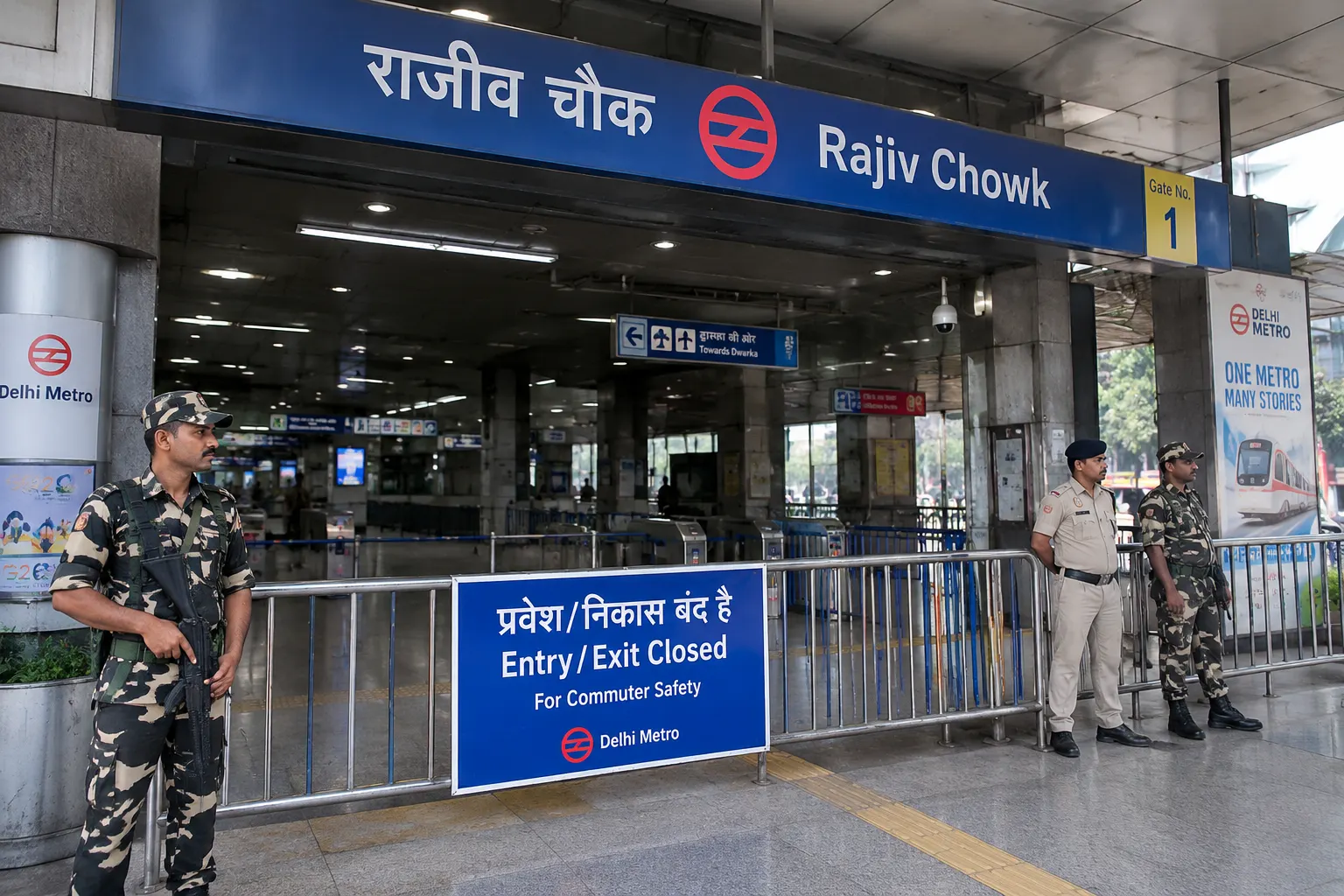
Six Delhi Metro stations in central Delhi were closed for entry and exit on Monday as authorities tightened security ahead of an opposition-led march towards the Supreme Court over the ongoing electoral-roll controversy.
The restrictions affected Rajiv Chowk, Central Secretariat, Patel Chowk, Janpath, Mandi House and Barakhamba Road. Entry and exit at these stations were scheduled to remain closed from 6 AM until 4 PM, although interchange facilities continued to operate at the affected interchange stations.
The Metro restrictions were accompanied by traffic advisories warning of possible congestion and diversions across central and New Delhi as opposition leaders prepared to march towards the Supreme Court.
Six central Delhi Metro stations affected
The six affected stations are located close to key government, commercial and protest-sensitive areas of the capital.
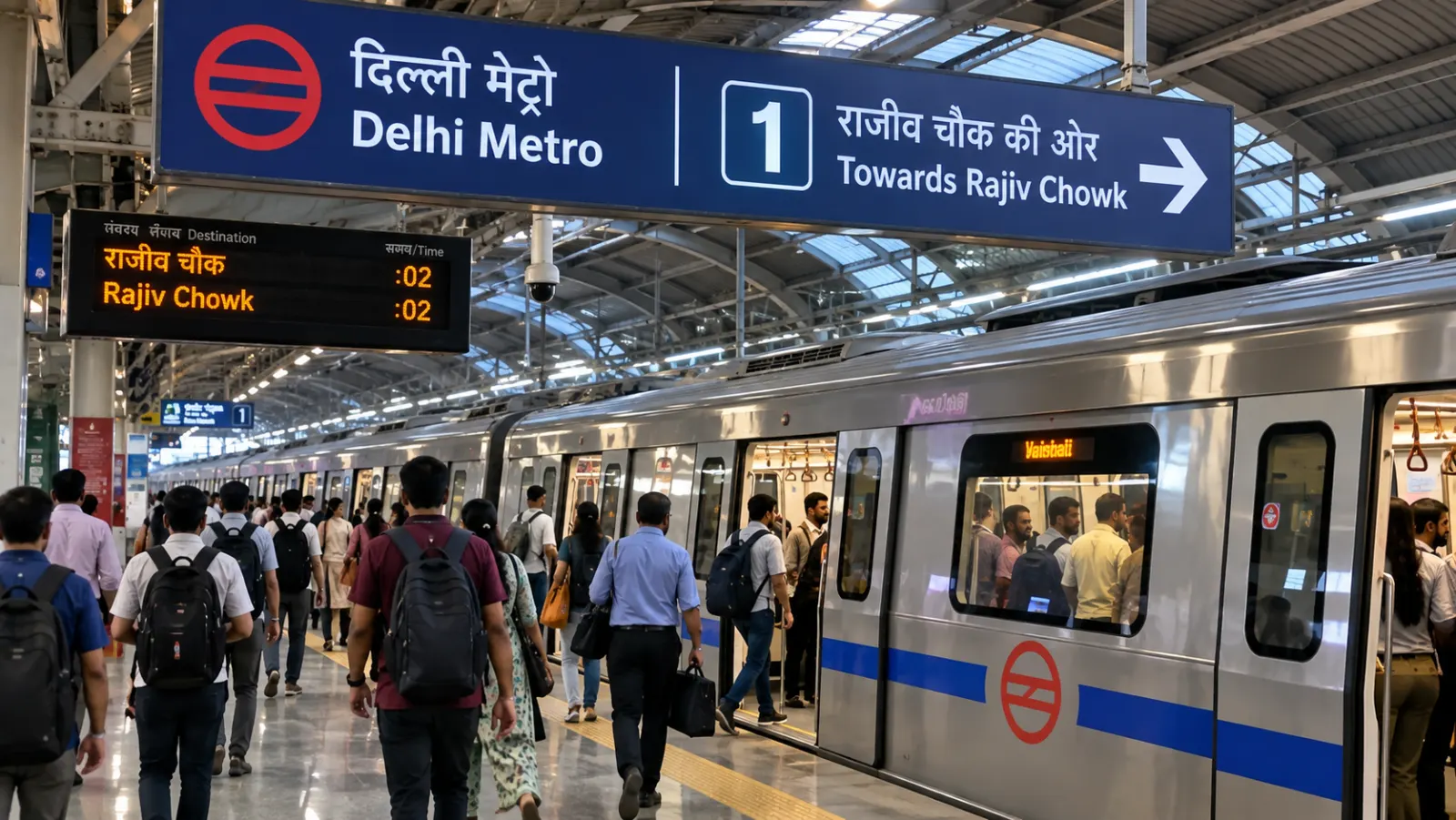
Rajiv Chowk is one of Delhi Metro’s busiest interchange stations, while Central Secretariat and Mandi House are important connections for commuters travelling through central Delhi. Patel Chowk, Janpath and Barakhamba Road also serve areas close to government offices, Connaught Place and major institutional zones.
Although passengers were unable to enter or leave through the affected stations during the restriction period, interchange services remained available where applicable.
Authorities said the situation would be reviewed by security agencies and additional changes could be introduced depending on developments on the ground.
The scale of Monday’s Metro restrictions is considerably smaller than the disruption seen during the previous round of demonstrations, when dozens of stations were affected.
Opposition plans march towards Supreme Court
The restrictions were imposed ahead of a planned march involving Congress and other opposition parties.
Opposition leaders are protesting against the Special Intensive Revision of electoral rolls and have demanded the resignation of Chief Election Commissioner Gyanesh Kumar.
The opposition has alleged that the voter-roll revision process has resulted in legitimate voters being removed and has repeatedly described the controversy as an issue of electoral integrity.
Congress leaders had announced plans to march towards the Supreme Court and submit a memorandum seeking intervention over the dispute.
The Supreme Court has indicated that political grievances concerning electoral procedures should be pursued through the appropriate legal process rather than through an informal meeting with judges.
Traffic diversions likely across central Delhi
Delhi Traffic Police also warned commuters that vehicle movement could be disrupted across several parts of the capital.
Traffic diversions were expected to begin depending on crowd movement and the prevailing security situation.
Major intersections, roads and flyovers in New Delhi and central Delhi could experience delays as security personnel regulate traffic around the proposed march route.
Commuters travelling through areas around Connaught Place, Parliament Street, Central Secretariat and routes towards the Supreme Court were advised to allow additional travel time.
Monday's heavy rain and waterlogging have added another layer of difficulty for commuters, with several parts of Delhi-NCR already experiencing slower traffic.
Restrictions follow weekend protest crackdown
The latest opposition march comes after several days of demonstrations over the electoral-roll controversy.
The Cockroach Janta Party and other groups had earlier attempted to hold large demonstrations demanding the resignation of the Chief Election Commissioner.
Those protests resulted in widespread security restrictions, preventive detentions and disruption to Metro and railway services.
CJP founder Abhijeet Dipke and other prominent organisers were detained during the earlier demonstrations before later being released.
Student groups and activists also continued smaller protests at different locations across Delhi after access to Jantar Mantar was restricted.
The continuing demonstrations have transformed the electoral-roll dispute into a wider political confrontation involving opposition parties, youth organisations and civil-society groups.
Supreme Court had questioned sweeping transport shutdowns
The latest Metro closures come after the Supreme Court raised concerns about extensive restrictions imposed during the previous protests.
The court had questioned whether broad shutdowns of public transport were proportionate to the security situation and stressed that ordinary commuters should not face unnecessary disruption.
It also directed authorities to ensure that peaceful protesters, journalists and lawyers were not improperly obstructed.
Monday’s restrictions are more limited, affecting six stations rather than the much larger network of stations disrupted during the earlier crackdown.
That distinction is likely to receive close attention as authorities attempt to balance security arrangements with the court’s concerns about excessive restrictions.
Why the electoral-roll revision is controversial
At the centre of the protests is the Special Intensive Revision of electoral rolls.
The Election Commission has undertaken a large verification exercise intended to identify voters who have died, moved permanently or can no longer be verified at their registered addresses.
Opposition parties and protest groups argue that the process could remove legitimate voters and disproportionately affect particular communities.
The Election Commission has rejected allegations of political bias and maintains that the revision is designed to improve the accuracy of electoral rolls.
It has also maintained that eligible voters who are incorrectly removed have mechanisms available to seek restoration of their names.
Despite those assurances, the issue has continued to generate protests and political criticism.
Delhi commuters face another day of disruption
For residents, the immediate impact is another day of travel disruption across central Delhi.
Metro passengers should check station access before travelling, particularly if their journey involves Rajiv Chowk, Central Secretariat, Patel Chowk, Janpath, Mandi House or Barakhamba Road.
Road users could also face diversions and congestion depending on the movement of protesters and security deployments.
Because the restrictions are subject to review, stations could reopen earlier or remain affected if the security situation changes.
The opposition march therefore represents both a new phase in the political confrontation over electoral rolls and another significant transport challenge for people travelling through central Delhi.