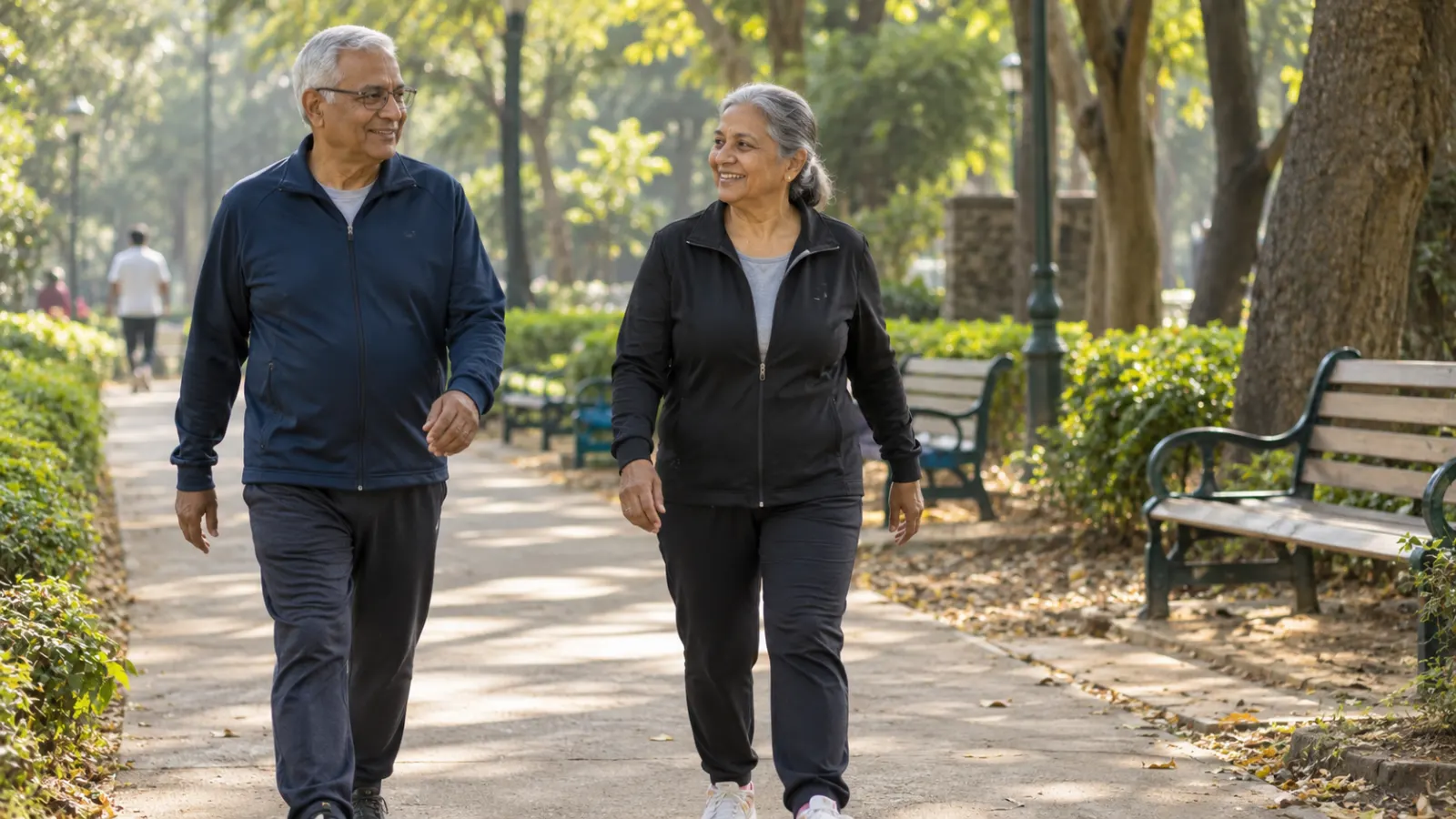
Strength training is easy to mistake for a specialist activity. Images of heavy barbells, bodybuilding competitions and highly structured gym programmes can make resistance exercise seem relevant only to athletes or people chasing visible muscle. Public-health guidance tells a different story: muscle-strengthening activity is part of the basic movement recommendations for adults, including older adults.
The reason is not simply that stronger muscles look different. Strength is a practical biological resource. It helps a person rise from a chair, carry shopping, climb stairs, lift a child, control a stumble and continue doing ordinary tasks without needing as much help. As people age, preserving that capacity becomes increasingly important.
In March 2026, the American College of Sports Medicine published its first major resistance-training position update since 2009. Drawing on 137 systematic reviews and more than 30,000 participants, the statement emphasised a message that is unusually simple for exercise science: for most healthy adults, the biggest step is moving from no resistance training to regular resistance training. Consistency matters more than designing a complicated “perfect” programme.
What counts as strength training?
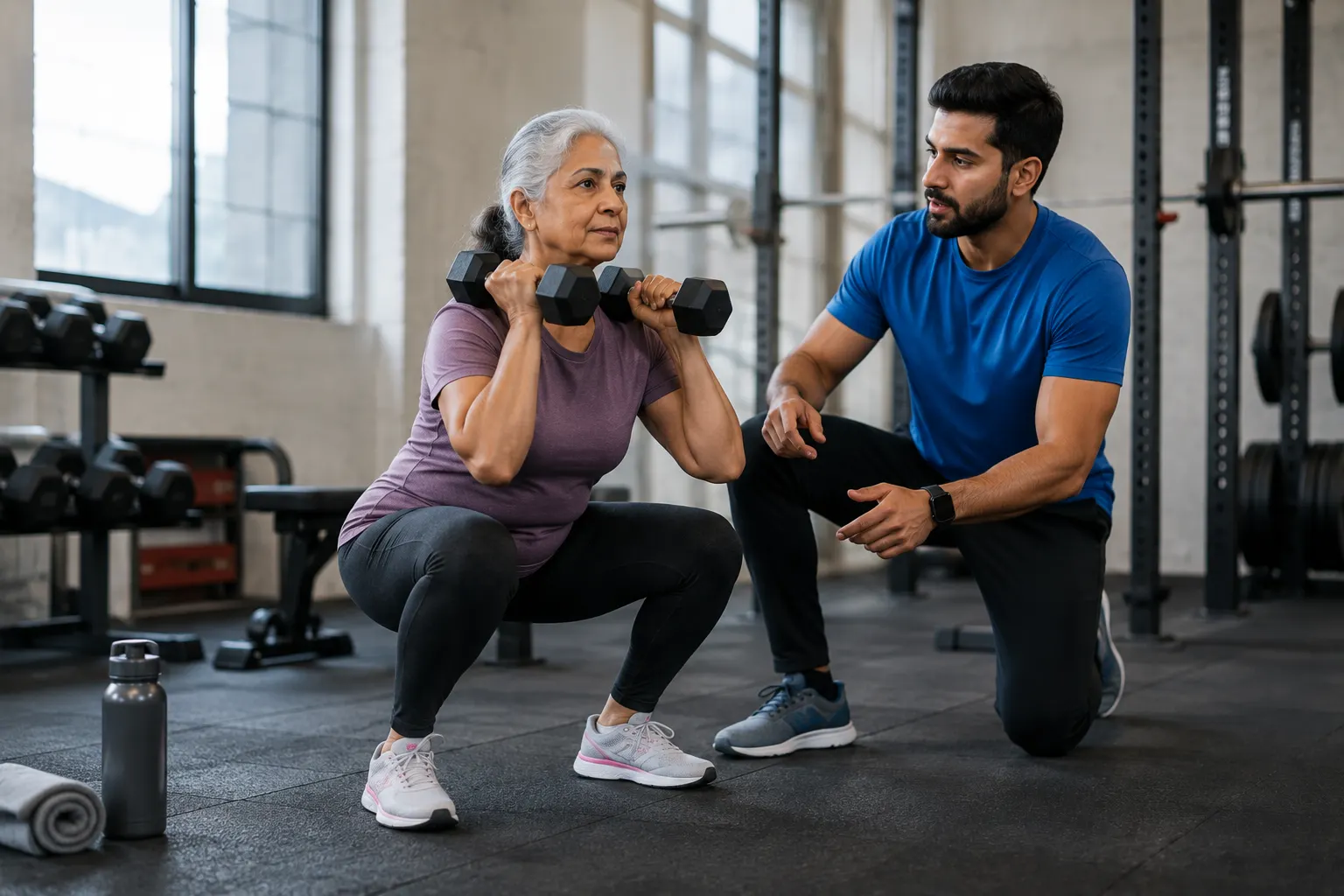
Resistance training means making muscles work against an external resistance. That resistance can come from a barbell or machine, but it can also come from dumbbells, elastic bands, body weight, weighted household objects or other forms of load. A squat from a chair, a wall push-up, a resistance-band row and a heavy deadlift are very different exercises, yet all can be forms of resistance training when they challenge the muscles involved.
This matters because access is often treated as a barrier. A person does not need a commercial gym to begin. ACSM’s 2026 guidance specifically notes that bodyweight routines, elastic resistance and home-based programmes can produce meaningful improvements in strength, muscle size and physical function.
Why muscles need a reason to stay strong
Muscle is adaptable tissue. When it repeatedly encounters a level of force that challenges its current capacity, the body responds by improving its ability to produce force. The adaptations include changes in the nervous system, which becomes better at recruiting and coordinating muscle, as well as structural changes within muscle fibres when training volume and nutrition support them.
The reverse is also true. Long periods of inactivity reduce the stimulus that helps preserve muscle strength and function. Ageing adds another pressure: muscle mass, strength and power tend to decline with advancing age, particularly when physical activity is low. The National Institute on Aging therefore treats muscle-strengthening exercise as one of the core forms of activity that support independence in later life.
Strength is not the same as muscle size
People often use “building muscle” and “getting stronger” as though they were identical. They overlap but are not the same outcome. Strength reflects muscle size, neural coordination, technique and the specific movement being tested. A beginner can become substantially stronger before dramatic changes in appearance occur because the nervous system learns to use existing muscle more effectively.
That distinction is useful for people who avoid strength training because they do not want a bodybuilding physique. General health-oriented resistance exercise does not automatically produce extreme muscularity. Training variables, genetics, nutrition, years of practice and total workload all influence hypertrophy.
The benefits become more important, not less, with age
For older adults, resistance exercise can help preserve or improve strength and physical function. The National Institute on Aging notes that muscle-strengthening activities can make everyday tasks easier and help people stay independent. Public-health recommendations for older adults also combine aerobic activity with muscle strengthening and balance work because these capacities support different parts of healthy ageing.
Age does change programme design. Someone with frailty, arthritis, osteoporosis, cardiovascular disease, recent surgery or a history of falls may need different exercise selection, range of motion, loading and supervision than a healthy 25-year-old. But needing adaptation is not the same as being “too old” to train. The practical objective may shift from maximising performance to preserving the ability to stand, walk, carry, climb and recover from perturbations.
What do current guidelines actually recommend?
WHO guidance recommends that adults perform muscle-strengthening activities involving the major muscle groups on two or more days each week. Similar recommendations appear in U.S. physical-activity guidance. These are population targets, not a rule that every person must follow the same routine.
ACSM’s 2026 position stand adds useful nuance. For the general healthy adult, training all major muscle groups at least twice weekly is more important than chasing complex methods. Different loading strategies can then be used when a person has a specific goal: heavier loads tend to be useful for maximising strength, higher weekly volume can help maximise muscle growth, and moderate loads moved rapidly can target power.
For general health, however, the headline is simpler: regular participation is the foundation. A modest routine done consistently is more useful than an elaborate programme abandoned after three weeks.
Do you have to lift heavy?
Not necessarily. “Heavy” is relative to the person and the goal. A load that is trivial for one person can be a meaningful training stimulus for another. ACSM’s current review found that many forms of resistance training can improve outcomes, and traditional gym equipment is not required.
That does not mean effort is irrelevant. For a muscle to adapt, an exercise usually has to become sufficiently challenging. Beginners often need instruction in technique and progression so they can increase difficulty without simply adding load faster than their joints, tendons or skill can tolerate.
What a beginner programme needs - and what it does not
A beginner does not need dozens of exercises. A practical whole-body programme usually covers major movement functions: pushing, pulling, knee-dominant leg work, hip-dominant work, carrying or trunk control, with exercises chosen for the person’s ability and equipment. The exact movements are less important than whether the programme can be performed safely and progressed over time.
Start with movements you can perform with control and without sharp pain.
Train the major muscle groups rather than repeatedly targeting only the arms or abdomen.
Increase difficulty gradually - for example by adding repetitions, resistance, range of motion or a more demanding variation.
Allow recovery between hard sessions for the same muscle groups, particularly when starting.
Choose a routine you can realistically repeat for months, not one designed mainly to look impressive.
Strength training and bone health
Muscle is not the only tissue exposed to mechanical loading. Weight-bearing and resistance exercise can also contribute to bone health, although the effect depends on the type, intensity and site of loading and on the individual’s age and health. This is particularly relevant when thinking about osteoporosis prevention, but people with known osteoporosis may need professional guidance because some loaded spinal movements or high-impact exercises can be inappropriate depending on fracture risk.
Why “at any age” needs one qualification
The phrase should not be interpreted as “everyone can immediately do the same workout.” Exercise is a stress applied to the body, and the useful dose depends on current capacity. Someone who has been inactive for years may need to begin with very light resistance, supported movements or supervised rehabilitation. Someone experienced may require much greater loading to create further adaptation.
The underlying principle still holds across adulthood: muscle responds to use. Starting later may change the ceiling and the pace of progress, but it does not erase the value of training.
The most useful definition of success
Strength training is often evaluated through kilograms lifted or centimetres of muscle gained. For public health, there is another measure: what can the person continue to do in daily life?
A programme that helps someone carry groceries without strain, rise from the floor, keep up with grandchildren, remain confident on stairs or maintain the strength needed for independent living has achieved something clinically meaningful even if the person never enters a weight room.
That is why resistance training belongs outside bodybuilding culture. It is a method of maintaining physical capacity. Across adulthood, the most important programme is usually not the most technical one. It is the safe, appropriately challenging programme that becomes regular enough for the body to adapt.
Medical note: This article provides general exercise information, not an individual training prescription. People with significant cardiovascular disease, uncontrolled blood pressure, severe osteoporosis, recent surgery, acute injury, neurological disease or other major medical limitations should seek appropriate clinical guidance before beginning or substantially intensifying resistance training.