Air Pollution Explained: What We Breathe, Where It Comes From and Why It Harms Health
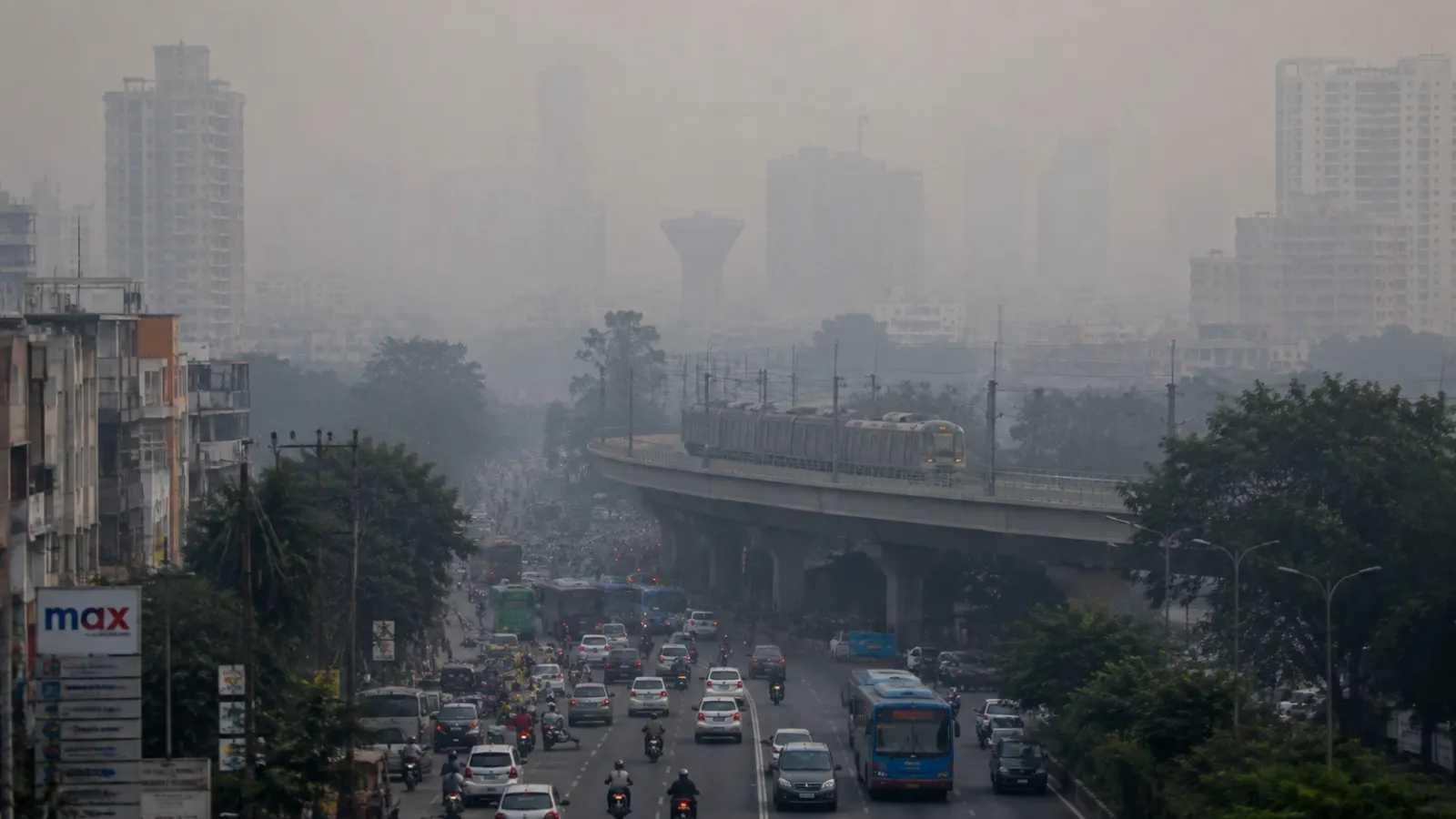
Air pollution is often imagined as a grey cloud hanging over a city. Sometimes it looks exactly like that. Often, however, the pollution that matters most to human health cannot be seen at all.
A clear blue sky can still contain elevated concentrations of fine particulate matter, nitrogen dioxide or ground-level ozone. Indoor air can also become hazardous because of cooking, heating, tobacco smoke, poorly vented combustion appliances or pollutants entering from outdoors.
The World Health Organization defines air pollution as contamination of the indoor or outdoor environment by chemical, physical or biological agents that alter the natural characteristics of the atmosphere. That broad definition matters because air pollution is not one substance. It is a changing mixture of particles and gases produced by transport, industry, power generation, household energy, agriculture, waste burning, natural processes and chemical reactions in the atmosphere.
WHO estimates that almost the entire global population—about 99%—breathes air that exceeds its health-based air-quality guideline levels.
Understanding air pollution therefore begins with a more useful question than “Does the air look dirty?”
The question is: What pollutants are present, at what concentration, for how long, and who is breathing them?
What Are the Main Air Pollutants?
The pollutants of greatest public-health concern include particulate matter, nitrogen dioxide, ground-level ozone, sulfur dioxide and carbon monoxide.
They behave differently in the atmosphere and affect the body in different ways.
| Pollutant | Common sources | Why it matters |
|---|---|---|
| PM2.5 and PM10 | Combustion, traffic, industry, dust, fires, secondary atmospheric reactions | Can penetrate the respiratory system; PM2.5 is particularly important for cardiovascular and respiratory health |
| Nitrogen dioxide (NO₂) | Vehicles, power plants, industrial combustion, fuel-burning appliances | Irritates airways and helps form ozone and secondary particles |
| Ground-level ozone (O₃) | Forms from chemical reactions involving nitrogen oxides and volatile organic compounds in sunlight | Irritates and damages the respiratory system |
| Sulfur dioxide (SO₂) | Sulfur-containing fuels, power generation, industry and metal smelting | Irritates the respiratory system and contributes to particle formation |
| Carbon monoxide (CO) | Incomplete combustion from engines, heaters, generators and cooking devices | Reduces the blood's ability to transport oxygen |
The mixture varies dramatically between places and even between different hours of the same day.
Particulate Matter: Why PM2.5 Matters So Much
Particulate matter, usually abbreviated PM, is a mixture of tiny solid particles and liquid droplets suspended in the air.
PM10 means particles with an aerodynamic diameter of 10 micrometres or less. PM2.5 refers to much smaller particles measuring 2.5 micrometres or less.
A human hair is far wider than a PM2.5 particle.
Particle size matters because smaller particles can travel deeper into the respiratory system. Fine particulate matter is strongly associated with cardiovascular and respiratory disease and contributes to premature mortality.
But particulate matter is not one chemical substance. Its composition can include sulfates, nitrates, ammonia, black carbon, mineral dust, salt, organic compounds and water.
Where the particles came from determines much of that composition.
Some particles are released directly into the air. Soot from combustion, smoke from fires and dust lifted from roads are examples.
Other particles are secondary pollutants. They form after gases released into the atmosphere undergo chemical reactions.
This distinction is important because controlling PM2.5 does not necessarily mean controlling only visible particle emissions. Governments may also need to reduce gaseous precursors from vehicles, industry, power generation or agriculture.
For a closer look at particle size, sources and health effects, see What Is Particulate Matter?
Nitrogen Dioxide: More Than a Traffic Pollutant
Nitrogen dioxide, or NO₂, is produced largely through high-temperature combustion.
Road traffic is a major urban source, particularly where diesel and other combustion vehicles operate densely. Power generation, industrial boilers, heating equipment and other fuel-burning systems can also produce nitrogen oxides.
Indoor sources can include gas stoves and other combustion appliances.
NO₂ can irritate the respiratory system and aggravate respiratory disease. But its significance extends further because nitrogen oxides participate in the atmospheric chemistry that produces ground-level ozone and secondary particulate matter.
NO₂ is therefore both a harmful pollutant in its own right and a precursor to other forms of air pollution.
Ground-Level Ozone: The Pollutant That Is Not Emitted Directly
Ozone creates one of the most confusing air-pollution stories because the same molecule can be beneficial or harmful depending on where it is found.
High in the stratosphere, the ozone layer protects life by absorbing much of the Sun's harmful ultraviolet radiation.
Near the Earth's surface, however, ozone is a pollutant and an important component of photochemical smog.
Ground-level ozone is generally not emitted directly from a vehicle exhaust or industrial chimney. Instead, sunlight drives chemical reactions involving nitrogen oxides and volatile organic compounds.
As a result, the worst ozone concentrations do not necessarily occur directly beside the original pollution source. Polluted air masses can travel, react chemically and produce high ozone concentrations elsewhere.
Ozone also tends to become an especially important problem during warm, sunny conditions favourable to photochemical reactions.
This illustrates a fundamental principle of atmospheric pollution: what people eventually breathe may not be identical to what was originally emitted.
For more on this process, see What Is Smog and How Does It Form?
Sulfur Dioxide: Closely Connected to Fuel and Industry
Sulfur dioxide, or SO₂, is generated mainly when fuels containing sulfur are burned and through some industrial processes, including metal smelting.
Historically, coal burning produced severe sulfur pollution in many industrial cities.
Fuel-quality standards, cleaner energy and industrial emission controls have reduced SO₂ substantially in some countries, but the pollutant remains important where sulfur-rich fuels or poorly controlled combustion continue to be used.
SO₂ can irritate the respiratory system and also participate in atmospheric reactions that produce particulate matter.
Carbon Monoxide: Dangerous Without Smoke or Smell
Carbon monoxide, or CO, forms when carbon-containing fuels burn incompletely.
Vehicle engines, fires, generators, furnaces, heaters and cooking appliances can produce it.
Carbon monoxide is particularly dangerous because it is colourless and odourless. A room does not need to look smoky or smell polluted for dangerous CO concentrations to accumulate.
Once inhaled, carbon monoxide interferes with the blood's ability to transport oxygen.
Poorly ventilated or improperly installed fuel-burning equipment can therefore create severe indoor exposure, and generators operated in enclosed or semi-enclosed spaces can be especially dangerous.
The broader lesson is simple: visibility is a poor measure of air safety.
Outdoor and Household Air Pollution Are Connected
Air-quality policy often separates ambient air pollution, meaning outdoor pollution, from household air pollution.
The distinction is useful because sources and interventions can differ. Yet people do not live inside two separate atmospheres.
WHO reported in December 2025 that around 2.1 billion people worldwide still cooked using polluting open fires or inefficient stoves fuelled by kerosene, biomass such as wood and crop waste, or coal.
Household combustion can produce extremely high concentrations of fine particles and other pollutants, particularly in poorly ventilated homes.
But smoke generated inside a household does not remain neatly indoors. It can escape outside and contribute to neighbourhood air pollution.
The reverse is also true. Traffic emissions, industrial pollution, wildfire smoke and outdoor particles can enter buildings through doors, windows, ventilation systems and small gaps.
Actual human exposure therefore reflects a combination of where a person lives, works, travels, studies, sleeps and cooks.
Why Does Air Pollution Cause Such a Large Health Burden?
Humans breathe continuously.
That basic biological fact makes air pollution different from many other environmental hazards. A person may be able to avoid contaminated food or choose another drinking-water source. Avoiding the air surrounding a home, workplace, school or neighbourhood is much more difficult.
The respiratory system receives the first exposure, but the health effects do not stop at the lungs.
WHO associates air pollution with major diseases including stroke, ischaemic heart disease, chronic obstructive pulmonary disease, lung cancer and respiratory infections.
Its current household-air-pollution fact sheet estimates that the combined effects of ambient and household air pollution are associated with approximately 6.7 million premature deaths each year.
This does not mean millions of death certificates simply list “air pollution” as the sole cause.
Air pollution acts more like other major health risk factors. It can increase the probability of diseases that also have other causes and risk factors.
When billions of people are exposed, even increases in individual risk that appear modest can translate into an enormous population-level health burden.
For a deeper explanation of these pathways, see Understanding the Health Effects of Air Pollution.
Who Is Most Vulnerable to Air Pollution?
Everyone needs clean air, but exposure and vulnerability are not distributed equally.
Children are particularly important because their lungs and other organs are still developing, they breathe more air relative to their body size than adults, and they may spend substantial time outdoors.
Older adults and people with cardiovascular or respiratory disease can have less physiological reserve when pollution places additional stress on the body.
Pregnancy is another important period because maternal exposure may also affect foetal development.
Occupation matters as well. Traffic workers, construction workers, street vendors, industrial employees and others may experience much greater exposure than city-wide averages suggest.
Income and geography can compound the problem. Lower-income households may be located closer to highways, industrial facilities, waste-burning sites or other pollution sources while having fewer resources to reduce exposure.
Air pollution is therefore not only an atmospheric-science and public-health issue. It can also be an environmental-justice issue.
Where Does Air Pollution Come From?
There is no single global source profile.
The relative contribution of different pollution sources changes from one city, region and season to another.
Major human sources include:
-
road transport;
-
coal, oil and other fossil-fuel combustion;
-
electricity generation;
-
industrial processes;
-
household cooking and heating;
-
construction and road dust;
-
agricultural activity;
-
waste burning;
-
crop-residue burning; and
-
fires influenced or started by human activity.
Natural processes can also affect air quality.
Dust storms can transport enormous quantities of particles across continents. Volcanoes release gases and particles. Sea spray contributes aerosols. Wildfires can expose populations hundreds or even thousands of kilometres away from the flames.
For a source-by-source explanation, see Understanding the Sources of Air Pollution.
Are All Air Pollutants Human-Made?
No.
The atmosphere has always contained particles and gases originating from natural processes.
The important policy question is not whether every pollutant molecule was created by humans. It is which harmful exposures can realistically be reduced.
Wildfire smoke illustrates why the distinction between “natural” and “human” pollution is sometimes complicated.
Fire occurs naturally in many ecosystems, but human ignition, land-use decisions, vegetation management, settlement patterns and climate conditions can influence how frequently severe fires occur and how many people are exposed to their smoke.
Dust is another example. Desert dust is natural, while construction activity, unpaved roads and disturbed land can create or intensify local dust pollution.
Effective air-quality policy therefore focuses on controllable sources rather than assuming that all pollution must have a single origin.
Air Pollution and Climate Change Are Closely Connected
Air pollution and climate change are different environmental problems, but many of their sources overlap.
Burning fossil fuels can release greenhouse gases while also producing or contributing to health-damaging pollutants.
Coal-fired power generation, oil-based transport and inefficient combustion can therefore affect both local air quality and the global climate.
Some short-lived pollutants, including black carbon, also influence climate directly. Methane contributes to climate warming and plays an important role in the chemistry that produces ground-level ozone.
This creates opportunities for substantial co-benefits.
Cleaner electricity, efficient buildings, low-emission transport, improved public transport, cleaner household energy and more efficient industrial processes can reduce harmful air pollution while also lowering greenhouse-gas emissions.
Not every climate policy automatically improves every air pollutant, and not every air-quality intervention produces equal climate benefits. But the overlap is large enough that health and climate policy are often more effective when considered together.
Why Can Air Quality Change So Quickly?
Air pollution is dynamic.
A city can experience relatively clean conditions one day and severe pollution the next even if its factories and roads have not suddenly changed.
Weather helps explain why.
Wind can disperse pollution or transport it into another region. Temperature inversions can trap polluted air close to the surface. Rain can remove some airborne particles. Strong sunlight can accelerate ozone-forming chemistry.
Seasonal activities can create additional variation. Crop-residue burning, domestic heating, festivals involving combustion, dust seasons or wildfire events can sharply increase concentrations during particular periods.
This is also why pollution can cross administrative and national boundaries.
A city cannot always control every pollutant its residents breathe solely by regulating sources within the city limits.
AQI and Annual Pollution Levels Answer Different Questions
People often encounter air pollution through an Air Quality Index, or AQI.
An AQI translates measured pollutant concentrations into an easier-to-understand public warning system. It can help people understand today's conditions and, depending on the system, whether sensitive groups should reduce exposure.
But today's AQI and a city's long-term pollution level are not the same thing.
An unusually polluted afternoon represents short-term exposure.
An annual average concentration represents chronic exposure over time.
A place can avoid spectacular smog emergencies and still expose residents to unhealthy average concentrations year after year.
Likewise, a generally cleaner region can experience a dangerous short-term episode caused by wildfire smoke, dust or unusual weather.
For readers trying to interpret daily pollution reports, see Understanding the Air Quality Index.
Can Masks and Air Purifiers Solve Air Pollution?
They can sometimes reduce personal exposure, but they are not substitutes for clean-air policy.
A well-fitted respirator capable of filtering fine particles may reduce inhalation of particulate pollution in appropriate circumstances. Indoor filtration can also reduce particulate concentrations in a room or building when properly selected and operated.
But neither intervention eliminates the pollution source.
They may also offer different levels of protection against gases such as ozone, nitrogen dioxide or carbon monoxide.
More fundamentally, expecting millions of individuals to buy equipment so they can safely breathe is not equivalent to creating clean air.
Personal protection can be useful during severe episodes.
Population-level protection requires emission reduction.
What Actually Reduces Air Pollution?
The most effective long-term interventions prevent pollutants from entering the air in the first place.
That can involve cleaner electricity generation, industrial emission controls, cleaner fuels, efficient buildings, low-emission transport, improved public transit, safe household energy, effective waste management, alternatives to open burning and better urban planning.
Monitoring also matters.
Authorities need reliable measurements to identify pollution sources, establish trends, evaluate policies and warn the public during dangerous episodes.
WHO's June 2026 Ambient Air Quality Database compiles annual mean ground-level measurements of PM2.5, PM10 and NO₂ for cities and towns around the world. Such data help show how pollution differs geographically and how conditions change over time.
But monitoring alone cannot clean the air.
A sensor can reveal a pollution problem. Source control is what reduces it.
Air Pollution Cannot Be Solved by the Health Sector Alone
Hospitals and doctors treat asthma attacks, cardiovascular disease, respiratory infections and other consequences associated with polluted air.
They generally do not determine what fuels power a city, how vehicles are regulated, where industries are located or how waste is managed.
Those decisions sit across energy, transport, housing, industry, agriculture, waste management and urban planning.
Air pollution is therefore a classic example of a public-health problem whose most powerful solutions often lie outside the healthcare system.
Cleaner air requires coordinated decisions about how societies produce energy, move people and goods, build cities, manufacture products and manage waste.
Frequently Asked Questions
What is air pollution?
Air pollution is contamination of indoor or outdoor air by chemical, physical or biological agents that alter the atmosphere's natural characteristics. It includes particles and gases from human and natural sources.
What is PM2.5?
PM2.5 refers to airborne particles with an aerodynamic diameter of 2.5 micrometres or less. Their small size allows them to penetrate deep into the respiratory system, making fine particulate matter a major public-health concern.
Can air be polluted even when the sky looks clear?
Yes. Many important air pollutants are invisible at concentrations relevant to health. Clear skies therefore do not necessarily indicate clean air.
What are the major sources of air pollution?
Major sources include transport, power generation, industry, household fuel use, agriculture, waste burning, construction and fires. Natural sources include dust storms, wildfires, volcanoes and sea spray.
Is indoor air pollution different from outdoor air pollution?
They are often classified separately but interact continuously. Household combustion can contribute to outdoor pollution, while outdoor pollutants can enter buildings.
What is the difference between smog and air pollution?
Air pollution is the broader category. Smog is a particular polluted-air condition involving combinations of particles and gases. Photochemical smog commonly contains ground-level ozone formed through sunlight-driven atmospheric reactions.
Does air pollution only damage the lungs?
No. Air pollution is associated not only with respiratory disease but also with cardiovascular disease, stroke, lung cancer and other health outcomes.
Is AQI the same everywhere?
No. Countries and agencies can use different pollutants, concentration thresholds, calculation methods and health categories. AQI values therefore need to be interpreted using the system that produced them.
Can an air purifier protect me from pollution?
A suitable air purifier can reduce some indoor particulate pollution, but performance depends on the device, room, pollutant and how it is operated. It does not solve outdoor pollution or replace emission controls.
How many people are affected by unhealthy air?
WHO reports that about 99% of the global population breathes air that exceeds its air-quality guideline levels, although the degree and type of exposure vary substantially between locations.
Invisible Does Not Mean Harmless
The most important shift in understanding air pollution is to stop judging air quality by appearance alone.
Dark smoke and dramatic smog are obvious warnings, but chronic exposure to invisible particles and gases can accumulate across years of ordinary life.
Air pollution is therefore best understood as an exposure problem: what is in the air, how much is present, how long people breathe it and which populations receive the greatest exposure.
That framing also changes how we think about solutions.
Cleaner air is not produced by asking individuals to breathe more carefully.
It is produced by changing the energy, transport, industrial, household, agricultural, waste and urban systems that release harmful pollutants into the atmosphere—and by ensuring that clean air becomes a shared public condition rather than a form of protection available only to people who can afford it.