Acid rain became one of the defining environmental issues of the late twentieth century because it revealed how pollution ignores geography. Sulfur dioxide released from a power plant could travel with the wind, transform chemically in the atmosphere and later fall onto a lake or forest hundreds of kilometres away.
The phrase “acid rain” is familiar but incomplete. Scientists and regulators often use the broader term acid deposition because acidic material reaches the surface in both wet and dry forms. Rain, snow, fog and hail can carry sulfuric and nitric acids, while acidic gases and particles can settle without precipitation.
The chemistry is straightforward in outline: emit sulfur dioxide and nitrogen oxides, allow atmospheric reactions to convert them into acidic compounds, and those compounds eventually return to land and water. The consequences depend on the sensitivity of the receiving ecosystem.
What makes rain acidic in the first place
Natural rain is not perfectly neutral. Carbon dioxide dissolves in water droplets and forms weak carbonic acid, so unpolluted precipitation is mildly acidic. Acid deposition refers to additional acidity generated largely from sulfur and nitrogen compounds.
EPA explains that sulfur dioxide, or SO2, and nitrogen oxides, or NOx, react in the atmosphere with water, oxygen and other chemicals to form sulfuric and nitric acids. Winds can carry the precursor gases and reaction products over long distances before deposition occurs.
This means acid rain is not produced because a cloud passes directly through smoke and immediately becomes dangerous. It is the outcome of atmospheric transport and chemistry operating over time.
Where the precursor pollution comes from
Historically, fossil-fuel combustion has been the dominant human source in heavily affected industrial regions. Coal-fired electricity generation can emit sulfur dioxide when sulfur in fuel is burned. High-temperature combustion in power plants, vehicles and industrial equipment produces nitrogen oxides.
EPA lists electricity generation, vehicles, heavy equipment, manufacturing and refineries among major sources. Natural sources, including volcanoes, also emit sulfur compounds, but human emissions drove the large regional acid-deposition problems that motivated modern regulation in North America and Europe.
The source profile can differ elsewhere depending on fuel sulfur content, industrial structure, vehicle controls and energy mix. The chemistry of acid formation remains the same even when the dominant source changes.
Wet deposition and dry deposition
Wet deposition is the form most people imagine: sulfuric and nitric acids are incorporated into rain, snow, fog or hail and fall to the surface. Mountain forests can receive significant acid exposure through cloud and fog water as well as ordinary rainfall.
Dry deposition occurs when acidic gases or particles settle onto vegetation, soil, water or buildings without precipitation. They may later be washed into ecosystems when rain arrives. In dry climates or between storms, this pathway can be environmentally important.
Together, wet and dry deposition make “acid rain” a somewhat misleading shorthand. The broader phenomenon is an atmospheric deposition problem.
Why some lakes are more vulnerable than others
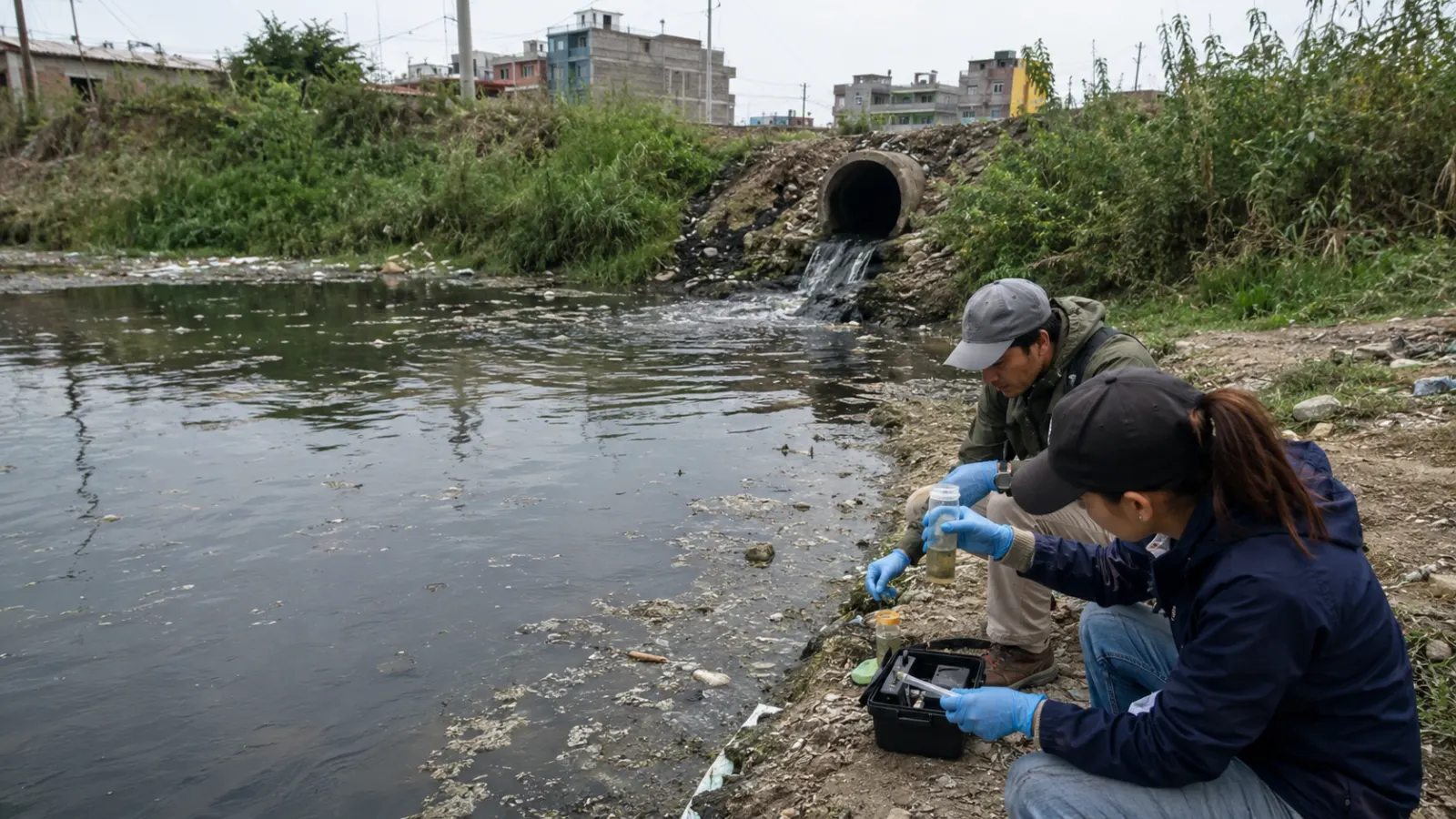
Acid deposition does not affect every lake equally. Watersheds differ in their ability to neutralise incoming acids. Soils and bedrock containing alkaline minerals can buffer acidity, while thin soils over resistant bedrock may have little neutralising capacity.
In sensitive watersheds, acidic water can lower lake and stream pH and mobilise aluminium from soils. EPA notes that increased acidity and aluminium can harm fish and other aquatic organisms. Eggs and young life stages may be particularly sensitive, and food-web effects can occur even before all adult fish disappear.
This explains why the same amount of deposition can produce severe ecological change in one mountain lake and relatively little measurable effect in another.
Effects on forests and soils
Acid deposition can leach base nutrients such as calcium and magnesium from soils while mobilising aluminium that can damage roots. At high elevations, acidic cloud water may directly affect foliage. The resulting stress can make sensitive trees less resilient to cold, pests and other environmental pressures.
Again, the effect is not uniform. Forest response depends on soil chemistry, tree species, elevation, deposition load and other stresses. It is inaccurate to assume that every damaged forest is suffering from acid rain or that acid deposition kills trees through one simple mechanism.
The broader ecological lesson is that atmospheric pollution can change soil chemistry slowly, with effects continuing after emissions begin to fall.
Buildings, monuments and visibility
Acidic particles and gases also react with materials. EPA notes that acid deposition can accelerate corrosion of metals and deterioration of paint and stone. Limestone and marble monuments are particularly vulnerable because acidic compounds react with carbonate minerals.
The sulfur and nitrogen pollution responsible for acid deposition also forms fine sulfate and nitrate particles. These particles contribute to regional haze and reduced visibility. The same emissions therefore affect ecosystems, built heritage and the air people breathe.
This overlap is important for policy. Controlling SO2 and NOx can yield several benefits at once rather than solving only one environmental problem.
Is acid rain dangerous to touch?
The phrase sounds as though rainfall itself should burn skin. In ordinary environmental conditions, that is not the principal human-health concern. EPA states that walking in acid rain or swimming in an acidified lake is not inherently more dangerous to people than similar contact with normal rain or non-acidic water.
The health threat comes mainly from the pollutants that create acid deposition. Sulfur dioxide and nitrogen oxides can irritate the respiratory system, and atmospheric reactions produce fine sulfate and nitrate particles that can be inhaled. NOx also contributes to ground-level ozone.
Acid-rain policy therefore produced health benefits because cutting precursor emissions also reduced particulate and ozone pollution.
Can acid rain be reversed?
The history of regulation shows that the atmospheric part of the problem can respond strongly to policy. The U.S. Acid Rain Program, established under the 1990 Clean Air Act Amendments and implemented from the 1990s, placed major controls on sulfur dioxide and nitrogen oxide emissions from power plants.
EPA reported in 2026 that the Acid Rain Program together with later power-sector regulations helped deliver annual SO2 reductions of more than 95 percent and annual NOx reductions of more than 89 percent from the relevant power-sector baseline. Wet sulfate deposition, a common indicator of acid rain, fell by more than 70 percent between 1989–1991 and 2020–2022.
Those results demonstrate that regional pollution is controllable. But ecosystem recovery can lag behind emissions reductions because soils depleted of buffering minerals and watersheds altered over decades may recover slowly. Declining deposition is a necessary condition for recovery, not a guarantee that every ecological effect disappears immediately.
Recovery also has to be measured, not assumed. Long-term lake and stream chemistry networks track whether acidity, sulfate, nitrate and buffering capacity are improving. Biological recovery can take longer because fish and invertebrate communities may need suitable water chemistry, habitat and recolonisation pathways before populations return. Monitoring therefore remains essential even after emissions targets are achieved.
The policy lesson: pollution crosses borders
Acid rain helped transform environmental governance because it made long-range transport impossible to ignore. A jurisdiction receiving damaging deposition may not control the sources that caused it. Regional monitoring, emissions inventories and interstate or international cooperation become essential.
The same principle applies to modern challenges such as ozone, fine particles and wildfire smoke. Air masses connect cities and countries. Local controls remain important, but regional atmospheric problems require regional policy.
Acid deposition also offers a rare environmental example in which strong regulation has produced measurable, large-scale improvement while scientific monitoring has tracked the response.
The takeaway
Acid rain forms when sulfur dioxide and nitrogen oxides are transformed into sulfuric and nitric acids and return to Earth through wet or dry deposition. Its impacts are most severe where soils and waters have limited capacity to neutralise the incoming acidity.
The problem can acidify lakes, alter soils, stress forests, damage materials and contribute indirectly to human-health risks through fine particles and ozone-forming pollution.
Its history is also a reminder that environmental damage is not always irreversible. When precursor emissions fall sharply, atmospheric deposition can fall with them. The recovery of ecosystems may take longer, but the source of the pressure can be reduced substantially in practice.
Sources / Further Reading
• U.S. Environmental Protection Agency — What is Acid Rain?: https://www.epa.gov/acidrain/what-acid-rain
• U.S. Environmental Protection Agency — Effects of Acid Rain: https://www.epa.gov/acidrain/effects-acid-rain
• U.S. Environmental Protection Agency — Acid Rain Program Results: https://www.epa.gov/acidrain/acid-rain-program-results
• U.S. Environmental Protection Agency — Monitoring Surface Water Chemistry: https://www.epa.gov/power-sector/monitoring-surface-water-chemistry
Suggested Internal Links
• Understanding the Sources of Air Pollution — Planned internal link
• What Is Particulate Matter — Planned internal link
• What Is Smog and How It Forms — Planned internal link
• Understanding the Health Effects of Air Pollution — Planned internal link
• Understanding Environmental Regulation — Planned internal link