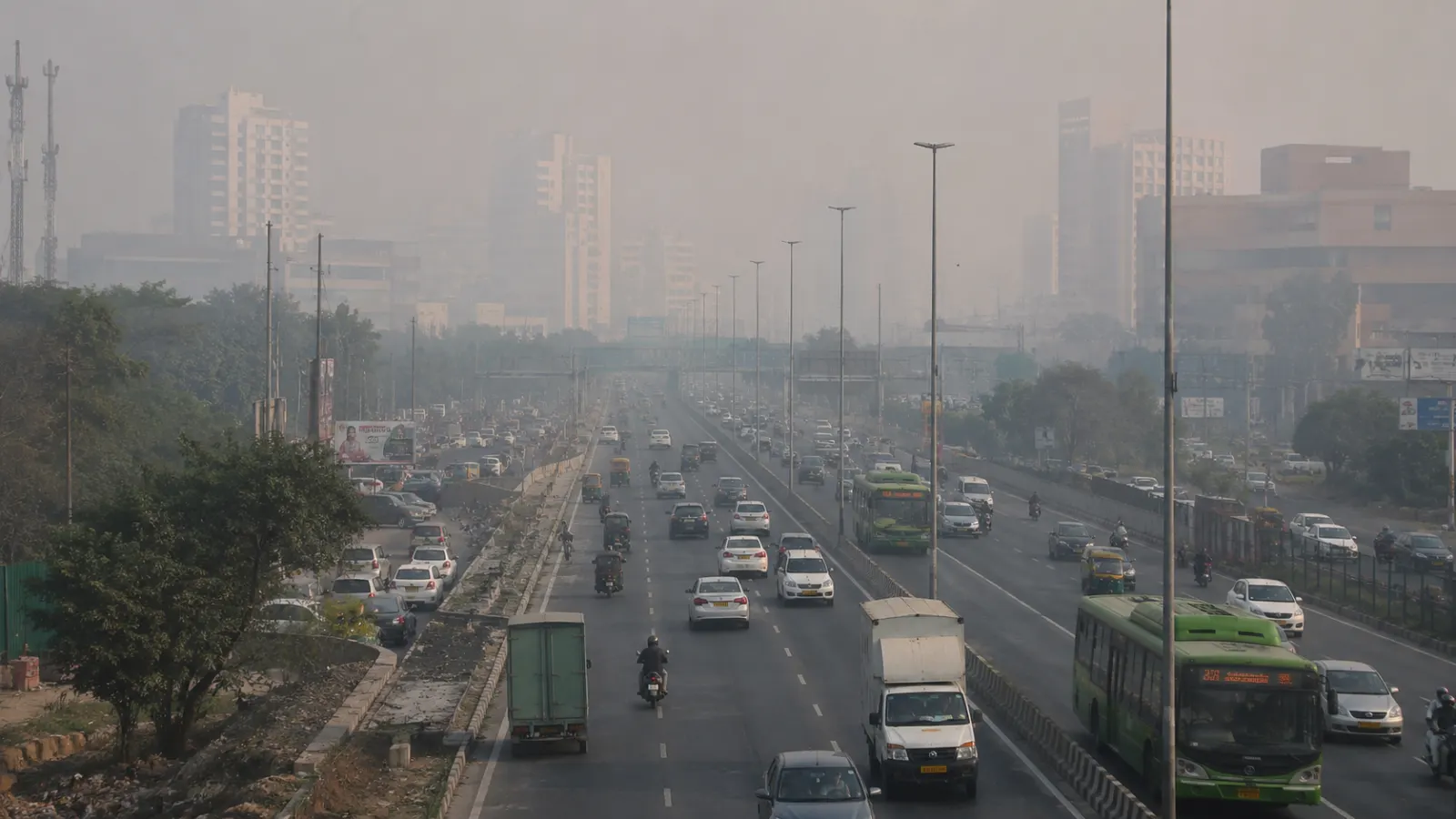
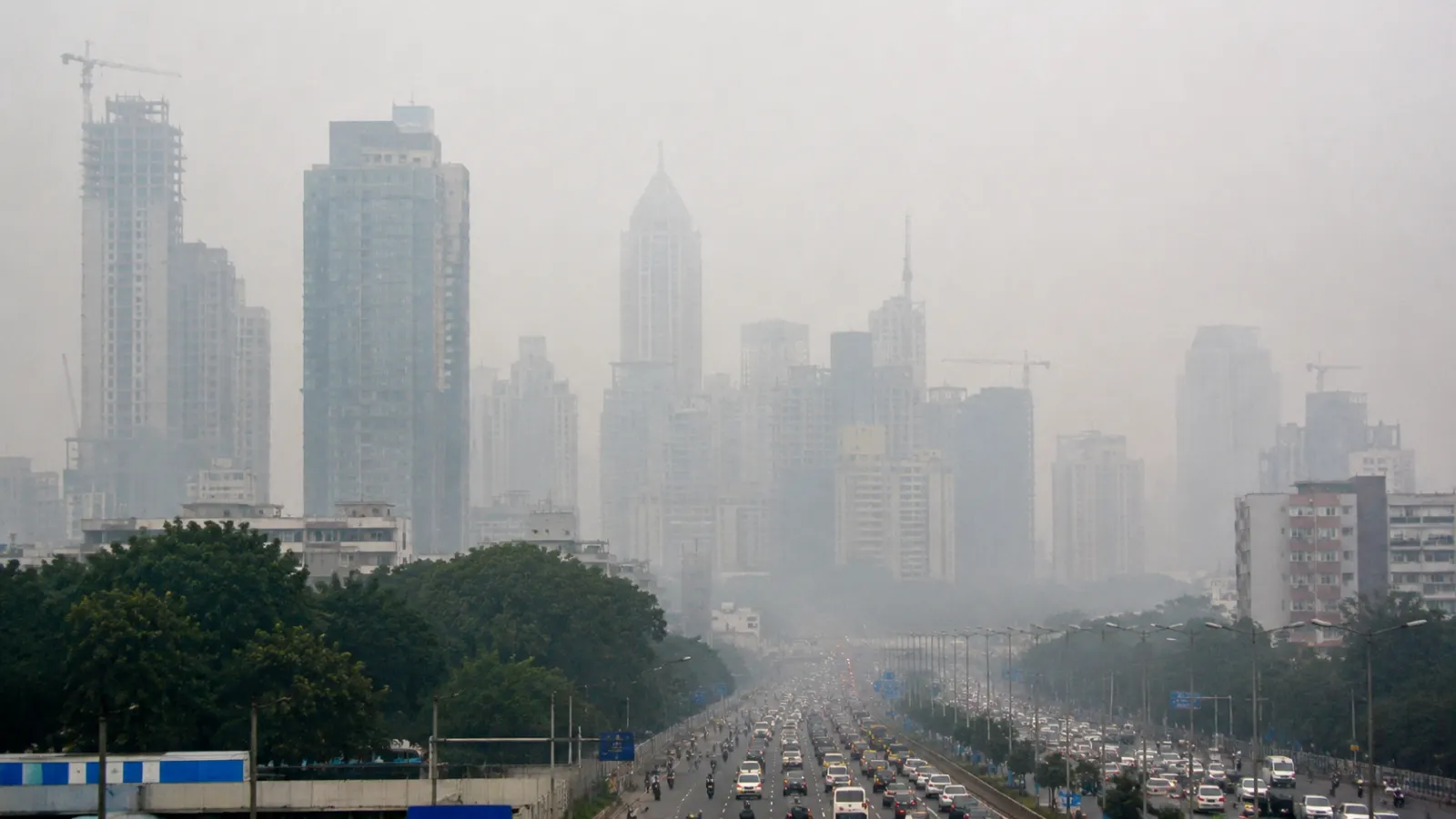
The word smog began as a description of something people could see: smoke mixed with fog. In the industrial cities of the nineteenth and early twentieth centuries, coal combustion filled damp winter air with soot and sulfur pollution. Under stagnant weather, the mixture could become thick enough to darken streets in daylight.
Modern smog is often chemically different. In many cities, the central problem is photochemical smog: a mixture in which ground-level ozone and other secondary pollutants form after nitrogen oxides and volatile organic compounds react in sunlight. Particulate matter can add the haze people associate with polluted urban skies.
The result is an important lesson in atmospheric science. A city can emit the ingredients of smog without directly emitting the pollutant that later dominates the episode. Sunlight, temperature, wind and chemistry finish the process.
The original smoke-and-fog smog
The historical meaning is closely associated with coal-burning cities. Domestic fireplaces, power stations and industrial furnaces emitted large quantities of soot and sulfur dioxide. When cold, moist, stagnant air trapped pollution near the ground, dense sulfurous smog could form.
The Great Smog of London in December 1952 remains the defining example. The UK Met Office describes a temperature inversion that trapped fog, smoke and industrial pollutants over the city. Public-health authorities later associated the event with thousands of excess deaths, and it became a major catalyst for British clean-air legislation.
This form of pollution is sometimes called London-type or sulfurous smog. It tends to be linked with coal combustion, high sulfur dioxide, particles, cool conditions and fog. Cleaner fuels and emissions controls have greatly reduced this specific pattern in many wealthy cities, though coal and solid-fuel pollution remains important in parts of the world.
Photochemical smog: the modern urban form
The smog associated with sunny traffic-heavy cities follows a different chemistry. EPA identifies ground-level ozone as the main ingredient in what is commonly called smog. Unlike pollutants emitted directly from an exhaust pipe, ozone at the surface is largely a secondary pollutant.
It forms when nitrogen oxides, usually written NOx, and volatile organic compounds, or VOCs, react in the presence of sunlight. Major human sources include motor vehicles, power plants, industrial boilers, refineries, chemical facilities, solvents and fuel handling. Natural sources of VOCs and some nitrogen oxides also exist.
The chemistry involves chains of reactions rather than one simple equation. Sunlight drives reactions involving nitrogen dioxide and oxygen; reactive organic compounds influence whether ozone accumulates. This is why effective ozone control can require sophisticated regional emissions modelling rather than reducing one pollutant in isolation.
Why hot sunny days are often worse
Photochemical reactions accelerate under strong sunlight, and high temperatures are often associated with meteorological conditions that favour ozone formation. EPA notes that ground-level ozone is most likely to reach unhealthy levels on hot sunny days, especially in urban environments.
Weather also governs dispersion. Strong winds can dilute local pollution, though they may transport ozone and precursor gases downwind. Stagnant high-pressure systems can allow pollutants to build for several days. Mountain basins and valleys may trap air, while sea breezes can move pollution back and forth across metropolitan regions.
Ozone can therefore peak away from the source of the emissions. A suburban or rural monitoring station downwind of a city may record high ozone even when central-city concentrations have begun to decline.
Temperature inversions and trapped pollution
Normally, warmer air near the surface can rise and mix with air above it. A temperature inversion reverses that pattern: warmer air sits above cooler surface air, suppressing vertical mixing. Pollutants released near the ground can then accumulate within a shallow layer.
Inversions do not create pollution. They trap what has already been emitted or formed. This distinction matters because dramatic smog episodes often result from the combination of high emissions and unfavourable meteorology.
The 1952 London event involved an inversion and fog. Modern winter pollution episodes in many cities can also involve inversions that trap fine particles and nitrogen oxides, even when photochemical ozone is not the dominant pollutant.
Smog is usually a mixture, not just ozone
Calling ozone “smog” is useful shorthand, but actual polluted air can contain particulate matter, nitrogen dioxide, carbon monoxide, sulfur compounds, organic chemicals and secondary aerosols at the same time. The visible haze may be caused largely by particles even when ozone is the pollutant driving a health warning.
This mixture changes by place and season. Wildfire smoke can combine with urban pollution. Dust can add coarse particles. Ammonia from agriculture can react with acidic compounds to form fine particles. Regional transport can bring pollution from hundreds of kilometres away.
The term smog is therefore descriptive rather than chemically precise. Air-quality management depends on measuring individual pollutants, not simply judging how hazy the sky looks.
Visibility can also mislead. Humidity can make particles swell and scatter more light, creating thicker-looking haze without a proportional increase in particle mass. Conversely, ozone can reach unhealthy concentrations on a day that does not look especially dirty. The sky is a useful warning sign, but instruments are a better guide to exposure.
Why smog harms health
Ground-level ozone is a strong oxidant. Breathing it can irritate and inflame the airways, cause coughing and throat irritation, make deep breathing more difficult, reduce lung function and aggravate asthma. Children, people with asthma, older adults and people active outdoors can be particularly vulnerable during high-ozone periods.
Particles within smog add separate cardiovascular and respiratory risks. Fine PM can penetrate deep into the lungs, and some particles can enter the bloodstream. A smog episode can therefore expose people to several harmful pollutants simultaneously.
The health burden is not limited to dramatic emergency episodes. Repeated lower-level exposure contributes to chronic population risk, which is why air-quality standards and long-term emissions reductions matter alongside short-term warnings.
Why smog can damage plants and ecosystems
Ground-level ozone also affects vegetation. EPA notes that ozone can damage sensitive plants, reduce photosynthesis, slow growth and alter ecosystem functioning. Crops and forests can therefore experience effects even when human observers notice no immediate symptoms.
Nitrogen compounds associated with smog and particle formation can also deposit onto ecosystems, changing nutrient balances. Sulfur and nitrogen oxides may contribute to acid deposition. Air pollution connects urban emissions with rural environmental change.
This broader damage is one reason ozone standards are designed not only around human health but also around public welfare, including vegetation and visibility.
Can smog travel?
Yes. Ozone and its precursors can be transported long distances by wind. EPA explicitly notes that rural areas can experience high ozone because polluted air moves downwind from urban and industrial sources. Fine particles and precursor gases can travel regionally as well.
This complicates accountability. A city may reduce local emissions and still receive transported pollution. Conversely, emissions in one jurisdiction may contribute to unhealthy air elsewhere. Effective control often requires regional or cross-border coordination.
The same principle explains why satellite images of large haze events can span multiple states or countries. Atmospheric chemistry does not stop at political boundaries.
Reducing smog
The chemistry points toward the solution: reduce the emissions that create ozone and particles. Vehicle emission standards, cleaner fuels, electrification, industrial controls, cleaner power generation, vapour recovery, solvent reformulation and restrictions on open burning can all play roles depending on the local source profile.
Because ozone chemistry is nonlinear, the exact balance of NOx and VOC reductions must be informed by monitoring and modelling. Measures that work in one airshed may not have identical effects in another.
For individuals, official AQI forecasts help reduce exposure during episodes. For society, however, clean-air policy is the main intervention. Smog cannot be solved by personal behaviour alone.
The takeaway
Smog is a name for polluted atmospheric mixtures, not a single chemical. The old industrial form combined smoke, sulfur pollution and fog under stagnant winter weather. Modern photochemical smog is commonly driven by ozone formed when NOx and VOCs react in sunlight, often alongside fine particles and other pollutants.
Its severity depends on both emissions and weather. That is why two days with similar traffic can have very different air quality, and why pollution can become severe far downwind from its sources.
The haze may be visible. The chemistry that creates it usually is not.
Sources / Further Reading
• U.S. Environmental Protection Agency — Ground-level Ozone Basics: https://www.epa.gov/ground-level-ozone-pollution/ground-level-ozone-basics
• U.S. Environmental Protection Agency — Smog, Soot, and Other Air Pollution from Transportation: https://www.epa.gov/transportation-air-pollution-and-climate-change/smog-soot-and-other-air-pollution-transportation
• UK Met Office — The Great Smog of 1952: https://weather.metoffice.gov.uk/learn-about/weather/case-studies/great-smog
• UK Government — Health Profile for England: Outdoor air pollution: https://www.gov.uk/government/publications/health-profile-for-england/chapter-7-current-and-emerging-health-protection-issues
Suggested Internal Links
• Understanding the Sources of Air Pollution — Planned internal link
• What Is Particulate Matter — Planned internal link
• Understanding the Air Quality Index — Planned internal link
• Understanding the Health Effects of Air Pollution — Planned internal link
• What Causes Acid Rain — Planned internal link