Why Urban Green Spaces Matter: Health, Heat, Flooding and City Life
Urban parks and trees are often described as amenities: pleasant additions a city can provide after housing, roads, drainage and other essential services have been addressed. That distinction is increasingly difficult to defend. Green spaces can influence heat exposure, stormwater, physical activity, mental well-being, biodiversity, social interaction and the experience of walking through a city. In a dense neighbourhood, a shaded route or accessible park can function as health and climate infrastructure just as clearly as a footpath or drainage system.
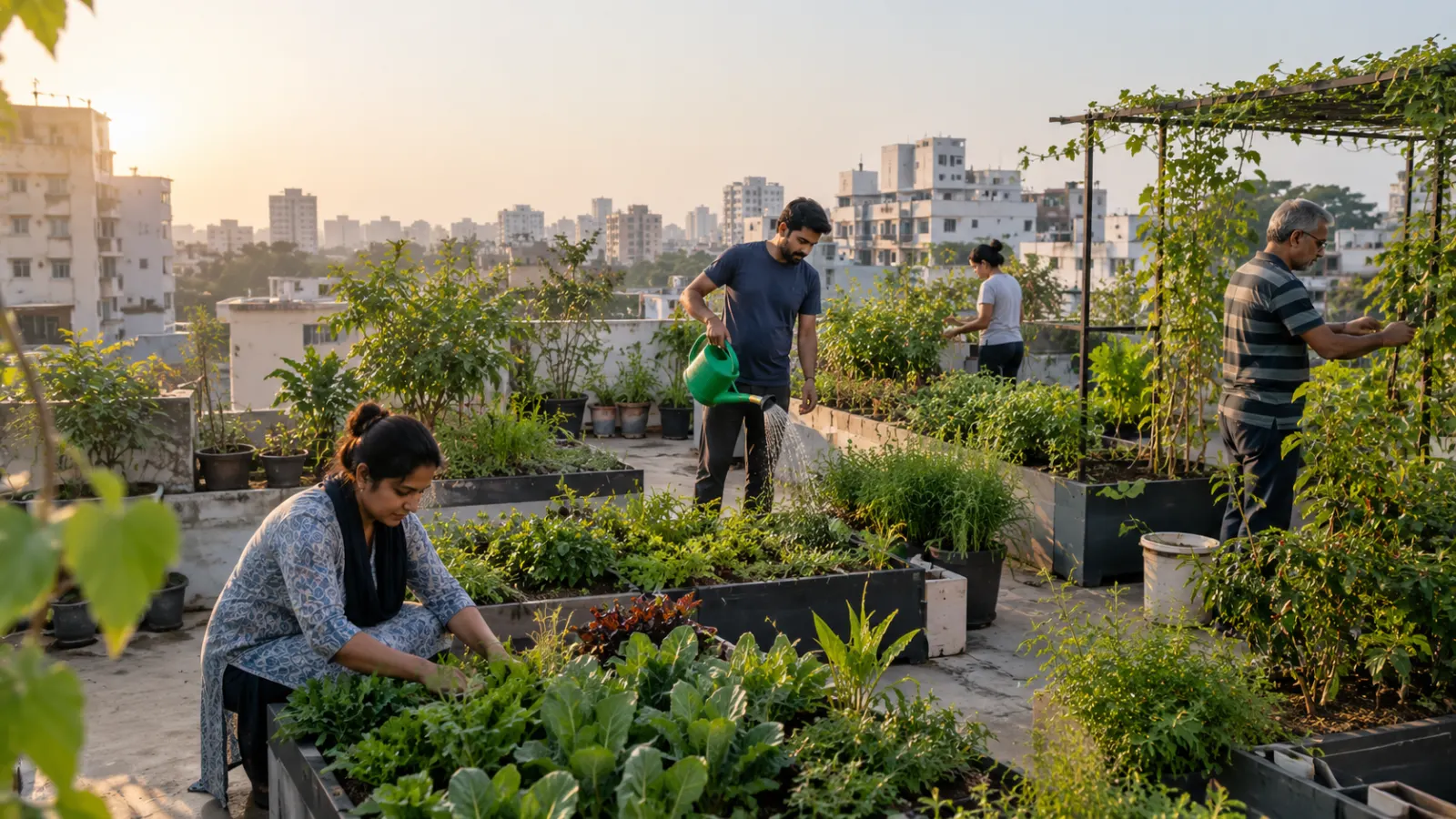
The category is broader than large public parks. Urban green space can include street trees, neighbourhood gardens, urban forests, greenways, wetlands, natural meadows, vegetated squares and smaller planted areas. Green roofs and private gardens can provide ecological functions as well, although their public-access value is different. WHO describes green and blue spaces as a fundamental component of urban ecosystems and links them with physical activity, relaxation, reduced noise exposure, cooling and social interaction.
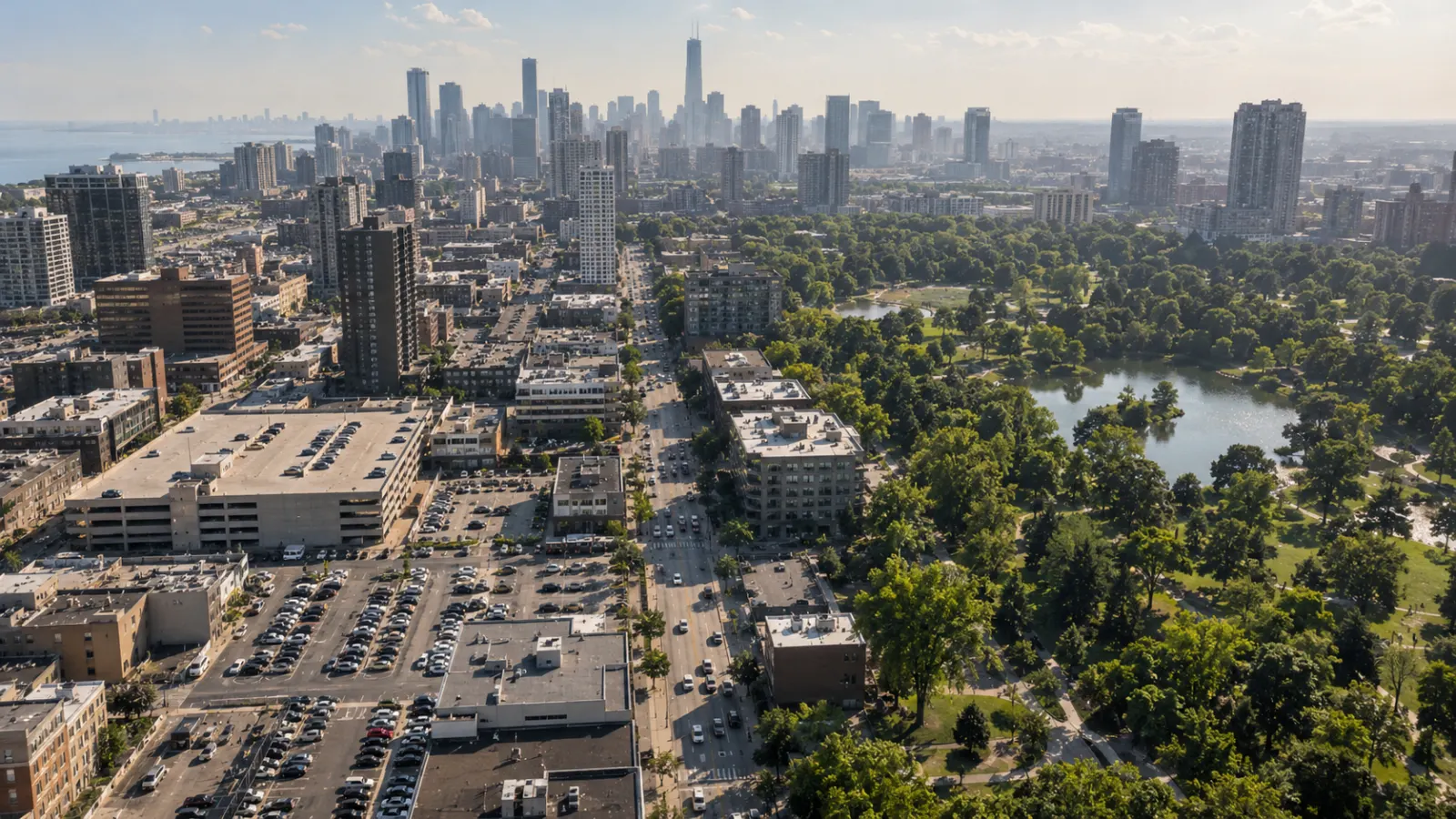
Quantity still matters, but hectares alone provide an incomplete picture. A city may contain a large forest at its edge while residents in dense neighbourhoods have almost no shade or usable public green space within walking distance. The more useful questions are where green spaces are located, whether people can reach them safely, what ecological functions they perform, whether they remain comfortable during extreme heat and whether the city can afford to maintain them over decades.
Green space can support health, but design and access determine how much
The health case for urban nature has strengthened as research has moved beyond simply asking whether greener neighbourhoods are more pleasant. WHO's 2025 science and policy brief reports associations between green-space exposure and benefits including lower risks of depression and anxiety, improved cardiovascular health, greater physical activity and reduced loneliness. WHO Europe likewise describes a growing evidence base linking urban green and blue spaces with physical health, mental well-being and social benefits.
Several mechanisms can operate simultaneously. A nearby park can make walking, running or play easier. Tree-lined streets can make active travel more comfortable. Natural settings may provide respite from noise, heat and crowded built environments. Parks can also create places for social contact, recreation or quiet time without requiring people to buy anything. WHO Europe identifies opportunities for physical activity, stress relief and social cohesion among the pathways through which urban nature may affect health.
None of these benefits appears automatically because land on a map has been coloured green. A poorly maintained park that feels unsafe at night may discourage use. A green space separated from nearby homes by a high-speed road may be geographically close but functionally inaccessible. An unshaded lawn may provide recreation but offer limited thermal relief during a hot afternoon. A park without accessible paths or seating may exclude people with mobility limitations.
UN-Habitat consequently places strong emphasis on public space being safe, inclusive, connected and accessible, particularly for vulnerable groups. Its Global Public Space Programme treats public-space design and management as part of wider strategies involving health, accessibility, resilience, inequality and long-term urban development rather than merely landscape beautification.
This changes how planners should evaluate success. Counting the number of parks tells less than knowing who can walk to them, whether children and older residents can use them safely, whether shade is available where people actually move, and whether quality differs systematically between wealthier and poorer neighbourhoods.
Trees and vegetation can help cities adapt to extreme heat
Urban heat is one of the clearest examples of green infrastructure performing a measurable physical function.
Buildings, roads and paved surfaces absorb and store solar energy, while dense urban form can restrict airflow and reduce the natural cooling that occurs through vegetation and soil. Trees and other vegetation can counter some of that effect principally through shade and evapotranspiration. Shade prevents direct solar radiation from heating people and surfaces, while evapotranspiration uses energy as water moves through plants and into the atmosphere.
The IPCC identifies street trees, green roofs, green walls, parks and other forms of urban vegetation as established nature-based strategies for reducing heat exposure. Its assessment describes shade and evapotranspiration as the primary cooling mechanisms and concludes with robust evidence and high agreement that urban vegetation can reduce heat and extreme-heat exposure.
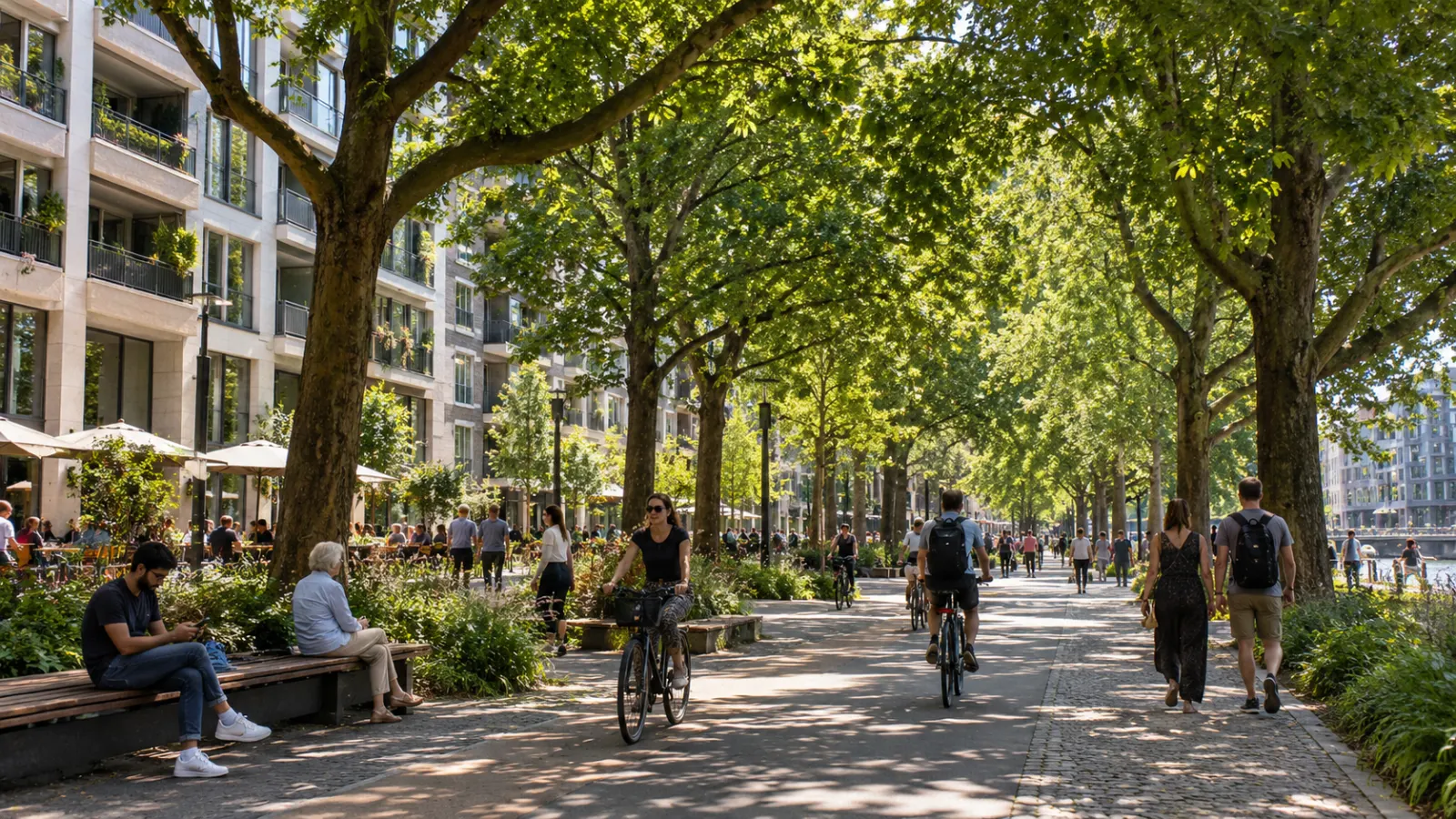
The distinction between temperature and thermal comfort matters. A pedestrian standing beneath a mature tree may experience substantially less radiant heat even when the official air temperature has changed relatively little. This is one reason tree canopy along walking routes, playgrounds, transit stops and public squares can be more relevant to daily heat exposure than simply increasing vegetation somewhere else in the city.
Not all greenery cools equally. A lightly vegetated lawn exposed to full afternoon sun may provide much less protection than a continuous canopy of mature trees. Cooling also depends on species, canopy density, soil moisture, urban form and local climate. In water-stressed cities, vegetation must be selected and managed in ways that can survive hotter and potentially drier future conditions.
Green infrastructure should therefore be designed for durable cooling, not for hitting a planting target. A thousand newly planted trees that die within several summers do not provide the same infrastructure value as fewer trees given adequate soil, water, maintenance and protection from construction damage.
Climate adaptation also favours connected systems. A shaded pedestrian network can reduce heat exposure during everyday trips, while isolated patches of vegetation may offer benefits only to people who deliberately visit them.
Green infrastructure can reduce stormwater pressure
The same urban surfaces that intensify heat can also make heavy rainfall harder to manage.
Roofs, parking areas, paved roads and other impermeable surfaces move water rapidly. Instead of infiltrating soil gradually, rain becomes runoff that is concentrated into drains and channels. During intense storms, drainage systems may be overwhelmed.
Green infrastructure can slow this process. Soil and vegetation can intercept rainfall, encourage infiltration and store water temporarily. Wetlands, rain gardens, vegetated swales and suitably designed parks can delay runoff before it reaches conventional drainage infrastructure. The IPCC identifies infiltration, drainage, detention, evaporation and transpiration as important hydrological functions of green and blue infrastructure and describes nature-based systems as useful alongside conventional flood-control infrastructure.
This is not an argument for replacing drains and engineered flood systems with parks. Soil becomes saturated, rainfall can exceed storage capacity and dense urban districts may have too little available land for natural systems to manage extreme flows alone. The more realistic strategy in many cities is hybrid infrastructure: pipes, channels and pumping systems deal with major flows while distributed green infrastructure reduces how rapidly water reaches that network.
A park can therefore be deliberately designed to perform more than one job. During ordinary weather it may function as a sports field or neighbourhood gathering place; during intense rain, part of it can temporarily hold water. A restored wetland may provide habitat and recreation while also slowing floodwater.
Multifunctionality is especially valuable because urban land is scarce. The strongest green-infrastructure investments often solve several problems within the same space rather than dedicating valuable land to a single purpose.
Urban nature also provides habitat
Cities are heavily modified ecosystems, but they do not have to be biologically empty.
Trees, native flowering plants, ponds, wetlands, grasslands and less intensively managed areas can provide food, shelter and breeding habitat for birds, insects and other organisms. Connected corridors can allow species to move between larger patches, while small green spaces may act as stepping stones through otherwise highly built environments.
The ecological value of a space depends on more than whether it looks green. A closely mown lawn containing only a few ornamental species can provide recreation and visual openness while supporting relatively limited habitat. More diverse planting, structural variation and connections to other habitat can support a wider range of species.
Maintenance practices matter as well. Frequent mowing, heavy pesticide use and excessive night lighting can reduce ecological value. Invasive species may provide greenery while damaging local ecosystems. A biodiversity-oriented design therefore asks different questions from a purely decorative landscape plan: which organisms can use this space, what food or shelter does it provide, and does it connect meaningfully to habitat elsewhere?
WHO Europe describes biodiversity and functioning ecosystems as relevant to human health partly through services such as water filtration, air purification and climate regulation. The relationship is not always simple—urban nature can also involve pollen, allergens or vectors of disease—but that is a reason for informed design rather than for treating biodiversity as irrelevant to city planning. WHO Europe explicitly notes both the benefits and potential risks that should be included when valuing green and blue spaces.
Public green space gives urban residents somewhere to exist without buying something
One of the less measurable but socially important features of public green space is that people can often occupy it without being customers.
Commercial districts provide valuable services and social activity, but participation usually requires spending money or entering privately controlled premises. Public parks, squares and greenways can create a different kind of urban environment: people can walk, meet, sit, play, exercise or simply remain in a shared space.
UN-Habitat treats safe and accessible public spaces as important components of inclusive and resilient urban development. Its programme emphasises community cohesion, accessibility, livelihoods and social inclusion alongside environmental resilience.
The social value again depends on details. Seating affects whether older adults or people with limited stamina can remain comfortably. Lighting influences evening use. Toilets, drinking water and shade determine how long families can stay. Paths and entrances influence wheelchair access. Programming can attract different groups but may also make a space feel dominated by particular activities.
Good public space is therefore not merely empty land with trees planted around it. It requires social design.
This becomes especially important in dense cities where private living space may be limited. A neighbourhood park can function as an extension of the home: a place for children to play, older people to walk, families to gather and residents to encounter people outside their immediate household.
Trees can help with air quality, but they cannot substitute for reducing pollution
Urban greening is sometimes promoted as though planting enough trees could solve air pollution. The evidence supports a more careful conclusion.
Leaves can capture some airborne particles, vegetation can alter pollutant dispersion and green space can sometimes reduce exposure by separating pedestrians from major emission sources. WHO's 2025 brief discusses air-quality pathways as one mechanism through which green spaces may affect health.
But trees do not remove the need to control emissions from vehicles, industry, open burning, power generation or other sources.
Local street geometry can even produce trade-offs. Dense vegetation placed inside a narrow traffic corridor may interfere with airflow and in some circumstances increase pollutant concentration close to pedestrians. Certain plant species can also produce high pollen loads or emit biogenic compounds that interact with atmospheric chemistry.
The correct hierarchy is therefore straightforward: reduce pollution at the source first and design vegetation to complement that strategy.
A roadside tree should be valued for shade, habitat and streetscape benefits as well as whatever air-quality contribution it makes. Its presence should not become justification for tolerating unnecessarily high emissions.
Access and inequality matter more than a citywide green percentage
A city can look green in aggregate statistics while everyday access remains extremely unequal.
A huge forest, golf course or protected area on the urban fringe can raise total green-space area without giving residents in dense neighbourhoods a place to walk after dinner or shade on the route to school. Private gardens may contribute canopy and biodiversity but provide no direct public access.
This is why public-health and urban-development organisations increasingly emphasise distribution and accessibility rather than only total supply. WHO Europe has developed tools specifically intended to evaluate the availability and accessibility of urban green space and estimate potential health impacts. UN-Habitat's SDG 11.7 work similarly focuses on universal access to safe, inclusive and accessible green and public spaces, with particular attention to women, children, older people and people with disabilities.
Unequal distribution can compound other urban disadvantages. Lower-income neighbourhoods may have less mature tree canopy, hotter streets, poorer park maintenance and fewer safe walking routes even while residents face greater exposure to pollution or heat.
Urban greening can help correct those inequities, but even a well-intentioned project can produce another problem: environmental improvements can increase an area's attractiveness and property values. If housing policy does not protect vulnerable residents, the people who were supposed to benefit from a new park or greenway may eventually be displaced.
This is sometimes described as green gentrification. It does not mean disadvantaged neighbourhoods should be denied environmental investment. It means greening policy should be coordinated with affordable housing, tenant protection and anti-displacement measures so that improvements remain available to existing communities.
A distributional question should therefore accompany every major green-space investment: who receives the benefits, and who bears the costs?
Maintenance determines whether green infrastructure remains infrastructure
A newly planted tree produces an attractive photograph long before it produces a mature canopy.
That time difference matters.
Trees need sufficient soil volume for roots, suitable species selection, water during establishment, protection from construction damage and appropriate pruning. Parks require paths, lighting, waste collection, equipment inspection and landscape maintenance. Wetlands may require hydrological management and control of invasive plants.
If construction receives political attention while maintenance remains chronically underfunded, expected benefits can deteriorate.
UN-Habitat's public-space work explicitly includes management and maintenance frameworks alongside design and construction. This is appropriate because a public space is not a completed object at the ribbon-cutting ceremony. It is an ongoing service.
Climate change makes maintenance strategy more demanding. Trees selected for historical temperatures may struggle under hotter conditions. Irrigation may become costly or unsustainable where water scarcity intensifies. Planting only a narrow range of species can increase vulnerability to pests or disease.
Urban forests therefore need diversification and long-term succession planning. Mature trees will eventually die, meaning cities must plant replacements early enough that canopy does not disappear from entire streets or neighbourhoods at once.
Maintenance should consequently be considered part of capital planning from the beginning. A city that cannot maintain a landscape reliably should reconsider its design before construction rather than allowing an ambitious project to deteriorate afterward.
The strongest green spaces perform several functions at once
Urban land is too valuable for green-space planning to be reduced to decoration.
A well-designed park can shade a walking route, absorb some stormwater, support exercise, provide habitat and create a place for social interaction. A network of street trees can reduce pedestrian heat exposure while making walking more comfortable and connecting ecological patches. An urban wetland can contribute to flood management, biodiversity and recreation simultaneously.
The IPCC describes this multifunctionality as one of the strengths of urban nature-based solutions, particularly when green and blue infrastructure operates alongside conventional engineered systems. WHO Europe similarly argues that the environmental, social, health and economic value of green and blue spaces should be taken into account when urban land decisions are made.
This suggests that cities should plan green space as a network, not as leftover parcels between development projects.
Street trees can connect parks. Greenways can connect neighbourhoods to larger natural areas. Wetlands can fit within catchment-scale drainage planning. School grounds and smaller public spaces can provide everyday access where acquiring land for a major new park is impossible.
The network also needs institutional coordination. Parks may be controlled by recreation departments while street trees fall under roads agencies, wetlands under drainage authorities and housing-landscapes under yet another department. Without coordination, one agency may plant trees that another removes for utility works several years later.
Long-term inventories of tree canopy, species diversity, park condition, pedestrian access and user patterns can help governments determine whether the network is actually improving.
Green space has trade-offs, which is why design matters
Describing green space as infrastructure does not mean every greening project is automatically beneficial.
Dense planting can create visibility concerns along poorly designed paths. Irrigation can compete with other water needs. Some tree species generate substantial pollen. Branch failure and storm damage create maintenance risks. Wet environments can support disease vectors if badly managed. Popular parks can generate noise or increase nearby property values.
WHO Europe's work on valuing urban nature explicitly recommends evaluating both benefits and risks, including allergens, injuries and potential disease exposures.
These trade-offs are arguments for competent planning, not against urban nature.
Roads also create costs and risks, yet cities do not respond by abandoning transport infrastructure. They establish design standards, maintenance programmes and safety controls. Green infrastructure deserves the same seriousness.
Evaluation should also examine actual use rather than supply alone. Park area says little about whether residents feel safe enough to enter, whether children can reach it without crossing dangerous roads, whether people with disabilities can navigate the paths or whether shade is available during periods of extreme heat.
Useful indicators can include walking access, canopy coverage, surface temperature, user surveys, biodiversity measures and maintenance condition. Different indicators answer different questions, so a city should avoid reducing performance to a single “green percentage.”
Urban green space is a public service, not leftover land
The strongest case for urban green space is not that greenery makes cities more attractive, although it often does.
Its larger value is functional.
Urban nature can support physical and mental health, reduce heat exposure, help manage stormwater, provide habitat and create publicly accessible places for movement and social life. WHO, the IPCC and UN-Habitat increasingly describe these functions within wider discussions of health, climate resilience, biodiversity and equitable urban development.
The benefits, however, depend on design and governance. A park that nobody can safely reach, a tree that dies before establishing canopy, a wetland disconnected from water planning or greenery concentrated only in affluent districts cannot deliver the same value as a connected, accessible and maintained urban network.
That is why the useful planning question is not simply, “How much green space does this city have?”
A stronger set of questions is: Where is it? Who can reach it? Does it provide shade where people need it? Can it survive the future climate? Does it manage water? Does it support biodiversity? Is it safe and accessible? Who maintains it? And will today's residents still be able to benefit when the neighbourhood becomes more desirable?
Urban green space becomes infrastructure when cities expect it to perform reliably for decades.
The objective is therefore not to make urban maps look greener. It is to build cities that are cooler, healthier, more absorbent, more biodiverse and more usable in everyday life—and to distribute those benefits widely enough that urban nature functions as a genuine public service.