Bahadur Shah Zafar: The Last Mughal Emperor and the Revolt of 1857
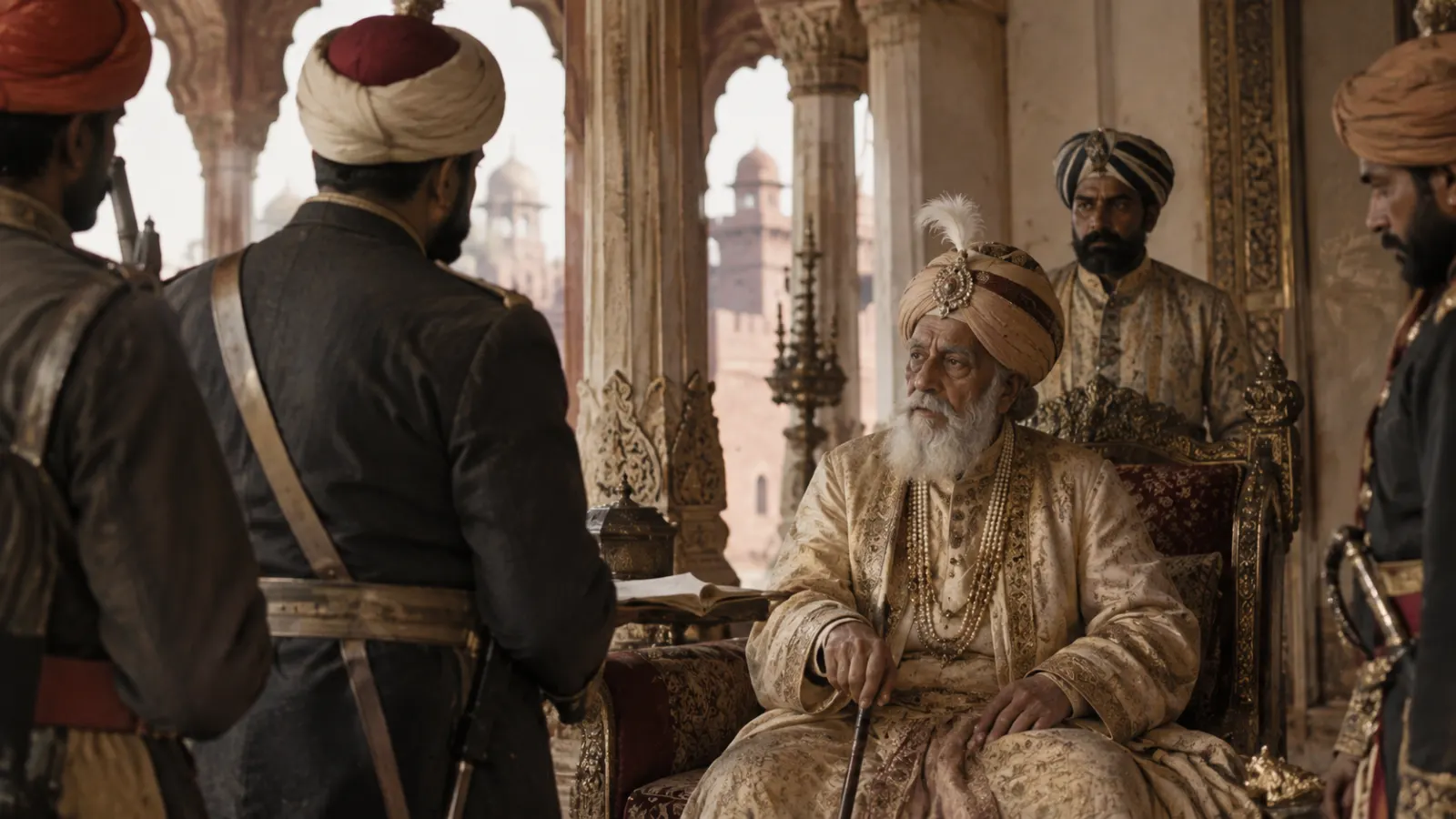
When soldiers who had rebelled at Meerut entered Delhi on 11 May 1857, they went to the Red Fort and sought the support of Bahadur Shah Zafar, the last Mughal emperor. Zafar was already an elderly ruler whose effective political power extended little beyond the palace. The East India Company dominated Delhi’s military and administrative order, while the Mughal court survived largely through prestige, ritual and a pension supplied under British authority. Yet the rebels still believed that the emperor’s name could convert a military mutiny into something politically larger.
That moment captures the central paradox of Zafar’s historical importance. He did not command a functioning Mughal empire comparable with that of Akbar or Aurangzeb, and he did not plan the uprising that began in 1857. But the dynasty he represented still possessed enough symbolic authority for rebels to proclaim him emperor and issue orders, proclamations and other acts of government in his name. The Metropolitan Museum of Art describes him as the final Mughal emperor whose nominal leadership of the 1857 rebellion led to his deposition and exile by the British.
His subsequent trial, removal from Delhi and exile to Rangoon therefore represented more than the punishment of one elderly ruler. They formally ended the Mughal imperial line and demonstrated that the British intended to eliminate an alternative source of sovereignty after the rebellion. To understand Bahadur Shah Zafar, however, it is necessary to separate his actual capacity to control events from the immense political meaning others attached to his name.
A poet-emperor ruling an empire that had almost disappeared
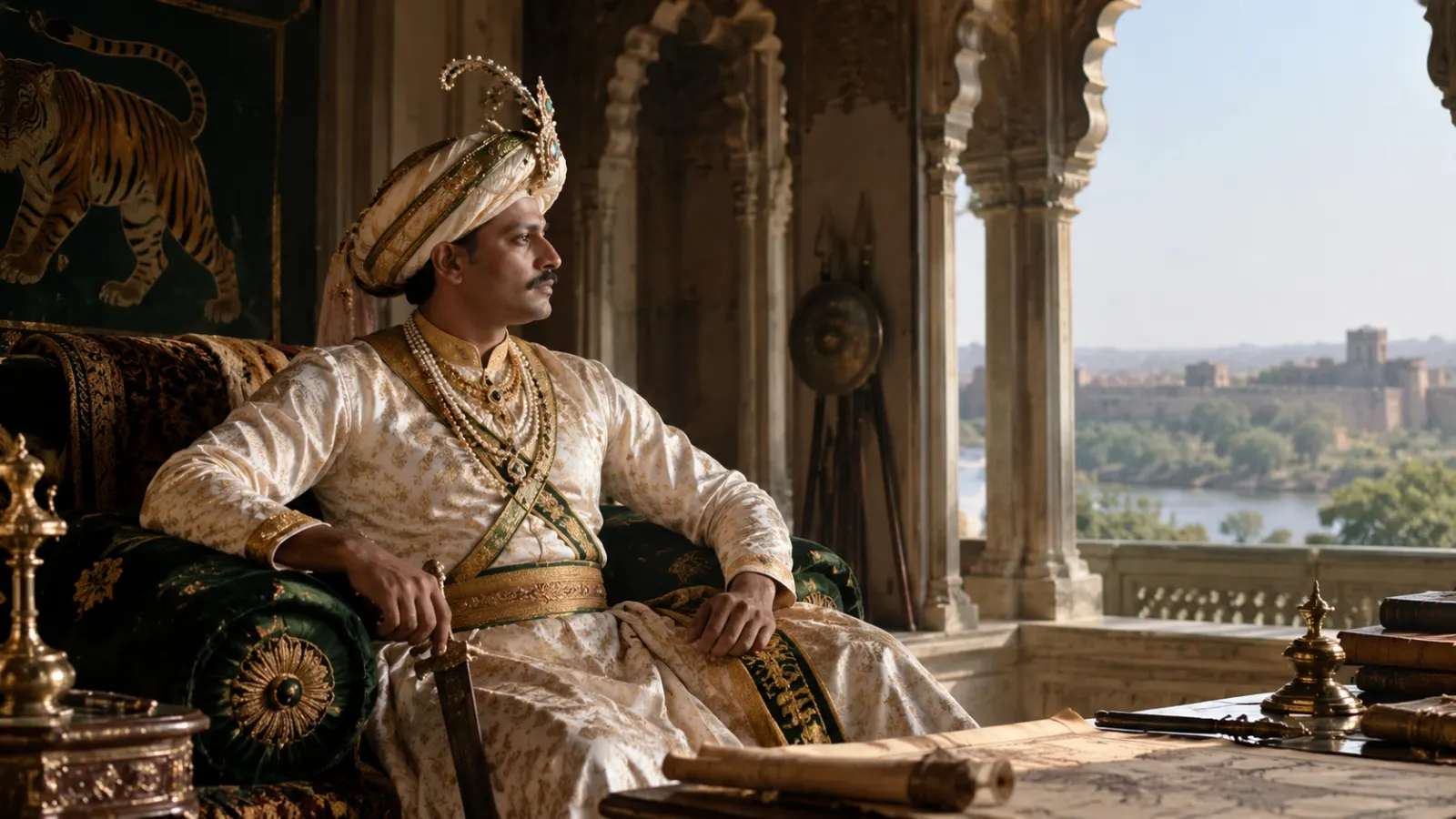
Bahadur Shah Zafar was born in 1775 and succeeded his father, Akbar Shah II, in 1837. By then Mughal territorial sovereignty had already contracted drastically. Regional states, the Marathas and eventually the East India Company had stripped the dynasty of most of the military, fiscal and diplomatic powers traditionally associated with emperorship. The Library of Congress describes Zafar as ruler of a declining empire whose authority did not extend much beyond Delhi’s Red Fort.
The distinction is important because describing Zafar simply as “emperor of India” can create a misleading image of the state he actually controlled. His court maintained titles, ceremonies, literary patronage and dynastic prestige, but the material machinery of empire had largely passed elsewhere. British power had steadily reduced the Mughal ruler’s public standing, and disputes over succession and residence made the court increasingly anxious about whether even its remaining privileges would survive another generation.
Zafar’s wife Zeenat Mahal was deeply involved in succession politics and sought recognition for her son Mirza Jawan Bakht. British officials resisted such arrangements and increasingly treated the Mughal family as a dependent household rather than the centre of a sovereign polity. By 1857, therefore, the Red Fort contained both the splendour of a royal court and the insecurity of a dynasty that knew its political future was narrowing.
Yet the court remained culturally important. Zafar wrote Urdu poetry under the pen name “Zafar,” meaning victory, and patronised a literary world that included some of the most important poets associated with nineteenth-century Delhi. The Library of Congress identifies him as a prolific writer and major patron of poets including Ghalib, Zauq, Momin, Dagh and others.
His literary role should not be treated as a decorative detail added to a political biography. Poetry was part of courtly status, intellectual exchange and public culture. Mushairas, patronage networks and literary rivalries helped make late Mughal Delhi one of the centres of Urdu cultural life even while imperial power weakened.
This later created another historical problem: Zafar’s life became so closely associated with exile and the destruction of Delhi that verses about loss, imprisonment and homeland were frequently attached to him in popular memory. Some are securely part of his poetic corpus; others have disputed attribution. The safest approach is to rely on documented collections and critical editions rather than assuming that every famous couplet circulated under his name was written by him.
Why the rebels turned to Zafar in May 1857
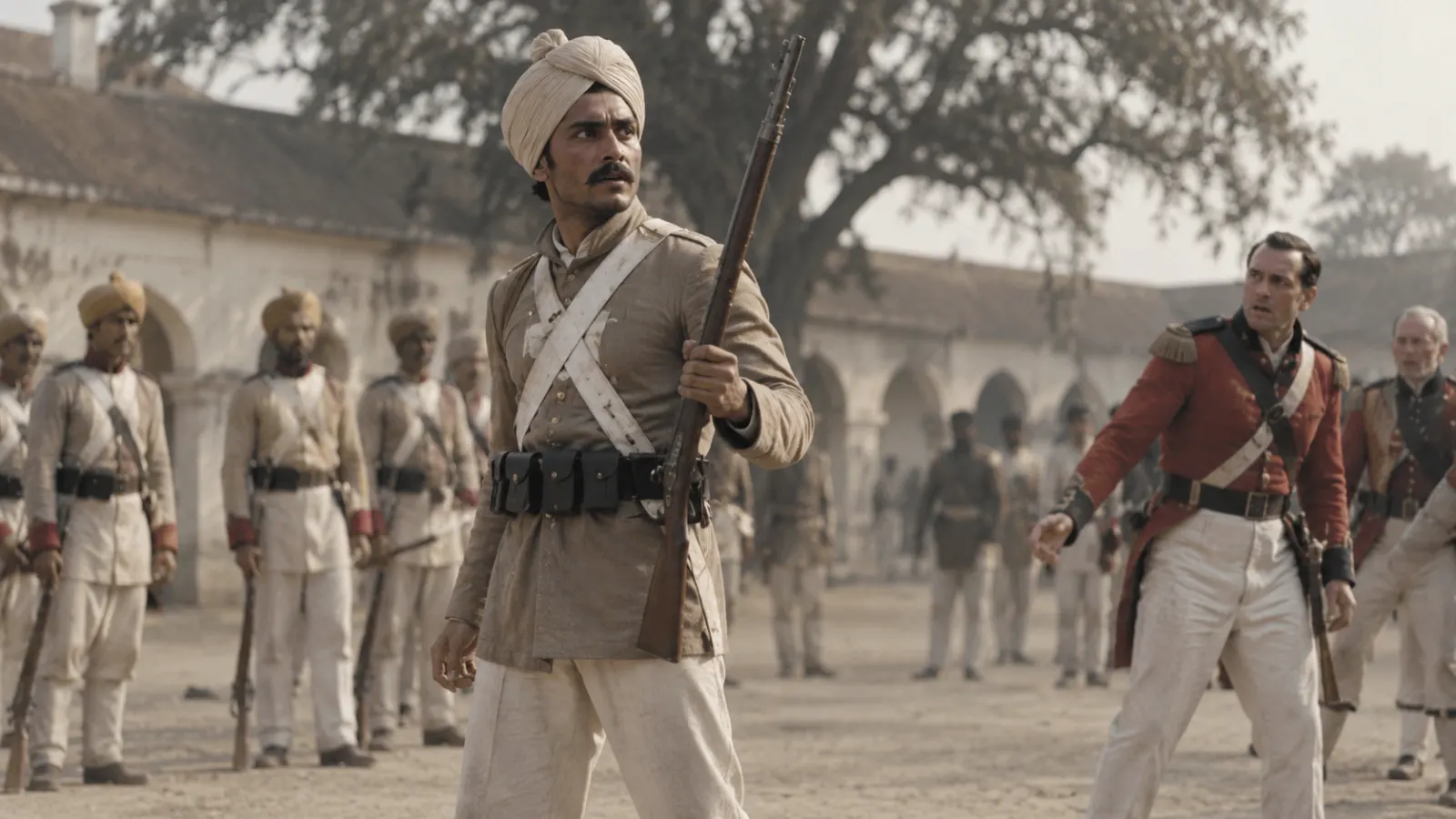
The uprising that reached Delhi in May 1857 did not begin at the Mughal court. Soldiers at Meerut had rebelled against Company authority and then moved toward Delhi. What they lacked was an accepted political centre capable of giving wider meaning to their revolt.
Zafar offered precisely that, even though he possessed little military strength of his own.
The Mughal name still carried recognition across much of north India. Soldiers, landholders, religious figures and townspeople could understand a proclamation issued under an emperor more easily than an entirely new political authority invented in the middle of rebellion. Coins, seals, orders and appointments made in Zafar’s name could create the appearance of restored sovereignty.
This did not mean that Zafar enthusiastically designed what followed. Evidence from later testimony, rebel documents and the trial suggests that he was placed under intense pressure when armed sepoys arrived at the palace. His later defence emphasised coercion and his inability to resist them. That argument was clearly useful to him during prosecution, but it also reflected a genuine structural reality: he did not possess an independent army capable of expelling or disciplining the soldiers who demanded his support.
Still, coercion does not mean complete political absence. Zafar eventually accepted the position the rebels offered him. His authority was invoked in proclamations and appointments, and the Red Fort became the symbolic centre of rebel government in Delhi. The most accurate interpretation is therefore neither that he commanded the uprising from the beginning nor that he remained entirely detached from it. His position changed as events unfolded.
Once his name was attached to the rebellion, symbolic authority generated political responsibility even when operational control remained weak.
Rebel Delhi: an emperor without reliable command
The transformation of Delhi exposed the difference between sovereignty as a symbol and sovereignty as the ability to make people obey.
The Red Fort suddenly became a headquarters for an improvised rebel administration. Sepoy regiments, Mughal princes, clerks, religious leaders, local elites and military commanders competed over decisions. Maintaining food supplies, pay, ammunition, policing and discipline became increasingly difficult while British and Company forces prepared to retake the city.
Zafar attempted to operate through councils, appointments and proclamations, but the rebel military was not a conventional imperial army under his direct command. Different regiments retained their own loyalties and structures. Princes attempted to exercise authority, while sepoy leaders did not always obey the court.
The arrival of Bakht Khan from Bareilly in July 1857 illustrates the problem. Government of India historical material records that Zafar appointed Bakht Khan to a senior command after he arrived with troops, arms and funds, and that Bakht Khan attempted to impose greater organisation and discipline on the rebel administration. His efforts nevertheless had to coexist with princes, court factions and existing regimental interests.
The result was not a unified command comparable with a modern national army. It was a coalition held together by opposition to British rule and, to an important degree, by Zafar’s symbolic status.
This distinction is essential when discussing the violence that occurred in Delhi. Europeans, Company officials, civilians and Indian Christians were killed during the first days of the uprising, and the treatment of prisoners later became a major part of the British case against Zafar.
His exact responsibility remains historically difficult. As the nominal sovereign of rebel Delhi, he cannot be treated as wholly unrelated to actions committed by forces claiming his authority. But political association is not identical to proof that he personally ordered every act committed by armed sepoys. His ability to compel those soldiers was demonstrably limited, and much of the surviving evidence about responsibility was later assembled within a prosecution conducted by the victorious colonial power.
A careful biography therefore separates three questions: what happened in Delhi, what authority was exercised in Zafar’s name, and what can actually be established about orders personally initiated or approved by him.
Religion, rebellion and the language of political legitimacy
Rebel proclamations from Delhi used several political languages at once. Some relied strongly on Islamic idioms and Mughal kingship. Others called on both Hindus and Muslims to defend religious customs against perceived British interference.
This complexity matters because 1857 does not fit neatly into later political categories. It was not simply a unified modern nationalist revolution, but neither can its Delhi politics be reduced to a purely religious conflict. Soldiers rebelled for reasons connected with military grievances, religion, pay and service conditions; rulers and landholders had territorial and political interests; urban populations experienced their own economic and cultural pressures.
Zafar’s usefulness came partly from his ability to stand above some of those differences. The Mughal monarchy was Muslim in dynastic identity, but its political memory had long involved relationships with Hindu elites, soldiers, administrators and communities. Rebel leaders could therefore invoke the emperor while simultaneously appealing to Hindu and Muslim solidarity against British rule.
The coalition was unstable, but the effort to prevent religious division was politically significant. It reflected a practical understanding that the British could benefit from fragmentation among the groups participating in or sympathetic to the rebellion.
This does not make Zafar the architect of a coherent ideology of national unity. His symbolic function was broader: his name supplied a surviving language of legitimate kingship that different actors could use for their own purposes.
The siege, the fall of Delhi and the destruction of the old court
British and Company forces established themselves on the Delhi Ridge and spent months attempting to recover the city. By September, reinforced forces launched a major assault. The National Army Museum records that Delhi was taken after intense street fighting between 14 and 21 September 1857 and describes the recapture as followed by widespread looting and killing.
For civilians, this was catastrophic.
Delhi was not simply a fortress containing rebel soldiers. It was a city of merchants, craftsmen, religious institutions, scholars, performers, servants and families whose lives were intertwined with the court and the urban economy. Siege, shortages, warfare and subsequent reprisals devastated those networks.
The destruction extended into the cultural landscape. The Metropolitan Museum of Art describes the suppression of the 1857 uprising as a turning point that effectively destroyed the late Mughal artistic renaissance centred on Delhi and marked the end of both the Mughal dynasty and the East India Company’s political order.
Zafar did not personally command the military defence of the city. His importance lay elsewhere. Delhi represented a rebel capital because those fighting there could claim to act beneath an imperial authority rather than as separate mutinous units. The emperor’s inability to dictate tactics did not make the symbolism militarily irrelevant; sovereignty itself was part of what the conflict concerned.
As British forces entered the city, that political world collapsed. Zafar left the Red Fort and sought refuge at Humayun’s Tomb. Once Delhi was lost, he possessed almost no remaining leverage.
Capture, the killing of the princes and the end of the dynasty in Delhi
On 21 September 1857, William Hodson received Zafar’s surrender after the fall of Delhi. The following day, Hodson arrested three Mughal princes and shot them after they had surrendered their weapons. The National Army Museum describes the episode as one of the most notorious incidents of the conflict and records that the princes were killed after surrendering peacefully.
The killings became central to competing memories of the reconquest of Delhi. British narratives often associated Mughal princes with rebel violence and the deaths of Europeans. Indian accounts increasingly treated their summary killing as an example of colonial vengeance.
For Zafar, the incident carried an obvious dynastic meaning. He had already lost political authority; now the royal household itself was being physically dismantled. Other members of the family were imprisoned, executed, displaced or eventually sent into exile.
The emperor was returned to the Red Fort, but not as ruler. The palace that had embodied what remained of Mughal sovereignty became the location of his imprisonment and trial.
The Red Fort trial and the problem of colonial justice
Zafar’s trial began in early 1858 before a British military commission. The surviving proceedings are extraordinarily valuable because they contain testimony, letters, proclamations and translated Persian and Urdu documents relating to rebel Delhi. The British Library preserves printed copies of the trial records as well as separate papers concerning his banishment.
The material must nevertheless be read in context.
This was not a trial conducted by a detached third party after a conflict between equal political authorities. The British had reconquered Delhi, imprisoned Zafar, defined the charges and convened the tribunal that would judge him. The legal proceeding was therefore also an act of political consolidation.
Zafar faced allegations including support for mutiny, waging war against British authority, assuming sovereignty and complicity in killings. His defence repeatedly emphasised his weakness. He argued that rebel soldiers had coerced him, taken control of his court and used his seal or authority for acts he could not prevent.
Parts of that defence were clearly designed to avoid punishment. But the larger claim cannot simply be dismissed. The emperor genuinely lacked a disciplined military establishment under his independent control.
This is why the trial remains useful without being treated as an uncomplicated verdict on historical responsibility. A document bearing the emperor’s seal may prove that his authority was invoked. It does not by itself prove that he personally drafted an order, initiated the policy behind it or possessed the means to enforce it.
The wider body of records traditionally called the Mutiny Papers similarly depicts an improvised government in which soldiers, princes, officials and religious figures repeatedly competed for influence. Zafar’s court functioned as a clearing house of legitimacy, but not as a tightly controlled executive government.
His role therefore occupied an unstable middle ground. He was initially overwhelmed by a rebellion he had not organised; he then accepted the imperial status the rebels demanded; he attempted to influence the government operating in his name; and he repeatedly failed to control significant parts of it.
That ambiguity is more historically useful than either extreme portrayal.
Exile to Rangoon and the formal end of Mughal kingship
The military commission convicted Zafar. He was removed from the throne and ultimately transported with members of his family to Rangoon in British-controlled Burma.
British Library records preserve government papers concerning the removal of the former king and his family from Delhi toward Calcutta and subsequently by sea to Rangoon.
Exile served an obvious political purpose. Keeping the last Mughal emperor in Delhi would have preserved a potential focus for future resistance. Removing him from the city severed the dynasty from the physical setting through which its authority had survived long after its territorial empire had disappeared.
At almost the same time, the structure of British rule itself changed. The Government of India Act of 1858 transferred authority from the East India Company to the British Crown. The aftermath of the rebellion therefore extinguished two institutions that had coexisted uneasily: the ceremonial remnants of Mughal sovereignty and the Company state that had gradually displaced it.
Zafar spent the remainder of his life in Rangoon under British supervision. He died there on 7 November 1862. Contemporary and later records place his death in exile four years after his deportation.
The contrast made the ending unusually powerful in historical memory. A dynasty that had produced monumental capitals and ruled large parts of the subcontinent ended with its final emperor dying far from Delhi without political authority.
Yet it was precisely this defeat that enlarged Zafar’s symbolic reputation.
The poet of exile and the remaking of Zafar after 1857
Before the uprising, Bahadur Shah Zafar had been a politically weak monarch presiding over a diminished court. After his exile, he increasingly became a cultural symbol of dispossession, Delhi’s destruction and the end of an older political world.
Poetry played a crucial part in that transformation.
His ghazals already dealt with familiar themes of love, mortality, separation and spiritual longing, but later readers encountered them through the knowledge that their author had lost his throne, his city and much of his family. Biography changed how the poetry was heard.
This has encouraged romanticisation as well as preservation. Zafar is often portrayed as though every melancholic Urdu verse associated with the collapse of Delhi must have been written by him. That assumption should be resisted. His literary legacy is substantial enough without uncertain quotations, and recognised collections of his writing survive. The Library of Congress holds a collection of selected poetry and identifies him as both a poet and an important patron of nineteenth-century Urdu literature.
His court also matters beyond his individual writing. Ghalib, Zauq and other poets belonged to a complex literary world of patrons, rivals, teachers and audiences. The destruction of the Mughal court therefore damaged an institutional system of cultural production, not simply one emperor’s personal life.
This is one reason Zafar came to represent something larger than the throne he actually occupied. His exile became a way of remembering the displacement of Delhi’s wider cultural society after 1857.
Was Bahadur Shah Zafar really the leader of the Revolt of 1857?
The common description of Zafar as a “leader of the Revolt of 1857” is accurate in one sense and misleading in another.
He was undoubtedly made the sovereign figurehead of the rebellion in Delhi. Rebels acknowledged him as emperor, political acts were performed in his name and his presence gave the uprising an authority that disconnected military mutinies could not easily reproduce. Even modern museum descriptions refer to his nominal leadership of the rebellion.
But “leader” becomes misleading if it suggests that Zafar planned the uprising, directed all military operations or exercised command over the rebellions that developed elsewhere.
The uprising contained numerous regional centres and leaders pursuing different objectives. Nana Saheb, Begum Hazrat Mahal, Rani Lakshmibai, Kunwar Singh, Tatya Tope and others were not simply subordinate officers in a centrally administered Mughal war effort. Communication, strategy and political goals varied enormously across regions.
Delhi itself never achieved unified command.
The more accurate description is that Zafar became the symbolic sovereign of a fragmented rebellion. His position supplied legitimacy without supplying effective central control.
That is not a minor historical role. Symbols can coordinate political action even when the people representing them possess little coercive power. The fact that armed rebels who had already rejected Company officers still sought Zafar’s approval shows how far Mughal political legitimacy had survived beyond Mughal material power.
The last Mughal was powerful because he was a symbol
Bahadur Shah Zafar’s historical significance ultimately rests on the distance between what he could do and what people believed his name meant.
Before 1857, he was an elderly poet-emperor governing little beyond the Red Fort and depending on a colonial power that had steadily reduced his dynasty’s privileges. When revolt reached Delhi, soldiers nevertheless turned to him because they needed a recognised language of sovereignty.
He did not create the rebellion. He could not reliably discipline its soldiers. He struggled to control competing commanders and court factions. The evidence does not justify treating every act carried out in rebel Delhi as his personal command.
But neither was he merely an irrelevant prisoner while others used his palace. He accepted the political position placed before him, allowed his name and imperial institutions to become part of the rebellion and attempted to exercise authority within the unstable administration that followed.
That combination—limited power and enormous symbolic value—is the key to understanding him.
The British response confirms how seriously symbolism mattered. After recovering Delhi, they did not simply restore Zafar to ceremonial retirement. They prosecuted him, removed him from the Red Fort and transported him permanently from India. British Library holdings on his trial and banishment document how deliberately the deposed king and his household were separated from Delhi.
His deposition formally ended a dynasty whose actual empire had been disappearing for generations. His exile then transformed that political ending into a cultural image: the last Mughal emperor, a poet without a kingdom, dying in a foreign city while the Delhi he had known was remade under a new imperial order.
The original draft captures this paradox particularly well: Zafar was politically weak and militarily incapable of directing the uprising in the modern sense, yet his dynastic authority remained powerful enough for rebels to invoke him as emperor.
That is why Bahadur Shah Zafar remains central to the history of 1857. His importance lies not in pretending that he possessed powers he did not have, but in recognising how a nearly powerless monarch could still embody an alternative sovereignty strong enough to alarm both rebels seeking legitimacy and the colonial state determined to extinguish it.