Why Voting Matters: Elections, Political Equality and Democratic Accountability
One vote rarely determines the outcome of a national election by itself. That mathematical reality can make an individual ballot appear insignificant, but elections are collective institutions. Their political power comes precisely from combining millions of individually small choices through rules intended to give citizens an equal opportunity to participate in deciding who governs.
The more useful question is therefore not whether one person’s ballot controls an election. It is what voting allows a political system to do. In representative democracies, elections provide a recurring mechanism for choosing governments, replacing officeholders, aggregating conflicting preferences and connecting political authority to citizens rather than inheritance, force or permanent appointment.
International human-rights law treats this as more than a procedural convenience. Article 25 of the International Covenant on Civil and Political Rights protects citizens’ right and opportunity to participate in public affairs and to vote and stand for election in genuine periodic elections conducted through universal and equal suffrage and secret ballot. The UN Human Rights Committee further describes genuine periodic elections as essential to keeping public authority based on the freely expressed will of electors.
Voting is therefore central to representative democracy, but it is not sufficient by itself. A meaningful election also requires genuine competition, reasonable access to registration and candidacy, independent political information, ballot secrecy, impartial administration, accurate counting and lawful mechanisms for resolving disputes. A country can physically hold an election while falling short on several of those dimensions.
Voting connects political authority to citizens
Governments exercise significant powers. They collect taxes, make laws, regulate economic and social activity, spend public money, operate police and defence institutions and make decisions that affect rights and opportunities. Democratic elections provide one mechanism through which those powers can be traced back to public authorisation.
That does not mean every government decision reflects the preference of every voter. Electoral politics necessarily produces winners and losers, and citizens often disagree strongly about taxes, welfare, migration, environmental policy, rights, public spending and foreign affairs. Voting does not remove those disagreements. It supplies rules for converting them into authorised political decisions without requiring unanimous agreement.
This is also why elections need to be periodic. If citizens can choose a government once but have no realistic opportunity to reconsider that choice, electoral consent becomes increasingly remote from current political authority. The UN Human Rights Committee states that elections must occur at intervals that are not unduly long so that governmental authority continues to rest on the free expression of voters’ will.
Regular elections also create a mechanism for accountability. Officeholders know that citizens can evaluate their record and potentially remove them, while opposition parties can attempt to gain power through political organisation rather than force. The possibility of alternation matters even when the governing party is repeatedly re-elected: democratic competition depends on there being a credible route by which political control could change.
A functioning election therefore requires more than a winner. It also requires a political system in which losing candidates and parties retain the right to organise, criticise the government and compete again. Electoral defeat must remain temporary rather than becoming permanent political exclusion.
Equal suffrage turns political equality into a procedure
Universal and equal suffrage expresses a powerful democratic principle: a citizen’s formal voting weight should not depend on wealth, family background, social status or education.
Real political influence is never perfectly equal. Some citizens have greater financial resources, larger media platforms, stronger professional networks or easier access to policymakers. Campaign organisations differ enormously in money and visibility. Equal voting rights do not eliminate these inequalities, but they establish a formal baseline under which eligible citizens enter the electoral count on equal terms.
The UN Human Rights Committee describes the principle as “one person, one vote” and states that electoral boundaries and methods of allocating votes should not distort voter distribution or discriminate against groups in ways that unreasonably restrict citizens’ ability to choose representatives.
This also explains why electoral-system design matters. Individual ballots are translated into representation through institutions. Proportional representation, single-member constituencies, runoffs, electoral thresholds and mixed systems can translate the same pattern of public preferences into different distributions of seats.
There is no single electoral model required by the ICCPR. The Human Rights Committee explicitly notes that the Covenant does not impose a particular electoral system, but whichever system a country uses must protect the free expression of electors’ will and comply with voting rights.
District boundaries, candidate-registration rules and campaign-finance systems can therefore affect political equality even when every ballot is counted accurately. Equal suffrage is not simply the moment a voter marks a ballot; it belongs to the broader institutional framework through which that ballot becomes political representation.
A genuine election requires more than counting ballots correctly
Electoral integrity is a chain. An accurate count cannot repair systematic exclusion from registration, intimidation before election day, arbitrary candidate restrictions or a political environment in which voters cannot form opinions freely.
Article 25 of the ICCPR requires elections to be genuine, periodic, universal, equal and secret. The Human Rights Committee has expanded on those principles by stating that voters must be able to support or oppose government without coercion and should be able to form political opinions independently, free from violence, threats, compulsion or manipulative interference. It also calls for independent electoral supervision, security of ballot boxes, scrutiny of counting and access to judicial or equivalent review.
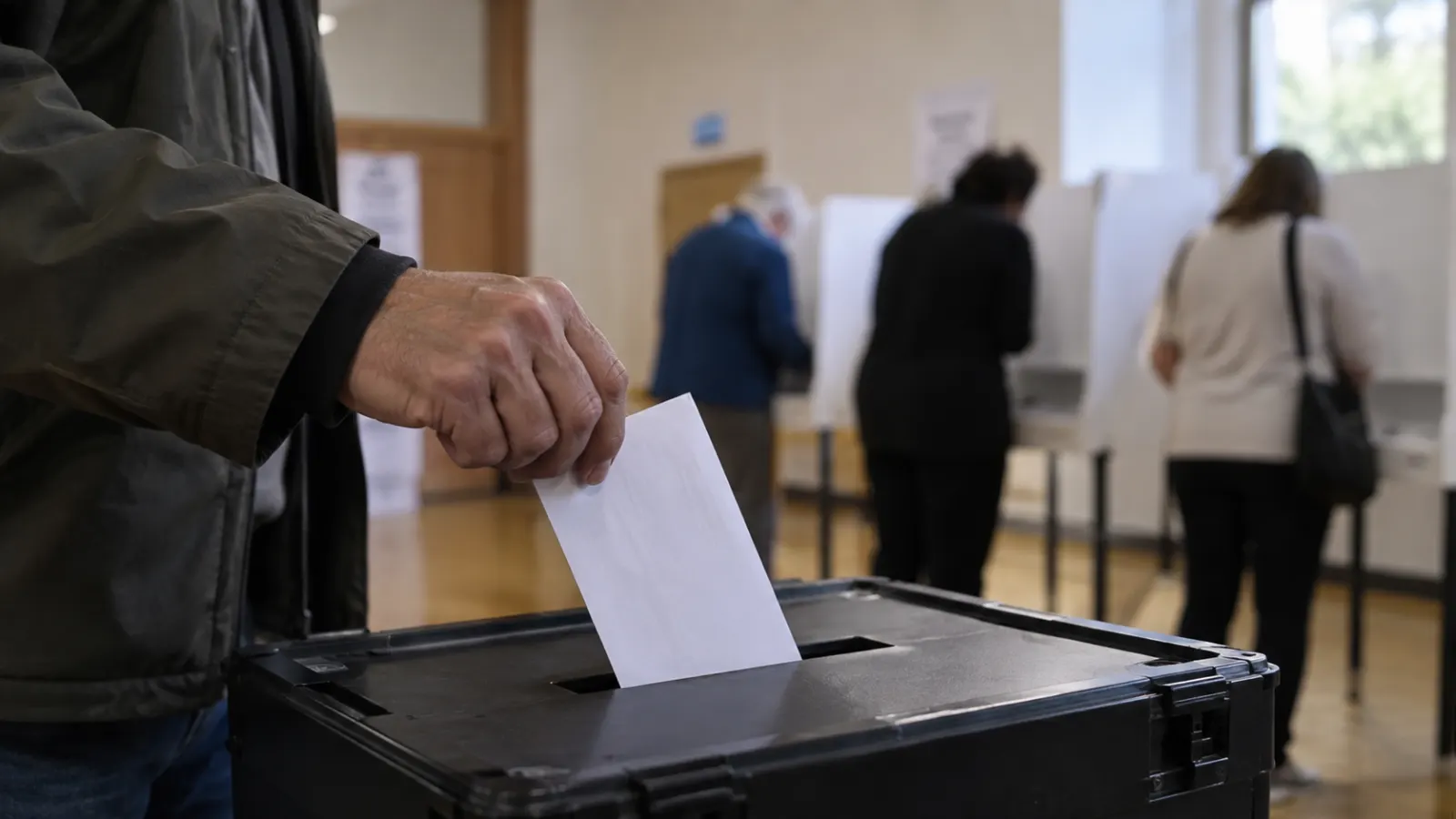
Ballot secrecy is particularly important because it protects political independence. If employers, family members, local power brokers, political organisations or governments could reliably discover how an individual voted, they could potentially reward compliance or punish dissent.
A secret ballot reduces that possibility. The Human Rights Committee states that voters should be protected from coercion to reveal how they intend to vote or how they voted.
Political information matters for the same reason. Citizens cannot independently evaluate candidates and policies if meaningful political communication is suppressed. The Human Rights Committee has described the free exchange of information and ideas among citizens, candidates and elected representatives as essential to effective political participation, including the existence of media able to inform public opinion and comment on public issues.
Competition also has to be real. Nomination requirements, deposits or eligibility rules can serve legitimate administrative purposes, but restrictions on candidacy should be reasonable and non-discriminatory. A formally open election with arbitrary barriers preventing meaningful opposition would not satisfy the same democratic function as a genuinely competitive contest.
Participation matters, but turnout needs careful interpretation
Voter turnout is one common measure of political participation, but it is easy to interpret poorly.
The percentage of registered voters who cast ballots can differ significantly from the percentage of the voting-age population who participate. Registration rules, eligibility requirements, administrative barriers and the completeness of voter rolls can all affect the denominator. Comparisons between countries therefore require attention to how turnout is measured as well as the number itself.
International IDEA’s Global State of Democracy 2024 reported that average electoral participation across the 173 countries covered by its indices, measured as the share of the voting-age population casting a ballot, declined from 65.2% in 2008 to 55.5% in 2023. IDEA also cautioned that global turnout trends are difficult to interpret because countries differ substantially, including in whether voting is compulsory and how elections are organised.
A decline in turnout does not by itself prove that democracy is failing. Citizens may abstain for very different reasons: dissatisfaction, satisfaction with available choices, deliberate protest, practical obstacles, distrust, lack of competition or simple disinterest. Those explanations have different political meanings.
Who does not participate can be as important as the aggregate turnout rate. If barriers disproportionately affect particular age groups, income groups, regions, minorities or people with disabilities, electoral outcomes may reflect the preferences of a narrower section of the eligible public.
Accessibility is therefore part of electoral infrastructure. Registration procedures, polling locations, voting assistance, ballot design, language access and reliable voter information influence whether a formal legal right can actually be exercised.
This is also why the debate over compulsory voting is not reducible to turnout statistics. Some democracies impose a legal requirement to participate, generally with specified exemptions or penalties, while others treat voting entirely as a voluntary right. Compulsory voting can increase participation, but it also raises a separate question about whether political freedom should include the ability to abstain. International human-rights standards do not prescribe one universal model; the Human Rights Committee has recognised that electoral systems can differ so long as they preserve protected political rights and the free expression of voters’ will.
Voting has influence, but democracy continues between elections
A ballot is a powerful political instrument, but it is also a blunt one. Voters normally choose between candidates or parties representing bundles of positions rather than expressing a separate preference on every issue.
Someone may support a party’s economic policy while disagreeing with its environmental policy, approve of a candidate’s record while opposing one major proposal, or vote for a smaller party knowing that it is unlikely to form the government. A ballot aggregates those judgments into a single electoral choice.
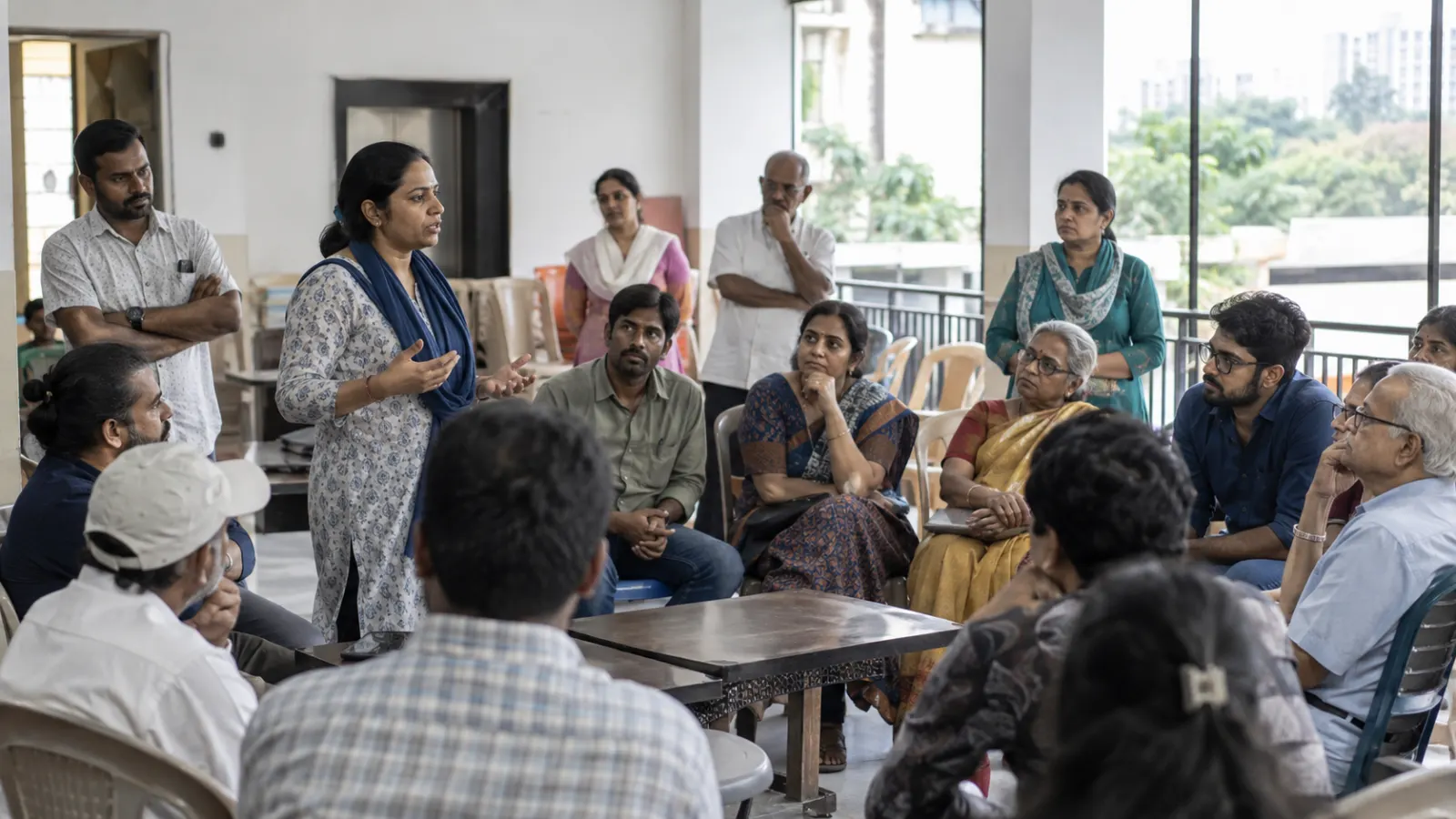
Voting therefore cannot communicate all the information that a citizen might want government to hear. Public consultations, petitions, civil-society activity, peaceful protest, contact with representatives, journalism and other forms of lawful participation can convey preferences between election cycles.
Recent OECD data illustrate this distinction. Its 2026 Trust Survey, drawing on 2025 survey responses across participating OECD countries, found that 68% of respondents believed voting in elections had a moderate or significant influence on what government does. Yet only 31% were confident that their political system allowed people like them to have a say in government decisions. Voting was also the most commonly reported form of political participation.
The gap is significant. It suggests that many people can simultaneously believe elections matter and feel that their influence between elections is limited. The OECD consequently treats political voice more broadly than electoral participation alone.
This distinction prevents two opposite errors. One is to treat voting as meaningless because it does not give citizens direct control over every policy decision. The other is to treat an election as the complete expression of democracy. Representative democracy relies heavily on elections, but institutions also need channels through which citizens can communicate, organise, criticise and participate after ballots have been counted.
Voting does not give majorities unlimited authority
Electoral victory gives governments democratic authority to govern within a legal and constitutional framework. It does not necessarily give a temporary majority unlimited authority over every person or institution.
Constitutional democracies commonly combine majority decision-making with rights protections, judicial institutions, federal or regional arrangements, legislative procedures and safeguards for political minorities. These mechanisms exist because democracy involves both popular government and limits on how political power may be exercised.
The distinction is particularly important for groups that lose an election. Genuine democratic competition depends on the expectation that today’s minority can continue organising, persuading voters and potentially become tomorrow’s majority. If winners can permanently eliminate opposition or remove the conditions for future competition, an election can undermine the system that made the victory democratic in the first place.
The Human Rights Committee consequently treats political participation as extending beyond election day. Citizens participate in public affairs through freely chosen representatives but also through public debate, dialogue with representatives and the ability to organise themselves, supported by freedoms of expression, assembly and association.
This broader framework also explains why accepting verified electoral results and maintaining lawful dispute mechanisms are important. Election administrators can make mistakes, candidates can challenge decisions, and genuine allegations of wrongdoing may require investigation. A democratic system needs ways to resolve such disputes without requiring either unquestioning acceptance or political violence.
Why one vote can matter without deciding the election alone
The significance of voting is sometimes framed entirely as a probability question: what are the chances that one ballot changes the winner?
That is only one possible measure.
A vote contributes to the aggregate from which governments and legislatures derive electoral mandates. It can affect a candidate’s margin, a party’s share of support and, depending on the electoral system, representation, public funding, thresholds or the political viability of emerging movements. Citizens may also use votes expressively—to demonstrate support for an independent candidate, minor party or political position even when they do not expect that choice to produce immediate control of government.
The importance of a ballot therefore does not depend on pretending that every individual vote is likely to decide a national election. The democratic function is collective.
This is comparable to many other large institutions in which individual participation has a small numerical effect but the system cannot function without aggregated participation. Elections transform millions of separate political judgments into an authorised decision under common rules.
The quality of that transformation is what matters. High turnout cannot compensate for intimidation or fraudulent counting. Accurate counting cannot compensate for unreasonable exclusion from registration. Formal equality at the ballot box cannot by itself eliminate extreme inequalities in political influence. And a genuine electoral victory does not eliminate constitutional limits or the rights of political opponents.
Voting is central to democracy, but it is not the whole of citizenship
Voting matters because it gives citizens a recurring mechanism to choose, reject and replace people who exercise public power. It formalises political equality, converts disagreement into decisions and makes peaceful changes of government possible without requiring society to reach consensus.
But the value of an election depends on the institutions surrounding it. Elections need to be genuinely competitive, reasonably accessible, periodic, secret and accurately administered. Citizens need the freedom to obtain political information, discuss competing ideas and organise. Candidates need reasonable opportunities to compete, and disputes need credible legal remedies.
Voting therefore occupies a specific place in democratic government. It is neither meaningless because one ballot is numerically small nor sufficient simply because ballot boxes exist.
A healthy representative system combines the ballot with rights, accountable institutions and continuing political participation. Elections allow citizens to decide who temporarily receives authority to govern; the broader democratic order determines how that authority may be exercised and preserves the possibility that it can change again at the next genuine contest.