What Is Smog and How Does It Form? Types, Causes, Health Effects and Pollution Chemistry
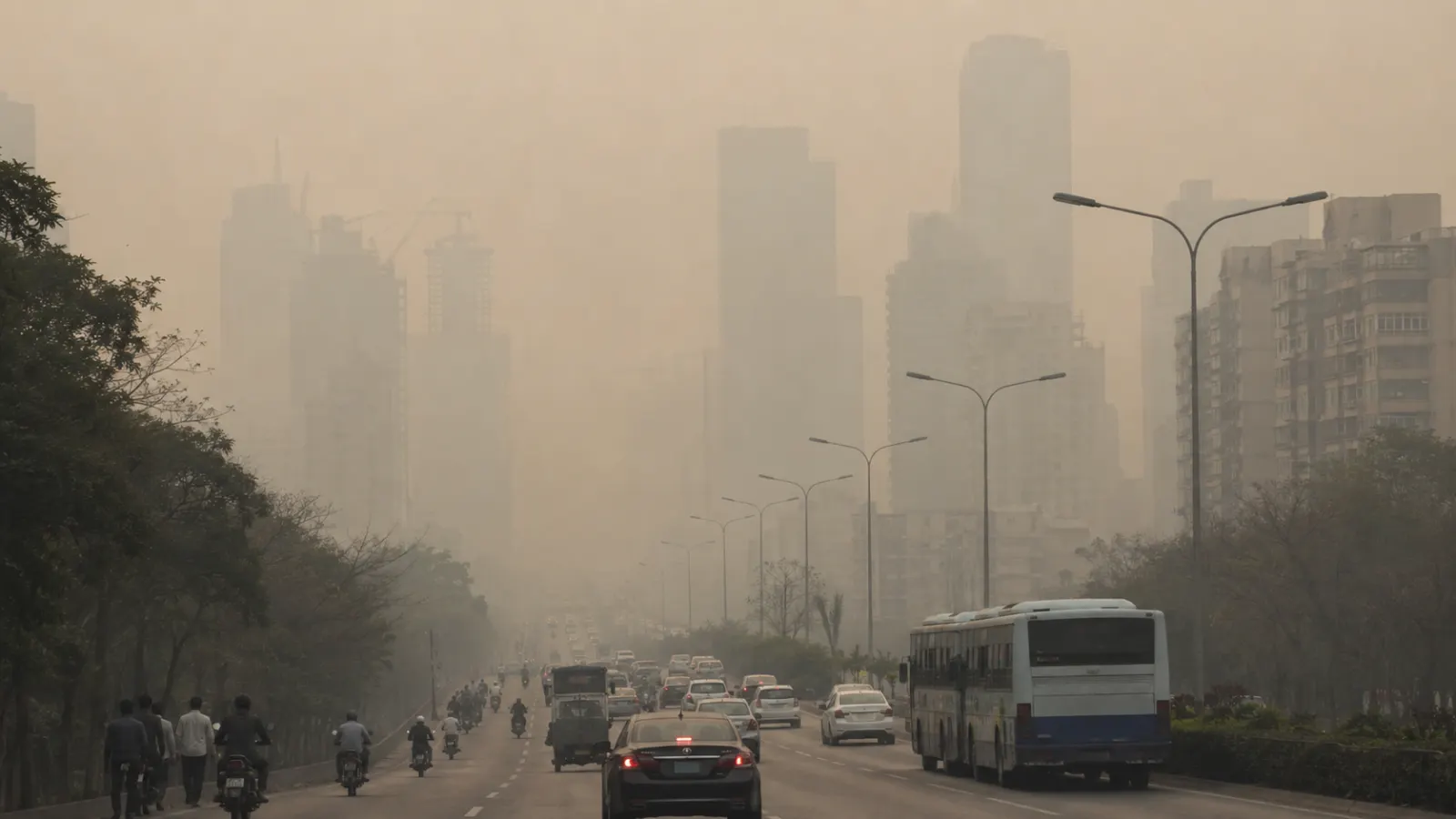
What is smog and how does it form? The simplest answer is that smog is a polluted atmospheric mixture created when emissions, weather and chemical reactions combine near the Earth's surface. The term originally described the thick mixture of smoke and fog that blanketed coal-burning industrial cities. Modern urban smog is often different: sunlight drives chemical reactions involving nitrogen oxides and volatile organic compounds, producing ground-level ozone and other secondary pollutants, while particulate matter can create the familiar grey or brown haze.
That distinction is important because smog is not one chemical emitted directly from a chimney or exhaust pipe. A city can release the ingredients of pollution in the morning and experience its highest ozone concentrations hours later or many kilometres downwind. Temperature, sunlight, wind, humidity and the vertical structure of the atmosphere help determine whether those emissions disperse harmlessly or accumulate into a serious pollution episode.
Smog is therefore best understood not simply as dirty-looking air but as the visible—or sometimes invisible—result of emissions interacting with atmospheric chemistry and meteorology. That is why a city can have severe pollution even when the sky does not look dramatically hazy, and why two days with similar traffic volumes can produce very different air quality.
What Does the Word Smog Mean?
The word smog combines “smoke” and “fog.” It became established in public-health discussion in the early twentieth century as a description of London's smoke-laden fog. A 1905 report in JAMA described the new term as a contraction of smoke and fog used for the dark urban pollution associated with London.
The phenomenon itself was much older than the word. Coal-burning cities had struggled with heavy smoke and polluted fog for centuries. Industrialisation intensified the problem as factories, furnaces, power generation and millions of domestic coal fires discharged soot and sulfur pollution into densely populated urban air.
Today, however, “smog” is used more broadly. EPA describes modern smog primarily in connection with ground-level ozone, while real urban pollution episodes often include particulate matter, nitrogen dioxide, volatile organic compounds and other pollutants as well.
This historical shift explains why two chemically different types of pollution can both be called smog.
The Two Main Types of Smog
The classic distinction is between sulfurous or London-type smog and photochemical smog. They share the ability to create unhealthy urban air, but they arise from different pollution sources and atmospheric conditions.
Sulfurous smog is associated mainly with coal combustion, soot, sulfur dioxide, cool temperatures, fog and stagnant air. Photochemical smog is more closely associated with motor vehicles, industrial emissions, strong sunlight, nitrogen oxides, volatile organic compounds and ground-level ozone.
Neither category describes every modern pollution episode perfectly. Many cities experience complicated mixtures involving traffic emissions, fine particles, industrial pollution, dust, biomass burning and atmospheric chemistry simultaneously. Nevertheless, the distinction helps explain how the meaning of smog changed from the industrial London of the nineteenth and twentieth centuries to the traffic-heavy metropolitan regions of today.
What Was London-Type Smog?
Historical London smog developed when enormous quantities of coal smoke and sulfur pollution accumulated in cool, damp and stagnant conditions. Domestic fireplaces were an especially important source because coal was burned across millions of individual homes as well as in industrial facilities and power stations.
Coal combustion released soot particles and sulfur dioxide. Fog droplets interacted with this polluted atmosphere, while weak winds and temperature inversions could trap emissions close to the surface. The result was sometimes a dense, dark mixture capable of reducing visibility to only a few metres.
This type of pollution is sometimes called sulfurous smog, industrial smog or London-type smog. It tends to be favoured by cool, humid conditions rather than the hot, sunny weather associated with photochemical ozone pollution.
The danger was not merely poor visibility. People were inhaling a chemically aggressive mixture containing smoke particles and sulfur compounds while pollution concentrations remained trapped around street level.
The Great Smog of London in 1952
The defining historical example occurred in December 1952, when an extraordinary pollution episode enveloped London. The UK Met Office describes how a temperature inversion trapped smoke, fog and pollutants near the ground while cold conditions encouraged residents to burn more coal.
From 5 to 9 December, the polluted fog became extraordinarily dense. Transportation was severely disrupted, visibility collapsed, and people experienced acute respiratory problems. Approximately 4,000 deaths were recognised at the time as resulting from the event, although later assessments have suggested that the ultimate mortality burden was substantially higher. The Met Office also notes that hundreds of tonnes of sulfur dioxide were chemically transformed into large quantities of sulfuric acid during the episode.
The disaster helped transform air pollution from an unpleasant feature of industrial urban life into an undeniable public-health crisis. Britain subsequently introduced major clean-air legislation, including the Clean Air Act 1956, which restricted black-smoke emissions and encouraged cleaner fuels.
London demonstrates an important principle that remains relevant today: severe pollution episodes generally result from both emissions and weather. The inversion did not create the coal smoke. It prevented the pollution already being produced from dispersing.
Why Traditional London Smog Became Less Common
The specific coal-and-fog smog that once characterised London became far less common as cities changed how they produced heat and energy. Cleaner fuels, central heating, industrial emission controls and restrictions on smoke-producing coal combustion greatly reduced the enormous quantities of soot that once entered urban air.
The Met Office credits clean-air legislation and technological changes with preventing a recurrence on the scale of 1952.
That success is historically important because it demonstrates that urban air pollution is not an unavoidable cost of industrial civilisation. When emission sources change, atmospheric pollution can change dramatically.
But solving one form of smog did not eliminate the problem altogether. The rise of automobiles, petrochemical industry and large metropolitan regions produced another form of urban pollution based on different chemistry.
What Is Photochemical Smog?
Photochemical smog develops when sunlight drives chemical reactions among pollutants in the lower atmosphere. Its most important component is ground-level ozone, although real episodes also contain particles and a range of other chemical compounds.
EPA explains that ground-level ozone is not emitted directly. Instead, it forms when nitrogen oxides (NOx) and volatile organic compounds (VOCs) react in the atmosphere in the presence of sunlight. Major human sources of these precursor pollutants include vehicles, power plants, industrial boilers, refineries, chemical facilities and other combustion or industrial processes.
WHO similarly identifies ground-level ozone as a major component of photochemical smog and explains that it forms through reactions involving pollutants such as nitrogen oxides and VOCs emitted from transport and industry.
This is the key difference between many primary pollutants and ozone: the city emits ozone's ingredients rather than the ozone itself.
Primary Pollutants and Secondary Pollutants
Air-pollution science distinguishes between primary and secondary pollutants.
Primary pollutants are released directly from a source. Vehicle exhaust can emit nitrogen oxides and carbon monoxide. Combustion processes release particles. Industrial facilities may emit sulfur dioxide or volatile organic compounds.
Secondary pollutants are produced later through chemical reactions in the atmosphere. Ground-level ozone is one of the clearest examples.
This distinction explains why pollution control can be counterintuitive. Regulators may want to reduce an ozone problem, yet there may be no major “ozone pipe” to regulate. They must instead identify the emissions contributing to the chemistry that generates ozone later.
Smog is therefore partly a problem of atmospheric transformation, not merely direct emissions.
How Does Ground-Level Ozone Form?
The chemistry of ozone formation is more complicated than the simplified formula often presented in school diagrams, but the basic process can be understood without advanced atmospheric chemistry.
Nitrogen dioxide absorbs energy from sunlight and undergoes photochemical reactions that ultimately allow ozone to form from atmospheric oxygen. If the atmosphere contained only nitrogen oxides, ozone formation and destruction could move toward a limited chemical cycle.
Volatile organic compounds change that balance. Their atmospheric oxidation creates reactive compounds that can convert nitric oxide back into nitrogen dioxide without consuming as much ozone, allowing ozone concentrations to build.
This is why urban ozone control involves both NOx and VOC emissions rather than treating either precursor in isolation. EPA emphasises that ozone is created through reactions between NOx and VOCs in sunlight.
The real atmosphere contains hundreds of organic compounds, radicals and competing reactions, making ozone chemistry highly nonlinear.
Why Is Photochemical Smog Associated With Traffic?
Motor vehicles have historically been major contributors of the ingredients needed for photochemical smog. Fuel combustion produces nitrogen oxides, while vehicles and fuel systems can contribute volatile organic compounds.
Transportation remains an important source of ozone-forming pollution. EPA identifies transportation emissions as contributors to smog and notes that nitrogen oxides and VOCs are among the important pollutants involved.
Traffic is not the only source, however. Power plants, industrial combustion, refineries, solvents, paints, chemical manufacturing and fuel handling can also contribute. Natural vegetation releases substantial amounts of some VOCs, while lightning, soils and other natural processes can contribute nitrogen compounds.
That complexity matters when designing pollution policy. A metropolitan area's ozone problem usually cannot be solved simply by blaming one street or one factory.
Why Hot, Sunny Days Often Produce More Ozone
Photochemical smog is strongly influenced by sunlight because sunlight provides the energy required for important ozone-forming reactions.
EPA states that ozone is most likely to reach unhealthy concentrations on hot, sunny days, particularly in urban environments. WHO likewise notes that ground-level ozone concentrations tend to be highest during periods of sunny weather because of its photochemical origin.
High temperatures often accompany atmospheric conditions favourable to ozone formation, although temperature itself is only part of the process. Warm weather can also affect emissions of volatile organic compounds, atmospheric reaction rates and energy demand.
This explains why ozone problems frequently become more severe during summer.
But ozone is not exclusively a summer pollutant everywhere. Regional chemistry, elevation, transported pollution and unusual meteorological conditions can produce elevated concentrations under other circumstances as well.
Why Two Equally Busy Traffic Days Can Have Different Smog Levels
Suppose a city experiences nearly identical traffic on Monday and Tuesday.
Monday is cloudy and windy.
Tuesday is hot, sunny and dominated by stagnant high pressure.
The emissions may be similar, but the resulting air quality can be very different. Clouds reduce some photochemical activity, while strong winds can dilute or transport pollutants. Strong sunlight and weak atmospheric mixing on Tuesday can instead allow ozone precursors and secondary pollutants to accumulate.
This is why smog cannot be understood through emissions alone.
Meteorology determines what happens to the emissions after they enter the atmosphere.
What Is a Temperature Inversion?
Under ordinary conditions, air near the Earth's surface is often warmed and can rise, allowing vertical mixing with the atmosphere above. That mixing helps disperse pollutants.
A temperature inversion occurs when a layer of warmer air sits above cooler air near the surface. The stable layer suppresses vertical motion, making it harder for polluted surface air to rise and mix.
The result can be something like an atmospheric lid.
Vehicles, factories, heating systems and other sources continue releasing pollutants, but the volume of atmosphere available for dilution remains limited. Concentrations can rise rapidly if the inversion persists.
Temperature inversions therefore do not create pollution. They trap pollution.
That distinction was fundamental to the 1952 London disaster and remains important in modern winter pollution episodes around the world.
Why Valleys and Basins Can Experience Severe Smog
Topography can make atmospheric stagnation worse.
Cities surrounded by mountains or located in basins may have limited ventilation under particular weather conditions. Polluted air can become trapped between surrounding terrain and stable atmospheric layers.
This helps explain why some large metropolitan areas have historically struggled with persistent air-quality problems despite being geographically distant from the old coal-burning cities associated with traditional smog.
Los Angeles became one of the most famous examples of photochemical smog because it combined enormous vehicle activity, strong sunlight and meteorological and topographic conditions capable of trapping pollution.
Other valleys and basins around the world can experience similar problems, although the exact mix of pollutants varies enormously.
Why Ozone Levels Can Be High Outside the City
One of the most surprising features of ozone pollution is that concentrations do not necessarily peak beside the largest emission source.
Ozone takes time to form. During that period, winds can move precursor pollutants away from the city. Atmospheric chemistry continues while the air mass travels.
EPA explicitly notes that ozone can be transported long distances by wind and that rural areas can therefore experience high ozone concentrations even when the main emission sources are urban.
A suburban or rural monitor downwind may consequently record higher ozone than a monitoring site beside a busy urban road.
This does not mean the rural area created the pollution.
It illustrates the difference between where pollutants are emitted and where secondary pollution forms or accumulates.
Why Ozone Can Sometimes Be Lower Beside Heavy Traffic
Another counterintuitive result occurs in the chemistry of fresh vehicle emissions.
Very high concentrations of nitric oxide emitted in traffic environments can react with ozone, temporarily reducing ozone immediately beside some roads. Farther downwind, however, atmospheric reactions can generate much higher ozone concentrations.
This is one reason air-pollution maps cannot always be interpreted through the simple assumption that every pollutant must be highest at the emission source.
Nitrogen dioxide, ultrafine particles and other traffic pollutants may still be very high near roads even if ozone itself is lower.
Air pollution is a mixture, and different pollutants have different spatial patterns.
Is Smog Just Ozone?
No.
Ground-level ozone is a central component of photochemical smog, but real smog episodes often contain many pollutants simultaneously.
The mixture can include PM2.5 and PM10, nitrogen dioxide, carbon monoxide, volatile organic compounds, sulfur compounds, secondary organic aerosols and other chemical products. WHO identifies particulate matter, ozone, nitrogen dioxide, sulfur dioxide and carbon monoxide among the major pollutants with established health importance.
This matters because the visible haze associated with smog may be caused largely by particles rather than ozone itself.
A person may therefore be exposed simultaneously to an airway irritant such as ozone and fine particles capable of affecting the lungs and cardiovascular system.
What Is Particulate Matter's Role in Smog?
Particulate matter, or PM, includes microscopic solid particles and liquid droplets suspended in air.
Some particles are emitted directly. Others form in the atmosphere when gases undergo chemical reactions. Sulfur dioxide can contribute to sulfate particles, nitrogen oxides can contribute to nitrate particles, and organic gases can form secondary organic aerosol.
Fine particles scatter and absorb light, which is why they are important contributors to urban and regional haze.
WHO notes that particulate matter can include sulfates, nitrates, ammonia, sodium chloride, black carbon, mineral dust and water.
This chemical diversity demonstrates why the word “smog” is convenient but scientifically imprecise. Modern air-quality management measures individual pollutants because different substances require different controls and create different health effects.
Can Humidity Make Smog Look Worse?
Yes.
Some airborne particles absorb water as humidity rises. They become larger and scatter more light, making the atmosphere appear hazier.
This means visibility is not a perfect measure of pollution concentration. A humid day may look dramatically hazy because particles contain more water, while a dry day with substantial fine-particle pollution may appear less visually striking.
The reverse problem occurs with ozone. Ozone is a gas and can reach unhealthy levels without creating an obvious dark cloud.
A person's eyes therefore cannot reliably function as an air-quality monitor.
The atmosphere can look clean and still contain harmful pollution.
Smog and Haze Are Not Exactly the Same Thing
The terms are often used interchangeably in everyday conversation, but they are not chemically identical.
Haze refers primarily to reduced visibility caused by particles and droplets scattering light. It can result from pollution but may also involve dust, smoke, humidity or other aerosols.
Smog generally implies polluted atmospheric conditions and often refers particularly to ground-level ozone and associated pollutants in modern air-quality discussion.
A severe pollution episode can contain both.
The distinction matters because the pollutant responsible for the health warning may not be the same substance responsible for the reduced visibility.
Wildfire Smoke Can Mix With Urban Smog
Wildfire smoke adds another layer of complexity.
Fires release enormous quantities of particulate matter, carbon monoxide, nitrogen oxides and organic compounds. These emissions can travel hundreds or thousands of kilometres and mix with urban pollution.
Smoke chemistry also continues during atmospheric transport. Sunlight can transform compounds within the plume, while fire emissions can contribute to ozone formation under appropriate chemical conditions.
A city affected by wildfire smoke may therefore experience pollution that cannot be described simply as either “wildfire” or “urban smog.”
Atmospheric pollution sources interact.
Agricultural Emissions Can Contribute to Particle Pollution
Urban residents often imagine smog as a problem created exclusively by cars and factories.
Agriculture can contribute indirectly to fine-particle formation. Ammonia released from fertiliser use and livestock can react with acidic atmospheric compounds derived partly from sulfur and nitrogen emissions, forming particulate ammonium sulfate and ammonium nitrate.
These particles can travel regionally.
This illustrates why air-quality management increasingly requires an airshed approach rather than treating every jurisdiction as an isolated pollution source.
The chemistry occurring above a city may involve emissions produced far beyond its boundaries.
Can Smog Travel Across Borders?
Yes.
Ozone, particulate matter and precursor pollutants can be transported over large distances. EPA notes explicitly that wind can carry ozone pollution into rural areas far from major cities.
Fine particles and gases can travel across state, provincial and national borders as well.
This creates a policy challenge. One city may successfully reduce its own emissions yet continue receiving transported pollution from elsewhere. Conversely, emissions generated in one jurisdiction can worsen air quality in communities hundreds of kilometres away.
The atmosphere does not recognise political boundaries.
Effective air-quality policy therefore frequently requires regional, national or international coordination.
What Is the Difference Between Ground-Level Ozone and the Ozone Layer?
The word ozone causes understandable confusion because ozone can be either environmentally protective or harmful depending on where it is located.
High in the stratosphere, the ozone layer absorbs harmful ultraviolet radiation from the Sun and protects life on Earth.
At ground level, ozone is an air pollutant.
WHO describes ground-level ozone as a major component of photochemical smog associated with breathing problems, asthma and reduced lung function.
The chemistry involves the same molecule—O₃—but location changes its environmental role.
A useful shorthand is:
Stratospheric ozone: protective.
Ground-level ozone: pollutant.
How Does Smog Affect Human Health?
The health effects depend on the mixture people breathe.
Ground-level ozone is a powerful oxidising gas that can irritate and inflame the respiratory system. WHO reports that excessive ozone exposure can cause breathing problems, trigger asthma, reduce lung function and contribute to respiratory disease.
Particulate matter creates additional risks. Fine particles can penetrate deep into the lungs, and some components can reach the bloodstream. WHO's 2026 evidence review identifies air pollution as the world's leading environmental health risk factor and describes effects extending across respiratory, cardiovascular, cerebrovascular, reproductive and metabolic systems.
A smog episode is therefore not simply a visibility problem.
It can represent exposure to several pollutants affecting different parts of the body at the same time.
What Does Ozone Do to the Lungs?
Ozone reacts chemically with tissues lining the respiratory tract.
Exposure can produce airway inflammation, coughing, throat irritation, discomfort during deep breathing and temporary reductions in lung function. People may notice effects especially during outdoor exercise because physical activity increases breathing rate and the amount of polluted air entering the lungs.
People with asthma are particularly vulnerable. EPA identifies people with asthma among the populations at greatest risk when ozone reaches unhealthy concentrations.
Children and people who spend large amounts of time physically active outdoors can also receive substantial exposure.
Why Children Can Be More Vulnerable
Children often spend more time exercising outdoors and breathe more air relative to their body size than adults. Their lungs are also still developing.
When ozone concentrations rise during warm afternoons, children engaged in sport or outdoor play may inhale greater volumes of polluted air because they are breathing faster and more deeply.
This is why air-quality warnings sometimes recommend reducing strenuous outdoor activity for sensitive groups rather than simply telling everyone to remain indoors.
Risk depends on pollutant concentration, duration of exposure, breathing rate and individual vulnerability.
Smog Can Affect the Heart as Well as the Lungs
The cardiovascular component of smog is driven particularly by fine particulate matter and the broader mixture of air pollutants.
WHO notes that fine particles can penetrate deeply into the lungs and enter the bloodstream, contributing to health effects across major organs.
Air-pollution exposure is associated with cardiovascular disease and stroke as well as respiratory illness. WHO's latest 2026 technical review reports that approximately 84% of air-pollution-related deaths globally are associated with noncommunicable diseases.
The common image of smog as something that merely makes people cough therefore understates its public-health significance.
Does Smog Cause Long-Term Health Problems?
Yes. Air pollution can produce both acute and chronic effects.
A severe smog episode may trigger asthma symptoms, breathing difficulty or hospital visits over hours or days. Long-term exposure to polluted air contributes to chronic population risk.
WHO states that both short- and long-term exposure to major air pollutants can damage health.
This distinction explains why public policy needs both emergency alerts and long-term emission standards.
An AQI warning can help someone decide whether to run outdoors this afternoon.
It cannot replace decades of policies aimed at making the underlying air cleaner.
Smog Also Damages Plants
People are not the only organisms affected by ground-level ozone.
Ozone enters plant leaves through microscopic openings called stomata and can damage internal tissues. This can reduce photosynthesis, slow growth and make some plants more vulnerable to disease, insects and environmental stress.
Agricultural crops and forests can therefore suffer even when pollution does not produce obvious immediate damage visible to people.
WHO also notes that ground-level ozone can damage agricultural productivity, linking air pollution with food security as well as human health.
The environmental cost of smog extends beyond the city where it formed.
Smog, Acid Rain and Air Pollution Are Connected—but Not Identical
Smog and acid rain share some precursor pollutants, particularly nitrogen oxides.
Sulfur dioxide and nitrogen oxides can react in the atmosphere to form acidic compounds that are deposited through rain, snow, fog or dry particles. These processes are central to acid deposition.
Photochemical smog, by contrast, focuses primarily on ozone and related oxidants formed through sunlight-driven reactions involving NOx and VOCs.
The problems therefore overlap without being identical.
Reducing sulfur dioxide and nitrogen oxide emissions can improve several environmental problems simultaneously.
Does Climate Change Make Smog Worse?
Climate and air pollution interact in complicated ways.
Ground-level ozone formation is often favoured by hot, sunny weather. Climate change can alter temperature patterns, wildfire activity, atmospheric stagnation and other factors influencing pollution. WHO's 2025 technical assessment notes that climate change can modify the levels and distribution of outdoor pollutants including ground-level ozone and particulate matter.
This does not mean every hot day automatically produces smog. Emissions must still provide the chemical ingredients, and local meteorology remains crucial.
But a warmer climate can make ozone control more difficult in some regions by creating more frequent conditions favourable to photochemical reactions.
Reducing precursor emissions therefore remains essential even as climate conditions change.
Why Smog Does Not Always Form Where Emissions Are Highest
This is one of the most important ideas in atmospheric pollution.
A factory or road emits precursor chemicals.
Sunlight transforms them.
Wind moves them.
New pollutants form.
Other pollutants are removed.
Particles grow or evaporate.
By the time an air mass reaches another community, its chemical composition may be substantially different from what left the original source.
That is why regulators use air-quality models, meteorological data and regional monitoring networks instead of assuming pollution stays directly above the location that created it.
The atmosphere is a moving chemical reactor.
Why Smog Control Can Be Chemically Complicated
If ozone is produced from NOx and VOC chemistry, it might seem obvious that reducing either pollutant always reduces ozone proportionally.
The actual relationship is nonlinear.
Different cities operate under different chemical conditions. In some environments, reducing VOCs may initially have a particularly strong effect; elsewhere, reducing nitrogen oxides is especially important. Local chemistry, background pollution, biogenic emissions and regional transport all influence the response.
This is why EPA and other air-quality authorities use monitoring and sophisticated atmospheric models when designing ozone-control strategies.
Pollution policy must respond to chemistry rather than slogans.
How Do Governments Reduce Smog?
The basic strategy is to reduce the pollutants that create it.
For photochemical smog, important policies include tighter vehicle emission standards, cleaner fuels, electrification, controls on power plants and industrial combustion, regulation of VOC emissions from fuels and solvents, improved public transport and restrictions on high-emitting industrial processes.
For fine-particle pollution, governments may additionally regulate direct particle emissions, sulfur dioxide, ammonia and other particle-forming precursors.
Historical London demonstrates how dramatic the results can be when major sources are controlled. Modern vehicle emission systems likewise reduced pollutants emitted per vehicle enormously in many countries even while total transport demand continued to grow.
Clean-air policy is therefore a combination of technology, regulation, energy policy, transportation design and monitoring.
Why Electric Vehicles Can Help but Are Not the Whole Solution
Electric vehicles eliminate tailpipe exhaust when operating, reducing a direct source of nitrogen oxides and combustion-related pollution in urban streets.
However, transportation-related particulate matter can also come from tyre wear, road dust and brake wear. Electricity generation may create emissions elsewhere depending on the energy system.
Vehicle electrification can therefore be an important air-quality measure without eliminating every transportation-related pollution source.
Urban smog policy ultimately involves more than changing engines.
It can also involve reducing unnecessary vehicle use, improving public transport and designing cities where more trips can occur safely by walking or cycling.
Can Trees Solve Smog?
Urban vegetation provides shade, cooling and many other benefits, but trees are not a substitute for controlling emissions.
Plants can remove some pollutants from the atmosphere. At the same time, many plant species naturally emit volatile organic compounds that participate in atmospheric chemistry.
The relationship is therefore more complicated than simply “more trees equals less smog.”
Urban forestry can be extremely valuable, particularly for heat mitigation and quality of life, but the primary pollution strategy remains reducing emissions at source.
A city cannot plant its way out of unlimited combustion.
Can Rain Clear Smog?
Rain can remove many particles and soluble pollutants from the atmosphere through wet deposition.
After substantial rainfall, particle concentrations and visibility can improve dramatically.
Ozone behaves differently. Rain itself does not simply wash all ozone from the atmosphere in the same manner as particles, although the weather systems bringing rain often also involve clouds, stronger winds and changes in atmospheric mixing that reduce ozone formation and accumulation.
This explains why thunderstorms or weather fronts can appear to “clear the air.”
The improvement reflects several meteorological processes occurring simultaneously.
Does Wind Always Improve Air Quality?
Not necessarily.
Wind can dilute local pollution and prevent pollutants from building up in one place. In that sense, ventilation is often beneficial.
But wind also transports pollution.
A strong flow can move smoke, dust, ozone or precursor gases from one region into another. A community experiencing clean local emissions may still encounter polluted air transported from hundreds of kilometres away.
Wind therefore determines where pollution goes, not simply whether pollution exists.
The same atmospheric motion that cleans one location may worsen another.
How Is Smog Measured?
Air-quality monitoring stations measure specific pollutants rather than “smog” as one substance.
Regulatory networks can monitor ozone, PM2.5, PM10, nitrogen dioxide, sulfur dioxide and carbon monoxide. Meteorological stations provide complementary measurements such as wind speed, wind direction, temperature and humidity.
Satellite instruments add regional information, although many satellite measurements describe atmospheric columns rather than exactly what a person breathes at street level.
Scientists increasingly combine ground monitors, satellites, chemical transport models and lower-cost sensors to understand how pollution varies across space and time.
The result is far more reliable than judging pollution from photographs of the skyline.
What Does the AQI Tell You During Smog?
An Air Quality Index, or AQI, converts pollutant measurements into a public communication scale.
It helps people understand whether current air quality may pose a health concern and whether sensitive groups should modify outdoor activity.
Different countries use different AQI systems and thresholds, so the same numerical value is not necessarily directly comparable everywhere.
AQI is useful precisely because “smog” is too imprecise for health decisions. The index identifies the measured pollutants driving current conditions rather than asking people to judge pollution visually.
During one episode, PM2.5 may determine the health warning.
During another, ozone may dominate.
Can You Protect Yourself During a Smog Episode?
Individuals cannot solve urban smog, but they can sometimes reduce exposure during severe episodes.
The first step is checking reliable official air-quality information rather than relying entirely on appearance or smell. If ozone is elevated, vulnerable people may benefit from adjusting the timing or intensity of strenuous outdoor exercise. Ozone often follows a daily cycle, so conditions may vary substantially between morning and afternoon.
Particle pollution requires somewhat different strategies. During severe particle episodes, cleaner indoor air and appropriate filtration can reduce exposure.
The correct response therefore depends partly on which pollutant is high.
That is another reason a generic warning that “the city is smoggy” is less useful than actual monitoring data.
Masks Do Not Solve Every Type of Smog
Particle-filtering respirators such as well-fitted N95s can reduce inhalation of fine particles when appropriate.
They do not filter ground-level ozone in the same way.
This distinction is often missed during pollution events because people treat every form of smog as though it were one pollutant.
A mask may therefore provide useful particle protection during a wildfire-smoke episode while doing little about the ozone component of photochemical smog.
Personal protective measures should be matched to the exposure rather than the visual appearance of the sky.
Why Personal Protection Is Not the Main Solution
Even the best individual behaviour has obvious limits.
Children cannot redesign the transportation system around their schools. Outdoor workers may not be able to stay inside when pollution rises. Households cannot permanently filter all outdoor air entering a city.
The largest public-health gains therefore come from preventing emissions before they enter the atmosphere.
That is what made historical clean-air legislation effective, and the same principle applies to modern ozone and particle pollution.
Smog is fundamentally a collective environmental problem.
Common Myths About Smog
“Smog is simply smoke mixed with fog.” That describes the historical origin of the term and classic London-type smog, but modern photochemical smog is primarily associated with sunlight-driven chemistry and ground-level ozone.
“Cars directly emit ozone.” They generally emit ozone precursors such as nitrogen oxides and VOCs. Ozone forms later through atmospheric reactions.
“Smog only happens in cities.” Rural and suburban regions can experience high ozone because pollutants and precursors travel downwind.
“If the sky looks clear, the air must be safe.” Ozone can reach unhealthy levels without producing dramatic visible haze.
“A temperature inversion causes pollution.” An inversion traps and concentrates pollution; it does not create the original emissions.
“Smog is only a lung problem.” Ozone primarily affects the respiratory system, while particles and the broader pollution mixture are also associated with cardiovascular and systemic health effects.
“Rain permanently solves smog.” Weather can temporarily reduce pollution, but concentrations will rise again if emissions and atmospheric conditions remain favourable.
“One city can solve transported pollution entirely by itself.” Regional transport means effective control may require cooperation across multiple jurisdictions.
Frequently Asked Questions About Smog
What is smog?
Smog is a polluted atmospheric mixture. Historically, it referred to smoke mixed with fog in coal-burning cities. Today the term often refers to photochemical pollution dominated by ground-level ozone, frequently accompanied by particulate matter and other pollutants.
How does smog form?
Modern photochemical smog forms when pollutants such as nitrogen oxides and volatile organic compounds undergo chemical reactions in sunlight, generating ground-level ozone and other secondary pollutants.
What causes smog?
Major contributors include traffic, fossil-fuel combustion, industrial facilities, power generation, solvents and other sources of ozone precursors and particulate matter. Weather determines how those emissions disperse and react.
What are the two main types of smog?
The two classic categories are sulfurous or London-type smog, associated with coal smoke, sulfur pollution, fog and cool stagnant weather, and photochemical smog, associated with NOx, VOCs, sunlight and ground-level ozone.
What is photochemical smog?
Photochemical smog is pollution created through sunlight-driven atmospheric reactions. Ground-level ozone is one of its main components.
Why is photochemical smog worse on sunny days?
Strong sunlight supplies energy for the chemical reactions that generate ozone. Hot, stagnant conditions can further favour ozone accumulation.
What is ground-level ozone?
Ground-level ozone is O₃ formed in the lower atmosphere through reactions involving precursor pollutants. Unlike protective stratospheric ozone, it is harmful to human health and vegetation.
Is ozone directly emitted by cars?
No. Cars emit pollutants that participate in ozone formation, especially nitrogen oxides and some volatile organic compounds. The ozone forms later in the atmosphere.
What is a temperature inversion?
A temperature inversion occurs when warmer air sits above cooler surface air, reducing vertical mixing. Pollution can then accumulate near the ground.
Why was the Great Smog of London so deadly?
Coal smoke, sulfur pollution, fog and an atmospheric inversion combined to produce extremely high pollution levels over several days in December 1952. Thousands of deaths were associated with the event.
Is smog always visible?
No. Particles can create visible haze, but ozone is invisible. Harmful air pollution can therefore occur even under relatively clear-looking skies.
Can smog travel?
Yes. Wind can transport ozone, particles and precursor gases long distances, meaning communities far from major emission sources can experience unhealthy pollution.
Does smog affect plants?
Yes. Ground-level ozone can damage plant tissues, reduce photosynthesis and growth and affect crops and ecosystems.
Can smog cause asthma?
Ozone can trigger asthma symptoms and worsen existing asthma. Air pollution also contributes to broader respiratory health risks.
What is the best way to reduce smog?
The most effective strategy is reducing the emissions responsible for ozone and particle formation through cleaner transport, energy, industry, fuels and pollution-control technology.
Smog Is a Chemistry Problem, a Weather Problem and an Emissions Problem
The history of smog shows why air pollution cannot be explained by one source or one substance.
London's deadly industrial smog arose from enormous coal emissions combined with fog and atmospheric stagnation. The modern photochemical version involves nitrogen oxides, volatile organic compounds, sunlight and atmospheric reactions producing ozone. Particle pollution can overlap with both forms, while wildfire smoke, dust, agricultural emissions and regional transport can add further complexity.
Weather determines whether pollutants disperse, accumulate or move elsewhere. Chemistry determines what those pollutants become after emission. Topography determines how easily polluted air escapes. Human activity determines how many of the ingredients enter the atmosphere in the first place.
That is why the same city can experience clean air one day and severe smog the next even when human activity changes only modestly.
The atmosphere is not merely a container for pollution.
It actively transforms it.
The Central Idea
Smog is not one pollutant and it is not simply dirty-looking fog. It is a useful name for polluted atmospheric mixtures whose composition changes according to emission sources, chemistry, location and weather.
Historically, the word described the combination of coal smoke and fog that once darkened industrial cities. The Great Smog of London demonstrated how lethal that mixture could become when emissions were trapped by stagnant meteorological conditions. Clean-air legislation later showed that such pollution could be dramatically reduced when society controlled the sources.
Modern photochemical smog follows different chemistry. Vehicles, industries and other sources release nitrogen oxides and volatile organic compounds. Sunlight drives reactions that create ground-level ozone, while fine particles and additional pollutants contribute to the broader mixture. The ozone may form hours after the original emissions and peak far downwind from the source.
That explains several apparent contradictions. A rural area can experience urban-generated ozone. A clear-looking sky can contain unhealthy pollution. A temperature inversion can create a severe episode without producing any pollution itself. A mask that helps with particles may not solve ozone exposure.
The haze may be the most visible part of smog.
The invisible chemistry is what explains it.
And because that chemistry begins with emissions, the long-term solution remains straightforward even when the atmospheric science is complicated: reduce the pollutants entering the air before sunlight and weather have the opportunity to turn them into something more harmful.