Water Contamination: How Drinking Water Becomes Unsafe
A glass of water can look perfectly clean and still be unsafe to drink. Colour, smell and taste can sometimes reveal a problem, but many of the most important drinking-water hazards are invisible. Disease-causing microorganisms cannot normally be seen with the naked eye, while dissolved arsenic, excessive fluoride, nitrates, pesticides, industrial chemicals and metals such as lead may be present without creating an obvious change in appearance.
This is why drinking-water safety cannot be judged simply by looking at water. It depends on understanding where the water came from, what hazards exist around the source, how it was treated, how it travelled through the distribution system and how it was handled after reaching the household.
The World Health Organization approaches drinking-water safety as a chain of risk management rather than a single treatment step. That framework reflects an important practical reality: contamination can occur at several stages. A river may already be polluted before water enters a treatment plant. Groundwater may naturally contain harmful minerals. A treatment system may fail. A broken pipe can allow contaminated water into an otherwise safe network. Even correctly treated water can become contaminated again when stored in an unclean household container.
Understanding water contamination therefore begins with a broader question than “Is the water dirty?” The more useful question is “What could enter this water, at what stage, and what controls prevent people from being exposed?”
What Water Contamination Means
Water contamination refers broadly to the presence of biological, chemical, radiological or other agents that can make water unsafe or unsuitable for its intended use. The presence of a substance does not automatically mean that a serious health risk exists. Risk depends on what the contaminant is, how much is present, how long exposure continues and who is exposed.
This distinction is important because drinking-water hazards behave differently. Some microorganisms can cause illness relatively quickly after contaminated water is consumed. Other contaminants create concern primarily after repeated exposure over months or years. A chemical that is harmless at a very low concentration may become dangerous at a much higher one.
Children, pregnant people, older adults and people with certain health conditions may also be more vulnerable to particular contaminants. Water safety therefore cannot be reduced to one universal laboratory value covering every possible hazard.
WHO's approach combines health-based targets with preventive risk management and surveillance. The aim is not merely to test the finished water and hope that nothing dangerous appears. A safer system identifies hazards throughout the water chain and controls them before exposure occurs.
Human Waste Is One of the Most Immediate Drinking-Water Threats
Faecal contamination remains one of the most important immediate threats to drinking-water safety. Human and animal waste can carry bacteria, viruses, protozoa and parasites capable of causing serious gastrointestinal and infectious disease.
The pathway from waste to drinking water can sometimes be obvious. Untreated sewage may be discharged directly into a river used downstream as a water source. Flooding may overwhelm sanitation systems and carry waste into wells and reservoirs. Sewer lines can leak. Septic systems can fail. Poorly positioned pit latrines may contaminate nearby groundwater.
In other cases, the pathway is much harder to see. A shallow well may appear protected at the surface while contaminated water travels through surrounding soil after heavy rainfall. In densely populated settlements, drinking-water pipes and sewage lines may run close together. If a water pipe develops a leak while internal pressure falls, polluted water from the surrounding ground can potentially be drawn into the distribution system.
The health significance can be immediate because microorganisms can multiply or spread rapidly through communities when many people depend on the same contaminated source.
This is why sanitation and drinking-water safety are inseparable. Treating water without controlling sewage and faecal contamination around the source leaves a major part of the risk system unresolved.
Agricultural Activity Can Affect Water in Several Ways
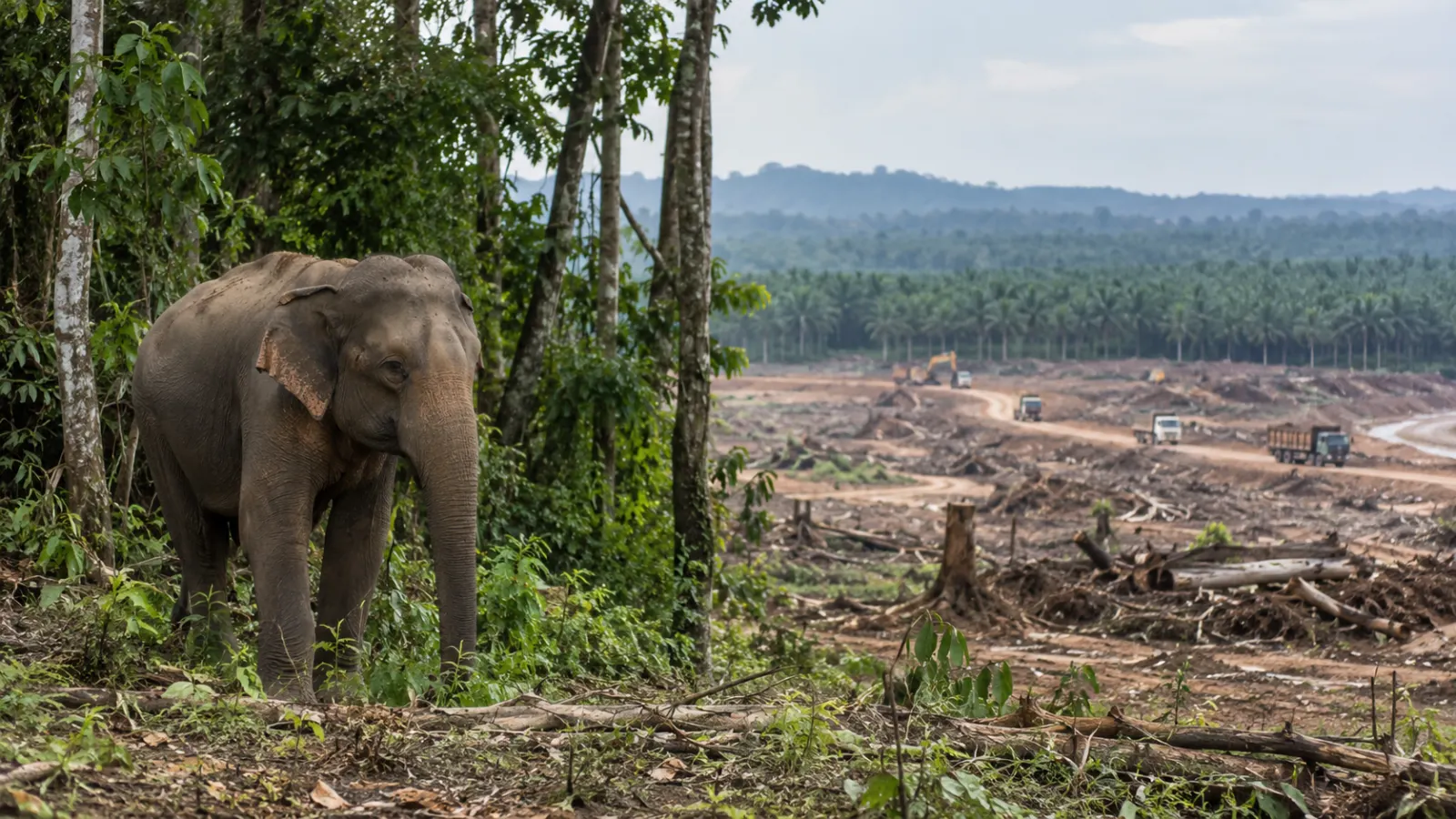
Agriculture can contaminate water biologically and chemically. Livestock manure may carry disease-causing organisms into streams, ponds and shallow groundwater. Fertilisers can add nitrates and other nutrients. Pesticides may move away from the fields where they were applied through runoff, erosion or leaching.
The difficulty is that agricultural contamination is often diffuse. An industrial discharge may sometimes be traced to one identifiable pipe, but agricultural pollution can originate across thousands of hectares. Rainfall can wash small amounts of contaminants from many fields into the same river or aquifer.
Risk therefore depends strongly on local conditions. Soil type affects how quickly water moves underground. The slope of the land influences runoff. Heavy rainfall can transport contaminants rapidly. Drainage systems change pathways. The distance between farms and water sources matters, as do the quantities and types of fertilisers and pesticides being used.
Agriculture can also affect water through nutrient pollution. Excess nitrogen and phosphorus entering lakes or reservoirs can encourage rapid growth of algae and cyanobacteria. This can complicate treatment, affect taste and odour and, in some circumstances, create toxin-related concerns.
The presence of farms near a water source does not automatically make the water unsafe. Good land management, buffer zones, manure control and appropriate chemical use can substantially reduce risk. The important point is that agricultural activity belongs inside any serious assessment of source-water protection.
Industry and Mining Can Introduce Complex Chemical Hazards
Industrial contamination differs greatly according to the activity involved. Manufacturing processes may use or generate solvents, metals, acids, salts, fuels and many other chemicals. When hazardous materials are properly contained and wastewater is effectively treated, industrial activity does not automatically create unsafe drinking water.
Problems arise when containment fails, treatment is inadequate, waste is discharged improperly or an accident allows chemicals to reach rivers, lakes or groundwater.
Mining can create another set of risks. Excavating and processing rock may expose minerals that were previously isolated from water and air. Mine drainage can alter water chemistry and mobilise metals. Tailings and waste-storage failures can release large volumes of contaminated material.
Urban environments create still another source. Rainwater moving across roads, industrial areas, parking surfaces and other built environments can carry fuel residues, metals, litter and other pollutants into drains and waterways.
The phrase industrial pollution therefore hides many different mechanisms. Effective control requires knowing which substances are present, how they behave in the environment and which treatment processes can remove them.
Not All Dangerous Water Has Been Polluted by People
One of the most important misconceptions about water contamination is that unsafe water must have been polluted by human activity.
Groundwater naturally interacts with rock and soil. As it moves underground, it dissolves minerals. In many places this process provides beneficial minerals without making the water unsafe. In some geological settings, however, naturally occurring substances can reach concentrations that create health concerns.
Arsenic is one of the most important examples. Communities may depend on groundwater that looks clean, smells normal and comes from apparently protected wells, yet contains naturally elevated arsenic. Excessive fluoride can also occur naturally in groundwater depending on local geology.
This makes geological contamination especially difficult from a public-perception standpoint. There may be no nearby factory, sewage outlet or obvious source of pollution to blame. The surrounding environment can appear pristine.
Testing therefore becomes essential.
A well is not automatically safe because it is underground.
Groundwater Can Protect Water and Hide Problems at the Same Time
Groundwater often has advantages over surface water because layers of soil and rock can provide a degree of natural filtration and protection from short-term contamination. But that protection should not be confused with immunity.
Shallow aquifers can be vulnerable to latrines, septic systems, agricultural chemicals and contaminated runoff. Pollutants that penetrate underground may also remain there for long periods because groundwater movement is often slow.
This creates a difficult contrast with rivers. Surface-water contamination may appear quickly but can also move through the system relatively quickly. Groundwater contamination may be harder to detect and much slower to reverse.
Over-pumping can introduce additional problems. In coastal regions, excessive groundwater extraction can allow saline water to move into freshwater aquifers. Pumping can also alter underground flow and potentially draw contaminated water toward wells.
There is therefore no universal rule that groundwater is always safer than surface water. Safety depends on geology, depth, surrounding land use, well construction, recharge patterns and the contaminants present.
Surface Water Is Exposed Directly to the Landscape Around It
Rivers, lakes and reservoirs interact continuously with their surrounding catchments. Rainfall carries material from the land into water bodies. Sewage discharges can enter directly. Industrial releases can move downstream. Agricultural runoff can change nutrient and chemical conditions.
This means surface-water quality can change quickly.
A river that met treatment expectations yesterday may be affected by heavy rainfall today. A reservoir can experience seasonal algal growth. A chemical spill upstream can create an acute emergency.
Surface-water treatment systems therefore need to account for variable conditions rather than assuming that raw water remains chemically and microbiologically constant.
Protecting the catchment is often one of the most effective forms of treatment because contamination prevented from entering the source does not need to be removed later.
Safe Water Can Become Unsafe Inside the Distribution Network
Producing safe water at a treatment plant does not guarantee that the same water remains safe at the tap.
Distribution systems can extend across enormous networks of pipes, storage tanks, valves and household connections. Every part of that infrastructure creates a potential failure point.
A damaged pipe can allow contaminated external water into the system. Poorly maintained storage tanks can become contamination sources. Biofilms can develop along pipe surfaces. Cross-connections with unsafe systems can introduce contaminants.
Pressure is particularly important. Properly pressurised water pipes tend to push water outward if a leak occurs. When pressure drops significantly, the direction of risk can change. Contaminated water surrounding a damaged pipe may be drawn inward.
This helps explain why intermittent water supply can create public-health problems even when the original source and treatment plant are adequate. Networks repeatedly emptied and refilled can be more vulnerable to contamination through leaks and poorly controlled connections.
Infrastructure is therefore part of water quality.
Lead Shows Why Plumbing Materials Matter
Lead provides a useful example because it often does not originate in the river, reservoir or aquifer.
Water can leave a treatment facility without dangerous lead concentrations and acquire lead later through contact with pipes, fittings, solder or other plumbing materials containing the metal.
Corrosion affects how readily lead enters water. Water chemistry therefore matters alongside the materials themselves.
This changes the way the problem must be managed. More treatment at the source cannot fully solve a problem created primarily by downstream plumbing. Corrosion control, monitoring and replacement of problematic materials may be necessary.
Lead demonstrates why drinking-water safety extends all the way to the point of use.
The source is only the beginning.
Household Storage Can Recontaminate Safe Water
In many communities, water cannot be used directly from a continuously pressurised tap. People may collect water from communal sources, receive intermittent municipal supply or purchase water that must be stored at home.
Storage creates another stage at which contamination can occur.
A container may have been filled with safe water but remain uncovered. Hands, cups or ladles can introduce microorganisms. Containers may not be cleaned regularly. Water may be transferred repeatedly between vessels. Open storage can expose water to dust, insects and other environmental contamination.
The design of the storage container therefore matters. Covered containers reduce exposure. Narrow openings can limit hand contact. Hygienic dispensing methods can reduce the need to dip objects directly into the stored water.
These practices may appear minor compared with large treatment plants and municipal infrastructure, but they can determine the microbiological quality of the water people actually consume.
The final metres of the water chain matter just as much as the first kilometres.
Flooding Can Transform Water Safety Very Quickly
Floods create several contamination pathways at once.
Sewers can overflow.
Pit latrines may be submerged.
Animal waste can be washed across the landscape.
Floodwater may enter wells.
Treatment plants can be damaged.
Electricity required for pumping and disinfection may fail.
Distribution pipes may break.
Communities can therefore experience a rapid decline in water safety even when the normal system functions well during ordinary weather.
After severe flooding, water that comes from a familiar source should not automatically be assumed safe simply because it was safe before the event.
Infrastructure inspection, treatment and official guidance become particularly important.
Drought Creates a Different Set of Water Problems
Drought may seem like a problem only of water quantity.
It can also affect quality.
As water volumes fall, some contaminants can become more concentrated. Reduced river flows may provide less dilution for pollutants. Reservoir conditions can change. Communities may abandon preferred sources and begin using shallower wells, tanker water or other alternatives with less reliable treatment.
Heavy groundwater extraction during prolonged drought can also place additional pressure on aquifers.
This relationship between quantity and quality is important.
Water scarcity and water contamination are not completely separate environmental problems.
A community forced to use lower-quality sources because safe sources are depleted faces both at once.
Earthquakes, Storms and Conflict Can Break the Water-Safety Chain
Natural disasters and conflict can damage water infrastructure quickly. Treatment systems may stop functioning. Electricity may fail. Pipelines can break. Sewer systems may leak. Storage tanks can become inaccessible or contaminated.
Emergency response therefore involves more than finding any available water.
Water still needs to be protected, treated where necessary, transported hygienically and stored safely.
The emergency itself may also change the contaminant profile. Flooding after a storm may create microbial risks, while damage to industrial facilities may release chemicals. Population displacement can overload sanitation systems and place unusually high demand on temporary water supplies.
Emergency drinking-water safety must therefore be based on the hazards created by the particular event.
Different Contaminants Require Different Treatment
There is no universal water-treatment process that removes every possible hazard equally well.
Disinfection can be highly effective against many microorganisms, but it does not automatically remove dissolved arsenic, lead or other chemicals.
Filtration can remove suspended particles and contribute to microbial control, but the ability to remove dissolved contaminants depends on the type of filtration and the substance involved.
Specialised chemical treatment may be necessary for arsenic, excessive fluoride or particular industrial contaminants.
This is why identifying the actual hazard matters before deciding how to treat the water.
A treatment system designed for a protected mountain reservoir may not be adequate for groundwater containing natural arsenic. A household filter designed mainly to improve taste may not provide protection against pathogens. A disinfectant cannot solve lead contamination from plumbing.
Effective water safety begins with a source-specific risk assessment.
Boiling Solves Some Problems, Not Every Problem
This distinction is especially important at household level.
Boiling is commonly used as an emergency method to reduce microbial risks because sufficient heating can inactivate many disease-causing organisms.
But boiling is not a universal solution to chemical contamination.
It does not remove substances such as arsenic or lead, and reducing water volume through evaporation can in some circumstances increase the concentration of dissolved substances.
Likewise, a household filter should not automatically be assumed capable of removing every contaminant simply because water tastes better after passing through it.
Household treatment needs to match the actual hazard.
Clean Appearance Is a Poor Safety Test
People naturally use the senses to judge food and water.
Cloudy water looks suspicious.
Bad-smelling water feels unsafe.
Visible sediment is easy to recognise.
These signs can indeed indicate quality problems.
The difficulty is that the opposite does not follow.
Clear water is not necessarily safe.
Microorganisms can be invisible. Arsenic is not detected by ordinary visual inspection. Lead can enter water without obvious colour. Many pesticides and industrial contaminants do not make drinking water visibly dirty.
Appearance therefore tells us something about water.
It cannot establish safety.
Testing Is Essential but Cannot Be the Only Protection
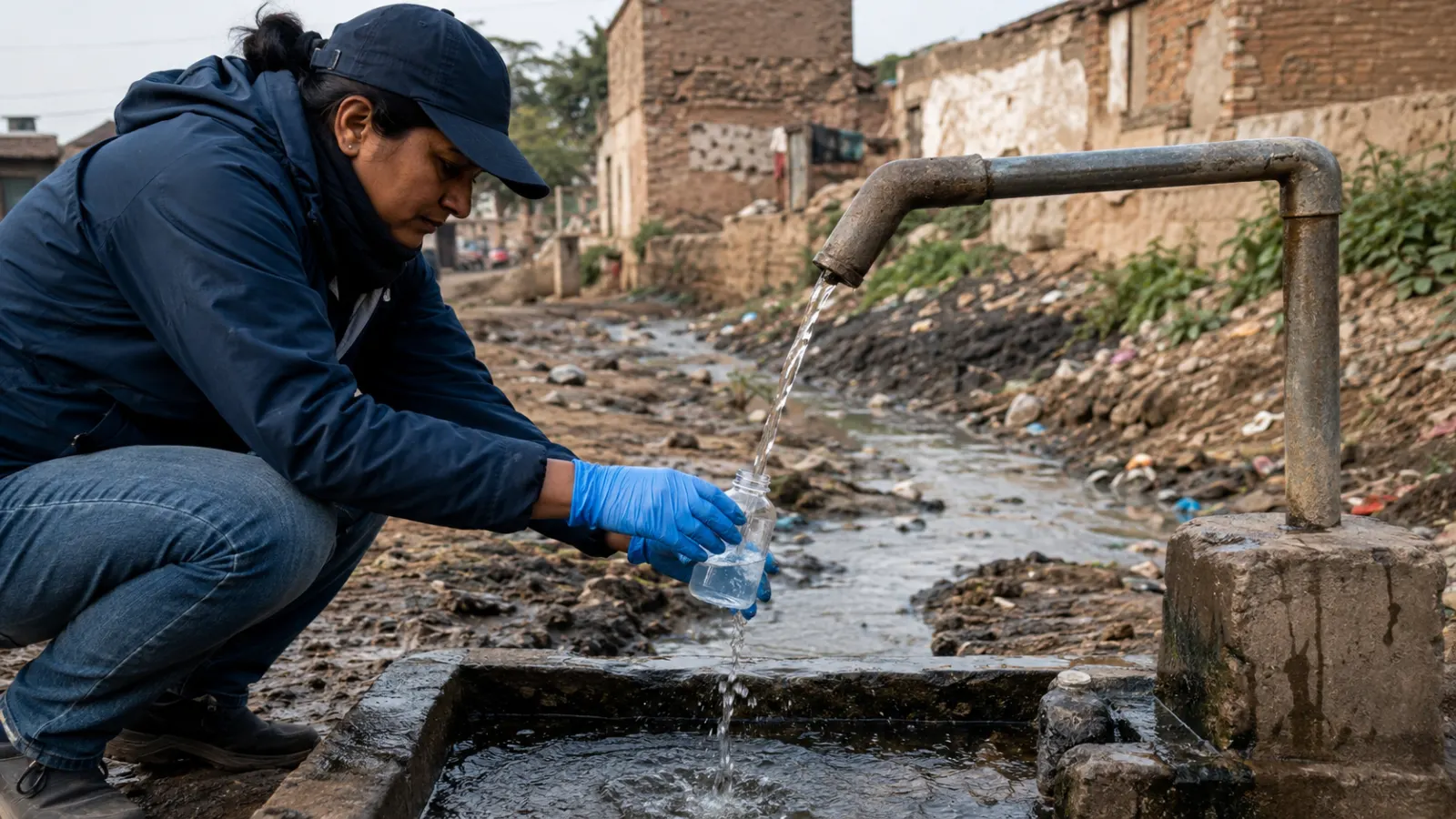
Laboratory testing provides direct evidence about water quality and is essential for verifying whether important contaminants are present.
But testing has limitations.
A water sample represents conditions at a particular place and time. Contamination may be intermittent. A pipe break can occur after a sample was collected. Heavy rainfall may suddenly alter a source. A storage tank may become contaminated between scheduled inspections.
A system based entirely on occasional testing therefore risks discovering contamination after people have already been exposed.
This is why the WHO drinking-water framework emphasises preventive risk management and water safety plans.
The principle is straightforward:
do not wait for a laboratory result to discover every failure. Design the system so that important failures are less likely to occur in the first place.
What Is a Water Safety Plan?
A water safety plan examines the full supply chain.
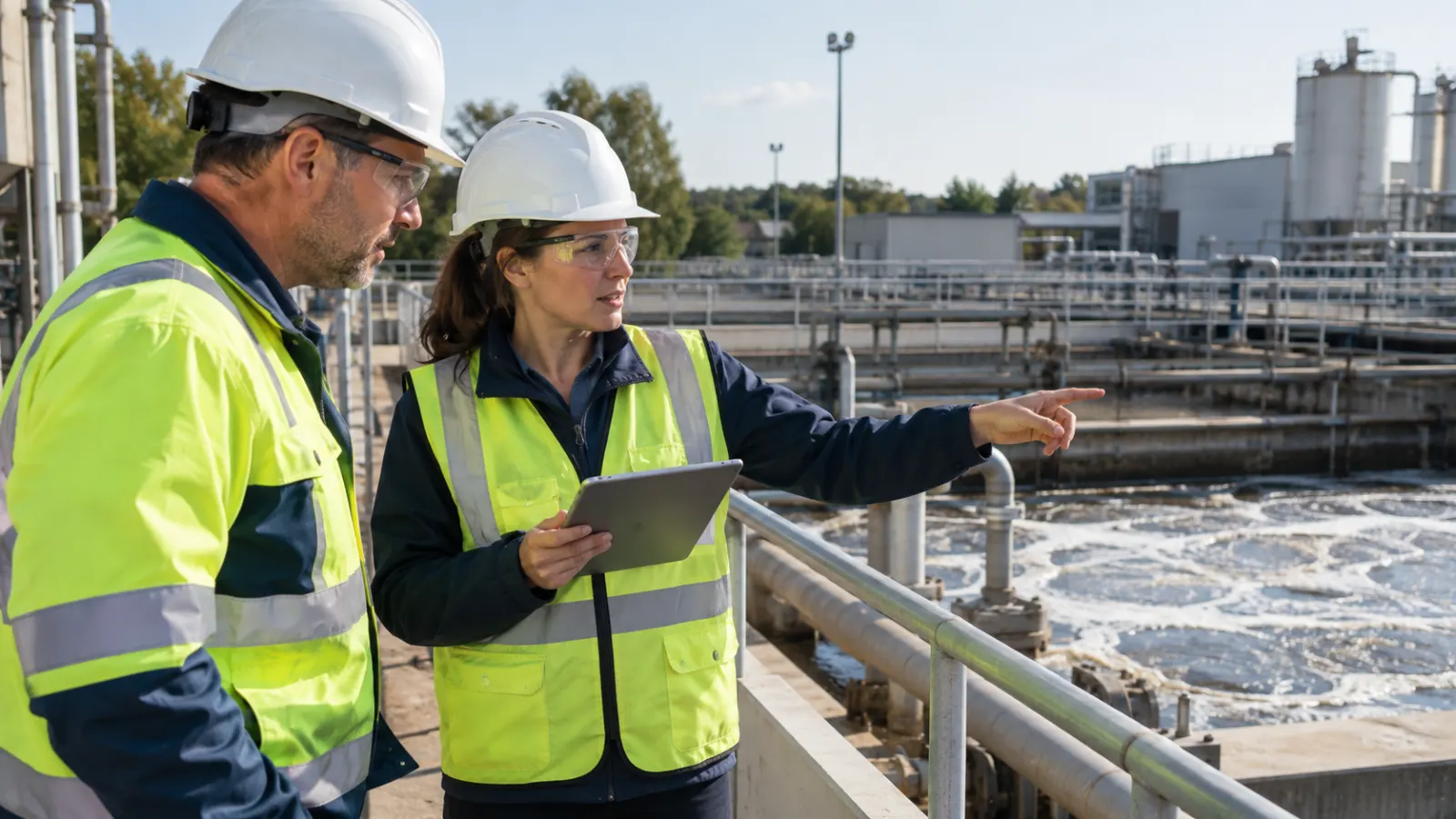
The process begins by understanding the water source and identifying potential hazards. It then evaluates the treatment barriers, storage systems, distribution network and operational procedures used to control those hazards.
Controls might include preventing sewage from entering a reservoir, maintaining appropriate filtration and disinfection, protecting groundwater wells, monitoring pressure in distribution pipes, inspecting storage tanks and preventing illegal or unsafe connections.
The system is then monitored to verify that these barriers continue working.
This differs from a reactive model in which authorities wait for consumers to become ill or for routine testing to discover contamination.
Prevention becomes part of daily operation.
Source Protection Is Often the First Treatment Barrier
One of the most effective ways to keep drinking water safe is to prevent contamination from reaching the source.
A protected catchment may reduce sewage, agricultural and industrial contamination before water reaches the treatment plant.
Protecting wells from surface runoff and nearby sanitation reduces microbial risk.
Managing hazardous chemicals upstream can prevent contamination that would otherwise require complex downstream treatment.
This does not eliminate the need for treatment.
Instead, it creates multiple protective barriers.
If one barrier weakens, others remain.
Safe drinking-water systems are strongest when protection does not depend on a single technology working perfectly.
Monitoring Needs to Match the Hazard
Different contaminants require different monitoring strategies.
Microbial contamination may change rapidly and can require frequent operational monitoring. Naturally occurring groundwater chemicals may be relatively stable but need accurate periodic testing. Distribution-system risks may require monitoring of pressure, disinfectant levels, pipe integrity and consumer complaints.
There is no sensible monitoring programme that measures everything everywhere all the time.
Risk assessment helps determine what deserves priority.
A region with known arsenic-bearing geology needs arsenic surveillance. A system vulnerable to sewage intrusion needs strong microbial controls. An old urban network may require particular attention to corrosion and pipe materials.
Water monitoring is most useful when it is based on plausible local hazards.
Contamination Can Be Acute or Chronic
The time scale of harm differs greatly between contaminants.
Faecally contaminated drinking water can produce outbreaks quickly. A large number of people using the same unsafe source can become ill within a short period.
Many chemical hazards operate differently. Long-term exposure to particular contaminants may create risk gradually.
This distinction affects public-health response.
An acute microbial outbreak may require immediate warnings and emergency treatment. A persistent chemical contaminant may require source substitution, specialised treatment or long-term infrastructure investment.
Both are serious.
They require different strategies.
Contamination Is Also an Infrastructure Problem
Discussions of water pollution often focus on rivers and lakes.
Drinking-water contamination is also an infrastructure issue.
Sewers need maintenance.
Treatment plants require skilled operators.
Pumps need electricity.
Pipes eventually fail.
Storage tanks must be cleaned.
Laboratories require equipment.
Utilities need financing.
Households need reliable connections.
Water safety therefore depends partly on institutional capacity.
Two communities can draw from similar water sources but experience very different outcomes because one has better treatment, monitoring and distribution infrastructure.
Informal and Intermittent Systems Can Create Additional Risks
Where piped supply is unreliable, households may rely on tankers, private vendors, rooftop tanks, borewells and stored municipal water.
Each additional transfer creates another potential contamination point.
Water may originate from a safe municipal plant but become contaminated inside a tanker. A borewell may contain chemical hazards that are never tested. A rooftop tank may accumulate sediment or be poorly covered.
Intermittent supply also encourages households to store large volumes, increasing the importance of storage hygiene.
This means improving water safety is not always simply a matter of building a larger treatment plant.
The entire delivery system has to be considered.
Who Is Responsible for Safe Drinking Water?
Responsibility is distributed across several levels.
Governments establish standards and regulatory systems. Water utilities manage treatment and distribution. Environmental authorities may regulate pollution entering source waters. Municipal sanitation systems control sewage. Farmers and industries influence catchment quality. Building owners affect internal plumbing. Households influence storage and handling.
The exact institutional arrangements vary by country.
The principle does not.
No single organisation controls every possible contamination pathway.
Safe drinking water therefore requires coordination across environmental protection, sanitation, infrastructure, public health and household practice.
Frequently Asked Questions
What is water contamination?
Water contamination occurs when biological, chemical, radiological or other agents enter water at levels that can make it unsafe or unsuitable for its intended use.
Can clear water still be contaminated?
Yes. Many important drinking-water contaminants are invisible and may not change the colour, smell or taste of water.
What is the biggest immediate drinking-water hazard?
Faecal contamination is one of the most important immediate microbial hazards because sewage and animal waste can carry disease-causing microorganisms.
How does sewage contaminate drinking water?
Sewage can enter rivers, wells or distribution networks through untreated discharge, leaks, flooding, failing sanitation systems or pressure losses in damaged water pipes.
Can farming contaminate groundwater?
Yes. Nitrates, pesticides, manure-derived microorganisms and other agricultural contaminants can move through soil into shallow or vulnerable groundwater.
Can groundwater be naturally unsafe?
Yes. Groundwater can naturally contain harmful concentrations of substances such as arsenic or fluoride depending on local geology.
Is groundwater always safer than river water?
No. Groundwater may have protection from some short-term surface contamination but can still contain natural chemicals or contaminants that have seeped underground.
Can drinking water become contaminated after treatment?
Yes. Broken pipes, pressure losses, storage tanks, plumbing materials and household storage can introduce new contamination after treatment.
How does lead get into drinking water?
Lead can enter water through corrosion of pipes, fittings, solder or other plumbing materials containing lead.
Can boiling remove every contaminant?
No. Boiling is mainly useful for reducing microbial hazards. It does not automatically remove dissolved chemical contaminants such as arsenic or lead.
Does a household water filter remove everything?
No. Filter performance depends on the technology and the contaminant. A system should be selected according to the hazards actually present.
Can floods contaminate wells?
Yes. Floodwater can carry sewage, animal waste and other contaminants into wells, particularly if the wellhead is submerged or poorly protected.
Can drought make water quality worse?
Yes. Drought can concentrate some contaminants, reduce dilution and force communities to use lower-quality alternative sources.
Why isn't water testing enough?
Testing captures conditions at specific places and times. Preventive controls are also needed because contamination can occur between tests.
What is a water safety plan?
A water safety plan is a preventive approach that identifies hazards from the source through treatment and distribution and establishes controls to reduce those risks before exposure occurs.
Can stored drinking water become unsafe?
Yes. Dirty containers, uncovered storage and contaminated hands or utensils can reintroduce microorganisms into previously safe water.
Who is most responsible for preventing drinking-water contamination?
Responsibility is shared among governments, water utilities, sanitation systems, industries, farmers, property owners and households depending on the contamination pathway.
Water Safety Is a Chain, Not a Single Treatment Step
The easiest way to misunderstand drinking-water safety is to imagine one decisive moment when dirty water enters a treatment plant and clean water comes out.
Real systems are more complicated.
The river or aquifer needs protection.
Treatment barriers need to work.
Storage tanks need maintenance.
Distribution pipes need adequate pressure and structural integrity.
Building plumbing needs safe materials.
Household storage needs hygienic handling.
A failure at any stage can change the safety of the water that reaches the consumer.
This is why WHO's preventive approach treats the entire supply chain as one connected risk-management system rather than concentrating only on laboratory testing at the end.
The Central Idea
Water contamination does not have one source and cannot be solved with one universal technology. Human and animal waste can introduce microorganisms. Agriculture can contribute pathogens, nitrates, nutrients and pesticides. Industry and mining can introduce complex chemical hazards. Natural geology can make groundwater unsafe even without obvious human pollution.
The contamination pathway can continue after treatment. Distribution networks can develop leaks or lose pressure. Plumbing materials can release metals. Water stored safely at the source can be recontaminated inside the home.
Floods, droughts, earthquakes and conflict can rapidly change all of these pathways.
The source you supplied makes the critical point that safe drinking water depends on a chain of protection extending from the catchment to the point of consumption.
That principle changes how water safety should be understood.
Testing remains essential, but testing alone is reactive. The stronger approach is preventive: identify the hazards that could occur, create barriers against them, monitor those barriers and verify that the final water remains safe.
Source protection prevents contamination before treatment becomes necessary. Appropriate treatment controls hazards that reach the source. Secure distribution prevents safe water from becoming contaminated again. Monitoring detects emerging problems. Hygienic household storage protects the final stage.
The most dangerous misconception is therefore also one of the simplest:
clean-looking water is safe water.
It may be.
Appearance cannot prove it.
Drinking-water safety depends on what the eye cannot see and on the systems designed to keep those invisible hazards away from the people who ultimately drink the water.