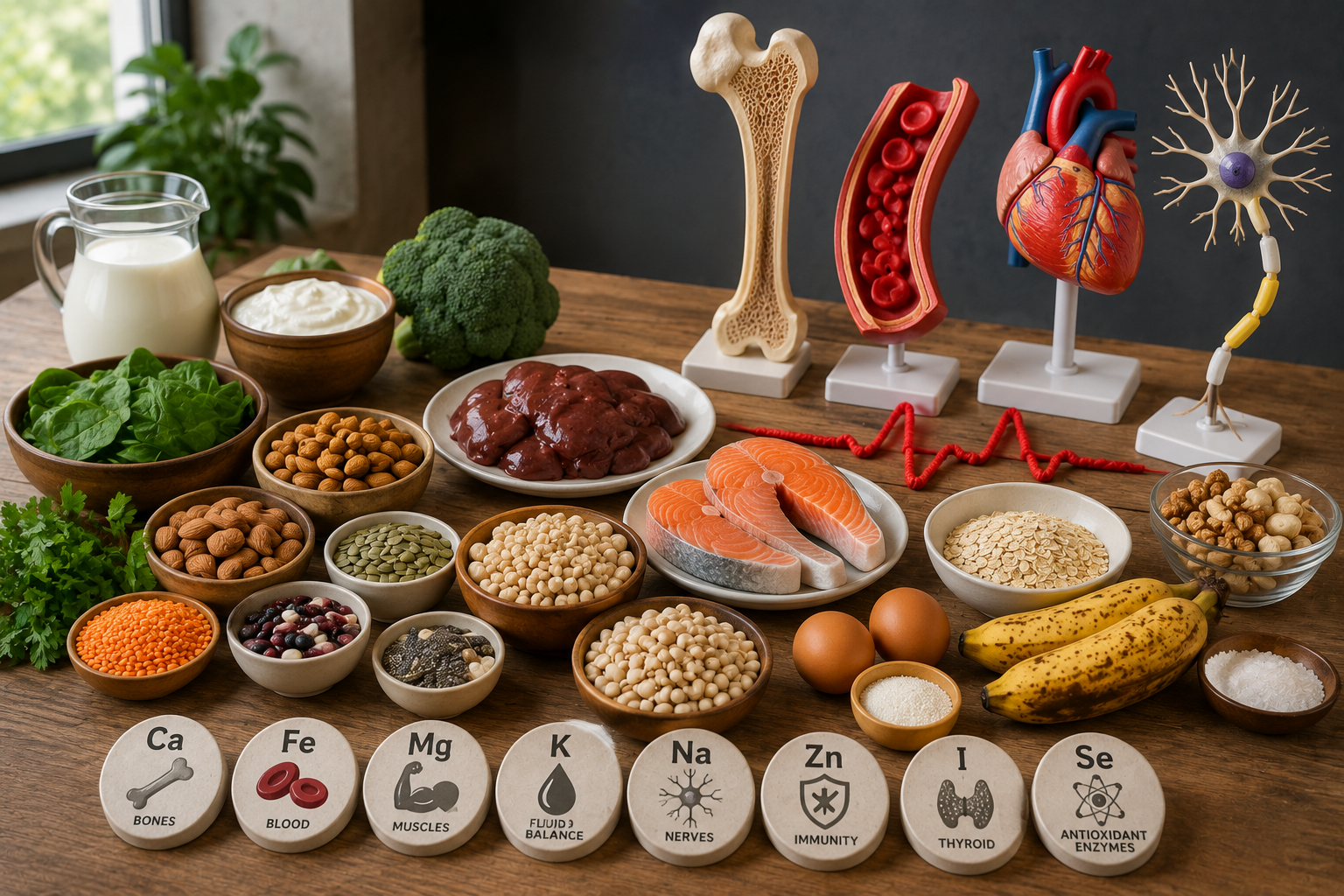
Understanding the Role of Minerals in the Body
Minerals rarely receive the same glamour as protein, vitamins or trendy superfoods, yet they are among the most important nutrients in the human body. They help bones stay strong, muscles contract, nerves send signals, blood carry oxygen, fluid balance remain stable, enzymes work, hormones function and the heartbeat maintain rhythm. They do not provide calories, but without them the body cannot use energy properly, build structure reliably or maintain internal balance.
A mineral is an inorganic element that the body needs for normal function. Unlike vitamins, which are organic compounds, minerals come from soil and water and enter the food chain through plants, animals and drinking water. The body cannot manufacture them. They must come from food, fluids or, in specific cases, supplements prescribed or recommended for a clear reason. Because minerals are elements, the body does not break them down in the same way it breaks down carbohydrates, proteins or fats. It absorbs, transports, stores, uses and excretes them according to need.
The first helpful distinction is between macrominerals and trace minerals. Macrominerals are needed in larger amounts. They include calcium, phosphorus, magnesium, sodium, potassium, chloride and sulfur. Trace minerals are needed in smaller amounts but are still essential. They include iron, zinc, iodine, selenium, copper, manganese, fluoride, chromium, molybdenum and others. “Trace” should not be misunderstood as optional. A tiny requirement can still be critical. The thyroid gland needs iodine in small quantities to make thyroid hormones. The blood needs iron to carry oxygen. Many enzymes need zinc, copper or selenium to function.
Calcium is the mineral most people associate with bones, and rightly so. Most body calcium is stored in bones and teeth, where it provides structure. But calcium is also involved in muscle contraction, blood clotting, nerve transmission and cellular signalling. This is why blood calcium is tightly regulated. If dietary intake is poor over time, the body may draw on bone stores to maintain blood levels. Bone health therefore depends not only on calcium intake but also on vitamin D status, physical activity, hormones, age, protein intake and overall health.
Phosphorus also contributes to bones and teeth and is part of ATP, the molecule often described as the body’s energy currency. Magnesium is involved in hundreds of enzymatic reactions. NIH Office of Dietary Supplements material describes magnesium as a cofactor in more than 300 enzyme systems, including those involved in protein synthesis, muscle and nerve function, blood glucose control and blood pressure regulation. In practical terms, magnesium participates in both structure and metabolism. It is found in nuts, seeds, legumes, whole grains and green leafy vegetables.
Sodium, potassium and chloride are electrolytes, meaning they help conduct electrical signals and regulate fluid balance. Sodium often receives attention because excess intake, especially from processed foods and added salt, is linked with high blood pressure risk in many people. But sodium is not simply “bad.” The body needs it for nerve impulses, muscle contraction and fluid balance. The problem is imbalance: many modern diets provide too much sodium and too little potassium. Potassium helps maintain fluid balance inside cells, supports nerve and muscle function, and is found in fruits, vegetables, legumes, potatoes, dairy and other foods. People with kidney disease, however, may need to limit potassium, which shows why general nutrition advice must be adapted to medical context.
Iron is one of the most important trace minerals because it helps form haemoglobin, the protein in red blood cells that carries oxygen. It is also part of myoglobin in muscle and contributes to many enzymes. Iron deficiency can cause tiredness, weakness, breathlessness, poor concentration, dizziness and anaemia, though symptoms vary. Iron is found in haem form from animal foods such as meat and fish and non-haem form from plant foods such as lentils, beans, leafy greens, nuts, seeds and fortified grains. Vitamin C improves non-haem iron absorption, while tea and coffee with meals may reduce it. Menstruation, pregnancy, rapid growth, low intake and blood loss can increase risk of deficiency.
Zinc supports immune function, wound healing, taste, smell, growth and many enzyme systems. It is found in meat, seafood, dairy, legumes, nuts and seeds. Iodine is required for thyroid hormone production, which affects metabolism, growth and brain development. Iodised salt has been one of the major public health strategies used to prevent iodine deficiency in many regions, though intake patterns vary by country and household. Selenium contributes to antioxidant systems and thyroid hormone metabolism. Copper helps iron metabolism, connective tissue formation and nervous system function. Fluoride supports tooth enamel. Each mineral has its own role, but the broader pattern is the same: minerals help the body maintain structure, chemistry and communication.
One of the most important lessons about minerals is that they work in balance. The body is not a collection of isolated nutrient boxes. Calcium and phosphorus interact in bone. Sodium and potassium influence fluid and blood pressure regulation. Iron absorption can be improved by vitamin C and inhibited by some dietary factors. Zinc and copper can compete when high-dose supplements are used. Magnesium and vitamin D metabolism are connected. This is why taking large doses of one mineral without medical supervision can disturb another. A person may think they are correcting one weakness while silently creating a new imbalance.
Mineral deficiency can happen for several reasons. Intake may be low because of poor diet, food insecurity, restrictive eating, low appetite, alcoholism or limited food variety. Needs may be higher during pregnancy, breastfeeding, childhood growth, adolescence or heavy physical stress. Losses may be increased through heavy menstrual bleeding, gastrointestinal bleeding, chronic diarrhoea, kidney disease or certain medications. Absorption may be reduced by digestive disorders, bariatric surgery, inflammation or interactions with other foods and medicines. Deficiency is therefore not always a matter of “not eating enough.” Sometimes the real issue is loss, absorption or increased demand.
Excess mineral intake can also be dangerous. Too much sodium may worsen blood pressure risk in salt-sensitive individuals. Excess iron can be toxic and should not be taken casually. High-dose zinc can interfere with copper status. Too much selenium can cause hair and nail problems and other symptoms. Too much calcium from supplements may create problems in some contexts. Potassium supplements can be dangerous in kidney disease or with certain medications. The body needs minerals, but it needs them within physiological ranges. The line between helpful and harmful depends on dose, health status and duration.
Food remains the best foundation for mineral intake because whole foods provide minerals in a nutritional matrix. Dairy, fortified alternatives, small fish with bones, leafy greens, legumes and certain seeds can support calcium intake. Whole grains, nuts, seeds and legumes support magnesium. Fruits, vegetables and legumes support potassium. Lentils, beans, meat, fish, poultry and fortified grains provide iron. Seafood, dairy and iodised salt can contribute iodine depending on region. Nuts, seeds, legumes, animal foods and whole grains provide zinc and selenium. A varied diet reduces the risk of over-relying on one source.
However, food advice should be realistic. Many people do not eat perfect diets. Some are vegetarian or vegan. Some cannot afford a wide variety of foods. Some have digestive problems. Some live in areas where soil mineral content, food fortification and public health policies differ. Some have cultural diets that are healthy overall but low in certain nutrients unless carefully planned. Good nutrition advice does not shame people. It helps them identify practical, affordable changes: add pulses, use iodised salt where appropriate, include seasonal vegetables, pair iron-rich plant foods with vitamin C, choose whole grains when possible, and avoid excessive ultra-processed salty foods.
Minerals also show why symptoms alone are not enough for diagnosis. Fatigue may be due to iron deficiency, but it may also be due to sleep problems, thyroid disease, depression, infection, diabetes, low B12, chronic stress or many other causes. Muscle cramps are often blamed on magnesium, but cramps can have many triggers. Hair fall may be linked with iron deficiency or zinc deficiency in some cases, but also with hormones, stress, genetics, illness, medications or protein intake. Because symptoms overlap, testing and professional evaluation matter, especially when symptoms are persistent, severe or unexplained.
The supplement industry has made minerals sound simple: take magnesium for sleep, zinc for immunity, iron for energy, calcium for bones. These claims often contain a small truth but can become misleading. Magnesium is essential, but not every sleep problem is magnesium deficiency. Zinc is necessary for immune function, but excess zinc does not make a healthy person invincible. Iron is essential for oxygen transport, but taking iron without confirmed need can be harmful and may hide the real cause of symptoms. Calcium supports bones, but bones also require vitamin D, protein, resistance exercise, hormones and time.
A safer supplement framework is to ask five questions. What is the reason for taking this mineral? Is there a deficiency, risk factor or medical recommendation? What dose is being taken, and is it near or above the upper safe limit? Could it interact with medicines or health conditions? When will it be reviewed or stopped? Without answers to these questions, supplementation becomes guesswork. The NIH and other recognised medical sources consistently emphasise that supplements can be useful but can also cause side effects and interactions.
Minerals deserve special caution in people with chronic disease. Kidney disease can change potassium, phosphorus, sodium and magnesium handling. Thyroid disorders may require iodine caution. People with haemochromatosis or iron overload must avoid unnecessary iron. Those taking blood pressure medicines, diuretics, thyroid medicines, antibiotics, antacids or osteoporosis medicines may need timing adjustments or avoidance of certain supplements. Pregnant people, children and older adults should be especially careful with unsupervised supplementation because requirements and risks differ.
From a public health perspective, minerals also reveal inequality. Iron deficiency and anaemia remain common worldwide, especially among women, children and pregnant people. Iodine deficiency has historically affected brain development in populations without adequate iodine intake. Excess sodium intake is a major nutrition concern in many countries because salt is hidden in packaged and restaurant foods. These are not only individual discipline issues. They are linked to food systems, affordability, education, fortification policies, healthcare access and cultural habits.
For everyday readers, the practical takeaway is not to memorise every mineral. It is to understand the pattern. Minerals are small nutrients with structural, electrical, metabolic and hormonal roles. They must come from diet or appropriate supplementation. They work in balance. Both deficiency and excess can cause harm. Food variety is the safest default. Testing and medical advice are important when symptoms, risk factors or chronic conditions are present.
A simple mineral-supporting routine can begin with ordinary meals. Include pulses, whole grains, nuts or seeds several times a week. Eat vegetables and fruits daily for potassium and other nutrients. Use iodised salt if it is recommended and common in your region, but keep total salt intake sensible. Include iron-rich foods and pair plant-based iron with vitamin C. Do not drink tea or coffee immediately with every iron-rich meal if iron deficiency is a concern. Avoid high-dose mineral supplements unless there is a clear reason. Seek professional advice for persistent fatigue, dizziness, paleness, muscle weakness, heavy menstrual bleeding, digestive symptoms, pregnancy-related needs or chronic disease.
Minerals are not glamorous because they do not promise instant transformation. They work quietly in the background, maintaining the chemistry of life. They help the heart beat, the nerves signal, the bones stand, the blood transport oxygen, the muscles contract and the enzymes complete their work. Understanding minerals is therefore not about becoming obsessed with labels. It is about respecting the body’s need for balance. When diet, medical context and supplementation are handled thoughtfully, minerals support health in one of the most fundamental ways: by keeping the body’s internal systems steady enough for everything else to function.
A practical mineral lens can also improve how people read food labels. Sodium is usually shown clearly, and packaged foods can contribute much more salt than people realise. Calcium, iron and potassium may appear on some labels, especially in fortified foods. Fortification can be helpful, but it should not create a false health halo around highly processed foods. A sugary cereal fortified with iron is still not the same as a balanced meal. The label should be read as information, not as a guarantee that the food is healthy overall.
Hydration and minerals are also connected. Electrolytes such as sodium, potassium and chloride help regulate fluid movement, but most people doing ordinary daily activity do not need sports drinks. Water and regular meals are enough for many. Electrolyte drinks may be useful during prolonged heavy sweating, intense endurance exercise, vomiting, diarrhoea or medical advice, but routine use can add unnecessary sugar or sodium. Again, context matters. Minerals are not about more; they are about the right amount for the body’s actual situation.
The final editorial caution is to avoid one-mineral explanations for complex problems. Weakness is not always low magnesium. Cravings are not always low zinc. Hair fall is not always low iron. Muscle pain is not always low potassium. These nutrients matter, but the human body is complex. Responsible health content should encourage readers to notice patterns, improve diet quality, avoid self-prescribing high doses, and consult professionals when symptoms are persistent or risk factors are present.
Medical Disclaimer
Medical disclaimer: This article is for general education only and is not a substitute for professional medical advice, diagnosis or treatment. Expert review is required before publication.