Rahul Gandhi’s Supreme Court March Stopped; INDIA Bloc Moves SIR Battle Into Court
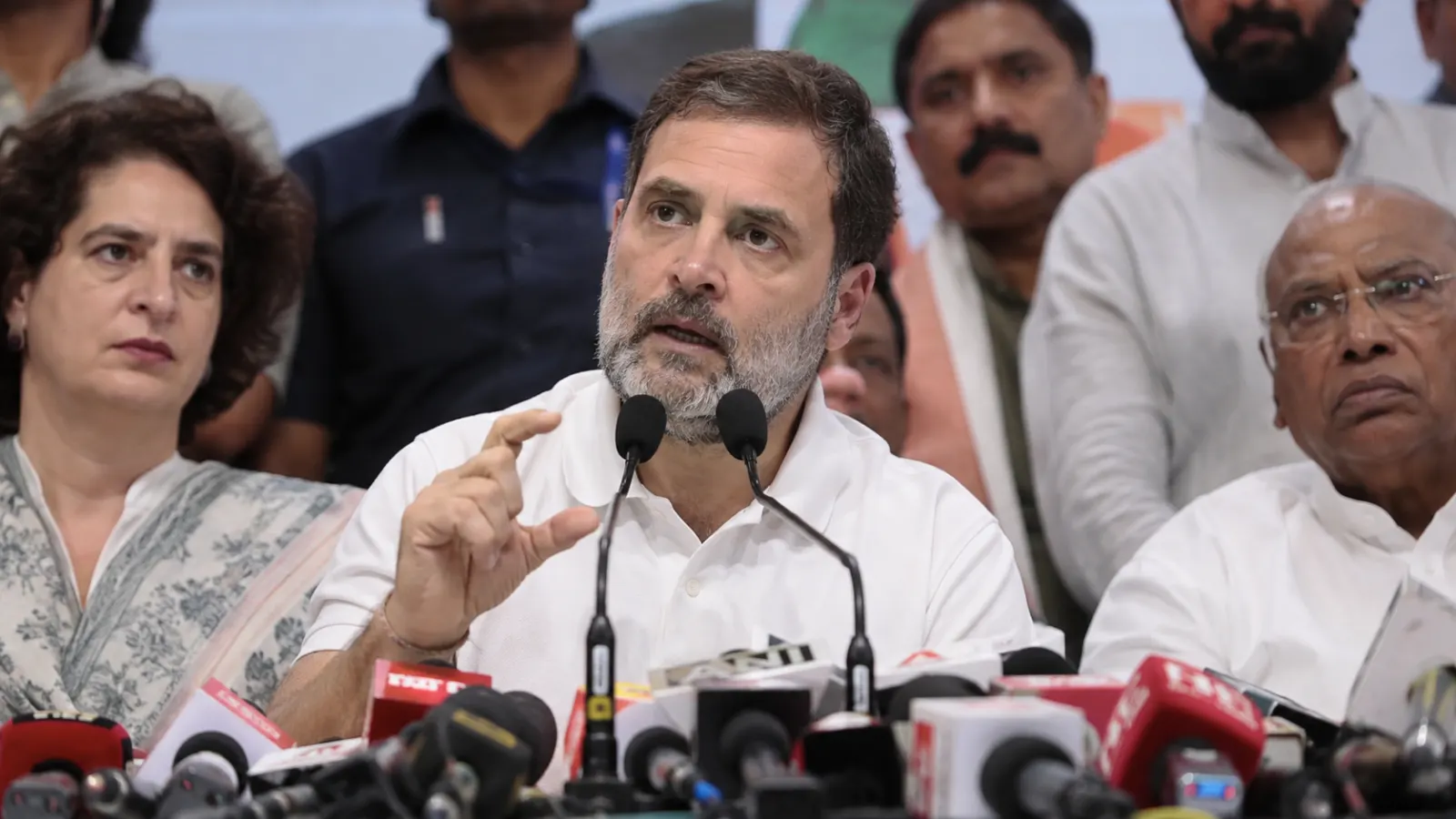
Rahul Gandhi and other INDIA bloc leaders marched towards the Supreme Court on Monday as opposition parties intensified their campaign against the Special Intensive Revision of electoral rolls and demanded the resignation of Chief Election Commissioner Gyanesh Kumar.
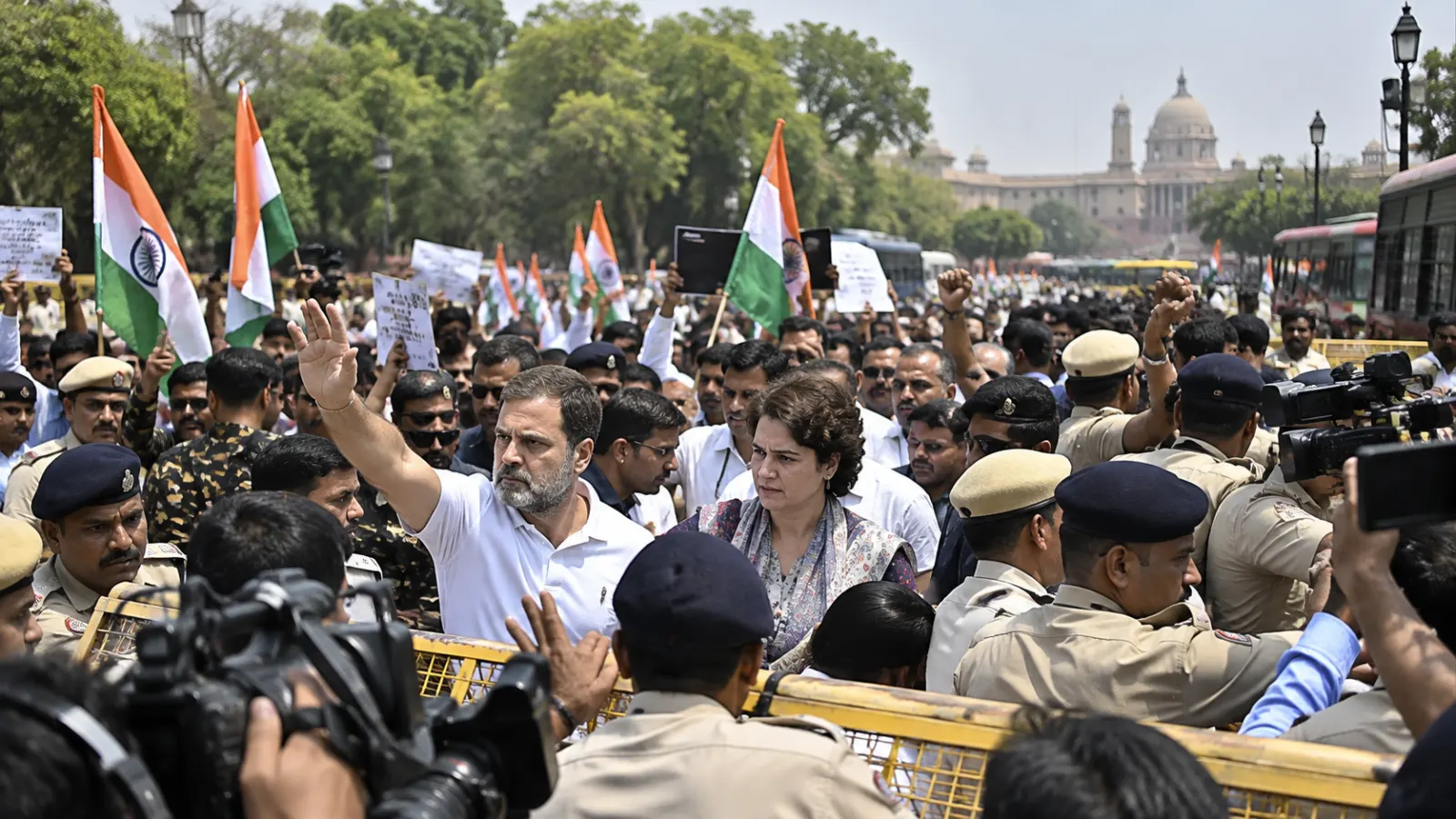
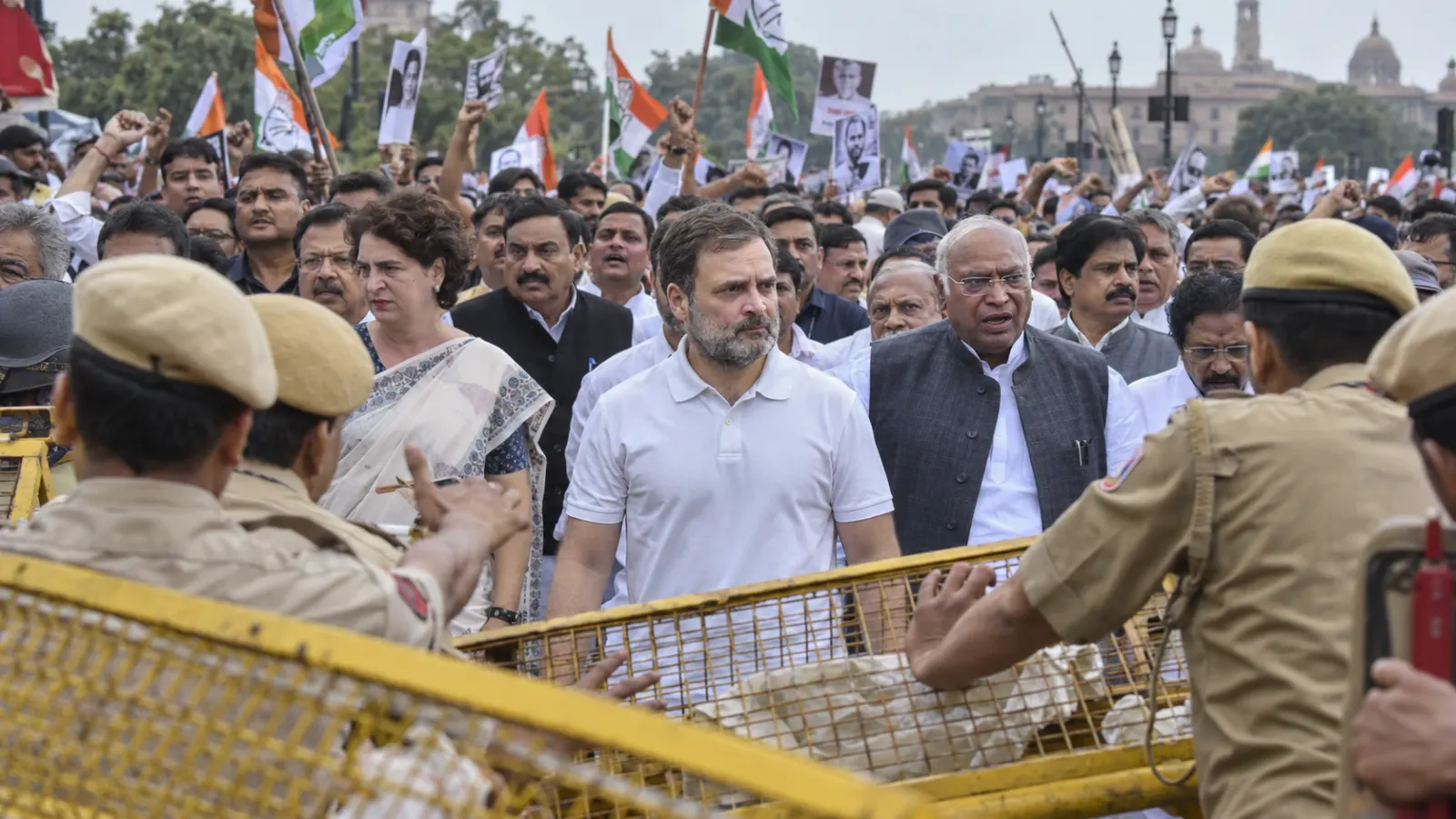
Delhi Police stopped the larger march at Bhagwan Dass Road before it could reach the Supreme Court complex. A smaller delegation was subsequently allowed to approach the court for filing purposes, while Rahul Gandhi formally moved the Supreme Court challenging alleged voter deletions and irregularities linked to the SIR process.
March blocked before reaching Supreme Court
Rahul Gandhi, Priyanka Gandhi Vadra and several senior opposition leaders joined the march from the Connaught Place-Barakhamba Road area towards the Supreme Court.
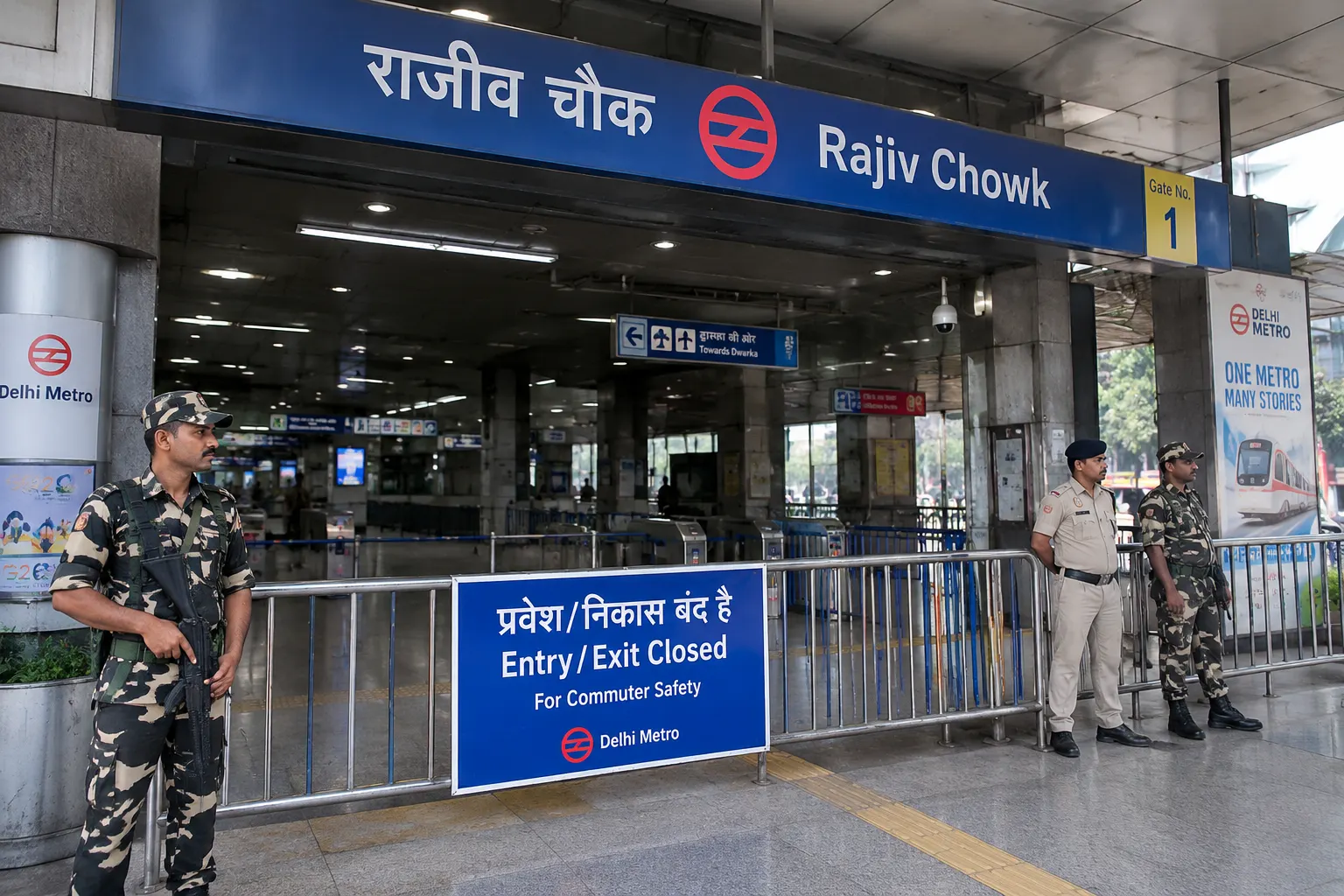
Police had imposed extensive security arrangements across central Delhi ahead of the demonstration, including road restrictions and temporary closure of six Metro stations for entry and exit.
As the march advanced, police stopped the main group at Bhagwan Dass Road.
The restriction prevented the larger crowd from reaching the Supreme Court premises, although arrangements were made for a smaller delegation to proceed through the formal legal process.
The confrontation once again placed Delhi’s protest restrictions at the centre of the political dispute between the opposition and the government.
Rahul Gandhi files Supreme Court petition
The most significant development of the day came after the street march.
Rahul Gandhi moved the Supreme Court against the Election Commission over alleged voter deletions and irregularities connected with the Special Intensive Revision of electoral rolls.
The legal challenge marks an important shift in the opposition campaign. What had largely been a political and street-protest movement has now entered the judicial arena.
The petition is expected to raise questions about the electoral-roll revision process, safeguards for voters whose names are removed and the Election Commission’s handling of the exercise.
Other opposition leaders have also backed the legal challenge, making the case part of a broader INDIA bloc campaign over electoral integrity.
Opposition demands Gyanesh Kumar’s resignation
Rahul Gandhi has continued to demand the resignation of Chief Election Commissioner Gyanesh Kumar.
Ahead of Monday’s march, he accused the Election Commission leadership of failing to protect the integrity of the electoral process and alleged that the voter-roll revision exercise had resulted in improper deletions.
He also called on Kumar to resign and cooperate with investigations into the alleged irregularities.
These are political allegations and remain strongly contested.
The Election Commission has maintained that the revision exercise follows established legal procedures and is intended to improve the accuracy of electoral rolls.
It has also argued that voters who are wrongly removed have mechanisms available to seek restoration of their names.
Rahul says protests are part of one movement
Rahul Gandhi has sought to connect the INDIA bloc demonstration with the broader wave of protests that has unfolded in Delhi over recent days.
Asked about demonstrations organised by student groups, activists and the Cockroach Janta Party, Gandhi said the different protests were united by opposition to the Election Commission leadership.
His comments suggest that the Congress intends to frame the current mobilisation as a wider movement rather than a series of separate protests.
The political strategy could allow the opposition to combine parliamentary parties, activists and youth groups around a common electoral-reform campaign.
Security restrictions affect central Delhi
Monday’s march again disrupted movement through parts of central Delhi.
Entry and exit were suspended at Rajiv Chowk, Central Secretariat, Patel Chowk, Janpath, Mandi House and Barakhamba Road Metro stations for several hours.
Traffic restrictions were also imposed along routes close to the proposed march.
The measures followed a weekend of heavy security deployment and protest-related disruption across Delhi.
Recent demonstrations have resulted in preventive detentions, road closures, Metro restrictions and political criticism over the scale of police action.
Authorities maintain that such restrictions are necessary to maintain public order when large demonstrations have not received permission or could affect sensitive areas.
Supreme Court route becomes central to dispute
The opposition’s decision to take the issue directly to the Supreme Court is significant because the Chief Justice had earlier declined a request for an informal meeting with opposition leaders.
The court indicated that grievances concerning electoral procedures should be pursued through proper judicial proceedings.
Monday’s petition therefore follows precisely that legal route.
The next major question is whether the Supreme Court will admit the petition, seek a response from the Election Commission or issue interim directions regarding the SIR process.
Any such order could dramatically change the political and legal trajectory of the dispute.
BJP attacks opposition campaign
The BJP has criticised Rahul Gandhi and the INDIA bloc over the campaign.
Government and BJP leaders have accused the opposition of politicising an administrative electoral process and attempting to create public unrest after failing to achieve its objectives through regular political channels.
The opposition rejects that argument and says the protests concern the integrity of democratic institutions rather than electoral advantage.
The increasingly sharp rhetoric from both sides indicates that the dispute is likely to remain politically significant even as it moves into court.
What happens next
The focus now shifts from the streets outside the Supreme Court to the courtroom itself.
The Supreme Court will have to determine whether Rahul Gandhi’s petition raises questions requiring judicial intervention and whether the Election Commission should be directed to respond.
At the same time, opposition parties have indicated that protests will continue.
Rahul Gandhi has described the campaign as a long-term movement and said it will not end with a single march or petition.
That means the SIR dispute is now unfolding simultaneously on two fronts: continued political mobilisation in Delhi and a formal legal challenge before India’s highest court.