Jantar Mantar No Longer a Designated Protest Site; Delhi Names 3 New Venues
Delhi Police has removed Jantar Mantar from the capital’s list of designated protest venues and shifted authorised demonstrations to three alternative locations: Ramlila Maidan, Burari Ground and CBD Ground in East Delhi.
The decision marks a major change in Delhi’s protest geography. Jantar Mantar had for decades served as one of the capital’s most recognisable spaces for demonstrations, sit-ins and political mobilisation because of its central location and proximity to Parliament, government offices and major institutions.
Delhi Police shifts designated protest venues
The new arrangement designates Ramlila Maidan, Burari Ground and CBD Ground as authorised locations for protests and demonstrations.
The change followed recommendations from a committee constituted by the Ministry of Home Affairs to examine alternative venues for public demonstrations.
Jantar Mantar had been the primary designated protest space after earlier restrictions reduced the use of areas such as Boat Club for large demonstrations. Its removal therefore represents a structural shift rather than a temporary restriction linked to a single protest.
The new sites are spread across different parts of Delhi. Ramlila Maidan is the closest of the three to central Delhi, while CBD Ground in East Delhi and Burari Ground are substantially farther away from the traditional political core around Parliament Street and Jantar Mantar.
Why the change matters
The location of a protest can affect its political visibility.
Jantar Mantar’s importance came partly from its proximity to Parliament, ministries, political offices and national media organisations. Demonstrations held there could attract immediate attention from lawmakers, journalists and the wider public.
Moving designated protests to larger grounds farther from central government institutions could make crowd management easier for police, but critics are likely to argue that distance also reduces the visibility and symbolic impact of public dissent.
That tension between maintaining public order and preserving meaningful access to spaces near political institutions is likely to become a central part of the debate around the decision.
Decision follows days of protest-related disruption
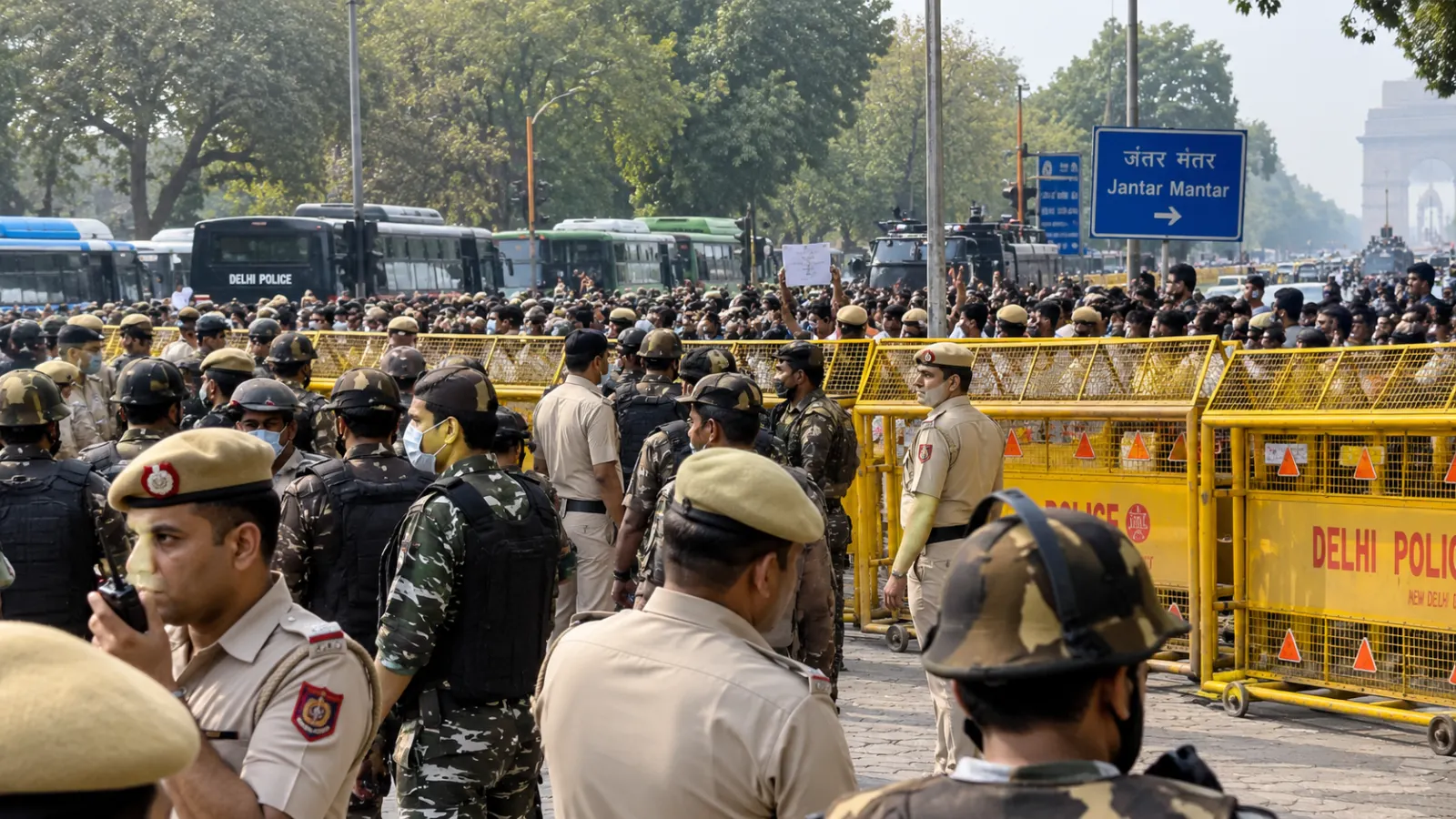
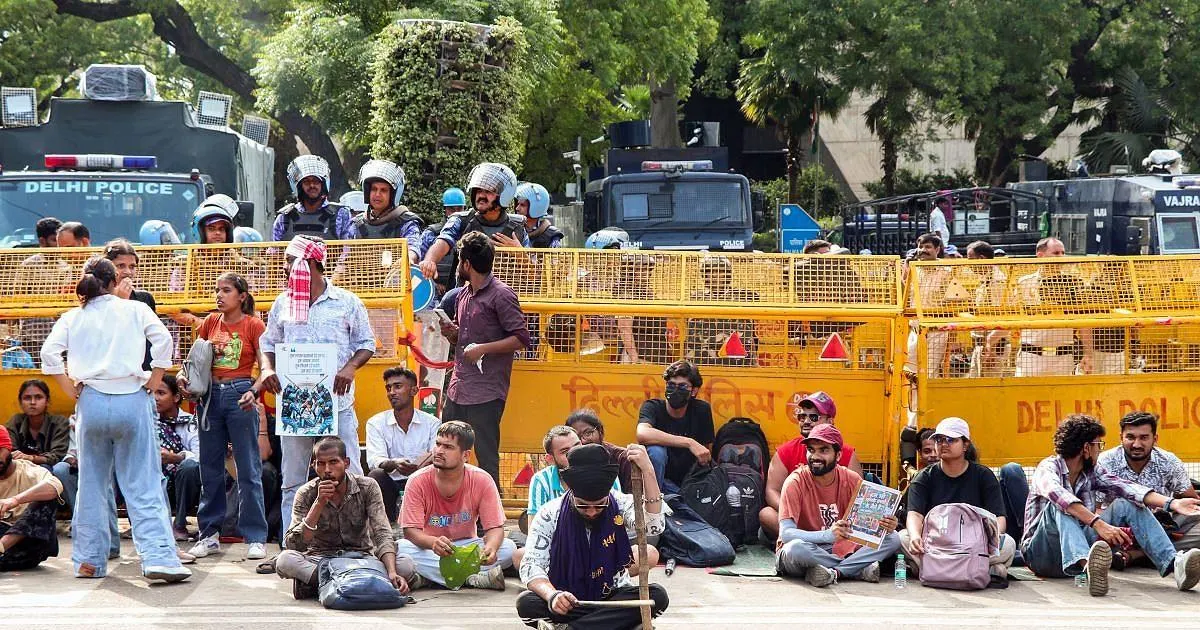
The change comes after several days of demonstrations and security restrictions in Delhi.
Recent protests over electoral-roll revisions and demands concerning Chief Election Commissioner Gyanesh Kumar led to extensive barricading, preventive detentions and restrictions on Metro, rail and road movement.
Authorities faced criticism over the scale of some of those restrictions, particularly when measures affected commuters who were not involved in demonstrations.
The Supreme Court also questioned broad transport restrictions imposed during the recent unrest and emphasised the need for proportionate security measures.
Against that backdrop, moving designated protest venues away from Jantar Mantar appears intended to create clearer, more manageable spaces for future demonstrations.
CJP objects to Jantar Mantar removal
The Cockroach Janta Party, which has been at the centre of the recent protest movement, has opposed the removal of Jantar Mantar from the designated list.
CJP leaders had approached Parliament Street Police Station seeking permission and a date for another peaceful demonstration at Jantar Mantar.
The group has argued that the right to protest loses some of its practical meaning if demonstrations are moved too far away from the institutions protesters are seeking to influence.
Its leaders have indicated that they will continue pressing authorities for permission to demonstrate and have criticised the decision to move protest activity away from central Delhi.
Three new protest sites will have different logistical realities
The three replacement venues differ significantly in location and accessibility.
Ramlila Maidan is relatively close to central Delhi and has historically hosted large political rallies and public gatherings.
CBD Ground in East Delhi offers a much larger open area but is farther from Parliament Street and the central government district.
Burari Ground is farther north and has also previously been used for large gatherings.
From a policing perspective, these venues offer more space for crowd control, designated entry and exit points, emergency access and separation from heavily congested central Delhi roads.
From the protesters’ perspective, however, distance from Parliament and national political institutions may reduce visibility.
Legal debate over right to protest may continue
The Constitution protects freedom of speech and peaceful assembly, but these rights are subject to reasonable restrictions in the interests of public order and security.
Courts have repeatedly held that authorities may regulate the time, place and manner of protests, but blanket or disproportionate restrictions can face judicial scrutiny.
The removal of Jantar Mantar is therefore likely to raise a broader legal question: whether providing alternative protest sites sufficiently protects the right to assemble when those locations are considerably farther from the institutions being protested against.
A petition challenging the closure of Jantar Mantar as a protest site has already reached the Delhi High Court, adding a judicial dimension to the dispute.
A long-standing protest landmark changes role
Jantar Mantar has hosted some of India’s most prominent demonstrations over several decades.
Its compact central location made it particularly suited to symbolic protests involving civil-society groups, political parties, farmers, students, workers and activists.
The site became associated not only with individual campaigns but with Delhi’s broader culture of public dissent.
Removing its designated-protest status therefore carries symbolic significance beyond the immediate logistical change.
What happens next
Future demonstrations requiring formal permission are expected to be directed towards Ramlila Maidan, Burari Ground or CBD Ground under the new arrangement.
Authorities are also expected to issue detailed operating procedures governing how protests can be organised at those venues.
The legal challenge and political opposition to the decision could, however, determine whether the arrangement remains unchanged.
For now, one of Delhi’s most recognisable protest sites has lost its official status, reshaping where future demonstrations will take place and reopening a wider debate over how close public dissent should be allowed to the institutions of power.