Meditation for Beginners: How to Meditate, What to Expect and What the Evidence Shows
Meditation for beginners is often made to sound much more complicated than it needs to be. Images of perfectly still people sitting cross-legged, instructions to “clear your mind,” elaborate rituals and promises of instant inner peace can create the impression that successful meditation requires unusual concentration or a particular spiritual state. In practice, many forms of meditation are much simpler: you deliberately place attention somewhere, notice when it moves and practise bringing it back.
Meditation is not one universal technique. Different religious, philosophical and secular traditions use focused attention, open awareness, mantras, compassion practices, movement and other methods. Modern clinical programmes such as Mindfulness-Based Stress Reduction, or MBSR, use selected practices within a structured therapeutic framework. For a beginner, the important point is that meditation is better understood as intentional training of attention or awareness than as a special feeling that must appear.
What Meditation Actually Is
One common form of meditation asks you to focus on a simple sensory object such as the natural movement of breathing. Attention will eventually wander to a thought, sound, memory, plan or physical sensation. When you notice that this has happened, you return to the chosen object. That cycle may occur repeatedly during one short session, and the repetition is part of the training rather than evidence that you are doing something wrong.
This is why the popular instruction to “empty your mind” is misleading. Human beings continue producing thoughts during meditation. A beginner may spend a few seconds noticing the breath, then think about tomorrow's meeting, remember something embarrassing, hear traffic outside and begin wondering whether the meditation is working. The practice consists of recognising where attention has gone and returning deliberately rather than trying to suppress every thought.
Meditation, mindfulness and relaxation are also related but different. Mindfulness usually refers to paying attention to present experience with less automatic judgment, and formal meditation is one way to cultivate it. Relaxation techniques are designed more directly to reduce arousal. Meditation may feel relaxing, but some sessions feel restless, boring or emotionally difficult, so calmness should not be used as the only measure of whether the practice was successful.
What the Evidence Shows About Meditation
Research on meditation is substantial but uneven because studies investigate many different techniques, programmes, populations and outcomes. NCCIH reviews evidence suggesting that meditation and mindfulness-based programmes may help some people with anxiety, depression, stress, insomnia and certain pain-related outcomes, while also noting limitations in study quality and consistency. The responsible conclusion is therefore not that meditation cures multiple illnesses, but that some well-defined meditation-based interventions have demonstrated meaningful benefits for particular groups and outcomes.
A useful example comes from a major randomised clinical trial comparing an eight-week MBSR programme with escitalopram in adults with diagnosed anxiety disorders. Anxiety symptoms improved in both groups, and MBSR met the study's predefined criterion for noninferiority to escitalopram at eight weeks. This is important evidence for structured mindfulness-based treatment, but it should not be converted into the claim that any meditation video or five-minute app session works like anxiety medication. MBSR involves trained instruction, weekly sessions, extensive practice and a defined clinical programme.
The same caution applies to other claimed benefits. Meditation may improve some stress, mood, sleep or pain-related outcomes, but the result depends on what was practised, how intensively, for how long and by whom. Whenever you see the claim “scientists proved meditation works,” the useful questions are: Which meditation? Which participants? Which outcome? Compared with what?
How to Meditate for the First Time
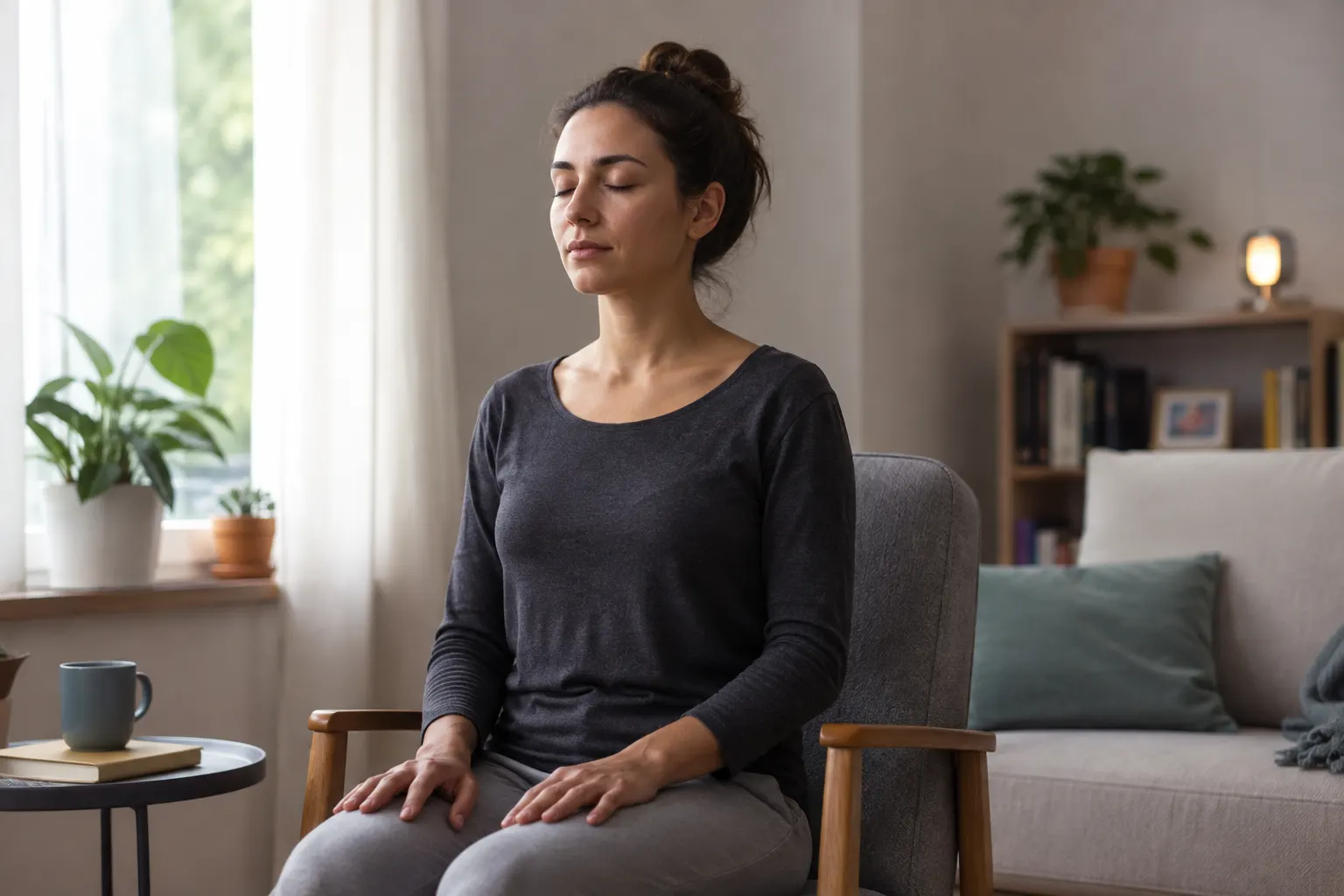
A first meditation can be very simple. Sit somewhere reasonably comfortable and safe. A chair is completely acceptable; there is no requirement to sit cross-legged. Keep the body supported enough that you are not constantly adjusting but alert enough that you are unlikely to fall asleep immediately. Set a timer for about five minutes.
Choose one sensory anchor. The natural breath is common because it is always available, but you can also use the feeling of your feet on the floor, contact between your body and the chair, ambient sounds or sensations in your hands. If you choose breathing, simply notice it rather than deliberately making it slower, deeper or more controlled. Breathwork and meditation are related but separate practices.
Attention will wander. When you notice that you are planning, remembering, worrying or listening to something else, acknowledge it without turning the distraction into a problem and return to the anchor. Continue until the timer ends. The central sequence is simply attend → notice wandering → return.
If breathing makes you unusually anxious or causes excessive monitoring of respiratory sensations, choose another anchor. Some people prone to panic find breath-focused practices uncomfortable, and there is no requirement that meditation must involve breathing. The training principle can remain exactly the same with sound or bodily contact as the object of attention.
Posture, Duration and Consistency
Meditation posture is functional rather than ceremonial. A person with knee, hip or back problems gains nothing by forcing a painful floor position simply because meditation photographs make it look authentic. A chair, cushion, standing position or other stable posture can work. The eyes may be closed, partly open or fully open depending on comfort and safety.
There is also no scientifically established number of minutes at which meditation suddenly becomes “real.” For a beginner, around five minutes is a practical starting point, while some people may begin with two or three minutes and others find ten manageable. The better rule is to start with a duration short enough that you are willing to repeat it rather than attempting a long session, becoming uncomfortable and abandoning the practice.
Consistency generally matters more than impressive duration. Practising for five or ten minutes at a predictable time can make the basic attentional movement familiar. You can increase the duration later if there is a reason to do so, but longer meditation should not become a status marker or an obligation created by an app streak.
What to Do When Your Mind Is Busy
A busy mind does not make someone bad at meditation. In fact, repeated distraction gives you more opportunities to practise noticing and returning. If the same thought appears ten times, you can return ten times. The goal is not uninterrupted concentration but increasing awareness of where attention has gone.
Sometimes a thought represents a genuine task that needs action. You might remember an important call, deadline or appointment. You do not need to pretend it is irrelevant; simply decide to write it down after the session and return to the practice. Meditation is not training yourself to ignore responsibilities.
Boredom can also become part of the experience. Without constant stimulation, people may quickly feel the urge to check a phone, switch activities or create entertainment. Instead of treating boredom as proof that meditation is pointless, notice what it feels like and how quickly the mind tries to escape it. This can reveal attentional habits that are difficult to see during ordinary life.
Different Types of Meditation
Focused-attention meditation is usually one of the easiest forms for beginners because the instruction is clear: select one object and return to it whenever attention wanders. Open-monitoring meditation places less emphasis on one narrow anchor and instead observes changing thoughts, sensations and emotions as they arise. Mindfulness meditation often combines present-moment awareness with reduced automatic judgment.
Loving-kindness or compassion meditation deliberately cultivates benevolent attitudes toward oneself and others. Mantra-based practices use repeated sounds or phrases, while movement-based contemplative traditions coordinate awareness with walking or other physical activity. These categories overlap, and traditions use different terminology, but the main lesson is that disliking one technique does not mean you are incapable of meditation.
Guided meditation can be useful at the beginning because another person provides the structure. Apps can also provide timers, introductory courses and reminders, but an app is only a delivery system. Evidence for MBSR or another structured clinical intervention should not automatically be transferred to every commercial product that uses the words “mindfulness” or “meditation.”
Teachers become more valuable when practice becomes more complex, when recurring problems arise or when someone wants to learn within a specific contemplative tradition. However, meditation expertise and mental-health expertise are not interchangeable. A teacher should not diagnose psychiatric conditions unless appropriately qualified.
Can Meditation Help With Anxiety, Depression and Sleep?
Meditation can help some people with anxiety, particularly within structured programmes. The MBSR research is substantial enough to take seriously, but meditation should not automatically replace psychotherapy, medication or professional assessment. Someone experiencing severe or persistent anxiety may need treatment that directly addresses avoidance, panic, beliefs or other mechanisms that ordinary meditation does not target.
The same applies to depression. Mindfulness-based interventions have shown benefits in some studies, but persistent depression, major loss of functioning, severe hopelessness or other significant symptoms should not be reduced to a failure to meditate enough. Meditation may complement treatment, but depression is a clinical condition with established psychological and medical treatments.
Meditation may also help some people settle before sleep, particularly where stress and cognitive arousal contribute to difficulty winding down. However, chronic insomnia can involve behavioural, medical, circadian or psychiatric causes that require more specific assessment. Meditation is useful precisely when it is treated as one possible tool rather than as a universal solution.
Meditation Can Become Avoidance
Meditation is usually promoted as a way of becoming more aware, but it can also be used to avoid difficult experiences. Imagine someone who is anxious about making an important phone call and decides they must meditate until they feel completely calm before calling. Twenty minutes later, some anxiety remains, so they postpone the call again.
In that situation meditation has become a safety ritual rather than a bridge to useful action. A healthier pattern may be to meditate briefly, recognise that anxiety is present and make the call anyway. Mental-health treatment often involves learning that difficult thoughts and sensations can be tolerated rather than waiting until all discomfort disappears.
This principle applies beyond anxiety. Meditation should support life rather than become another requirement that must be completed perfectly before ordinary activities can continue.
Meditation Is Usually Low Risk, but Not Risk-Free
Beginner meditation is generally considered relatively low risk, but adverse experiences do occur and deserve more attention than wellness marketing usually gives them. A 2020 systematic review of studies involving thousands of meditation participants identified reported adverse experiences including anxiety and depression, although estimates varied substantially because the studies used different practices, populations and methods for identifying harm.
That does not mean a fixed percentage of everyone who tries five minutes of meditation will experience a serious problem. Short home practice, an eight-week clinical programme and an intensive silent retreat are very different exposures. Risk appears to depend partly on practice intensity, individual vulnerability and how adverse experiences are defined and monitored.
Greater caution is appropriate for people experiencing significant psychiatric instability, severe dissociation, mania, psychosis or trauma-related destabilisation, especially before intensive retreats involving many hours of daily practice and prolonged silence. Anyone whose meditation repeatedly causes marked panic, dissociation, worsening mood or major distress can stop or modify the practice and seek appropriate professional guidance. Meditation is optional; health does not depend on forcing yourself through a practice that is making you significantly worse.
Common Meditation Mistakes Beginners Can Avoid
The most common mistake is trying to stop every thought. A second is judging every session by how calm it felt. Another is forcing a painful posture because it looks traditional. Beginners also frequently start with sessions that are too long, switch techniques every few days because nothing dramatic happens or turn the practice into perfectionism by continually monitoring whether breathing, posture and attention are “correct.”
Another mistake is assuming that more meditation is always better. A short routine practised consistently can teach the basic skill without making meditation dominate the person's schedule. Retreats and intensive practice may be valuable for some experienced practitioners, but intensity is not proof of quality and is unnecessary for learning the fundamentals.
The most useful test is therefore practical. After several weeks, are you noticing distraction sooner? Can you recognise a thought without immediately following it? Are you slightly better at returning attention to what you deliberately chose to do? Does the practice help you respond less automatically in situations that matter? Those changes may be more meaningful than whether any individual session felt profound.
Frequently Asked Questions About Meditation for Beginners
How do beginners meditate? Sit comfortably, choose a simple sensory anchor such as natural breathing or bodily contact, notice it and gently return whenever attention wanders.
Do I need to clear my mind? No. Thoughts are expected. Recognising distraction and returning attention is central to many forms of meditation.
How long should a beginner meditate? There is no mandatory duration. About five minutes is a practical starting point, and shorter sessions are acceptable.
Do I have to meditate every day? No, but regular short practice often makes the skill easier to learn than occasional long sessions.
Do I need to sit cross-legged? No. A chair or any stable comfortable posture is fine.
Should I control my breathing while meditating? Not in basic mindfulness of breathing. Usually you observe the natural breath rather than deliberately altering it.
What if focusing on breathing makes me anxious? Use another anchor such as sounds, feet on the floor or bodily contact. Breath focus is not compulsory.
What is the easiest meditation for beginners? Focused attention is often easy to understand because the basic instruction is simply to choose an anchor and return after distraction.
Is meditation the same as mindfulness? No. Meditation is a family of practices. Mindfulness is a mode of awareness that can be cultivated through meditation and during ordinary activities.
Can meditation help anxiety? Structured mindfulness-based programmes can help some people with anxiety, but severe or persistent anxiety may require professional treatment.
Can meditation have side effects? Yes. Most ordinary practice appears relatively low risk, but anxiety, mood worsening and other adverse experiences have been reported in some studies.
Are meditation apps useful? They can provide guidance and habit support, but clinical evidence for one meditation programme should not automatically be assumed to apply to every app.
Do beginners need a teacher or retreat? No. Simple meditation can be learned independently. Teachers and retreats may be useful later depending on goals and circumstances.
Meditation Is a Practice, Not a Performance
The most useful lesson in meditation for beginners is that very little needs to happen during the session for the practice to be valid. You do not need to eliminate thoughts, achieve permanent calm, sit in a perfect posture or have a profound experience. You need only enough attention to notice what is happening and enough intention to return when the mind moves elsewhere.
Over time, that simple practice can make attentional habits easier to recognise outside meditation. You may notice that you have been rehearsing the same worry, recognise irritation before reacting impulsively, catch yourself reading without absorbing anything or become aware of physical tension earlier. You may still become distracted, anxious or frustrated; the difference is that the process can become visible sooner.
The research should be interpreted with the same restraint. Meditation and structured mindfulness programmes have meaningful evidence for some psychological and health-related outcomes, particularly within defined interventions such as MBSR. But meditation is not one treatment, and evidence for an eight-week clinical programme does not prove that every app, retreat or meditation style produces the same result.
For beginners, the practical approach is therefore straightforward: start short, choose a comfortable posture, expect distraction, practise returning attention and increase duration only if it adds value. If one anchor does not suit you, use another. If practice repeatedly worsens wellbeing, modify it or stop. Judge meditation primarily by whether it contributes something useful to the life you are living outside the session.
Medical Note
This article provides general educational information and is not a substitute for individual medical or mental-health assessment or treatment. Meditation should not be used to delay appropriate healthcare. Stop or modify a practice that repeatedly causes significant panic, dissociation, worsening mood or other concerning symptoms, and seek qualified professional guidance when distress is severe, persistent or substantially affecting daily functioning.