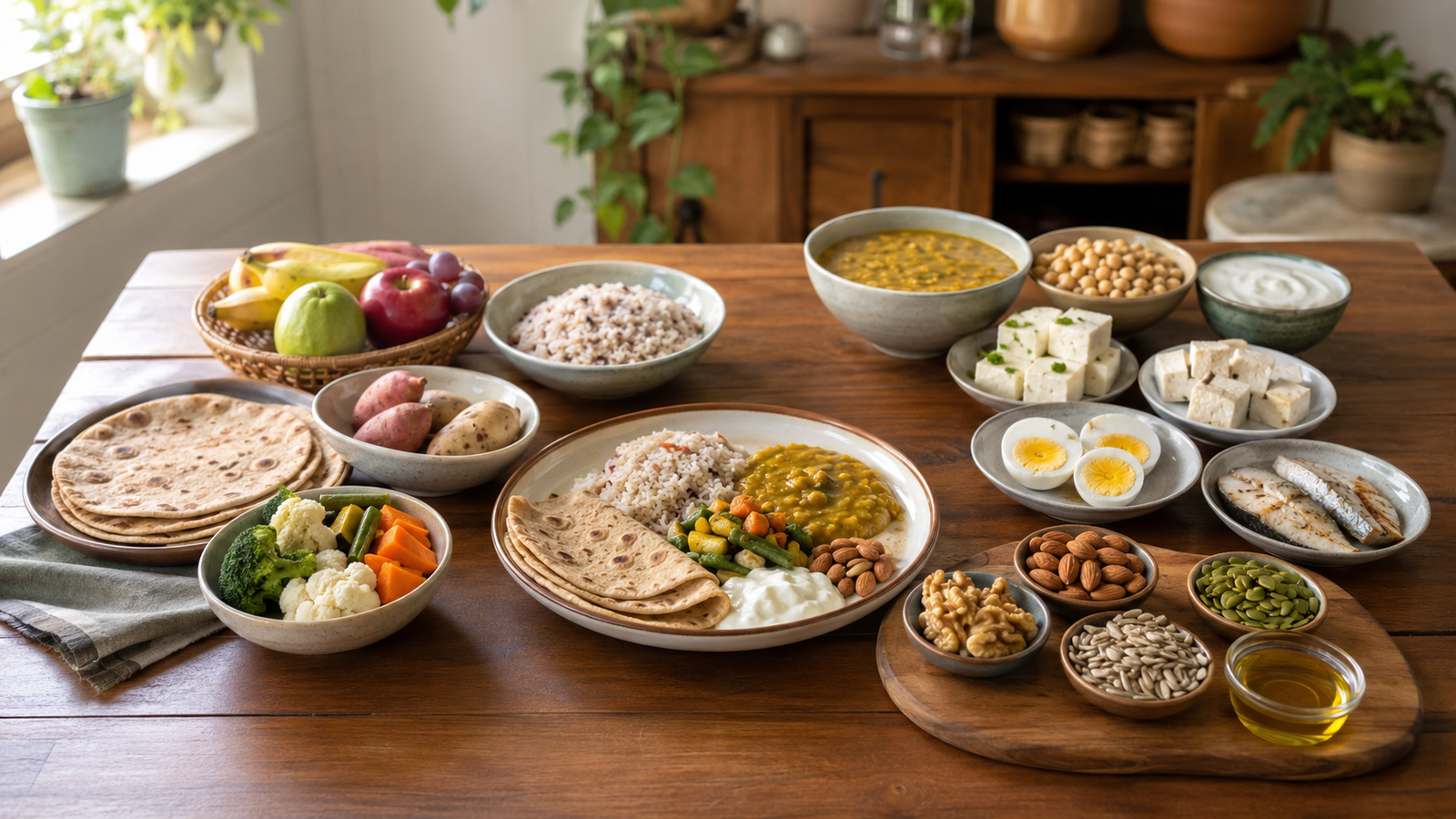
Macronutrients are nutrients needed in larger amounts, mainly carbohydrates, protein and fats; they provide energy and support body structure and function.
Carbohydrates and protein provide about 4 calories per gram, while fat provides about 9 calories per gram.
Public-health guidance emphasizes staying within calorie needs while choosing nutrient-dense foods, not simply counting macros mechanically.
Macro targets should be individualized for medical conditions, age, pregnancy, activity level and health goals.
The word macronutrients sounds technical, but the idea is simple. Macronutrients are the major nutrients that the body needs in relatively large amounts from food. The three main macronutrients are carbohydrates, protein and fats. They are called macro because the body needs them in grams, not tiny microgram amounts. They provide energy, but they also do much more than fuel the body. They help build tissues, regulate body processes, support hormones, protect organs, carry vitamins and keep daily life possible.
Understanding macronutrients matters because most diet confusion begins with them. People ask whether carbohydrates are bad, whether protein is always good, whether fat should be avoided, whether calories matter more than food quality, and whether a person should track every gram. These questions cannot be answered properly unless the basic role of each macronutrient is clear. Once the roles are understood, nutrition becomes less about fear and more about proportion, quality and context.
The simplest summary is this: carbohydrates are the body’s most accessible energy source, protein supports structure and repair, and fats support concentrated energy, cells, hormones and vitamin absorption. A healthy diet usually includes all three, though the exact amount depends on age, body size, activity level, health conditions, culture, appetite and goals. Problems begin when one macronutrient dominates the diet in a low-quality form, or when another is unnecessarily removed.
Carbohydrates: the body’s quick energy system
Carbohydrates are found in foods such as grains, fruits, vegetables, milk, pulses, sugar, sweets and many packaged foods. During digestion, many carbohydrates are broken down into glucose. Glucose is a major energy source for cells, tissues and organs. The brain, in particular, depends heavily on glucose, though the body has backup systems during fasting or very low carbohydrate intake.
But not all carbohydrate-rich foods are equal. A bowl of oats, a fruit, a serving of dal, a millet roti, a potato with vegetables, a glass of sugary soda and a packet of biscuits all contain carbohydrates, but their nutritional value is very different. Some bring fiber, vitamins, minerals and satiety. Others bring mostly refined starch or added sugar with little nutrition. That is why the question should not be, are carbs good or bad? The better question is, what kind of carbohydrate, how much, and with what else?
Higher-quality carbohydrate sources include whole grains, millets, pulses, beans, fruits, vegetables and other minimally processed foods. These often contain fiber, which slows digestion, supports gut health and helps people feel full. Lower-quality sources include sugary drinks, sweets, refined flour snacks, many desserts and highly processed cereals. These can be part of occasional eating, but they should not become the foundation of daily energy.
Protein: structure, repair and resilience
Protein is often associated with muscles, but its role is much wider. The body uses protein to build and repair tissues. Protein is involved in enzymes, immune function, hormones, transport molecules and many cellular processes. Hair, skin, muscles, organs, blood components and many body chemicals depend on protein in some way.
Protein is made of amino acids. Some amino acids are essential, meaning the body must obtain them from food. Animal foods such as eggs, dairy, fish and meat often provide complete protein, but many plant foods also contribute meaningfully. Pulses, beans, soy, lentils, chickpeas, nuts, seeds and whole grains can form strong protein patterns when eaten with variety. For vegetarians, diversity matters because different plant foods provide different amino acid profiles.
In real life, many people do not need extreme high-protein diets. They need consistent protein distributed through the day. A breakfast of tea and biscuits may be low in protein. A lunch plate with a large amount of rice and very little dal may be low in protein relative to energy. A dinner of noodles or refined bread alone may miss protein. Improvement can be simple: add dal, curd, eggs, sprouts, chana, paneer in sensible quantity, tofu, soy, fish or other suitable protein sources.
Protein supplements can help in specific situations, but they are not magic. Athletes, older adults with poor intake, people recovering from illness, or patients with special needs may require professional guidance. Some medical conditions, especially kidney disease, require careful advice about protein intake. For most people, improving food-based protein should come before relying on powders.
Fats: concentrated energy and essential functions
Fats are often misunderstood because they are calorie-dense. One gram of fat provides about nine calories, compared with about four calories per gram from carbohydrates or protein. This means high-fat foods can increase calorie intake quickly. But this does not make fats unnecessary. Fats are essential for cell membranes, hormone production, nerve function, insulation, organ protection and absorption of fat-soluble vitamins A, D, E and K.
The quality of fat matters greatly. Unsaturated fats from foods such as nuts, seeds, fish, some plant oils and avocados are generally considered better choices within a healthy dietary pattern. Saturated fats, found in higher amounts in butter, ghee, high-fat dairy, fatty meats and some processed foods, may need moderation. Trans fats, especially from partially hydrogenated oils and some processed foods, are harmful and should be avoided as much as possible.
Cooking practices matter too. A small amount of oil used in home cooking is different from frequent deep-fried snacks. Nuts are nutritious, but large quantities can add substantial calories. Ghee may be culturally familiar, but it still needs portion awareness. Packaged foods may hide fat, sugar and salt together, making them easy to overeat. Balanced fat intake is not about zero fat. It is about choosing better sources and using sensible amounts.
Why macro counting alone can mislead
Many fitness diets focus on macro counting: a certain number of grams of protein, carbohydrates and fat each day. Macro tracking can be useful for athletes, people with specific goals, or those working with qualified professionals. But for the general public, macro counting can also become misleading. A person may meet a macro target while still eating a low-quality diet. For example, it is possible to hit carbohydrate and fat numbers through refined snacks, or protein numbers through processed foods while missing vegetables, fiber and micronutrients.
Food is more than macros. It contains vitamins, minerals, fiber, water, phytochemicals, sodium, additives, texture and satiety signals. Two meals with the same macro numbers can behave differently in the body. A meal of whole grains, dal, vegetables and curd is not the same as a meal of refined bread, processed meat and sugary dessert, even if a tracking app shows similar calories. Nutrition quality is not captured fully by three numbers.
This is why public-health guidance focuses on dietary patterns. Choose nutrient-dense foods. Stay within energy needs. Limit excess added sugars, sodium, saturated fats and trans fats. Eat a variety of vegetables, fruits, whole grains, legumes, protein foods and healthy fats. This approach may sound less exciting than a strict macro formula, but it is more useful for everyday health.
Calories and macronutrients: how they connect
Macronutrients provide calories. Carbohydrates and protein provide about four calories per gram. Fat provides about nine calories per gram. Alcohol also provides calories, though it is not treated as an essential nutrient. This explains why portion sizes matter. A handful of nuts can be nutritious but energy-dense. A large sugary drink can add calories without fullness. A large serving of refined carbohydrates without protein or fiber can leave a person hungry again sooner.
Weight change is influenced by energy balance, but health is influenced by more than weight. A person can lose weight on a poor-quality diet and still miss important nutrients. A person can maintain weight but have a diet high in salt, sugar and unhealthy fats. A person can be thin and still have poor metabolic health. Macronutrients help explain energy, but they do not replace the need for overall diet quality, sleep, physical activity and medical monitoring.
How much of each macro does a person need?
There is no single perfect ratio for everyone. General dietary guidance often gives broad ranges rather than exact universal numbers. The right pattern depends on age, sex, height, weight, activity, pregnancy, illness, medications, training goals and personal preferences. A manual labourer may need more energy than a sedentary office worker. An endurance athlete may need more carbohydrates. An older adult may need careful attention to protein. A person with diabetes may need medical advice on carbohydrate distribution and quality. A person with kidney disease should not increase protein casually.
For the average reader, a better starting point is not a calculator. It is the plate. Does each main meal include a fiber-rich carbohydrate, a protein source, vegetables or fruit, and a sensible amount of fat? Are sugary drinks and refined snacks occasional rather than routine? Is protein present at breakfast or only at dinner? Are fats mostly coming from cooking oil, nuts, seeds or fish, or mostly from fried packaged foods? These questions are practical and safer than copying a stranger’s macro target.
Macronutrients in Indian-style meals
Macronutrients become easier to understand through familiar meals. A plate of rice, dal, sabzi, curd and salad contains carbohydrates from rice, protein from dal and curd, fats from cooking oil or tempering, and fiber and micronutrients from vegetables and salad. A roti meal with chana, vegetables and curd can be balanced. Idli with sambar can be improved by increasing sambar and adding vegetables. Poha can be improved with peanuts, vegetables and curd. Upma can become more balanced with vegetables and a protein side. A paratha meal can be balanced with curd, vegetables and portion control.
The issue is rarely the traditional food itself. The issue is proportion and repetition. If the plate is mostly refined grain, with tiny protein and little vegetable, it becomes imbalanced. If snacks are mostly fried or sugary, the day’s macro pattern shifts. If protein is missing from breakfast and dinner, total intake may suffer. If oil is used heavily in every dish, fat intake can rise without obvious volume. Small adjustments can change the nutritional profile without destroying taste or culture.
Common myths about macronutrients
The first myth is that carbohydrates make everyone fat. Excess calories can come from any macronutrient, and carbohydrate quality varies widely. Whole, fiber-rich carbohydrate foods can be part of healthy diets. The bigger problem is frequent refined carbohydrates, sugary drinks, large portions and low activity.
The second myth is that protein has no downside. Protein is essential, but more is not always better. Very high intake may be inappropriate for some people, especially those with kidney disease or other medical conditions. Protein sources also matter: beans, lentils, fish, eggs and curd are different from processed meats or deep-fried protein snacks.
The third myth is that fat should be avoided. The body needs fat. The issue is type and amount. Unsaturated fats in sensible portions can support health, while excess saturated fat, trans fat and fried ultra-processed foods can be harmful.
The fourth myth is that macro tracking is required for health. It is not. Many people can improve health by building balanced plates, eating more whole foods, reducing ultra-processed foods and maintaining consistency. Tracking is a tool, not a requirement.
How to use macro knowledge without becoming obsessive
The best use of macronutrient knowledge is practical. When a meal leaves you hungry quickly, check whether it had enough protein and fiber. When energy crashes after snacks, check whether the snack was mostly sugar or refined starch. When weight is increasing gradually, check portion sizes, cooking fat, sugary drinks and frequent snacks. When exercise recovery is poor, check protein, total energy, sleep and hydration. When digestion is poor, check fiber and water.
A simple balanced meal formula is: one quality carbohydrate, one protein source, one or more vegetables or fruit, a small amount of healthy fat, and water. This formula can be adapted to almost any cuisine. It is not perfect for every medical condition, but it is a strong general starting point.
When to seek professional advice
People with diabetes, kidney disease, liver disease, heart disease, digestive disorders, pregnancy, eating disorders, severe weight loss, obesity-related complications or food allergies should not rely only on general articles. Macronutrient needs may require personalization. A registered dietitian, physician or qualified nutrition professional can help tailor advice safely.
The final takeaway is that macronutrients are not enemies competing for control of the plate. They are partners. Carbohydrates provide energy, protein supports structure and repair, and fats support essential functions. Health comes from choosing better sources, balancing portions, and repeating sustainable patterns. The goal is not to fear macros. The goal is to understand them well enough to eat with clarity.
Source / Fact-Check References
WHO healthy diet fact sheet: https://www.who.int/news-room/fact-sheets/detail/healthy-diet
MedlinePlus nutrition overview: https://medlineplus.gov/nutrition.html
MedlinePlus carbohydrates: https://medlineplus.gov/carbohydrates.html
NIH News in Health - Breaking Down Food: https://newsinhealth.nih.gov/2023/08/breaking-down-food
Harvard T.H. Chan Healthy Eating Plate: https://nutritionsource.hsph.harvard.edu/healthy-eating-plate/
NHS Eatwell Guide: https://www.nhs.uk/live-well/eat-well/food-guidelines-and-food-labels/the-eatwell-guide/
USDA National Agricultural Library - Macronutrients: https://www.nal.usda.gov/human-nutrition-and-food-safety/food-composition/macronutrients
American Heart Association - Carbohydrates: https://www.heart.org/en/healthy-living/healthy-eating/eat-smart/nutrition-basics/carbohydrates
Medical Disclaimer
This article is for general educational purposes only and is not a substitute for professional medical advice, diagnosis, or treatment. Readers with medical conditions, pregnancy, diabetes, kidney disease, eating disorders, digestive disorders, food allergies, unexplained symptoms, or those taking medication should consult a qualified healthcare professional or registered dietitian before making major dietary changes. Expert medical review is recommended before publication.