Acid Rain: Causes, Effects, pH, Health Risks and How It Is Controlled
Acid rain is rain, snow, fog or other atmospheric deposition that contains unusually high levels of acidic compounds formed mainly from sulfur dioxide and nitrogen oxides released into the air.
The familiar name is slightly misleading. Scientists generally use the broader term acid deposition because acids can reach the Earth's surface in two ways. They can arrive with rain, snow, fog or hail as wet deposition, or acidic gases and particles can settle onto soil, vegetation, water and buildings without precipitation as dry deposition.
Acid rain became one of the defining environmental problems of the late twentieth century because it demonstrated something that is now fundamental to air-pollution science: pollution does not respect political borders. Sulfur dioxide released from one industrial region can travel hundreds of kilometres, undergo chemical reactions in the atmosphere and later contribute to acidic deposition over forests, lakes and communities far from the original source.
The environmental consequences depend not only on how much pollution falls but also on where it lands. Some soils and waters can neutralise incoming acidity relatively well, while sensitive ecosystems have little natural buffering capacity and can undergo substantial chemical and biological change.
What Is Acid Rain?
The U.S. Environmental Protection Agency defines acid rain, or acid deposition, broadly enough to include acidic rain, snow, fog, hail and even acidic dust. The acids form primarily when sulfur dioxide, or SO₂, and nitrogen oxides, or NOₓ, undergo chemical reactions in the atmosphere.
A simplified sequence looks like this:
| Stage | What happens |
|---|---|
| 1. Emissions | SO₂ and NOₓ enter the atmosphere |
| 2. Transport | Winds and air currents move the pollutants |
| 3. Atmospheric chemistry | The gases react to form sulfuric and nitric acids and related particles |
| 4. Deposition | Acidic material returns through rain, snow, fog, particles or gases |
| 5. Environmental response | Soil, water, forests and materials respond according to their sensitivity |
This means acid rain is not simply smoke mixing directly with a rain cloud. It is the result of emissions, atmospheric transport, chemical transformation and eventual deposition.
Why Is Normal Rain Already Slightly Acidic?
Pure water has a neutral pH of about 7, but ordinary rain is naturally somewhat acidic.
Carbon dioxide in the atmosphere dissolves into rainwater and forms weak carbonic acid. EPA therefore gives normal rain a pH of roughly 5.6 rather than 7.
Acid rain is significantly more acidic. EPA says acid rain commonly falls in a range of approximately pH 4.2 to 4.4.
That numerical difference may look small, but the pH scale is logarithmic. A decrease of one pH unit represents a tenfold increase in hydrogen-ion concentration. A change from pH 5.6 to around pH 4.6 therefore represents a substantial increase in acidity rather than a minor numerical shift.
What Causes Acid Rain?
The two most important precursor pollutants are sulfur dioxide (SO₂) and nitrogen oxides (NOₓ).
Sulfur dioxide contains sulfur and oxygen. Nitrogen oxides are a group of compounds containing nitrogen and oxygen. Once released into the atmosphere, these gases participate in reactions involving oxygen, water vapour, oxidants and other atmospheric chemicals.
The process eventually produces sulfuric acid, nitric acid and sulfate and nitrate particles. These compounds may remain airborne long enough to travel substantial distances before returning to the surface.
EPA identifies fossil-fuel electricity generation, vehicles, heavy equipment, manufacturing, oil refining and other industrial activities as important human sources of the precursor pollutants. Natural processes such as volcanic activity can also release sulfur compounds, but human fossil-fuel combustion drove the large regional acid-deposition problems that became prominent in industrialised regions.
How Does Sulfur Dioxide Produce Acid Rain?
When sulfur-containing fuels are burned, sulfur can combine with oxygen and produce sulfur dioxide.
Once in the atmosphere, SO₂ can undergo a series of reactions and oxidation processes that ultimately form sulfuric acid and sulfate particles. These products can then be incorporated into cloud droplets, rain and snow or deposited directly as particles.
Coal-fired power generation historically became especially important because some coal contains substantial amounts of sulfur. Large combustion facilities could therefore emit significant SO₂ before modern pollution controls became widespread.
Reducing sulfur content in fuel, switching fuels, installing flue-gas desulfurisation systems and changing electricity generation have all contributed to reductions in sulfur emissions in regulated regions.
How Do Nitrogen Oxides Contribute?
Nitrogen oxides are formed primarily when combustion occurs at high temperatures.
Sources include power plants, industrial combustion, vehicles and heavy equipment. In the atmosphere, nitrogen oxides participate in complex reactions that can ultimately produce nitric acid and nitrate particles.
NOₓ pollution has environmental significance beyond acid rain. Nitrogen oxides also contribute to ground-level ozone and particulate pollution, which means policies reducing NOₓ can simultaneously address several air-quality problems.
This overlap is one reason acid-rain regulation produced benefits beyond simply making rainfall less acidic.
Acid Rain Can Travel Long Distances
One of the most important features of acid deposition is long-range atmospheric transport.
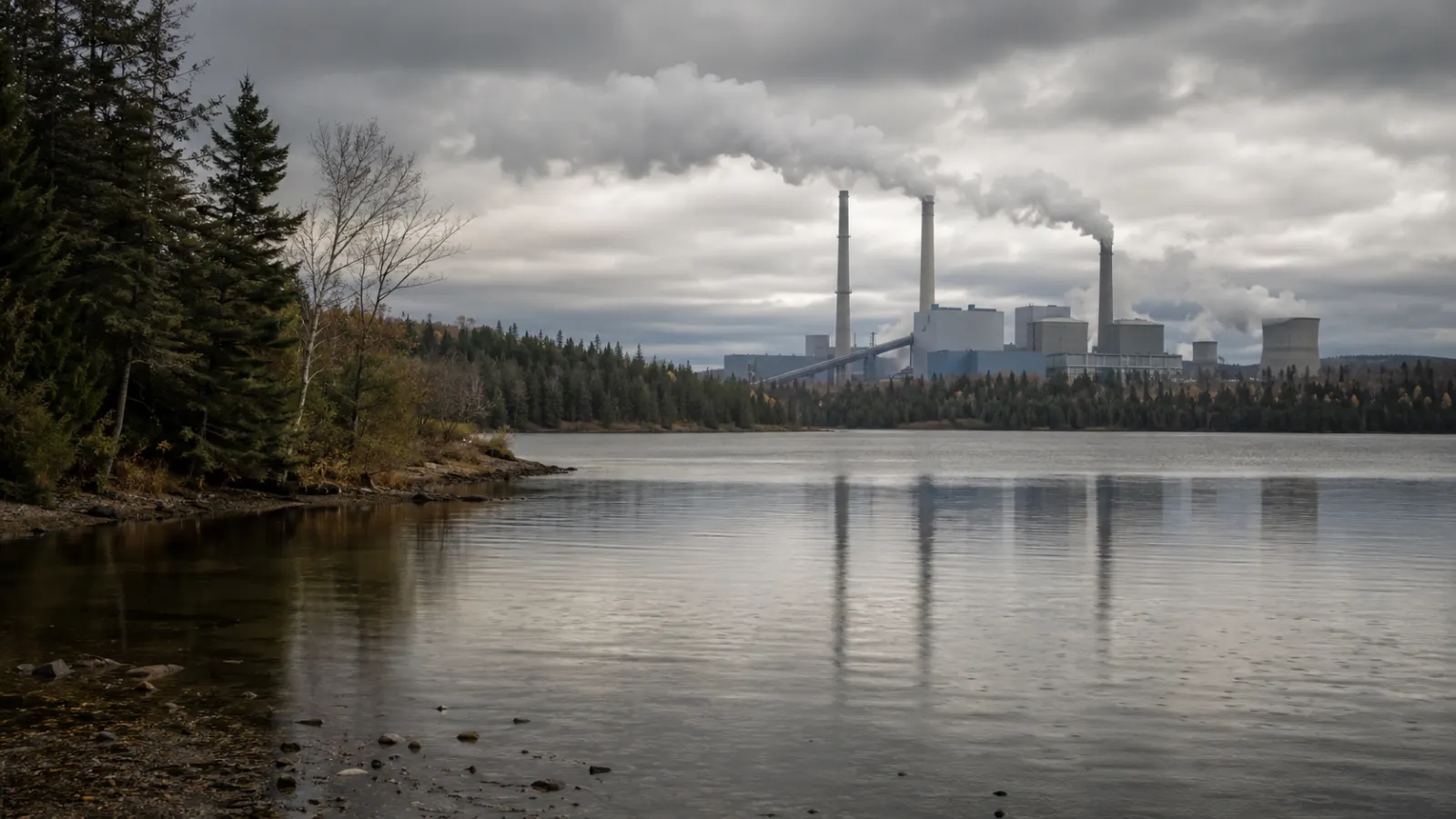
A factory or power station does not necessarily cause its greatest environmental damage immediately beside the smokestack. Winds can carry SO₂, NOₓ and their reaction products across state or national borders before deposition occurs.
EPA explicitly notes that these pollutants can travel long distances, making acid rain a regional rather than purely local environmental issue.
This created a political problem as well as an environmental one. Communities experiencing acidified lakes or forests could not necessarily solve the problem by regulating only local sources because substantial pollution might originate elsewhere.
Acid rain therefore became an important lesson in regional and international environmental cooperation.
Wet Deposition vs Dry Deposition
The phrase acid rain usually makes people imagine acidic rainfall. That is only one part of the process.
Wet Deposition
Wet deposition occurs when acidic compounds are incorporated into precipitation and reach the surface through rain, snow, fog or hail.
Mountain environments can receive substantial exposure from acidic clouds and fog even when conventional rainfall is limited. Vegetation may intercept this moisture directly.
Dry Deposition
Dry deposition occurs when acidic gases and particles settle onto surfaces without precipitation.
They can accumulate on:
-
vegetation;
-
buildings;
-
soil;
-
lakes;
-
roads;
-
other exposed surfaces.
Later rainfall may wash these substances into soil, streams and lakes.
EPA notes that the relative importance of dry deposition can be greater in places receiving less rainfall.
This is why acid deposition is scientifically more complete than simply acid rain.
How Is Acid Rain Measured?
Acidity is usually described using the pH scale.
A pH of 7 is neutral. Numbers below 7 are acidic, while numbers above 7 are alkaline or basic.
Monitoring acid deposition involves much more than measuring one rainstorm. Scientists collect precipitation over long periods, measure sulfate, nitrate, acidity and other chemical characteristics, and compare patterns geographically and over time.
EPA says the National Atmospheric Deposition Program's National Trends Network operates more than 250 wet-deposition monitoring sites across the United States and associated regions, while CASTNET provides measurements used to estimate dry sulfur and nitrogen deposition. Long-term surface-water monitoring also tracks how lakes and streams respond as deposition changes.
Long-term measurement matters because one rainy day tells researchers relatively little about a regional environmental trend.
Why Are Some Lakes More Vulnerable Than Others?
Acid rain does not affect every lake equally.
The difference comes largely from buffering capacity: the ability of soils, bedrock and water chemistry to neutralise incoming acids.
Watersheds containing carbonate-rich minerals such as limestone may neutralise significant acidity before it reaches a lake. Other regions contain thin soils or geological materials with little acid-neutralising capacity.
In a vulnerable watershed, acidic deposition can reduce the pH of lakes and streams and change the chemistry of surrounding soils.
This explains why two lakes receiving similar atmospheric pollution can respond very differently.
How Acid Rain Affects Fish and Aquatic Life
Aquatic ecosystems provide some of the clearest examples of acid-rain damage.
As acidic water moves through soils, it can mobilise aluminium and transport it into streams and lakes. Increasing acidity and aluminium concentrations can create difficult conditions for fish and aquatic invertebrates.
Different species have different tolerance levels. EPA notes that young life stages are often particularly sensitive and that at around pH 5, many fish eggs cannot hatch successfully. As acidity increases further, some species disappear entirely.
The damage can also move through food webs. A fish species might tolerate a particular pH, but the insects or other organisms it eats may not. The fish can therefore decline indirectly because its food supply changes.
This is an important ecological principle: pollution does not need to kill every organism directly to transform an ecosystem.
Why Aluminium Matters
Aluminium occurs naturally in soils and rocks, but soil chemistry affects how mobile it becomes.
Acidic conditions can increase the release of aluminium from soil into water. Elevated dissolved aluminium can harm aquatic organisms and interfere with fish physiology.
This means acid deposition can affect aquatic ecosystems through two connected pathways: directly increasing acidity and indirectly changing the availability of other potentially harmful substances.
The receiving watershed therefore acts as an active chemical system rather than simply a container collecting acidic rainwater.
Acid Rain Effects on Soil
Soil contains minerals and nutrients essential to plant growth.
Acid deposition can accelerate the loss of base cations such as calcium and magnesium from some soils. These nutrients can be leached downward or transported out of the ecosystem.
At the same time, increasing acidity can change the mobility of aluminium.
Over long periods, this can alter soil fertility and reduce its ability to buffer future acidic inputs.
The effect is often gradual, which makes the problem different from a sudden pollution disaster. Forest soil can undergo chemical change for years before the consequences become visually obvious.
Acid Rain Effects on Trees and Forests
Acid rain does not usually kill a mature forest by simply burning leaves like a strong laboratory acid.
The real mechanisms are more complicated.
Acid deposition can alter soil chemistry, remove important nutrients and increase aluminium availability. At high elevations, acidic cloud water and fog can also contact foliage directly.
Trees experiencing these stresses may become less resilient to other environmental pressures such as:
-
freezing temperatures;
-
drought;
-
insects;
-
disease;
-
nutrient deficiency.
EPA describes both soil-mediated effects and direct exposure to acidic cloud conditions as important ways sensitive forests can be harmed.
This also means it is misleading to assume that every damaged forest is suffering from acid rain. Tree health reflects multiple interacting environmental pressures.
Acid Rain and Buildings
Acid deposition can also damage human-made structures.
Sulfuric and nitric acids and related particles can accelerate corrosion of metals and deterioration of paint and stone. Limestone and marble are particularly vulnerable because their carbonate minerals react with acids.
Over time, surfaces may become rougher, details on sculptures can be lost and maintenance costs can increase.
Historic buildings, statues, monuments and gravestones can therefore become environmental records of long-term air pollution.
EPA specifically identifies corrosion of metals and accelerated deterioration of paint, stone, buildings and monuments among the material effects of acid deposition.
This creates a connection between air pollution and cultural heritage preservation.
Does Acid Rain Cause Smog or Haze?
The same precursor pollutants are involved in several atmospheric problems.
SO₂ can form sulfate particles, while NOₓ can contribute to nitrate particles. These fine particles scatter light and contribute to regional haze.
Nitrogen oxides also participate in atmospheric chemistry that forms ground-level ozone.
Acid rain, particulate pollution, ozone and visibility problems therefore should not always be thought of as entirely separate environmental issues. They can share important emission sources and chemical pathways.
Reducing precursor emissions can consequently produce several benefits at once.
Is Acid Rain Dangerous to Humans?
The name can sound frightening enough to suggest that people should avoid touching acidic rain.
Under ordinary environmental conditions, that is not the principal human-health concern.
EPA states that walking in acid rain or swimming in a lake affected by acid rain is not inherently more dangerous than similar contact with ordinary rain or non-acidic water.
The more important health concern comes from the air pollutants that cause acid deposition.
SO₂, NOₓ and the fine sulfate and nitrate particles produced through atmospheric reactions can affect respiratory and cardiovascular health. Nitrogen oxides also contribute to formation of ground-level ozone.
Acid-rain policy therefore improved human health largely by reducing air pollution before those compounds reached the ground.
Can Acid Rain Burn Your Skin?
Ordinary acid rain does not behave like concentrated sulfuric acid in a laboratory.
Its pH is typically low enough to be environmentally significant but nowhere near the concentration required to burn human skin during normal exposure.
The term “acid” creates understandable confusion because people associate acid with corrosive chemicals.
The environmental danger comes from repeated deposition across sensitive ecosystems and from inhalation of the precursor and secondary air pollutants, not from raindrops dissolving human skin.
Is Acid Rain the Same as Climate Change?
No.
Acid rain and climate change are separate environmental problems, although fossil-fuel combustion contributes to both.
Acid deposition is driven mainly by emissions of sulfur dioxide and nitrogen oxides, which form acidic compounds in the atmosphere.
Modern climate change is driven primarily by increasing concentrations of greenhouse gases such as carbon dioxide, methane and nitrous oxide, which alter the Earth's energy balance.
A coal-fired power plant can contribute to both problems at once by emitting CO₂ as well as sulfur and nitrogen pollutants.
The solutions overlap in some areas—particularly reducing fossil-fuel combustion—but the atmospheric processes and environmental effects are different.
Is Acid Rain the Same as Air Pollution?
Acid rain is better understood as one consequence of air pollution.
SO₂ and NOₓ are released into the atmosphere as pollutants. They may affect health directly, participate in ozone and particulate formation and eventually contribute to acidic deposition.
Acid rain therefore demonstrates what happens after certain air pollutants undergo atmospheric transport and chemical transformation.
For a broader explanation of pollutant origins, this article should internally connect with Understanding the Sources of Air Pollution and What Is Particulate Matter?
Why Acid Rain Became a Major Environmental Issue
Acid rain gained major political attention during the twentieth century as scientists documented widespread acidification in parts of Europe and North America.
The problem was especially important because the geographic relationship between source and damage was difficult to see.
A lake might become increasingly acidic despite having no large factory beside it. The responsible emissions could come from power plants hundreds of kilometres away.
This challenged the traditional assumption that air pollution could be managed only at the local level.
It also created a powerful case for emissions monitoring, atmospheric modelling and cross-border environmental agreements.
The U.S. Acid Rain Program
In the United States, the 1990 Clean Air Act Amendments created the Acid Rain Program, which began operating in the 1990s.
Its central objective was to reduce SO₂ and NOₓ emissions from fossil-fuel-fired power generation.
The SO₂ programme became especially famous for using an allowance-trading system. Power plants faced an overall emissions cap and were required to hold allowances for their emissions, while having flexibility over how reductions were achieved.
Individual plants could respond through options including:
-
installing pollution controls;
-
switching fuels;
-
improving operations;
-
changing generation;
-
acquiring emission allowances.
The programme became an influential example of market-based environmental regulation.
Did Acid Rain Regulation Work?
The emissions data show very large reductions.
EPA reported in February 2026 that the Acid Rain Program, combined with later power-sector regulations and changes in the energy sector, helped deliver annual SO₂ reductions of more than 95% and annual NOₓ reductions of more than 89% from the relevant power-sector baselines.
The atmospheric response was also measurable. EPA reports that wet sulfate deposition—a widely used indicator of acid rain—fell by more than 70% between 1989–1991 and 2020–2022.
This is important because environmental regulation is sometimes evaluated only by whether emissions limits were adopted.
Acid rain provides a stronger test: pollution was measured before and after policy, atmospheric deposition was monitored and ecological indicators were tracked over decades.
Did Lakes and Streams Recover?
Some have shown significant improvement, but ecological recovery is not instantaneous.
EPA's Long-Term Monitoring programme tracks water chemistry in sensitive lakes and streams. During the period in which wet sulfate deposition fell substantially, EPA reports an 81% improvement in the number of monitored waters experiencing critical-load exceedances.
A critical load represents a level of pollutant deposition below which significant harmful effects are not expected according to current knowledge. Fewer exceedances therefore indicate reduced pressure on sensitive ecosystems.
However, atmospheric improvement and complete ecological recovery are not the same thing.
Why Ecosystem Recovery Can Take Decades
Imagine repeatedly removing calcium and other buffering materials from a soil for several decades.
Reducing acid deposition stops or reduces the continuing pressure, but it does not instantly restore everything that has already been lost.
Soils may remain chemically altered. Lakes may recover at different rates. Biological communities may need time to recolonise even after water chemistry improves.
Fish populations, insects and other aquatic organisms also depend on habitat, connectivity and food-web conditions.
This is why long-term environmental monitoring remains important after pollution controls succeed.
Can Lime Be Used to Restore Acidified Lakes?
In some areas, adding limestone or other alkaline materials to lakes or watersheds has been used to temporarily neutralise acidity.
This process is often called liming.
It can raise pH and improve conditions for aquatic organisms in particular locations, but it does not address the atmospheric source of the problem.
If acidic deposition remains high, repeated treatment may be necessary.
Source control is therefore fundamentally different from environmental repair. Reducing SO₂ and NOₓ prevents additional acid pressure across entire regions, whereas liming treats particular affected waters.
Is Acid Rain Still a Problem Today?
The answer depends heavily on geography.
In regions where sulfur and nitrogen emissions have fallen sharply, acid deposition has declined dramatically compared with its historical peak. The United States provides particularly strong monitoring evidence for this improvement.
That does not mean acid deposition has disappeared everywhere or that every affected ecosystem has fully recovered.
Emission patterns differ across countries according to:
-
electricity generation;
-
fuel sulfur content;
-
vehicle standards;
-
industrial development;
-
pollution controls;
-
regulatory enforcement.
Nitrogen deposition also remains complicated because nitrogen reaches the atmosphere from sources beyond the power sector.
Acid rain should therefore not be described either as an unsolved crisis everywhere or as a completely finished environmental problem.
The more accurate conclusion is that acid deposition can be reduced substantially when precursor emissions are controlled, but vulnerability and recovery remain region-specific.
What Acid Rain Teaches About Environmental Regulation
Acid rain provides one of the clearest examples of environmental policy changing a measurable regional pollution problem.
Several lessons stand out.
First, environmental problems should be regulated at the geographic scale at which they operate. Pollution transported hundreds of kilometres cannot be managed effectively if every jurisdiction looks only within its own boundaries.
Second, monitoring matters. Regulators need emissions data, atmospheric measurements and ecosystem indicators to determine whether policy is working.
Third, pollution sources can create several harms simultaneously. Cutting SO₂ and NOₓ reduced acid deposition while also delivering benefits involving particulate pollution, visibility and human health.
Fourth, ecosystem recovery can lag behind emissions control. Successful policy can stop the pressure faster than damaged ecological systems can repair themselves.
Common Myths About Acid Rain
Myth 1: Acid Rain Is Strong Enough to Burn Your Skin
Ordinary acid rain is not comparable with concentrated laboratory acid. Its main direct effects occur through long-term environmental chemistry rather than acute skin burns.
Myth 2: Acid Rain Only Means Rainfall
The broader process includes snow, fog and dry deposition of acidic gases and particles.
Myth 3: Acid Rain Only Damages Places Near Factories
Pollutants can travel long distances before acidic compounds are deposited.
Myth 4: All Lakes Respond the Same Way
Watersheds vary greatly in buffering capacity, so the same amount of deposition can produce different outcomes.
Myth 5: Acid Rain Directly Burns Forests
Forest effects are usually more complex, involving soil chemistry, nutrient loss, aluminium mobilisation and additional environmental stresses.
Myth 6: If Emissions Fall, Ecosystems Recover Immediately
Recovery can take years or decades because soils, lakes and biological communities retain the effects of earlier pollution.
Myth 7: Acid Rain and Climate Change Are the Same Problem
They have overlapping fossil-fuel sources but different pollutants, mechanisms and environmental consequences.
Myth 8: Acid Rain Regulation Failed Because the Issue Still Exists
Long-term U.S. monitoring shows very large reductions in SO₂ emissions and sulfate deposition after regulatory intervention.
Frequently Asked Questions
What is acid rain?
Acid rain is atmospheric deposition containing unusually high levels of acidic compounds, particularly sulfuric and nitric acids produced from sulfur dioxide and nitrogen oxides.
What causes acid rain?
The primary causes are emissions of sulfur dioxide and nitrogen oxides, especially from fossil-fuel combustion, vehicles and industrial processes. These pollutants react in the atmosphere and form acidic compounds.
What is the pH of acid rain?
EPA says normal rain has a pH of about 5.6, while acid rain typically has a pH around 4.2 to 4.4.
Why is normal rain acidic?
Carbon dioxide dissolves in rainwater and forms weak carbonic acid, making ordinary rain naturally slightly acidic.
What is acid deposition?
Acid deposition is the broader term describing acidic material reaching the Earth's surface through both wet precipitation and dry gases or particles.
What is wet deposition?
Wet deposition occurs when sulfuric and nitric acids reach the surface through rain, snow, fog or hail.
What is dry deposition?
Dry deposition occurs when acidic gases and particles settle onto surfaces without precipitation.
What gases cause acid rain?
Sulfur dioxide and nitrogen oxides are the main precursor pollutants.
What acid is present in acid rain?
Sulfuric acid and nitric acid are the major acids associated with anthropogenic acid deposition.
What human activities cause acid rain?
Important sources include fossil-fuel electricity generation, industrial combustion, manufacturing, oil refining, vehicles and heavy equipment.
Can volcanoes cause acid rain?
Volcanoes can release sulfur compounds and contribute naturally to atmospheric acidity, but human emissions drove the major regional acid-rain problems associated with industrialisation.
How far can acid-rain pollution travel?
SO₂, NOₓ and their atmospheric reaction products can travel hundreds of kilometres and cross political borders before deposition.
How does acid rain affect lakes?
Acid deposition can lower water pH and mobilise aluminium from soils, creating conditions harmful to fish, insects and other aquatic organisms.
How does acid rain affect fish?
Increasing acidity and aluminium can interfere with fish survival and reproduction. Eggs and juvenile stages of many species are particularly sensitive.
How does acid rain affect forests?
It can alter soil chemistry, remove nutrients and mobilise aluminium. Acidic cloud water can also affect high-elevation vegetation, making sensitive trees more vulnerable to other stresses.
How does acid rain affect soil?
Long-term acid deposition can leach calcium, magnesium and other base nutrients from some soils and alter the mobility of aluminium.
Does acid rain damage buildings?
Yes. Acidic pollutants can accelerate corrosion of metal and deterioration of limestone, marble, paint and other materials.
Can acid rain damage the Taj Mahal?
Air pollution can contribute to deterioration and discoloration of stone heritage structures, but the condition of any particular monument can involve multiple pollutants and environmental processes. It is better to evaluate site-specific scientific evidence than attribute all deterioration simply to acid rain.
Is acid rain harmful to people?
Ordinary contact with acid rain is not the principal health hazard. The greater health concern comes from SO₂, NOₓ, sulfate and nitrate particles and related ozone pollution in the air.
Can acid rain burn you?
No under normal environmental conditions. Acid rain is much too dilute to behave like concentrated laboratory acid on human skin.
Does acid rain cause asthma?
Acid rain itself is not the main exposure concern, but the pollutants associated with its formation—particularly SO₂, fine particles and ozone—can aggravate respiratory disease.
Is acid rain caused by carbon dioxide?
Carbon dioxide makes normal rain mildly acidic by forming weak carbonic acid, but the major anthropogenic acid-rain problem is associated mainly with sulfur dioxide and nitrogen oxides.
Is acid rain the same as global warming?
No. Acid rain involves sulfur and nitrogen compounds and atmospheric deposition. Global warming is primarily driven by greenhouse gases altering the Earth's energy balance.
Is acid rain still happening?
Yes, acid deposition still occurs, but its severity has fallen substantially in some regions following major reductions in SO₂ and NOₓ emissions.
Has acid rain decreased in the United States?
Yes. EPA reports a decline of more than 70% in wet sulfate deposition between 1989–1991 and 2020–2022.
Can ecosystems recover from acid rain?
Yes, some affected lakes, streams and soils can recover as deposition falls, but recovery may take years or decades and may be incomplete in highly sensitive ecosystems.
How can acid rain be prevented?
The most effective strategy is reducing SO₂ and NOₓ emissions through cleaner fuels, pollution-control technology, cleaner electricity, vehicle-emission controls, industrial standards and other air-quality policies.
Why is acid rain a cross-border problem?
Atmospheric winds can transport precursor pollutants and acidic compounds across state and national boundaries, meaning the location experiencing damage may not contain the main pollution sources.
Acid Rain Shows That Air Pollution Can Be Reversed
The history of acid rain is unusual because it contains both a warning and a measurable environmental success.
The warning is that air pollution can transform after leaving a smokestack, travel across borders and alter ecosystems far from the source. A lake can become acidic not because anything was discharged directly into it, but because pollution released elsewhere changed the chemistry of the atmosphere above an entire region.
The success is that this process is not beyond human control.
Reducing sulfur dioxide and nitrogen oxide emissions produced large reductions in atmospheric deposition. Monitoring networks detected the change. Many surface waters showed improvements. Visibility and human health benefited from reducing some of the same pollutants.
But the story also demonstrates why environmental recovery cannot be judged only at the smokestack. Emissions can decline rapidly while soils, lakes and biological communities recover slowly from decades of accumulated stress.
The most important lesson is therefore broader than acid rain itself.
Air pollution is transported, transformed and shared. Effective environmental policy has to follow the pollution across those boundaries, measure what happens after regulation and remain in place long enough for ecosystems to respond.
Acid rain once showed how regional industrial pollution could alter distant environments. Its decline in heavily regulated regions now shows the other side of the same principle: when the source of environmental pressure is reduced strongly enough, measurable environmental recovery can follow.