Diversity Usually Has More Than One History
When a society becomes more diverse, immigration is often the first explanation offered.
Migration matters enormously, but it is only one route.
A country's diversity may come from ancient trade, conquest, slavery, shifting borders, refugees, internal migration, religious conversion, intermarriage or the incorporation of territories that were already culturally different.
Migration Changes the Population Directly
International migration moves people across political borders for work, family, study, safety or other reasons.
UN DESA's International Migrant Stock 2024 estimates about 304 million international migrants worldwide.
The cultural effects differ because migrants arrive with different languages, skills, religions, family structures and histories.
Migration Is Not Random
People often move along established networks.
Earlier migrants help later arrivals find housing, jobs and community institutions. Colonial ties, language, geography and labour demand also shape destinations.
This produces concentrations of particular communities in particular cities or regions.
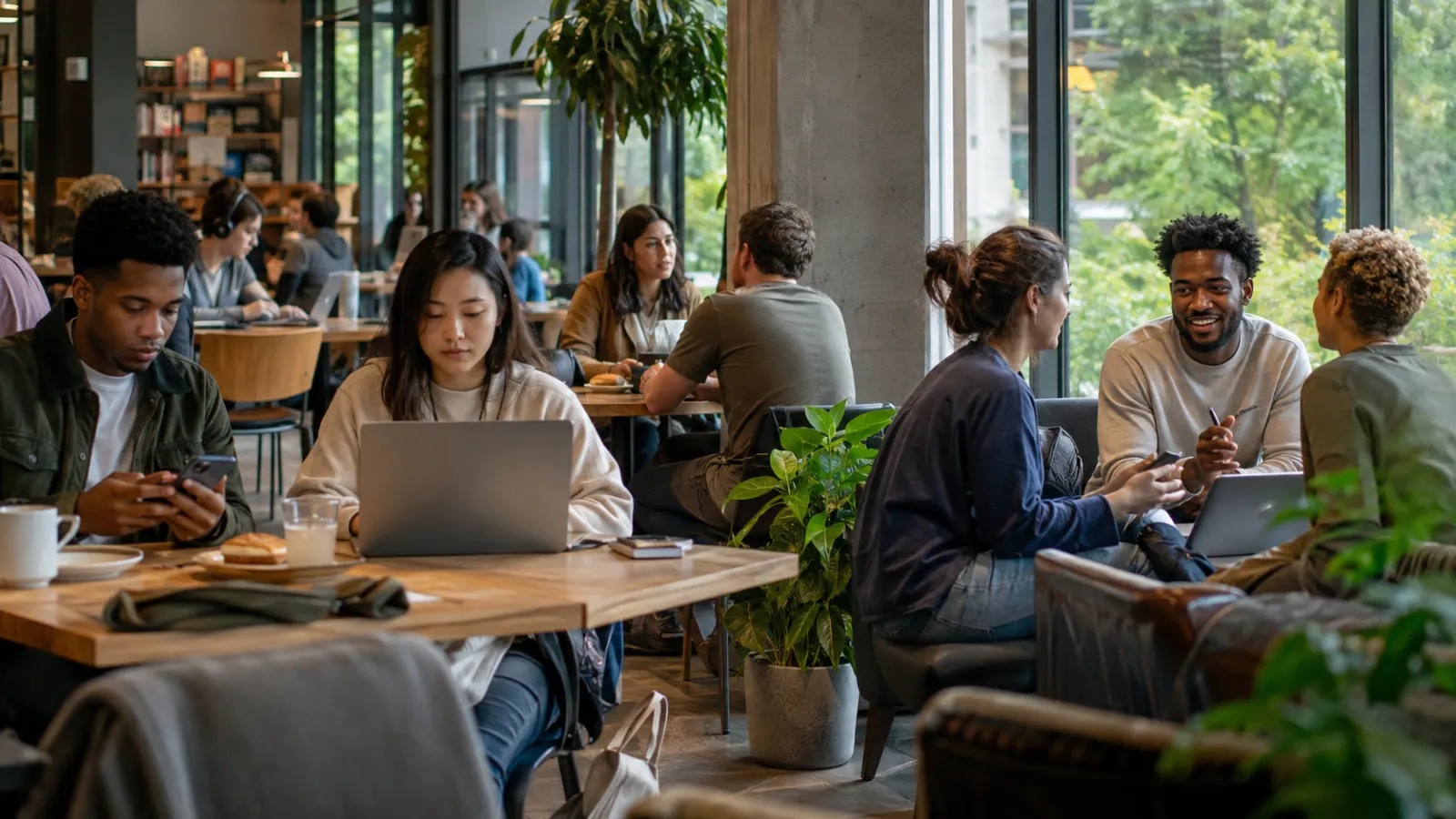
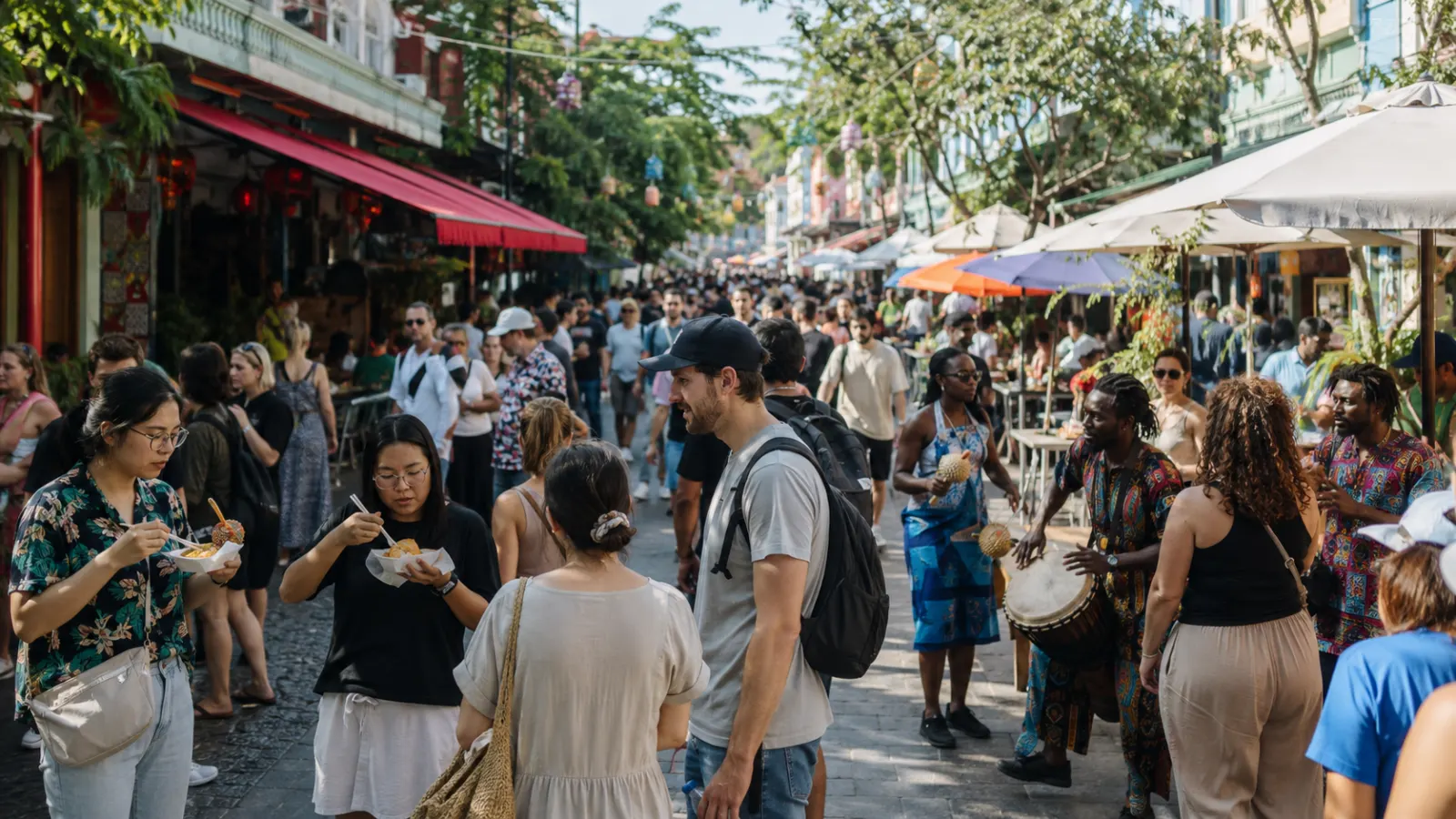
Cities Magnify Diversity
Cities attract workers, students, entrepreneurs and refugees because they concentrate jobs and services.
UNESCO describes cities as major sites of migration, diversity, connectivity and cultural exchange.
Urban diversity is therefore partly an economic product.
Internal Migration Can Be as Important as International Migration
A rural worker moving to a multilingual national capital may encounter as much cultural difference as someone crossing a border.
Large states often contain regional languages, religions and ethnic communities whose movement changes the cultural composition of cities.
Trade Routes Create Permanent Contact
Ports and market towns have historically attracted merchants, sailors and migrants from distant regions.
Some visitors stay, marry locally and establish religious or commercial institutions.
A trading network can gradually become a settlement network.
Empires Create Diversity Through Incorporation
Empires often rule populations that were already culturally different.
Subjects may move within imperial territories as soldiers, administrators, workers, enslaved people or merchants.
Diversity can therefore expand without modern immigration policy.
Colonial Borders Can Place Different Peoples Inside One State
Modern borders were sometimes drawn across existing linguistic, ethnic or political communities.
A state may be diverse from the moment it is created because the territory already contains multiple peoples.
This is why cultural difference cannot always be divided neatly into 'native majority' and 'recent immigrant minority'.
Slavery and Forced Labour Produced Diversity Through Violence
Millions of people were moved involuntarily through slavery, indenture and other coercive labour systems.
Their descendants became enduring parts of societies that were transformed by forced movement.
Diversity produced through coercion carries different historical meaning from voluntary migration.
Refugees and Forced Displacement Create New Communities
War, persecution and disaster can move large populations rapidly.
Refugees may initially expect to return home but remain for years or generations.
Host societies then confront long-term questions of education, employment, language and belonging.
Borders Move Even When People Do Not
A community can become a minority because political borders change around it.
War, decolonisation, partition and state dissolution can transform citizens into minorities without physical migration.
This is one of the clearest reasons diversity cannot be understood only through movement.
Religious Conversion Adds Another Layer
Religious diversity can expand through conversion, missionary activity, reform movements and intermarriage.
New religious identities may emerge among people who share language or ethnicity.
Intermarriage Blurs Group Boundaries
Children of parents from different backgrounds complicate categories that assume culture is inherited from one group.
Families combine language, food, ritual and kinship traditions.
Over generations, these mixed identities can become normal features of the wider society.
Education Creates Contact
Universities and schools bring students from different regions and countries into shared institutions.
International education can become a pathway to longer-term settlement.
Labour Markets Attract Diversity
Employers recruit workers when local labour supply does not match demand.
Construction booms, health systems, agriculture, domestic work and technology sectors can create migration corridors.
Economic structure therefore influences cultural composition.
States Can Encourage or Restrict Diversity
Immigration law, citizenship rules, refugee policy and family-reunification rules affect who can enter and remain.
The demographic effects of migration are therefore shaped by political decisions as well as individual choice.
Citizenship Changes the Meaning of Diversity
A temporary worker, permanent resident and citizen may live in the same neighbourhood but possess very different political rights.
A society's diversity becomes politically deeper when people from different backgrounds gain durable membership and representation.
Global Communication Maintains Transnational Identity
Migrants can now remain connected to media, family and politics in places of origin through digital networks.
Assimilation therefore does not necessarily require the same degree of cultural separation from the homeland that earlier migrants experienced.
Diversity Can Grow Even When Migration Slows
Second and third generations may maintain, reinterpret or revive ancestral identities.
Religious conversion, intermarriage and regional migration continue changing the social landscape.
Diversity Is Multidimensional
A society may be ethnically diverse but linguistically concentrated, or religiously diverse while sharing a strong common national identity.
Class, gender and generation intersect with cultural background.
Counting groups therefore gives only a partial picture.
Contact Does Not Automatically Produce Integration
Different communities can live in the same city while attending separate schools, occupying different labour markets and having little social interaction.
Demographic diversity and social integration are separate questions.
Segregation Can Be Voluntary or Imposed
People may cluster near relatives, places of worship and familiar businesses.
They may also be concentrated by discrimination, housing costs or legal exclusion.
A neighbourhood map cannot reveal the cause by itself.
Diversity Can Produce Creativity
Contact brings different skills, cuisines, languages and artistic traditions into proximity.
UNESCO frequently connects cultural diversity with creativity, exchange and innovation.
These benefits are possibilities, not automatic results.
Diversity Can Also Produce Conflict
Competition over jobs, political power or land can become framed through ethnic or religious identity.
Political actors may intensify difference for strategic reasons.
Diversity itself is not the same as conflict; institutions and inequality shape outcomes.
Institutions Determine Whether Diversity Becomes Inclusion
Schools, courts, labour markets, police, housing systems and political parties decide whether different groups can participate equally.
This is where the descriptive question 'How did society become diverse?' turns into the political question addressed by multiculturalism and integration policy.
Modern Diversity Has Deep Historical Roots
UNESCO notes that trade and migration have nourished cultural diversity across centuries, while colonialism, slavery and conflict have also transformed social fabrics.
The modern multicultural city is therefore not an unprecedented break from history. What is new is often the speed, scale and visibility of movement.
Population Change Happens at Different Speeds
A port city may become diverse gradually over centuries, while conflict or a labour boom can change a smaller town within a few years.
The speed of change matters because institutions need time to expand schools, housing, language services and political representation.
Diversity Can Be Inherited Rather Than Imported
Many citizens described as minorities are not descendants of recent migrants at all. Their communities may have lived in the territory for centuries or longer.
Calling all diversity 'immigrant diversity' can therefore erase Indigenous peoples, border minorities and historically incorporated populations.
Return Migration Adds Another Layer
People who return after years abroad bring languages, habits, spouses, children and professional norms acquired elsewhere.
Migration changes both receiving and sending societies, creating circular cultural flows rather than a simple one-way movement.
Naturalisation Can Transform Demographic Diversity Into Civic Diversity
When residents gain citizenship, they enter electorates, public institutions and political parties more fully.
This can change national narratives over time because people who were once treated as temporary newcomers become part of the society's permanent political voice.
Economic Change Can Rearrange Diversity Inside a Country
When factories close, new industries emerge or infrastructure improves, populations move. A mining town may shrink while a technology hub attracts workers from across a country and abroad.
Cultural geography therefore changes with economic geography.
Family Reunification Stabilises Communities
Labour migration may begin with individual workers, but spouses, children and relatives can later join them where law permits.
Once families settle, schools, places of worship, shops and associations develop, turning temporary migration into durable community life.
Diversity Can Increase Through State Expansion
When states annex, federate or incorporate territories, populations with different histories enter a shared political system without migrating.
Federal arrangements are often attempts to govern this kind of territorial diversity.
Demographic Categories Change Too
Census categories, racial labels and official minority definitions are not permanent. Governments revise them as populations and political understandings change.
A society can therefore become more visibly diverse partly because institutions begin measuring identities that were previously merged, ignored or unnamed.
Because these processes overlap, demographic change should be read as a historical sequence rather than a single event or policy outcome.
Those historical layers shape competing claims to belonging and membership.
How Societies Become Diverse
Societies become diverse when people, borders and identities move.
Sometimes the movement is voluntary and economically motivated. Sometimes it is forced. Sometimes the people remain in place while states and boundaries change around them.
Understanding these different histories matters because they create different claims to belonging.
A diverse society is rarely the product of one migration wave. It is usually a layered history of movement, power, settlement and adaptation.
Sources / Further Reading
• UN DESA Population Division — International Migrant Stock 2024 — https://www.un.org/development/desa/pd/content/international-migrant-stock
• IOM — Migrants in Society: Diversity and Cohesion — https://www.iom.int/resources/migrants-society-diversity-and-cohesion-graeme-hugo
• UNESCO — Migration and Inclusive Societies — https://www.unesco.org/en/no-racism-no-discrimination/migration
• UNESCO — Culture and Education: Diversity through globalisation, urbanisation and migration — https://www.unesco.org/en/articles/cutting-edge-culture-education-strategic-investment-inclusive-and-sustainable-development
• UNESCO — Cultural Diversity and Social Inclusion — https://www.unesco.org/en/articles/cutting-edge-all-aboard-culture-and-social-inclusion
Suggested Internal Links
• What Is Multiculturalism — Article 63
• The Melting Pot Idea — Article 65
• Pluralism in Society — Article 24
• How Different Faiths Coexist — Article 26
• The Globalisation of Culture — Article 58