Kittur Rani Chennamma: Sovereignty, Succession and the War of 1824
Kittur Rani Chennamma is remembered for armed resistance to the East India Company in 1824, more than three decades before the uprising of 1857. Yet the conflict is often simplified in ways that obscure why it began. It was not initially a general rebellion against a fully established British Raj, which did not formally exist until 1858. It began as a dispute over who possessed the authority to determine the succession of a small but politically autonomous state in the Deccan.
That distinction is also important because Chennamma is frequently described as having resisted Lord Dalhousie’s Doctrine of Lapse. The comparison is understandable, but the chronology is wrong if taken literally. Dalhousie became Governor-General only in 1848, decades after the Kittur conflict. What happened in 1824 involved an earlier East India Company claim that its recognition was necessary for an adopted heir to inherit political authority. In that sense, Kittur anticipated later annexation disputes without being a product of Dalhousie’s formal policy. Contemporary and later records show Company officials debating precisely whether the adoption should be recognised and whether Kittur could be “resumed” if it was not.
The original account correctly identifies this distinction as central to understanding the conflict: succession, revenue and sovereignty became inseparable once Company officials rejected Kittur’s attempt to preserve dynastic continuity.
Kittur was small, but its sovereignty still mattered
Chennamma was born in 1778 and became the second wife of Mallasarja Desai, ruler of Kittur in what is now Karnataka. Kittur was not a major power comparable with Mysore, Hyderabad or the Maratha state, but it had its own court, revenue, army, fortifications and traditions of political authority. Its rulers had spent generations negotiating relationships with stronger regional powers while trying to preserve substantial autonomy. A National Book Trust history describes Mallasarja’s Kittur as maintaining its own military forces and administrative autonomy while navigating pressure from Mysore, the Peshwas and eventually the East India Company.
The political environment changed substantially in the early nineteenth century as Company power expanded across western and southern India. The defeat of the Peshwa and other Maratha forces in the Third Anglo-Maratha War of 1817–18 greatly strengthened Company authority in the Deccan. Small principalities that had previously balanced among several larger powers increasingly confronted one dominant external authority. That shift forms the essential background to what happened at Kittur.
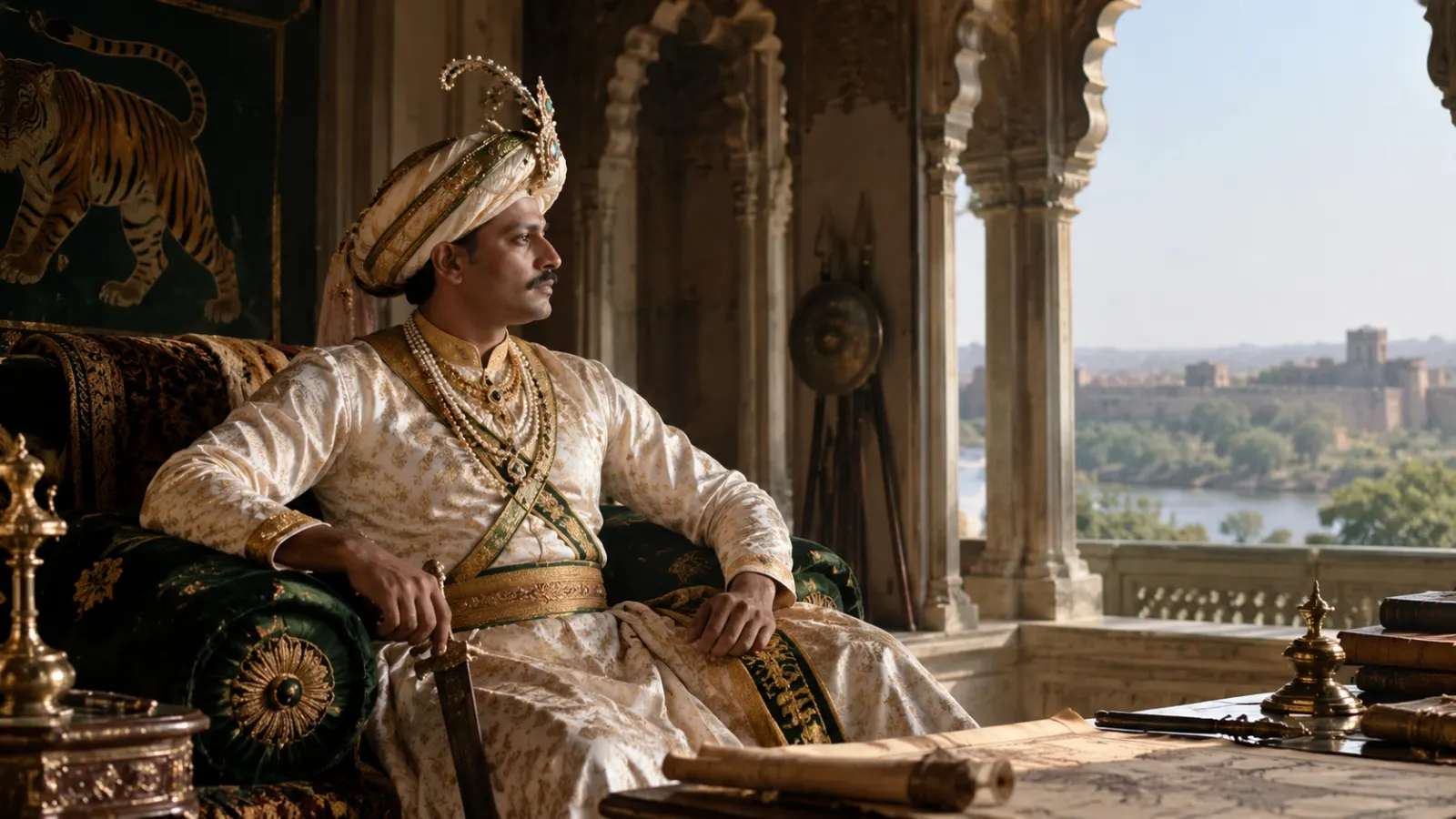
Mallasarja died after a long reign, and Shivalingarudra Sarja, the son of his first wife Rudramma, succeeded him. Chennamma’s own son had died earlier, and surviving accounts indicate that she supported Shivalingarudra’s succession rather than attempting to place her own line ahead of him. The National Book Trust biography describes Chennamma as treating Rudramma’s children as members of the same royal household and supporting Shivalingarudra Sarja as the appropriate successor.
The decisive crisis arrived when Shivalingarudra Sarja became seriously ill without a biological heir. He selected a young relative, Shivalingappa, for adoption and intended that the boy continue the dynasty. A surviving letter reproduced in the National Book Trust history records Shivalingarudra’s intention to adopt Shivalingappa and transfer the samsthan to him.
What appeared internally as a legitimate succession arrangement was treated very differently by Company officials.
The real dispute was over who had authority to recognise the heir
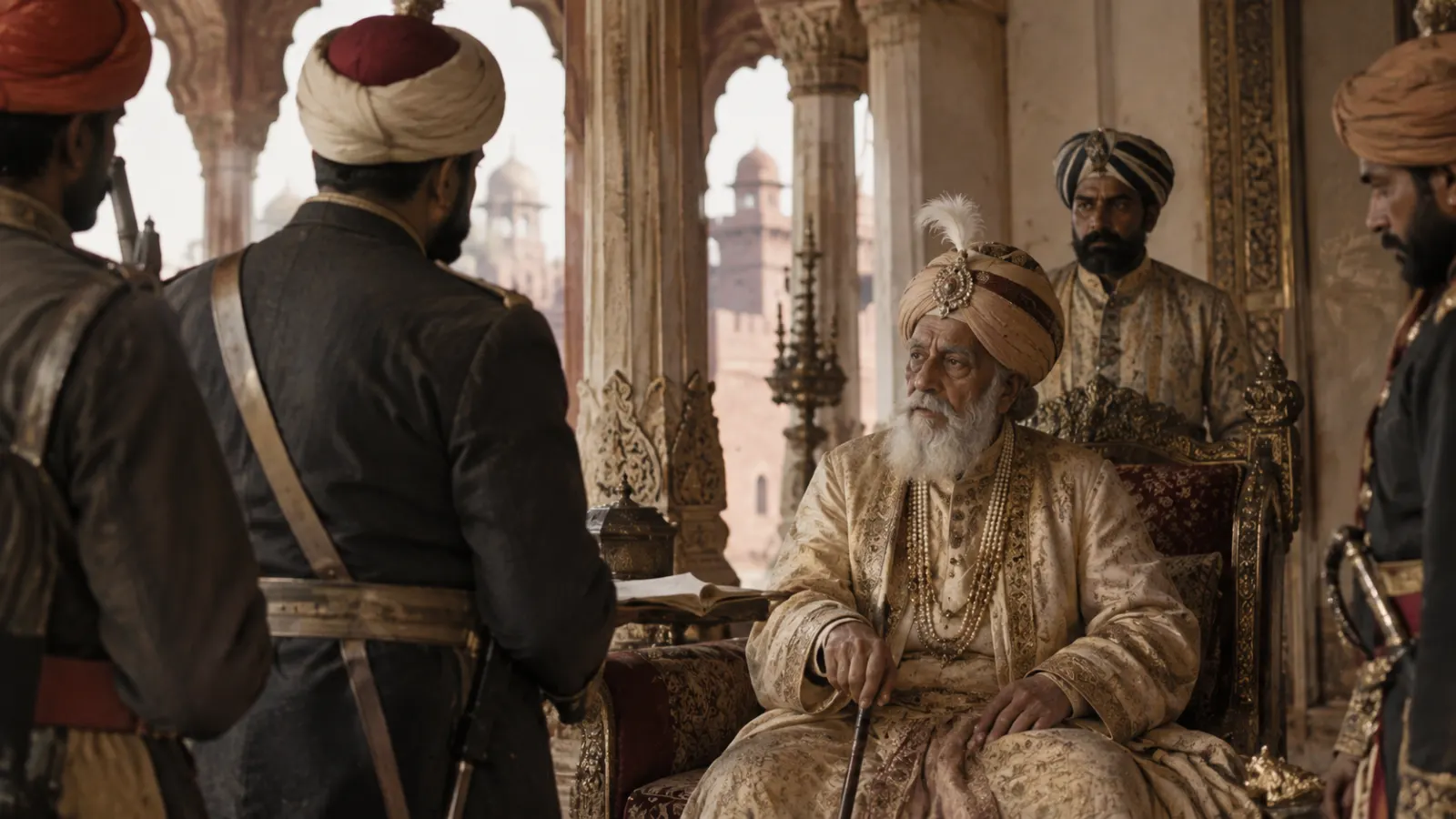
St John Thackeray, the Company’s collector and political agent at Dharwad, questioned the adoption and the circumstances surrounding it. Company officials argued over whether an adopted heir could succeed without prior government recognition and whether the political status of Kittur permitted such succession without Company approval.
The surviving correspondence is revealing because it shows that the dispute was not simply about family inheritance. Commissioner William Chaplin wrote that if the adoption had been made with previous government permission, there might be grounds for continuing the state, but if the adoption were not confirmed, resumption of Kittur could follow under the terms of the existing sannad. He also contemplated Company management of the estate even if the minor heir were recognised.
This is the constitutional core of the conflict. For the Kittur court, adoption was a recognised means of ensuring dynastic continuity. For Company officials, sovereignty had become conditional enough that recognition by the colonial power could determine whether that continuity had political effect.
That is why the later Doctrine of Lapse provides a useful comparison but an inaccurate label if applied directly. The famous policy associated with Dalhousie belongs to the 1848–56 period. Kittur instead demonstrates that Company interference in succession and adopted inheritance existed earlier, before those practices were associated with Dalhousie’s systematic annexation programme. Recent historical coverage similarly describes the Kittur case as a precursor to the later doctrine rather than simply an application of Dalhousie’s policy.
Thackeray moved increasingly directly into Kittur’s affairs. He placed controls around the treasury and administration and ordered that Shivalingappa be removed from Kittur. Chennamma and other members of the court appealed to Bombay Governor Mountstuart Elphinstone, but the appeal did not produce a settlement acceptable to them.
The disagreement had now moved beyond succession. If the Company could determine who counted as heir, take control of the treasury and remove the adopted successor, it could effectively decide whether Kittur continued to exist as a political entity.
October 1824 turned a succession crisis into war
By October, negotiation and coercion were operating simultaneously. British troops were positioned around Kittur while Company officials demanded compliance. Chennamma’s court and military leaders refused to accept the effective extinction of the state.
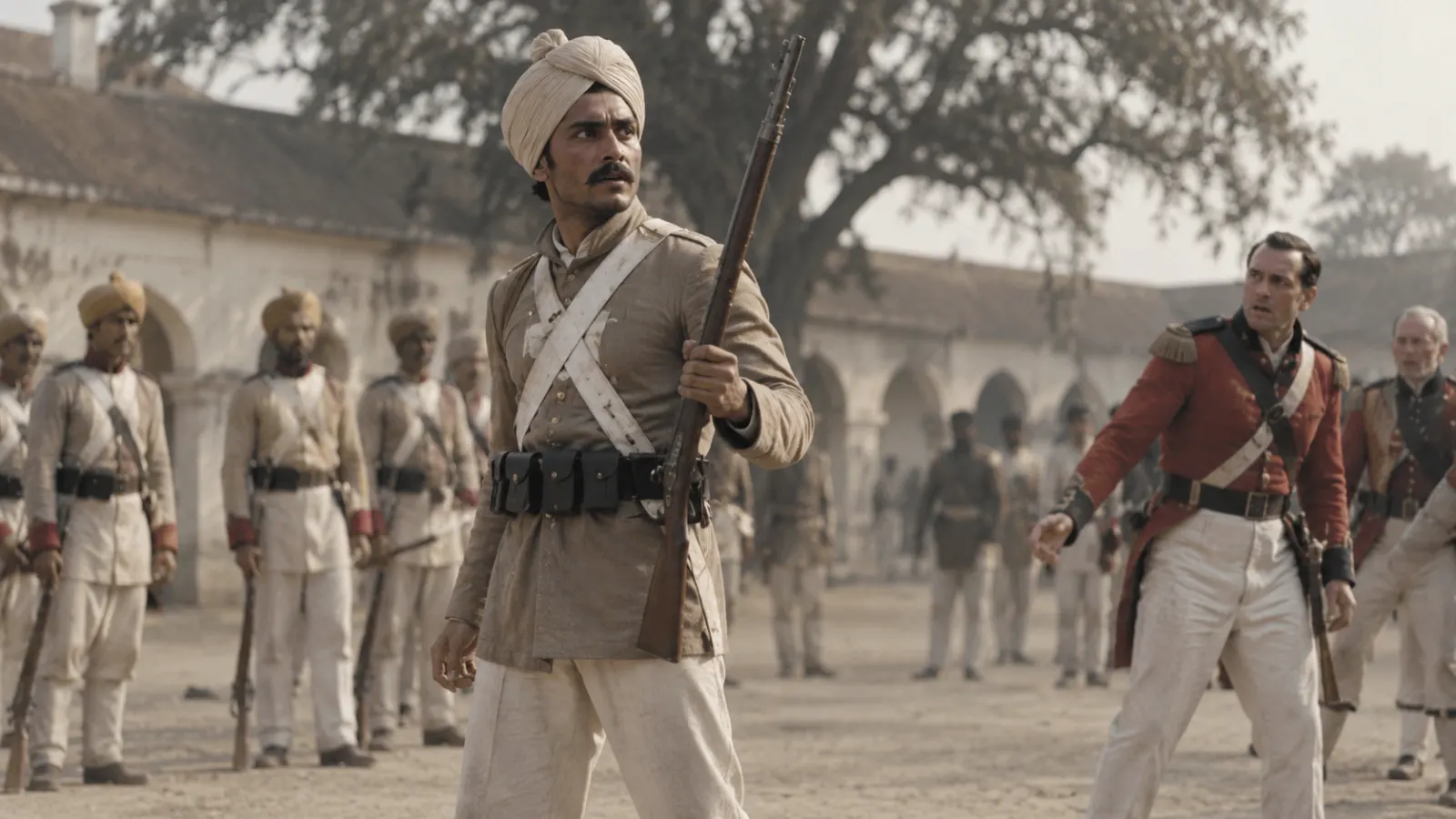
The confrontation reached a decisive point on 23 October 1824. Thackeray demanded access to the fort and threatened to use artillery against the gates when Kittur’s guards refused to comply. Kittur forces then attacked. Contemporary Company correspondence reproduced in later histories records the serious defeat suffered by the British detachment and the death of Thackeray. A later British military history itself described Thackeray as having attempted to coerce Kittur with inadequate means, resulting in his repulse and death.
This first victory became the central military episode in Chennamma’s public memory. The Government of India’s Ministry of Culture marked its 200th anniversary through a year-long commemoration beginning in October 2024, describing the 1824 encounter as a historic victory against Company forces.
Yet the result should not be exaggerated into a permanent defeat of British power. Kittur had beaten the force immediately confronting it. It had not eliminated the Company’s much larger military capacity across the Bombay Presidency and neighbouring territories.
That difference between tactical success and strategic power shaped everything that followed.
The death of a senior Company official also transformed the political stakes. Before the fighting, the dispute could still theoretically have ended through a negotiated recognition of succession. After Thackeray’s death and the defeat of his force, Company prestige became part of the conflict. Officials were increasingly unwilling to accept an outcome that could appear to reward armed resistance to colonial authority.
Chennamma negotiated even after winning the first battle
Several British officers and soldiers were captured during the fighting, including political assistants Walter Elliot and J. A. R. Stevenson. Their treatment became part of an extended negotiation between Kittur and Company officials.
It is tempting to describe the prisoners’ eventual release only as evidence of Chennamma’s generosity, but that interpretation misses its political logic. Kittur needed recognition of the state and its adopted heir. Prisoners provided leverage through which such a settlement might be pursued.
Records reproduced in the National Book Trust history show that Kittur’s leadership discussed using Stevenson and Elliot as intermediaries for negotiations and maintaining them as hostages if necessary. Correspondence from the captured officers also indicates that Kittur’s leaders were seeking restoration of the state rather than simply fighting without a political objective.
Negotiations continued through October and November while the Company assembled larger forces. The asymmetry between the two sides became increasingly obvious. Kittur could bargain using the fort, prisoners and the strength demonstrated in the first battle; Company officials could negotiate while simultaneously moving reinforcements, artillery and troops from a much larger territorial system.
That combination of diplomacy and military pressure was characteristic of Company expansion. Political recognition and military force were not separate tools. They reinforced one another.
Kittur eventually released Stevenson and Elliot after receiving assurances connected to the suspension of hostilities. Records cited in the NBT history show that the officers were handed safely into British custody on the evening of 2 December while Kittur representatives continued pleading for preservation of the samsthan. Company officials nevertheless maintained the demand that the fort and garrison submit.
From Kittur’s perspective, the release had been linked to hopes of negotiation. From the Company’s perspective, recovering the officers removed one of the principal constraints on a full military response.
The gap in expectations proved fatal to the settlement.
The second campaign exposed the imbalance in power
By early December 1824, substantial Company reinforcements had assembled around Kittur. The military situation was entirely different from the relatively limited confrontation in October.
Fighting resumed, and Company artillery and troops attacked the positions around the fort. The Kittur defenders resisted, but by early December the fort had been breached and occupied. Contemporary material reproduced in later histories places the final capture of the fort in the first days of December after sustained fighting.
Chennamma was taken prisoner. The succession that had triggered the crisis was not accepted on Kittur’s terms, and the political autonomy of the state was effectively destroyed.
This sequence makes the first victory more historically meaningful, not less. Kittur demonstrated that Company forces could be defeated locally. The subsequent campaign demonstrated the deeper strategic reality: the East India Company could draw troops, money, artillery and administrators from a far larger system until the balance became overwhelming.
Chennamma’s defeat was therefore not simply evidence of failed battlefield leadership. It illustrates the structural vulnerability of a small polity facing an expanding corporation-state.
The preserved landscape at Kittur helps make that political world tangible. The Kittur Rani Chennamma Memorial Government Museum, established as a state archaeological museum, holds archaeological material, weapons, inscriptions, sculpture and other objects associated with the region. Fortifications, palace remains, treasury administration and court institutions remind us that the conflict concerned an actual state rather than an abstract patriotic symbol.
Imprisonment did not end resistance around Kittur
Chennamma was confined at Bailhongal, where she remained until her death in 1829. Sources differ on the precise day of her death, which is one reason an evidence-based account should avoid treating every date repeated in later commemorative biographies as equally secure. A National Book Trust history places her death after nearly five years in confinement in 1829, while some official commemorative sources give a different date within the same year.
Her imprisonment did not immediately extinguish resistance connected to the Kittur succession.
Sangolli Rayanna, a military leader associated with Kittur, continued armed resistance and attempted to restore Shivalingappa. The continuation of resistance after Chennamma’s capture is important because it prevents the entire episode from being reduced to one heroic individual. Kittur’s defence depended on military commanders, court officials, retainers and communities whose political commitment outlasted the first battles. The NBT account identifies Rayanna’s later campaign as the most important continuation of resistance after the fall of the state.
This broader network also explains why the adopted heir remained politically significant even after Kittur itself had fallen. Shivalingappa was not merely a child around whom a private inheritance dispute had developed. His recognition represented the possibility that Kittur’s political order might continue.
For the Company, preventing that restoration was therefore part of securing control.
Chennamma should not be reduced to the Doctrine of Lapse—or a doubtful “first”
Kittur Rani Chennamma is frequently described as the “first woman freedom fighter of India,” the “first queen to defeat the British,” or a precursor to later figures such as Rani Lakshmibai.
Such descriptions communicate the importance later generations attached to her, but historical rankings of this kind create unnecessary problems. Resistance to European trading companies and colonial expansion had occurred in several regions before 1824, including Mysore and the Polygar conflicts. Determining a single “first freedom fighter” also imposes a modern national political category on conflicts that emerged from very different eighteenth- and early nineteenth-century institutions.
Chennamma’s documented achievement does not need a superlative.
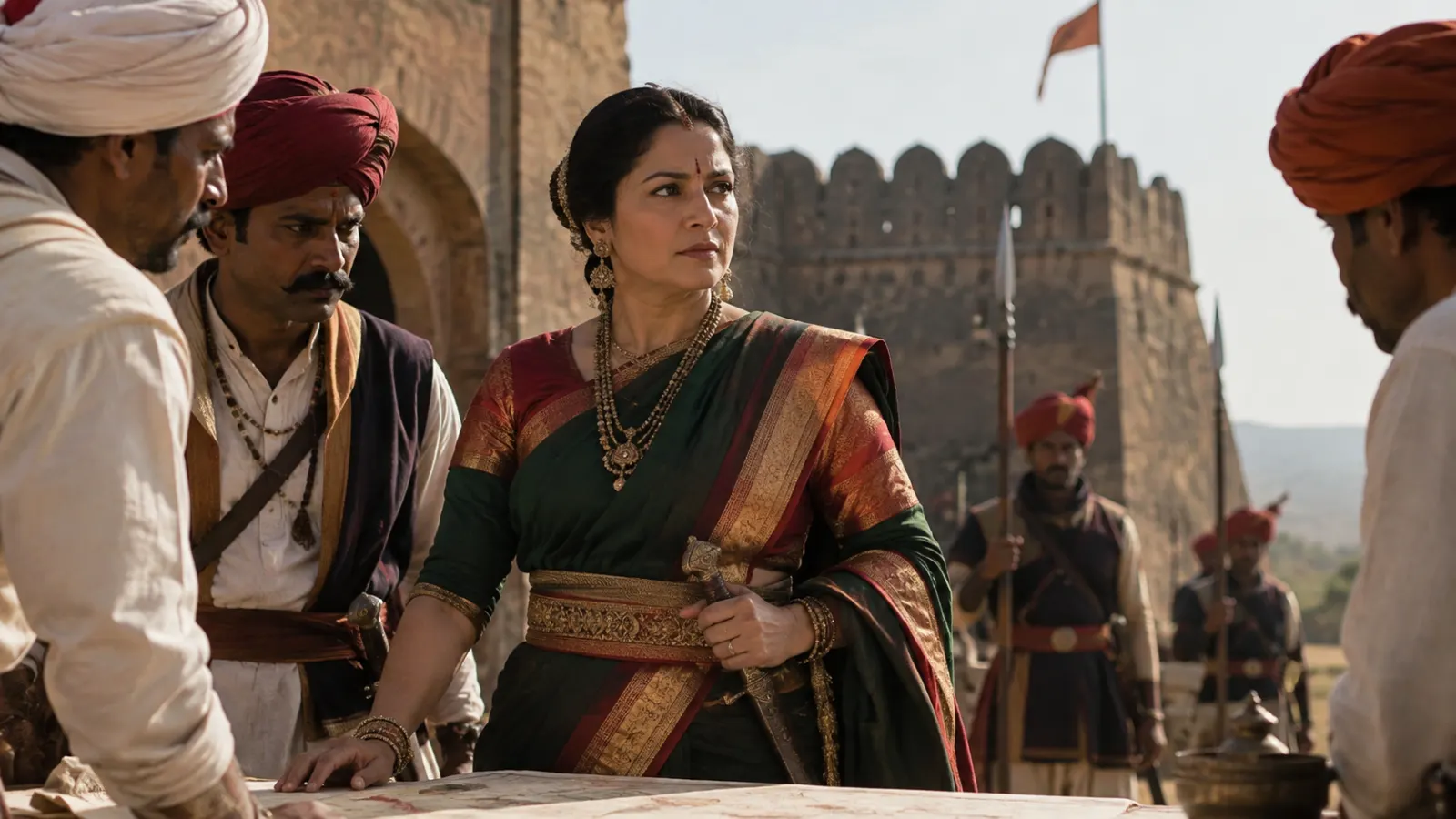
She was a woman occupying a position of political authority in a small Deccan state who became the central defender of its sovereignty during a succession crisis. Her government resisted Company intervention militarily, defeated the first force sent against Kittur, continued negotiating for recognition of the state, and then confronted a much larger retaliatory campaign.
Her gender is historically relevant without turning the biography into a generic story of individual empowerment. Chennamma exercised authority through the institutions available to a queen within a princely court: dynastic legitimacy, relationships with chiefs and military leaders, administrative networks and the loyalty of forces defending Kittur.
Later memory transformed that historically specific power into a broader symbol. Statues, museums, Kittur Utsav celebrations and government commemorations increasingly positioned her within narratives of women’s leadership and anti-colonial resistance. The Ministry of Culture’s 2024–25 bicentenary programme included exhibitions, lectures, cultural events and commemorative releases marking the Kittur victory.
That commemoration is itself part of her history: a local nineteenth-century succession war became a national memory of resistance.
Colonial records and regional memory tell different kinds of truth
The surviving evidence creates its own difficulties.
Compared with later nationalist figures, Chennamma did not leave behind an extensive body of easily accessible speeches, memoirs or political writings. Much of the detailed documentary record comes instead from the East India Company—the institution against which Kittur fought.
Those records remain indispensable. They provide dates, official correspondence, descriptions of military movements and discussions about succession. The British Library’s India Office collections contain secret correspondence from late 1824 specifically relating to “Kittoor” and wider Company affairs.
But administrative records are not neutral windows into events. Company officials often described Kittur’s defenders as insurgents or rebels because they wrote from an institutional framework in which British authority was presumed legitimate.
Regional memory has a different problem. Kannada songs, commemorative histories and later patriotic narratives preserve the social significance of Chennamma but may sharpen heroism, personalise military victories or supply details for which documentary evidence is limited.
Responsible history needs both kinds of evidence without confusing their purposes.
A Company report can document what an official ordered without proving that the order was legitimate. A commemorative tradition can demonstrate how communities remembered Chennamma without proving that every remembered speech occurred exactly as later narrated.
The gaps should remain visible.
That is particularly important for disputed details such as precise troop numbers, exact responsibility for particular deaths, Chennamma’s birth date, aspects of battlefield command and the motives attributed to individual court officials. Historical significance does not require filling every uncertainty with certainty.
Kittur reveals how empire expanded before famous annexation doctrines
The larger historical value of Chennamma’s story lies in what Kittur shows about the mechanics of East India Company expansion.
Empire did not advance only through major wars in which one sovereign state defeated another. It also operated through treaties, recognition of heirs, administrative supervision, control of revenue, political agents and decisions about whether existing states possessed the right to continue.
The Kittur crisis demonstrates this process with unusual clarity.
Shivalingappa’s adoption became politically explosive because adoption was not merely a family matter. Recognition of an heir determined control over the treasury, administration, armed forces and future sovereignty of the state.
When Company officials claimed a decisive role in recognising that succession, they were also claiming authority over the continued existence of Kittur as a polity.
This is why describing Chennamma as simply resisting the Doctrine of Lapse actually makes the story less interesting. The later doctrine supplies an easy label, but Kittur shows the deeper process before the label existed.
Company paramountcy was developing through practice. Officials increasingly asserted that their approval could determine political succession inside states whose rulers understood themselves as possessing established dynastic rights.
The contradiction became impossible to resolve because both sides were effectively answering different constitutional questions.
Kittur asked: Who succeeds according to the political and dynastic practices of Kittur?
Company officials increasingly asked: Will the British government recognise that succession?
Once recognition by the external power became decisive, the sovereignty being defended by Chennamma had already been substantially narrowed.
Why Kittur Rani Chennamma still matters
Chennamma did not create a national revolutionary organisation. She did not permanently defeat the East India Company, and the events of 1824 should not be rewritten as though participants already possessed the political vocabulary of the Indian nationalism that developed much later.
Her historical importance is more specific.
She confronted Company power at the moment a succession dispute became a test of whether Kittur retained meaningful sovereignty. She attempted negotiation, accepted armed confrontation when Company intervention deepened, survived the transformation of a local constitutional dispute into war and became the political centre of a resistance that continued even after her imprisonment.
The first battle demonstrated that Company authority was not automatically irresistible. The second demonstrated how difficult it was for a small state to sustain resistance when the Company could mobilise a much larger military and administrative system.
Together, those outcomes explain why Kittur matters.
The original draft captures the point well: the conflict reveals colonial expansion occurring through succession decisions, treasury control, political supervision and military force, rather than through conquest alone.
That perspective also places Chennamma more accurately within the history of resistance in India. She does not need to be declared the first of anything, nor does she need to be inserted artificially into the politics of 1857.
Her own historical setting is significant enough.
Kittur Rani Chennamma matters because in 1824 she recognised that control over succession was control over sovereignty—and chose resistance when the East India Company attempted to decide whether her state would continue to exist.