A Habit Is Not Automatically a Ritual
People repeat actions every day: locking a door, brushing teeth, checking a phone, making tea. Repetition alone does not make these acts rituals.
A ritual usually carries a layer of recognised meaning beyond immediate practical function. The sequence matters because participants understand it as marking something: belonging, transition, remembrance, obligation, protection, gratitude, mourning or sacred time.
That meaning can be religious, civic, familial or entirely secular. Graduation ceremonies, national commemorations, pre-match sporting routines and funeral practices can all contain ritual elements.
Ritual Gives Form to Important Moments
Some experiences are socially difficult because ordinary behaviour offers no obvious script. What should people do when a child is born, two families join, someone dies, a young person reaches adulthood or a community remembers catastrophe?
Ritual provides an answer. It creates a sequence of actions through which participants recognise that something has changed.
Rites of Passage Make Transitions Public
Birth, initiation, marriage and funeral rituals are classic examples because they change social status. A person is not only older, married or bereaved privately; the community acknowledges the transition publicly.
UNESCO includes rites of passage, wedding rituals, funeral rituals, worship rites, oaths and many other practices within the broad domain of social practices, rituals and festive events. The category is deliberately wide because ritual is woven into many aspects of social life.
Ritual Converts Abstract Values Into Action
A value such as respect is abstract. Bowing to an elder, standing in silence, removing shoes before entering a sacred space or sharing food in a prescribed order makes that value visible.
Ritual therefore communicates without requiring an explanation every time. Participants learn what matters by learning what must be done, in what order and with what degree of seriousness.
Repetition Builds Memory
Memory is strengthened when ideas return in structured form. Annual commemorations, festival rituals and family observances repeatedly reactivate stories that might otherwise fade.
Children often learn cultural history through participation before they can explain it intellectually. The ritual becomes a memory framework: a smell, song, gesture or sequence later recalls the wider story.
Synchrony Can Increase a Sense of Connection
Many rituals coordinate bodies. Participants chant, march, clap, kneel, circle, sing or remain silent together. Research on collective ritual and synchronised behaviour has found associations with social bonding and cooperation, although effects vary by context and should not be treated as automatic.
The intuitive mechanism is powerful: doing something at the same time makes a collection of individuals experience themselves, temporarily, as a group.
Ritual Helps Manage Uncertainty
People often ritualise situations that involve uncertainty: illness, examinations, dangerous work, competition, travel, childbirth or unpredictable weather. Some actions may have no direct causal effect on the outcome, yet they can create a sense of order.
That psychological function should not be dismissed as irrationality. Humans regularly use routines to structure anxiety. Ritual adds shared meaning and inherited form to that process.
Ritual Creates Boundaries
To know a ritual is often to know how to belong. Members understand when to arrive, what to wear, what words to say and which actions are appropriate.
But the same boundary can exclude. Outsiders may not understand the sequence. Some roles may be restricted by age, gender, lineage, caste, office or religious status. Ritual can therefore reveal social hierarchy as clearly as social solidarity.
Objects Become Symbolic Through Ritual
Water, fire, bread, flowers, rings, cloth, incense, colour and ordinary household objects can acquire meanings far beyond their material properties when used ritually.
The object is not powerful because of chemistry alone. Its significance comes from the story, relationship and recognised action surrounding it.
Ritual Can Authorise Institutions
States and organisations also use ritual. Swearing-in ceremonies, military parades, judicial oaths, parliamentary procedures and award ceremonies present authority as orderly and legitimate.
These rituals remind participants that institutions depend partly on shared symbols. A constitution may be written law, but public ceremonies help make its offices socially visible.
Ritual Is Not the Opposite of Change
Traditions are often described as unchanged repetitions. In reality, rituals evolve. New materials appear. Languages shift. ceremonies become shorter. Diaspora communities adapt sequences to new work schedules and legal settings.
UNESCO’s idea of living heritage is useful precisely because it treats transmission and recreation as compatible. A ritual can remain recognisable while changing across generations.
Digital Rituals Are Still Rituals
People now attend memorials by livestream, exchange festival greetings in messaging groups and repeat online practices that mark birthdays, anniversaries and collective mourning.
Digital participation lacks some forms of physical co-presence, but it can still create recognised sequences and shared symbolic moments. The medium changes; the social need for marking time and belonging remains.
When Ritual Becomes Empty
Participants sometimes complain that a ritual has become mechanical. This reveals an important truth: ritual meaning is not guaranteed by repetition.
A practice can survive institutionally while losing emotional or theological significance for some people. Others may continue because of family obligation, cultural identity or respect for elders. The same ritual can therefore mean different things to different participants.
Ritual Can Also Be Contested
Practices connected with hierarchy, exclusion or harm may be challenged. Defenders may call them heritage; critics may call them discrimination. The word ritual does not place an action beyond ethical evaluation.
Safeguarding culture should preserve living knowledge and community agency, not freeze every inherited practice regardless of rights or consent.
Secular Societies Still Produce Ritual
Modernisation does not eliminate ritual; it often relocates it. Citizenship ceremonies, graduations, memorial days, sporting traditions, corporate inductions and even the repeated protocols of courts and parliaments show that symbolic repetition remains important outside explicitly religious life.
This matters because it challenges a common stereotype: ritual is not a leftover from a premodern age. Complex institutions also depend on patterned actions that signal seriousness, continuity and belonging.
Ritual Helps Groups Coordinate Expectations
A ritual tells participants not only what an event means but what behaviour is expected. At a funeral people lower their voices; at an oath ceremony they stand; at a festival they prepare particular foods or greetings. These expectations reduce uncertainty and make large-scale coordination possible without constant negotiation.
The social efficiency can be substantial. Hundreds of people may act in a recognisable sequence because they have learned the ritual form through repeated participation.
Private Rituals Can Matter Without Public Recognition
Not all ritual is collective. Individuals create private practices around grief, study, exercise, prayer or remembrance. Such acts may help structure attention and emotion even when nobody else witnesses them.
The distinction is that personal ritual still involves symbolic or meaningful repetition. It is experienced as more than a convenient routine.
Ritual Can Preserve Minority Identity
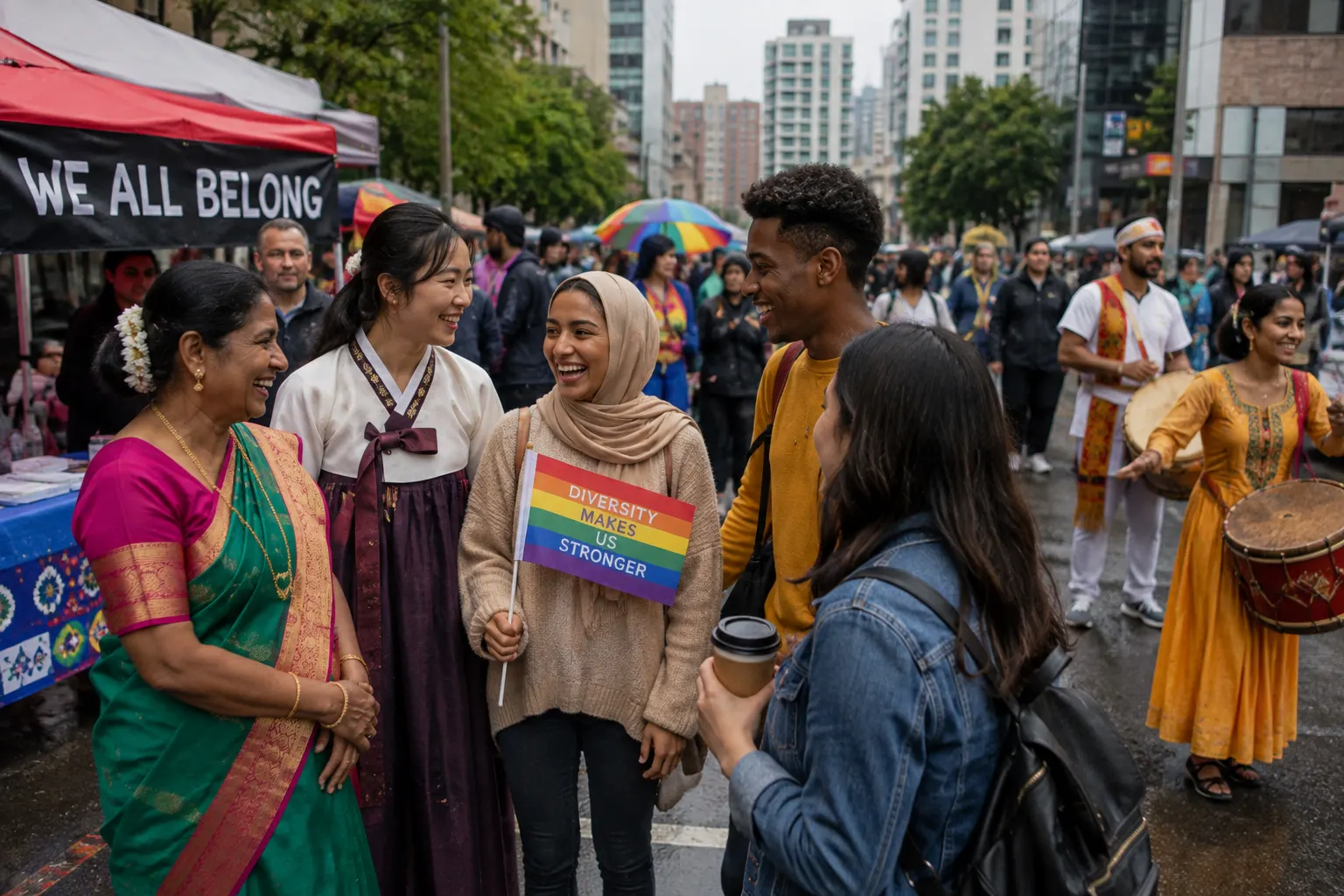
For diasporas and minority communities, ritual can sustain identity when language, residence and occupation change. Preparing a festival meal, observing a fast or teaching a ceremonial song may become a concentrated way to transmit belonging to children growing up in another cultural environment.
This preservation is rarely exact. Practices adapt to school schedules, local laws, available ingredients and new social expectations. Continuity survives through flexible repetition.
Ritual Also Teaches Attention
Many rituals require participants to slow down and notice actions they would otherwise perform automatically. Washing, eating, lighting a flame, walking a route or speaking a phrase becomes deliberate because the sequence is framed as significant.
This concentrated attention can deepen memory and make a familiar object or action feel different from ordinary use. The effect is social as well as personal: everyone recognises that this moment is being treated with special seriousness.
Ritual therefore sits at an unusual intersection of memory, emotion and institution. The same sequence can comfort one participant, constrain another and educate a third. Its importance comes from the fact that meaning is shared enough for people to recognise the act, even when their private interpretations differ.
That shared recognisability is what allows ritual to carry meaning across generations even as personal belief and social circumstances change.
Why Rituals Matter
Rituals matter because they make social meaning tangible. They tell people when ordinary time has become special time, when a private change has become a public transition and when an individual action represents something larger than itself.
They can create memory, coordinate groups, express values, manage uncertainty and connect generations. They can also reproduce boundaries and power.
The next article examines the closely related idea of ceremony. Ritual describes patterned symbolic action; ceremony describes the larger formal occasion in which many such actions may be assembled into a publicly recognised event.
Sources / Further Reading
• UNESCO — Social practices, rituals and festive events — https://ich.unesco.org/en/social-practices-rituals-and-00055
• UNESCO — Intangible Heritage domains — https://ich.unesco.org/en/intangible-heritage-domains-00052
• UNESCO — What is Intangible Cultural Heritage? — https://ich.unesco.org/en/what-is-intangible-heritage-00003
• Royal Society — Ritualistic synchrony, cohesion and cooperation — https://royalsocietypublishing.org/rstb/article/375/1805/20190432/42486/The-cultural-evolutionary-trade-off-of-ritualistic
Suggested Internal Links
Understanding the Meaning Behind Ceremonies — Article 28
Why Festivals Matter — Article 3
Why Festivals Bring People Together — Article 4
How Faith Shapes Culture — Article 22
What Is Social Cohesion — Planned internal link